


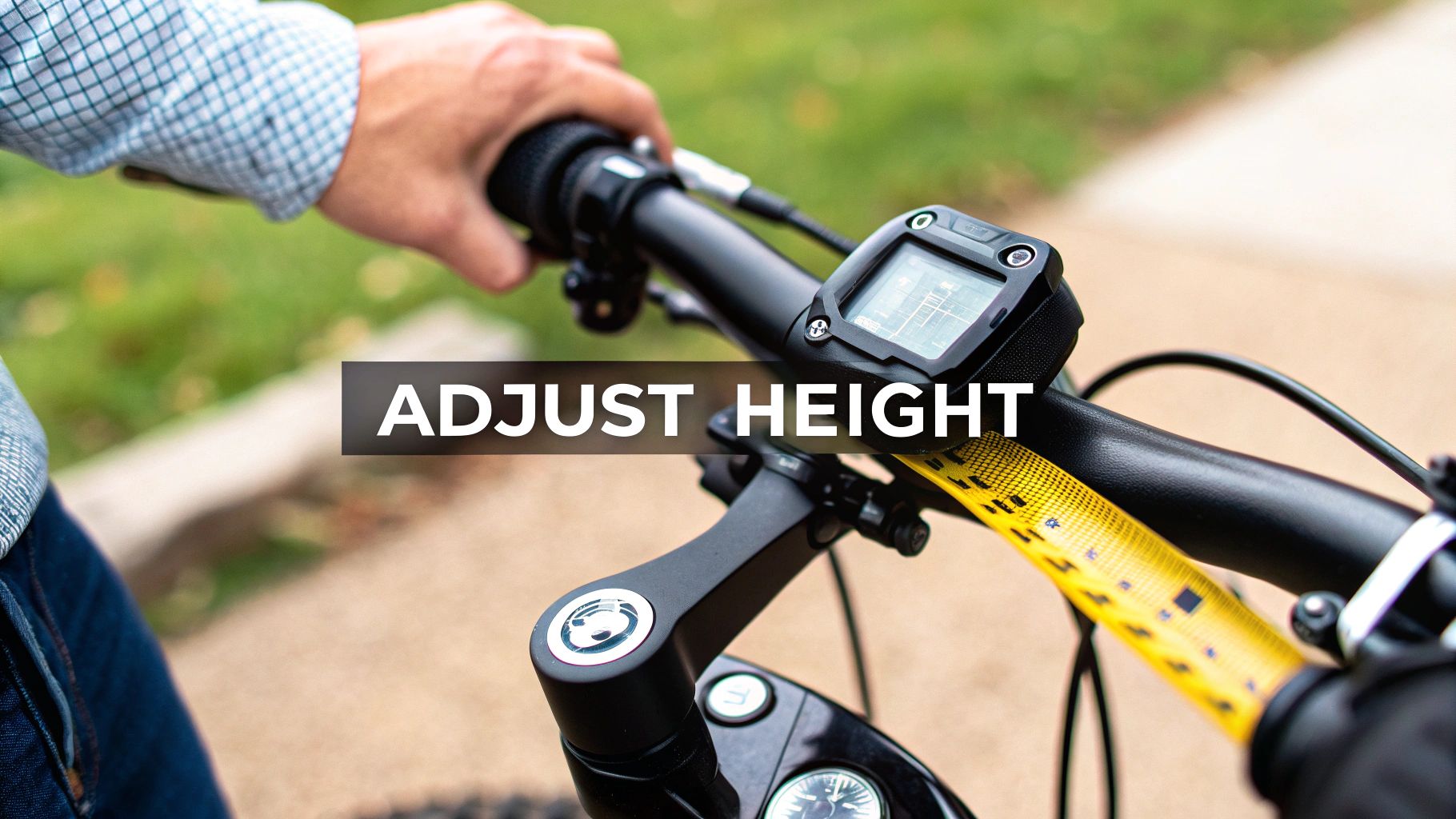
Zdziwiłbyś się, jak wielką różnicę może zrobić kilka minut z kluczem imbusowym. Regulacja wysokości kierownicy wydaje się niewielką zmianą, ale jest to jeden z najszybszych sposobów, aby całkowicie zmienić styl jazdy z „w porządku” w niewiarygodnie wygodny i kontrolowany. Wszystko polega na znalezieniu tego osobistego, idealnego miejsca, w którym Twój rower elektryczny lub hulajnoga elektryczna będzie stanowić przedłużenie Ciebie.
Dlaczego wysokość kierownicy ma większe znaczenie, niż myślisz
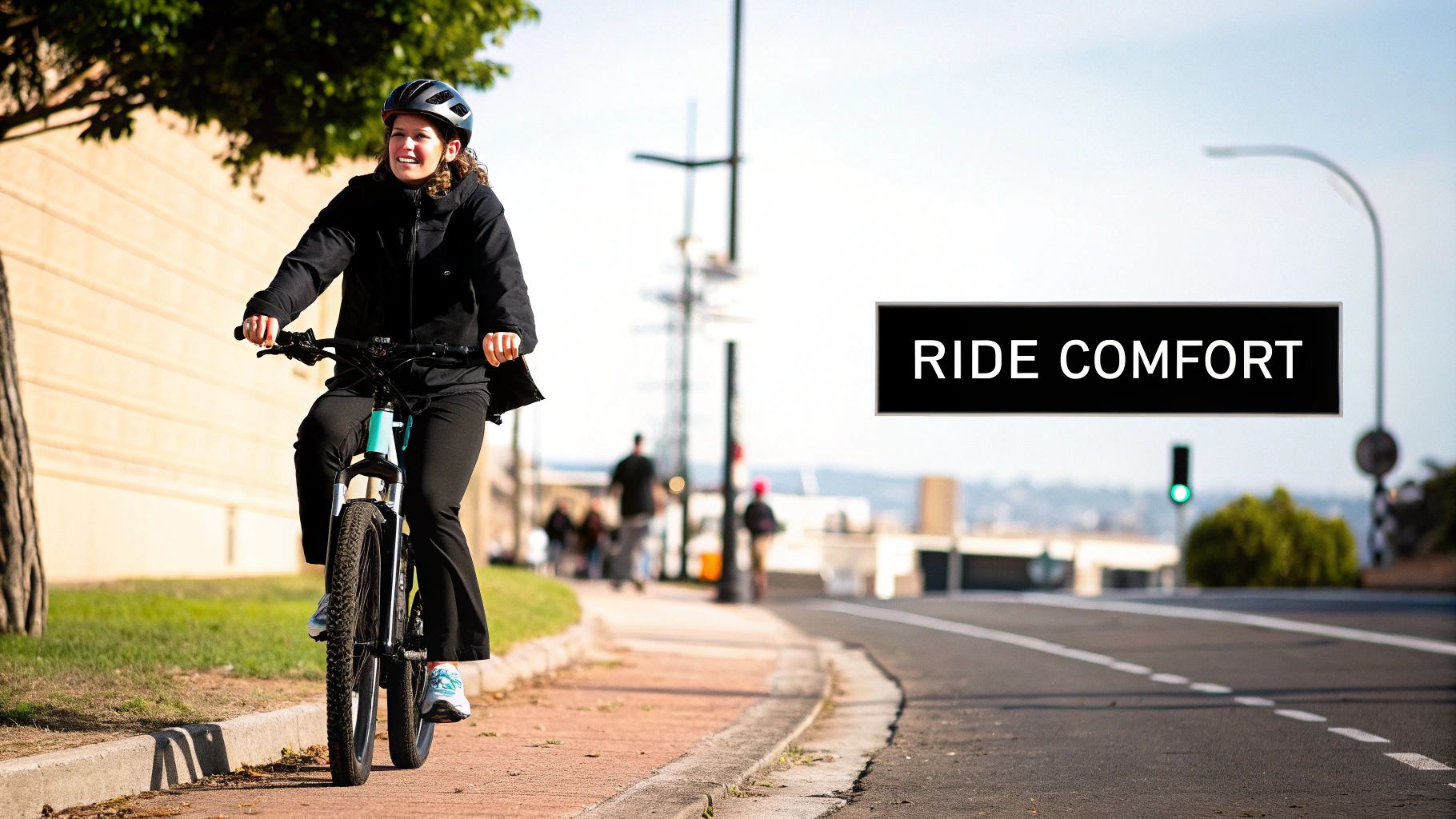
Zanim zaczniesz odkręcać śruby, porozmawiajmy o tym dlaczego to ma ogromne znaczenie. Prawidłowa wysokość kierownicy to nie tylko poczucie większego komfortu; ma to fundamentalne znaczenie dla Twojego bezpieczeństwa, kontroli nad jazdą i ogólnej przyjemności z jazdy.
Zła konfiguracja powoduje przyjęcie niewygodnej postawy i tu zaczynają się problemy. Jeśli ciągle garbisz się nad zbyt niskimi drążkami, poczujesz to w nadgarstkach i ramionach. To także klasyczna recepta na ból dolnej części pleców, nawet po krótkiej podróży. Z drugiej strony kierownica ustawiona zbyt wysoko może sprawić, że sterowanie będzie płynne i nieprecyzyjne, a to ostatnia rzecz, jakiej chcesz podczas poruszania się po ruchliwej ulicy.
Korzyści z konfiguracji z modemem w świecie rzeczywistym
Kiedy osiągniesz odpowiednią wysokość, zmiana będzie natychmiastowa. Poczujesz to od razu.
- Naprawdę będziesz czuć się komfortowo: To jest ten duży. Mniejsze obciążenie pleców, szyi i ramion oznacza, że możesz cieszyć się jazdą bez krzywienia się. Bardziej naturalna, wyprostowana postawa jest po prostu łatwiejsza dla ciała, niezależnie od tego, czy dojeżdżasz do pracy przez miasto w USA, czy przemierzasz malownicze australijskie ścieżki rowerowe.
- Lepsza obsługa i stabilność: Właściwa pozycja zapewnia znacznie większą kontrolę nad rowerem elektrycznym lub hulajnogą elektryczną. Poczujesz się pewniej, pokonując ciasne miejsca, unikając dziur i utrzymując stabilność na nierównej nawierzchni.
- Możesz zobaczyć więcej: Nieco bardziej wyprostowana pozycja naturalnie podnosi głowę, co otwiera pole widzenia. Stanowi to ogromną poprawę bezpieczeństwa, ponieważ znacznie wcześniej będziesz w stanie dostrzec ruch uliczny, pieszych i inne zagrożenia.
To nie jest tylko uczucie; nauka to potwierdza. Właściwa ergonomia może zmniejszyć obciążenie pleców nawet o 30% dla zwykłych jeźdźców. Podniesienie kierownicy do wygodniejszej pozycji może nawet zmniejszyć aktywność mięśni w dolnej części pleców 15-20%. A najlepsza część? Jest to naprawa, która zwykle zajmuje mniej niż 15 minuty.
Ostatecznym celem jest znalezienie neutralnej, zrelaksowanej pozycji do jazdy. Twoje ramiona powinny być lekko ugięte, a plecy powinny być dość proste – nie wygięte w łuk jak u kota ani zgarbione. To podstawa wspaniałej jazdy za każdym razem.
Oto krótki przegląd wpływu różnych wysokości kierownicy na jazdę.
Krótki przewodnik po pozycjach kierownicy
| Pozycja kierownicy | Podstawowa korzyść | Najlepsze dla | Potencjalny minus |
|---|---|---|---|
| Niższy | Aerodynamika i moc | Jazda sportowa, wspinaczka górska | Obciąż plecy, szyję i nadgarstki |
| Neutralny (poziom z siedziskiem) | Zrównoważony komfort i kontrola | Wszechstronne codzienne dojazdy do pracy, fitness | Kompromis; nie specjalizuje się w szybkości i czystym komforcie |
| Wyżej | Maksymalny komfort i widoczność | Rejsy rekreacyjne, wycieczki długodystansowe | Mniej aerodynamiczny, może sprawiać wrażenie mniej połączonego z przednim kołem |
Znalezienie idealnej równowagi jest kluczowe.
Dla poważnych rowerzystów ta niewielka korekta ma ogromny wpływ na wydajność i wytrzymałość. To kluczowa część optymalizacja konfiguracji roweru w ramach kompleksowego planu treningowego Ironman. Poświęcając kilka chwil na wybranie tego ustawienia, nie tylko majstrujesz przy swoim rowerze; personalizujesz go, aby uzyskać lepsze osiągi i znacznie przyjemniejszą jazdę.
Przygotowanie narzędzi i miejsca do pracy
Zanim w ogóle pomyślisz o dotknięciu śruby, ustawmy wszystko na swoim miejscu. Niewielka ilość prac przygotowawczych może znacznie pomóc i zmienić potencjalnie skomplikowaną pracę w płynny i bezpieczny proces. Pomyśl o tym jak o mise en place dla Twojego roweru — wszystko gotowe, zanim zaczniesz gotować.
Dobra wiadomość jest taka, że nie będziesz musiał napadać na skrzynkę z narzędziami profesjonalnego mechanika. W przypadku zdecydowanej większości rowerów elektrycznych i hulajnóg elektrycznych dostępnych w Australii i USA – takich marek jak Eleglide, Engwe czy Hitway – lista narzędzi jest zaskakująco krótka.
Lista kontrolna Twojego podstawowego narzędzia
Za pomocą kilku typowych elementów możesz poradzić sobie z niemal każdą regulacją kierownicy.
- Porządny zestaw kluczy imbusowych: Będziesz sięgać po 4 mm, 5 mm i 6 mm rozmiary stale. To chleb powszedni w przypadku śrub trzpieniowych i górnych pokryw.
- Taśma miernicza: Nie skupiaj się tylko na tym! Precyzja ma tutaj znaczenie. Taśma miernicza umożliwia śledzenie zmian i późniejsze odtworzenie wysokości optymalnego punktu, jeśli zajdzie taka potrzeba.
- Kawałek taśmy lub nietrwałego markera: To moja ulubiona sztuczka. Przyklej mały kawałek taśmy elektrycznej do łodygi, aby oznaczyć punkt początkowy. Daje natychmiastowe odniesienie, dzięki czemu się nie zgubisz.
Teraz te narzędzia z pewnością wykonają swoje zadanie. Ale jeśli chcesz to zrobić jak profesjonalista, a klucz dynamometryczny to zmiana zasad gry. To najlepszy sposób na uniknięcie klasycznego błędu polegającego na nadmiernym dokręceniu śrub, co może spowodować zerwanie gwintu lub nawet pęknięcie drogich elementów. Zrozumienie jak działa dynamometr daje pewien wgląd w to, dlaczego pomiar siły jest tak ważny dla bezpieczeństwa, i właśnie w tym pomaga klucz dynamometryczny.
Wskazówka dla profesjonalistów: Przy okazji szybko ściśnij opony. Ogólna geometria i wyczucie roweru mogą się zmieniać wraz z ciśnieniem w oponach. Jeśli wydają się miękkie, to idealny moment, aby je uzupełnić. Mamy prosty przewodnik pompowanie opon rowerowych jeśli potrzebujesz odświeżenia.
Na koniec zaaranżuj swoją przestrzeń. Nie potrzebujesz dedykowanego warsztatu, wystarczy płaski, stabilny teren. Oprzyj bezpiecznie swój rower elektryczny lub hulajnogę elektryczną o ścianę. Jeśli masz stojak na rowery, najwyższy czas z niego skorzystać — jest to ogromna pomoc, uwalniająca obie ręce. Kilka minut przygotowań oznacza, że możesz całkowicie skupić się na uzyskaniu odpowiedniej wysokości kierownicy, bez żadnych zakłóceń.
Praktyczne informacje: regulacja łodyg bezgwintowych i kolczastych
No dobrze, przejdźmy do konkretów. W tym miejscu dostosujemy wysokość kierownicy Twojego roweru elektrycznego. Większość dzisiejszych rowerów elektrycznych wykorzystuje jeden z dwóch głównych typów mostków — to element łączący kierownicę z ramą roweru. Będziesz mieć bez gwintu łodyga lub a pióro łodyga.
Mostki bezgwintowe można znaleźć w większości nowoczesnych rowerów elektrycznych, szczególnie na rynkach takich jak USA i Australia. Z drugiej strony wsporniki typu Quill mają bardziej klasyczny, opływowy wygląd i są powszechne w rowerach miejskich i niektórych hybrydach. Nie przejmuj się; omówimy, jak sobie poradzić z obydwoma.
Zanim sięgniesz po narzędzia, krótki przegląd mentalny może zaoszczędzić wielu kłopotów.
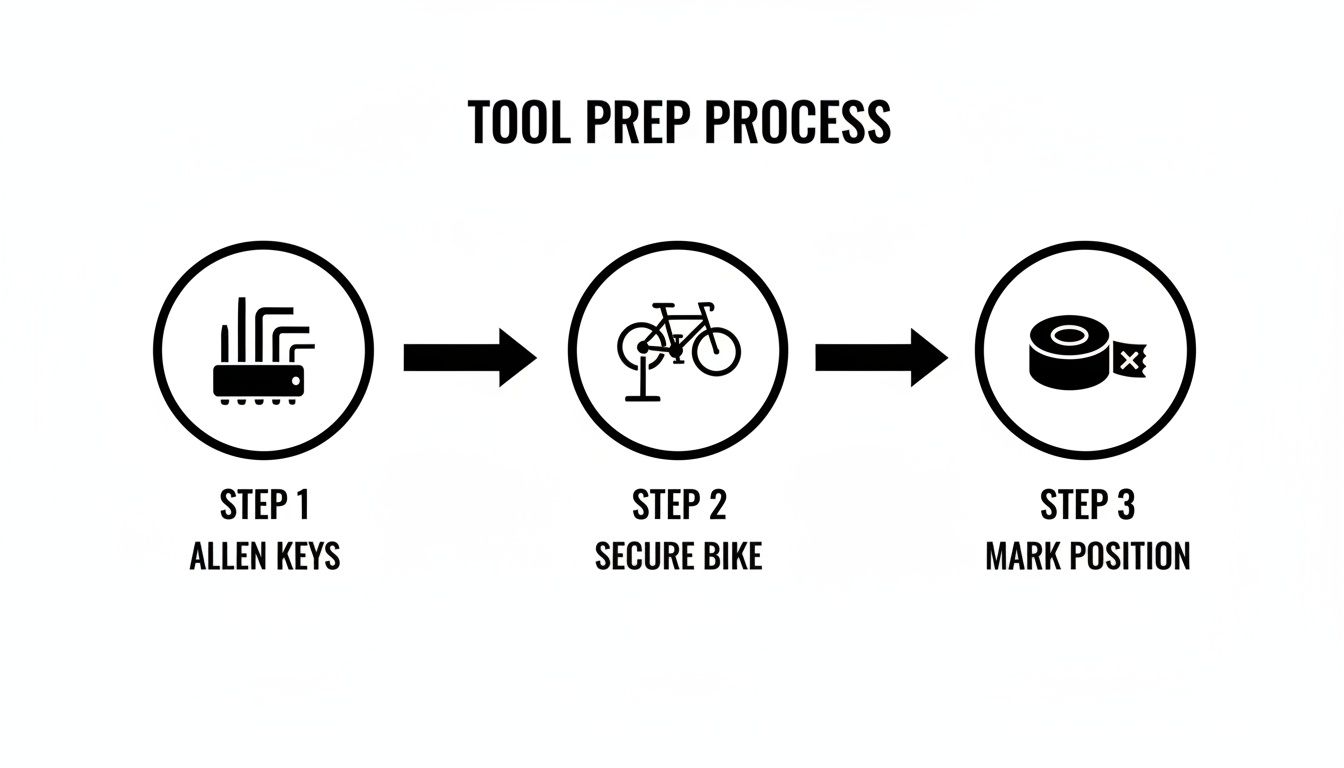
Ta niewielka grafika doskonale to podsumowuje. Zdobądź klucze imbusowe, upewnij się, że rower jest stabilny i zaznacz punkt startu. Proste przygotowanie zapewnia płynną pracę.
Regulacja nowoczesnego trzpienia bezgwintowego
Przyjrzyj się swojej łodygi. Jeśli widzisz stos okrągłych pierścieni – zwanych przekładkami – nad lub pod nim, masz konfigurację bezgwintową. Te podkładki dystansowe to Twój bilet na nową wysokość kierownicy. Cały zespół jest utrzymywany na miejscu za pomocą śruby na samej górze (górna zaślepka) i kilku śrub z boku mostka.
Najpierw poluzuj dwie boczne śruby w miejscu, w którym wspornik zaciska się wokół rury sterowej widelca. Nie musisz ich całkowicie wyciągać; po prostu cofnij je na tyle, aby łodyga mogła się swobodnie poruszać.
Teraz przejdź do górnej śruby mocującej i wyjmij ją całkowicie. Głównym zadaniem tej śruby jest ustawienie napięcia łożysk sterów, a nie mocne dociśnięcie mostka. Po odkręceniu tej śruby powinno być możliwe zsunięcie mostka i wszelkich podkładek bezpośrednio z górnej części rury sterowej.
Chcesz podnieść kierownicę? Wystarczy zamienić element dystansowy znajdujący się nad mostkiem i umieszczony pod nim. Aby je obniżyć, wykonaj czynności odwrotne. Każdy element dystansowy robi niewielką, ale zauważalną różnicę, więc baw się, aż poczujesz, że jest odpowiedni.
Uwaga: Następna część ma kluczowe znaczenie dla bezpieczeństwa. Kolejność ponownego montażu nie jest opcjonalna. Po zmianie rozmieszczenia podkładek wsuń trzonek z powrotem, a następnie załóż z powrotem górną nasadkę. Dokręć górną śrubę pokrywy pierwszy. Dociśnij go na tyle, aby wyeliminować kołysanie lub luz w zestawie słuchawkowym, ale nie na tyle, aby sterowanie było ciasne lub lepkie.
Po ustawieniu naprężenia sterów stań nad rowerem i ustaw kierownicę tak, aby była idealnie prosta w stosunku do przedniego koła. Teraz możesz śmiało dokręcić te boczne śruby mostka. Upewnij się, że są dobre i dobrze dopasowane, najlepiej zgodnie ze specyfikacją momentu obrotowego producenta. Ten ostatni krok blokuje wszystko bezpiecznie na swoim miejscu.
Regulacja klasycznego trzonka z piórem
Łodygi piór mają znacznie prostszy wygląd. Zobaczysz pojedynczą, długą śrubę przechodzącą pionowo przez górną część łodygi. Ta śruba steruje klinem rozporowym ukrytym w rurze sterowej, który utrzymuje całość mocno.
Aby dokonać regulacji, wystarczy poluzować jedną środkową śrubę. Chwyć klucz imbusowy i wykonaj dwa lub trzy pełne obroty w kierunku przeciwnym do ruchu wskazówek zegara. To powinno wystarczyć, aby zmniejszyć nacisk na wewnętrzny klin.
W tym momencie kierownica powinna przesuwać się w górę i w dół. Jeśli wydaje się, że jest zablokowany, co może się zdarzyć z czasem, delikatnie uderz górną część poluzowanej śruby gumowym młotkiem. To zwykle wystarczy, aby uwolnić klin.
Teraz wystarczy przesunąć kierownicę na preferowaną wysokość. Najważniejszą rzeczą, na którą należy tutaj zwrócić uwagę, jest minimalna linia wstawiania. Na każdym trzpieniu znajduje się wygrawerowana linia pokazująca najwyższą wysokość, jaką można bezpiecznie unieść. Jeśli widzisz tę linię, Twoja kierownica jest niebezpiecznie wysoko i należy ją natychmiast opuścić.
Po znalezieniu odpowiedniego miejsca mocno dokręć środkową śrubę rozporową. Aby sprawdzić swoją pracę, stań nad rowerem, chwyć przednie koło kolanami i spróbuj zmusić kierownicę do skrętu. Jeśli się skręcają, a koło nie, śruba musi być mocniej dokręcona. Gdy już będzie solidnie, możesz zaczynać.
Znalezienie swojego osobistego miejsca na wygodę
W porządku, masz narzędzia i znasz podstawowe kroki, ale tutaj dzieje się prawdziwa magia: ustawienie wysokości kierownicy, która jest idealna dla ty. Zapomnij o uniwersalnych zasadach i pojedynczej magicznej liczbie. Tu chodzi przede wszystkim o Twoje ciało, styl jazdy i pogoń za bezbolesną, wygodną jazdą.
Sposób jazdy powinien decydować o konfiguracji. Proste. Jeśli głównie poruszasz się po mieście i dojeżdżasz do pracy, będziesz potrzebować bardziej wyprostowanej postawy. Uniesienie kierownicy niemal na wysokość siodełka zmienia zasady gry. Zapewnia wspaniały widok na ruch uliczny i odciąża plecy i ramiona.
Z drugiej strony, jeśli gonisz za prędkością lub pokonujesz bardziej agresywne trasy – coś, co często widzimy wśród rowerzystów w USA i Australii – niższa pozycja kierownicy może być Twoim rozwiązaniem. Nieznaczne obniżenie kierownicy powoduje, że kierownica jest bardziej aerodynamiczna i może znacznie poprawić prowadzenie, gdy naprawdę mocno naciskasz.
Twój styl jazdy definiuje Twoją konfigurację
Pomyśl o tym, co robisz najczęściej na rowerze. Idealna konfiguracja dla wyluzowanego miejskiego cruisera będzie okropna dla rowerzysty e-MTB poruszającego się po singletracku.
- Miejski dojazd: Komfort jest Twoim priorytetem numer jeden. Wyższa pozycja kierownicy pozwala siedzieć prosto, co oznacza mniejsze obciążenie dolnej części pleców i nadgarstków. Jest idealny do nawigacji w ruchu ulicznym i po prostu czerpania przyjemności z jazdy.
- Weekendowy jeździec fitness: Szukasz tego idealnego miejsca pomiędzy komfortem a wydajnością. Pozycja neutralna, z kierownicą mniej więcej na tej samej wysokości co siodełko, zwykle trafia w sedno. Pozwala zmniejszyć moc bez nadmiernego obciążania podczas dłuższych weekendowych przygód.
- Entuzjasta wydajności: Tutaj chodzi przede wszystkim o aerodynamikę i kontrolę. Niższa pozycja kierownicy (poniżej siodełka) pomaga zejść nisko, oszukać wiatr i poczuć większe połączenie z rowerem, co pozwala na agresywne prowadzenie.
Doświadczeni trenerzy często radzą Ci, abyś dążył do osiągnięcia celu Kąt 90 stopni między tułowiem a ramionami, gdy siedzisz i trzymasz uchwyty. Dla większości okazjonalnych rowerzystów oznacza to pochylenie tułowia o 45 stopni z odpowiednio podniesioną kierownicą, co pokazuje, że konfiguracja zmniejsza obciążenie ramion w imponujący sposób 22%.
W rzeczywistości badanie przeprowadzone w 2022 r. wykazało, że wyższa kierownica aktywuje mięśnie szyi 12% mniej niż niższe, co czyni je znacznie lepszą opcją dla Twojego kręgosłupa. Dla rowerzysty o wzroście około 175 cm doskonałym punktem wyjścia jest ustawienie kierownicy zaledwie 2 cm poniżej wysokości siodełka. Stamtąd możesz wprowadzać drobne poprawki w odstępach co 5 mm, aż poczujesz się dobrze. Możesz przejść do pełnego badania na jak wysokość kierownicy wpływa na aktywację mięśni jeśli chcesz posmakować nauki.
Ostatecznie najlepszym testem jest własne ciało. Zrób szybki obrót wokół bloku. Jeśli czujesz szczypanie w szyi, ból w ramionach lub przerażające drętwienie rąk, oznacza to, że wzrost jest nieprawidłowy. Sekret polega na wprowadzaniu małych, stopniowych zmian, aż znajdziesz idealne dopasowanie.
Wygodna pozycja kierownicy to ogromny element układanki, ale działa jeszcze lepiej w połączeniu z innymi ulepszeniami ergonomii. Sprawdź nasz poradnik na temat najlepsze akcesoria do rowerów elektrycznych aby zobaczyć, jakie inne ulepszenia możesz wprowadzić, aby uzyskać naprawdę spersonalizowaną jazdę.
Końcowa kontrola bezpieczeństwa i Twoja pierwsza jazda próbna
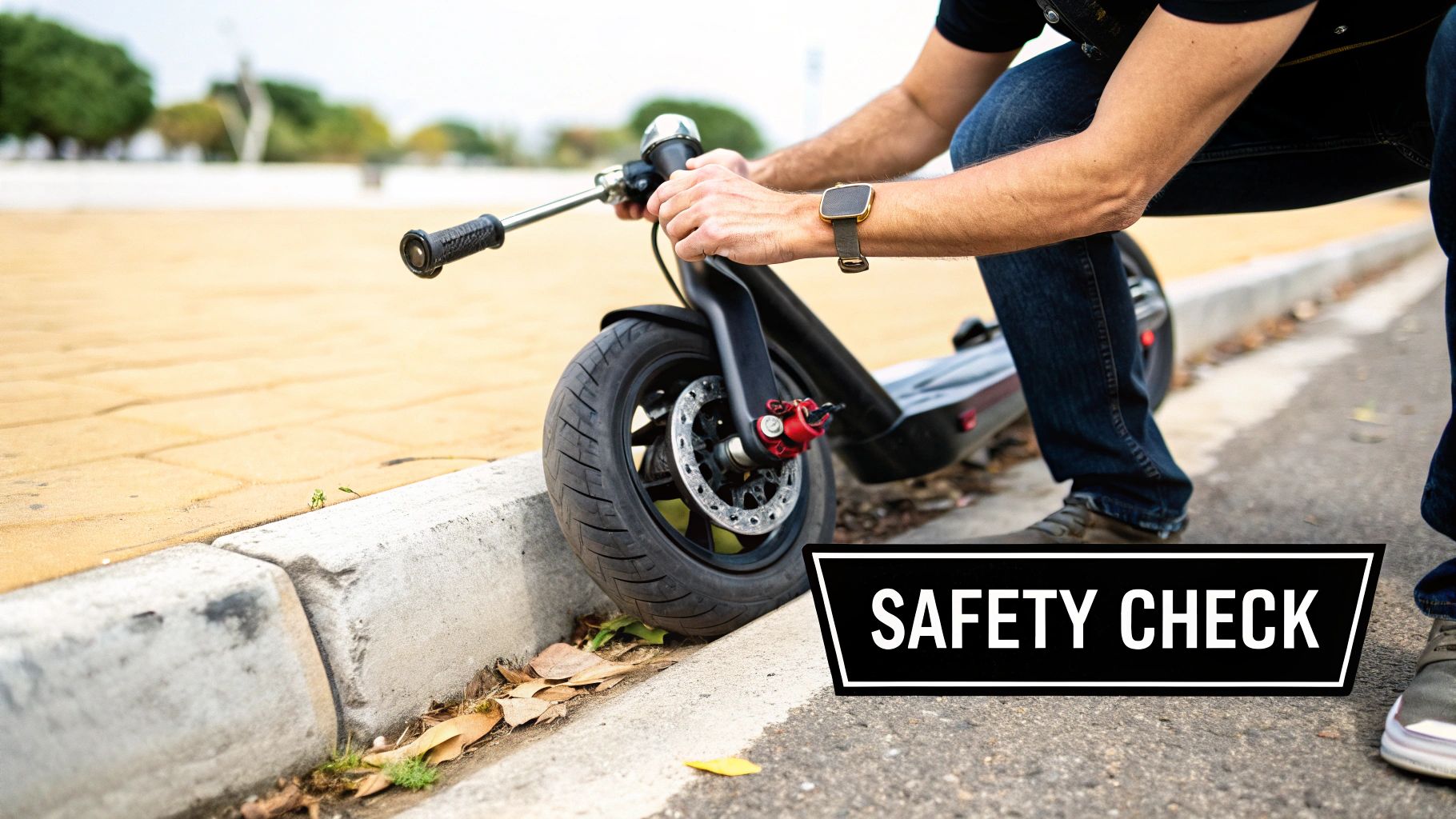
W porządku, już udało ci się szarpać i skręcać, ale nie wskakuj i nie oddalaj się. Szczerze mówiąc, ten ostatni element jest najbardziej krytyczną częścią całego procesu. To krok, który oddziela przyzwoitą regulację od naprawdę bezpiecznej.
Zanim wyruszysz na prawdziwą przejażdżkę, koniecznie wykonaj kilka szybkich kontroli. To nie jest bzdura; to niepodlegająca negocjacjom, 60-sekundowa rutyna, która może uchronić Cię przed przykrą niespodzianką. Pomyśl o tym jak o kontroli pilota przed lotem – szybkiej, prostej i niezwykle ważnej.
Niezbędny przegląd przed jazdą
Najpierw zwróć uwagę na swoje ustawienie. Siedź okrakiem na rowerze elektrycznym lub hulajnodze elektrycznej i patrz prosto w dół ze swojej pozycji do jazdy. Czy kierownica tworzy idealną literę „T” z przednim kołem? Jeśli wygląda choć trochę krzywo, poczujesz to podczas jazdy. Poluzuj śruby mostka na tyle, aby je wyprostować, a następnie zaciśnij je z powrotem.
Następnie czas na „test kołysania”, który jest obowiązkowy, jeśli majstrujesz przy mostku bez gwintu. Stań obok pojazdu, mocno naciśnij dźwignię przedniego hamulca i pchaj rower do przodu i do tyłu. Czujesz pukanie, stukanie lub luz wokół zestawu słuchawkowego? To charakterystyczny znak, że górna czapka jest zbyt luźna. Będziesz musiał ponownie poluzować boczne śruby mostka, obrócić górną pokrywę o kolejne ćwierć obrotu, a następnie ponownie wszystko dokręcić.
Chwiejny zestaw słuchawkowy to poważna czerwona flaga. Ma to wpływ na układ kierowniczy, sprawia, że jazda jest niestabilna i z czasem może zniszczyć łożyska wewnątrz ramy. Nie pomijaj tego testu.
Po zaliczeniu testu kołysania wykonaj ostatnie ominięcie wszystkich dotkniętych śrub. Upewnij się, że wszystkie są dobrze dopasowane. W tym przypadku klucz dynamometryczny jest na wagę złota i daje pewność, że nic nie jest zbyt luźne lub niebezpiecznie zbyt mocno dokręcone.
Twój pierwszy obrót wokół bloku
A teraz chwila prawdy: jazda próbna. Nie dajmy się jednak zwieść. Proste 5 do 10 minut wystarczy rejs po cichej, płaskiej ulicy. Celem jest dostrojenie się do sposobu jazdy czuje teraz.
Pełzając lub poruszając się, przeglądaj w myślach listę kontrolną:
- Jak sterowanie? Czy jest ostry i przewidywalny, czy też wydaje się nieco powolny lub może zbyt niestabilny?
- A co z komfortem? Zwróć uwagę na dłonie, nadgarstki, ramiona i szyję. Pojawiają się jakieś nowe bóle, drętwienie lub drętwienie?
- Czy czujesz, że masz kontrolę? Czy potrafisz z łatwością manewrować przy niskich prędkościach i wykonywać ciasne zakręty bez uczucia chybotania i rozciągania?
Ta szybka jazda próbna jest ostatecznym sprawdzianem. Natychmiast poinformuje Cię, czy udało Ci się dokonać regulacji, czy też potrzebujesz kolejnej poprawki. Nie wahaj się wrócić do garażu, aby dokonać drobnej zmiany — czasami wystarczy kilka milimetrów w górę lub w dół, aby znaleźć ten idealny punkt.
I oczywiście bezpieczeństwo zawsze na pierwszym miejscu. Właściwe dopasowanie to tylko połowa sukcesu, więc upewnij się, że Twoja głowa jest chroniona. Nasz przewodnik po wyborze najlepszy kask dla ebike'a jazda konna zawiera kilka świetnych wskazówek, które pozwolą Ci zachować bezpieczeństwo na drodze.
Praca nad załamaniami: częste problemy z dostosowaniem
W porządku, więc dokonałeś regulacji, dokręciłeś ostatnią śrubę i wskoczyłeś na jazdę próbną… tylko po to, by stwierdzić, że sterowanie wydaje się trochę niepewne. Nie przejmuj się. Zdarza się to każdemu i na szczęście większość gremlinów po dostosowaniu jest bardzo łatwa do wypędzenia.
Masz chwiejne lub luźne stery po pracy na mostku bez gwintu? W dziewięciu przypadkach na dziesięć chodzi po prostu o odpowiednią kolejność dokręcania. Luźne stery to klasyczny znak, że nieprawidłowo ustawiłeś napięcie wstępne łożyska. Rozwiązanie jest proste: najpierw poluzuj boczne śruby mostka, a następnie obróć górną śrubę pokrywy na tyle, aby wyeliminować drgania. Gdy już będzie dobrze dopasowany, możesz ponownie dokręcić boczne śruby.
A co z odwrotnym problemem? Jeśli układ kierowniczy jest sztywny, lepki lub walczy z Tobą na zakrętach, prawdopodobnie po prostu zbyt entuzjastycznie dokręciłeś górną śrubę z łbem kołpakowym. Za duży nacisk na łożyska nie jest dobry. Po prostu wykonaj odwrotnie: poluzuj boczne śruby, odkręcaj górną śrubę z łbem kołpakowym o ćwierć obrotu, aż będzie gładka, a następnie zablokuj wszystko z powrotem.
Co się stanie, jeśli osiągniesz maksymalny poziom i nadal potrzebujesz większej wysokości?
Więc zatrzasnąłeś mostek i przesunąłeś pod nim ostatnią przekładkę, ale nadal czujesz się zbyt zgarbiony. Jest to bardzo powszechny problem, szczególnie w przypadku wyższych rowerzystów na rynku amerykańskim i australijskim, którzy starają się przyjąć wygodniejszą, wyprostowaną postawę na swoich e-MTB. Masz kilka solidnych opcji.
Jedna trasa to a wspornik łodygi, czyli w zasadzie rura przedłużająca mocowana do rury sterowej, aby zapewnić dodatkowy udźwig. Inną opcją, preferowaną przez wielu rowerzystów górskich, jest wymiana samej kierownicy.
Dla miłośników MTB kierownica wznieść się jest wszystkim. Jest to odległość w pionie od zacisku mostka do miejsca, w którym znajdują się chwyty. Okazuje się, że wieżowce zmieniają reguły gry. Ostatnie testy wykazały, że pomagają utrzymać ciężar przedniego koła 80% płaskich zakrętów i radykalnie zmniejszają podsterowność 18%. Po prostu wymiana płaskownika na taki o wzniosie 40 mm może zapewnić taki sam udźwig, jak duży stos podkładek dystansowych. Wraz ze wzrostem udziału MTB 12% rocznie, a teraz są włączone pionowe słupki 75% rowerów na głównych rynkach jest to popularne i skuteczne ulepszenie. Możesz poznać wszystkie szczegóły w tym temacie zabójczy rozkład wzrostu kierownicy z Enduro-MTB.com.
Szczerze mówiąc, rozwiązywanie tych drobnych problemów pozwala naprawdę dowiedzieć się, co się dzieje z układem kierowniczym roweru. Za każdym razem, gdy naprawisz chybotanie lub skrzypienie, zyskujesz lepsze wyczucie mechaniki, co czyni Cię pewnym siebie mechanikiem domowym.
Oto kilka innych typowych scenariuszy i szybkich rozwiązań:
- Słyszysz skrzypienie? Ten denerwujący dźwięk to zazwyczaj niedostatecznie dokręcona śruba lub piasek przedostający się pomiędzy częściami. Rozbierz go, wytrzyj wszystko i ponownie dokręć zgodnie ze specyfikacją.
- Pręty ciągle się kręcą? Jeśli kierownica nie będzie wyrównana z przednim kołem na drążku, śruba rozporowa wewnątrz wymaga kolejnego obrotu. W przypadku mostka bezgwintowego to śruby boczne wymagają nieco większego momentu obrotowego.
- Zabrakło miejsca na dokręcenie? Jeśli obniżyłeś mostek, a teraz górna czapka kręci się bez dokręcania, oznacza to, że rura sterowa wystaje poza mostek. Po prostu włóż kolejną małą przekładkę na szczyt łodygi i gotowe.
Masz pytania? Mamy odpowiedzi.
Nawet po przejściu wszystkich etapów może pojawić się kilka pytań. To zdarza się każdemu. Oto niektóre z najczęstszych pytań, o które ludzie nas pytają, gdy chcą uzyskać prawidłową kierownicę.
Jak często powinienem sprawdzać śruby kierownicy?
Świetne pytanie. Nie musisz mieć na ich punkcie obsesji, ale dobrym pomysłem jest włączenie tego do szybkiego comiesięcznego przeglądu, zwłaszcza jeśli często jeździsz po wyboistych drogach miejskich. Zwykle wystarczy szybkie poruszenie i obejrzenie.
Czas być ekstra czujność jest po dużym uderzeniu, na przykład po uderzeniu w paskudną dziurę lub po lekkim upadku (to się zdarza!). Nagły wstrząs może wystarczyć, aby wytrącić Cię z równowagi.
Oto profesjonalna wskazówka: jeśli kiedykolwiek poczujesz, że kierownica jest luźna lub „niewłaściwa”, w pierwszej kolejności powinieneś sprawdzić śruby kierownicy. Najczęściej wystarczy szybkie dokręcenie.
Czy mogę wyregulować kierownicę w dowolnej hulajnodze elektrycznej?
Niestety, nie. Wiele hulajnóg elektrycznych, szczególnie tych przeznaczonych do prostych dojazdów do pracy, jest wyposażonych w stałą kierownicę. Producenci robią to, aby wszystko było proste i trwałe, co ma sens dla wielu rowerzystów. Przekonasz się, że jest to powszechne w przypadku wielu podstawowych modeli, które możesz zobaczyć na rynku amerykańskim lub australijskim.
Z drugiej strony hulajnogi z wyższej półki lub nastawione na osiągi często mają regulowane wsporniki. Zwykle są wyposażone w dźwignię szybkiego zwalniania lub prostą blokadę sworzniową, która sprawia, że zmiana wysokości jest niezwykle łatwa. Absolutnie najlepszym sposobem, aby się upewnić, jest sprawdzenie instrukcji obsługi hulajnogi. Od razu Ci powie, czy posiadasz taką funkcję.
Jaka jest różnica między wysokością a zasięgiem kierownicy?
To fantastyczne pytanie i jest czymś, co wielu rowerzystów myli. Współpracują ze sobą, ale kontrolują różne aspekty dopasowania.
- Wysokość kierownicy: Pomyśl o tym jak o „w górę i w dół”. Od niego zależy, czy siedzisz wyprostowany (wygodniej dla pleców), czy pochylony do przodu w bardziej agresywnej, aerodynamicznej pozycji.
- Zasięg kierownicy: To jest „do przodu i do tyłu”. Jest to odległość od siedzenia do kierownicy i określa, jak bardzo musisz rozprostować ramiona.
Dostosowanie wzrostu ma niewielki wpływ na zasięg – podniesienie drążków przybliża je nieco do Ciebie – ale to odrębne sprawy. Jeśli masz idealny wzrost, ale nadal czujesz, że sięgasz za daleko, rozwiązaniem nie jest podnoszenie się wyżej. Prawdziwym rozwiązaniem jest zazwyczaj zastosowanie krótszego mostka, który przybliża kierownicę bez zmiany jej wysokości.
Gotowy, aby od razu po wyjęciu z pudełka znaleźć pojazd, który idealnie do Ciebie pasuje? O godz Punk Ride spółka z ograniczoną odpowiedzialnością, mamy ogromny wybór rowerów elektrycznych i hulajnóg elektrycznych najlepszych marek, takich jak Engwe, Eleglide i Hitway, a wiele z nich ma regulowane funkcje potrzebne do zapewnienia komfortu. Zapoznaj się z naszą kolekcją i znajdź swój idealny pojazd już dziś!
Share:
Przewodnik dla rowerzystów po oponach hulajnoga elektryczna
Twój przewodnik po przepisach dotyczących bezpiecznej jazdy dotyczących hulajnóg elektrycznych