


Elscooterlagar kan kännas som en labyrint, med regler som kan ändras helt från ena sidan av en stadsgräns till den andra. Det handlar i grund och botten om detta: var du kan köra, hur snabbt du kan köra, och om du behöver hjälm beror helt på hur den lokala myndigheten ser på din scooter. Är det en leksak? En cykel? Eller ett motorfordon?
Svaret på den frågan förändrar allt.
Din snabbinstruktion för globala regler för elscootrar
Att försöka förstå elscooterlagar behöver inte vara en mardröm. Oavsett om du navigerar gatorna i Sydney eller cruisar genom en amerikansk stad är det första steget för en säker, bötesfri resa att känna till de lokala reglerna. Den största förvirringen beror på att det inte finns någon enhetlig, universell regelbok. En åktur som är helt okej i en stad kan ge dig en rejäl böter i nästa.
Denna blandning av regler uppstår eftersom lagstiftare kämpar för att passa in en helt ny typ av fordon i lagar som skrevs för decennier sedan. De försöker balansera fördelarna med grön transport med verkliga problem som fotgängarsäkerhet och trånga trottoarer. Som ett resultat kan en delstat behandla din scooter som en cykel, medan en annan klassificerar den som en moped, vilket plötsligt innebär krav på körkort och försäkring.
För att ge dig en tydligare bild, låt oss bryta ner de tre största frågorna varje förare har.
Denna visuella visar verkligen kärnan: var du kan köra, hjälmregler och hastighetsgränser. Det är de tre pelarna du hittar i nästan varje lokal elscooterlag.
Hur regler förändras från plats till plats
När du tittar på stora marknader som USA, Australien, Storbritannien och EU är skillnaderna i lagar för elscootrar ganska tydliga. Till exempel har många amerikanska delstater antagit en mer avslappnad, cykelvänlig inställning. Men hoppar du över till Australien hittar du en blandad kompott där delstater som Queensland är ganska tillåtande, medan andra som New South Wales är mycket mer restriktiva.
I Europa har länder som Tyskland skapat specifika rättsliga ramar, komplett med saker som obligatoriska försäkringsskyltar, medan Storbritannien till stor del håller privata elscootrar borta från allmänna vägar.
För att hjälpa dig se dessa skillnader sida vid sida har vi satt ihop en snabb jämförelse av de allmänna reglerna i dessa stora regioner.
Globala e-scooterlagar i översikt
| Region | Allmän laglig status | Vanlig hastighetsgräns | Policy för körning på trottoar |
|---|---|---|---|
| USA | Varierar mellan delstat/stad; mestadels lagligt i cykelfält. | 15-20 mph | Förbjudet i de flesta stadsområden |
| Australien | Varierar mellan delstater; vissa tillåter privat användning, andra är striktare. | ~15,5 mph | Vanligtvis förbjudet på trottoarer |
| Storbritannien | Privat ägda olagliga på allmänna vägar; uthyrningsprov tillåtna. | 15,5 mph (uthyrning) | Strikt förbjudet |
| EU | Varierar mellan länder; ofta lagligt med försäkring och specifika regler. | 12-15.5 mph | Generellt förbjudet, med vissa undantag |
Som du kan se finns det inget universellt svar. Allt handlar om hur lokala lagar klassificerar dessa fordon. För en djupare titt på detta kan vår guide om om elsparkcyklar är lagliga på gatan hjälpa dig att ta reda på detaljerna för ditt område.
Det allra viktigaste att veta är hur din lokala myndighet klassificerar en elsparkcykel. Om de kallar den en "leksak", en "personligt mobilitetsfordon" eller en "moped" kommer att avgöra allt annat som följer.
I slutändan handlar dessa regler om att försöka få sparkcyklar att passa säkert in i den dagliga trafikflödet. Målet är att skydda alla—förare, fotgängare och bilister—genom att se till att vi alla känner till trafikreglerna. Att förstå dessa grunder är det första steget för att köra med självförtroende och hålla sig på rätt sida av lagen. Kontrollera alltid, alltid de lokala reglerna för din specifika stad innan du ger dig ut.
Varför lagar för elsparkcyklar är så komplicerade
Har du någonsin undrat varför du kan susa runt på din elsparkcykel i en stad, bara för att upptäcka att du kan få böter om du korsar gatan till nästa stad? Det är en vanlig frustration, och anledningen till att lagar för elsparkcyklar är så krångliga är att det inte finns en enda, enkel regelbok.
Tänk på det mer som en lagerkaka. Varje regeringsnivå—federal, delstat och lokal—lägger på sina egna regler. Federala myndigheter kan sätta grundläggande säkerhetsstandarder, sedan bestämmer din delstat om sparkcyklar ens är tillåtna på vägar. Slutligen har din stad eller ditt län sista ordet i frågor som var du kan parkera, hur snabbt du får köra eller om det är förbjudet att köra på trottoaren.
Detta innebär att du som förare ständigt försöker följa tre olika regelverk samtidigt. Vad som är helt okej på delstatsnivå kan vara förbjudet enligt en lokal stadsförordning, vilket skapar ett rörigt och förvirrande lapptäcke av regler.
Problemet med juridisk klassificering
I hjärtat av all denna förvirring finns en enkel fråga som lagstiftare bara inte kan enas om: Vad exakt är en elsparkcykel? Det finns inget universellt svar, och hur de definierar den avgör alla regler som följer.
Regulatorer försöker i princip trycka in en helt ny teknik i gamla, dammiga juridiska ramar. Den etikett de väljer förändrar allt.
- Är det en leksak? Om din sparkcykel klassas som en leksak, som en skateboard, är den vanligtvis förbjuden på vägar. Du blir fast på trottoarer eller i parker, ofta med frustrerande låga hastighetsgränser.
- Är det en cykel? Detta är en populär rutt för många platser, särskilt i USA och delar av Australien. Att slå ihop elsparkcyklar med cyklar innebär vanligtvis att du kan använda cykelbanor och vägar. Du måste troligen också följa samma hjälm- och åldersregler som cyklister.
- Är det en moped eller motorfordon? Detta är den striktaste kategorin hittills. Om en scooter lagligt räknas som ett motorfordon, är du plötsligt skyldig att ha körkort, registrering och kanske till och med försäkring. Aj då.
Eftersom varje delstat, provins eller land kan välja en annan ruta kan reglerna för exakt samma scooter vända helt när du korsar en gräns. Detta är ett stort problem både i USA och Australien, där beslut fattade på delstats- eller territorienivå skapar ett vilda västern av olika lagar.
Till exempel är detta lapptäcke anledningen till att 17 amerikanska delstater hade infört uttryckliga förbud mot att köra på trottoarer år 2025, medan många andra bara lämnade beslutet till enskilda städer. Resultatet? I vissa delstater är scootrar helt lagliga på gatan, medan de i andra är begränsade till cykelvägar eller helt förbjudna på trottoarer. Du kan gräva i skillnaderna mellan delstaterna för att se hur djupt kaninhålet går.
Varför detta är viktigt för dig
Att få grepp om denna "lager-paj" och klassificeringsproblemet är hemligheten till att förstå lagarna för elscootrar var du än är. Det är anledningen till att det inte finns något enkelt, universellt svar att ge din vän som just köpt en scooter.
Innan du kör, tänk alltid i lager. Börja med ditt lands regler, gå sedan ner till ditt delstatslagar, och slutligen, kolla upp de specifika ordningsföreskrifterna för din stad. Det är det enda sättet att vara säker på att du är täckt.
I slutändan är denna juridiska röra inte skapad för att göra ditt liv svårt med flit. Det är bara den långsamma, knarrande processen där gamla trafiklagar försöker hinna ikapp ny teknik. För oss förare betyder det helt enkelt att vi måste göra lite hemarbete för att se till att varje resa är säker—och laglig.
Att förstå de grundläggande trafikreglerna
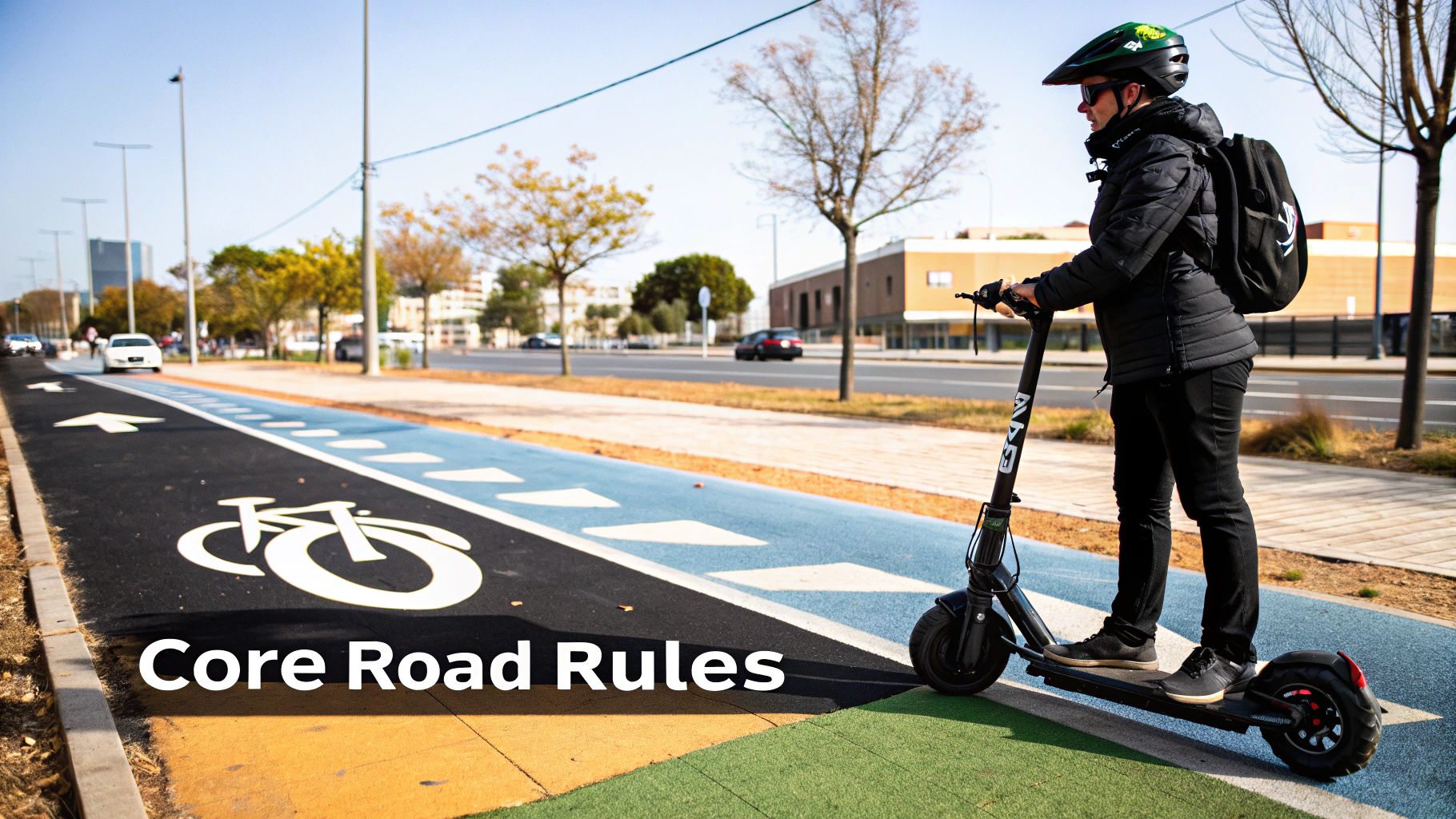
När du förstår varför e-scooterlagar känns som en lapptäcke kan du börja titta på de faktiska regler du kommer att möta dagligen. Tänk på dessa som huvudingredienserna i vilket scooterlagrecept som helst. Oavsett om du är i Sydney eller San Francisco justerar lagstiftare överallt dessa grundläggande regler för att försöka hålla alla säkra.
Det här är inte bara slumpmässiga regler dragna ur luften. Varje regel är direkt kopplad till hur din scooter klassificeras enligt lagen och var den hör hemma på vägen. Låt oss gå igenom de viktigaste du absolut måste känna till.
Var får du köra lagligt?
Det här är den första frågan varje förare funderar på, och med all rätt. Svaret brukar handla om tre platser: trottoaren, cykelbanan eller vägen.
Som en allmän regel är det starkt förbjudet att köra på trottoaren i de flesta stadsområden i USA och Australien. Det är logiskt—trottoarer är till för fotgängare, och att blanda en 15 mph scooter med fotgängare är en katastrof som väntar på att hända.
Din säkraste satsning är nästan alltid ett utpekat cykelfält. De flesta platser som klassificerar elsparkcyklar som cyklar ger dig grönt ljus att använda dem. Om det inte finns något cykelfält måste du troligen köra på själva vägen. När du är där måste du bete dig som vilket annat fordon som helst: håll till höger och följ varje trafikljus och skylt.
Hastighetsgränser: Den universella regeln
Nästan alla platser med lagar för elsparkcyklar har en hastighetsgräns. Det är en av de mest konsekventa reglerna du hittar, även om det exakta talet varierar från stad till stad.
- USA/Australien: Gränser här ligger vanligtvis mellan 15 och 20 mph (24 till 32 km/h). Även om vissa delstater tillåter lite högre hastigheter är 15 mph den vanligaste gränsen, särskilt för uthyrningsscootrar som du ser överallt.
- UK/EU: Du ser nästan alltid en gräns på 15,5 mph (25 km/h). Detta tal valdes för att matcha reglerna för elcyklar och skapa en ganska konsekvent standard över Europa.
Anledningen till dessa begränsningar är enkel: säkerhet. Högre hastigheter ökar inte bara risken för en krasch; de gör också eventuella olyckor mycket allvarligare för dig och alla andra inblandade. För hela historien, kolla in vår guide om hur hastighetsgränsen för elsparkcyklar bestäms.
Körkort, registrering och försäkring
Här kan det bli lite mer komplicerat, och allt hänger tillbaka på den juridiska klassificeringen vi pratade om. Att behöva körkort, registrering eller försäkring är det klassiska tecknet på att din sparkcykel behandlas som ett motorfordon, inte en enkel cykel.
I det ögonblick du hör orden "körkort", "registrering" eller "försäkring" vet du att lagstiftarna ser din sparkcykel mer som en moped än en cykel. Detta är en avgörande skillnad som helt förändrar dina ansvar.
I större delen av USA och Australien, så länge din sparkcykel ligger under en viss effekt- eller hastighetströskel, behöver du vanligtvis inte något av detta. Den behandlas precis som en cykel.
Det är en annan historia i vissa delar av Europa. Tyskland, till exempel, kräver kända för att varje elsparkcykel ska ha en liten försäkringsdekal (Versicherungsplakette) för att vara laglig på vägen. Och i Storbritannien kräver de lagliga uthyrningsförsöken att förarna har minst ett provisoriskt körkort, medan uthyrningsföretaget sköter försäkringssidan.
Tabellen nedan bryter ner dessa vanliga regler för att ge dig en tydligare bild av vad du kan förvänta dig.
Typisk uppdelning av elsparkcykelregler
En detaljerad genomgång av vanliga regler för användning av elsparkcyklar, inklusive typiska begränsningar och krav för förare.
| Regelkategori | Vanligt krav (US/AU-fokus) | Vanligt krav (EU/UK-fokus) | Varför det är viktigt |
|---|---|---|---|
| Var man får köra | Cykelfält eller vägar. Regler för trottoarkörning varierar mycket mellan stad och delstat. | Cykelfält eller vägar. Cykling på trottoaren är nästan alltid förbjudet. | Håller fotgängare säkra och integrerar sparkcyklar i trafikflödet. |
| Hastighetsgräns | 15-20 mph (24-32 km/h), ofta med lägre gränser i trafiktäta zoner. | 15,5 mph (25 km/h) är standardgränsen. | Minskar risken och allvaret vid olyckor för alla. |
| Minimiålder | Typiskt 16, men vissa delstater kan tillåta yngre förare. | Vanligtvis 16 eller 18 år, särskilt för uthyrningssystem. | Säkerställer att förare har en grundläggande mognad och trafikkännedom. |
| Hjälmar | Ofta obligatoriskt endast för förare under 18, men starkt rekommenderat. | Rekommenderas för alla, ofta obligatoriskt för användare av uthyrningssystem. | En enkel utrustning som kan förhindra allvarliga huvudskador. |
| Licensiering | Generellt inte krävt för låg-effekt elsparkcyklar. | Ofta krävt (t.ex. provisoriskt körkort i brittiska försök). | Avgör om föraren är lagligt kvalificerad att köra ett fordon. |
| Försäkring | Sällan krävt för privatägda sparkcyklar. | Ofta obligatoriskt (t.ex. Tysklands krav på klistermärke). | Ger ekonomiskt skydd vid en olycka. |
Denna översikt visar hur mycket reglerna kan variera beroende på var du är, även för samma grundläggande koncept.
Ålders- och hjälmkrav
Slutligen, låt oss prata om åldersgränser och hjälmar. Dessa regler finns enbart för säkerhetens skull.
- Minimiålder: De flesta platser sätter gränsen vid 16 år. Du kan se vissa områden som tillåter förare så unga som 12, men det är mycket ovanligare för körning på allmänna vägar.
- Hjälmar: Hjälmlagar varierar mycket. Vissa amerikanska delstater eller australiska territorier kräver dem bara för förare under 18 år. Andra rekommenderar starkt hjälm för alla. Men låt oss vara ärliga: oavsett lag, är det alltid smart att bära hjälm.
Mycket av förvirringen kring elsparkcykellagar kommer från hur de passar in i befintliga trafikregler. Därför kan förståelse för grundläggande statliga körregler ge dig en stabil grund. I slutändan är dessa regler bara förlängningar av grundläggande trafiksäkerhet. Känn till dem, följ dem, och du kan köra med självförtroende var du än är.
Hur städer tämjer elsparkcyklarnas vilda västern
När delade elsparkcyklar från företag som Lime och Bird först dök upp på gatorna kändes det som en invasion. Ena dagen var trottoarerna fria, och nästa dag var de en hinderbana av övergivna sparkcyklar. Denna "be om förlåtelse, inte tillstånd"-metod tog stadsmyndigheterna helt på sängen och tvingade dem att snabbt hitta sätt att hantera denna nya transportform.
Istället för att bara förbjuda dem helt och hållet valde de flesta städer att reglera. De arbetar för att hitta den perfekta balansen – ett sätt att behålla bekvämligheten och miljövänliga fördelar med elsparkcyklar samtidigt som kaoset hålls i schack. Deras mest kraftfulla verktyg? Tillståndsprogram.
Tänk på ett tillståndsprogram som en licens att verka. Scootertjänster måste gå med på en uppsättning regler för att bedriva verksamhet i staden, vilket gör dem ansvariga för säkerhet och att hålla offentliga platser fria. Det har snabbt blivit den globala standarden för att hantera e-scooter-boomen.
Digitala räcken: Geofencings magi
Ett av de smartaste verktygen i stadens verktygslåda är geofencing. Det är i princip ett osynligt, digitalt staket som använder GPS för att kontrollera var scootrar kan köras och hur snabbt de får gå. Det låter städer skapa olika zoner med olika regler, och scooterns egen mjukvara upprätthåller dem automatiskt.
Till exempel kan en stad markera ett livligt torg i centrum som en "no-ride zone". Om du försöker scoota in i det området kommer din färd smidigt att sakta ner till stopp och låta dig veta att du måste gå igenom.
Städer blir ganska kreativa med denna teknik:
- Zones där körning är förbjuden: Dessa är perfekta för mycket trånga platser som turistattraktioner, gågator eller myndighetskomplex där scootrar skulle vara ett problem.
- Zones för långsam körning: På platser med mycket fotgängartrafik, som en parkstig eller ett universitetsområde, kan scootrar automatiskt begränsas till en säkrare hastighet, vanligtvis runt 8-10 mph.
- Parkering förbjuden-zoner: För att förhindra att scootrar blockerar trottoarer kan geofencing stoppa användare från att avsluta sina turer på fel platser, som precis framför en byggnads huvudingång eller vid en busshållplats.
Denna teknik ger städer exakt kontroll över sina gator utan att behöva en polis på varje hörn. Det är en mycket elegantare lösning på de problem som uppstod när scootrarna först kom.
Tillståndsprogram och geofencing är ett direkt svar på scootertjänsternas ursprungliga disruptiva strategi. Städerna sitter nu vid ratten och sätter reglerna för mikromobilitet i sina samhällen.
Att använda användardata för att bygga bättre gator
Den andra stora pusselbiten i moderna lagar för elscootrar är data. Som en del av sina tillstånd kräver städer att scootertjänster delar anonymiserad reseinformation. För stadsplanerare är dessa data rena guldgruvan.
Den visar dem var resorna startar och slutar, vilka rutter som är mest populära och när folk åker som mest. Det handlar inte om att spåra dig personligen; det handlar om att se de större mönstren för hur människor tar sig fram.
Med denna insikt kan planerare:
- Upptäck saknade länkar: Om en viss gata utan cykelbana är en hotspot för scooterturer är det en tydlig varningssignal att det är dags att bygga en.
- Öka säkerheten: Genom att kartlägga de mest trafikerade elscootergångarna kan städer fokusera säkerhetsuppgraderingar där de gör störst skillnad, som att lägga till skyddade cykelfält eller åtgärda farliga korsningar.
- Finjustera kollektivtrafiken: Data visar ofta hur människor använder sparkcyklar för den där "första-milen, sista-milen"-resan för att koppla till en tågstation eller busshållplats, vilket hjälper städer att bygga ett mer sömlöst transportsystem.
Sedan delade sparkcyklar först dök upp 2017 har denna regleringsmodell spridit sig som en löpeld. År 2025 hade uppskattningsvis 700 städer världen över infört formella regler eller tillståndssystem. Dessa program, mestadels i Nordamerika och Europa, genererar inte bara intäkter utan ger också städerna den data de behöver för att planera för en säkrare, sparkcykelvänlig framtid. Du kan fördjupa dig i siffrorna med dessa marknadsstatistik för elsparkcyklar 2025 på gyroorboard.com.
Genom att omfamna dessa verktyg reagerar städer inte längre bara på problem. De formar aktivt elsparkcykelrevolutionen för att gynna sina samhällen och skapar en bättre balans mellan innovation, ordning och säkerhet för alla.
En titt på lagar för elsparkcyklar över hela världen
Det är en sak att prata om regler i teorin, men att se hur lagar för elsparkcyklar faktiskt fungerar i verkligheten är när allt börjar bli begripligt. Det juridiska landskapet är ett lapptäcke, där varje land – och ibland varje stad – syr sin egen unika ruta.
Låt oss ta en snabb rundtur i några viktiga platser för att se hur olika regeringar hanterar elsparkcykelboomen, från tillåtande lagar till försiktiga försöksperioder.
USA: Ett pussel delstat för delstat
I USA har den federala regeringen till stor del hållit sig utanför och lämnat reglerna till enskilda delstater och till och med städer. Detta har skapat ett förvirrande nät av regler där lagen kan ändras dramatiskt bara genom att korsa en delstatsgräns.
Florida är ett utmärkt exempel på en tillåtande delstat. Sedan 2019 har man behandlat elsparkcyklar nästan exakt som cyklar. Det betyder inget körkort, ingen registrering och ingen försäkring krävs. Du kan köra dem i cykelfält och på gator med hastighetsgränser upp till 30 mph, vilket gör Florida till en ganska bra plats för sparkcykelfantaster.
Men sedan har du andra delstater som är mycket mer restriktiva. Många städer i Kalifornien, till exempel, ger lokala kommuner makten att skapa sina egna regler, vilket leder till olika hastighetsbegränsningar och parkeringslagar från en stad till en annan. För alla som kör i USA är det absolut avgörande att gräva i de lokala förordningarna. Du kan lära dig mer om detta lapptäcke i vår guide till lagar för elsparkcyklar per delstat.
Australien: En försiktig och varierad strategi
Precis som i USA beslutas Australiens lagar för elsparkcyklar på delstats- och territorienivå. Resultatet är en verklig blandning av pilotprogram och permanenta lagar, alla med sina egna regler.
Queensland har till exempel verkligen omfamnat elsparkcyklar och tillåter dem på de flesta gångvägar och cykelvägar med en hastighetsgräns på 25 km/h (15,5 mph). Å andra sidan har New South Wales varit mycket mer försiktigt och driver endast begränsade försök samtidigt som privata elsparkcyklar är förbjudna på allmänna vägar. Detta system med olika regler per delstat innebär att du måste hålla koll på de specifika reglerna i ditt lokala område för att undvika böter.
Den största lärdomen för förare i USA och Australien är att delstatslagar bara är början. Kontrollera alltid specifika stadsordningar, eftersom de ofta har sista ordet om var och hur du kan köra.
Storbritannien: En berättelse om två sparkcyklar
Storbritannien har en av de mest intressanta – och ärligt talat frustrerande – juridiska situationerna. Lagen drar en mycket tydlig gräns mellan privatägda elsparkcyklar och de som du kan hyra via officiella stadsscheman.
Om du äger din egen sparkcykel är nyheterna inte så bra. Det är fortfarande olagligt att köra en privat elsparkcykel på allmänna vägar, trottoarer eller ens i cykelfält. De klassificeras som Personliga Lätta Elektriska Fordon (PLEVs), men eftersom de saknar saker som blinkers eller synliga registreringsskyltar kan de inte registreras eller beskattas. I praktiken betyder detta att de är lagligt begränsade till privat mark.
Uthyrningselsparkcyklar från operatörer som Lime och Voi är dock en annan historia. Dessa ingår i statligt godkända försök som pågår i olika städer. De är helt lagliga att köra på allmänna vägar och i cykelfält, men du behöver ett giltigt körkort och måste hålla dig till en hastighetsgräns på 15,5 mph.
EU: Den tyska regleringsmodellen
I hela Europeiska unionen känns tillvägagångssättet lite mer samordnat, även om reglerna fortfarande varierar från land till land. Tyskland satte verkligen ett prejudikat redan 2019 genom att skapa en specifik juridisk kategori bara för elsparkcyklar: “Elektrokleinstfahrzeuge,” eller "små elektriska fordon."
Denna ram legaliserade dem nationellt, men med tydliga villkor som obligatorisk försäkring (bevisad med en klisterlapp), en maxhastighet på 20 km/h (12,4 mph) och ett strikt förbud mot att köra på trottoarer. Denna mycket strukturerade metod har definitivt påverkat andra EU-länder som vill reglera på ett säkert sätt.
Hur säkerhetsbekymmer formar regler för sparkcyklar
Att känna till trafikreglerna är en sak, men att förstå varför de finns är det som verkligen gör dig till en smartare och säkrare förare. Den ständigt föränderliga världen av lagar för elsparkcyklar sker inte bara av sig själv; det är en direkt reaktion på verkliga säkerhetsdata och, tyvärr, ett växande antal olyckor.
När e-scootrar först fyllde stadsgatorna var de så nya att de flesta platser inte visste hur de skulle klassificera dem, än mindre reglera dem. Men när deras popularitet exploderade ökade också antalet skador. Den trenden tvingade lagstiftare att vakna upp, ta notis och börja skapa regler för att skydda förare och alla andra på gatorna.
Det här handlar inte om att skrämma bort dig från att köra. Det handlar om att visa varför dessa regler finns. De lagar vi ser idag – från obligatoriska hjälmar till strikta förbud på trottoarer – är födda ur sjukhusdata och olycksrapporter.
Data som driver nya lagar
Siffrorna berättar en ganska tydlig historia. När fler började använda e-scootrar började akutmottagningarna också se många fler av dem. Denna trend har varit den främsta drivkraften bakom nya regler över hela världen.
Faktum är att skadedata har fått lagstiftare att bli mycket striktare. Vissa sammanställda rapporter visar att besök på akutmottagningar för e-scooter-skador ökade med ungefär 80% mellan 2022 och 2024. En stor del av dessa skador involverade huvudtrauma, där barn och unga vuxna var de vanligaste patienterna.
Denna tydliga koppling mellan ökande skador och nya regler visar att dessa lagar inte bara är påhittade. De är ett direkt försök att ligga steget före farliga trender och förebygga olyckor innan de händer.
Dessa statistik är precis varför du ser regler ändras. En plötslig ökning av huvudskador i en stad? Du kan vara säker på att en hjälmlag är på väg. En rad kollisioner mellan scootrar och fotgängare? Det är det snabbaste sättet att få scootrar förbjudna på trottoarerna för gott.
Praktiska tips för säkrare körning
Att följa lagen och att vara säker är två sidor av samma mynt. Reglerna är din grund, men defensiv körning är det som räddar dig när saker blir oförutsägbara. Och kom ihåg, säkerhetsföreskrifter anger ofta dina ansvar om något går fel, inklusive de allvarliga juridiska skyldigheterna efter en olycka.
Här är några praktiska tips för att hålla dig säker där ute:
- Var förutsägbar: Överraska inte folk. Använd handsignaler för att visa att du svänger och försök att köra i en rak, stadig linje. Att slingra sig mellan trafiken är en katastrof i vardande.
- Var synlig: Kör som om du vore osynlig för bilister, för hälften av tiden är du det. Bär klara färger under dagen och använd alltid dina lampor på natten, även om det inte är lagkrav. Din scooters små inbyggda lampor räcker ofta inte.
- Bemästra defensiv körning: Var alltid uppmärksam på vad som händer framför dig. Håll utkik efter öppnande bildörrar, potthål, fotgängare som kliver av trottoaren eller bilar som backar ut från uppfarter. Ju mer du förutser vad som kan hända, desto mer tid har du att reagera.
- Förstå vägfaror: När du delar vägen måste du förstå dess rytm. Håll dig till cykelbanor när du kan och var extra försiktig vid korsningar—det är där de flesta olyckor sker.
Har du frågor om e-scooter-lagar? Vi har svaren.
Låt oss vara ärliga, att lista ut reglerna för elscootrar kan kännas som en labyrint. För att klara upp förvirringen har jag samlat några av de vanligaste frågorna från förare. Här är de snabba, raka svaren du behöver för att köra smart och hålla dig på rätt sida av lagen.
Behöver jag verkligen körkort för att köra elscooter?
Det är en av de där "det beror på"-situationerna, och var du bor är avgörande. Många platser, inklusive många amerikanska delstater och australiska territorier, kräver inte körkort så länge din scooter håller sig under en viss hastighets- och effektgräns. De behandlar den ofta som en cykel.
Men sedan har du platser som Storbritannien, där du absolut behöver ett giltigt körkort, även för en av deras lagliga hyr-scootrar. Det är ett perfekt exempel på hur mycket reglerna kan variera. En delstat som Florida kanske inte kräver körkort, medan en snabb flygresa till London placerar dig i en helt annan juridisk värld. Slutsatsen: kolla alltid, alltid dina lokala regler först.
Kan man verkligen få rattfylleri på en elscooter?
Ja, 100%Låt inte den lilla storleken lura dig. Nästan överallt där elscootrar är lagliga på allmänna vägar klassas de som fordon enligt trafiklagen.
Det betyder att köra under påverkan är helt förbjudet. Du kan drabbas av samma stränga straff som en rattfyllerist i bil—vi pratar stora böter, indraget körkort och mycket ånger. Det är helt enkelt inte värt risken för din säkerhet eller ditt register.
Många tror att rattfylleri bara gäller bilar. Det är ett farligt misstag. De flesta trafiklagar täcker alla fordon på allmän väg, och det inkluderar definitivt din elscooter.
Är reglerna olika för min egen scooter jämfört med en hyr-scooter?
Det här är en riktigt viktig punkt, och att göra fel kan bli en kostsam miss, särskilt på platser med strikta försöksprogram som vissa australiska delstater eller Storbritannien.
Hyr-scootrar från företag som Bird eller Lime är vanligtvis en del av officiella, statligt sanktionerade program. De är byggda för att uppfylla specifika säkerhetsstandarder och har den nödvändiga försäkringen, vilket gör dem lagliga att använda.
Din privata scooter uppfyller dock sannolikt inte samma strikta krav. Så även om du ser hyr-scootrar överallt betyder det inte automatiskt att din personliga åktur är laglig på allmänna vägar. Reglerna för hyr-scootrar och privata scootrar kan skilja sig helt åt.
Redo att hitta en åktur som passar din stads regler? Kolla in vårt sortiment av högpresterande elscootrar hos Punk Ride LLC. Vi hjälper dig att ta dig ut på gatorna med självförtroende. Se vad vi har på https://www.punkride.com.
Dela:
Hur man justerar styrets höjd för en perfekt cykeltur
Byta en sparkcykeldäck utan huvudvärk