


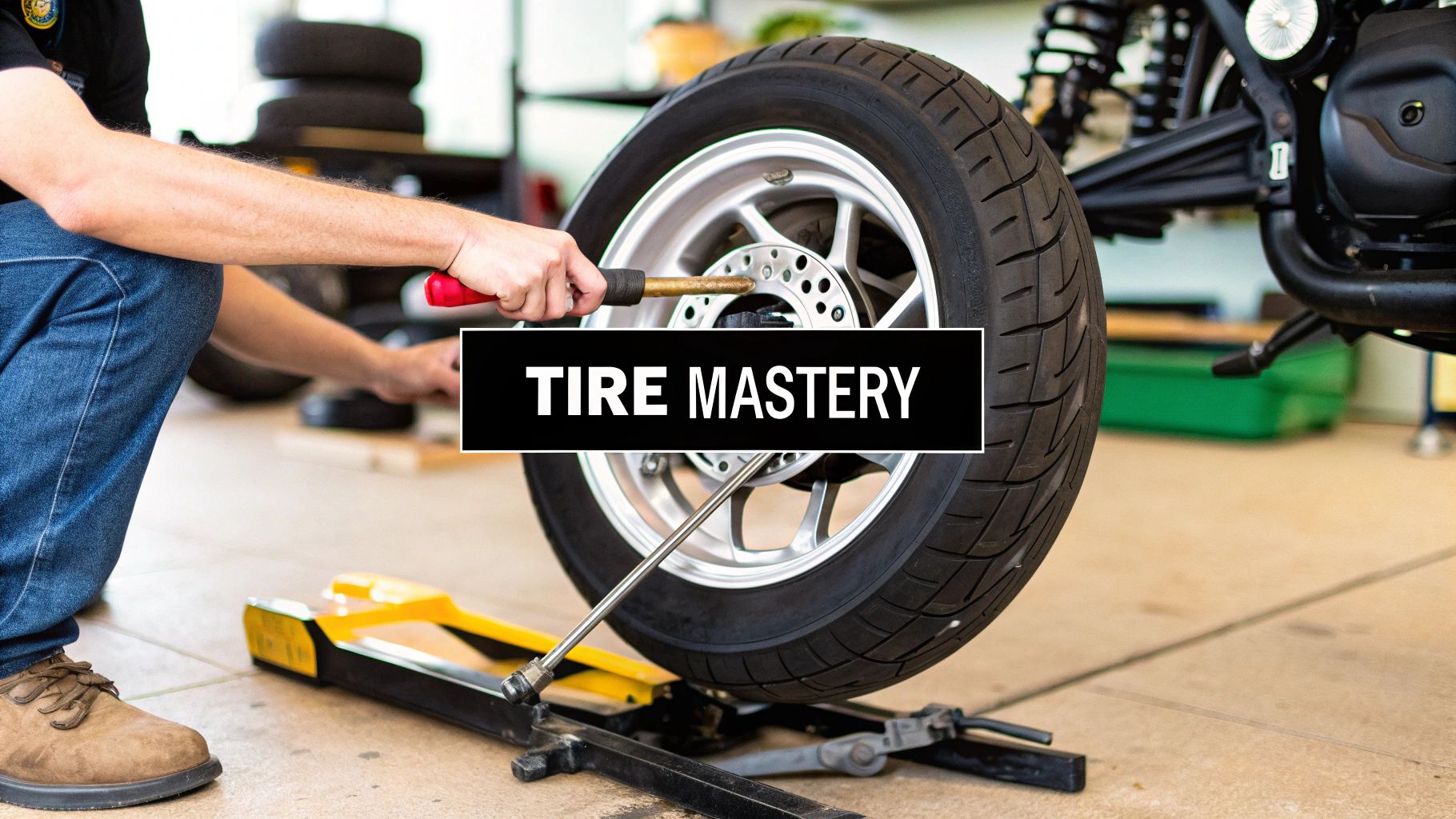
Varem või hiljem puutub iga elektriskuutri juht kokku tühja rehvi probleemiga. See on praktiliselt sissepääsrituaal. Aga usu mind, see ei pea olema päevamõrvar. Valutu paranduse saladus ei ole jõu kasutamine, vaid ettevalmistus. Tööriistade valmisolek, teadmine, kas sul on sisekummiga või sisekummita rehv, ja mõned kiired ohutuskontrollid teevad kogu vahe.
Sinu praktiline juhend skuutri rehvi vahetamiseks
Enne kui hakkad rattaga võitlema, võib vaid mõne minuti organiseerimine säästa suurt pettumust. Kõik seisneb õige varustuse ja kindla tegevuskava olemasolus.
Esiteks pead välja selgitama, millist tüüpi rehv su skuutril on. Enamik USA ja Austraalia tänavatel nähaolevaid elektriskuutreid kasutab kahte peamist tüüpi: klassikaline sisekummiga rehv või kaasaegsem sisekummita versioon.
Sisekummiga vs sisekummita rehvid
Sisekummiga rehvid on nagu jalgrattal – neil on eraldi sisekumm, mis tegelikult õhku hoiab. Neid leidub paljudel algtaseme ja vanematel skuutritel. Kui saad tühjaks, parandad tavaliselt ainult sisekummi või vahetad selle välja, mitte kogu rehvi.
Sisekummita rehvid, nagu nimigi ütleb, loovad õhukindla tihendi otse velje vastu. Need on läbitorkamise suhtes vastupidavamad ja neid saab sageli parandada lihtsa tihendikomplektiga, mõnikord isegi ratast skuutrist eemaldamata.
Pro näpunäide: Ei ole kindel, mis sul on? Vaata ventiili, kuhu õhku pumpad. Kui näed lukustusmutrit, mis on keeratud vastu velge, on see peaaegu kindlasti sisekummita rehv. Kui ventiil on lihtsalt sile kumm, mis tuleb rehvi seest, on sul sisekummiga seadistus.
Erinevuse teadmine on äärmiselt oluline. Tööriistad, mida vajad, ja sammud, mida teed, on täiesti erinevad. Üht tüüpi parandamine nagu teist on kiire tee pettumusteni.
Et aidata sul valmistuda, siin on kiire ülevaade mõlema rehvitüübi varustusest ja omadustest.
Olulised varustuse ja rehvitüüpide ülevaade
| Ese/omadus | Rehvid sisekummiga (traditsioonilised) | Rehvid ilma sisekummita (kaasaegsed) |
|---|---|---|
| Peamised tööriistad | Rehvivardad, võtmekomplekt, õhupump. | Võtmekomplekt, rehvivardad (valikuline), õhupump, rehvitihendite komplekt. |
| Parandamise fookus | Sisekummi parandamine või vahetamine. | Rehvi enda läbitorke parandamine. |
| Tavaline rike | Sisekummi pigistamisega seotud tühjad või läbitorked. | Läbitorked teravatest esemetest; serva tihendi lekked. |
| Raskusaste | Uue sisekummi pigistamise vältimine võib olla keeruline. | Tihendid on lihtsad, kuid serva tihendi murdmine võib olla keeruline. |
| Parim kasutusala | Eelarvesõbralikud mudelid, lihtsad seadistused. | Kõrgem jõudlus, parem vastupidavus läbitorkamisele. |
See tabel peaks andma sulle selge ettekujutuse, millega sa hakkama pead saama, enne kui käed määrduvad.
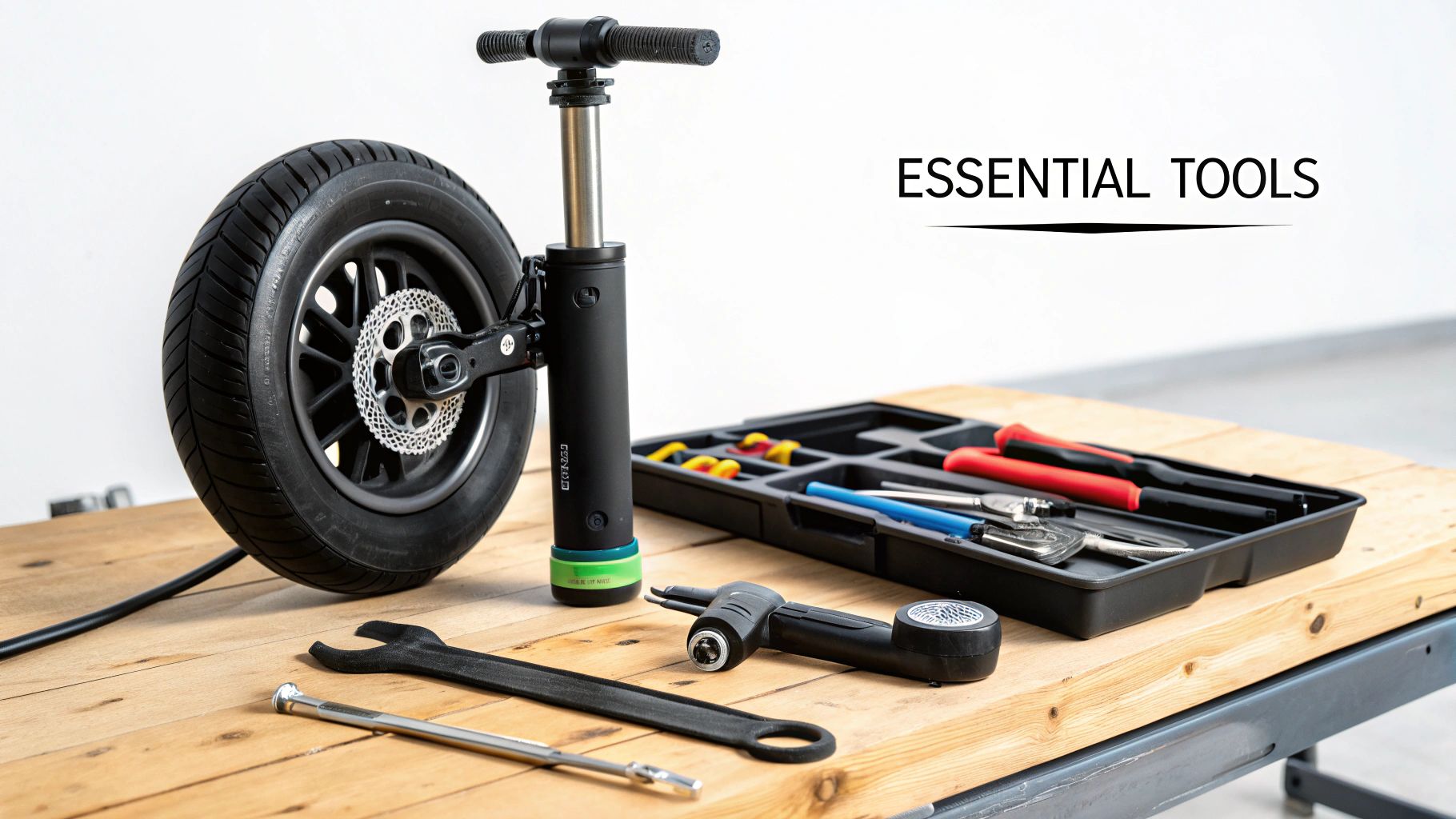
Sinu hädavajalik tööriistakomplekt
Tööriistade valmisolek enne töö alustamist on kohustuslik. Pole midagi hullemat kui poole töö peal avastada, et sul puudub oluline mutrivõti. Siin on põhiliste tööriistade nimekiri, mida vajad mõlema töö jaoks:
- Mutrivõtmete komplekt või Allen-võtmed: Neid vajad teljemutrite eemaldamiseks ja ratta eemaldamiseks. Suurus sõltub sinu konkreetse tõukeratta mudelist.
- Rehvilabidad: Need on hädavajalikud rehvi veljelt lahti kangutamiseks. Ära isegi mõtle kruvikeerajate kasutamisele—sa lõhud lihtsalt velge või pigistad oma uue sisekummi katki.
- Õhupump rõhumõõtjaga: Rehvi õhutamiseks tootja soovitatud õige PSI-ni. Arvamine pole hea mõte.
- Seebivee lahus: Väike tilk nõudepesuvahendit pihustuspudelis veega on parim nipp. See toimib määrdeainena ja teeb rehvi veljele panemise ja eemaldamise palju lihtsamaks.
Tasub märkida, et rehvitehnoloogia areneb pidevalt, mis on meile hea uudis. Liikumine tubeless-rehvide ja paremate pneumaatiliste segude suunas tähendab üldiselt vähem torkeid. Mõned neist uuematest rehvidest on palju vastupidavamad pigistustorketele ja kestavad kauem kui vanamoodsad sisekummiga tüübid. Tegelikult väidavad mõned tootjad, et nende parendatud materjalid võivad normaalses kasutuses kulumist vähendada 10–25%. Sa võid uurida neid kaksrataste rehvituru trende, et näha, kuhu asjad liiguvad.
Lõppkokkuvõttes on pool võitu teadmine, millega sa tegeled. Õigete tööriistade ja selge arusaamaga oma rehvitüübist oled juba edukale remondile lähemal.
Ratta ja rehvi võitlus tõukerattalt eemaldamisel
Nüüd algab tõeline töö—ja koht, kus enamik loobub. Aga ma luban, et ratta ja vana rehvi eemaldamine on rohkem tehnika kui jõu küsimus. Jagame selle kaheks osaks: ratta eemaldamine tõukerattalt ja rehvi eemaldamine rattalt.
Esiteks, vabastame selle ratta. Paljudel tõukeratastel, eriti tagumise rummumootoriga, on üks lisasamm, mis inimestel tihti segadust tekitab: mootori kaabel.
Ratta eemaldamine raamilt
Enne kui sa üldse mõtled mutrivõtme panemisele nende teljemutritele, pead mootori lahti ühendama. Leia kaabel, mis jookseb ratta keskosast ja mööda tõukeratta raami. Sellel on kuskil pistik, sageli peidetud plastkatte või kuumuskahaneva toru alla.
- Leia ja lahtiühenda mootori kaabel: Jälgi seda paksu musta kaablit ratta rummust. Kui leiad pistiku, väänle seda õrnalt lahti. Mida iganes teed, ära tõmba seda jõuga. Väike professionaalne nipp? Tee enne lahtiühendamist telefoniga kiire foto. See aitab hiljem meeles pidada, kuidas kõik tagasi kokku panna.
- Tegele teljemutritega: Nüüd on aeg põhiürituseks. Võta mutrivõti ja valmista end ette, sest need teljemutrid on tihti tehases väga tugevalt kinni keeratud. Kui tavaline mutrivõti ei aita, vajad rohkem jõudu. Pikem mutrivõti või padrunvõti murdvardaga annab sulle selle lisajõu. Pea meeles klassikalist reeglit: paremale kinni, vasakule lahti.
Kui mutrid on eemaldatud, vaata hoolikalt, kas leidub pesureid või vaheosasid. Need on kriitilise tähtsusega. Need tuleb panna tagasi täpselt samas järjekorras ja samas suunas. Parim viis jälgimiseks on asetada need rätikule täpses järjekorras, nagu need eemaldati. Kui kõik on selge, peaks ratas libisema tõrgeteta tõukeratta raamilt välja.
Kummiserva murdmine ja vana rehvi lahtiharutamine
Okei, ratas on maha võetud. Järgmine vastane on rehvi ise. See kangekaelne sisemine serv, mis tihendab velje vastu, on kummiserv. Pärast kuid või aastaid kasutamist, rõhku, mustust ja tolmu võib tunduda, et see on veljega kokku keevitatud.
Enne alustamist olgu selge: ära kasuta rehvi lahtiharutamiseks kruvikeerajaid ega muid teravaid metalltööriistu. Sa kahjustad kindlasti oma velge või veel hullem, torkad kohe uue sisekummi paigaldamisel läbi. Kasutage ainult sobivaid plast- või nailonrehvikange.
Selleks, et kummiserv lahti hüppaks, pead esmalt kogu õhu välja laskma. Tavalise sisekummiga rehvi puhul vajuta lihtsalt ventiili varre keskel olevat väikest tihvti, kuni see enam ei hissa. Kui sul on tubeless-süsteem, võib õhu kiireks ja täielikuks väljalaskmiseks vaja minna ventiili tuuma eemaldamise tööriista.
Nüüd aseta ratas pehmele pinnale, näiteks papp- või vana rätiku peale. Aseta jalad (puhaste jalanõudega!) rehvi külgseinale ja kasuta oma kehakaalu, surudes alla ning liikudes ümber kogu ringi. Võib-olla pead päris jõudu rakendama. Ootad rahuldustpakkuvat praginat — see on heli, kui kummiserv vabaneb.
Rehvikangide kasutamine nagu professionaal
Kui kummiserv on mõlemalt poolt lahti murdunud, on aeg kasutada rehvikange. See osa nõuab peent tehnikat.
- Alusta, surudes ühe kangi lusikaotsa rehvi serva ja velje vahele.
- Kinnita sama kanga teine ots veljevarda külge või hoia seda kindlalt rummu vastu. See on sinu ankur.
- Võta oma teine kang ja torka see vaid paar tolli kaugusele esimesest. Kasuta seda, et kangutada väike osa rehvirõngast üles ja üle velje serva.
- Kui üks osa on alustatud, libista teine kang velje serva mööda, peaaegu nagu lukk, tõmmates rohkem kummirõngast üle. Siin tuleb appi see seebivesi, mille sa varem segasid—natuke määrdeainet teeb tohutu vahe.
Kui üks rehvi külg on täielikult veljelt maha võetud, saad käe sisse pista ja vana sisekummi välja tõmmata (kui su tõukerattal on selline). Seejärel tee täpselt sama teise rehvi poolega ja oledki valmis. Vana rehv on maha võetud ja sa oled võitnud.
Uue rehvi paigaldamine: sisekummiga vs läbivooluta taktikad
Nüüd, kui vana rehv on maha võetud ja sa vaatad paljast velge, on aeg põhinäidendiks: uue rehvi paigaldamine. Siin läheb tee lahku, sõltuvalt sellest, millist rehvi sa kasutad.
Sisekummiga rehvi paigaldamisel on peamine vältida hirmuäratavat "kokkusurumisrebenemist"—seda ärritavat hetke, kui rehvlangega uue sisekummi torkad. Läbivooluta rehvi puhul on mäng hoopis teine. Sinu ainus eesmärk on luua rehvirõnga ja velje vahel täiuslik, õhutihe tihend. Alustame.
Sisekummiga rehvi paigaldamise kunst
Kui tegeled sisekummiga, säästab natuke ettevalmistust hiljem palju vaeva. Parim nõuanne, mida saan anda, on see: täida uus sisekumm osaliselt õhuga enne, kui midagi muud teed. Mõned pumbatõmbed, et anda sellele kuju, on kõik, mida vajad. See vähendab oluliselt võimalust, et kumm keerduks või jääks rehvirõnga alla kinni.
- Kontrolli kõike kiiresti üle. Tõmba käsi uue rehvi siseküljel, et tunda teravaid osi või tehase vigu. Nüüd, kui sisekumm on veidi täis pumbatud, torka see rehvi sisse.
- Alusta ventiilist. Leia velje auk ja torka sisekumm ventiil läbi selle. See on sinu ankrupunkt. Siit saad hakata rehvi ühte külge veljele panema. See esimene külg peaks lihtsalt kätega peale hüppama.
- Aeg keeruliseks osaks. Teise kummirõnga serva üle saamine on koht, kus võitlus tõeliselt algab. Kasuta käsi nii palju kui võimalik, surudes kummirõngast alla velje keskkanalisse, kui liigud ümber. Kui surumine muutub liiga pingeliseks, on aeg kasutada rehvlange. Oluline on siin juhtida kummirõngast üle serva, mitte lihtsalt jõuga kangutada.
See on tavaline koht, kus kinni jääda. Kui sul on tõesti raske, siis meie üksikasjalik juhend, kuidas tõukeratta rehvi parandada, sisaldab lisatõrkeotsingu nippe, mis võivad suurt vahet teha.
Pro nõuanne: Sinu parim sõber siin on seebivesi. Veidi pihustatud rehvi kummile toimib suurepärase määrdeainena, muutes kummil libisemise palju lihtsamaks. See trikk võib olla vahe sujuva töö ja kahjustatud kummi vahel.
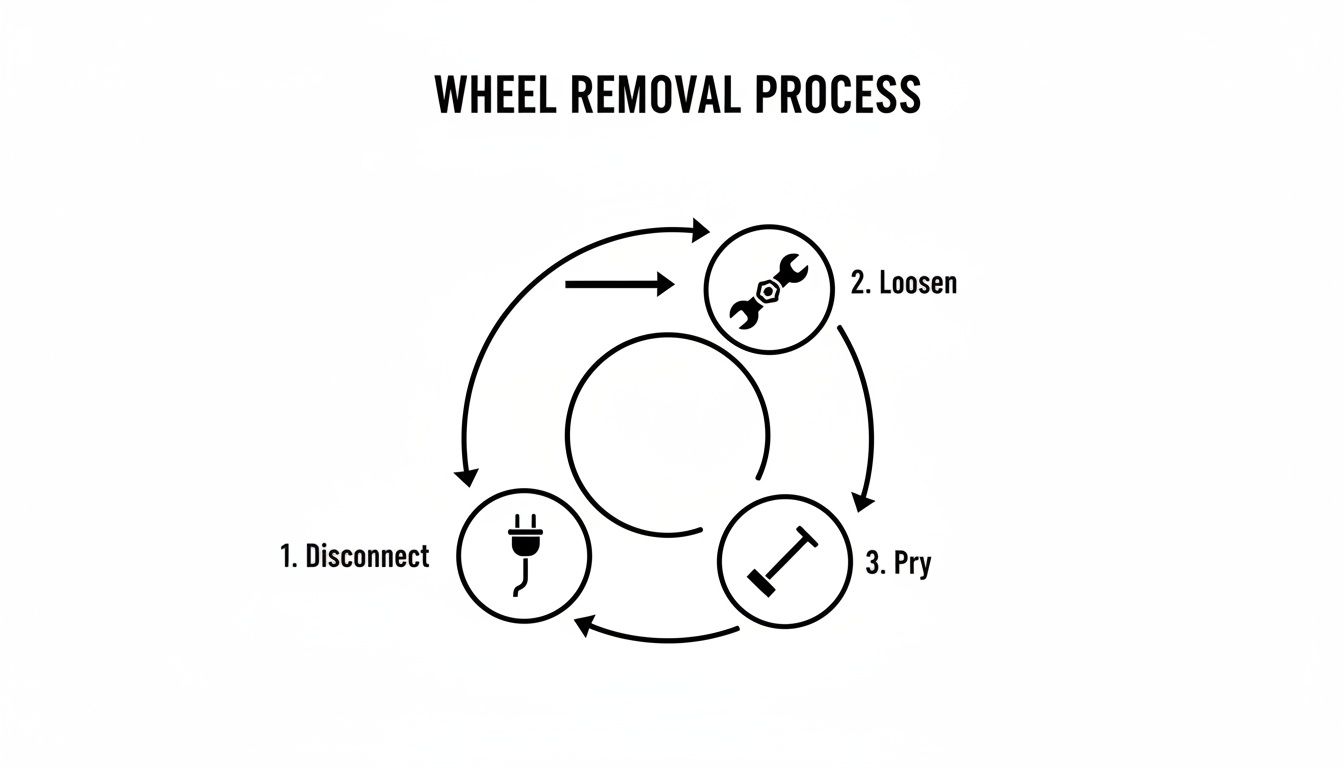
See diagramm jagab just lõpetatud ratta eemaldamise kolmeks põhitegevuseks. Hea rehvi vahetus algab alati metoodilise lahtivõtmisega – lahti ühendamine, õige riistvara lõdvendamine ja ratta hoolikas vabastamine.
Tubeless-rehvi paigaldamise valdamine
Toruta rehvi paigaldamine ei ole nii palju peenhäälestus, vaid täiusliku, lekkekindla tihendi loomine. Sul ei ole sisekummiga muret, kuid iga tolmukübeke või vana mustus võib põhjustada tüütult aeglast lekkimist.
Esiteks, puhasta see velg korralikult. Pühkige kogu kanal, kus rehvi kumm istub. Eemalda vana tihendusaine, mustus või kummitükid. Sul peab olema laitmatu pind tõeliselt õhukindla ühenduse jaoks.
Järgmisena võta uuesti seebivesi ja määri heldelt uue rehvi kummid. Nagu toruga rehvide puhul, teeb see elu palju lihtsamaks. Tööta üks rehvi külg käsitsi veljele.
Tegelik väljakutse on "kummi paigale istutamine". Selleks on vaja võimsat, järsku õhuhoogu, mis sunnib rehvikumme klõpsatama velje seinte külge. Kuigi hea põrandapump võib mõnikord töö ära teha, on õhukompressor sinu kõige usaldusväärsem tööriist selleks.
- Maksimaalse õhuvoolu saamiseks eemalda ajutiselt ventiili südamik ventiili varrest.
- Puhu sellele tugeva õhuhooga kompressorist.
- Kuulad kahte valju, selget 'pauk' või 'ping' heli. See on edu heli – iga kumm lukustub oma kohale.
Kui kuuled neid pauke, saad ventiili südamiku uuesti paigaldada ja rehvi soovitatud rõhuni täis pumbata. Sa oled just lukustanud oma tõukeratta jaoks turvalise ja kindla rehvi.
Tavaliste paigaldusprobleemide tõrkeotsing
Isegi parima tehnikaga võib mõnikord midagi valesti minna. Võid võidelda kummide paigale saamisega või leida lekke pärast seda, kui arvasid, et oled lõpetanud. Siin on kiire ülevaade levinumatest takistustest, mida näen, ja kuidas neid parandada.
| Tavaline probleem | Tõenäoline põhjus | Kuidas seda parandada |
|---|---|---|
| Rehvi kumm ei istu paigale (toruta) | Õhuvool või määrimine ei ole piisav. | Eemalda ventiili südamik maksimaalse õhuvoolu jaoks. Kasuta rohkem seebivett kummide ja velje peal. Õhukompressor on väga soovitatav. |
| Sisekumm sai pigistatud (toruga) | Rehvikangide liigne jõu kasutamine või sisekummi keeramine. | Tühjenda, eemalda rehv ühelt küljelt ja paiguta sisekumm ümber. Sisekummi osaline täitmine enne paigaldust aitab seda vältida. |
| Aeglane lekkimine pärast paigaldust | Veljel on mustust, ventiili vars on kahjustatud või halb serva tihendus (tubeless). | Tühjenda ja kontrolli velge puhtuse suhtes. Veendu, et ventiili vars on kindlalt paigas ja kahjustusteta. Vajadusel paiguta rehv uuesti. |
| Rehv tundub kõikuva või ebaühtlane | Servad ei istu veljel ühtlaselt kogu ulatuses. | Tühjenda rehv täielikult. Määri servad uuesti ja täida õhku, jälgides, et servad istuksid mõlemal küljel ühtlaselt. |
Enamik paigaldusprobleeme tuleneb ettevalmistusest ja kannatlikkusest. Töö kiirustamine on kiireim viis vea tegemiseks, nii et võta aega, kasuta palju määrdeainet ja kontrolli oma tööd hoolikalt.
Kõige kokkupanek: kokkupanek ja ohutuskontrollid
Nüüd on kõige raskem osa seljataga. Sa said uue rehvi veljele peale ja nüüd on aeg lõpuspurti teha. Aga ära siin rahulikuks jää — tõukeratta korrektne kokkupanek on sama oluline kui rehvi peale panek.
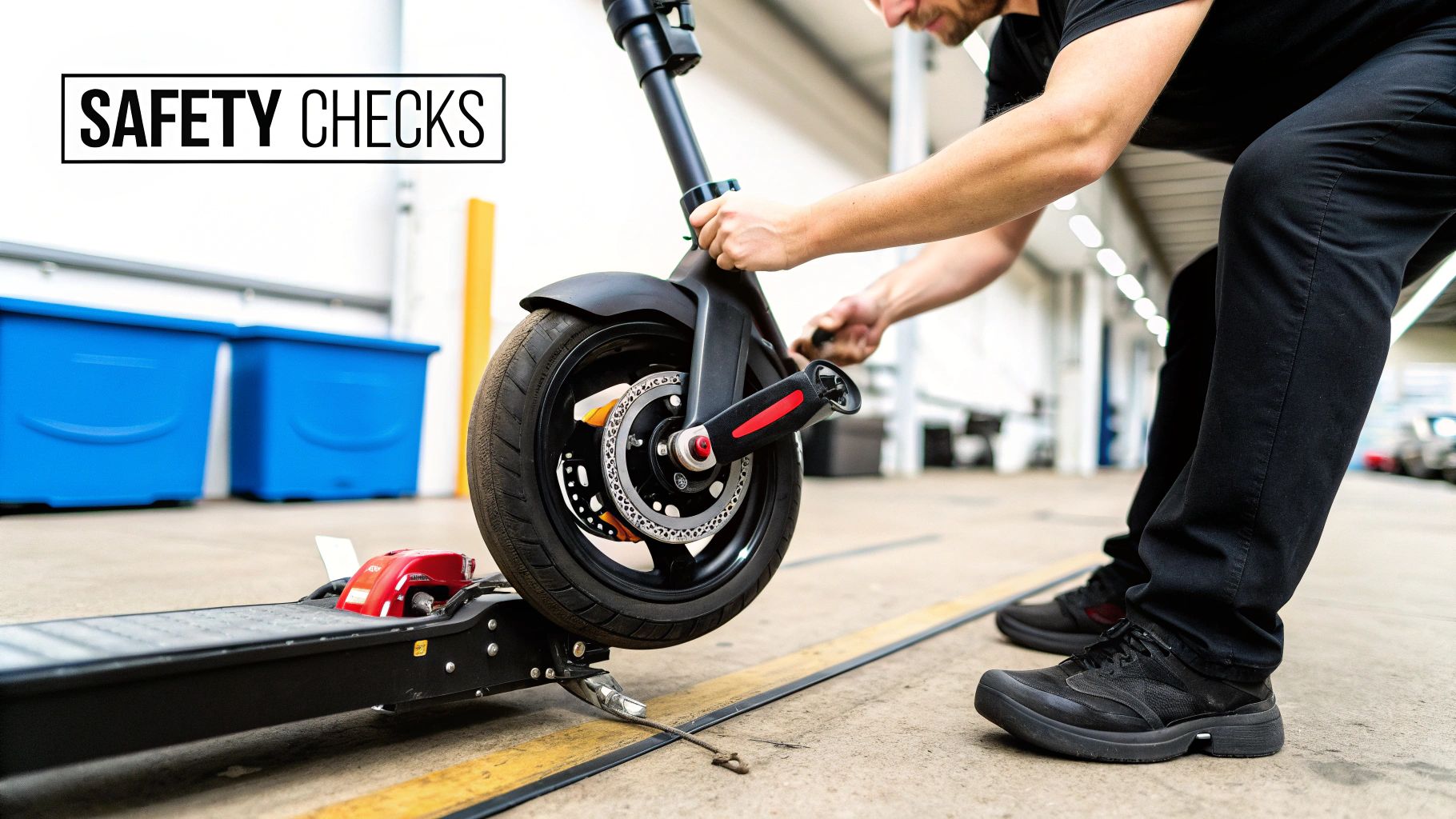
See viimane etapp on täielikult selleks, et tagada su tõukeratas on 100% sõidukõlbulik. Lahtine mutter või valesti joondatud pidur võib kiiresti muuta su edukast remondist väga halva päeva. Teeme selle õigesti.
Ratta ja pidurite joondamine
Alusta ratta õrnast juhendamisest tagasi tõukeratta raamile. Mäletad neid pesasid ja vahekettaid, mille hoolikalt kõrvale panid? Nüüd on nende aeg. Veendu, et need lähevad teljele tagasi täpselt samas järjekorras, nagu need eemaldati.
Kui telg on täielikult dropout’idesse lükatud, keera mõlemalt poolt teljemutrid käsitsi kinni. See hoiab ratast paigal, kui kontrollid joondust. Enne kui võtad mutrivõtme, anna rattale korralik pööris. Otsid kahte asja:
- Kas see on kõikuva? Ratas peaks pöörlema sirgelt ja ühtlaselt. Kui näed kõikumist, pole see raamile õigesti paigaldatud.
- Kas pidurid hõõruvad? Kuula, kas piduriklotsidest kostub kriipimist või sihistamist.
Kui kuuled pidurite hõõrumist, lõdvestage teljemutte veidi ja lükkake ratast kergelt külgsuunas, kuni see pöörleb ilma igasuguse mürata. See väike reguleerimine muudab su sõidukvaliteedi oluliselt paremaks ja säästab piduriklotside liiga kiirest kulumisest.
Kui ratas juba vabalt pöörleb ja sirgelt istub, on aeg see kinni keerata. Ära seda vahele jäta. Lahtine teljemutter on katastroofi retsept — see võib põhjustada ratta nihkumise või isegi täieliku lahtilibisemise sõidu ajal.
Miks õige pöördemoment on nii oluline
Parim variant on kasutada jõumomendi võtme, et mutrid tootja spetsifikatsioonide järgi kinni keerata. Aga olgem ausad, kõigil seda pole. Kui kasutad tavalist mutrivõtit, püüa keerata "kindlalt ja veel veerand pööret". Keera mutrid kindlalt kinni, kuni need on pingul, seejärel anna neile veel üks kindel veerandpööre. Need peaksid tunduma kindlad, kuid sa ei tohiks pingutada nii palju, et keermed kahjustuksid.
Kui sa lahti ühendasid mootori kaabli, on nüüd aeg see tagasi ühendada. Otsi pistiku pealt väikseid nooli või tihvte, joonda need ja suru kokku, kuni kuuled või tunned kindlat klõpsu. Veendu, et kaabel on turvaliselt peidetud, kus see ei saa kuskile kinni jääda.
Lõplik täitmine ja pöörlemistest
Kui ratas on raamile kindlalt kinnitatud, on aeg õhurõhk õigeks sättida. Vaata oma uue rehvi külgseinalt soovitatud PSI (naela ruuttolli kohta). Kasuta usaldusväärse rõhumõõtjaga pumpa ja täida rehvi õige rõhuni.
Ausalt öeldes on õige rehvirõhk kõige olulisem rehvi hoolduse osa. See mõjutab sinu tõukeratta juhitavust, sõiduulatust ja vastupidavust torketele rohkem kui miski muu.
Nüüd pööra ratast veel kord. See peaks pöörlema sujuvalt ja vaikselt mõne sekundi jooksul. Kui kuuled uusi klikke või tunned takistust, peatu ja selgita välja põhjus enne edasi liikumist.
Viimane eelsõidu kontroll
Oled nii lähedal! Enne kui peale hüppad ja sõitu alustad, tee veel üks kiire ohutuskontroll. See pole lihtsalt töö lõpetamine; see on vastutustundlik sõitja olemine. Sügavamaks uurimiseks on meie täielik juhend elektriliste tõukerataste ohutusnõuannetest sinu jaoks olemas.
Sinu kiire eelsõidu kontrollnimekiri:
- Kontrolli pidureid: Suru piduripuldid kokku. Kas need tunduvad kindlad ja reageerivad? Rulli tõukerattaga ettepoole ja vajuta pidureid, et veenduda, et rattad tõesti peatavad.
- Vaata üle: Tee oma tööle viimane pilk. Kas teljemutrid on kinni keeratud? Kas mootori kaabel on kindlalt paigas ja teelt eemal? Kas ventiili varre asend on sirge?
- Kuula tähelepanelikult: Rulli tõukerattaga veidi edasi-tagasi. Kuula, kas kostub kummalisi klikke, kriipse või helisid, mida enne polnud.
Kui kõik testid on läbitud, oled valmis lühikeseks ja aeglaseks proovisõiduks turvalises kohas. Saa tunnetus sellest, testi pidureid veel kord madalal kiirusel ja kuula, kas esineb mingeid probleeme. Kui kõik tundub kindel ja sujuv, siis õnnitleme — sa just vahetasid oma tõukeratta rehvi ise.
Pro-nõuanded rehvi vastupidavuse ja vähemate torkete jaoks
Kuigi rehvi vahetamise oskus on suurepärane, on tõeline võit see, kui sul üldse ei tule seda teha. Mõned minutid lihtsat ja ennetavat hooldust võivad säästa sind tundidepikkusest määrdunud kätest ja frustratsioonist. Usu mind, see on seda väärt, et hoida sind teel ja garaažist eemal.
Suurim asi, mida saad oma rehvide heaks teha, on hoida neid õiges rõhus. Ma ei saa seda piisavalt rõhutada. Õigesti täis pumbatud rehvid juhitakse paremini, pikendavad sõiduulatust ja on palju vastupidavamad torketele. Alarõhk on number üks põhjus hirmuäratava "kokkusurumisega tühjenemise" tekkeks, kus sisekumm pigistatakse velje ja millegi vahel, millega sa just kokku põrkasid.
Õigesti täis pumbatud rehv on su parim kaitse tühjenemiste vastu. See hoiab paremini kuju, veereb tõhusamalt ja kaitseb sisekummi ning velge kahjustuste eest. Nädalane rõhu kontrolli tegemine võtab vähem kui kaks minutit ja on parim investeering, mida saad oma tõukeratta töökindlusse teha.
Rehvi hermeetiku kasutamine on su salarelv
Veel üks suurepärane ennetusmeetod on rehvi hermeetiku kasutamine. See kleepuv aine elab su rehvi sees ja sulgeb kohe väiksed augud, kui need tekivad – sageli enne, kui sa ise tead, et need olemas on.
- Toruta rehvide puhul: Hermeetik on mõistlik kasutada. Enamik toruta süsteeme tuleb tehases koos hermeetikuga ja see on hädavajalik õhukindla tihendi hoidmiseks. Pead seda lihtsalt iga kuue kuu kuni aasta tagant täiendama, kuna see aeglaselt kuivab.
- Toruga rehvide puhul: Saad ka otse sisekummidesse hermeetikku süstida. See toimib täpselt samamoodi, sulgedes väiksed augud okaste või klaasi tõttu enne, kui need su sõitu rikuvad. See on odav ja lihtne täiendus, mis pakub suurt meelerahu.
Tee regulaarsetest kontrollidest harjumus
Harjuta oma rehve enne sõitu kiiresti üle vaatama. Lihtne visuaalne kontroll aitab sul probleeme märgata enne, kui need sind hätta jätavad. Vaata lihtsalt kiiresti rehvimustrit ja külgi. Otsi sisse imbunud klaasi, väikseid naelu või kummalisi lõikeid või muhke.
Väikese prahi varajane märkaminen tähendab, et saad selle välja tõmmata ja olukorda jälgida. Kui jätta see sisse, võib see sügavamale tungida ja hiljem põhjustada ootamatu tühjaks minemise. See kiire kontroll aitab sul ka jälgida rehvimustrit, nii et tead, millal on aeg vahetuseks, enne kui sinu ohutus ja jõudlus kannatavad. Nende hooldusprintsiipide mõistmine on võtmetähtsusega. Kuigi see on kirjutatud autode jaoks, pakub see juhend suurepäraseid teadmisi regulaarsete kontrollide väärtusest. Avasta põhjalik auto hooldusnimekiri, mis sisaldab olulisi rehvi hoolduse nõuandeid.
Kaubanduslike operaatorite jaoks ei ole see lihtsalt mugavuse küsimus – see puudutab ka kasumlikkust. Seisakuaeg ja tõukeratta rehvi osade vahetamise kulud kogunevad. Näiteks võivad kulleriteenuse sõidukipargid rehvide vahetust vajada 30–50% sagedamini pideva kasutuse tõttu. 5000 tõukerattaga sõidukipargi puhul võib see tähendada aastaseid rehvi vahetamise kulusid vahemikus USD 112,500–187,500. See teeb ennetavast hooldusest mitte ainult nutika, vaid ka rahalise vajaduse.
Täiendavate üksikasjalike nõuannete saamiseks rehvide ideaalse rõhu hoidmiseks vaata meie juhendit aadressil https://www.punkride.com/blogs/news-advice/inflating-bike-tires—põhimõtted on peaaegu identsed ja väga kasulikud.
Kas sul on küsimusi oma tõukeratta rehvide kohta? Meil on vastused.
Oleme aastaid vahetanud tõukeratta rehve oma töökojas ja usu mind, oleme kõike näinud. Alates salapärastest aeglastest lekketest kuni sõjapiirkonnana näivate rehvideni. Aja jooksul oleme märganud, et samad küsimused tulevad ikka ja jälle üles. Nii et lähme otse asja juurde ja vastame mõnele kõige sagedasemale küsimusele, mida kuuleme sõitjatelt nagu sina.
Kas ma võin lihtsalt panna tubeless-rehvi oma tubed-veljele?
See on kindlasti kõige sagedamini esitatav küsimus. Lühike vastus? See on halb mõte.
Tubeless-süsteemi kasutamiseks peab su tõukeratta velg olema spetsiaalselt selleks disainitud. Tubeless-velgedel on eriline kuju, sees on väikesed küngad või sooned, mis lukustavad rehvi serva kindlalt paika, luues kriitilise õhutiheda tihendi. Tavaline tubed-velg seda ei oma.
Kui proovida tubeless-rehvi sundida tavalisele veljele, ei hoia see lihtsalt õhku. Võid peale määrida nii palju tihendusainet kui tahad, aga see ei tööta. Oleme näinud inimesi proovimas igasuguseid DIY konverteerimistrikke spetsiaalsete teipide ja ventiilidega, kuid see on suur risk, mis võib põhjustada rehvi ootamatu tühjenemise sõidu ajal. Mitte lõbus.
Oluline kokkuvõte: Jää selle rehvitüübi juurde, mille jaoks su tõukeratas on ehitatud. Kui oled kindel torkekindla tubeless-süsteemi kasuks, pead investeerima täiesti uutesse tubeless-valmis velgedesse.
Kui tihti peaksin ma tõesti oma rehvirõhku kontrollima?
Ole aus, kui tihti sa seda kontrollid? Kui tahad probleemidest hoiduda, tee sellest iganädalane harjumus.
Jah, ma tean, kord nädalas tundub palju. Kuid need väikesed tõukeratta rehvid kaotavad õhku palju kiiremini kui sinu auto omad. Kiire kontroll korraliku rõhumõõtjaga võtab vähem kui minuti ja see on parim asi, mida saad teha torkete vältimiseks ja sujuvaks sõiduks.
Sõitmine madala rõhuga on sisekummide suurim tapja, põhjustades need jubedad pigistustorked. See halvendab ka sinu juhitavust, muudab sõidu aeglaseks ja võib isegi aku kiiremini tühjaks teha. Mõtle nii: sa ei lähe jooksma lahtiste kingapaeltega, nii et ära lase oma tõukerattal sõita pehmetel rehvidel.
Mis on tõeline lugu tahkete õhuta rehvidega?
Tahked rehvid kõlavad tõesti nagu unistus, eks? Mitte kunagi enam torkeid. Ja see on tõsi, sa ei saa kunagi torket tahke rehviga. Kuid see supervõime tuleb koos tõsiste kompromissidega.
- Sõit on krobeline: Täiskummrehvidel puudub praktiliselt igasugune pehmendus. Sa tunned iga praokest teekattel, iga kivi ja iga muhku. See võib muuta sõidu luud raputavaks, eriti USA ja Austraalia erineva teekvaliteedi tingimustes.
- Haarduvus võib olla ebakindel: Enamiku täiskummrehvide kõva kummisegu ei haara teed nii hästi kui traditsiooniline pneumaatiline rehv, eriti märjal teel.
- Neid on õudne paigaldada: Nende rehvide paigaldamine veljele on tõsine treening. Tavaliselt tuleb neid vees keeta, et muuta need paindlikumaks, ja siis jõuga kohale suruda.
Kas need on seda väärt? Kui sõidad täiesti siledatel rattateedel ja sinu peamine eesmärk on vältida tühje rehve, võib-olla. Enamiku sõitjate jaoks on aga suur ohver mugavuses ja turvalisuses lihtsalt halb tehing.
Kuidas ma tean, millal on aeg uus rehv osta?
Ära oota, kuni rehv lõhkeb, et see sulle meelde tuletaks. Ennetamine on turvalisuse võti. Siin on selged märgid, et su rehvi parimad päevad on möödas:
- Paljas on halb: Otsi kulumisindikaatoreid — need on väikesed kõrgendatud ribad rehvi põhikanalites. Kui su kulumine on nendega ühel tasemel, on aeg rehvi vahetada.
- Praod, lõhed ja muhud: Vaata rehvi külgi hoolikalt üle. Igasugused nähtavad praod, kuivrotid või kummalised muhud on hoiatavad märgid struktuurilise rikke kohta. Vaheta see rehv kohe välja.
- "Ruutrehv": Kui sõidad enamasti sirgjooneliselt, võib rehvi keskmine osa kuluda ja muutuda lamedaks ehk "ruudukujuliseks". See segab tõsiselt su tõukeratta võimet kurvides kallutada.
- Sul on kogu aeg tühjad rehvid: Kui sul tekib järjepidevalt üks torke pärast teist, on see hea märk, et rehvi kest on kulunud ja ei suuda enam sisemist toru korralikult kaitsta.
Rehvide vahetamine on nüüd tõukeratta elu osa. Kuna üha rohkem inimesi valib kahe ratta transporti, kasvab turg kiiresti. Maailma kahe ratta rehvide turg peaks 2025. aastaks ulatuma umbes 11,33 miljardi USA dollarini, mida ajendab nii uute tõukerataste müük kui ka meie kõigi kulunud kummide asendamine. See kehtib eriti Aasia-Vaikse ookeani piirkonnas, kus linnastumine muudab tõukerattad populaarsemaks kui kunagi varem. Saad lugeda rohkem nende ülemaailmsete rehvituru trendide kohta ja näha, kui suur see turg tegelikult on.
Meie missioon Punk Ride LLC-s on hoida sind turvaliselt liikumas ja naeratades. Kas vajad kõrge haarduvusega rehve või otsid oma järgmist elektrilist sõiduvahendit, meil on sulle lahendus olemas. Vaata meie hoolikalt valitud tippklassi elektritõukerataste ja varustuse kollektsiooni aadressil https://www.punkride.com.
Jaga:
Parima lukustuse leidmine elektritõukeratta turvalisuse tagamiseks
Sõitja juhend elektritõukerataste rehvide kohta