


Električni skuterji spreminjajo način, kako se premikamo po mestih, saj ponujajo zabaven, okolju prijazen in izjemno priročen način potovanja. Ne glede na to, ali se sprehajate po ulicah Sydneya, vozite po Kaliforniji ali potujete kjerkoli v ZDA in Avstraliji, je užitek vožnje neizpodbiten. A s to novo svobodo pride tudi ključna potreba po ozaveščenosti. Obvladovanje vašega stroja ni le vprašanje hitrosti in okretnosti; gre za prioriteto varnosti na vsakem potovanju.
Ta vodič ni namenjen, da vas uči očitnih nasvetov. Namesto tega ponujamo celovit pregled uporabnih nasvetov za varnost električnih skuterjev, ki vas bodo opolnomočili. Premaknili se bomo onkraj osnov in se poglobili v praktične podrobnosti, ki resnično štejejo, od ključnih predvožnih pregledov in obvladovanja obrambnih tehnik vožnje do izbire prave opreme, ki presega samo čelado.
To štejte za svoj dokončni seznam za samozavestno in varno vožnjo. Razčlenili bomo osem ključnih stebrov varnosti skuterja, da boste imeli znanje za obvladovanje pogostih cestnih situacij in izogibanje morebitnim nevarnostim. Z upoštevanjem teh praks lahko zagotovite, da bo vsaka vožnja s skuterjem ne le prijetna, ampak tudi temeljito varna, kar vam omogoča, da se osredotočite na vožnjo pred seboj.
1. Vedno nosi pravilno prilegajočo čelado
Najprej pa naj povemo najpomembnejši nasvet. Nošenje čelade ni le priporočilo; je najučinkovitejši način, da se zaščitiš pred resnimi poškodbami med vožnjo z električnim skuterjem. Tvoj možgani so precej pomembni, čelada pa je njihova najboljša obramba. Podatki iz urgentnih centrov dosledno kažejo, da velik del poškodb pri električnih skuterjih vključuje glavo, mnoge od teh pa bi bilo mogoče preprečiti ali omiliti s čelado.
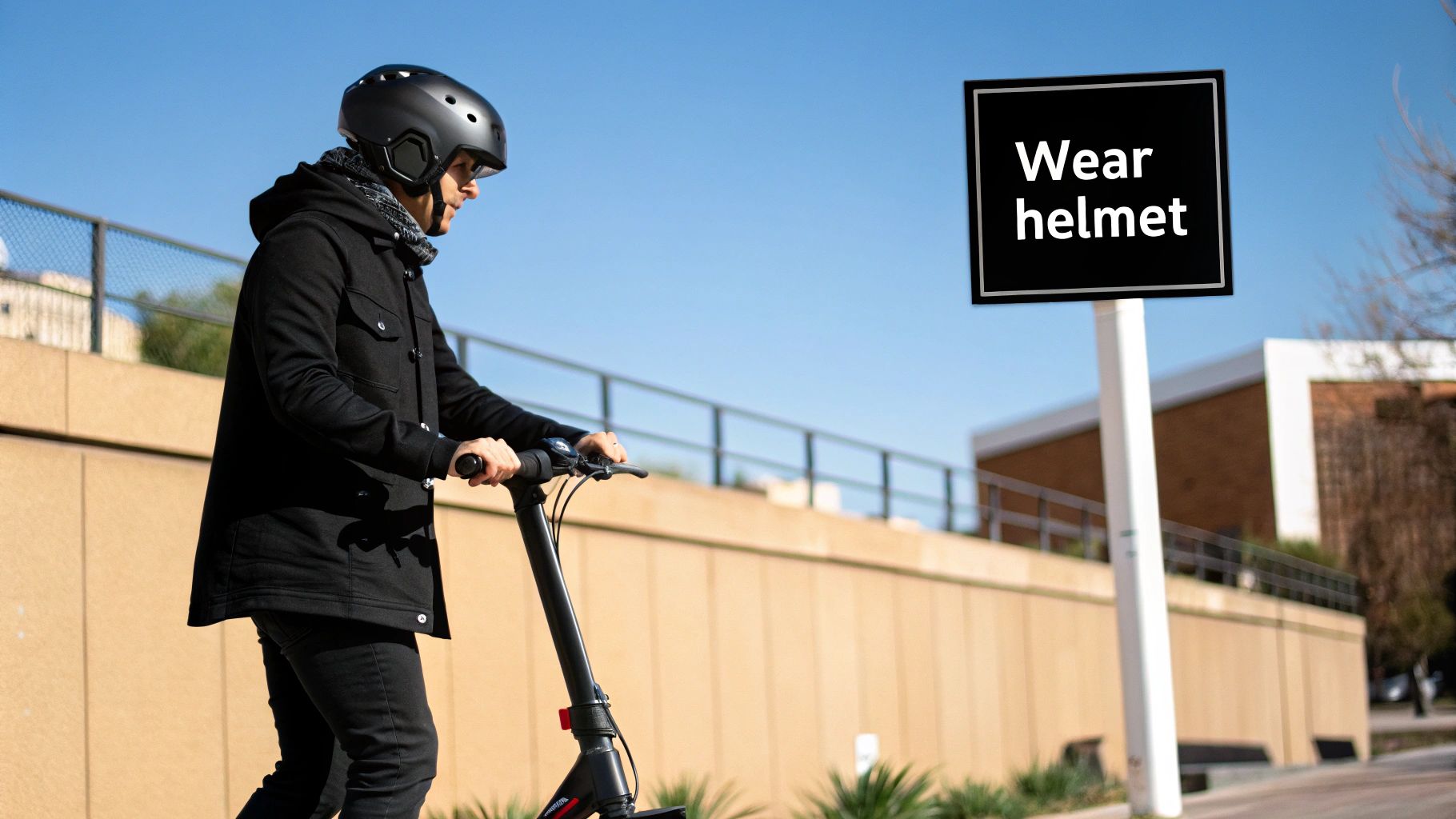
Ni presenečenje, da velike podjetja za skuterje, kot sta Lime in Bird, močno spodbujajo uporabo čelad v svojih aplikacijah. V mnogih krajih to sploh ni izbira. Na primer, uporaba čelade je obvezna za voznike električnih skuterjev v vseh avstralskih zveznih državah in je zakonska zahteva v mnogih ameriških državah, kot je Kalifornija, kar odraža naraščajoči globalni trend k boljšim varnostnim predpisom. To je ključni nasvet za varnost električnih skuterjev, s katerim se strinjajo oblasti in proizvajalci.
Kako doseči popolno prileganje
Samo lastništvo čelade ni dovolj; mora biti pravilno prilegajoča, da opravi svoje delo. Slabo prilegajoča čelada je lahko skoraj tako neuporabna kot če je sploh nimaš med padcem.
- Nadgradi se: Tvoja čelada naj sedi ravno na glavi in pokriva čelo. Dobro pravilo je, da med obrvmi in robom čelade ostaneta približno dva prsta prostora.
- Oblika 'V': Bočni trakovi naj tvorijo obliko "V" tik pod vašimi ušesnimi mečicami. Prilagodite jih tako, da so tesni, a ne neudobni.
- Preverjanje bradnega traku: Zapnite bradni trak. Med trakom in brado bi morali spraviti le en ali dva prsta. Trak mora biti dovolj tesen, da prepreči premikanje čelade.
Izbira prave čelade
Ko kupujete čelado, ne vzemite prve, ki jo vidite. Poiščite certifikacijske oznake, kot so CPSC (v ZDA) ali AS/NZS 2063:2008 (v Avstraliji), da zagotovite, da je bila pravilno testirana. Razmislite o čeladi s tehnologijo MIPS (Multi-directional Impact Protection System), ki je zasnovana za zmanjšanje rotacijskih sil ob določenih udarcih. In ne pozabite, čelade imajo rok trajanja; zamenjajte svojo po vsakem večjem udarcu ali na 3-5 let.
2. Opravite varnostne preglede pred vožnjo
Tako kot pilot pred vzletom opravi pregled letala, je tudi minuta ali dve za pregled vašega električnega skiroja pred vožnjo nepogrešljiva varnostna navada. Hiter predvozni pregled lahko odkrije morebitno mehansko okvaro, preden se zgodi na cesti, s čimer prepreči nesreče zaradi okvar opreme. To je eden tistih nasvetov za varnost električnih skirojev, ki situacijo iz reaktivne spremeni v proaktivno, kar vam zagotavlja mir na vsakem potovanju.
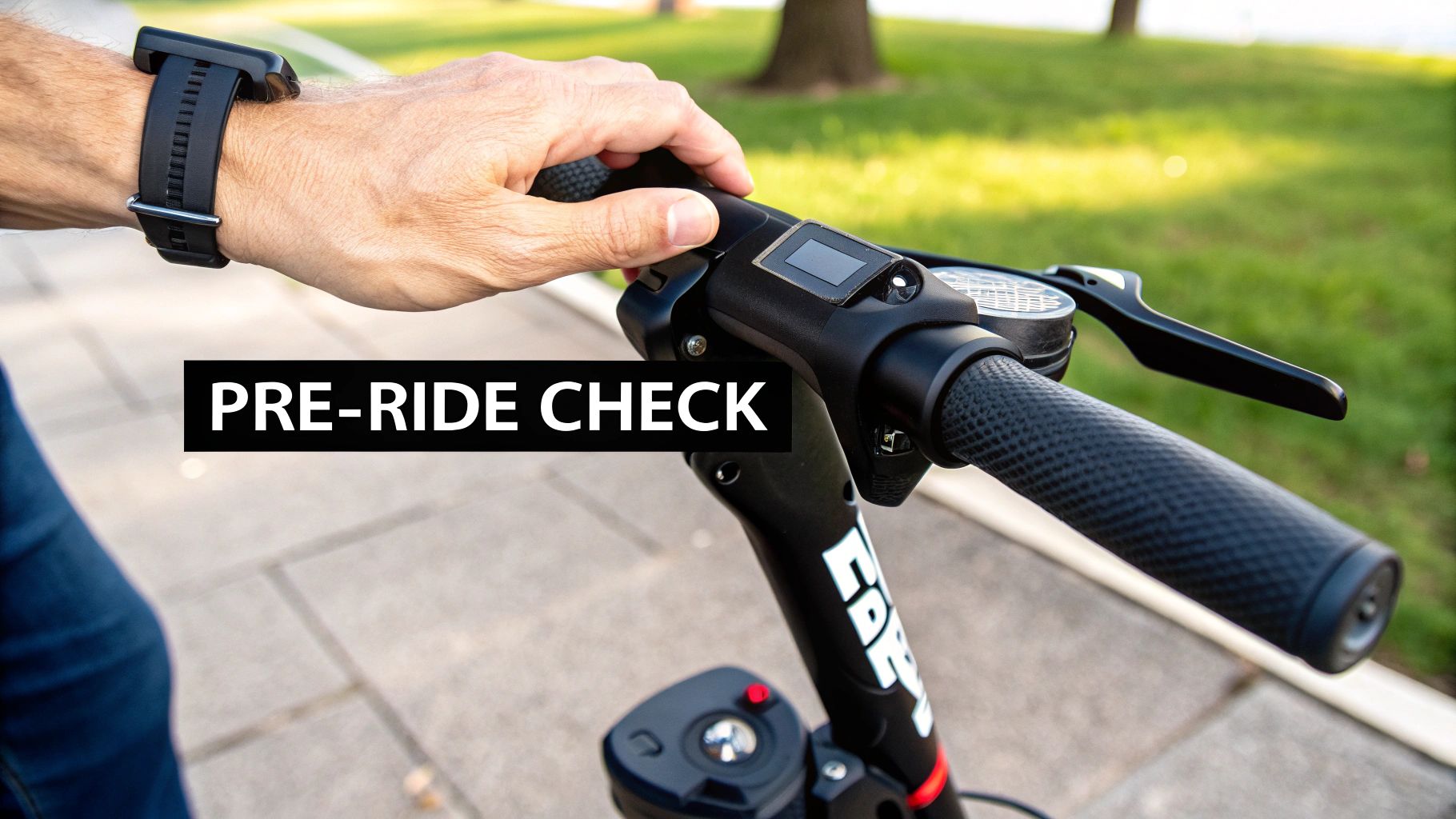
Pomen teh pregledov je dobro dokumentiran. Consumer Reports je med letoma 2018 in 2023 v ZDA zabeležil več kot 1.500 odpoklicev električnih skirojev, kar poudarja težave, ki bi jih redni pregledi lahko odkrili. Tudi velikani najema, kot je Lime, uporabljajo avtomatizirane predhodne preglede svojih voznih parkov, glavni proizvajalci, kot sta Segway-Ninebot in Xiaomi, pa te preglede poudarjajo v svojih uporabniških priročnikih. To je preprost korak, ki ga strokovnjaki in proizvajalci univerzalno priporočajo.
Kako ustvariti hitro rutino pregleda
Za učinkovito preverjanje ne potrebujete mehaničnega dovoljenja. Ključ je doslednost. Odličen način, da si zapomnite ključne točke, je uporaba preprostega akronima, kot je "BLASTER".
- Zavore: Stisnite ročice zavor. Morajo biti trde, ne mehke, in učinkovito ustaviti kolo, ko potisnete skiro naprej.
- Svetila: Vklopite sprednje in zadnje luči, da se prepričate, da delujejo. To je ključno za vidnost, še posebej pri vožnji skozi vse leto.
- Zrak: Preverite tlak v pnevmatikah enkrat tedensko. Večina pnevmatik za električne skiroje potrebuje 40-50 PSI. Stisnite jih, da zagotovite, da so trde, in preverite morebitne vidne poškodbe.
- Vozniški drog: Preverite, da se krmilo gladko obrača brez zatikanja in da ni nihanja v drogu. Preverite, da so mehanizmi za zlaganje varno zaklenjeni.
- Gaz: Ko je pogonsko kolo dvignjeno od tal, nežno pritisnite na gas, da zagotovite gladek odziv in takojšnjo prekinitev, ko spustite.
- Elektrika: Oglejte si raven baterije. Polnjenje nad 20 % zagotavlja predvidljivo moč in preprečuje, da bi skiro med vožnjo ugasnil.
- Reflektorji: Hitro obrišite reflektorje, da bodo čisti in vidni drugim na cesti.
Naredite pregled navado
Najboljši način, da tega nikoli ne pozabite, je, da pregled vključite v svojo vožnjo kot ritual. Naredite ga, ko si namečete čelado ali čakate na zeleno luč, preden začnete glavno pot. Ena minuta pregleda vam lahko prihrani veliko težav ali še hujšega.
3. Obvladujte nadzor hitrosti in poznajte svoje meje
Hitrost je vznemirljiva, a je tudi glavni dejavnik pri večini nesreč z električnimi skiroji. Razumevanje, kako upravljati svojo hitrost in voziti znotraj svojih osebnih meja, je temeljni nasvet za varnost pri električnih skirojih, ki loči varnega voznika od statistike. Veliko skirojev lahko doseže hitrosti 25-30 mph (40-48 km/h), a to, da lahko vozite tako hitro, še ne pomeni, da bi morali. Prava hitrost je vedno določena z okoljem, vašimi sposobnostmi in pogoji.
Regulatorji jemljejo hitrost resno. Na primer, mesta po ZDA in Avstraliji, ki sodelujejo v preizkusih najema, pogosto uvajajo samodejne omejitve hitrosti na območjih z veliko pešci. Raziskave to podpirajo, nekatere študije kažejo, da so poškodbe trikrat bolj verjetne pri hitrostih nad 15 mph (24 km/h). Podatki zavarovalnic to potrjujejo, saj pogosto navajajo prekomerno hitrost kot glavni vzrok za zahtevke. Ne gre za odvzem zabave pri vožnji; gre za ohranjanje nadzora.
Kako voziti z varno hitrostjo
Prava hitrost ni le držanje ene številke. Gre za stalno ocenjevanje okolice in prilagajanje. Hitrost, ki je popolnoma varna na široki, prazni kolesarski stezi, je lahko nevarno hitra na gneči poti.
- Začnite počasi: Če ima vaš skiro različne načine, začnite v načinu 'eco' ali 'začetnik' za prvih 10-20 voženj. To omeji vašo največjo hitrost, kar vam omogoča, da se osredotočite na ravnotežje in zaviranje. Več začetniških tehnik lahko najdete z učenjem kako varno voziti električni skiro.
- Vremenski opazovalec: Mokra cesta, listje ali gramoz močno povečajo vašo zavorno pot. V mokrih ali spolzkih razmerah zmanjšajte običajno hitrost na polovico.
- Poglejte naprej: Vedno glejte daleč pred seboj. Upočasnite pred križišči, dovoznimi potmi ali območji, kjer se lahko pešci nepričakovano pojavijo.
Obvladovanje meja vašega skiroja
Oblikovanje vašega skiroja prav tako močno vpliva na stabilnost pri visokih hitrostih. Za razliko od koles imajo električni skiroji običajno majhna kolesa (8-10 palcev), ki so bolj občutljiva na neravnine in manj stabilna pri visokih hitrostih.
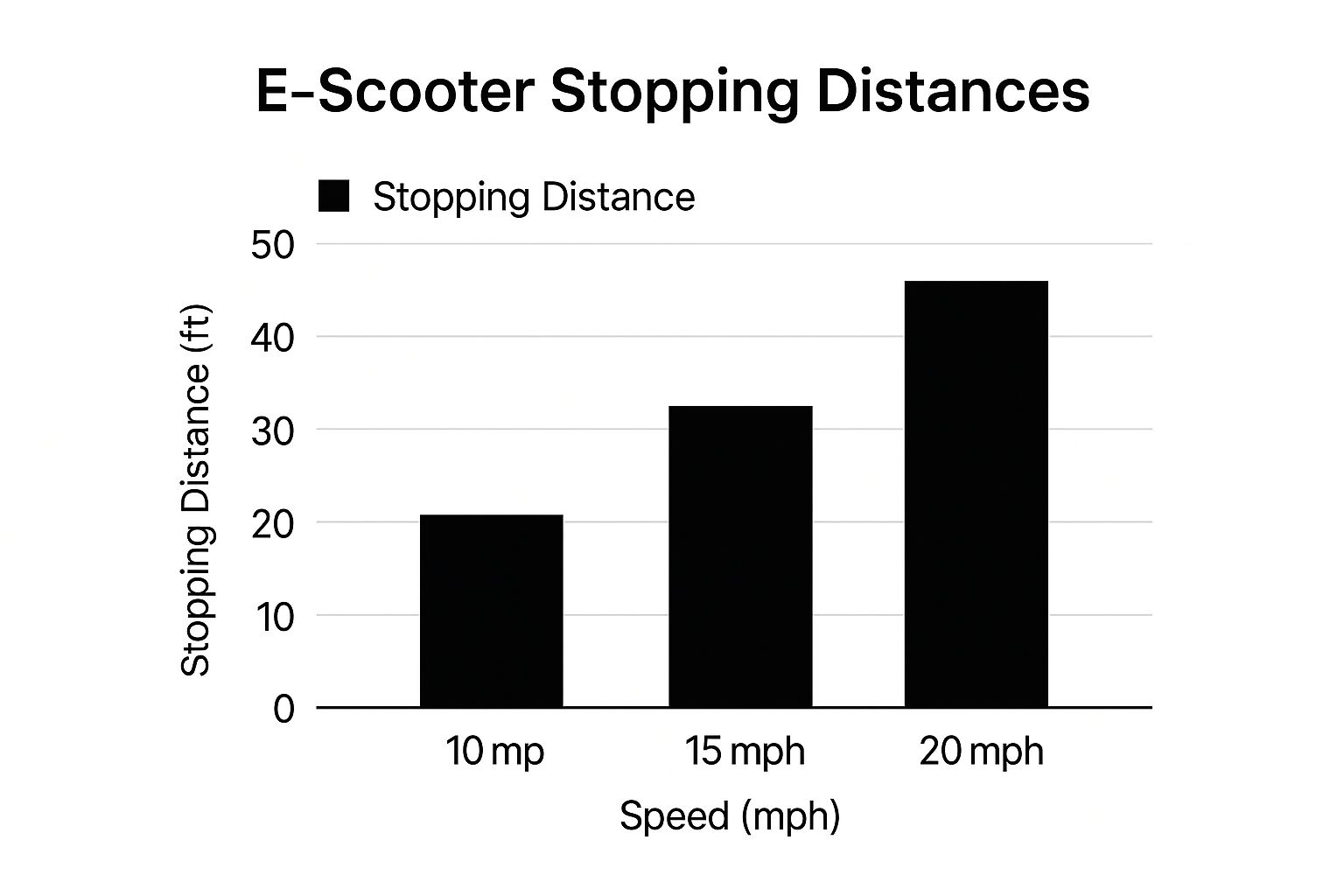
Zapomnite si, da hitrejša hitrost zahteva veliko daljšo zavorno pot. Vadite postopno zaviranje (nežno in postopno pritiskanje zavor) na varnem mestu, da razumete, kako vaš skiro reagira. Izogibajte se močnemu zaviranju, saj lahko to zaklene kolesa in povzroči zdrs. S spoštovanjem fizike vašega skiroja in realnosti okolja naredite vsako vožnjo varnejšo.
4. Ostani viden z ustrezno osvetlitvijo in odsevnimi pripomočki
Če vas voznik avtomobila ne vidi, se vam ne more izogniti. Vidnost je eden najpomembnejših nasvetov za varnost električnih skirojev, še posebej ob zori, mraku in ponoči. Biti viden voznikom, kolesarjem in pešcem je vaša najboljša obramba pred trki, ki nastanejo, ker drugi preprosto ne opazijo vaše prisotnosti. Majhen profil vašega skiroja vas lahko naredi skoraj nevidne v prometnem urbanem okolju.
Nacionalna uprava za varnost cestnega prometa (NHTSA) poroča, da se kar 60 % smrtonosnih nesreč z električnimi skiroji zgodi v pogojih slabe osvetlitve. To poudarja življenjsko pomembnost dobre osvetlitve. V mnogih krajih to ni le priporočilo, ampak zakon. Na primer, v številnih avstralskih zveznih državah in ameriških mestih so obvezne delujoče sprednje in zadnje luči za osebna lahka električna vozila, kar odraža vse večji poudarek na vidnosti voznika.
Kako osvetliti svojo vožnjo
Samo vgrajene luči, ki so priložene vašemu skiroju, morda niso dovolj. Da bi res izstopali, potrebujete strategijo večtočkovne vidnosti, ki vas naredi opazne z vseh strani.
- Sprednje in zadnje luči: Svetla bela sprednja luč in rdeča zadnja luč sta najmanjša zahteva. Nastavite ju na utripajoči način podnevi, da pritegnete največ pozornosti. Usmerite svojo glavno luč rahlo navzdol, da osvetlite pot brez slepljenja nasproti vozečih vozil.
- Vidnost od strani: Ne pozabite na svoje strani. Uporabite reflektorje na špicah ali celo LED luči na kolesih, da zagotovite vidnost iz 360-stopinjskega zornega kota, kar je ključno na križiščih.
- Nosljiva tehnologija: Dopolnite luči skiroja z lastnimi. Odsevni jopič ali jakna z visoko vidnostjo vas lahko močno izpostavita. Dodajanje odsevnega traku na čelado, nahrbtnik in celo gležnje ustvarja gibljive svetlobne točke, ki so zelo učinkovite pri pritegovanju pozornosti voznika.
Izbira in vzdrževanje vaše opreme
Vaša vidna oprema je učinkovita le, če deluje, ko jo potrebujete. Malo priprave veliko pomeni, da ste vedno vidni in varni.
Iščite svetilke z visoko svetilnostjo priznanih znamk, kot sta Cygolite ali Knog, ki so zasnovane za mikromobilnost. Za vašo odsevno opremo izberite predmete z visoko stopnjo retrorefleksivnosti. Pred vsako vožnjo hitro preverite, ali luči delujejo in so baterije napolnjene. Odličen nasvet za varnost električnega skiroja je, da nosite rezervne baterije ali prenosni USB polnilec za polnilne luči, da vas nikoli ne ujame tema.
5. Izberite primerne površine za vožnjo in se izogibajte nevarnostim
Majhna kolesa vašega električnega skiroja (običajno 8-10 palcev) so odlična za hitro vožnjo po gladkem asfaltu, vendar vas naredijo ranljive za nepravilnosti na površini. Razpoka ali luknja, ki jo avto ali celo kolo zlahka premagata, je lahko velika grožnja za voznika skiroja. Razumevanje, katere površine so varne, in učenje prepoznavanja nevarnosti je ključni nasvet za varnost električnega skiroja za preprečevanje hudih padcev.
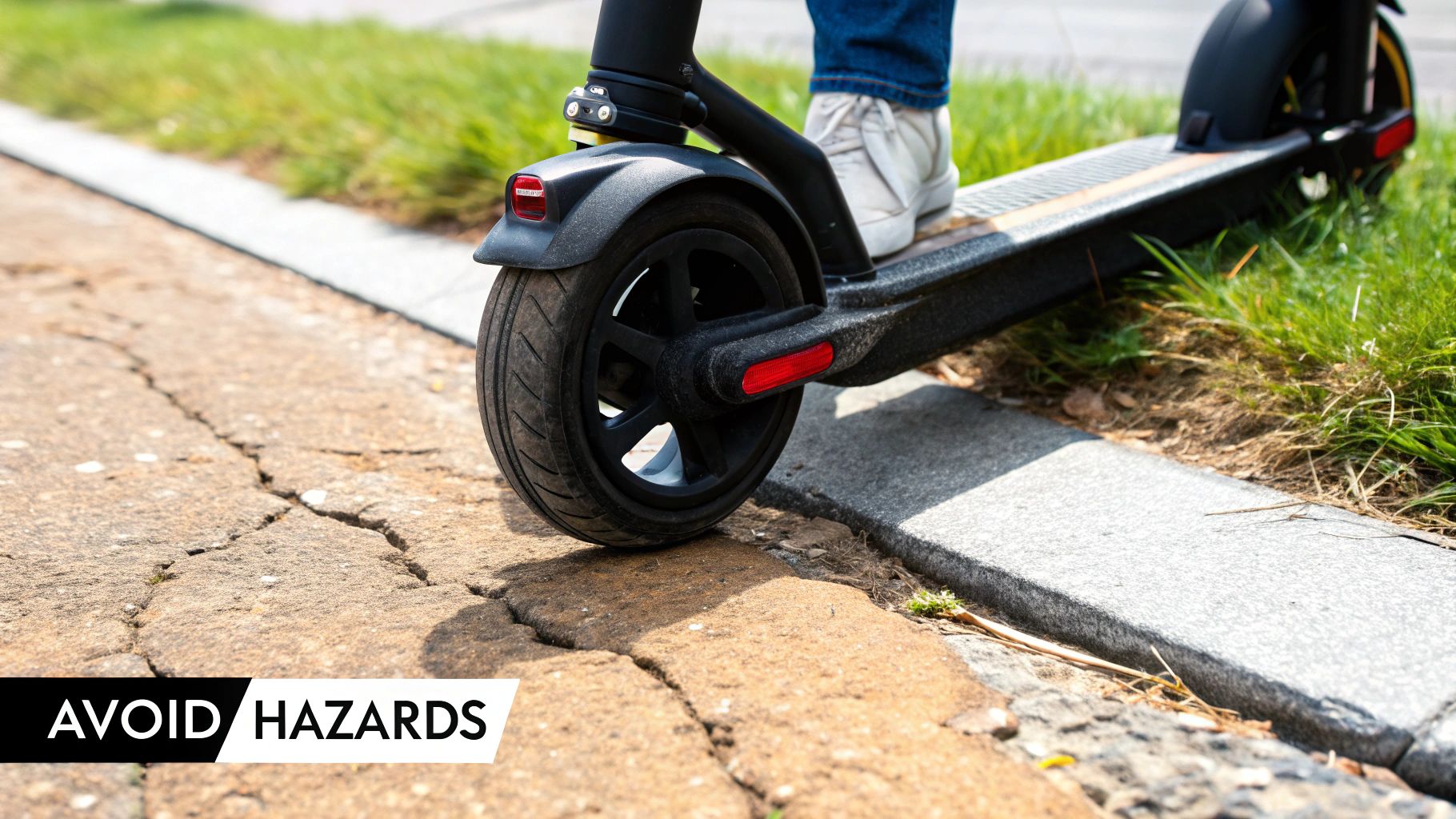
To ni le anekdotični nasvet; raziskave o preprečevanju poškodb dosledno kažejo, da velik delež nesreč z enoslednimi električnimi skiroji povzroči neenakomernost površine. V odgovor so nekatera ameriška mesta, kot je Boston, celo ustvarila "mikromobilnostne koridorje" z zglajeno površino, kar poudarja pomen varne poti za vožnjo. Podobno avstralska mesta nenehno nadgrajujejo mreže kolesarskih poti, da bolje ustrezajo skirojem.
Kako pregledovati in se odzvati na nevarnosti
Razvijanje dobre navade pregledovanja je vaša najboljša obramba. Namesto da gledate navzdol na sprednje kolo, morate aktivno gledati naprej, da predvidite in se odzovete na morebitne težave.
- Poglejte naprej: Nenehno premikajte oči in pregledujte pot 10-15 čevljev pred seboj. To vam daje dovolj časa, da opazite luknje, gramoz ali odpadke in varno manevrirate okoli njih.
- Pametno vozite po neravnih odsekih: Če se neravnemu odseku ne morete izogniti, upočasnite preden vanj vstopite. Peljite skozi njega brez zaviranja ali pospeševanja in trdno, a sproščeno držite krmilo.
- Pravilo 90 stopinj: Vedno poskušajte prečkati ovire, kot so železniške proge, kovinske rešetke ali razpoke v tlaku, pod kotom 90 stopinj. To prepreči, da bi se vaše kolo ujelo v utor in povzročilo padec.
Pogoste nevarnosti, na katere morate biti pozorni
Mestno okolje je polno potencialnih pasti za voznike skirojev. Zavedanje teh je že polovica zmage. Bodite še posebej previdni okoli teh pogostih nevarnosti:
- Luže: Izogibajte se vožnji skozi luže. Lahko skrivajo globoke in nevarne luknje.
- Ohlapne površine: Bodite pozorni na pesek, gramoz, mokre liste in druge ohlapne delce, saj lahko močno zmanjšajo oprijem vaših pnevmatik.
- Drsno, ko je mokro: Obarvane cestne oznake in kovinski pokrovi jaškov postanejo v dežju izjemno spolzki. Ravnajte z njimi z veliko previdnostjo.
- Neenakomerna podlaga: Nikoli ne vozite po travi, gozdnih poteh ali neasfaltiranih površinah, razen če je vaš skiro posebej ocenjen za vožnjo po terenu. Držite se gladkih, tlakovanih poti.
6. Upoštevajte prometne predpise in vozite predvidljivo
Eden največjih nasvetov za varnost električnih skirojev je presenetljivo preprost: obnašajte se kot vozilo. V večini krajev električni skiroji niso le igrače; so zakonsko uvrščeni kot vozila, kar pomeni, da morate upoštevati enaka prometna pravila kot vsi ostali. Predvidljiva vožnja in spoštovanje prometnih predpisov vas naredi legitimni del prometnega toka, kar je ključno za vašo varnost.
To ni le priporočilo; to je zakonska zahteva z resnimi posledicami. Tako v ZDA kot v Avstraliji postajajo predpisi bolj standardizirani, vendar se lahko še vedno precej razlikujejo glede na zvezno državo ali mesto. Na splošno to pomeni, da ostanete v kolesarskih pasovih in ne na pločnikih za pešce. Ignoriranje teh pravil lahko vodi do visokih kazni in vas ter druge postavi v resno nevarnost.
Kako voziti kot profesionalec
Biti predvidljiv pomeni, da lahko drugi udeleženci v prometu predvidijo vaš naslednji korak, kar močno zmanjša možnost trčenja. Gre za to, da ste sodelujoč in viden del prometnega ekosistema.
- SIGNALIZIRAJTE svoje namere: Uporabite jasne ročne signale dobro pred ovinkom. Iztegnite levo roko naravnost za zavijanje levo in desno roko naravnost (ali levo roko upognjeno pod kotom 90 stopinj) za zavijanje desno.
- Sledite toku prometa: Vedno vozite v isti smeri kot promet. Vožnja v nasprotni smeri je pogost vzrok za resne nesreče, ker vozniki ne pričakujejo vozil, ki prihajajo iz napačne smeri.
- Upoštevajte vse znake: Ustavite se pri znakih za stop in rdečih lučeh, tako kot avtomobil. Prednost dajte pešcem na prehodih za pešce in jim zagotovite dovolj prostora.
Obvladovanje vaše prisotnosti na voznem pasu
Kako se postavite na cesti je ključno. Cilj je, da ste vidni in da nikogar ne presenetite. Uporabljajte kolesarske steze, kadar so na voljo; so vaše najvarnejše mesto. Če ni kolesarske steze, vozite po desni strani ceste (ali levi v Avstraliji), vendar ne preblizu robnika, da ne postanete nevidni ali da vas ne prisilijo s ceste zaradi smeti. Ključni del tega je upravljanje hitrosti; več o omejitvah hitrosti električnih skuterjev se lahko naučite, da boste bolje usklajeni s tokom prometa. Ne pozabite najprej preveriti lokalne zakone, saj se predpisi za uporabo e-skuterjev med mesti in državami močno razlikujejo.
7. Nosite dodatno zaščitno opremo poleg čelade
Čelada je obvezna, vendar glava ni edini del telesa, ki je med padcem ogrožen. Ko padeš z e-skuterja, je tvoj naravni instinkt, da iztegneš roke, da zajeziš padec, kar pa postavi zapestja, roke in komolce neposredno v nevarnost. Zato je dodatna zaščitna oprema ključni del vsakega celovitega seznama varnostnih nasvetov za električne skuterje.
Podatki iz urgentnih oddelkov po ZDA in Avstraliji jasno kažejo: poškodbe zgornjih okončin, zlasti zlomi zapestij, so izjemno pogoste. Poročilo CDC je izpostavilo, da približno tretjina ne-smrtnih poškodb z e-skuterji vključuje zgornje okončine. Ortopedski kirurgi so glasni zagovorniki večje zaščite, saj opažajo znatno povečanje poškodb zapestij in komolcev, ki neposredno sovpada z naraščajočo priljubljenostjo e-skuterjev v mestih, kot sta Austin in Melbourne.
Kako se opremiti za varnejšo vožnjo
Izbira prave opreme ne pomeni, da morate izgledati kot stormtrooper, vendar vam lahko nekaj ključnih kosov reši boleče odrgnine, zvin ali celo zlom kosti.
- Prednost dajte zapestjem in rokam: Vaše roke so skoraj vedno prva točka stika pri padcu. Zapestni ščitniki so dokazano zelo učinkoviti, nekatere študije celo kažejo, da lahko zmanjšajo tveganje za zlom zapestja za kar 87 %. Podložene rokavice ne ščitijo le dlani, ampak tudi izboljšajo oprijem na krmilu.
- Zaščitite svoje sklepe: Vaša kolena in komolci so prav tako zelo ranljivi za udarce in odrgnine. Poiščite ščitnike s trdo zunanjo lupino za odbijanje udarcev in mehko notranjo blazino za blaženje tresljajev. Veliko jih je zasnovanih tako, da jih lahko nosite neopazno pod oblačili.
- Zaščitite svoje noge: Nikoli ne vozite v sandalih, japonkah ali odprtih čevljih. Trdni, zaprti čevlji z nedrsečim podplatom so ključni za ohranjanje nadzora in zaščito nog pred poškodbami.
Izbira prave opreme
Vsa zaščitna oprema ni enako kakovostna. Poiščite izdelke, ki so bili testirani in certificirani za izpolnjevanje varnostnih standardov, kot so CE ali ASTM certifikati. To zagotavlja, da bo oprema delovala, ko jo boste najbolj potrebovali. Blagovne znamke, kot sta Pro-Tec in G-Form, ki sta bila sprva priljubljena v skejtanju, zdaj ponujata odlične možnosti za voznike skirojev. Če iščete kakovostno zaščitno opremo, lahko na punkride.com najdete skrbno izbrano ponudbo najboljših dodatkov za električna kolesa in skiroje. Začnite z osnovami in dodajajte več, ko se vaša hitrost in samozavest povečujeta.
8. Vadite defenzivno vožnjo in ohranjajte situacijsko zavest
Defenzivno vožnjo si predstavljajte kot supermoč za mestnega potnika. Je umetnost predvidevanja težav, preden se zgodijo, z zavestjo, da vas drugi udeleženci v prometu morda ne vidijo ali lahko naredijo nenaden, nepredvidljiv manever. Ta proaktiven način razmišljanja je eden najpomembnejših nasvetov za varnost električnih skirojev, saj vas premakne iz pasivnega voznika v aktivnega udeleženca svoje lastne varnosti. Vaš manjši profil in tišji motor vas naredijo manj opazne kot avto, zato morate to nadomestiti z večjo zavestjo.
To ni le slutnja; podprto je z dejstvi. Analiza nesreč z električnimi skiroji je pokazala, da je kar 60 % nesreč vključevalo voznike, ki niso predvideli dejanj voznika. Zaradi tega varnostni programi po vsem svetu močno poudarjajo razvoj sposobnosti predvidevanja. Sprejetje te strategije je kot imeti nevidni ščit, ki vam pomaga varno krmariti po mestnem džungli.
Kako voziti defenzivno
Defenzivna vožnja je veščina, ki jo razvijate z vadbo. Vključuje stalno opazovanje okolice in zavestno sprejemanje odločitev za zmanjšanje tveganja.
- Predpostavite nevidnost: Zlato pravilo. Vozite, kot da ste popolnoma nevidni za voznike. Nikoli ne predpostavljajte, da vas avto vidi, tudi če mislite, da ste vzpostavili očesni stik.
- Skenirajte in predvidevajte: Držite glavo pokonci in oči v gibanju. Poglejte daleč naprej po cesti, preverite svoji strani in bodite pozorni na dogajanje za vami. Pazite na "indikatorje nevarnosti", kot so zavorne luči, smerniki ali voznik, ki gleda preko ramena.
- Ustvarite varnostno območje: Ohranite varno razdaljo vsaj tri sekunde od vozila pred vami. To vam daje čas za reakcijo, če nenadoma zavirajo. Prav tako se izogibajte zadrževanju v mrtvem kotu avtomobila; bodisi ostanite zadaj ali jih popolnoma prehitite.
Ključne taktike zavesti, ki jih morate obvladati
Vključite te specifične ukrepe v vsako vožnjo, da ohranite svojo situacijsko zavest ostro in učinkovito. Ne pozabite, da je izogibanje motnjam najpomembnejše; študije kažejo, da lahko motena vožnja poveča tveganje za nesrečo za kar 400 %.
- Bodite pozorni na vrata: Vedno pazite na odpirajoča se vrata avtomobilov, ki lahko pridejo na vašo pot, kar je pogosta nevarnost, znana kot "dooring". Po možnosti vozite zunaj območja vrat.
- Obvladujte križišča: Upočasnite, ko se približujete križiščem, tudi če imate prednost. Pazite na vozila, ki zavijajo čez vašo pot, in poskušajte vzpostaviti očesni stik z vozniki, preden nadaljujete.
- Pazite na pešce: Bodite še posebej pozorni v bližini avtobusnih postajališč, prehodov za pešce in prometnih pločnikov. Pričakujte, da lahko pešci, zlasti tisti, ki gledajo v telefon, stopijo na vašo pot brez ogleda.
- Ostanite osredotočeni: Pospravite telefon in pustite slušalke doma. Vaš sluh je ključno orodje za zaznavanje približujočih se vozil in drugih morebitnih nevarnosti.
Primerjava nasvetov za varnost električnih skirojev
| Varnostni ukrep | Zapletenost izvedbe 🔄 | Zahteve glede virov ⚡ | Pričakovani rezultati 📊 | Idealni primeri uporabe 💡 | Ključne prednosti ⭐ |
|---|---|---|---|---|---|
| Vedno nosite pravilno prilegajočo se čelado | Nizka 🔄 | Zmerna (nakup čelade za 30–150 $) ⚡ | Znatno zmanjša tveganje poškodb glave 📊 | Vsi vozniki, zakonsko zahtevano na mnogih območjih | Visoka zaščita pred travmatskimi poškodbami možganov ⭐ |
| Izvedite varnostni pregled pred vožnjo | Srednja 🔄 | Nizka (čas, osnovno znanje) ⚡ | Preprečuje mehanske okvare in nesreče 📊 | Pogosti vozniki, uporabniki najemov | Zgodnje odkrivanje napak skiroja, podaljšuje življenjsko dobo ⭐ |
| Obvladujte nadzor hitrosti in poznajte svoje meje | Srednja 🔄 | Nizka (uporaba načinov hitrosti in GPS) ⚡ | Manj nesreč, boljši nadzor, pravna skladnost 📊 | Vsi vozniki, zlasti začetniki | Omejuje resnost nesreč in izboljšuje nadzor ⭐ |
| Ostanite vidni z ustrezno osvetlitvijo in odsevno opremo | Nizka 🔄 | Nizka do zmerna (luči, odsevna oprema) ⚡ | Zmanjšuje tveganje trčenja v slabih svetlobnih pogojih 📊 | Nočna ali vožnja v slabih vidnih pogojih | Povečuje vidnost iz več zornih kotov ⭐ |
| Izberite primerne površine za vožnjo in se izogibajte nevarnostim | Srednja 🔄 | Nizka (pozornost, načrtovanje poti) ⚡ | Zmanjšuje padce, izboljšuje udobje vožnje 📊 | Mestni vozniki, tisti na neenakomernem terenu | Preprečuje nesreče zaradi nepravilnosti na površini ⭐ |
| Upoštevajte prometne predpise in vozite predvidljivo | Srednja 🔄 | Nizka (znanje in spoštovanje pravil) ⚡ | Zmanjšuje konflikte in pravne težave 📊 | Vsi vozniki v reguliranih območjih | Varnejše interakcije, nižje globe, spodbuja sprejemanje ⭐ |
| Nosite dodatno zaščitno opremo poleg čelad | Srednja 🔄 | Zmerna (nakup zaščitne opreme) ⚡ | Zmanjšuje poškodbe, ki presegajo poškodbe glave 📊 | Začetniki, vozniki pri visokih hitrostih | Ščiti zapestja, kolena, komolce; preprečuje resne poškodbe ⭐ |
| Vadite obrambno vožnjo in ohranjajte situacijsko zavest | Visoka 🔄 | Nizka do nič (mentalna osredotočenost in trening) ⚡ | Preprečuje večino preprečljivih nesreč 📊 | Vsi vozniki, zlasti v prometu | Izboljša predvidevanje nevarnosti in odzivni čas ⭐ |
Tvoja vožnja, tvoja odgovornost
Vožnja z električnim skirojem je neverjetna kombinacija svobode, udobja in zabave. Lahko skrajša vaš čas potovanja, zmanjša vaš ogljični odtis in preprosto vam pričara nasmeh na obraz. A kot smo raziskali, ta svoboda prinaša tudi pomembno odgovornost. Nasveti za varnost električnih skirojev, ki smo jih obravnavali, niso naključni seznam; so temeljne navade, ki ločijo nepremišljenega voznika od samozavestnega, cestno izkušenega strokovnjaka.
Pomislite tako: ne bi vozili avtomobila brez pripetega varnostnega pasu ali pregleda ogledal. Prav tako naj postane samoumevno, da opravite predvozniški pregled, nosite čelado in obvladujete hitrost. To niso enkratni nasveti; so bistveni rituali, ki zagotavljajo, da se vsaka pot konča tako dobro, kot se začne. Z notranjim sprejemanjem teh praks ne ščitite le sebe pred morebitno škodo, ampak postajate tudi pozitiven ambasador celotne skupnosti e-skirojev.
Pretvarjanje znanja v navado
Pravi cilj je, da te nasvete premaknete s seznama, ki ste ga prebrali, v nezavedno rutino.
- Predvozniški pregled: Naj bo to prva stvar, ki jo naredite, tako kot vzamete ključe. Hiter pregled pnevmatik, zavor in luči traja manj kot minuto, a lahko prepreči okvaro, ki bi končala vožnjo.
- Defenzivna vožnja: To ni paranoja; gre za zavedanje. Aktivno opazovanje nepazljivih voznikov, nepredvidljivih pešcev in nenadnih nevarnosti na cesti je najučinkovitejši način za preprečevanje trkov.
- Oprema, vsakič: Vaša čelada in zaščitna oprema so vaša osebna zavarovalna polica. Ne dovolite, da bi "hitri izlet" do trgovine postal tisti, katerega boste obžalovali.
Ne pozabite, da se zakonodaja o električnih skirojih nenehno spreminja. Pravila za vožnjo e-skiroja v Kaliforniji se lahko močno razlikujejo od predpisov v Queenslandu. Biti obveščen o lokalni zakonodaji ni le dobra ideja, temveč pravna nujnost, ki varuje vas in druge.
Na koncu je obvladovanje teh nasvetov za varnost električnih skirojev prevzemanje odgovornosti za svojo vožnjo. To je zaveza lastnemu dobremu počutju in znak spoštovanja do vseh drugih, ki delijo pločnik in cesto. Z modrimi, premišljenimi odločitvami pred in med vsako vožnjo zagotovite, da vaš e-skiro ostane vir veselja in učinkovit, trajnosten način prevoza še vrsto let. Vozite pametno, ostanite pozorni in uživajte v poti s samozavestjo.
Ste pripravljeni združiti svoje novo znanje o varnosti z skirojem, zasnovanim za zmogljivost in zanesljivost? Raziščite najnovejše modele pri Punk Ride LLC, kjer vsak skiro oblikujemo z najsodobnejšimi varnostnimi funkcijami, da vam zagotovimo brezskrbnost na cesti. Danes poiščite svojo popolno, varnost na prvem mestu vožnjo na Punk Ride LLC.
Deli:
Vodnik po omejitvah hitrosti električnih skirojev: ZDA in Avstralija v primerjavi s svetom
Najboljše rešitve za shranjevanje električnih koles za vaš prostor