


Onnistunut skootterin renkaan vaihto alkaa kauan ennen kuin kosketat jakoavainta. Se alkaa tilan ja työkalujen valmistelusta. Pieni valmistautuminen muuttaa tehtävän, joka voi tuntua todella turhauttavalta, täysin hallittavaksi. Ajattele sitä kuin kokin mise en place—saa kaikki oikeille paikoilleen, niin loput sujuu helposti.
Valmistautuminen Onnistuneeseen Renkaan Vaihtoon
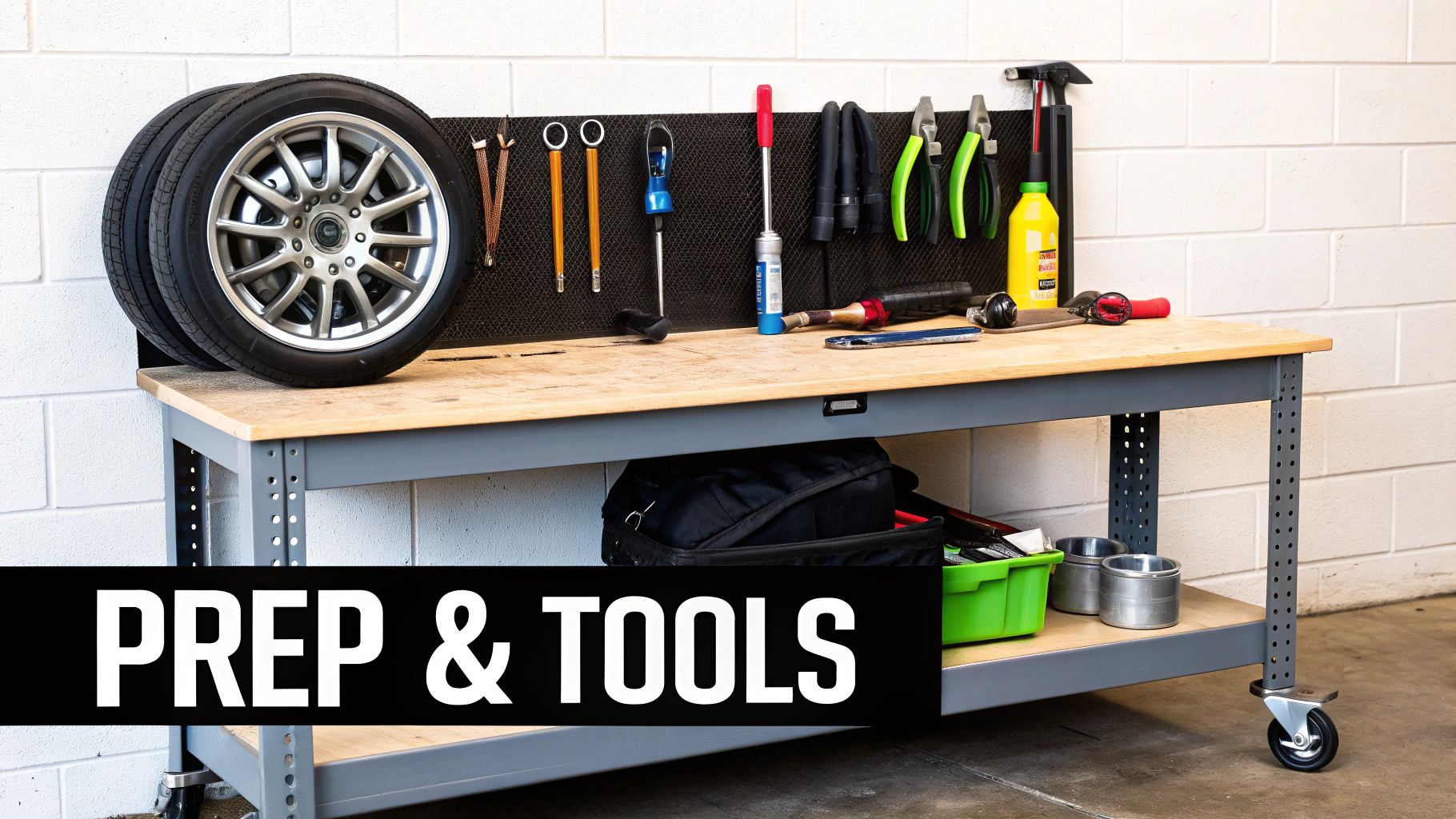
Rehellisesti sanottuna, kun kaikki on valmiina ja järjestyksessä, koko prosessi tuntuu paljon vähemmän pelottavalta. Tämän alkuvalmistelun onnistuminen on todennäköisesti paras tapa välttää yleiset ja ärsyttävät ongelmat myöhemmin. Tehdään esilento-tarkastus.
Tunne Renkaasi Tyyppi
Ensimmäiseksi sinun täytyy tietää, mitä olet vastassa. Ennen kuin alat taistella kumirenkaan kanssa, selvitä, minkä tyyppinen rengas skootterissasi on. Useimmat kaupunkiskootterit Yhdysvalloissa ja Australiassa käyttävät yhtä kolmesta tyypistä, joilla kaikilla on omat erityispiirteensä.
- Sisärenkaalliset renkaat: Tämä on vanhanaikainen ratkaisu—erillinen sisärengas on renkaan sisällä. Ne ovat erittäin yleisiä, mutta tunnettuja puristuspuhkeamista, jos renkaanvivut käsitellään huolimattomasti asennuksen aikana.
- Ilmaton rengas: Aivan kuten auton rengas, nämä muodostavat ilmatiiviin tiivisteen suoraan vanteen reunaa vasten. Ne kestävät hyvin pieniä puhkeamia, mutta voivat olla hankalia saada istumaan kunnolla vanteelle.
- Kiinteät renkaat: Nämä ovat puhkeamattomat mestarit, valmistettu kiinteästä kumista tai polymeeriseoksesta. Haittapuoli? Ne tarjoavat paljon karkeamman ajokokemuksen ja ovat ehdottomasti vaikeimmat asentaa. Kyseessä on todellinen treeni.
Kerää Tarvikkeet
Et tarvitse täysimittaista mekaanikon työpajaa, mutta muutama työkalu on ehdottoman välttämätön. Luota minuun, väärillä välineillä improvisoiminen johtaa naarmuisiin vanteisiin ja verille raapaisuihin.
Tässä nopea katsaus olennaisiin työkaluihin, jotka sinun tulisi olla valmiina ennen kuin edes ajattelet aloittamista.
Välttämätön työkalusarja skootterin renkaan vaihtoon
| Työkalu | Miksi Tarvitset Sen | Ammattivinkki |
|---|---|---|
| Renkaanvivut | Tarvitset näitä renkaan irrottamiseen ja asentamiseen vanteelle. Hanki vähintään kaksi, mutta kolmen sarja on todellinen pelin muuttaja. | Metalliset vivut ovat vahvoja, mutta muovipinnoitetut suojaavat vanteitasi kulumiselta. Kannattaa omistaa molempia. |
| Jakoavaimet/Hylsyavainsarja | Akselimuttereiden irrottamiseen, jotka pitävät pyörän paikallaan. | Säädettävä jakoavain voi toimia, mutta oikea hylsy tarttuu mutteriin paljon paremmin ja estää sen pyöristymisen. |
| Ilmapumppu | Välttämätön sekä sisäkumillisille että tubeless-renkaille. Paine on saatava oikeaksi. | Lattiapumppu, jossa on sisäänrakennettu painemittari, on paras ystäväsi tässä. Älä arvaile PSI-arvoa. |
| Venttiilin ytimen irrotin | Tämä pieni työkalu antaa sinun tyhjentää renkaan kokonaan muutamassa sekunnissa. | Se tekee vanhan renkaan poistamisesta paljon helpompaa. Joissakin venttiilin suojakorkeissa on jopa perusvoitelu sisäänrakennettuna. |
| Saippuavesiliuos | Yksinkertainen astianpesuaineen ja veden seos toimii voiteluaineena. | Tämä on salainen ase, jolla itsepäiset tubeless- ja kiinteät renkaat saa liukumaan vanteelle ilman taistelua. |
| Yleinen saksitunkkiadapteri ja pyöränmutterin avain | Tunkki tekee skootterin nostamisesta ja pitämisestä vakaana paljon turvallisempaa ja helpompaa kuin tasapainottaminen palikoilla. | Jotkut adapterit antavat jopa käyttää sähköporakonetta tunkin nostamiseen, mikä säästää valtavasti aikaa. |
Näiden työkalujen asettaminen puhtaalle pyyhkeelle tai magneettialustalle säästää aikaa ja estää sinua menettämästä järkeä yrittäessäsi löytää karkuun päässyttä mutteria keskellä korjausta.
Luo turvallinen ja siisti työtila
Lopuksi löydä hyvä paikka työskennellä. Haluat puhtaan, hyvin valaistun alueen, jossa on vakaa ja tasainen pinta skootterin asettamiseen. Autotallin lattia tai tukeva työpöytä on täydellinen.
Kyse ei ole vain mukavuudesta; kyse on turvallisuudesta. Vakaa skootteri ei kaadu, ja siisti tila tarkoittaa, ettet menetä pieniä mutta tärkeitä osia, kuten aluslevyjä ja venttiilin suojakorkkeja sekamelskassa.
Sähköskoottereiden räjähdysmäisen suosion myötä amerikkalaisissa kaupungeissa ja australialaisissa metropolialueilla varaosien kysyntä on valtava. Kaksipyöräisten renkaiden markkina-arvo on jo noin 15 miljardia dollaria, ja suuri osa siitä on jälkimarkkinoiden vetämää, joka johtuu päivittäisen kaupunkiajon kulumisesta. Tämä osoittaa, kuinka monta muuta kuljettajaa siellä on, jotka tekevät juuri tätä samaa työtä.
Vanhan renkaan irrottaminen ilman taistelua
Okei, skootterisi on penkillä ja työkalut esillä. Nyt päästään pääasiaan: vanhan, kuluneen renkaan repimiseen vanteelta. Rehellisesti sanottuna tässä useimmat ihmiset turhautuvat ja haluavat luovuttaa. Mutta pysy mukana—selvitään tästä yhdessä.
Lähestymistapasi riippuu todella siitä, millaisen renkaan kanssa olet tekemisissä. Kiinteän kumirenkaan irrottaminen on täysin eri peli kuin ilman täytetyn renkaan poistaminen. Käydään molemmat läpi.
Ilmatäytteisille renkaille (ne, joissa on sisäkumit tai tubeless-ratkaisut)
Ensimmäinen asia ensin: sinun täytyy päästää kaikki ilma ulos. Ota venttiilin ytimen irrotin ja tyhjennä rengas kokonaan. Älä vain paina nastaa—kiristä ja poista pieni ydin venttiilin varresta. Tämä tekee kumista paljon joustavampaa ja helpompaa käsitellä.
Kun rengas on täysin litteä, olet valmis vaikeimpaan osaan: reunan irrottamiseen. Reuna on se paksu, vahvistettu reuna renkaassa, joka istuu tiukasti vanteen urassa muodostaen ilmatiiviin tiivisteen. Tuhansien kilometrien tai mailien jälkeen se voi tuntua kuin se olisi liimattu kiinni.
Luottokikkani: Et tarvitse hienoa konetta tähän. Aseta pyörä tasaisesti autotallin lattialle. Paina varovasti kantapäälläsi renkaan sivuseinämään mahdollisimman lähelle vanteen reunaa. Kävele vähän kerrallaan ympäri, kunnes kuulet tai tunnet napsahduksen. Se on ihana ääni, kun reuna irtoaa.
Kun reuna on löysällä molemmilta puolilta, ota rengasraudat käteen. Tässä kohtaa tekniikalla on suuri merkitys.
- Aloita työntämällä ensimmäisen raudan lusikan muotoinen pää renkaan reunan alle.
- Kohota se vanteen reunan yli. Jos voit, koukista raudan toinen pää pinnaan pitämään se paikallaan. Se on ankkurisi.
- Ota nyt toinen rautasi ja työnnä se vain muutaman tuuman päähän ensimmäisestä. Irrota myös tämä kohta vanteelta.
- Toista tätä vain, liikkuen pienin askelin renkaan ympäri. Ennen kuin huomaatkaan, koko renkaan toinen puoli on irti. Käännä pyörä ympäri ja tee sama toiselle puolelle. Avain on kärsivällisyys—älä yritä irrottaa suuria osia kerralla, muuten riskeeraat vanteen vahingoittumisen.
Kovien renkaiden käsittely (ilmaton malli)
Kovat renkaat? Ne ovat aivan eri juttu. Niissä ei ole ilmaa poistettavana eikä reunaa "rikottavana" samalla tavalla. Tässä pelin nimi on lämpö.
Sinun täytyy ehdottomasti lämmittää kumia. Kylmä, kova rengas on uskomattoman jäykkä, ja sen voimakas irrottaminen on resepti huonolle päivälle. Lämmittäminen saa kumin laajenemaan ja joustavammaksi.
Tässä pari suosikkimenetelmääni:
- Kuumavesikylpy: Ota ämpärillinen kuumaa vettä—ei kiehuvaa, vaan hanasta tulevaa kuumaa vettä—ja anna renkaan liota siinä 10–15 minuuttia. Se toimii kuin taika.
- Pieni lämpöpuhallinapu: Jos sinulla on lämpöpuhallin tai jopa tehokas hiustenkuivaaja, voit käyttää sitä. Pidä sitä jatkuvasti liikkeessä, jotta lämmität renkaan tasaisesti ilman, että mikään kohta sulaa.
Kun rengas on lämmin ja joustava, käytä pari jämäkkää rengasraudaa irrottaaksesi sen vanteelta, aivan kuten ilmatäytteisessä renkaassa. Tarvitset silti voimaa, mutta lämpö tekee siitä tuhat kertaa helpompaa.
Uuden renkaan asennus kuin ammattilainen
Selvä, vanha rengas on pois. Nyt hauska osuus: saada uusi, raikas rengas vanteelle. Tässä kohtaa pieni huolellisuus ja muutama alan niksi tekevät suuren eron turhauttavan iltapäivän ja työn, johon voit olla ylpeä, välillä.
Ennen kuin alat taistella uuden kumirenkaan kanssa, ota hetki tarkistaaksesi renkaan sivuseinämän. Näetkö tuon pienen nuolen? Se näyttää pyörimissuunan. Haluat, että nuoli osoittaa eteenpäin, kun pyörä on takaisin skootterissa. Se on pieni yksityiskohta, mutta varmistaa, että kuvio toimii oikein, erityisesti pidon ja veden poistamisen kannalta märillä teillä.
Vanhan renkaan irrottaminen on usein suurin taistelu. Tämä infografiikka kattaa kolme pääkohtaa.
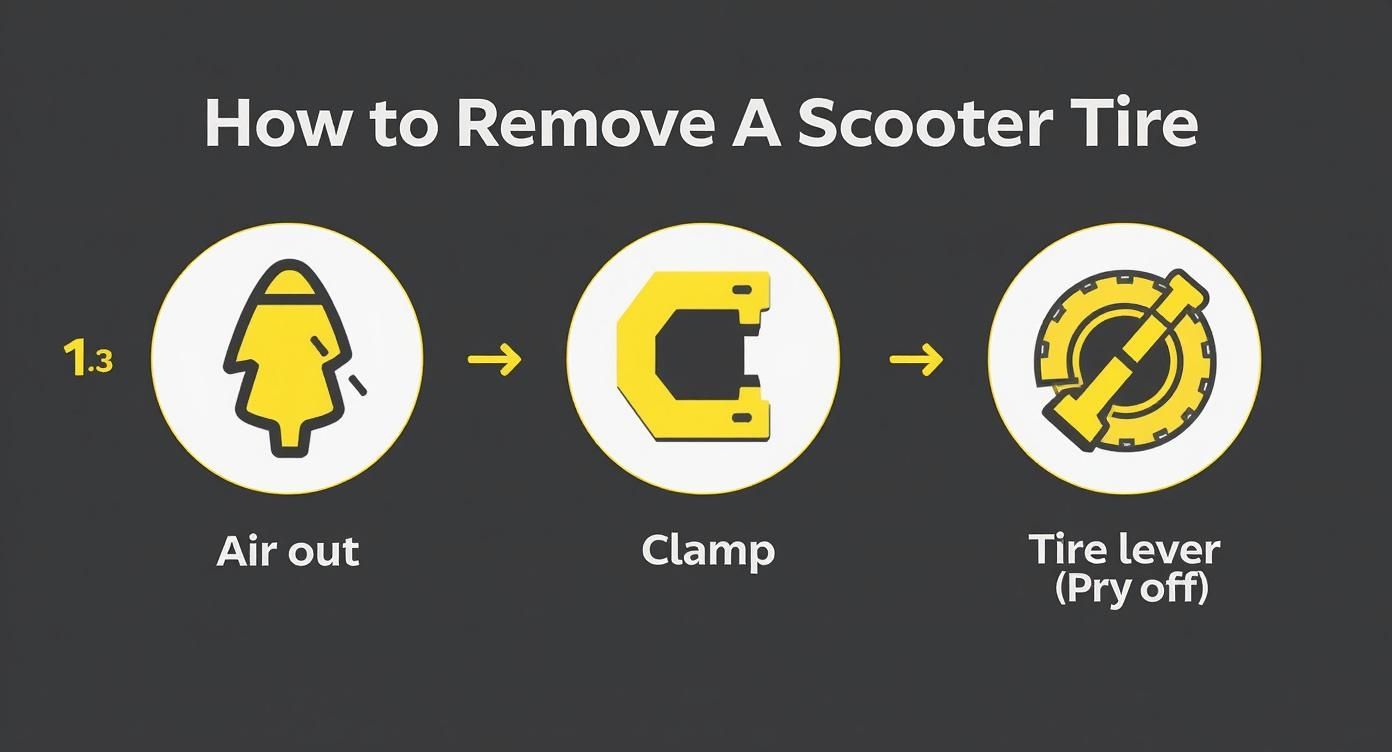
Se todella tiivistyy siihen, että tyhjennät ilman, irrotat reunan ja sitten vain irrotat sen vipuilla. Teoriassa yksinkertaista, mutta vaatii voimaa.
Sisärenkaiden ja tubeless-renkaiden asettaminen paikalleen
Jos työskentelet klassisen sisärenkaan kanssa, tässä vinkki, jonka toivon oppineeni aikaisemmin: täytä uusi sisärengas juuri vähän ennen kuin laitat sen renkaan sisään. Puhun juuri sen verran ilmaa, että se saa pyöreän muodon. Tämä auttaa vakavasti estämään sen kiertymisen tai puristumisen renkaan ja vanteen väliin—numero yksi syy välittömään puhkeamiseen heti asennuksen jälkeen.
Tubeless-renkaissa pelin nimi on täydellisen ilmatiiviin tiivisteen luominen. Salainen aseesi on suihkepullo, jossa on saippuavettä. Suihkuta kevyesti vanteen sisäpuolelle ja molemmille renkaan reunoille. Tämä voitelu muuttaa kaiken, auttaen rengasta liukumaan vanteelle ja napsahtamaan paikalleen ilman suurta vastustusta.
Olen nähnyt niin monen kamppailevan yrittäessään väkisin saada kuivaa tubeless-rengasta vanteelle. Älä ole se henkilö. Saippuaveden temppu on taikaa; kuulet tyydyttävän "poksahtamisen", kun reuna asettuu paikalleen pumpatessasi.
Täyskumirenkaan asentamisen hallinta
Täyskumirenkaat ovat aivan eri juttu. Sinun täytyy käyttää samaa lämmitystapaa kuin vanhan renkaan irrottamiseen. Varmista, että rengas on vielä mukavan lämmin kuumavesikylvystä tai nopeasta kuumailmapuhallinhetkestä. Joustavuus on tässä avainsana.
Aloita työntämällä toinen puoli renkaasta vanteen uraan. Tässä tarvitset vahvoja rengasvippaita ja henkilökohtaisen suosikkivinkkini, raskaat nippusiteet.
- Kun osa renkaasta on vanteella, lukitse se paikalleen. Pujota pari nippusiteitä pyörän pinnojen läpi ja renkaan ympärille. Tämä toimii kuin kolmas käsi, estäen juuri asennetun osan ponnahtamasta heti takaisin pois.
- Nyt käytä vipujasi hitaasti ja varovasti työntääksesi loput renkaasta vanteen reunuksen yli. Tee se pienissä osissa; älä yritä tehdä liikaa kerralla.
- Se on varmasti kuntoilua. Mutta lämpö pitää kumit juuri tarpeeksi joustavina, jotta ne suostuvat yhteistyöhön.
Kun niin monet ihmiset kiitävät kaupungeissa skoottereilla, varaosien kysyntä on räjähtänyt. Maailmanlaajuinen skootterirenkaiden markkina kasvoi noin 1,95 miljardiin dollariin vuonna 2021 ja on matkalla saavuttamaan 2,6 miljardia dollaria vuoteen 2025 mennessä. Tämä buumi ei johdu pelkästään lisääntyneistä kuskeista; se heijastaa, miten kaupunkiajo kuluttaa renkaita ja miten ihmiset ovat tulleet fiksummiksi turvallisuuden ja huollon suhteen. Voit tutustua lisää näihin tietoihin osoitteessa Cognitive Market Research.
Oikean renkaan valinta ajollesi
Kun on aika vaihtaa skootterin rengas, kyse ei ole pelkästä yksinkertaisesta korjauksesta. Se on todellinen tilaisuus hienosäätää skootterisi suorituskykyä. Valitsemasi renkaat voivat täysin muuttaa, miltä skootterisi tuntuu asfaltilla, joten siihen kannattaa panostaa hieman ajatusta.
Markkina koostuu oikeastaan kolmesta pääpelaajasta: klassisista sisäkumirenkaista, moderneista ilman sisäkumia olevista ratkaisuista ja lähes luodinkestävästä kovasta renkaasta. Jokaisella on oma persoonallisuutensa, hyvät ja huonot puolensa, jotka voivat tehdä tai rikkoa päivittäisen työmatkasi. Se, mikä toimii ihmeellisesti vastamaalatulla pyöräkaistalla, voi ravistaa hampaasi irti kuoppaisella kaupunkitiellä.
Kolme suurta rengastyyppiä selitettynä
Joten, miten valita? Se todella riippuu prioriteeteistasi. Mieti tyypillistä reittiäsi, teiden laatua, joilla ajat, ja rehellisesti, kuinka paljon vihaat huollon kanssa säätämistä. Haluatko pilvenpehmeän, pehmeän ajon vai onko tärkein tavoitteesi, ettet koskaan enää saa puhki rengasta?
-
Sisäkumilliset renkaat: Tämä on vanhanaikainen, perinteinen ratkaisu. Sinulla on ulkorenkaat pidon takaamiseksi ja erillinen sisäkumi, joka pitää ilman. Ne tunnetaan melko mukavasta ajosta ja ovat yleensä edullisin vaihtoehto. Suuri miinus? Ne ovat alttiimpia puhkeamisille.
-
Ilman sisäkumia olevat renkaat: Aivan kuten autossa, nämä renkaat muodostavat ilmatiiviin tiivisteen suoraan vanteen kanssa. Ne kestävät korkeampaa ilmanpainetta paremman suorituskyvyn saavuttamiseksi, ja kun lisäät renkaan tiivistysainetta, ne voivat usein paikata pieniä puhkeamia itsestään ajon aikana. Haittapuolena on, että niiden asentaminen vanteelle ensimmäistä kertaa voi olla todellinen treeni.
-
Kovat renkaat: Jos olet sellainen kuski, joka haluaa nollahuollon, tämä on sinun lippusi. Ne on valmistettu kiinteästä kumista tai kehittyneistä polymeereistä, ja ne ovat 100 % puhkeamattomia. Mutta tämä mielenrauha maksaa kovan hinnan: ajomukavuuden. Tunnistat jokaisen halkeaman ja kiven tiessä, mikä voi olla melko kovaa epätäydellisillä kaupunkiteillä.
Oikea rengas muuttaa potkulaudasi luonteen täysin. Täyskumirenkaat antavat täydellisen mielenrauhan puhkeamisten varalta, kun taas hyvä tubeless-rengas tarjoaa loistavan tasapainon mukavuuden ja kestävyyden välillä. Se on klassinen kompromissi luotettavuuden ja ajomukavuuden välillä.
Jos haluat syvällisempää tietoa eri rengasrakenteiden vivahteista, kattava opas liikkuvuuspotkulautojen renkaista voi tarjota lisäselvyyttä.
Renkaiden vertailu päältä päin
Laitetaan nämä vaihtoehdot rinnakkain nähdäksesi, miten ne todella pärjäävät tärkeimmillä osa-alueilla.
Potkulaudan renkaiden tyypin vertailu
| Ominaisuus | Sisäkumikumirenkaat | Tubeless-renkaat | Täyskumirenkaat |
|---|---|---|---|
| Pistosuojaus | Matala | Korkea (tiivistysaineen kanssa) | Pistonkestävä |
| Ajon mukavuus | Erinomainen | Erittäin hyvä | Huono |
| Vaihdon helppous | Kohtalainen | Vaikea | Erittäin vaikea |
| Paino | Kevyin | Kohtalainen | Raskain |
| Parhaiten sopii | Sileät pinnat, mukavuus | Monipuolinen suorituskyky | Karkea kaupunkityömatka |
Lopulta oikean renkaan valinta on suurimman ongelmasi ratkaisemista.
Jos olet kyllästynyt siihen, että työmatkasi menee pilalle jatkuvien puhkeamisten takia, täyskumirenkaan valinta on yksinkertainen ja tehokas ratkaisu. Mutta jos haluat sujuvan, pitävän ajon ja olet valmis käyttämään hieman ylimääräistä vaivaa asennuksessa, tubeless-ratkaisu on vaikea voittaa.
Yleisten ongelmien korjaaminen ja mihin kiinnittää huomiota
Vaikka noudattaisit kaikkia vaiheita täydellisesti, potkulaudan renkaan vaihto voi joskus yllättää. Se tapahtuu meille parhaimmillekin. Todellinen niksi on tietää, miten käsitellä näitä pieniä ongelmia, jotta ne eivät pilaa koko päivääsi.
Yksi turhauttavimmista asioista, erityisesti jos työskentelet sisäkumikumirenkaan kanssa, on pelätty puristusrikko. Olet tehnyt kaiken kovan työn, alat pumppaamaan ja kuulet sen sielua raastavan ilmavuodon sihinän. Ugh. Tämä tarkoittaa melkein aina, että olet vahingossa puristanut sisäkumin renkaanvipuasi ja vanteen väliin.
Sinun täytyy ottaa rengas pois ja etsiä pieni "käärmeenpurema"—kaksi pientä rinnakkaista reikää sisäkumissa. Se on klassinen virhe, mutta nyt tiedät, mitä etsiä.
Asennuksen jälkeisten heiluntojen tunnistaminen ja ratkaiseminen
Oletko koskaan saanut kaiken kasaan, lähtenyt potkulaudalla ajamaan ja tuntenut oudon heilunnan? Se ei ole vain ärsyttävää; se on todellinen turvallisuusriski.
Yhdeksän kertaa kymmenestä tuo heilunta tarkoittaa, että renkaan helma ei ole tasaisesti paikallaan vanteella. Toinen puoli on napsahtanut paikoilleen, mutta toinen on edelleen jumissa vanteen keskikanavassa.
Tässä on korjaus:
- Tyhjennä rengas kokonaan.
- Suihkuta saippuavettä koko renkaan helmalle molemmilta puolilta. Älä säästele.
- Aloita pumppaaminen uudelleen, mutta tällä kertaa seuraa tarkasti renkaan sivuseinämän helmaviivaa.
- Seuraa, että rengas napsahtaa tasaisesti koko vanteen ympäri. Saatat jopa kuulla pari kovaa "poksausta", kun se asettuu paikalleen. Joskus täytyy mennä hieman suositeltua painetta korkeammalle (mutta ei yli maksimi PSI:n) saadaksesi renkaan täysin istumaan.
Eniten unohdettu vaihe on lopullinen paineen tarkistus. Renkaiden oikea PSI ei ole vain suorituskyvyn takia; se on tärkein suoja tulevia puhkeamisia ja epätasaista kulumista vastaan. Alipaine on onnellisen potkulaudan renkaan vihollinen.
Tubeless-ongelmat ja painevinkit
Ongelma uuden tubeless-renkaan hitaassa vuodossa? Älä panikoi. Tiiviste helmassa tai venttiilin ympärillä on todennäköisesti syynä.
Ennen kuin purat kaiken uudelleen, kokeile lisätä rengastiivistettä. Pumppaa rengas täyteen, pyöritä pyörää kunnolla ja pomputa sitä maata vasten muutaman minuutin ajan. Tämä levittää tiivisteen sisällä, pakottaen sen täyttämään pienet raot ja tukkimaan vuodot.
Oikea rengaspaine on paras ystäväsi. Alipaineella ajaminen on kuin kutsuisi ongelmat paikalle—se hidastaa sinua, lisää puristuspuhkeamien riskiä ja voi jopa vahingoittaa vanteita karkeilla kaupunkikaduilla. Tee tavaksi tarkistaa paine vähintään kerran viikossa kunnollisella mittarilla.
Ja hei, jos ajat myös sähköpyörällä, suuri osa tästä neuvosta pätee myös siihen. Periaatteet ovat samat useimmissa kaksipyöräisissä ajoneuvoissa. Jos olet aloittamassa toista projektia, oppaamme sähköpyörän renkaan korjauksesta saattaa tarjota sinulle lisävinkkejä. Näiden yleisten ongelmien tunnistaminen ja korjaaminen tekee sinusta paljon varmemman mekaanikon.
Vastaukset yleisimpiin potkulaudan rengaskysymyksiisi
Olemme viettäneet paljon aikaa potkulaudat foorumeilla ja yhteisöchatissa, ja samat kysymykset toistuvat yhä uudelleen. Joten olemme koonneet yleisimmät kysymykset antaaksemme sinulle suorat, turhattomat vastaukset.
Kuinka usein minun todella täytyy vaihtaa sähköpotkulaudan renkaat?
Tässä ei ole tiukkaa sääntöä. Kaikki riippuu siitä, kuinka usein ajat, millaisessa maastossa ajat ja renkaidesi laadusta. Päivittäiselle työmatkalaiselle hyvä nyrkkisääntö on tarkistaa renkaat joka kuukausi ja odottaa niiden vaihtamista jossain välillä 1 500–5 000 kilometriä (tai 1 000–3 000 mailia).
Rehellisesti sanottuna, unohda matkamittari ja käytä vain silmiäsi. Todelliset merkit on mahdotonta missata: kulutuspinta on kulunut sileäksi, sivuseinämässä näkyy halkeamia tai yhtäkkiä tulee useita puhkeamisia peräkkäin. Kilometrimäärä on vain suuntaa antava; näkyvä kuluminen on lopullinen totuus.
Voinko laittaa potkulautaani eri kokoisen renkaan?
Se on houkuttelevaa, mutta sinun kannattaa pysyä valmistajan suositteleman koon mukaisena. Löydät sen painettuna nykyisen renkaasi sivuseinämään (se näyttää jotakuinkin tältä: 10x2.5).
Leveämmäksi meneminen on ongelmien kutsu – se voi hangata potkulaudan runkoa tai jopa jarruosia vasten, mikä on vakava turvallisuusriski. Kapeammaksi meneminen voi tehdä laudasta epävakaan ja heiluvan, muuttaen täysin sen käsittelyä. Jos vaihdat ilmatäytteisistä renkaista täyskumisiin, tarkista vain, että uusi rengas on tehty nimenomaan potkulautasi vanteelle.
Kannattaako päivittää täyskumisiin tai tubeless-renkaisiin?
Kyse on kompromisseista. Oikea valinta riippuu täysin siitä, mitä olet korjaamassa. Jos olet kyllästynyt puhkeamiin lasinsirujen ja piikkien takia työmatkallasi, niin kyllä, tavallisten sisärenkaallisten renkaiden hylkääminen on todellinen pelin muuttaja.
Yhteenveto: Täyskumirenkaat poistavat puhkeamat kokonaan, mutta mukavuudesta joutuu tinkimään ja jokainen töyssy tuntuu selvästi. Tubeless-renkaat ovat loistava kompromissi, tarjoten pehmeän kyydin ja tiivisteen, joka paikkaa pieniä puhkeamia lennosta.
Jos puhkeamat ovat suurin vihollisesi, päivitä renkaat. Jos arvostat pehmeää ja mukavaa kyytiä yli kaiken, pysy laadukkaissa pneumaattisissa renkaissa. Syvällisempää tietoa löydät oppaastamme sähköpotkulautojen turvallisuusvinkeistä, joka selittää, miten oikeat varusteet tekevät kyydistä turvallisemman.
Tarvitsenko tähän hommaan kasan erikoistyökaluja?
Et tarvitse täyttä mekaanikon työpajaa, mutta muutama erityinen työkalu tekee prosessista miljoona kertaa vähemmän turhauttavan. Välttämättömimmät ovat vankka sarja rengasvipuja. Metalliset antavat parhaan vipuvoiman, mutta muovipinnoitetut viput ovat erinomaisia estämään rumia naarmuja vanteissa.
Tarvitset myös oikean kokoiset jakoavaimet tai hylsyavaimen pyörän akselin mutterin irrottamiseen. Jos työskentelet tubeless-renkaiden kanssa, ilmakompressori on pelastus renkaan istuttamisessa kunnolla, mutta yleensä homman saa hoidettua hyvällä lattiapumpulla ja vähän käsivoimaa käyttäen. Voit pärjätä ilman täydellistä varustusta, mutta oikeat työkalut säästävät sinut monelta vaivalta.
Valmiina saamaan kyydistäsi taas sujuvan? Punk Ride -verkkokaupassa meillä on käsin valittu valikoima huippuluokan sähköpotkulautoja ja kaikki osat, joita tarvitset seuraavaan rengasvaihtoon. Löydä seuraava päivityksesi osoitteesta https://www.punkride.com.
Jaa:
Kuinka valita paras sähköpotkulaudan kypärä ajollesi
Parhaiden lukkojen löytäminen sähköpyöriin