


When you're trying to figure out the whole moped vs ebike thing, it really just boils down to one simple question: do you want a powered-up bicycle or a mini-motorcycle? An ebike gives you an electric boost while you pedal, so most laws treat it just like a regular bike. That means no license, no registration, no fuss in most places.
An electric moped, on the other hand, is a completely different beast. It’s all throttle, no pedaling required, which puts it in the same category as a small motorcycle. With that extra power comes extra responsibility: you'll likely need a specific license, registration, and insurance to hit the road.
Your Quick Guide to Choosing Between a Moped and an Ebike
Picking between an electric bike and a moped can feel like a huge decision, but it gets a lot simpler when you know what to look for. Think of this as your cheat sheet—we'll cut straight to the chase and help you figure out which ride fits your life before we get into all the nitty-gritty details.
For most city dwellers in the US and Australia, the biggest fork in the road is the law. Are you cool with the paperwork and ongoing costs of owning a motor vehicle, or is the simple, hop-on-and-go freedom of a bike more your speed? This little flowchart breaks it down perfectly.
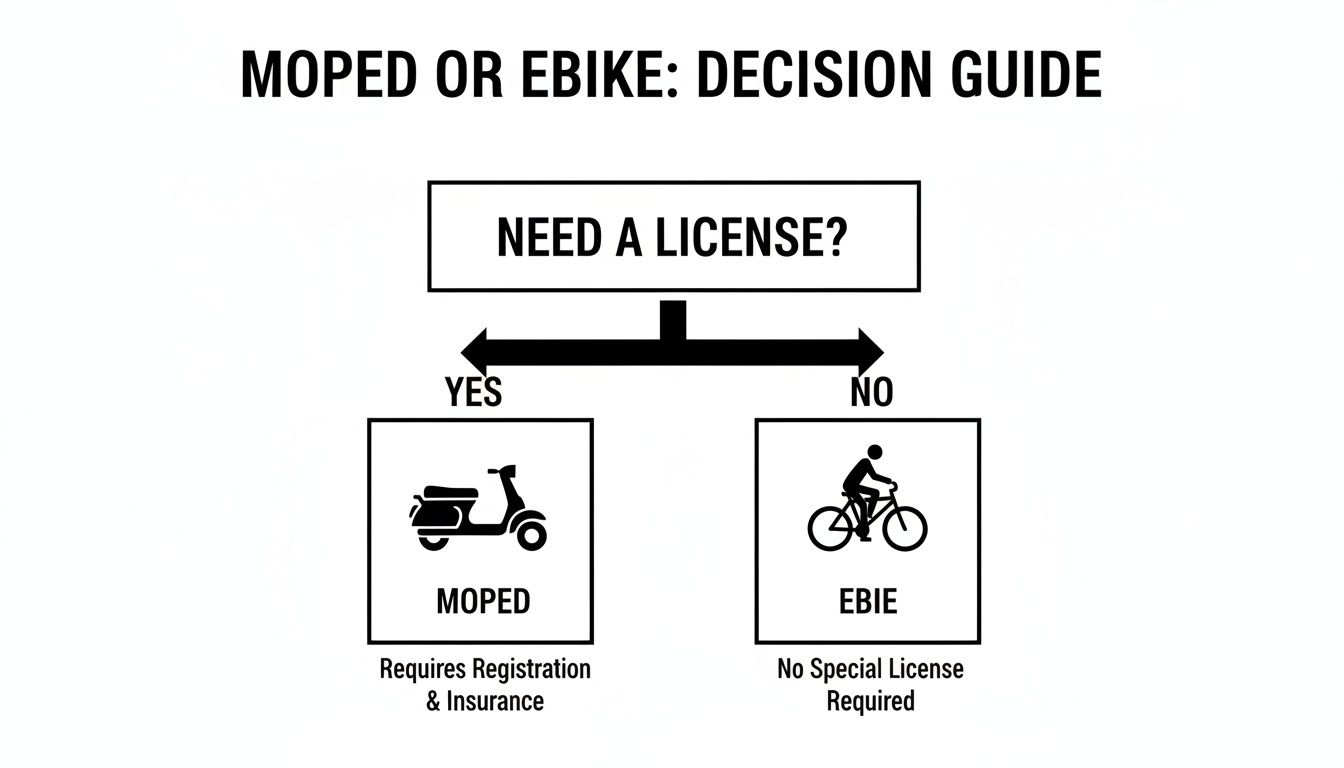
As you can see, that license requirement is the first, and often biggest, hurdle that splits the two. It’s a make-or-break factor for a lot of riders right from the start.
To give you an even clearer picture, let's put them head-to-head.
Moped vs Ebike A Side-by-Side Comparison
Here’s a quick summary of the key differences between electric mopeds and ebikes to help guide your decision. It’s a simple at-a-glance look at what sets them apart.
| Feature | Ebike (Pedal-Assist) | Electric Moped (Throttle-Only) |
|---|---|---|
| Primary Power | Pedal-assist electric motor (throttle optional in some classes) | Throttle-controlled electric motor |
| Top Speed | Varies by class; often 20 mph (32 km/h) in the US or 25 km/h in Australia | Can reach speeds of 30 mph (48 km/h) or more |
| Licensing | Generally not required for Class 1/2 ebikes | License/endorsement often required (varies by state/territory) |
| Insurance | Generally not required | Mandatory in most jurisdictions |
| Where to Ride | Bike lanes, roads, and some trails (depending on class) | Public roads only; not permitted in bike lanes |
| Upfront Cost | Generally lower | Often higher due to vehicle-grade components |
| Running Costs | Very low (charging, basic maintenance) | Higher (insurance, registration, professional servicing) |
| Best For | Active commuting, fitness, and recreational rides | Longer commutes and replacing a car for city travel |
So, there you have it. The choice hinges on whether you value the exercise and freedom of an ebike or need the speed and raw power of a moped for your daily travels.
What Really Separates an E-bike from a Moped?
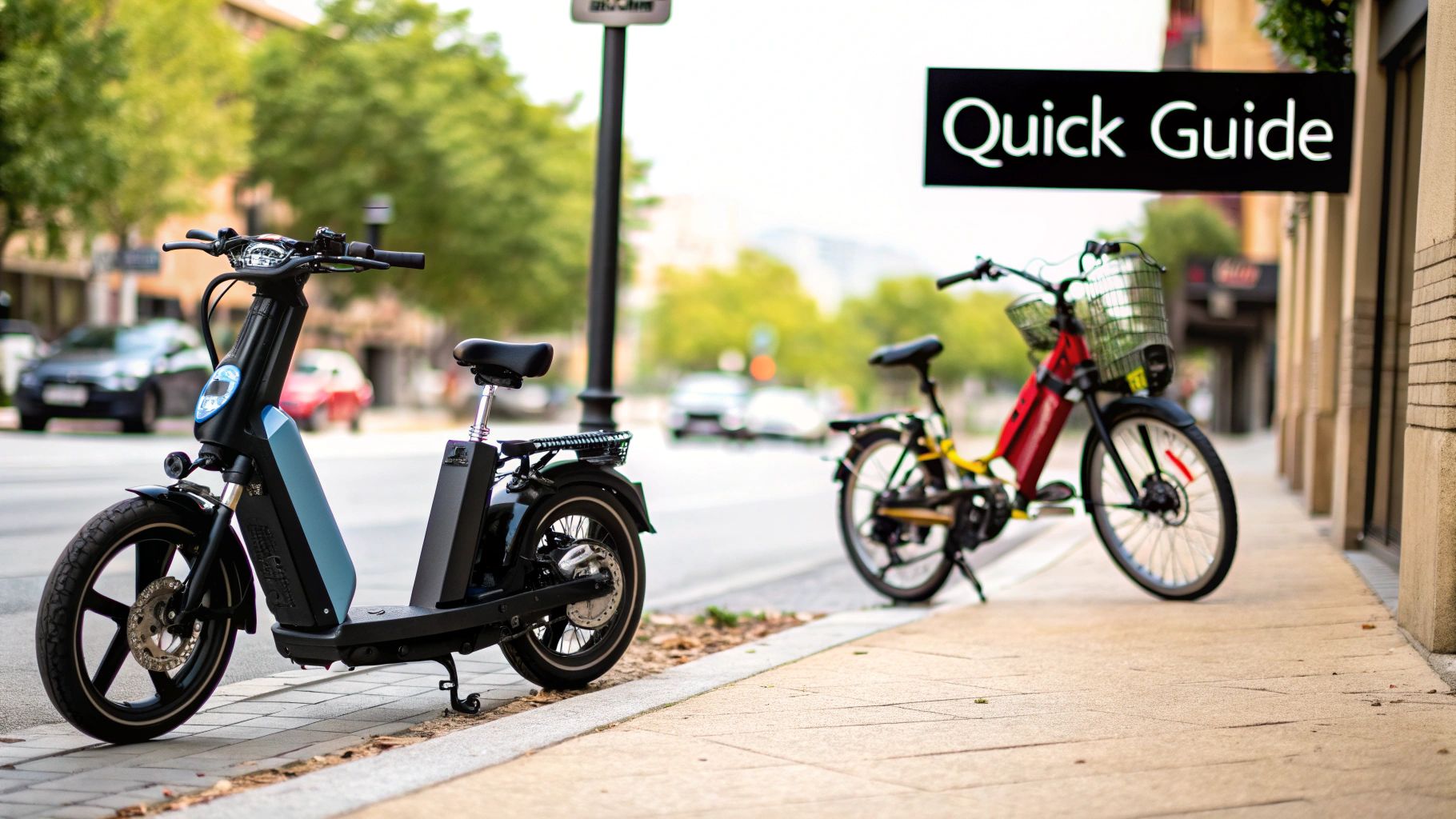
Before diving into the specs and performance stats, let's get one thing straight. The core difference between an e-bike and a moped puts them in completely different worlds. The whole moped vs ebike conversation isn't just about speed or style; it’s about how you power your ride and, crucially, how the law sees it. This one distinction changes everything, from where you can ride to the paperwork you need to sort out.
It all boils down to a simple concept: an e-bike is built to assist you, while a moped is built to propel you. In the US, ebikes are often categorized into a 3-Class system, defining whether they assist pedaling, have a throttle, and how fast they go. This legal framework keeps them in the bicycle category.
An electric moped, on the other hand, is all throttle. You twist the grip, and off you go—no pedalling necessary. This fundamental difference is why a moped is legally a motor vehicle, like a small scooter or motorcycle, while an e-bike keeps its bicycle status.
The Power Dynamic Explained
How the power gets to the wheels completely shapes the feel of the ride. On an e-bike, it’s an active and intuitive experience. The motor kicks in as you pedal, so it still feels like you’re cycling, just without the grind up hills or the exhaustion on long journeys. Some US-spec ebikes (Class 2) even have a throttle for pedal-free cruising.
A moped gives you a more passive ride. It’s a pure "twist-and-go" machine, which is fantastic for zipping through city traffic without breaking a sweat. It’s a brilliant car alternative for many, but it also means you have to play by the same road rules as every other motor vehicle.
The real takeaway is this: An e-bike amplifies your effort, keeping you in the world of cycling. A moped replaces your effort, putting you squarely in the world of motorised transport—with all the legal strings attached.
This is also reflected in what people are buying. The market for lightweight, bicycle-class e-bikes is growing way faster than for heavier, vehicle-class mopeds. The global e-bike market was valued at around USD 61.9 billion in 2024 and is expected to shoot up to nearly USD 113.6 billion by 2030. That tells you a lot about how popular the pedal-assist model has become for city dwellers.
Why This Matters for You
Getting your head around this legal and functional divide is the first step to making the right call. It’s what decides whether you’ll be cruising down bike lanes or sticking to the main roads, and whether you'll need a license plate or just a good helmet. Nail this from the start, and picking the perfect ride becomes a whole lot easier.
If you're just getting started, our guide on how to choose an ebike is a great next step to figure out the specific features that will work for you.
Speed, Power, and Range: How They Feel in the Real World
Let's get down to what really matters on your daily commute: how these rides actually perform on the street. Forget the marketing specs for a minute. The real-world differences in speed, power, and range are what you'll feel every single day, and this is where you'll find the right fit for your ride.
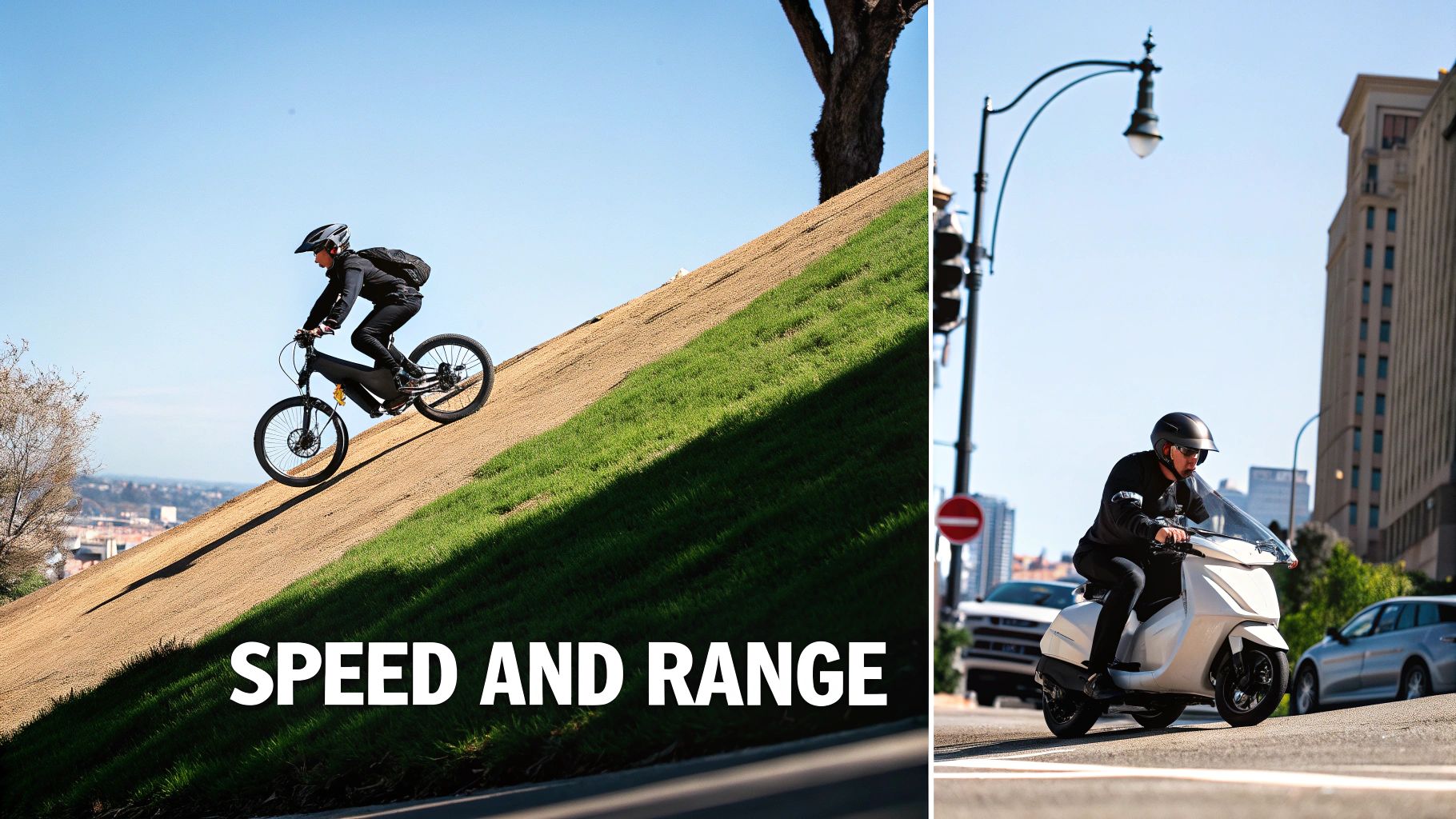
An electric moped is all about that instant, on-demand power. Twist the throttle, and you're off. With motors typically packing anywhere from 1,000W to 4,000W, a moped has no trouble keeping pace with city traffic, comfortably hitting speeds of 30 mph (48 km/h) and sometimes more. This makes it a fantastic tool for longer commutes down main roads where you need to blend in with the flow of cars.
E-bikes, on the other hand, offer a totally different kind of ride. The power is there to help you pedal, not do all the work for you. E-bike motors usually sit in the 250W to 750W range, and in the US, assisted speeds can go up to 20 mph (32 km/h) for Class 1/2 and even 28 mph (45 km/h) for Class 3. That might not sound like much, but it's more than enough for zipping through dedicated bike lanes and navigating those congested city centers where cars are barely moving anyway.
What Power Actually Feels Like on the Road
You'll really notice the difference when you hit a hill. A moped just goes—it tackles steep inclines without breaking a sweat, maintaining its speed with a simple twist of your wrist. No effort required.
An e-bike still needs you to pedal up that hill, but the motor kicks in and makes a tough climb feel surprisingly easy. It’s like having a superhero’s legs. You're still getting a bit of a workout, but the bike is doing the heavy lifting.
If your goal is to get from A to B without a single drop of sweat, the raw, effortless power of a moped is the obvious choice. But if you actually enjoy the feel of cycling and just want to flatten the hills and make your commute a little quicker, an e-bike's pedal-assist is a game-changer.
It all boils down to this: Do you want effortless acceleration to merge with traffic, or do you want a supercharged cycling experience that makes your journey faster and easier? Your answer points you straight to either a moped or an e-bike.
Figuring Out Your True Travel Range
When it comes to range, don't just look at the numbers on the box. A moped’s bigger battery might promise an impressive 40-50 miles or more on a single charge, making it a solid bet for anyone with a long daily haul.
An e-bike's range is a bit more of a moving target, usually falling somewhere between 25 and 50 miles. The big difference is that you have a ton of influence over it. Dial back the pedal assistance and put in a bit more legwork, and you can stretch that battery life way further. While things like your weight, the terrain, and even a strong headwind will affect both rides, only the e-bike gives you the power to conserve energy with your own effort. You're much more in control of how far you can go.
Navigating the Rules of the Road in the US and Australia
This is often the deal-breaker. When it comes to the moped vs ebike debate, the legal side of things is where they split into two completely different worlds. If you're riding in the United States or Australia, getting your head around these rules is non-negotiable—it keeps you safe, fine-free, and helps you buy the right ride for you.
An e-bike is pretty much treated like a regular push-bike in the eyes of the law, as long as it fits the legal definition (which varies by state and territory). You can just get on and go. No license, no registration, and no mandatory insurance. It's that simple.
Electric mopeds? That's a whole other story. They’re classed as motor vehicles. Because they pack more punch and you don't need to pedal, they're legally in the same boat as a small motorcycle, which means a lot more red tape.
The Legal Breakdown for Mopeds
Opting for an electric moped means you’ve got some homework to do before you can legally hit the road. Think of it like getting a car—there are a few boxes you absolutely have to tick.
- Licensing: You'll likely need a specific motorcycle license or endorsement on your driver's license.
- Registration: Your moped has to be registered with the local vehicle authority (like the DMV in the US), which also means fitting a proper license plate.
- Insurance: Just like a car, vehicle insurance is mandatory.
- Helmet Laws: You must wear a proper, safety-standard-approved motorcycle helmet whenever you're riding.
The key takeaway is simple: E-bikes offer the path of least resistance. You get maximum freedom because they fall under bicycle laws. Mopeds, on the other hand, demand the same level of responsibility as any other motor vehicle on the road.
Why Simpler Rules Often Win for City Riders
For city commuting, the dead-simple legal status of e-bikes makes them a no-brainer for many. You can zip down bike lanes, sail past traffic jams, and lock them up almost anywhere without a second thought about paperwork. We've got a whole guide breaking down the specifics of whether electric bikes are street legal in the UK.
This lack of hassle is a huge reason why e-bikes are taking over our cities. When you look at the big picture, government policies and costs play a massive role. Places that simplify the rules and offer subsidies for e-bikes see them fly off the shelves. Electric mopeds face more hurdles—higher upfront costs and the need for better infrastructure, which often makes them a better fit for delivery fleets than for the average commuter.
Ultimately, it boils down to what you're after: the grab-and-go convenience of a bicycle or the full commitment of a motor vehicle.
Calculating the True Cost of Ownership
That initial price tag? It's really just the opening chapter of the story. When you're trying to decide between a moped vs ebike, you've got to look past what you pay upfront and get a feel for the total cost of ownership. The ongoing expenses are where one of these rides really starts to pull away from the other, showing you which one is actually lighter on your wallet in the long run.
For the most part, an electric bike is going to have much lower running costs. Besides the electricity for charging—we’re talking just pennies per charge—your main expenses are for basic bike maintenance. Think new brake pads, a fresh set of tires now and then, and maybe a chain clean. Most of it is straightforward stuff you can easily do yourself.
Moped Maintenance and Hidden Fees
Electric mopeds, on the other hand, are legally classified as motor vehicles, and that brings a whole bunch of extra costs you just don't have with an e-bike. These aren't optional, either; they're legal requirements in most US states and Australian territories.
- Mandatory Insurance: This is often the biggest kicker. Moped insurance is a legal must-have and can add a serious chunk to your yearly budget.
- Vehicle Registration: Just like a car, your moped has to be registered with the state, and that means recurring fees.
- Professional Servicing: Mopeds are more complex machines. Their systems often need a qualified mechanic to look them over, which adds another line item to your annual costs.
This financial commitment is a huge factor. If you're thinking about how to pay for your new ride, it's smart to understand all your options. For more info on borrowing for personal items, this guide to business loan versus personal loan is a helpful resource.
The bottom line is this: An e-bike's costs are mostly about basic upkeep and are largely up to you, while a moped comes with mandatory, repeating fees that feel a lot more like owning a small car.
Long-Term Value and Resale
Finally, let's talk long-term value. Sure, both will depreciate over time, but the sheer simplicity and cheap running costs of e-bikes keep them incredibly popular on the secondhand market.
When you really crunch the numbers, it’s easy to see why so many city dwellers are asking themselves if electric bikes are worth it. For most riders, the minimal upkeep and freedom from legal fees make the e-bike the clear financial winner over time.
Which Ride Fits Your Life? Real-World Scenarios
Specs on a page are one thing, but how do these rides actually stack up in the real world? The moped vs ebike debate really comes down to how you live and where you need to go. Let's run through a few common situations to see which one makes more sense for different riders.
The Urban Student
Think about a university student navigating a packed city like Sydney or Los Angeles. They're constantly dashing between lectures, the library, and a part-time job. Parking is a constant headache, and every dollar counts.
For this student, an e-bike is a no-brainer. It can legally zip down bike lanes to dodge traffic jams, lock up to any old bike rack, and doesn't come with the hassle of insurance or registration. It's the perfect machine for staying flexible and on budget in the city.
The Suburban Commuter
Now, let's switch gears to a professional commuting 10 miles from the suburbs into a city center, maybe from the Bay Area into San Francisco or the suburbs into Melbourne. They need something reliable and fast enough to handle busier roads, and they definitely don't want to show up to the office needing a shower.
This is where things get interesting, but the electric moped usually wins out. With a top speed of 30 mph (48 km/h), it can comfortably merge with traffic on main roads where an e-bike would feel dangerously slow. The simple "twist-and-go" throttle means they arrive feeling fresh, turning the daily grind into a simple, stress-free ride.
It all boils down to your route. If you're ducking through parks and bike paths, the e-bike is your best bet. But if your commute is mostly on main roads where you need to keep pace with cars, the moped is the smarter, safer choice.
The Delivery Rider
Finally, picture a food delivery rider who's on the clock. Their entire shift is about covering maximum ground, making quick stops, and not running out of juice—or energy.
In this demanding gig, the moped is the clear champion. Its bigger battery provides a more reliable and extensive range, and because there's no pedaling involved, the rider saves all their energy for the actual job. It's built for work, not just for fun.
This scenario also sheds light on a major difference in how the world views these rides. While electric mopeds and scooters are the go-to for delivery and transport across Asia, e-bikes are exploding in popularity for commuters in the US and EU. In fact, the United States imported an estimated 1.7 million e-bikes in 2024 alone, a testament to just how much Western riders love their pedal-assist. You can dig deeper into these global electric two-wheeler sales trends to see the full picture.
Still on the Fence? Let's Tackle Some Common Questions
Even with all the specs laid out, you might still have a few nagging questions. It’s totally normal. Let's run through some of the most frequent ones we hear to help you iron out those last few details.
What's the Deal with Security?
This one comes up all the time. Both ebikes and mopeds are hot items for thieves, but you'll secure them differently. An ebike's big advantage is its flexibility—you can use a high-quality D-lock or chain to secure it to a standard bike rack. A moped is a different beast. Since it's heavier and classified as a motor vehicle, you’ll want to layer your security with things like disc locks, alarms, and, ideally, secure off-street parking.
Can I Ride in the Rain?
Yes, you can! Both are built to be water-resistant, but it's important to remember they aren't submarines. A light drizzle is no problem for either, but you'll want to avoid monsoon-level downpours and deep puddles that could zap the electronics. Always give your ride a good wipe-down after getting it wet to keep rust away, and store it somewhere dry.
How Long Does the Battery Really Last?
People aren't just asking about range, but the battery's overall lifespan. A good quality lithium-ion battery, whether in an ebike or a moped, should give you 500 to 1,000 charge cycles. For most people, that works out to a solid three to five years of regular use before you start seeing a noticeable dip in how far you can go on a charge.
Look, the single best thing you can do is take good care of your ride. Proper charging habits, regular maintenance, and just riding smart will make a huge difference. That’s how you get the most bang for your buck, whether you’re pedaling or twisting a throttle.
If you're still wrestling with some doubts, it's worth checking out resources that bust a few common myths about electric vehicles—it can really clear things up.
Ready to roll? Punk Ride has a handpicked lineup of awesome ebikes and electric scooters built for city life. Take a look at what we've got and find your perfect match at https://www.punkride.com.
Share:
Your Guide to Ebike Pedal Assist Systems
Change Scooter Tire: Your DIY Guide for a Quick Swap