


Paljudele inimestele USAs ja Austraalias on vastus kõlav jah, elektrijalgrattad on absoluutselt seda väärt. Need on nutikas investeering, mis tasub end mitmel moel tagasi – see on hea teie rahakotile, tervisele ja üldisele õnnetundele. See muudab frustreeriva töölesõidu tõeliselt lõbusaks päeva osaks.
Elektrilise ratta tõeline väärtus
Niisiis, kas elektrilised jalgrattad on seda väärt? Trikk on lõpetada e-ratta nägemine lihtsalt veel ühe vidinana ja hakata seda nägema selleks, mis see on: tõsine asendus kallitele autosõitudele. See on tööriist, mis annab teile tagasi aega, säästab üllatavalt palju raha ja toob teie igapäevasesse rutiini värsket õhku ja kerget treeningut.
Kujutage ette tüüpilist töölesõitu linnas nagu Sydney või Los Angeles. Olete kas ummikus, otsite naeruväärselt kallist parkimiskohta või ootad bussi. E-ratas libiseb sellest kõigest mööda. Võite mööduda ummikus olevatest autodest, avastada vaikseid tagatänavaid ja jõuda sihtkohta energilisena, mitte stressis.
See väike tõuge pedaaliabist on tõeline mängumuutja. See muudab mäed tasaseks ja pikad vahemaad kergeks, lüües maha suured vabandused, mis takistavad enamikku inimesi rattasõidul.
Kaasaegne transpordilahendus
See ei ole ainult teie enda elu paremaks muutmine; see on tõeliselt praktiline lahendus paljudele kaasaegse linnalise elu probleemidele. E-rattad lahendavad korraga hulga peavalusid:
- Kuluefektiivsus: Võite hüvasti jätta kütusekulude, kallite parkimislubade ja kindlustusmaksetega. E-ratta aku laadimine maksab sente. Tõsiselt.
- Aja kokkuhoid: Unustage ummikud ja ühistranspordi hilinemised. Enamiku linnasõitude puhul on e-ratas sageli kiireim ja usaldusväärseim viis oma koduuksest sinna, kuhu peate jõudma.
- Tervis ja heaolu: See on lihtne, madala koormusega treening, mida saate oma päeva sisse ehitada. Parandate südame tervist ja selgitate meelt ilma kunagi jõusaali astumata.
- Keskkonnamõju: Nullheitmetega vähendab auto asendamine e-rattaga drastiliselt teie süsiniku jalajälge ja aitab muuta teie linna õhu veidi puhtamaks.
See diagramm paneb selle tõesti perspektiivi, näidates, kuidas e-ratas võrdub teie teiste valikutega, kui vaadata igapäevaseid kulusid, töölesõidu aegu ja keskkonnamõju.
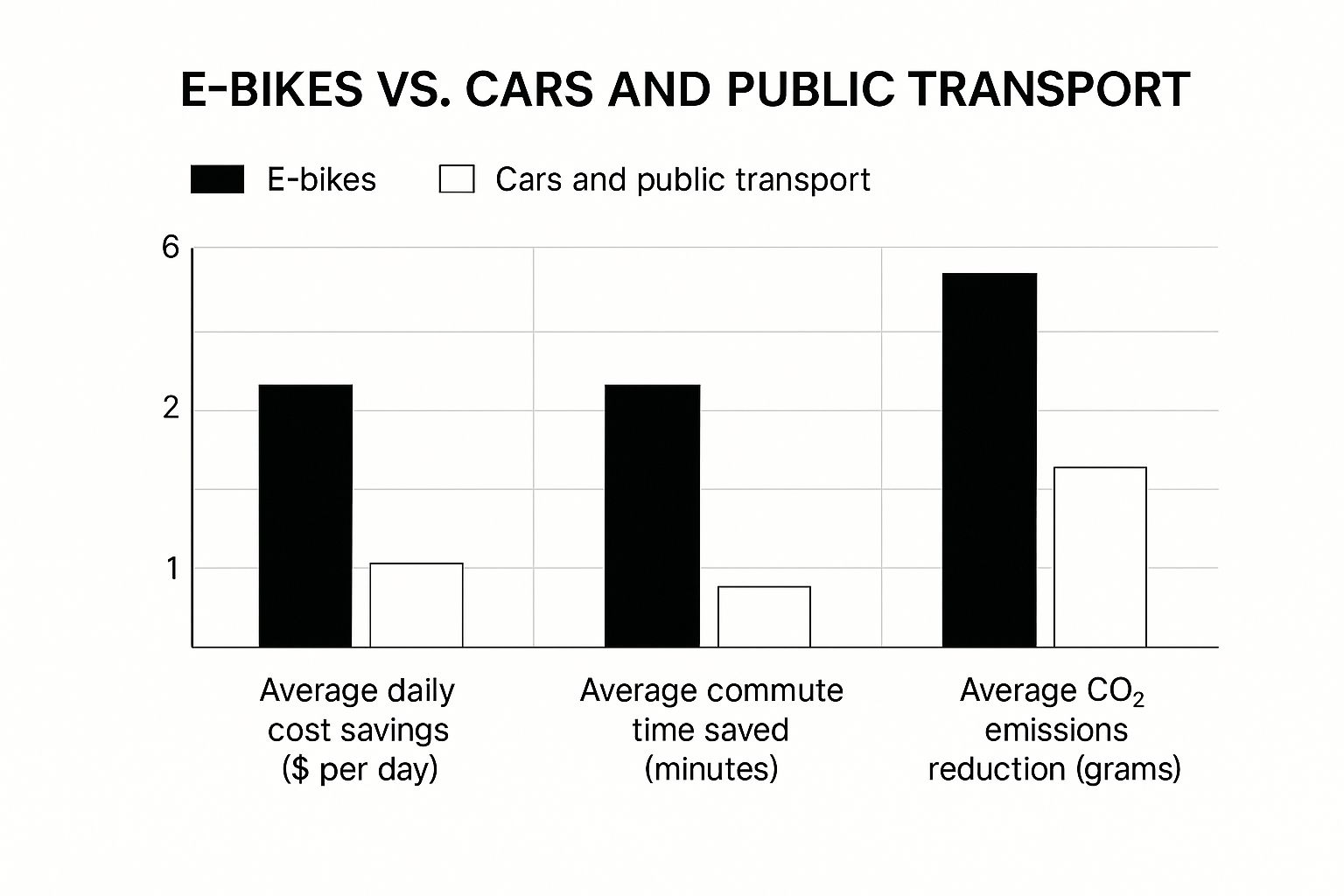
Nagu näete, numbrid ei valeta. Kasud on tohutud, mis teeb tugeva põhjuse e-rattale kui töölesõidu kuningale. See algne ostuhind hakkab tunduma üsna väike, kui näete, kui palju te iga päev säästate.
Veelgi täpsemaks muutmiseks on siin kiire ülevaade, kuidas väärtuspakkumised kõrvuti võrreldes välja näevad.
E-ratta väärtus ülevaatlikult
| Väärtuse aspekt | Elektrijalgratas | Auto | Ühistransport |
|---|---|---|---|
| Käibekulud | Minimaalne (senti laadimiseks) | Kõrge (kütus, kindlustus, registreerimine, hooldus) | Mõõdukas kuni kõrge (piletid, sõidupiletid) |
| Sõiduaeg | Sageli linnades kõige kiirem (väldib ummikuid) | Ettearvamatu liikluse ja parkimise tõttu | Sõltub viivitustest ja graafikutest |
| Tervise kasu | Suurepärane (kerge, järjepidev treening) | Puudub (istuv) | Minimaalne (jalutamine peatuseni/peatusest) |
| Parkimine | Lihtne ja tavaliselt tasuta | Raske ja kallis | Ei kehti |
| Keskkonnamõju | Väga madal (nullheitmed) | Kõrge (peamine CO2 ja õhusaaste allikas) | Mõõdukas (jagatud, kuid kasutab siiski energiat) |
Lõppkokkuvõttes hakkab algne investeering peaaegu kohe end ära tasuma. Küsimus muutub kiiresti "kas elektrirattad on seda väärt?" asemel "kas sa tõesti saad endale lubada mitte omada ühte?"
Tõelise omamise kulu lahtiseletamine
On lihtne kinni jääda e-ratta sildihinnas, kuid see on vaid loo esimene lehekülg. Hästi varustatud elektriratas USAs või Austraalias maksab tavaliselt kuskil $1,500 kuni $4,000, kuigi võid kindlasti kulutada rohkem tipptasemel mudelile. See võib tunduda suur summa, kuid pead vaatama suuremat pilti—omamise kogukulu.
Erinevalt autost on e-ratta käidukulud üllatavalt madalad. Siin hakkad tõeliselt nägema säästude kuhjumist ja küsimus "kas elektrirattad on seda väärt?" saab väga selge vastuse.
Käidukulude ülevaade
Mida sa tegelikult maksad, kui sul on e-ratas? Peamine kulu on elekter ja see on peaaegu naeruväärselt odav. Tavalise e-ratta aku laadimine täiesti tühjalt täis maksab vaid paar senti—vähem kui 25¢. See väike kulu võimaldab sul sõita abistatud režiimis 30 kuni 100 kilomeetrit (20 kuni 60 miili).
Elektrienergia kõrval on hooldus üsna lihtne ja ettearvatav. Siin on, mida võid eelarvesse planeerida:
- Aastane hooldus: Igakuine häälestus kohalikus rattapoes hoiab kõik sujuvalt töös.
- Tarvikud: Nagu tavalise rattaga, tuleb sul lõpuks asendada näiteks piduriklotsid ja rehvid.
- Aku vahetamine: See on suurim tulevane kulu, kuid e-ratta aku on ehitatud kestma mitu aastat ja sadu laadimistsükleid enne, kui see hakkab mahutavust kaotama.
See lihtne, madalate kuludega reaalsus on täiesti erinev finantspeavaludest, mis kaasnevad teiste transpordivõimalustega.
Kui vahetad auto e-ratta vastu, ei säästa sa mitte ainult raha; sa vahetad hulga ettearvamatuid, stressirohkeid kulutusi ühe hallatava investeeringu vastu, mis end ise ära tasub.
Finantsvõistlus: E-ratas vs. Auto
Et tõeliselt näha sääste tegevuses, paneme e-ratta otse vastamisi autoga sellistes linnades nagu Austin või Melbourne.
Võrreldes autoga: Olgem ausad, auto võib olla rahaline must auk. Sa maksad pidevalt kütuse, kindlustuse (mis USAs võib hõlpsasti ületada 1500 USD aastas), registreerimise ja nende õudsete ootamatute remondiarvete eest. Ja see on enne, kui mõtled parkimistasudele. E-jalgratas kustutab kõik need kulud. AAA andmetel on uue auto omamise keskmised aastakulud USAs ületanud 12 000 USD.
Võrreldes ühistranspordiga: Kuigi üldiselt odavam kui auto, võivad igakuise ühistranspordi piletid siiski kokku tulla kalliks. Suuremas Austraalia linnas võib pilet maksma minna üle 200 AUD kuus, kokku üle 2400 AUD aastas. Suures USA linnas võid kulutada hõlpsasti üle 1200 USD aastas. Sinu e-jalgratas, mida sa omad, tasub end sageli ära veidi üle aasta võrreldes nende lõputute piletikuludega.
Matemaatika on lihtne. Raha, mida sa enam ei kuluta kütusele, piletitele ja kindlustusele, läheb otse sinu e-jalgratta eest tasumiseks. Kui jõuad tasakaalupunkti, paneb iga sõit tõeliselt raha sinu taskusse tagasi.
Kui otsid head kohta alustamiseks, aitab meie juhend parima elektrijalgratta kohta alla £2000 leida sõiduvahendi, mis hakkab sulle raha säästma veelgi kiiremini.
Kuidas e-jalgratas parandab sinu igapäevast töölesõitu

Olgem ausad, igapäevane töölesõit võib olla tõeline nuhtlus. Jääd ummikusse kinni — see pole just inspireeriv päeva algus. Aga mis siis, kui saaksid seda muuta? E-jalgratas muudab selle igapäevase rutiini millekski, mida sa võid isegi oodata.
See ei ole lihtsalt punktist A punkti B jõudmine. See on aeg enda jaoks tagasi võita.
Tõeline võlu peitub pedaaliabimootoris. Mõtle sellele kui pidevale, sõbralikule taganttuulele, mis sind edasi lükkab. Need hirmutavad tõusud tunduvad äkki kui õrnad nõlvad ja vastutuul pole enam probleem. Sa sõidad mööda seisvatest autodest, tunnetades tuult, mitte hingates sisse heitgaase.
See tähendab, et jõuad tööle värskena ja energilisena, mitte higisena ja stressis. Sa saad kõik kerged treeningu ja värske õhu eelised, kuid sul ei ole vaja kohe pärast ukse avamist duši alla joosta. See muudab täielikult, kuidas sa oma tööpäeva alustad ja lõpetad.
Peidetud eeliste avastamine
See on rohkem kui lihtsalt ummikute vältimine. E-jalgrattaga sõitmine avab sinu linnast täiesti uue külje, mida sa tõenäoliselt pole märganud. Hakad märkama vaikseid tagatänavaid, võluvaid kohalikke kohvikuid ja parke, millest sa isegi ei teadnud. Monotoonne teekond muutub väikseks igapäevaseks seikluseks.
Selline liikumine annab sulle ka tõsise vaimse tõuke. Oma päeva alustamine liikumise ja värske õhuga puhastab su mõtted viisil, mida metallkastis istumine lihtsalt ei suuda. Sa jõuad oma laua taha rohkem keskendununa ja palju positiivsema meelega.
Küsimus „kas elektrirattad on seda väärt“ keskendub sageli hinnasildile, kuid tõeline väärtus peitub sinu igapäevase elu kvaliteedi paranemises. See on vahe kannatamise ja tegeliku nautimise vahel oma töölesõidul.
USA ja Austraalia töölesõidu murede lahendamine
Loomulikult on sellistes kohtades nagu USA ja Austraalia töölesõidul omad väljakutsed—nimelt ilm ja turvalisus. Kuid need on takistused, millel on lihtsad ja praktilised lahendused.
Kuuma suvepäevade jaoks teeb kergete, hingavate kangaste kandmine ja sõidu ajastamine kuumima aja väljapoole suurt vahet. Vihmastel päevadel on kaasaegne veekindel varustus suurepärane. Kvaliteetne jakk ja püksid hoiavad sind täiesti kuivana.
Turvalisuse osas on esmaklassiline U-lukk või tugev kett vältimatu. Kahe erineva lukutüübi kasutamine muudab su ratta varaste jaoks palju vähem ahvatlevaks sihtmärgiks. Paljud töökohtad pakuvad nüüd turvalist rattahoidlat ja küsida ei tee kunagi paha, kas sinu oma seda pakub. Aku eemaldamine ja kaasavõtmine on samuti suurepärane takistus, kuna see on ratta kõige väärtuslikum osa. Selle olulise komponendi maksimaalseks kasutamiseks saad meie põhjalikust juhendist rohkem teada elektriratta aku eluaja optimeerimise kohta.
Rohkem kui lihtsalt sõit: tõelised tervise- ja keskkonnaeelised

Lahendame ühe levinud müüdi: idee, et e-rattaga sõitmine on „pettus“. Ausalt öeldes ei saa see tõest kaugemal olla. Pedaaliabi on tegelikult see salajane koostisosa, mis teeb e-rattad nii suurepäraseks tervisetööriistaks.
Mõtle sellele pigem mitte nagu motorollerile, vaid treeningkaaslasele, kes annab sulle õrna tõuke siis, kui seda kõige rohkem vajad. See ei tee tööd sinu eest; see töötab sinuga. See teeb sellest täiusliku madala mõjuga treeningu, aidates sul ületada need tapvad tõusud ja läbida vahemaid, mida sa muidu ehk ei julgeks.
See on suur asi, sest see teeb rattasõidu ligipääsetavaks peaaegu kõigile, sõltumata nende praegusest vormist. Sa ikka pedaalid, su süda lööb kiiremini ja su lihased töötavad—lihtsalt ilma karistava pingutuseta, mis võib traditsioonilise rattasõidu hirmutavaks muuta. See on geniaalne viis lisada mõõdukat, järjepidevat treeningut oma igapäevaellu ilma, et see tunduks kohustusena.
Tõsine samm rohelisema planeedi suunas
Lisaks isiklikele tervise-eelistele on auto asendamine e-jalgrattaga üks tõhusamaid valikuid, mida saad keskkonna heaks teha. Sinu süsiniku jalajälje erinevus pole lihtsalt veidi parem; see on nagu öö ja päev. Sinu e-jalgratas ei eralda üldse heitmeid, mis tähendab iga sõiduga puhtamat õhku sinu kogukonnale.
Me ei räägi siin väikesest paranemisest. See on tohutu saastekärbe ja inimesed mõistavad seda kiiresti. Aastatel 2020 kuni 2023 müüdi üle 130 miljoni e-jalgratta kogu maailmas. Ainult USA turg nägi müügis tohutut 240% kasvu aastatel 2019 kuni 2021.
Numbrid räägivad tõesti loo. E-jalgrattad on võtmetähtsusega meie transpordi puhastamisel, eraldades vaid 4,9 grammi CO₂ miili kohta. Võrdluseks, tavaline bensiiniauto paiskab sama distantsi kohta välja umbes 274 grammi. Kui oled uudishimulik, võid siit uurida rohkem e-jalgrataste statistikat ja nende keskkonnamõju.
Vastus küsimusele "kas elektrijalgrattad on seda väärt?" ulatub kaugemale sinu rahakotist ja tervisest. Iga sõit e-jalgrattaga auto asemel on otsene ja mõõdetav panus liiklusummikute vähendamisse ja tervislikuma planeedi loomisse kõigile.
See üleminek e-jalgratastele sobib ideaalselt kokku roheliste algatustega, mis kerkivad üles kogu USAs ja Austraalias, kõik eesmärgiga luua jätkusuutlikumaid ja meeldivamaid linnu. Kui valid e-jalgratta, ei saa sa lihtsalt uut liikumisviisi — sa muutud aktiivseks osaks sellest positiivsest muutusest.
Sinu valiku tõeline mõju
Kui rohkem inimesi sellel teel liigub, on kollektiivne mõju tohutu. Mõtle vaid, milline tunne oleks meie linnades ja alevites, kui isegi väike osa autosõitudest asendataks e-jalgrattasõitudega.
- Vähem mürasaastet: Kujuta ette vaiksemaid, rahulikumaid tänavaid ilma pideva mootori suminata.
- Vähenenud ummikud: Vähem autosid tähendab vähem ummikuid ja kiirem, stressivabam liikumine kõigile (ka kiirabidele ja bussidele).
- Parem rahvatervis: Puhtam õhk tähendab otseselt vähem hingamisteede probleeme ja tervemat kogukonda.
Päeva lõpuks on e-jalgratas topeltvõit. See on fantastiline investeering sinu enda tervisesse ja õnnetundesse ning võimas viis aidata luua puhtamaid, rohelisemaid ja meeldivamaid elukohti.
Miks e-jalgrataste turg plahvatab
Kui tundub, et tänapäeval näed e-jalgrattaid kõikjal, siis sa ei eksi. See ei ole enam lihtsalt nišihobi — see on täieõiguslik transpordiliikumine. E-jalgrataste turu uskumatult kiire kasv on tõenäoliselt kõige kõvem vastus küsimusele: kas elektrijalgrattad on seda väärt?
Seda buumi ajendavad tavalised inimesed, kes otsivad targemaid, rohelisemaid ja lihtsalt paremaid viise linnas liikumiseks. Me kõik oleme ummikutes väsinud ja elektrijalgratas pakub geniaalset väljapääsu. Tõestus on numbrites.
Globaalne elektrijalgrataste turg on olnud pöörane sõit. 2023. aastal hinnati see juba tohutult 43,59 miljardi USA dollarini. Aga oota, sest prognoosid näitavad, et see tõuseb taevasse kuni 148,70 miljardi USA dollarini aastaks 2032. Kui soovid andmetesse süveneda, saad vaadata täielikku elektrijalgrataste turuanalüüsi fortunebusinessinsights.com lehel.
Valitsused ja infrastruktuur jõuavad järele
See populaarsuse plahvatus ei juhtu iseenesest. Valitsused üle USA ja Austraalia suruvad sellel autovabale üleminekul. Nad näevad eeliseid: vähem ummikuid, puhtam õhk ja tervemad inimesed. Kõik see toetus teeb elektrijalgratta omamise lihtsamaks ja turvalisemaks kui kunagi varem.
USA-s pakuvad erinevad osariigid ja linnad maksusoodustusi ja tagasimakseid, et muuta elektrijalgrattad taskukohasemaks. Samamoodi investeerivad Austraalia osariigivalitsused tugevalt jalgrattainfrastruktuuri, et julgustada rohkem inimesi sõitma.
Jalgrattainfrastruktuuri kiire laienemine on selge märk sellest, et elektrijalgrattad on siin, et jääda. Ühe ostmine nüüd ei ole lihtsalt trendi järgimine – see on investeering tulevikku, kuidas me linnades liigume.
Linnad on ümber kujundatud kahe ratta jaoks
Lisaks rahalistele eelistele muutuvad meie linnad füüsiliselt, et teha ruumi sõitjatele. Sa oled ilmselt märganud üha rohkem spetsiaalseid jalgrattateid. Need kaitstud marsruudid on mängumuutjad, muutes rattasõidu palju turvalisemaks ja võttes ära ühe suurima ettekäände, miks inimesed ei sõida.
See pühendumus uue infrastruktuuri ehitamisele tõestab, et elektrijalgrataste buum ei ole lihtsalt mingi moeröögatus. See on tõeline muutus, millel on suured eelised:
- Parema ohutusega: Eraldatud jalgrattateed vähendavad oluliselt hirmutavaid kokkupõrkeid autodega.
- Sujuvam liiklus: Rohkem inimesi kahel rattal tähendab vähem ummikuid kõigile, isegi neile, kes veel autoga sõidavad.
- Ühendatum linn: Jalgrattateed loovad uusi, otseseid marsruute, mis varem lihtsalt puudusid.
Nii et kui kõik kokku panna – suur nõudlus sõitjate poolt, tõeline valitsuse toetus ja linnad, mis on ümber kujundatud jalgrataste jaoks – on pilt kristallselge. Elektrijalgrattaturg plahvatab, sest see pakub tõelist, praktilist väärtust. Elektrijalgratas ei ole lihtsalt lõbus ost; see on tark, tulevikukindel otsus, mis sobib ideaalselt kokku meie linnade arengusuunaga.
Elektrijalgrataste sagedased küsimused
Kas teil on mõned tüütud küsimused enne, kui olete valmis hüppama? See on täiesti normaalne. Vaatame läbi mõned kõige levinumad küsimused, mida inimesed esitavad, kui nad püüavad välja selgitada, kas elektrijalgratas on nende jaoks õige valik.
Teie kõige olulisemad elektrijalgratta küsimused vastatud
Kui kiiresti need tegelikult sõidavad? See on tavaliselt esimene küsimus, mis kõigil meeles on. Austraalias peab mootori abi lõppema 25 km/h juures. USAs varieeruvad reeglid osariigiti, kuid klassi 1 ja 2 elektrijalgrattad on tavaliselt piiratud 20 mph (32 km/h). Kindlasti saate kiiremini sõita, kuid sellest kiirusest alates sõltub kõik ainult teist ja teie jalgadest—täpselt nagu tavalise jalgrattaga. Me käsitleme reegleid põhjalikumalt meie juhendis, mis on klass 1 elektrijalgratas.
Järgmine teema: juriidilised küsimused. Kas vajate juhiluba või kindlustust? Tavaliselt mitte. Kui teie jalgratas vastab teie osariigi või territooriumi seaduslikule elektrijalgratta definitsioonile, siis tavaliselt ei ole vaja eriluba, kindlustust ega registreerimist. Alati on hea mõte kontrollida kohalikke seadusi, kuid enamasti võite lihtsalt sadulasse hüpata ja sõita.
Elektrijalgratta tegelik väärtus ei seisne ainult säästetud rahas, vaid vabaduses, mida see teile annab. See eemaldab takistused nagu mäed ja vahemaad, muutes jalgrattasõidu praktiliseks ja nauditavaks valikuks peaaegu kõigile, iga päev.
Tasub vaadata ka suuremat pilti. Globaalne elektrijalgrataste turg kasvab kiiresti—ootatakse, et see ulatub 54,1 miljardi USA dollarini 2025. aastaks ja on teel jõuda tohutule 87,2 miljardi USA dollarini 2032. aastaks. See ei ole lihtsalt moeröögatus; see on märk sellest, et elektrijalgrattad on kindel investeering transpordi tulevikku, mida toetab tehnoloogia areng. Saate siit uurida neid turuprognoose lähemalt.
Ja lõpuks, klassikaline küsimus "mis saab halva ilmaga?" Jah, saate kindlasti sõita oma elektrijalgrattaga vihmas! Need on loodud veekindlaks. Olge lihtsalt libedatel teedel veidi ettevaatlikum ja pange selga veekindel varustus, ning olete valmis sõitma.
Valmis liituma elektrijalgrataste revolutsiooniga? Punk Ride LLC pakub hoolikalt valitud tippkvaliteediga elektrijalgrattaid ja tõukerattaid, et täiustada teie igapäevast sõitu. Leidke oma ideaalne sõiduvahend ja kogege tänapäeval vaevata ja keskkonnasõbralikku liikumisvabadust. https://www.punkride.com
Jaga:
Mis on klass 1 elektrijalgratas? Lihtne juhend USA ja Austraalia sõitjatele
Kas elektrijalgrattad on tänaval lubatud? Teie juhend USA ja Austraalia jaoks