


Mõelge elektritõukeratta kindlustusele kui oma finantsilisele tagavarale ootamatuste jaoks. See on põhimõtteliselt turvavõrk teie sõidule, kaitstes teid varguse, juhusliku kahjustuse või vastutushüvitiste eest, kui satute õnnetusse.
Miks teie elektritõukerattal on vaja turvavõrku
Nii paljude elektritõukeratastega, mis USA ja Austraalia linnades ringi kihutavad, on õiglane küsida: kas kindlustus on lihtsalt veel üks arve või midagi, mida ma tõesti vajan?
Olgu otse asja juurde minnes — sõitmine ilma kindlustuseta on suur risk. Riskid on väga reaalsed ja rahaline kahju võib olla tohutu.
Kujutage ette, et põikate teekahju vältimiseks ja kriimustate kogemata pargitud autot. Või veel hullem, põrkute jalakäijaga kokku. Ilma vastutuskindlustuseta peate maksma kõik remondiarved või kohtukulud, mis võivad kergesti ulatuda tuhandeteni.
Ja ärgem unustagem vargust. Elektritõukerattad on varaste seas kuum kaup. Kuigi tipptasemel lukk on teie esimene kaitseliin — ja saate meie juhendist õppida, kuidas oma elektritõukeratast korralikult lukustada — on kindlustus see, mis päästab päeva, kui varas siiski läbi murdub.
Kasvav vajadus kindlustuse järele
Elektritõukeratta buum ei ole lihtsalt mööduv trend; see muudab meie linnas liikumise viisi. See populaarsuse plahvatus on loomulikult tekitanud suure nõudluse korraliku kaitse järele.
Globaalse elektritõukeratta kindlustusturu kasv on plahvatuslik, prognoositakse, et see ulatub 2025. aastaks umbes 689 miljoni dollarini. See ei ole lihtsalt juhuslik number; see peegeldab, kui paljud inimesed vahetavad autovõtmed lenksude vastu. Rohkem statistikat selle kasvava turu kohta leiate saidilt datainsightsmarket.com.
Probleem on selles, et valitsused ja kindlustusseltsid püüavad seda kõike veel välja selgitada. See on viinud segase reeglite mosaiigini, mis võivad riigiti, osariigiti või isegi linniti väga erineda.
Mõnes USA ja Austraalia piirkonnas muutub kolmanda osapoole vastutuskindlustus üha tavalisemaks, kuid reeglid võivad olla ebajärjekindlad. Teistes kohtades on regulatsioonid endiselt üsna halli ala.
Kõik see ebakindlus teeb kindla elektritõukeratta kindlustuspoliisi olulisemaks kui kunagi varem. See ei ole lihtsalt juriidilise nõude täitmine; see on enda kaitsmine finantsilise katastroofi eest.
Päeva lõpuks võimaldab kindlustus teil sõidust rõõmu tunda ilma "mis siis, kui" ärevuseta. See väike igakuine kindlustusmakse annab teile palju enesekindlust, teades, et teil on varuplaan, ükskõik mida tee teile ka ei tooks.
Teie elektritõukeratta kindlustuskaitse lahtimurdmine
Mõtle elektritõukeratta kindlustusele pigem mitte kui ühele tootele, vaid kui oma täiusliku pitsa koostamisele. Alustad põhjast ja kastmest – see on sinu põhiline kaitse – ja lisad siis täidised, mis sobivad sinu maitse ja vajadustega. Elektritõukerataste kindlustus on erinevate kaitsete komplekt ja teadmine, milliseid "täidiseid" valida, on võtmetähtsusega.
Sa ei taha maksta ananassi eest, kui sa seda vihkad, eks? Sama mõte siin. Vaatame peamised kindlustuskaitsed läbi, et saaksid koostada poliisi, mis sind tõeliselt kaitseb ilma liigse jamata.
Kolmanda osapoole vastutus: sinu rahaline turvamees
See on iga kindlustuspoliisi absoluutne alus. Kuigi see ei pruugi olla seadusega kohustuslik kõikjal USAs ja Austraalias, on see alati tark samm. Kolmanda osapoole vastutus päästab sind, kui sa kogemata tekitad kahju kellegi teise varale või veelgi hullem, vigastad kedagi sõidu ajal.
Kujuta ette: sõidad läbi tiheda tänava Sydneys ja kogemata tabad kellegi sülearvutikotti, saates täiesti uue MacBooki põrandale kukkuma. Või hindad San Franciscos valesti terava kurvi ja kriimustad pargitud auto külge. See juhtub.
Ilma vastutuskindlustuseta vastutad sa kõigi remondiarvete, meditsiinikulude ja isegi õigusabikulude eest ise. Need kulud võivad kasvada tuhandetesse, muutes väikese vea rahaliseks õudusunenäoks.
Väike õnnetus võib tuua kaasa suuri rahalisi tagajärgi. Vastutuskindlustus on sinu esimene ja kõige olulisem kaitseliin nende ettearvamatute ja potentsiaalselt hävitavate kulude vastu.
Sinu sõiduki kaitsmine: varguse ja vandalismi kaitse
Sinu tõukeratas on rohkem kui lihtsalt lõbus liikumisvahend; see on väärtuslik tehnikaese. Kahjuks teeb see sellest varaste suure sihtmärgi. Hea lukk on sinu esimene kaitseliin, aga olgem ausad, sihikindlad vargad suudavad peaaegu kõigest läbi murda. Siin tulevad appi varguse ja vandalismi kaitsed, mis päästavad päeva.
See kindlustus kaitseb sinu rahakotti, kui sinu tõukeratas varastatakse või pahatahtlikult kahjustatakse. Kui lukustad oma Punk Ride tõukeratta, et kohvi jooma minna ja tuled tagasi tühja koha peale, aitab varguskindlustus katta uue ostmise kulud.
Ole lihtsalt teadlik, et enamik kindlustusandjaid nõuab teatud reeglite järgimist, näiteks konkreetse sertifitseeritud lukutüübi kasutamist või tõukeratta kinnitamist millegi püsiva külge. Loe alati peenikest kirja!
See diagramm näitab peamisi riske, millega sõitjana silmitsi seisad.
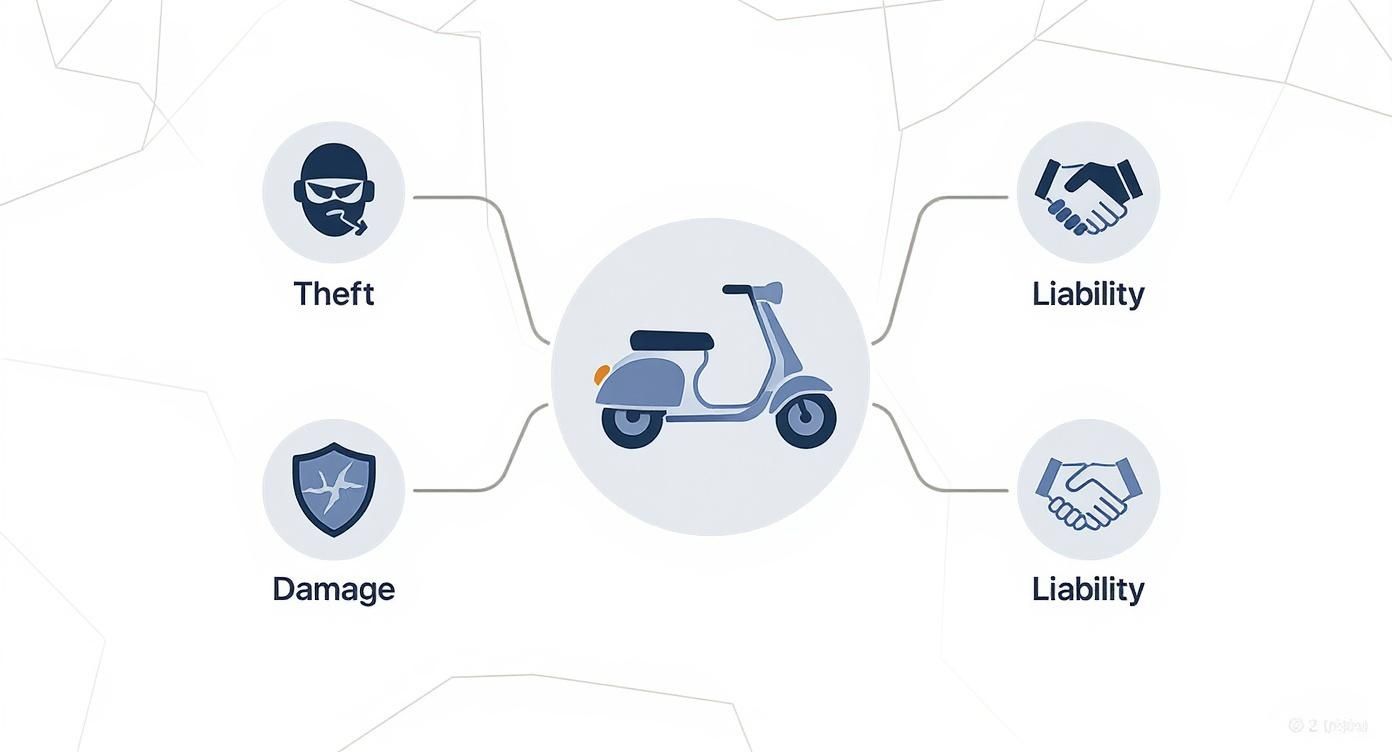
Nagu näed, on sinu tõukeratta kaitsmine varguse või kahjustuste eest sama oluline kui enda kaitsmine vastutuskohustuse nõuete eest.
Sind ja sinu tõukeratast katvad kindlustused: isiklik õnnetusjuhtum ja kokkupõrge
Okei, nii et vastutus kaitseb teisi inimesi. Aga mis saab sinust ja sinu tõukerattast? Siin muutuvad need kaks kindlustuskaitset eriti oluliseks.
- Isikliku õnnetuse kaitse: See aitab sinu enda meditsiinikulude katmisel, kui sa vigastad end õnnetuses. Mõtle füsioteraapiale, hambaravile või teistele kuludele, mida sinu tervisekindlustus ei pruugi täielikult katta. See on finantsiline turvavõrk, mis aitab sul ilma kulude pärast muretsemata taas jalule saada.
- Kokkupõrke kahju: See katab sinu tõukeratta parandamise või asendamise kulud, kui see saab õnnetuses kahjustada, sõltumata süüst. Põrkasid suure auku ja painutasid raami? Kukkusid ja elektroonika läks katki? Kokkupõrke kaitse hoiab sind sellest, et peaksid neid kulukaid parandusi ise maksma.
Nende valikute lisamine oma poliisile loob palju tugevama kilbi, andes sulle tõelise meelerahu. Sa võid sõita teadmisega, et ükskõik mis juhtub, hoolitsetakse sinu, sinu rahakoti ja sinu tõukeratta eest.
E-tõukeratta kindlustuskaitse valikute võrdlus
Et veelgi selgem olla, paneme need põhikaitsetüübid kõrvuti. See tabel annab sulle lihtsa ülevaate, mida igaüks teeb ja kellele see on mõeldud.
| Kaitsetüüp | Mida see katab | Näidisstsenaarium | Kes seda kõige rohkem vajab? |
|---|---|---|---|
| Kolmanda osapoole vastutus | Kahju või vigastus, mida sa põhjustad teistele inimestele või nende varale. | Sa kriimustad kogemata pargitud autot manööverdamisel. | Iga üksik sõitja. See on sageli seadusega nõutud. |
| Varastamine ja vandalism | Sinu tõukeratta asendamise kulud, kui see varastatakse või tahtlikult kahjustatakse. | Sinu tõukeratas varastatakse, kui see on lukustatud poe ees. | Sõitjad linnapiirkondades või kõik, kes parkivad oma tõukeratta avalikus kohas. |
| Kokkupõrke kahju | Sinu enda tõukeratta parandused pärast õnnetust, sõltumata süüst. | Sa põrkad äärekivisse ja kahjustad oma tõukeratta esiratast ja mootorit. | Kõrge väärtusega tõukerataste omanikud või kõik, kes sõltuvad oma tõukerattast igapäevaselt. |
| Isiklik õnnetus | Sinu enda meditsiinikulud (nt kaasmaksed, füsioteraapia) pärast vigastust. | Sa kukud ja murdud randme, vajades meditsiinilist ravi. | Kõik, kes soovivad finantsilist turvavõrku oma tervise ja taastumise jaoks. |
Võta seda tabelit kui oma petmislehte. Kasuta seda, et otsustada, milline kindlustuskaitse kombinatsioon sobib kõige paremini sinu sõidustiili ja -koha jaoks. Kõikehõlmav poliis, mis sisaldab kõiki nelja tüüpi, annab sulle parima kaitse, kuid saad seda kohandada vastavalt oma eelarvele ja riskitasemele.
USA ja Austraalia e-tõukerataste seaduste navigeerimine
E-tõukerataste reeglite mõistmine võib tunduda nagu pusle lahendamine, kus tükid pidevalt muutuvad. Õiguslik maastik Ameerika Ühendriikides ja Austraalias on tõeline osariikide seaduste ja linnapõhiste reeglite mosaiik. Mis ühes linnas on täiesti lubatud, võib mõne miili kaugusel teises linnas kaasa tuua karmi trahvi.
See regulatsioonide segadus tähendab, et sa pead teadma oma vastutust sõitjana. Asi ei ole ainult trahvi vältimises; see on enda ja kõigi enda ümber olevate turvalisuse tagamises. Kõige olulisem, mida meeles pidada, on lihtne: alati kontrolli konkreetseid reegleid täpselt selle koha jaoks, kus plaanid sõita.
Võta seda jaotist kui kaarti, mis aitab sul praegust olukorda mõista, mitte kui õigusnõuannet. Selgitame peamisi erinevusi osariikide vahel, tuues välja, kus elektrilise tõukeratta kindlustus muutub targast ideest seaduslikuks nõudeks.
USA elektriliste tõukerataste õiguslik olukord
Ameerika Ühendriikides puudub ühtne föderaalne seadus elektriliste tõukerataste kohta. Selle asemel kehtestab iga osariik — ja mõnikord isegi linnad — oma reeglid. See loob sõitjatele segadust tekitava olukorra.
Näiteks Californias on spetsiifilised seadused, mis klassifitseerivad elektrilised tõukerattad, kehtestavad kiirusepiirangud ja nõuavad juhiluba, kuid kindlustust ei nõuta. Teisalt võivad mõned linnad või osariigid nõuda erinevaid tingimusi isiklike ja jagatud renditõukerataste (nagu Lime või Bird) puhul.
- Osariigiti kehtivad reeglid: Kiivrite, kiirusepiirangute ja sõidukohtade (jalgrattateed, teed, kõnniteed) osas on seadused väga erinevad.
- Kindlustus on sageli valikuline, kuid...: Kuigi enamik osariike ei nõua eraelektriliste tõukerataste kindlustust seadusega, lasub õnnetuse korral kogu rahaline risk täielikult sinul.
Õiguslik hall ala on suur arutelu teema ja elektriliste tõukerataste kasutamise kasvades uuendatakse seadusi pidevalt. Sügavama ülevaate saamiseks kogu arutelust vaata meie täielikku juhendit kas elektrilised tõukerattad on tänaval seaduslikud.
Kiire ülevaade elektriliste tõukerataste seadustest Austraalias
Hüppa Vaikse ookeani taha ja leiad, et reeglid on sama mitmekesised. Austraalia osariikidel ja territooriumidel on oma määrused, mis ei ole ühtsed. See tähendab, et sõitja kohustused võivad riigipiiri ületades oluliselt muutuda.
Vaatame mõningaid näiteid, et näha, kui erinev võib lähenemine olla.
Näiteks Queenslandis on elektrilised tõukerattad paljudel radadel ja kohalikel teedel seaduslikud, kehtestatud on konkreetsed kiirusepiirangud. Uus-Lõuna-Walesis on aga eraelektriliste tõukerataste reeglid avalikel aladel ajalooliselt palju rangemad, kuigi jagatud süsteemide katseprogrammid on käimas.
See varieeruvus tähendab, et kohalike seaduste kontrollimine ei ole mitte ainult soovitatav — see on hädavajalik. Iga linn võib kehtestada oma reeglid, seega tuleb enne sõitmist alati kohalikult kontrollida.
Siin on ülevaade, kuidas olukord näeb välja mõnes olulisemas Austraalia osariigis:
| Osariik/territoorium | Kindlustusnõue | Peamised määrused (näited) |
|---|---|---|
| Queensland (QLD) | Eraomanikele mitte kohustuslik. | Kiirusepiirangud kehtivad (12 km/h kõnniteedel, 25 km/h mujal). Kiivrid on kohustuslikud. |
| Uus-Lõuna-Wales (NSW) | Ei ole kohustuslik (õiguslike katsetõukerataste puhul). | Eraomandis olevad elektrilised tõukerattad on üldjuhul avalikel teedel/radadel ebaseaduslikud. |
| Victoria (VIC) | Ei ole kohustuslik (õiguslike katsetõukerataste puhul). | Reeglid on keerulised ja sageli piiratud jagatud tõukerataste katsealadega. |
| Lääne-Austraalia (WA) | Eraomanikele mitte kohustuslik. | E-tõukerattad on lubatud radadel ja kohalikel teedel, kus on 25 km/h kiirusepiirang. |
See tabel teeb selgeks: sa ei saa lihtsalt eeldada, et reeglid on kõikjal samad. Enne sõitmist mõnes Austraalia osariigis pead kindlasti oma kodutöö ära tegema. Kiire veebipõhine otsing kohaliku transpordiameti või selle konkreetse linna "e-tõukeratta seaduste" kohta on parim esimene samm.
Kui palju maksab mulle e-tõukeratta kindlustus?
Olgu, lähme asja tuumani. Kui palju see tegelikult maksma läheb? Rääkida elektriliste tõukerataste kindlustusest on üks asi, aga hinna välja selgitamine on enamikule meist see, mis tõesti loeb.
Siin pole mingit maagilist numbrit. Mõtle sellele pigem kui sinu, su tõukeratta ja sõidustiili ümber kohandatud hinnapakkumisele, mitte fikseeritud hinnale. Kindlustusandjad tegelevad riskiga, seega mida suurem risk, seda kõrgem on su makse. Nad sisestavad mõned olulised andmed süsteemi, et välja arvutada, mida sa maksad.
Olulised tegurid, mis mõjutavad su kindlustusmakset
Nende tegurite mõistmine on esimene samm, et aru saada, milline su hinnapakkumine võib olla. Igaüks aitab kindlustajal hinnata, kui tõenäoline on sul nõude esitamine.
- Sinu tõukeratta väärtus: See on suur tegur. Tippklassi, kiire tõukeratas, mis maksab üle 1500 dollari, on kindlustamiseks kallim kui lihtne algtaseme mudel. Mida kallim on asendamine, seda rohkem maksad varguse ja kahjustuste katte eest.
- Sinu asukoht: Kus sa sõidad ja kus oma tõukeratast parkid, on väga oluline. Tihedas linnakeskuses nagu New York või Melbourne ringi kihutamine on varguse ja õnnetuste risk suurem kui vaikse äärelinnasõidu puhul.
- Sinu vanus ja sõidukogemus: Üldiselt maksavad nooremad ja vähem kogenud sõitjad rohkem. Kuigi ametlikku e-tõukeratta juhtimisajalugu (veel!) ei ole, võib sinu vanus kindlasti mõjutada, kuidas mõned ettevõtted su hinda arvutavad.
- Hoiustamine ja turvalisus: Kuidas sa selle öösel lukustad, on ülioluline. Tõukeratta panemine lukustatud garaaži annab alati parema hinna kui selle ahelaga tänavalambile kinnitamine. Kindlustusandjad hindavad, kui näitad, et hoolid selle turvalisusest.
Mikromobiilsuse valdkond plahvatab, mis sunnib kindlustusandjaid nutikamalt arvutama. 2025. aastaks oli ülemaailmne e-rataste ja e-tõukerataste kindlustusturg juba jõudnud 1,1 miljardi dollarini. Hull osa? Suur kindlustuskate puudub endiselt, mõned hinnangud näitavad, et ainult umbes 20% sõitjatest on tegelikult korralikult kindlustatud.
Ligikaudsed kulud ja reaalsed näited
Mida võid realistlikult oodata maksmist? USAs ja Austraalias võib lihtne kolmanda osapoole vastutuskindlustusplaan alata juba 10–15 dollarist kuus. Kui soovid täielikku paketti—kõikehõlmavat plaani, mis katab varguse, kokkupõrke ja isikliku vigastuse—siis tõenäoliselt jääb see vahemikku 25–50+ dollarit kuus.
Muidugi sõltub see kõik just äsja käsitletud teguritest. Need numbrid on hea lähtepunkt ja sama loogika kehtib ka elektrijalgratta kindlustuse kulude puhul, mida hinnatakse väga sarnasel viisil.
Toome selle ellu paariga erinevat sõitjat.
Sõitja profiil 1: Chloe, linnatöölesõitja Chloe elab Chicago südames ja kasutab oma 1200-dollarilist tõukeratast igapäevaseks töölesõiduks. Ta hoiab seda jagatud, lukustatud jalgrattakuuris oma kortermajas. Kõrgema linnavarguse riski tõttu on tema kõikehõlmava katvuse pakkumine umbes 35 dollarit kuus.
Sõitja profiil 2: Sam, äärelinnasõitja Sam elab väiksemas linnas Perthist veidi eemal ja kasutab oma 800-dollarilist tõukeratast nädalavahetuse lõbuks. Ta hoiab seda kindlalt lukustatud oma privaatgaraažis. Tema pakkumine sama kõikehõlmava katvuse jaoks on vaid 20 dollarit kuus, mis peegeldab tema madalamat riskitaset asukoha ja hoiustamise tõttu.
Sisemised nipid odavama kindlustuse saamiseks
Sa ei ole kindlustusseltside täielikus võimu all. Mõne nutika sammuga saad sageli oma kuumaksest kena tüki maha võtta.
- Hangi tõsiselt hea lukk: Paljud kindlustusandjad annavad soodustust, kui kasutad tipptasemel sertifitseeritud lukku. See on selge märk, et võtad varguse ennetamist tõsiselt.
- Vali kõrgem omavastutus: Omavastutus on summa, mille nõustud kahjujuhtumi korral ise maksma enne, kui kindlustus hakkab kehtima. Kõrgem omavastutus tähendab tavaliselt madalamat kuumakset. Veendu lihtsalt, et see summa oleks sulle mugavalt jõukohane, kui midagi peaks juhtuma.
- Paki oma poliisid kokku: Kas sul on juba üürniku- või autokindlustus? Küsi oma pakkujalt, kas nad pakuvad elektritõukeratta katvust või lisandust. Mõnikord saad mitme poliisi soodustust. Küsimine ei tee kunagi paha.
- Maksa aastas: Kui saad endale lubada, on poliisi eest ühe korraga aasta eest maksmine peaaegu alati odavam kui 12 kuumakse tegemine.
Kuidas kindlustada oma elektritõukeratas täna
Valmis kaitseks? Õige elektriliste tõukerataste kindlustuse leidmine ei ole sugugi nii keeruline, kui see kõlab. Mõtle sellele kui lihtsale neljaastmelisele protsessile, mis viib sind kindlustamata ja veidi murelikust olekust täielikult kaetud ja enesekindlana iga sõidu ajal.
Juhatame sind läbi selge tee, muutes näiliselt keerulise ülesande lihtsateks ja teostatavateks sammudeks. Alustame, et sind kindlustada.
Samm 1: Kogu oma info
Enne kui hakkad pakkumisi otsima, korda kõik oma andmed üle. Kui su andmed on valmis, sujub kogu protsess sujuvamalt ja palju kiiremini. Kindlustajad vajavad neid andmeid, et anda sulle täpne hind.
Võta märkmik või ava uus dokument ja kirjuta need üles:
- Sinu tõukeratta andmed: Tootja, mudel ja aasta.
- Seerianumber: See on eriti oluline varguse nõuete puhul. Tavaliselt leiad selle raamilt või kasutusjuhendist.
- Ostuteave: Kui palju sa selle eest maksid ja millal ostsid.
- Sinu isikuandmed: Ainult põhilised – su nimi, aadress ja sünnikuupäev.
- Turvameetmed: Räägi neile, millist lukku kasutad (nt kõrge turvalisusega U-lukk) ja kus sa tõukeratast öösel hoiustad.
Samm 2: Võrdle kindlustuspakkujaid
Kui su info on käepärast, on aeg ringi vaadata. Palun ära vali lihtsalt esimest pakkujat, keda leiad! Pakkumiste võrdlemine on parim viis veenduda, et saad hea hinna just selle katte eest, mida tegelikult vajad.
Sa märkad, et iseseisvate elektritõukeratta kindlustuste turg on USAs ja Austraalias veel arenemisjärgus. Paljud pakkujad ühendavad selle e-ratta või isegi mootorratta kindlustusega, samas kui mõned suured auto kindlustajad pakuvad lisasid. Otsi mikromobiilsuse või isiklike elektrisõidukite spetsialiste. Kiire otsing "electric scooter insurance USA" või "e-scooter insurance Australia" annab sulle hea nimekirja alustamiseks.
See kasvav vajadus katte järele on otsene tulemus mikromobiilsuse buumist. Tõsiselt, ülemaailmne turg peaks 2029. aastaks jõudma 186 548,5 miljoni USA dollarini. See plahvatuslik kasv sunnib kindlustajaid kohanema ning nad hakkavad kasutama tehnoloogiat nagu GPS-jälgimine, et riskidest targemalt aru saada. Kui oled uudishimulik, võid süveneda mikromobiilsuse turu tulevikku technavio.com lehel.
Samm 3: Mõista oma pakkumist ja poliisi
Kui pakkumised hakkavad saabuma, vaata kaugemale hinnasildist. Odavaim valik pole peaaegu kunagi parim. Pead mõistma, mille eest sa tegelikult maksad.
Kõige olulisem tingimus, mida kontrollida, on 'omavastutus'. See on summa, mille pead nõude korral ise kinni maksma enne, kui kindlustusselts sekkub. Madalam kuumakse tähendab sageli kõrgemat omavastutust, nii et leia endale sobiv tasakaal.
Kontrolli ka kattepiiranguid. Kas poliisil on varguse või vastutushüvitise nõude puhul maksimaalne summa? Veendu, et need piirid oleksid piisavalt kõrged, et asendada su tõukeratas ja mis veelgi tähtsam – kaitsta sind ebameeldiva vastutuskannatuse kohtuasja eest.
Samm 4: Esita õiged küsimused
Enne kui kohustud, on aeg mängida detektiivi. Iga hea kindlustusandja vastab hea meelega sinu küsimustele. See on sinu võimalus avastada varjatud klauslid või võimalikud üllatused enne, kui neist probleem saab.
Siin on kiire küsimuste kontrollnimekiri:
- Kas poliis katab juhuslikku kahju ja vandalismi?
- Millised on minu lukustamise konkreetsed nõuded? Kas sellel peab olema teatud tase, et varguse nõue oleks kehtiv?
- Kas minu tõukeratas on kaetud, kui ma võtan selle kaasa teise linna või isegi teise osariiki?
- Kas poliis sisaldab isikliku õnnetuse/meditsiinikulude katet minu enda vigastuste korral?
- Milline on tegelikult kahjunõude protsess ja kui kaua tavaliselt võtab aega raha kättesaamine?
Selgete vastuste saamine aitab sul leida poliisi, mis tõeliselt sobib sinu eluga, jättes tulevikuks ebameeldivad üllatused ära. Kui oled rahul, saad ostu lõpule viia ja dokumendid kätte. Oled valmis.
On küsimusi? Meil on vastused.
Olgu, lõpetame selle, vastates mõnele kõige levinumale küsimusele, mis sõitjatel elektritõukeratta kindlustuse kohta on. Mõtle sellele kui viimasele KKK sessioonile, et kõik viimased küsimused selgeks teha. Nende detailide selgeks tegemine aitab sul tunda end kindlalt, et valid õige poliisi ja sõidad targalt.
Vaatame üle kõik alates sellest, kas sinu kodukindlustus sind toetab (vihje: tõenäoliselt mitte) kuni selleni, mis juhtub, kui sa avariisse satud.
Kas minu elektritõukeratas on kaetud minu kodu- või üürniku kindlustuspoliisiga?
See on suur teema ja lõks, kuhu on lihtne langeda. Lühike vastus? Peaaegu kindlasti ei. On tavaline – ja potentsiaalselt väga kallis – viga arvata, et su tõukeratas on lihtsalt veel üks vidin, mida katab sinu kodu- või üürniku kindlustus.
Siin on asi: enamik standardpoliise sisaldab klauslit, mis välistab konkreetselt „mootorsõidukid“ ja just nii nähakse sinu elektritõukeratast. Kuigi mõned ettevõtted võivad pakkuda konkreetset lisandit või „lisa“ lisatasu eest, ei kata sinu põhipoliis vastutust ega kahju, mis juhtub väljaspool sinu vara.
Loobumine oma tavapärasest kodu- või üürniku kindlustuspoliisist, et katta oma elektritõukeratast, on nagu kanda jalgrattakiivrit autoavariis – see pole lihtsalt õige kaitse riskide vastu. Pühendatud elektritõukeratta poliis või konkreetne lisand on ainus tõeline viis end varguse, vastutuse ja teepeal tekkiva kahju eest kaitsta.
Mis juhtub, kui ma sõidan ilma kindlustuseta avariisse?
Isegi kui kindlustus pole sinu piirkonnas seadusega nõutud, võib avariisse sattumine ilma kindlustuseta avada tohutu probleemide kimbu. Õnnetus võib muutuda tõsiselt keeruliseks ja kulukaks.
Kui oled avariis osaline ja leitakse süüdi, võid olla isikuliselt vastutav iga kahjustuse sendi eest. See tähendab, et vastutad:
- Kellegi teise vara parandamine, olgu see siis mõlkis auto uks või purunenud poeakna klaas.
- Meditsiinikulude või juriidiliste tasude katmine, kui keegi saab vigastada. Need kulud võivad hetkega kasvada tuhandeteks või isegi sadadeks tuhandeteks dollariteks.
Lisaks sellele rahalisele õudusunenäole võid kohalikest liiklusseadustest sõltuvalt saada trahve. Võrreldes sellega võib vastutuskindlustuse suhteliselt väike kuumakse päästa sind rahaliselt laastavast tagajärjest.
Kas USAs või Austraalias on mul vaja elektritõukeratta kindlustust?
Siin muutub olukord veidi keeruliseks, sest ühtset reeglit pole. Nii USAs kui Austraalias on seadused killustunud ja muutuvad osariigiti ning mõnikord isegi linniti.
Ameerika Ühendriikides ei nõua enamik osariike elektritõukerataste kindlustust, käsitledes neid jalgratastena. Kuid reeglid muutuvad pidevalt ning mõned linnad või osariigid võivad kehtestada spetsiifilisi nõudeid. Kindluse saamiseks vaata oma osariigi mootorsõidukite osakonna (DMV) või kohaliku transpordiameti veebisaiti.
Sarnane olukord on Austraalias, kus reeglid on väga erinevad. Queenslandis on seaduslik see, mis on New South Walesis nõutav. Parim on alati kontrollida oma kohaliku osariigi või territooriumi transpordiameti ametlikku seisukohta.
Aga siin on põhitõde: isegi kui see pole sinu elukohas seadusega nõutud, on vastutuskindlustuse võtmine ikkagi väga tark samm. See on väike hind, mida maksta, et kaitsta end võimaliku elumuutva arve eest õnnetuse korral.
Kuidas esitada kindlustusnõue oma elektritõukeratta jaoks?
Kui juhtub halvim ja pead kahjunõude esitama, on see tavaliselt vähem keeruline, kui arvad. Kõige tähtsam on tegutseda kiiresti ja kõike dokumenteerida.
Siin on kiire samm-sammuline juhend:
- Ohutus esikohal: Enne kõike muud veendu, et sina ja kõik kaasatud oleksite terved. Kui keegi on vigastatud, kutsu kohe meditsiiniline abi.
- Helista politseisse: Kui su tõukeratas varastati või sattusid õnnetusse koos teise inimesega või tema varaga, tee kohe politseile avaldus. Sul on kahjunõude jaoks kindlasti vaja politsei avalduse numbrit.
- Kogu tõendid: Võta telefon välja ja tee fotosid ning videoid kõigest – sündmuskohast, tõukeratta kahjustustest ja muudest kaasatud varadest. Kui on tunnistajaid, saada nende nimed ja telefoninumbrid.
- Helista oma kindlustusandjale: Võta oma kindlustusseltsiga ühendust nii kiiresti kui võimalik. Hoia käepärast oma poliisinumber ja ole valmis neile kogu juhtunu lugu rääkima.
- Järgi nende juhiseid: Nad juhendavad sind ülejäänud protsessi jooksul. See võib tähendada kahjunõude vormi täitmist, kogutud tõendite saatmist või remondipakkumise saamist nende heakskiidetud töökojast.
Rahulikuks ja organiseerituks jäämine teeb kogu protsessi sujuvamaks ning aitab sul palju kiiremini jalule ja oma tõukeratta selga saada.
Valmis sõitma täieliku meelerahuga? Punk Ride pakub suurepärast valikut elektritõukerattaid tippbrändidelt igasugustele sõitjatele. Leia oma ideaalne sõiduvahend ja mine teele
Jaga:
Parima elektrijalgratta leidmine maastikusõiduks
kuidas hoida liitiumakusid ohutult: nõuanded USA ja Austraalia elektrijalgrataste ning elektritõukerataste omanikele