


Safely storing your e-bike or scooter battery really boils down to a few key habits. Think of it this way: keep it at a 40-60% charge level, find a cool, dry spot away from direct sunlight, and ideally, pop it inside a fire-resistant container. You never want to leave it sitting at 100% or completely dead, as that just puts unnecessary stress on the battery cells and can seriously shorten its life.
Getting these basics right is hands-down the best way to prevent nasty accidents and protect the heart of your ride.
Why Safe Battery Storage Is Non-Negotiable
Knowing how to properly store your e-bike or e-scooter battery isn’t just some fussy best practice—it's a critical safety routine. The amount of energy packed into these things is massive, and mishandling them is a leading cause of fires and, at the very least, a much shorter battery lifespan.
For those of us in the US and Australia, where e-bikes and scooters are a common sight, being aware of the risks is the first step to avoiding them.
The stakes are genuinely higher than you might think. We're not just talking about a dead battery. Eye-opening data from UL Solutions has linked micro-mobility devices like e-bikes and e-scooters to a startling 1,982 injuries and 340 fatalities. These aren't just statistics; they are real, often preventable incidents.
The Three Pillars of Safe Storage
Getting your storage setup right is all about mastering three simple, interconnected factors: charge level, location, and temperature. Nail these, and you're golden.

The trick is remembering they all work together. If you get the temperature right but store the battery at 100% charge, you're still creating a risky situation.
A smart first move is to actually think through the potential dangers in your own home. This practical guide on how to do a risk assessment is a great resource for evaluating your storage setup and spotting any weak points before they become a problem.
For a quick reference, here’s a simple table breaking down the essentials.
Safe Lithium Battery Storage At a Glance
| Action | The Safe Way (Do) | The Unsafe Way (Don't) |
|---|---|---|
| Charge Level | Store at 40-60% charge. | Leave it at 100% or 0% for long periods. |
| Temperature | Keep it between 15-25°C (59-77°F). | Expose it to freezing temps or direct summer heat. |
| Location | Choose a cool, dry, well-ventilated area. | Store it near flammable materials or in a damp basement. |
| Container | Use a dedicated fire-resistant bag or box. | Leave it exposed or in a cardboard box. |
| Placement | Keep it away from exit routes and on a stable surface. | Block a doorway or leave it where it can be knocked over. |
Treat this table as your go-to checklist every time you store your battery.
Key Takeaway: Think of battery storage as an active responsibility, not a set-it-and-forget-it task. It requires a conscious effort to create a safe environment every single time you put your ride away, whether it's just for the night or for the entire winter. Cutting corners here is an open invitation for risk to sneak into your home.
Getting Your Battery Ready for Storage
Before you stash your e-bike or scooter battery away for a while, spending just a few minutes on prep can make a world of difference for its future health and safety. This isn't just about clearing a space on a shelf; it's about giving your battery the best chance to survive its downtime, whether that's overnight or for the whole winter.
Trust me, this prep work is super easy, but skipping it is a classic mistake. It's the kind of thing that can leave you with a sluggish, underperforming, or even dead battery when you're ready to ride again.

A Quick Clean and Visual Check-Up
First things first: take the battery off your bike or scooter. Grab a clean, dry cloth and give the entire casing a good wipe-down. You'll want to pay close attention to the metal contacts where the battery connects to the bike. Make sure they're completely free of dirt, gunk, and any moisture.
Why bother? Because leftover grime can cause a poor connection later on, and moisture is a big no-no for any electronics.
While you've got it in your hands, give it a proper look-over. This simple visual check is your best early warning system for potential problems.
- Look for Bulges or Swelling: Does the battery case look puffy or bloated anywhere? A swollen battery is a huge red flag. It means something's gone wrong inside, and it's not safe to charge or store.
- Spot Any Damage: Check for cracks, deep gouges, or dents. Any physical damage can mess with the battery's internal structure and make it unsafe.
- Inspect the Connectors: Are the contacts clean and shiny, or are they bent, broken, or showing signs of corrosion?
If you see any of these issues, that battery's life is over. Don't use it, don't store it. It's time to find out how to dispose of it safely.
Finding That Perfect Storage Charge
Okay, this is probably the single most important thing you can do. Never, ever store a lithium-ion battery when it's fully charged to 100% or completely dead at 0%. Both extremes put a ton of stress on the battery's chemistry.
Leaving it fully juiced up is like holding a muscle in a tensed position for months—it accelerates wear and tear. On the flip side, leaving it empty risks it falling into a "deep discharge" state. From there, it might never wake up again. The battery's own management system (BMS) uses a tiny bit of power, which can push a dead battery over the edge.
The sweet spot for long-term storage is a State of Charge (SOC) somewhere between 40% and 60%. This is the battery's happy place, a stable state that minimises stress and dramatically slows the aging process.
Getting it there is easier than you think. Most batteries have indicator lights. Just charge it or run it until it's showing about half capacity. A common trick is to take your bike for a quick ride after a full charge to bleed off some power before putting the battery away.
If you want to dive deeper into this, you can learn more about optimising your electric bike battery life in our detailed guide. A few simple steps now will make sure your battery is ready to roll when you are.
Finding the Right Storage Environment
Where you stash your battery is just as critical as how much juice it’s holding. Think of lithium-ion batteries as being a bit like Goldilocks—they hate it when it's too hot or too cold. The spot you pick plays a massive role in both the battery's safety and its overall lifespan.
The chemistry inside these batteries is surprisingly sensitive. Extreme temperatures can either send their internal parts into a rapid decline or slow things down so much that permanent damage sets in. This isn't just some abstract theory; it's the hard science behind keeping your battery healthy for the long haul.

The Enemy of Every Battery: Temperature Extremes
Heat is the absolute number one villain for battery health. When you store a battery somewhere hot, even if it's not being used, its internal components degrade way faster. This process is called calendar aging, and while it happens naturally over time, high temperatures put it into overdrive.
For instance, leaving your battery in a sun-baked garage in Arizona or the boot of your car during an Australian summer heatwave is a recipe for disaster. Temperatures can easily climb above 30°C (86°F), which puts immense stress on the battery cells and will permanently slash their capacity.
The cold is just as nasty, but for different reasons. As temperatures drop towards freezing, the battery's internal resistance shoots up. Storing it in a frosty Michigan garage over winter is asking for trouble, as condensation can form inside the casing—a huge risk for short circuits.
The Golden Rule: You need to find a spot with a stable temperature between 15°C and 25°C (59°F to 77°F). This is basically standard room temperature, which pretty much makes indoor storage your only safe bet.
Humidity and Ventilation: What You Need to Know
Beyond temperature, you've got to think about moisture and airflow. High humidity can cause the battery's metal contacts to corrode, leading to dodgy connections or, in a worst-case scenario, a short circuit.
This is exactly why damp basements or garages prone to condensation are terrible places for your battery. You're looking for a space that stays consistently dry.
Good ventilation is also a big help. While a battery in storage shouldn't be giving off any gases, a bit of airflow helps keep the temperature stable and disperses any minor heat buildup, especially if you happen to be storing more than one battery nearby.
- Good Ventilation: Think of a room with decent airflow, a space that doesn't feel stuffy or sealed up.
- Poor Ventilation: Avoid an airtight box, a cluttered cupboard stuffed with clothes, or burying it under a pile of blankets.
The Best and Worst Storage Spots in a Typical US or Australian Home
Alright, let's get practical. Finding that perfect spot in your home is a balancing act between temperature, safety, and just pure convenience. Here are a few real-world examples to get you thinking.
Avoid These High-Risk Locations
- The Garage or Shed: These spots are notorious for wild temperature swings—freezing in a Chicago winter, roasting in a Perth summer. They're often damp, too.
- The Attic or Loft: An unconditioned attic can get unbelievably hot during the summer months, creating a seriously dangerous environment for a battery.
- A Sunroom or Near a Window: Direct sunlight is an absolute no-go. The focused heat can push the battery past its safe temperature limit in no time.
- The Kitchen or Laundry Room: These areas have constantly fluctuating heat and humidity, making them far too unstable.
Consider These Safer Alternatives
- A Hallway Closet: Usually dark, dry, and stays at a consistent room temperature.
- A Utility Room: As long as it's not damp and has some ventilation, this can be a great option.
- Under the Stairs: This is often a cool, protected spot away from any direct heat sources.
- A Spare Room: A dedicated shelf in a spare room is ideal, provided it's kept out of the sun.
Looking at the bigger picture, battery safety technology is constantly improving. Industrial energy storage deployments in the U.S. ballooned by over 18 times between 2017 and 2022, yet safety incidents worldwide only went from two to twelve in that same period. This progress comes from better safety codes and system designs, showing how seriously the industry is taking environmental controls.
Ultimately, the best place is climate-controlled, dry, and well away from anything flammable. For more ideas on getting your space set up, have a look at our guide on practical electric bike storage solutions to see how you can safely fit your ride into your home.
Using Containers for Physical Protection
Now that you've got the temperature and humidity dialled in, let's talk about the physical shell protecting your battery. Just leaving an e-bike or scooter battery sitting out in the open on a shelf—especially a wooden one—is a risk you just don't need to take. Physical containment is a critical, but often overlooked, part of a smart battery storage strategy.
Think of it as your final line of defence. In the incredibly rare event of a catastrophic failure, what's known as thermal runaway, a proper container can be the difference between a scary but contained incident and a full-blown house fire. The goal here is simple: limit the spread of intense heat and flames.

Investing in a Proper Battery Box or Bag
Hands down, the best way to store a lithium battery is inside a dedicated, purpose-built container. These aren't just any old boxes; they're engineered specifically to handle the unique violence of a lithium battery fire.
You'll generally find two main types on the market, which are really popular among US and Australian riders:
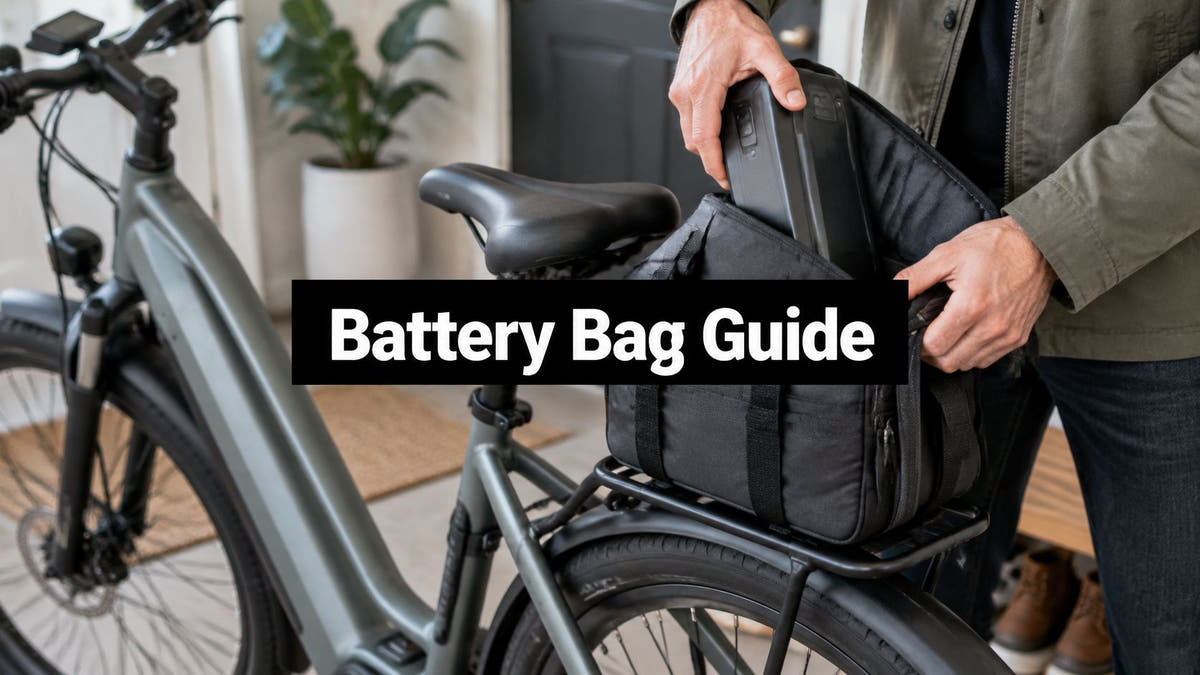
- Fire-Resistant Battery Bags: You've probably heard of "LiPo bags." These are typically made from woven fibreglass and other fire-retardant materials. They're designed to contain a fire for a short time, buying you precious seconds to react. They're lightweight, pretty affordable, and a huge improvement over having no protection at all.
- Metal Battery Boxes: For a more heavy-duty solution, a sturdy metal box or even a small, fire-rated cabinet is a fantastic choice. Look for one with a solid latch. These offer far better physical protection from accidental knocks and bumps and will do a much better job of containing a fire.
When you're shopping around, just make sure the container is big enough for your battery to fit comfortably with a little room to breathe. You don't want it crammed in there.
Smart Alternatives When You Don't Have a Specialised Container
Look, if a dedicated container isn't an option for you right now, you can still slash your risk by being smart about where and on what you place the battery. The main principle is the same: use non-flammable surfaces.
Just ask yourself: if this battery went up in flames, what would it be sitting on? Wood, carpet, or cardboard will just become more fuel for the fire.
Pro Tip: Never store your battery directly on a wooden shelf, a carpeted floor, or inside a cardboard box. Instead, find a surface that won't easily burn. A concrete garage floor (away from any oil spills!), a ceramic tile, or a metal shelving unit are all great, low-cost options.
This simple switch costs nothing but instantly improves your safety setup. The reality is that battery fires are a growing concern. In 2023, the UK saw 338 fires linked directly to e-bikes and e-scooters—a massive jump that shows the risk is real. What's more, these incidents, combined with bad disposal habits, cost the UK economy an estimated £158 million a year. You can discover more about these findings on battery fire risks to see why these simple steps are so important.
Strategic Placement Is Everything
Finally, where you actually put the container is just as important as what it's made of. You have to think about your escape plan in a worst-case scenario.
- Keep Exits Clear: This is non-negotiable. Never, ever store your battery near the front door, back door, or any other primary escape route. The last thing you want is a fire blocking your only way out.
- Avoid Clutter: Place the container in an open, tidy area. Don't pile things around it, especially flammable stuff like old newspapers, cleaning chemicals, or gas cans.
- Think About Access: While it needs to be out of the way, make sure you can still get to it easily for your regular maintenance checks.
By combining a fire-resistant container with a non-flammable surface and a smart location, you're creating multiple layers of safety. This thoughtful approach is the cornerstone of being a responsible e-ride owner.
Long-Term Storage and Maintenance Routines
Putting your e-scooter or e-bike away for the winter isn't like parking it overnight. If you just stash it in the garage and forget about it until spring, you're rolling the dice on finding a completely dead battery. It’s a classic mistake, and a costly one.
For any storage period longer than a month, you need a simple, consistent game plan. Ignoring a battery for months is one of the fastest ways to kill it for good. Lithium-ion batteries naturally lose a bit of juice over time—a process called self-discharge. Left alone, this slow drain can pull the voltage down to a critically low level, permanently wrecking the internal cells. Once that happens, it's game over; the battery will never hold a proper charge again.
Your Simple Maintenance Schedule
The secret to successful long-term storage is just checking in every now and then. You don't have to do much, but you do have to be consistent. This simple routine is all that stands between your battery and that dangerous zero-percent state of charge.
Think of it like watering a plant. A little attention on a regular schedule keeps it healthy. Your only goal here is to keep the battery sitting comfortably in that ideal 40-60% charge range.
Key Insight: A healthy lithium battery loses about 3-5% of its charge per month in storage. This slow, predictable drain is exactly why you can't just forget about it. These quick check-ins are your defense against a damaging deep-discharge state.
The easiest way to stay on top of this is to set a recurring reminder on your phone or just scribble it on your calendar. All you need to do is two simple things.
- Check the Charge Level Every 4-6 Weeks: Once a month or so, grab the battery and press the button to check the charge level. You'll notice it has dropped a bit.
- Top It Back Up to 50%: If the charge has dipped below 40%, plug it in for a little while. You’re not trying to get it to 100%—just bump it back into that 40-60% sweet spot. This quick top-up is all it needs to stay happy for another month.
This simple cycle of checking and topping up is genuinely the most effective thing you can do to make sure your battery survives its hibernation and is ready to roll when you are.
Spotting Problems During Checks
These monthly check-ins are also the perfect opportunity to catch any signs of trouble before they become big problems. Each time you handle the battery, give it a quick once-over, just like you did before you put it away for the season.
Be on the lookout for anything new:
- Physical Changes: See any new signs of swelling, cracking, or bulging that weren't there before?
- Unusual Smells: Does the battery give off any weird chemical or burning odors?
- Charging Issues: When you go to top it up, does it refuse to take a charge or get alarmingly hot?
Catching these issues early can prevent a really dangerous situation. It's also crucial to see how these habits directly affect your battery’s lifespan. To get the full picture, check out our guide on how long you can expect ebike batteries to last, which dives into all the factors that help you get the most out of your battery. A little proactive care now will save you a ton of money and frustration later.
What to Do in an Emergency
Even if you follow every rule, things can still go wrong. Being prepared for an emergency isn’t about being paranoid; it's about having a clear, calm plan ready to go. Knowing the early warning signs of battery failure and exactly what to do can make all the difference when seconds count.
Recognising the Warning Signs
A battery failure rarely happens out of the blue. Your own senses are your best first line of defence, and you need to act immediately if you notice any of these red flags.
- Strange Smells: A failing lithium battery can kick out a very distinct, sharp, or slightly sweet chemical smell. If your nose picks up something weird near your battery, don't ignore it.
- Hissing or Popping Sounds: These noises are a dead giveaway that the cells inside are under extreme pressure and venting hot, flammable gases. This is a massive danger signal.
- Smoke or Vapour: Any smoke, even a tiny wisp, means the battery is entering thermal runaway. This is a critical situation where its internal temperature is spiralling out of control.
- Extreme Heat: If the battery casing is so hot you can't comfortably touch it, it's overheating. Unplug it immediately and, only if you can do so without risk, move it to a safe place.
Knowing how to react to immediate hazards is crucial. Think about it like a phone getting wet—the right steps prevent disaster. While it's a different scenario, the principle is the same: quick, correct action is vital. You can discover how to handle liquid-damaged iPhones safely to see just how specific emergency responses need to be.
Your Immediate Fire Action Plan
If you even suspect your battery is failing—and especially if you see smoke—your priority flips from saving the battery to protecting yourself and your home.
Crucial Safety Rule: Your personal safety is always the number one priority. Never put yourself at risk to save property. If a fire starts, get everyone out, stay out, and call your local emergency number (like 911 in the US or 000 in Australia).
A lithium-ion battery fire is not your typical fire. It's a violent chemical reaction that can be incredibly difficult to put out.
Do NOT use water. Pouring water on a lithium fire can make things dramatically worse. It can react with the molten lithium metal, creating explosive hydrogen gas and actually spreading the fire.
The only effective tool you can have at home is a specialised fire extinguisher. You need a Class D extinguisher or one specifically rated for lithium-ion batteries. These use agents like dry powder to smother the flames and cool the reaction. Having one of these handy near your storage area is a non-negotiable part of a safe setup.
When to Say Goodbye: The End of a Battery's Life
A battery doesn't have to be on fire to be dangerous. There comes a time when it’s simply not safe to use or store anymore. It's time to retire your battery if you spot:
- Physical Damage: Any serious cracks, deep dents, or punctures in the casing.
- Permanent Swelling: If the battery case looks puffy or is bulging, that's a sign of internal gas buildup and a major fire risk.
- Poor Performance: A battery that barely holds a charge, takes forever to power up, or gets unusually hot during normal use is telling you it's done.
Don't be tempted to squeeze a bit more life out of a damaged or faulty battery. The risk just isn't worth it.
Responsible Disposal in the US and Australia
You can't just toss a dead battery in the household bin. It’s not only incredibly dangerous for waste collection workers but also illegal in many places. Lithium batteries are classified as hazardous waste and need special handling.
This screenshot from TakeCharge.org.uk perfectly illustrates the hidden dangers of "zombie batteries" thrown in with general waste, which can and do cause serious fires in collection trucks and facilities. Improper disposal creates a direct and significant fire risk for others.
Fortunately, getting rid of them safely is pretty straightforward.
- USA: Websites like Call2Recycle or Earth911 provide search tools to find your nearest drop-off location. Many major retailers like Best Buy or The Home Depot also have battery recycling programs.
- Australia: Check with your local council for hazardous waste collection events or visit sites like B-cycle or Planet Ark to find a nearby battery recycling point.
Here's a pro tip: always tape over the battery's terminals with electrical tape or another non-conductive tape before taking it for recycling. This simple step prevents any accidental short circuits on the journey.
Your Top Battery Storage Questions, Answered
Alright, even after laying out all the best practices, some questions always seem to come up. Let's dig into a few of the most common ones we hear from riders in the US and Australia. Getting these details right will give you total peace of mind.
So, Can I Just Keep My Battery in the Garage?
This is probably the number one question we get, and honestly, it's a terrible idea. Think about a typical American or Australian garage—it's not climate-controlled. That means it gets bone-chillingly cold in a Northern US winter and can turn into an oven during a scorching Aussie summer. As we've already covered, those wild temperature swings are your battery's worst nightmare.
It's not just the temperature, either. Garages tend to be damp, and that moisture is bad news for the sensitive contacts on your battery. Corrosion can build up, which could lead to a short circuit later on. Do yourself a favor and find a spot inside your house that stays dry and at a comfortable, stable temperature all year.
Is It Really That Bad to Leave My Battery on the Charger?
Yes, it really is. Leaving a battery plugged in after it’s fully charged is one of the quickest ways to ruin it. This is called overcharging, and it puts the battery cells under constant stress, which dramatically speeds up their aging process and can even make them dangerously hot.
A good charger will cut the power once the battery hits 100%, but keeping it connected is still a habit you need to break. Your battery needs to rest.
A Pro Tip From the Trenches: The best habit you can get into is unplugging the charger the moment the battery is full. But remember, for storage, you're not even charging it to full—you're aiming for that 40-60% sweet spot. And whatever you do, never, ever leave a battery charging unattended overnight.
How Does Storage Change Between Summer and Winter?
The fundamental rules for safe lithium battery storage stay the same no matter the season, but you do need to be more mindful of the specific risks each season brings.
-
Summer Worries: The big enemy here is heat. Never, ever leave your battery in a hot car, a sealed shed, or any spot where direct sunlight can beat down on it. High temperatures will permanently cook the capacity right out of it.
-
Winter Dangers: In winter, the main threats are the cold and the damp. Storing a battery in freezing temperatures can cause damage that you can't undo. Plus, bringing a frozen battery inside and immediately plugging it in is a huge no-no. The rapid temperature change can cause condensation to form inside the battery casing, which is a major safety risk.
Here’s a simple rule of thumb: if it's too hot or cold for you, it's definitely too hot or cold for your battery.
Always let a cold battery gradually warm up to room temperature for a couple of hours before you even think about charging it. A little bit of patience here goes a long way in preventing damage and keeping things safe, no matter what the weather is doing outside.
Here at Punk Ride LLC, we know that the best rides start with confidence in your gear. Follow these storage tips, and you’re not just protecting a battery; you're ensuring years of future adventures. Check out our complete lineup of top-tier e-bikes and e-scooters over at https://www.punkride.com and get ready to ride.

Share:
Your Guide to Electric Scooters Insurance
How to Choose the Best E Scooter Helmet for Your Ride