


Think about your phone for a second. When the battery gets low, you don't plug your whole life into the wall, right? You just plug in the phone. What if your e-bike worked the same way?
That’s the brilliant idea behind an electric bike with removable battery. It’s not just a cool little feature; for anyone living in an apartment or commuting to an office, it completely changes the game.
Why Removable Batteries Are a Must for Urban Riders
City living is amazing, but let's be real—it comes with its own set of challenges. An e-bike can make getting around a breeze, but the practical side of things can be a headache.
Ever tried hauling a 55-pound e-bike up three flights of stairs just to charge it? Or felt that anxiety leaving your expensive ride in a shared, not-so-secure bike room overnight? This is exactly where a removable battery becomes your best friend.

The concept is beautifully simple. Instead of dragging the whole bike inside, you just unlock the battery—which usually weighs just a few pounds—and carry that with you to your desk or apartment. This one design choice solves some of the biggest frustrations of owning an e-bike in the city.
The Core Benefits for City Life
This isn't just about making things a little easier. It fundamentally changes how you interact with your bike every day. When you're dealing with tight spaces, figuring out practical bike storage solutions is just as critical as picking the right bike.
Here’s why a detachable battery is a lifesaver:
- Effortless Charging: You can charge up at any normal wall outlet. At your desk, in your kitchen, even at a coffee shop. No more hunting for a ground-floor plug or trying to maneuver your entire bike into the hallway.
- Smarter Security: Let’s face it, the battery is one of the most valuable parts of your e-bike. Pop it off and take it with you, and your bike instantly becomes a much less tempting target for thieves.
- Simplified Maintenance: Need to get your bike serviced or just want to pop it in the car? Taking the battery off shaves off a good chunk of weight, making the frame way easier to lift and handle.
A removable battery gives you freedom. It separates the power source from the bike itself, allowing you to adapt to the realities of city living without compromise.
This simple design is transforming urban travel across the US, Australia, and beyond. It’s the key that unlocks the full potential of e-biking for those of us navigating busy streets and compact living spaces. Honestly, it’s the first thing you should look for.
Alright, let's break down what a removable battery really means for your daily grind.
The Real-World Pros and Cons Explained
So, let's get real. Should an e-bike with a removable battery actually be at the top of your list? Like anything in life, it’s a mix of game-changing perks and a few minor things to keep in mind. Knowing both sides of the story is the only way to figure out if this setup is right for you, whether you're dodging traffic in New York or cruising the bike lanes in Sydney.
The biggest win here is just pure, simple convenience, especially if you live in an apartment or work in an office. Forget about needing a ground-floor outlet or a private garage. You just unlock the battery, pop it off the frame, and carry it inside. That means you can juice it up at your desk, in your kitchen, or even at a coffee shop.
This kind of flexibility is a huge reason the e-bike world is blowing up. We're talking about a global market expected to jump from USD 12.3 billion in 2025 to a whopping USD 46.1 billion by 2035. A lot of that growth comes from commuters like us who need practical designs that fit into real life. If you want to dive deeper, you can explore the full e-bike battery market forecast and see how our needs are shaping the tech of tomorrow.
The Big Wins for Urban Riders
For most city dwellers, the upsides of a removable battery are a no-brainer. It’s all about smoothing out the little daily hassles that come with owning an e-bike in an urban jungle.
- Charge It Anywhere: This is the big one. The freedom to charge your battery from any standard wall socket is a total game-changer. It gets rid of the headache of trying to find a secure spot to plug in your entire bike.
- Theft-Proof Your Power: Let's be honest, an e-bike's battery is its most valuable part. Take it with you, and your bike instantly becomes a much less appealing target for thieves. A bike without its battery is just a heavy, regular bike.
- Lighter Lifts: Ever tried hoisting an e-bike onto a car rack or carrying it up a few stairs for a quick tune-up? Taking the battery off shaves off 7-9 pounds, making the frame so much easier to handle.
The Honest Downsides to Consider
Now, while the benefits are pretty stacked, it's only fair to look at the other side. No design is perfect, and there are a couple of trade-offs with removable systems that you should know about before pulling the trigger.
For one, the locking mechanism and mounting hardware add a tiny bit of extra weight and complexity to the bike's frame compared to a fully integrated, sealed-in design. It's not a huge difference, but it's there. Also, some riders just love the super clean, almost invisible look of an integrated battery that melts right into the frame. Removable batteries, even the slickest ones, are still visibly a distinct part of the bike.
The Bottom Line: For the vast majority of urban and suburban riders, the incredible convenience of easy charging and better security makes the removable battery the clear winner. The minor trade-offs in weight and looks are a small price to pay for how much easier it makes your life every single day.
Now, let's put these two styles head-to-head so you can see the differences at a glance.
Removable vs Integrated E-Bike Batteries: A Quick Comparison
This table gives you a side-by-side look at the key differences between removable and integrated e-bike batteries, helping you pick the perfect fit for your city lifestyle.
| Feature | Removable Battery | Integrated (Non-Removable) Battery |
|---|---|---|
| Charging | Highly flexible; can be charged anywhere with a standard outlet. | Requires the entire bike to be near a power source. |
| Security | High; removing the battery deters theft significantly. | Lower; the valuable battery remains on the bike, a target for thieves. |
| Weight & Handling | Easier to lift and transport the bike frame without the battery. | The bike's full weight must be managed at all times. |
| Aesthetics | Visible component on the frame, though designs are improving. | Sleek, seamless look with the battery hidden inside the frame. |
| Maintenance | Simple to replace or service the battery if needed. | Often requires a bike shop visit for battery service or replacement. |
| Best For | Apartment dwellers, office commuters, and security-conscious riders. | Riders with secure, ground-level storage and a focus on aesthetics. |
Ultimately, the choice comes down to what you value more: the everyday, practical convenience of a removable system or the clean, streamlined look of an integrated one. For city life, we almost always find that practicality wins out.
How to Read Removable Battery Specs Like a Pro
Staring at a tech sheet for an e-bike battery can feel like trying to read a foreign language. But once you get a handle on the key numbers, you'll know exactly how an electric bike will perform on your daily commute. Let's break down the jargon so you can pick your next ride with confidence.
Think of it this way: if your e-bike is an athlete, the battery specs are its performance stats. They tell you everything about its power, endurance, and overall health. Knowing what they mean is the secret to finding the perfect match for your riding style.
The Big Three Battery Numbers
When you look at a battery, you'll usually see three main specs. Don't let them intimidate you; they're actually pretty simple and tell you almost everything you need to know about what the bike can do.
-
Voltage (V): This is the "muscle" behind your e-bike. A higher voltage sends more power to the motor, giving you punchier acceleration and making it easier to climb hills. Most e-bikes you'll find in the US and Australia run on either 36V or 48V systems.
-
Amp-Hours (Ah): Think of this as the size of the fuel tank. It tells you how much energy the battery can hold. Simply put, a higher Ah number means you can ride for longer before you need to plug it in.
-
Watt-Hours (Wh): This is the one number that gives you the best idea of your total range. It’s the combination of muscle and fuel (Voltage x Amp-Hours = Watt-Hours). For example, a 500Wh battery will take you a lot farther on a single charge than a 300Wh one.
This quick visual sums up the main perks you get with a removable battery, from charging convenience to better security.

As you can see, those benefits of easy charging, security, and simpler maintenance are a game-changer for any city rider.
Beyond the Basics
While voltage, amp-hours, and watt-hours grab the headlines, a few other specs are just as crucial for your long-term happiness with an e-bike.
A battery's lifespan isn't measured in years, but in charge cycles. A well-cared-for battery can keep going strong for thousands of miles, long after that new-bike smell has faded.
Charge Cycles tell you how many times you can fully charge and discharge the battery before it starts to lose its oomph. A quality lithium-ion battery should be good for 800-1,000 cycles, which translates to years of reliable riding for most people.
The battery’s weight is a surprisingly big deal. Since you’ll be carrying it around, a lighter one (most are between 6-9 lbs) makes a massive difference when you’re lugging it up to your apartment or into the office.
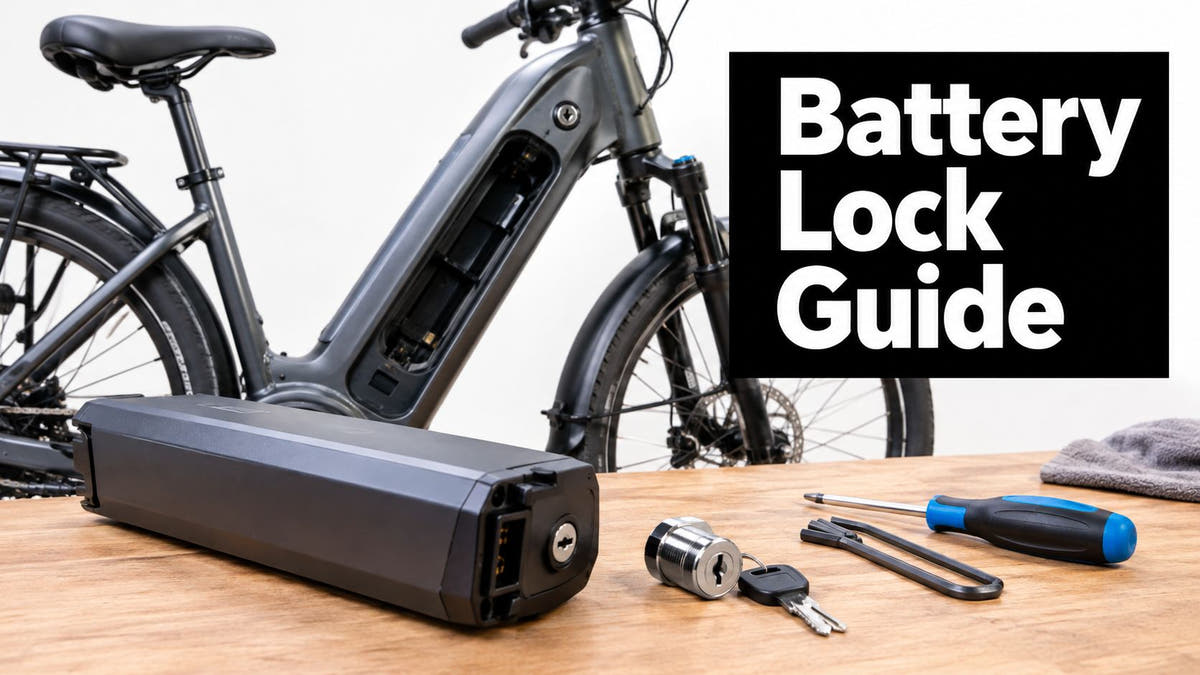
Finally, take a close look at the lock mechanism. A sturdy, reliable lock is your best friend for keeping the battery securely attached to the frame. It’s what gives you peace of mind when you have to leave your bike locked up outside.
For a full rundown on what to look for when buying, check out our guide on how to choose an e-bike.
Mastering Your Battery's Care and Feeding
Your battery is the powerhouse of your e-bike, and a little TLC goes a long way in keeping it healthy and strong. Proper care isn't rocket science, but a few smart habits can seriously extend its lifespan. This protects your investment and makes sure your bike is always raring to go when you are.
Think of your battery as a sensitive piece of electronics—because that's exactly what it is. It really doesn't like extreme temperatures. Charging it in a sweltering Arizona sunroom or a chilly Melbourne garage puts a lot of stress on the cells, which can chip away at its total capacity over time.
For best results, always bring your battery inside to charge at a comfortable room temperature. This one simple move helps it charge efficiently and safely, whether you're topping up in our US or Australian warehouse locations.
The 80/20 Rule: Your Battery's Best Friend
Here’s one of the best pro tips for boosting your battery's longevity: the "80/20 rule." Basically, for daily rides, try to keep the charge level between 20% and 80%. Avoid the habit of always pushing it to a full 100%.
Why? Pushing a lithium-ion battery to its absolute maximum charge puts a tiny bit of strain on the cells. While the built-in Battery Management System (BMS) is smart enough to prevent overcharging, stopping around 80% most of the time can dramatically increase the number of charge cycles you get. Of course, if you've got a long haul planned, go ahead and charge it all the way up!
Think of partial charging as a form of active recovery for the battery's internal chemistry. It avoids the stress of being totally full or completely empty, which is where the most wear and tear happens.
This small tweak to your routine can literally add years to the life of your electric bike with removable battery, saving you a nice chunk of change down the road.
Smart Storage for When You're Not Riding
What you do between rides is just as crucial as how you charge. If you’re putting your bike away for more than a few weeks (hello, winter!), never leave the battery fully charged or completely drained. Either extreme can cause permanent damage.
The sweet spot for long-term storage is a charge level between 40% and 60%. Find a cool, dry spot for it, far away from direct sunlight. For a deeper dive into this, our guide on how to store lithium batteries safely has all the details.
Even with perfect care, all batteries eventually wear out. When it's finally time to say goodbye, be sure to dispose of it responsibly. You can explore local battery recycling solutions to do right by the planet. Stick to these tips, and your power pack will stay healthy and ready to roll for years to come.
Simple Ways to Keep Your Removable Battery Secure
Having an electric bike with a removable battery is a game-changer for city living, but it also means you need to be smart about keeping it safe and in good working order. Sure, the battery probably has its own little lock, but that’s not always enough to stop a determined thief. A few simple habits will keep your power source safe and sound.
The easiest and most effective security trick? When you park in public, take the battery with you. Seriously, just pop it off and bring it inside. Treat it like your phone or your wallet—it’s the most valuable, pocketable part of your bike. Carrying it into the office, a coffee shop, or your apartment makes your e-bike a much less appealing target.

Essential Maintenance for Peak Performance
Beyond just keeping it from getting stolen, a little TLC will keep your battery performing at its best. This power pack is the heart of your ride, and it’s part of a huge, fast-growing market. Globally, e-bike batteries are projected to jump from a USD 18.90 billion industry in 2025 to USD 42.24 billion by 2032. Learn more about what's driving this growth. Keeping yours in top shape means you get the most out of this incredible tech.
A solid connection is everything, so a quick wipe-down now and then works wonders.
- Clean the Contacts: Every so often, take a dry, clean cloth and gently wipe the metal electrical contacts on both the battery itself and the bike frame. This gets rid of any dust or gunk that could mess with the power flow.
- Post-Rain Check: If you get caught in a downpour, make sure to wipe down the battery and its housing once you're under cover. Most are built to be water-resistant, but drying them off helps prevent any long-term moisture problems.
- Listen for Looseness: A healthy battery should give you a satisfying click when it locks into place. If the lock feels wobbly or you hear the battery rattling around on your ride, it's time to take a closer look and make sure everything is snug.
A secure battery isn’t just about stopping thieves. It's about ensuring a solid, reliable connection so you get a smooth, uninterrupted ride every time. Clean contacts and a tight fit are where it all starts.
These habits barely take any time but give you massive peace of mind. And for those moments when you absolutely have to leave your bike locked up outside, a top-notch frame lock is a must. We’ve got more tips in our guide to choosing the best lock for your electric bike. A good lock plus a little routine maintenance will keep you and your ride ready for anything the city throws at you.
Got questions about removable e-bike batteries? You're not alone. It’s a big part of the e-bike experience, and it makes sense to get all the details straight before you commit. We hear these questions all the time from our riders, so we’ve put together some clear, no-nonsense answers.
Let's dive in and get you feeling confident about how these batteries work.
Can I Upgrade the Removable Battery on My Electric Bike?
Upgrading your battery is possible, but you have to treat it like a transplant—everything has to match up perfectly. The absolute golden rule is to perfectly match the voltage (V) of your original battery. Seriously, don't mess with this. Using the wrong voltage can fry your bike’s motor and electronics for good.
You can often find a battery with higher amp-hours (Ah) to give you more range, which is awesome. The catch is that the new battery still has to physically slide into the bike’s frame and click into the exact same connector. Before you even think about buying, your best bet is to chat with your bike's manufacturer or a pro at a good e-bike shop to find an upgrade that’s both safe and compatible.
Key Takeaway: Match the voltage, no exceptions. You can play around with amp-hours, but only if the new battery physically fits and connects. When in doubt, just ask an expert.
How Long Does a Removable E-Bike Battery Typically Last?
A good quality lithium-ion battery should give you somewhere between 800 to 1,000 full charge cycles. A "full cycle" is just a fancy way of saying you've charged it from totally empty to totally full. For most people, that translates to about 3 to 5 years of solid, regular riding before you'll start to notice the range isn't quite what it used to be.
And you can definitely push it closer to that 5-year mark with a few good habits. Little things, like keeping it out of scorching heat or freezing cold and not letting it sit dead for weeks on end, will go a long way in keeping it healthy.
Is It Safe to Leave My Removable Battery Charging Overnight?
Generally, yes. Modern e-bike batteries have a smart little computer inside called a Battery Management System (BMS). Think of it as a bouncer for your battery—it cuts off the power as soon as it's full, so there’s no risk of overcharging.
Even with that safety feature, it’s still best practice to unplug the charger once it hits 100% to help with long-term health. But the most important thing here is to never, ever use a cheap, third-party charger. Stick with the one that came with your bike. An incompatible charger is a major safety hazard, and it’s just not worth the risk.
Are Removable Batteries Waterproof?
They're water-resistant, not waterproof. What's the difference? It means your battery is built to handle getting caught in a downpour or splashing through puddles on your commute. It’s sealed up tight enough for normal riding conditions.
But you definitely shouldn't ever dunk it in water. You also want to avoid hitting it with a high-pressure hose when you're washing your bike. That kind of force can push water past the seals and into places it shouldn't be. A good habit to get into after a wet ride is to quickly wipe down the battery and its connection points before charging it or putting it back on the bike. It's a small step that can prevent a lot of moisture-related headaches.
Ready to experience the freedom of an electric bike with removable battery? At Punk Ride, we have a handpicked selection of top-notch e-bikes that are perfect for any city adventure. Find your perfect ride and redefine your commute today. Shop E-Bikes Now.
Share:
Best Electric Scooters Under 1000: best electric scooters under 1000 for 2026
The Best Ebike Accessories for Your Perfect Ride