


Tehát nagyszerű elektromos robogót keresel, ami nem viszi el a pénztárcádat? Jó helyen jársz. A legjobb elektromos robogók 1000 dollár alatt megtalálása arról szól, hogy megtaláld a teljesítmény, a masszív felépítés és a valós hatótáv tökéletes egyensúlyát anélkül, hogy kiürítenéd a megtakarításaidat.
Gondolj olyan márkákra, mint az ISCOOTER, AOVO és HITWAY. Ezek népszerűvé váltak egy okból – megbízható ingázó teljesítményt és valóban hasznos funkciókat kínálnak egy olyan csomagban, ami sokkal könnyebbé teszi a városi közlekedést. Ez az útmutató az ausztrál és amerikai piacokon élő felhasználóknak készült, hogy segítsen eligazodni a lehetőségek között és megtalálni a tökéletes járművet.
Az útmutatód a tökéletes 1000 dollár alatti robogóhoz
Az elektromos robogók világába való belépés olyan lehet, mint egy labirintusban való tájékozódás. Olyan sok műszaki adat, márka és funkció van, amit figyelembe kell venni. De ne aggódj, ez az útmutató személyes térképként szolgál, segít megtalálni a számodra és a költségvetésedhez illő járművet. Ez nem kompromisszumokról szól, hanem okos vásárlásról.
Kezdjük azzal, hogy megnézzük, mit várhatsz reálisan egy ebben az árkategóriában lévő robogótól. A jó hír? A hatalmas előrelépéseknek köszönhetően az akkumulátor- és motortechnológiában az 1000 dollár alatti kategória versenyképesebb és lenyűgözőbb, mint valaha.
Mit várhatsz egy 1000 dollár alatti robogótól
Ez a táblázat világos képet ad arról, milyen teljesítményre számíthatsz ebben az árkategóriában, segítve, hogy reális célokat tűzz ki az új járművedhez.
| Jellemző | Tipikus teljesítmény | Mit jelent ez számodra |
|---|---|---|
| Hatótávolság | 15-25 mérföld (24-40 km) egy töltéssel | Tökéletes a legtöbb napi ingázáshoz vagy városi ügyintézéshez anélkül, hogy nap közben tölteni kellene. |
| Végsebesség | 15-20 mph (25-32 km/h) | Biztonságos és fürge sebesség városi utcákra és kerékpársávokra. Elég gyors ahhoz, hogy felszabadító legyen, de mégis könnyen irányítható. |
| Kivitelezési minőség | Tartós alumíniumötvözet vázak | A robogód elég masszív lesz ahhoz, hogy bírja a napi használatot, ütődéseket és rezgéseket anélkül, hogy szétesne. |
| Motor teljesítmény | 350W-500W névleges teljesítmény | Elég erő ahhoz, hogy sík felületeken és kis-közepes emelkedőkön is haladjon anélkül, hogy csigalassúságra váltana. |
| Fékrendszer | Tárcsafékek, dobfékek vagy kombináció | Megbízható fékerő alapfelszereltség, ami megadja a magabiztosságot a forgalomban és váratlan megállásoknál. |
| Hordozhatóság | Gyakran 28-40 lbs (13-18 kg) súlyú | Elég könnyű ahhoz, hogy a legtöbb ember felvigye egy lépcsőn vagy bedobja egy autó csomagtartójába. |
Végső soron egy megbízható napi munkalovat kapsz. Lehet, hogy nincs meg benne egy csúcskategóriás teljesítménymodell arcégető gyorsulása, de arra tervezték, hogy nap mint nap gond nélkül eljuttasson oda, ahová kell.
Egy piac mozgásban
Az elektromos roller piac most robbanásszerűen növekszik, és ez fantasztikus hír az USA és Ausztrália utazói számára. A globális piac hihetetlen ütemben bővül, és várhatóan 2025-ben körülbelül 38,4 milliárd USD-ről 2035-re hatalmas, 91,1 milliárd USD-re ugrik.
Ez a fellendülés közvetlenül jobb technológiát és hevesebb versenyt jelent a márkák között. Számodra, vásárlóként ez több funkciót, jobb akkumulátorokat és erősebb motorokat jelent a pénzedért.
Ha még mélyebbre szeretnél ásni, átfogó elektromos roller vásárlási útmutatónk tele van részletes tippekkel és modellösszehasonlításokkal. A megfelelő információkkal a kezedben magabiztosan választhatsz olyan rollert, amely teljesen megváltoztatja, hogyan közlekedsz a városodban.
A valóban fontos műszaki adatok megfejtése
Egy roller műszaki adatlapját nézegetni olyan, mintha kódot próbálnál feltörni. Az összes watt, amperóra és különböző féktípusok elsőre túl soknak tűnnek, de nem olyan bonyolultak, mint amilyennek látszanak. Fordítsuk le ezt a műszaki zsargont arra, hogy mit jelent ez a napi utazásod szempontjából, hogy ki tudd választani a legjobb elektromos rollereket 1000 alatt úgy, hogy az tényleg illeszkedjen ahhoz, ahogyan te élsz és közlekedsz.
Valójában két kulcsfontosságú dologról van szó: a motorról (a motor) és az akkumulátorról (az üzemanyagtartály). Az, hogy ezek hogyan működnek együtt, határozza meg a roller személyiségét. Csak ne feledd, ebben az árkategóriában mindig kompromisszum van. Egy erős motor élvezet a dombokon, de ugyanúgy zabálja az akkumulátort, mint egy V8-as motor a benzint.
A gépház: Motor teljesítmény
Egy roller teljesítményét wattban (W) mérik, és ez a nyers erőről szól. Ez a szám megmutatja, milyen gyorsan érsz el sebességet, és ami még fontosabb, hogy a roller mennyire jól birkózik meg a dombokkal. Ezer dollár alatt általában 350W és 500W közötti motorokat találsz.
- 350W motorok: Ezek a tökéletes munkalovak a síkabb városokban, mint Chicago vagy Melbourne. Simán, megbízhatóan gyorsulnak, ami ideális a kiszámítható napi ingázáshoz.
- 500W-os motorok: Vannak dombok az útvonaladon? Ha olyan helyen élsz, mint San Francisco vagy akár Sydney egyes részei, akkor a 500W-os motor extra ereje az, amire szükséged van. Megadja a nyomatékot, hogy ne kelljen csigalassúsággal másznod, és az egész utazás sokkal fürgébbnek érződik.
Több watt egyszerűen több erőt jelent. Egy 350W-os roller a legtöbb napi utat gond nélkül kezeli, de egy 500W-os modell magabiztosságot ad, hogy nem akad el, amikor az út felfelé kezd emelkedni.
Az üzemanyagtartályod: Akkumulátor és hatótávolság
Az akkumulátor a roller életfonala. Kapacitása határozza meg a hatótávolságot — hogy milyen messzire juthatsz, mielőtt konnektort keresnél. Ebben az árkategóriában reálisan 15-25 mérföld (24-40 km) közötti távolságra számíthatsz egyetlen töltéssel.
De azokat a hivatalos hatótávolság számokat sóval kell venni. A gyártók tökéletes laboratóriumi körülmények között tesztelik őket: nagyon könnyű vezető, szélmentes idő és teljesen sík terep. A való életben viszont a súlyod, a dombok és még a sebességed is befolyásolja, hogy valójában milyen messzire jutsz.
Ez pont olyan, mint az autód „mérföld per gallon” értéke. Ha mindenhol padlózod, hamar kiürülsz. Ha simán vezetsz, minden utolsó mérföldet ki tudsz hozni.
Egy klasszikus kezdő hiba, ha olyan rollert veszel, amelynek a hirdetett hatótávolsága éppen csak fedezi az ingázásodat. Mindig, és tényleg mindig, szerezz be egy rollert legalább 30-40%-kal nagyobb hatótávolsággal, mint amennyire gondolod, hogy szükséged van. Ez a plusz energia a biztonsági hálód a szeles napokra, váratlan kerülőkre és az idővel természetesen csökkenő akkumulátor kapacitásra.
Fékerő: A fékrendszerek magyarázata
Elindulni szórakoztató, de biztonságosan megállni nem alku tárgya. Ebbe a kategóriába tartozó rollerek általában háromféle féktípus egyikével, vagy néha kombinációjával érkeznek.
- Tárcsafékek: Ezek a legjobbak a szakmában. Komoly fékerőt nyújtanak, amiben megbízhatsz, esőben és napsütésben egyaránt. Ha egy rolleren tárcsafékeket látsz, tudhatod, hogy a biztonság volt az elsődleges szempont.
- Dobfékek: A kerékagy belsejében elrejtve, a dobfékek nagyszerűek, mert védettek a kosztól és a víztől, így kevesebb gondot és karbantartást igényelnek. Szilárd fékerőt biztosítanak, bár talán nem olyan éleset, mint egy jó tárcsafék.
- Elektromos fékek: Ez a rendszer maga a motor segítségével lassít le. Egy menő extra a regeneratív fékezés, ami egy kis energiát visszatáplál az akkumulátorba. Magukban nem elégségesek egy vészfékezéshez, ezért mindig mechanikus fékkel (tárcsás vagy dobfékkel) kell párosítani őket.
Ha bele akarsz mélyedni abba, hogyan érződnek ezek a rendszerek a valóságban, érdemes elektromos robogókat összehasonlítani, hogy megtaláld, melyik beállítás passzol hozzád. A lényeg egyszerű: győződj meg róla, hogy a robogód legalább egy jó mechanikus fékkel rendelkezik. Az életed múlhat rajta.
Hogyan alakítják a gumik és a felfüggesztés az utazás minőségét
A motor és az akkumulátor lehet, hogy minden figyelmet magára von, de beszéljünk arról, ami igazán meghatározza a napi utazásodat: a gumikról és a felfüggesztésről. Ezek a névtelen hősök döntik el, hogy simán siklasz az úton, vagy érzed minden egyes repedést és kavicsot. Amikor a legjobb 1000 dollár alatti elektromos robogókat keresed, az, hogy milyen érzés vezetni, ugyanolyan fontos, mint a sebesség.
Úgy gondolj rá, mint amikor nem viselsz elegáns cipőt futáshoz. Az egyik a megjelenésre van tervezve, a másik az ütéselnyelésre. A robogód gumijai és felfüggesztése ugyanígy működnek, és a megfelelő kombináció megtalálása a titka a kényelmes, kontrollált utazásnak.
Pneumatikus vs. szilárd gumik: a nagy vita
Ez az egyik legnagyobb döntés, amit meg kell hoznod. A robogód gumijának típusa alapvetően megváltoztatja a vezetési élményt, és egyértelmű kompromisszum van a kényelem és a praktikum között.
-
Légtöltött gumik (pneumatikus): Pont úgy, mint a kerékpáron, ezek a gumik levegővel vannak töltve. Ez a levegő természetes párnaként működik, elnyeli a rezgéseket és az apróbb úthibákat. Az eredmény egy sokkal simább, kényelmesebb utazás jobb tapadással. A hátrány? Leereszthetnek.
-
Masszív gumik (levegő nélküli): Szilárd gumiból vagy sűrű habból készülnek, ezek az igazi keményfiúk. Átgurulhatsz üvegen, szögeken, bármin – 100%-ban defektállóak. Ez a nyugalom fantasztikus, de ára van. Légtelen párnázás nélkül az utazás sokkal keményebb, és minden egyes egyenetlenséget érzel az úton.
Szóval, mi a megfelelő számodra? Valójában a prioritásaidtól függ. Ha mélyebbre szeretnél ásni, útmutatónk a elektromos robogók gumiabroncsairól mindent részletesen elmagyaráz.
A felfüggesztés szerepe
Ha a gumik a futócipők, akkor a felfüggesztés a rugó a lépésedben. Ez az, ami elnyeli a nagy ütéseket – a kátyúkat, leesett járdaszegélyeket és a komolyan durva szakaszokat. Míg sok olcsó robogó kihagyja, egy 1000 dollár alatti modell megtalálása még alap felfüggesztéssel is hatalmas nyereség a kényelem szempontjából. Ez egy igazi mérföldkő.
A felfüggesztés átalakítja a rollert egy csontropogtató haszoneszközből kényelmes utazássá. Még egy egyszerű első rugó is lehet a különbség aközött, hogy összeszorítod a fogad a rázós úton, vagy alig veszed észre. Ez egy olyan funkció, ami megéri az árát az utazási minőségben, különösen a régebbi városi utcákon.
Általában néhány típust láthatsz ebben az árkategóriában:
- Rugós felfüggesztés: Ez a leggyakoribb és leghatékonyabb típus 1 000 dollár alatt. Egy egyszerű tekercsrugó összenyomódik a rezgések elnyelésére. Működik, és megbízható.
- Hidraulikus felfüggesztés: Ez fejlettebb, és általában drágább rollereken található meg. Folyadékot használ, hogy még simább, jobban szabályozott csillapítást biztosítson.
- Gumi felfüggesztés: Egy alacsony karbantartású alternatíva, amely gumitömböket használ a rezgések elnyelésére. Jó középút a rugós rendszer és a semmi között.
Szóval, mi az ideális beállítás? A legtöbb ember számára, aki tipikus városi utcákon közlekedik, a légpárnás gumik és legalább első felfüggesztés az arany standard. Ez a tökéletes egyensúly a rezgéscsillapítás és a teljesítmény között. De ha az ingázásod sima kerékpársávokon zajlik, és egyszerűen nem bírod elviselni a defekt gondolatát, akkor egy tömör gumis roller lehet a legjobb választás, különösen, ha találsz olyat, amin valamilyen felfüggesztés is van a kellemetlenségek csökkentésére.
Ismerd a terepet! Igazítsd a gumikat és a felfüggesztést a napi útvonaladhoz, és garantáltan sokkal jobb lesz az utazás.
Megfelelő roller megtalálása az életstílusodhoz
Itt egy kis titok: nincs olyan, hogy „legjobb elektromos roller”. A legjobb roller nem az, amelyiken a legnagyobb számok szerepelnek a műszaki adatlapon – hanem az, amelyik tényleg illik az életedhez.
Gondolj rá úgy, mint autóvásárlásra. Nem vennél hatalmas pickupot egy szűk városi ingázáshoz, ugye? Arról szól, hogy a járművet a napi feladatodhoz igazítsd. Nézzünk meg néhány gyakori helyzetet, hogy kiderítsük, mi a megfelelő számodra.
A napi ingázó
Próbálsz megszabadulni a zsúfolt vonattól vagy a drága parkolóházaktól? Ha igen, akkor te egy Napi Ingázó vagy. A fő céljaid a megbízhatóság és a következetesség. Egy megbízható munkalóra van szükséged, ami egyszerűen működik, nap mint nap, dráma nélkül.
Ehhez a fajta közlekedéshez nem a sebességrekordokat hajszolod. Egy okos funkciókeverékre törekszel, ami sokkal simábbá teszi a napi robotot.
- Jó hatótáv: Keress valós körülmények között 15-20 mérföld (24-32 km) hatótávot. Ez az ideális tartomány, amely elegendő energiát ad oda-vissza útra, egy kis tartalékkal arra az esetre, ha elfelejtenéd éjszaka feltölteni.
- Masszív fékek: A városi forgalom kiszámíthatatlan. Legalább egy mechanikus fék (például tárcsafék vagy dobfék) megléte elengedhetetlen a biztonság és az irányítás érdekében.
- Közepes súly: Ha az ingázásod magában foglalja, hogy a rollert néhány lépcsőn fel kell cipelned, egy 28-40 font (13-18 kg) közötti modell a legjobb választás. Elég kezelhető ahhoz, hogy ne rettegj a cipeléstől.
Az Utolsó Mérföld Felfedezője
Te vagy a többmódú ingázás szakértője. Lehet, hogy az út nagy részét autóval vagy vonattal teszed meg, majd az utolsó szakaszon felszállsz a rollerre az irodáig. Számodra a legfontosabb szó a hordozhatóság.
A rollernek könnyű utazótársnak kell lennie, nem pedig egy nehéz horgonynak, amit cipelni kell. A nagy, nehézkes modellek egyszerűen nem felelnek meg.
Az utolsó mérföldes utazók számára a roller valódi értékét akkor mérik, amikor éppen nem használják. Milyen gyorsan csukódik össze? Fel tudod vinni egy zsúfolt buszra anélkül, hogy furcsa pillantásokat kapnál? Egy könnyű, kompakt kialakítás sokkal fontosabb, mint a nyers erő.
A tökéletes utolsó mérföldes roller fürge, könnyű, és pillanatok alatt összecsukható.
Ez a kis útmutató segíthet eldönteni, hogy milyen típusú gumik szolgálnak majd a legjobban a szokásos útvonalad alapján.
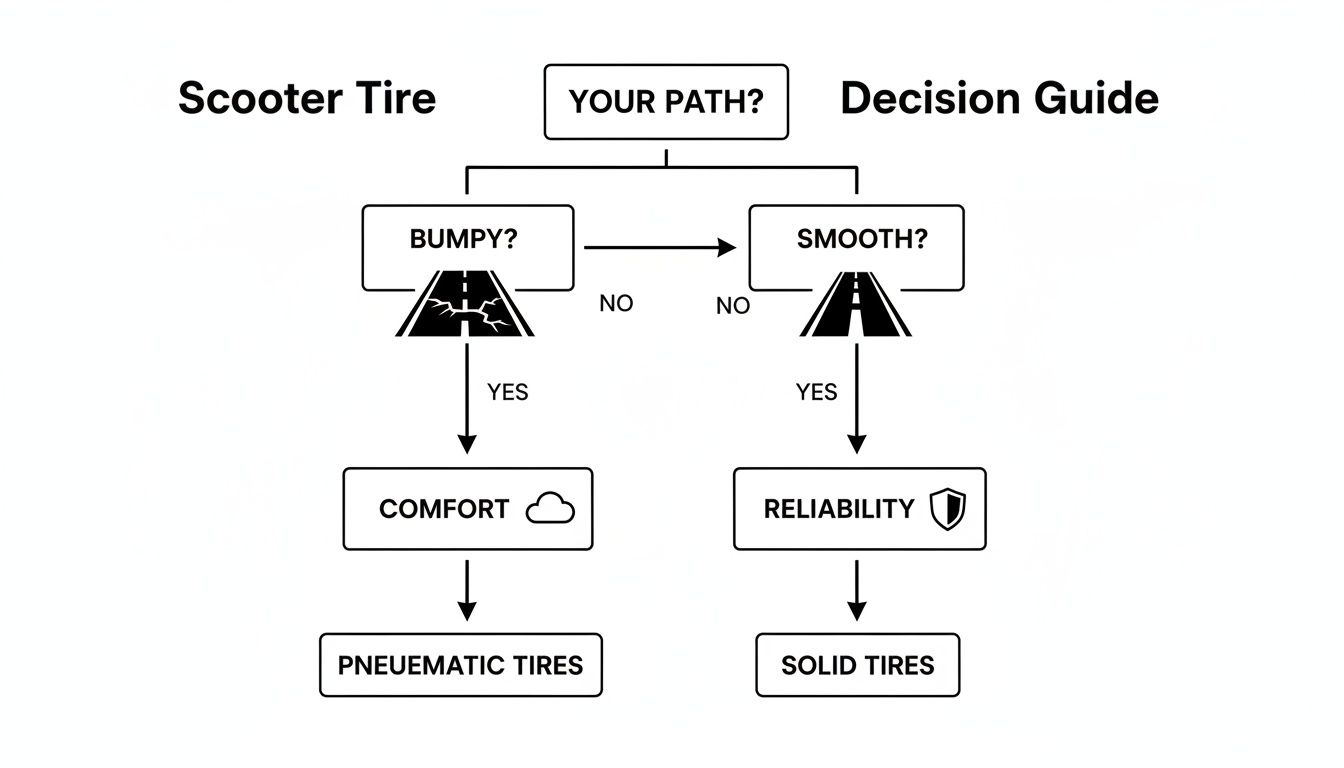
Ez igazából így szól: a levegővel töltött gumik a királyok a kényelem terén a nem tökéletes városi utcákon, de a masszív gumik nagyszerű választás, ha az utad sima, és soha nem akarsz a defekttel foglalkozni.
A Hétvégi Kalandor
Amint eljön a péntek, a roller a menekülő járműved. Nem csak ügyeket intézel; felfedezed a kerékpárutakat, parkokon suhansz át, és egyszerűen élvezed az utazás szabadságát. Számodra a teljesítmény és a kényelem a hosszú távon a legfontosabb.
Egy alap ingázó roller kissé korlátozottnak tűnhet. Meg kell nézned, mire képes igazán egy 1000 dollár alatti roller.
- Hosszabb hatótáv: Olyan rollert kell keresned, amely reálisan képes 20+ mérföldet megtenni egyetlen töltéssel. Semmi sem öli meg gyorsabban a szórakozást, mint az akkumulátor miatti aggódás.
- Erőteljes motor: Egy fürgébb motor, valami a 500W környékén, izgalmasabbá teszi az utazást, és megadja azt az erőt, amire szükséged van, hogy leküzdd a dombokat a festői ösvényeken.
- Kényelmi funkciók: Itt válik elengedhetetlenné a felfüggesztés. A levegővel töltött gumik kombinációjával ez egy igazi áttörés, amely elnyeli az ütéseket és sokkal kellemesebbé teszi a hosszabb utakat. Olyan márkák, mint a DUOTTS vagy az IENYRID gyakran építenek ilyen funkciókat megfizethető modelljeikbe, így ezek remek választások a hétvégi szórakozáshoz.
Okos közlekedés: Biztonságban maradás és a roller tökéletes állapotban tartása
Egy új elektromos roller kibontása igazi élmény. De mielőtt végigszáguldanál az utcán, beszéljünk néhány dologról, ami biztonságban tart és megóvja az új járművedet. Gondolj rá úgy, mint egy gyors előkészítő ellenőrzőlistára; pár perc előkészület sokat számít.
Először is: a legfontosabb felszerelés egy sisak. Komolyan, ez nem alku tárgya. Ezek a rollerek gyorsan felgyorsulhatnak, és sosem tudhatod, mit dob eléd egy városi utca. Egy jó, tanúsított sisak az egyetlen dolog, ami egy igazán rossz napot kisebb balesetté változtathat.
Azt is ajánlom, hogy vegyél fel egy pár kesztyűt a jobb fogás és védelem érdekében, ha esetleg elesnél. Ha pedig hajnalban, alkonyatkor vagy éjszaka tervezel közlekedni, viselj valami fényes vagy fényvisszaverő ruhát, hogy a sofőrök és gyalogosok tényleg lássanak.
Az elektromos roller törvények labirintusának navigálása
Oké, ez egy nagy téma. Az elektromos rollerrel való közlekedés helye és módja szó szerint mindenhol más és más. Ami az egyik városban teljesen rendben van, az egy másikban akár súlyos bírságot is vonhat maga után, még ugyanazon országon belül is. Mindenképpen ellenőrizd a helyi szabályokat, mielőtt rollerre pattansz.
- Amerikai Egyesült Államok: A törvények valódi foltvarrások, államonként és akár városonként is változnak. Egyes helyeken a rollereket kerékpárként kezelik, így használhatod a kerékpársávokat, míg máshol saját szabályaik vannak.
- Ausztrália: Hasonlóan az Egyesült Államokhoz, a szabályozások államonként vagy területenként eltérőek. Például Queenslandben a sebességre és a motor teljesítményére vonatkozó szabályok nem ugyanazok, mint Victoriában.
- Egyesült Királyság: Jelenleg csak magántulajdonban lévő e-rollerrel lehet legálisan közlekedni magánterületen (természetesen engedéllyel). Azokon a rollereken, amelyeket a közutakon látsz, kormány által jóváhagyott bérlési kísérletek részei.
- Európai Unió: Ez tényleg az adott országtól függ. Olyan helyeken, mint Németország és Franciaország, vannak nemzeti törvények, amelyek meghatározzák a sebességhatárokat és azt, hogy hol lehet közlekedni, de más helyeken ez a helyi városi önkormányzatra van bízva.
A legjobb tanács, amit adhatok, hogy kezeld a rollered, mint bármely más járművet, és tanuld meg a helyi közlekedési szabályokat. Egy gyors Google keresés a "e-scooter laws [a városod neve]" kifejezésre általában elvezet a helyi önkormányzat vagy közlekedési hivatal weboldalára. Higgy nekem, ez jobb, mint ha elkoboznák a rolleredet.
Egyszerű karbantartási ellenőrzőlistád
Nem kell szerelőnek lenned ahhoz, hogy a rollered úgy működjön, mint újkorában. Egy pár perc alapvető karbantartás időnként komolyan meghosszabbítja az élettartamát és biztonságosabbá teszi minden utazást.
- Ellenőrizd a gumiabroncs nyomását: Ha a rollered levegős gumikon fut, tartsd őket megfelelően felfújva! A megfelelő PSI érték a gumi oldalán van feltüntetve. Az alacsony nyomás a defektek első számú oka, és csökkenti az akkumulátor hatótávolságát.
- Teszteld a fékeket: Minden egyes utazás előtt nyomd meg alaposan a fékkarokat. Szilárdnak és keménynek kell érezniük magukat, nem puhának.
- Töröld le: Vegyél egy nedves rongyot, és töröld át gyorsan. Ez megakadályozza, hogy a kosz és szennyeződés felgyülemljen a fontos részeken, mint a hajtogatószerkezet vagy a felfüggesztés.
- Figyelj a furcsa zajokra: Ha új csörgést vagy nyikorgást hallasz, figyelj oda. Ez gyakran az első jele egy laza csavarnak vagy valaminek, amit gyorsan meg kell húzni.
- Vigyázz az akkumulátorra: Próbáld meg nem lemeríteni az akkumulátort egészen 0%-ra. Egy jó szabály, hogy akkor dugd be tölteni, amikor kb. 20%-ra csökken. És ne hagyd bedugva napokig, miután teljesen feltöltődött.
Az elektromos személyi járművekre való átállás globális jelenség. Az Ázsia-csendes-óceáni régió például nemcsak a legtöbb egységet vásárolja; ez egy hatalmas változás jele abban, ahogyan az emberek a fenntartható közlekedésről gondolkodnak. Délkelet-Ázsiában olyan országok, mint Indonézia és Vietnam robbanásszerű növekedést tapasztalnak, és együttes eladásaik időnként még Kínát is meghaladják. Ez egy hatalmas regionális elmozdulás az elektromos mobilitás felé. Ha szereted az adatokat, további statisztikákat találhatsz a globális kétkerekű piacról, hogy első kézből lásd ezeket a trendeket.
Szóval, miért válaszd a Punk Ride-ot?
Rendben, idáig eljutottál. Tudod, mire kell figyelni egy motorban, miért számít a gumiabroncs választás, és milyen hatótávolságra van ténylegesen szükséged az életedhez. A kirakós utolsó darabja már nem a műszaki adatokon múlik — hanem a bizalmon. Arról szól, hogy találj egy olyan boltot, ami érti a dolgát.
Ez a mi egész ügyünk itt a Punk Ride-nál. Nem csak dobozokat mozgatunk; mi magunk is éljük ezt. Mi már kipróbáltuk a rosszakat, hogy neked ne kelljen, és minden egyes modellt kézzel válogatunk ki, hogy biztosak legyünk benne, hogy olyan gép, amivel mi magunk is izgatottan motoroznánk.
A küldetésünk egyszerű: összehozni egy olyan rollerkollekciót, amely tökéletes egyensúlyt teremt a teljesítmény, a stílus és a környezetbarát városi közlekedés között. Már elvégeztük a házi feladatot, együttműködve megbízható márkákkal, mint a ISCOOTER, AOVO és EVERCROSS, mert ők következetesen kiváló minőséget nyújtanak megfizethető áron. Ha egy roller rajtunk van az oldalon, az azért van, mert megfelelt a teszten.
A Punk Ride ígérete
Legyünk őszinték, a legjobb 1000 dollár alatti elektromos rollerek keresése olyan, mintha teljes munkaidőben dolgoznál. Mi átvágjuk a zajt, és egyenesen a lényeghez vezetünk.
- Érték alapján válogatva: Csak olyan rollereket tartunk, amelyek messze felülmúlják az árukat. Ha nem fantasztikus ajánlat, nem tartjuk készleten. Ennyi az egész.
- Az életre tervezve: A kínálatunk úgy van kialakítva, ahogy az emberek valójában használják. Legyen szó napi ingázásról, az utolsó mérföldről a vonattól, vagy hétvégi lazulásról, van rollerünk hozzá.
- Globális elérés, helyi szolgáltatás: Floridában, USA-ban vagyunk, de raktáraink az Egyesült Királyságban és Németországban vannak, így gyorsan eljuttatjuk hozzád az új járművedet, bárhol is legyél.
A Punk Ride-nál úgy gondoljuk, hogy egy elektromos roller beszerzése olyan érzés legyen, mint egy új szabadságszint feloldása – ne pedig úgy, mintha egy záróvizsgára készülnél. Összekötünk téged olyan rollerekkel, amelyek szórakoztatóak, megbízhatóak és okosak, hogy jól érezd magad a választásod miatt.
Rollerrel magabiztosan
A lényeg, hogy nyugalmat adjunk neked. Bizalmat, hogy egy előzetesen ellenőrzött, minőségi gépparkot nézel. Bizalmat, hogy olyan rollert választasz, ami valóban megfelel az igényeidnek, amiket most tisztáztál. És bizalmat, hogy okos befektetést teszel egy jobb közlekedési módba.
Már nem csak vásárló vagy. Tájékozott felhasználó vagy, aki pontosan tudja, mire kell figyelni. Csapj le a Punk Ride roller kollekciójára, és találd meg azt, amelyik a nevedre szól.
Kérdéseid vannak? Válaszaink vannak
Belevágni az 1000 dollár alatti elektromos rollerek világába olyan, mintha egy labirintusba lépnél. Kérdéseid vannak, és ez jó dolog. Vegyük sorra a leggyakoribbakat, amiket a felhasználóktól hallunk, hogy megtaláld a tökéletes rollert találgatás nélkül.
Mindent lefedünk, azzal kezdve, hogy milyen távolságot fogsz valójában megtenni, egészen a helyi törvények apró részleteiig. A végére minden információd meglesz, hogy teljes magabiztossággal vásárolhass.
Meddig tart egy 1000 dollár alatti elektromos roller?
Egy kis gondoskodással egy masszív elektromos roller ebben az árkategóriában könnyedén lehet a megbízható társad 3-5 évig. Nem az ár a lényeg; a karbantartáson múlik minden.
A legtöbb váz erős alumíniumötvözetből készül, amely bírja a strapát. Az alkatrészek, amelyek természetesen idővel kopnak, például az akkumulátor, a gumik és a fékbetétek – és tippeld meg? Mind cserélhetők. Csak az egyszerű dolgokkal, mint a gumik megfelelő levegőnyomásának fenntartása és az akkumulátor helyes tárolása, évekkel meghosszabbíthatod a roller élettartamát.
Mekkora valós hatótávolságra számíthatok?
Legyünk őszinték: a dobozon feltüntetett hatótávolság a legjobb esetet mutatja, laboratóriumi körülmények között, szél és dombok nélkül, könnyű sofőrrel tesztelve. A valóságban egy jó szabály, hogy a hirdetett szám körülbelül 70-80%-ára számíts. Ha egy roller 25 mérföldes hatótávolságot ígér, akkor a napi utazásaid során inkább 18-20 mérföldre számíthatsz.
Miért van különbség? A testsúlyod, a meredek emelkedők, a szembeszél, és még az is, ha sokat állsz meg és indulsz újra, mind befolyásolják az akkumulátor élettartamát. Az elkerülhetetlen „hatótávolság-szorongás” elkerülése érdekében mindig olyan rollert válassz, amelynek a megadott hatótávolsága kényelmesen meghaladja a leghosszabb szokásos oda-vissza utadat.
Íme egy profi tipp: vegyél olyan rollert, amelynek a hirdetett hatótávolsága legalább 40%-kal nagyobb, mint amennyire a napi ingázásodhoz szükséged van. Ez a tartalék fedezi a nehezebb napokat és a lítium akkumulátor természetes kapacitáscsökkenését, így soha nem maradsz útközben.
Az elektromos rollerek mindenhol legálisak a használatra?
Ez egy nagy kérdés, és a rövid válasz nem. Az e-rollerekre vonatkozó szabályok nagyon eltérőek, és tényleg attól függ, hol élsz. Feltétlenül ellenőrizd a helyi szabályokat.
- Az USA-ban és Ausztráliában: Ez teljesen széttagolt. A törvények államonként, sőt városonként is változhatnak. Egyes helyeken kerékpárként kezelik őket, máshol saját szabályrendszerük van.
- Az Egyesült Királyságban: Ez bonyolult. Jelenleg csak magántulajdonban lévő e-rollert lehet magánterületen használni. A közutakon való használat csak hivatalos bérlési programokra korlátozódik.
- Az EU-ban: Minden országnak megvan a maga szabálya. Németország például konkrét sebességkorlátozásokat és használati területeket határoz meg, míg más helyeken lazábbak a szabályok.
Mielőtt egyáltalán a vásárláson gondolkodnál, gyorsan keress rá az „e-roller szabályok [a te városodban]” kifejezésre. Komolyan, öt perc kutatás megspórolhat egy komoly bírságot, vagy még rosszabb, hogy elvegyék a rolleredet. Okosan közlekedni azt jelenti, hogy legálisan közlekedsz.
Most, hogy megvannak a válaszaid, készen állsz arra, hogy megtaláld a valóban az életedhez illő járművet. Itt a Punk Ride-nál már elvégeztük a házi feladatot, és kiválasztottuk a legjobb ár-érték arányú elektromos rollereket. Nézd meg a kínálatunkat, és készülj fel a következő kalandodra a https://www.punkride.com oldalon.
Megosztás:
Útmutató a robogógumi cseréjéhez a gyakorlatban
Az elektromos kerékpár levehető akkumulátorral kapcsolatos végső útmutató