


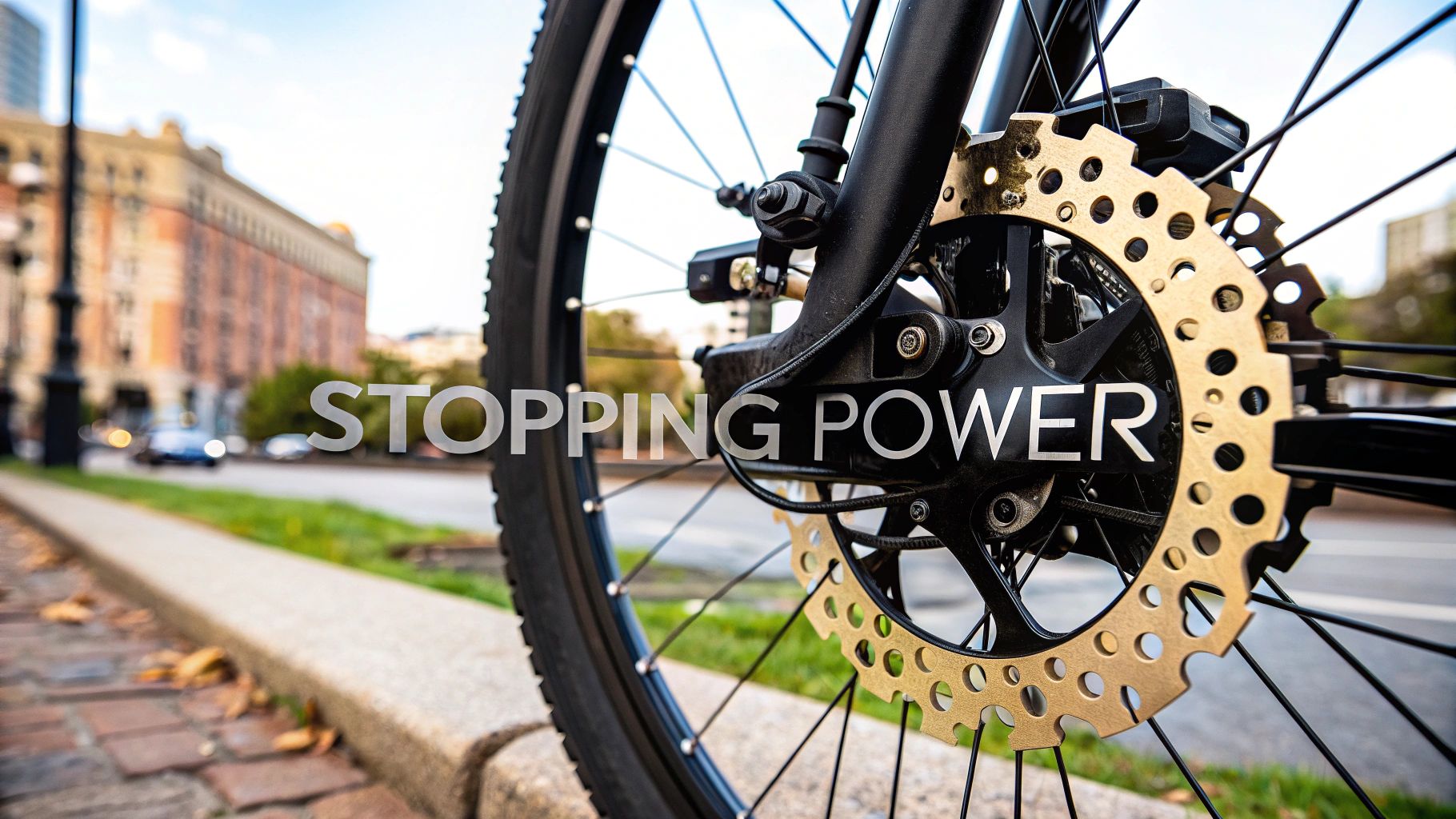
Įsivaizduokite: jūs greitai važiuojate per užimtą Sidnėjaus gatvę, ir pėsčiasis staiga žengia nuo šaligatvio. Tas akimirksnis, kai širdis plaka greičiau, yra būtent tas momentas, kai elektrinių dviračių hidrauliniai stabdžiai parodo savo vertę. Jie suteikia tokį galingą, patikimą stabdymą, kurio jums tikrai reikia šiandienos sunkesniuose, greitesniuose elektriniuose dviračiuose.
Kodėl jūsų elektrinis dviratis reikalauja geresnių stabdžių
Standartinių dviračių stabdžiai tiesiog nebuvo sukurti darbui, kurį elektrinis dviratis jiems turi atlikti. Tai kaip bandyti naudoti Toyota Yaris stabdžius, kad sustabdytumėte pristatymo furgoną – tiesiog neveiks gerai. Jūsų elektrinis dviratis su savo galingu varikliu ir baterija neša daug daugiau svorio ir įgauna daugiau impulso nei bet kuris įprastas dviratis. Visa ši papildoma masė reikalauja stabdžių sistemos, kuri galėtų atlaikyti spaudimą ir užtikrinti jūsų saugumą.
Tai ne tik malonus priedas; tai kritiškai svarbi saugos įranga. Todėl pamatysite, kad tokie prekės ženklai kaip ENGWE ir DUOTTS savo dviračius iš karto aprūpina hidraulinėmis sistemomis. Papildomas elektrinio dviračio svoris ir greitis sukuria didžiulę jėgą, o senamadiški mechaniniai stabdžiai tiesiog nesugeba su tuo susitvarkyti, ypač kai leidžiatės nuo stačios kalvos arba reikia staigiai sustabdyti avarijos atveju. Jei dažnai susiduriate su įkalnėmis, mūsų vadovas apie https://www.punkride.com/blogs/news-advice/best-electric-bikes-for-hills yra būtina perskaityti.
Elektrinio dviračio sustabdymo fizika
Galų gale viskas susiveda į paprastą fiziką. Didesnis svoris, judantis didesniu greičiu, reiškia, kad reikia pašalinti daug daugiau energijos, kai norite sustoti.
Ši srauto diagrama puikiai atspindi – kuo daugiau svorio ir greičio atneša elektrinis dviratis, tuo rimtesnės stabdymo technologijos jam reikia.
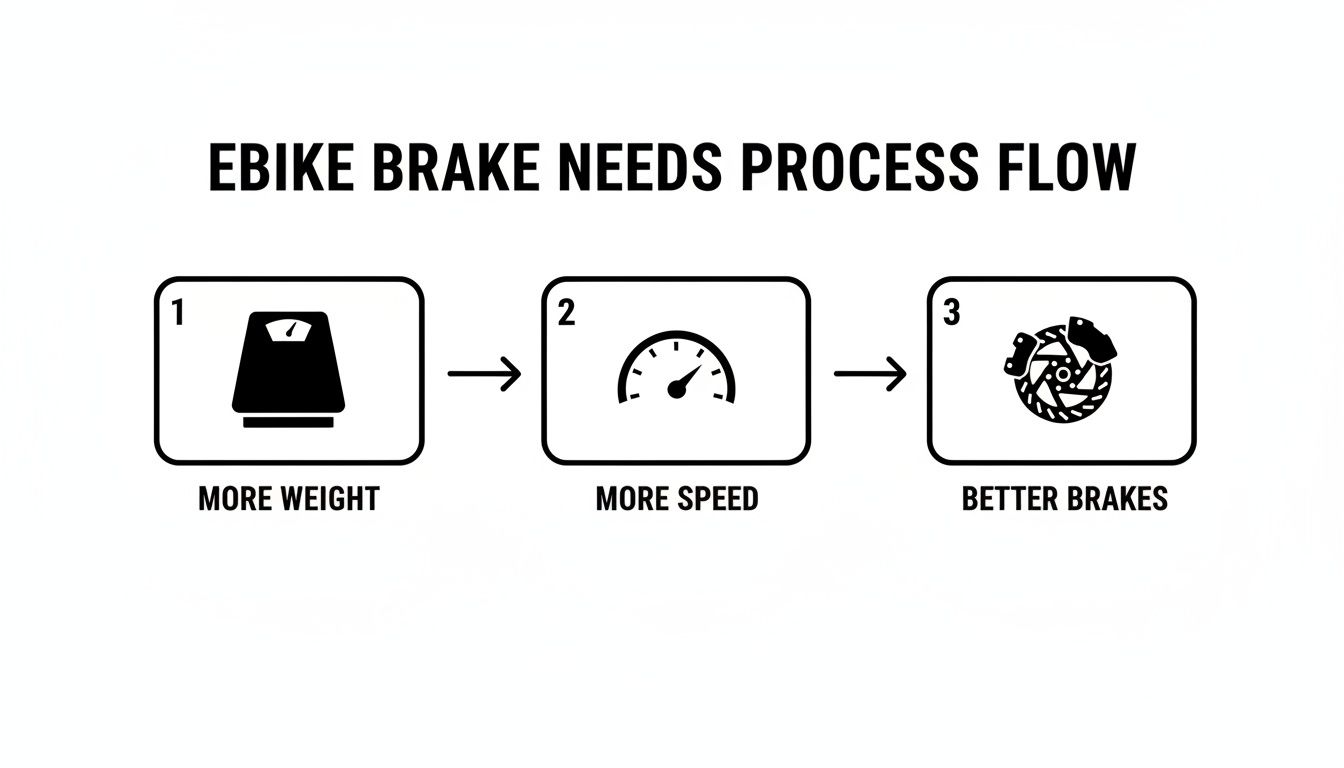
Kaip matote, didėjant svoriui ir greičiui, didėja ir poreikis stabdžių sistemai, kuri tikrai su tuo susitvarkytų. Būtent todėl elektrinių dviračių hidrauliniai stabdžiai tapo aukso standartu visiems, kurie vertina saugumą ir našumą.
Rinkos statistika tai visiškai patvirtina. Pasaulinė hidraulinių diskinio tipo stabdžių rinka išaugo iki 1,8 mlrd. USD, o didelė šio augimo dalis yra dėl elektrinių dviračių revoliucijos. Elektriniai dviračiai gali sverti 20-30 % daugiau nei jų neelektriniai broliai ir gali pasiekti 28 mylių per valandą greitį, todėl jiems reikalingi stabdžiai, kurie nesilpnėtų ir nesugestų lyjant, purve ar karštyje, su kuriais miesto keleiviai susiduria kasdien. Norint tikrai suprasti, kaip visa tai dera, verta pažvelgti į platesnį E mobilumo sektorių ir pamatyti, kur link viskas juda.
Kaip iš tikrųjų veikia hidrauliniai stabdžiai
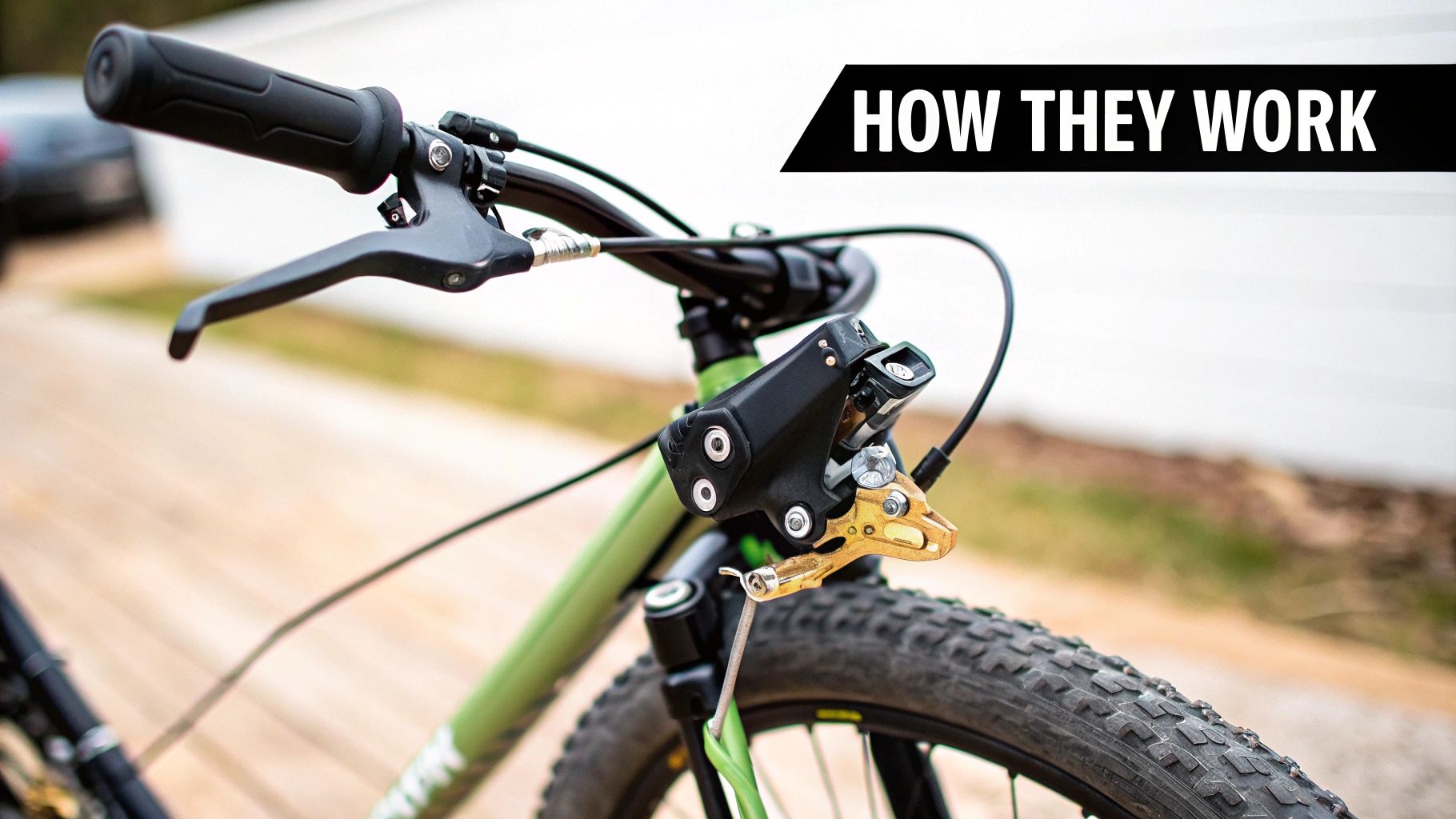
Norint tikrai suprasti, kaip veikia elektrinių dviračių hidrauliniai stabdžiai, galite trumpam pamiršti sudėtingus inžinerinius brėžinius. Tiesiog įsivaizduokite paprastą vandens pistoletą.
Spausdami gaiduką, jūs šiek tiek spaudžiate vandenį, uždarytą viduje. Tas slėgis akimirksniu praeina per vamzdelį ir išstumia vandenį kitu galu su netikėta jėga. Hidrauliniai stabdžiai veikia pagal tą patį principą, tik su daug didesniu tikslumu ir stabdymo galia.
Traukdami stabdžių svirtį, jūs netraukiate plieninio troselio, kaip senoviniuose dviračiuose. Vietoje to, jūs stumiate mažą stūmoklį į kamerą, pilną specialaus stabdžių skysčio. Šis mažas judesys sukuria milžinišką slėgį visiškai sandarioje sistemoje.
Kadangi skysčiai beveik nesuspaudžiami, visas tas slėgis iš karto perduodamas per tvirtą, sustiprintą žarną tiesiai iki stabdžių apkabos prie jūsų rato. Ir čia vyksta tikras stebuklas. Jėga, kurią dedate pirštu, padauginama, suteikiant jums neįtikėtiną stabdymo galią be būtinybės stipriai spausti.
Pagrindinių komponentų išskaidymas
Kiekviena hidraulinės stabdžių sistemos dalis atlieka specifinį darbą, visos kartu dirba, kad suteiktų jums sklandžią ir pasitikinčią stabdymo galią. Kai pamatysite, kaip viskas susijungia, visa sistema taps daug aiškesnė.
Štai keturios pagrindinės dalys ir už ką jos atsakingos:
- Svirtis ir pagrindinis cilindras: Galvokite apie tai kaip apie savo valdymo centrą. Traukiant svirtį, stūmoklis pagrindiniame cilindre spaudžia skystį.
- Hidraulinė žarna: Tai yra vamzdis. Tai itin tvirtas, sandarus vamzdelis, kuris nukreipia slėgį turintį skystį nuo vairo iki pat stabdžio. Jei jus domina, kaip šios sistemos jungiasi, verta pasižiūrėti gidus apie hidraulinių jungčių tipus ir identifikaciją.
- Stabdžių apkaba ir stūmokliai: Tai yra pagrindinė dalis, esanti prie jūsų rato. Apkaba turi kelis mažus stūmoklius, kurie yra stumiami į išorę dėl atkeliaujančio skysčio slėgio.
- Stabdžių kaladėlės ir rotorius: Kai tie stūmokliai juda, jie prispaudžia stabdžių kaladėles prie rotoriaus (metalinio disko, besisukančio kartu su jūsų ratu). Būtent ši trintis sulėtina jūsų judėjimą ir sustabdo jus.
Kodėl ši sistema yra tokia efektyvi
Visas procesas yra nepaprastai greitas ir galingas, nes jis remiasi pagrindiniu fizikos dėsniu, vadinamu Paskalio dėsniu. Jis iš esmės sako, kad kai taikote slėgį skysčiui uždaroje talpykloje, tas slėgis paskirstomas vienodai visur.
Paprastai tariant, nedidelė jėga, kurią jūsų pirštas taiko svirtelėje, padidinama į daug didesnę prispaudimo jėgą prie stabdžių kaladėlių. Dėl to hidrauliniai stabdžiai jaučiasi tokie lengvi ir jautrūs, net kai reikia skubiai sustoti.
Šis nuostabus efektyvumas yra būtent tai, kas daro elektrinių dviračių hidraulinius stabdžius daugumos važiuotojų pirmuoju pasirinkimu. Jie užtikrina nuoseklų, stiprų stabdymą tiek saulėtą, tiek lietingą dieną, suteikdami jums kontrolę, kurios reikia judant užimtais miesto gatvėmis.
Be to, kadangi sistema yra uždara, purvas ir vanduo negali patekti vidun ir sugadinti veikimo. Stabdymo našumas, kurį gaunate pirmą dieną, praktiškai išlieka toks pats ir po tūkstančių mylių.
Hidrauliniai prieš mechaninius stabdžius: kuris tinkamiausias jūsų elektriniam dviračiui?
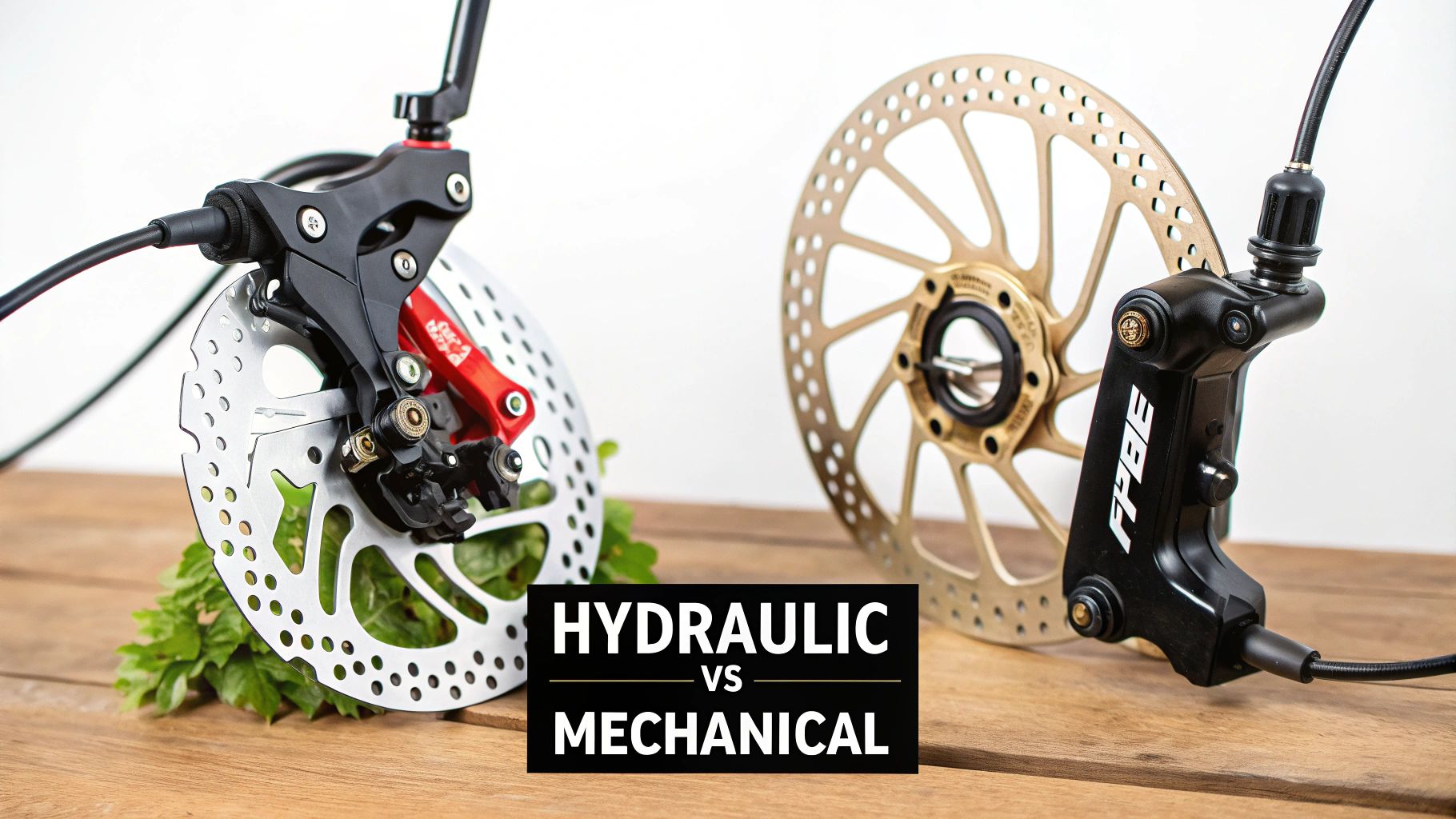
Kai žiūrite į elektrinius dviračius, viena didžiausių diskusijų, su kuria susidursite, yra hidrauliniai prieš mechaninius stabdžius. Abu sukurti tam, kad saugiai jus sustabdytų, bet jie tai daro visiškai skirtingais būdais. Tikrasis skirtumas slypi tame, kaip galia nuo jūsų rankos perduodama iki rato.
Mechaniniai stabdžiai yra klasikinis, patikrintas pasirinkimas. Jie veikia su paprasta plieno troseliu, kaip ir jūsų dviračio pavaros, kuris fiziškai traukia stabdžių kaliperį uždaryti. Tai prispaudžia stabdžių kaladėles prie rotoriaus, ir voilà, jūs sulėtėjate. Tai paprasta sistema, kurią lengva suprasti ir dar lengviau pataisyti patiems su keliais pagrindiniais įrankiais.
Hidrauliniai stabdžiai, kita vertus, yra visiškai kitokia kategorija. Jie naudoja stabdžių skystį uždaroje žarnoje, kad atliktų darbą. Traukdami svirtį, jūs stumiate skystį per sistemą, kuri sukuria didžiulį slėgį, kad prispaustų stabdžių kaladėles. Ši sistema suteikia jums didžiulį galios padidėjimą su daug mažesnėmis pastangomis iš jūsų pirštų – tikras žaidimo keitėjas sunkesniame, greitesniame elektriniame dviračiuose.
Galia ir kontrolė: šviesos reguliatoriaus analogija
Labiausiai pastebimas skirtumas, kurį pajusite, yra tai, kaip jie veikia kelyje. Mechaniniai stabdžiai kartais gali jaustis šiek tiek „įjungta arba išjungta“, tai reiškia, kad turite stipriai spausti, kad gautumėte rimtą stabdymo galią. Galvokite apie tai kaip apie standartinį šviesos jungiklį.
Kita vertus, elektrinių dviračių hidrauliniai stabdžiai suteikia tai, ką vadiname pranašesne moduliacija. Tai tiesiog išraiškingas būdas pasakyti, kad turite daug tikslesnį valdymą, kiek stabdymo jėgos taikote.
Įsivaizduokite šviesos reguliatorių. Hidrauliniai stabdžiai leidžia sklandžiai ir tiksliai reguliuoti stabdymą – nuo lengvo trinties iki visiško, galingo sustojimo. Toks valdymas yra tikras išsigelbėjimas, kai važiuojate dulkėtais Australijos keliais arba valdote greitį nusileidžiant stačiu San Francisko kalnu.
Toks tikslumas suteikia daug pasitikėjimo, leidžiant jums sumažinti greitį būtent tiek, kiek reikia, nesukeliant ratų užblokavimo. Elektrinių dviračių prekės ženklams, orientuotiems į našumą, tokiems kaip HIDOES ar CYSUM, toks valdymas nėra tik funkcija; tai būtinybė.
Kad būtų dar aiškiau, suskaidykime pagrindinius skirtumus greitame palyginime.
Hidrauliniai stabdžiai prieš mechaninius stabdžius iš pirmo žvilgsnio
Ši lentelė išdėsto pagrindinius kiekvienos sistemos privalumus ir trūkumus, suteikdama jums apžvalgą, ko tikėtis kasdien važinėjant.
| Savybė | Hidraulinės stabdžių sistemos | Mechaniniai stabdžiai |
|---|---|---|
| Stabdymo galia | Pranašesnis, reikia mažiau rankos pastangų | Geras, bet reikalauja daugiau rankos jėgos |
| Valdymas (moduliacija) | Puikus, labai tikslus ir sklandus | Paprasta, labiau kaip „įjungti/išjungti“ jungiklis |
| Šlapio oro sąlygų veikimas | Labai pastovūs ir patikimi | Gali būti mažiau efektyvūs, trosas gali koroduoti |
| Priežiūra | Mažai priežiūros reikalaujančios, automatiškai prisitaikančios kaladėlės | Reikalauja reguliaraus trosų įtempimo reguliavimo |
| Pradinės išlaidos | Aukščiau | Žemesnis, labiau biudžetui pritaikytas |
| Sudėtingumas | Sudėtingesnė, reikalauja oro ištraukimo (bleed) | Paprasta, lengva taisyti su pagrindiniais įrankiais |
Galų gale, nors mechaniniai stabdžiai atlieka savo darbą, hidraulinės sistemos siūlo aiškų patobulinimą beveik kiekvienoje svarbioje našumo kategorijoje miesto elektrinio dviračio keleiviui.
Visų oro sąlygų patikimumas ir priežiūra
Kitas didelis palyginimo taškas yra tai, kaip šie stabdžiai veikia realiame pasaulyje – lietus, purvas ir visa kita. Kadangi mechaninės sistemos naudoja atvirą trosą, jos yra atviros purvui ir vandeniui patekti, kas sukelia trintį ir laikui bėgant jas daro vangias. Tie trosai taip pat tempiasi, todėl periodiškai reikės juos įtempti, kad jaustumėtės aštrūs.
Hidraulinės sistemos yra visiškai uždarytos nuo aplinkos poveikio. Tai reiškia, kad skystis yra apsaugotas, o jų veikimas išlieka nepaprastai pastovus, nesvarbu, ar važiuojate per liūtį, ar dulkėtą kelią. Jos netgi automatiškai prisitaiko, kai nusidėvi stabdžių kaladėlės, todėl svirtis jaučiasi vienodai nuo pirmos dienos iki naujų kaladėlių keitimo laiko. Rezultatas? Žymiai mažiau laiko praleidžiama reguliuojant.
Rinkos tendencijos kalba pačios už save. Diskiniai stabdžiai dabar sudaro daugiau nei 30% visos pasaulinės dviračių stabdžių rinkos, o hidraulinės sistemos yra šio augimo lyderės, daugiausia dėl elektrinių dviračių poreikių. Jų gebėjimas tvarkyti papildomą svorį (iki 50-70 kg) ir užtikrinti 70% geresnį veikimą drėgnomis sąlygomis daro juos akivaizdžiu pasirinkimu kasdieniams važiuotojams. Daugiau apie šiuos skaičius galite sužinoti Persistence Market Research analizėje.
Nors hidrauliniai stabdžiai kainuoja šiek tiek daugiau iš pradžių, didžiuliai saugumo, valdymo ir sumažintos priežiūros privalumai daro juos protinga investicija kiekvienam rimtam elektrinio dviračio vairuotojui.
Kaip išlaikyti hidraulinius stabdžius puikios būklės
Viena geriausių elektrinių dviračių hidraulinių stabdžių savybių yra ta, kad galite beveik pamiršti apie juos. Kadangi sistema yra uždara, stabdžių kaladėlės automatiškai prisitaiko, kai nusidėvi. Tai reiškia, kad svirtis jaučiasi visiškai taip pat, stabdant vėl ir vėl, tūkstančius mylių. Bet kaip ir viskam, šiek tiek dėmesio ir priežiūros labai praverčia.
Galvokite apie tai kaip apie alyvos patikrinimą automobilyje. Jūs to nedarote kasdien, bet retkarčiais greitas patikrinimas apsaugo nuo didelių problemų ateityje. Šiek tiek pagrindinės priežiūros yra labai paprasta ir suteikia ramybę, kad svarbiausia jūsų saugumo funkcija visada pasiruošusi veikti. Visa idėja – pastebėti smulkmenas, kol jos netampa rimta problema.
Jūsų paprastas priežiūros kontrolinis sąrašas
Jums tikrai nereikia profesionalaus mechaniko įrankių rinkinio pagrindams. Iš tiesų svarbiausia priežiūros dalis yra tiesiog atkreipti dėmesį, kaip jūsų stabdžiai jaučiasi ir skamba važiuojant. Keletas paprastų patikrinimų – ir jūsų hidraulinė sistema išliks galinga ir aštri.
Štai į ką turėtumėte atkreipti dėmesį (ir ausį):
- Klausykite keistų garsų: Girdite aukštą cypimą arba šiurkštų gręžimo garsą? Tai jūsų dviratis bando pranešti, kad su kaladėlėmis kažkas negerai. Dažniausiai tai reiškia, kad jos arba nusidėvėjusios, arba užterštos aliejumi ar purvu.
- Patikrinkite stabdžių kaladėles: Tai paprasta. Tiesiog pažvelkite į suportą ten, kur kaladėlė liečiasi su metaliniu disku. Jums svarbi tikrojo stabdymo medžiagos storis. Nors dauguma kaladėlių turi nusidėvėjimo indikatoriaus liniją, gera taisyklė yra jas keisti, kai storis sumažėja iki maždaug 1,5 mm.
- Laikykite rotorius švarius: Jūsų rotoriai – blizgantys metaliniai diskai – turi būti nepriekaištingai švarūs, kad tinkamai atliktų savo darbą. Nuvalykite juos švariu skudurėliu su izopropilo alkoholiu. Tai pašalina bet kokį nešvarumą ar riebalų pirštų atspaudus, kurie gali rimtai pakenkti stabdymo efektyvumui.
Žinoma, puikūs stabdžiai yra tik dalis saugumo lygties. Svarbu išlaikyti visą dviračio pavarų sistemą geros būklės. Švari, gerai sutepta grandinė reiškia sklandų pagreitį, kuris puikiai papildo galingą stabdymo sistemą. Visą informaciją rasite mūsų vadove apie elektrinio dviračio grandinės priežiūrą.
Hidraulinės sistemos patikimumas yra didžiulis saugumo pranašumas. Kasdieniams važiuotojams ar trasų mėgėjams tai reiškia mažiau netikėtumų kelyje. Iš tiesų, saugumo duomenys rodo, kad hidrauliniai stabdžiai žymiai sumažina avarijų riziką miestuose, kur elektriniai dviračiai dažnai pasiekia greitį virš 20 mph. Daugiau apie šias svarbias pramonės saugumo įžvalgas galite sužinoti čia.
Kada kreiptis į specialistą
Nors kasdienės patikros yra paprastos, kai kuriuos darbus geriausia palikti vietinei dviračių dirbtuvėms. Dažniausias iš jų – „stabdžių oro išleidimas“. Tai tiesiog senos hidraulinės skysčio išplovimo procesas ir mažų oro burbuliukų pašalinimas, kurie galėjo patekti į linijas. Tai grąžina tvirtą, pasitikėjimą keliančią jausmą stabdžių svirtelėje.
Kaip žinoti, kada laikas? Didžiausias ženklas – kai traukdami svirtį jaučiate purų arba minkštą jausmą. Jei tenka traukti ją iki pat rankenos, kad dviratis sustotų, tikrai laikas atlikti oro išleidimą. Tai paprastai reikia daryti kas vienerius ar dvejus metus, priklausomai nuo to, kaip dažnai važinėjate. Profesionalus oro išleidimas yra geriausias būdas užtikrinti, kad jūsų elektrinio dviračio hidrauliniai stabdžiai turėtų tą tvirtą stabdymo galią, kuriai jie buvo sukurti.
Kaip pasirinkti tinkamus hidraulinius stabdžius savo važiavimui
Gerai, jūs jau pasirinkote hidraulinius stabdžius. Protingas sprendimas. Tačiau ne visos hidraulinės sistemos yra vienodos, o kitas žingsnis – išsiaiškinti, kuris variantas tinka jums ir jūsų elektriniam dviračiui.
Didžiausias pasirinkimas, su kuriuo susidursite, yra tarp dviašmenio ir keturių stūmoklių suportų. Šis sprendimas iš esmės priklauso nuo to, kiek stabdymo galios jums iš tikrųjų reikia.
Galvokite apie dviašmenius stabdžius kaip apie aukso standartą daugumai važiuotojų. Jie turi daugiau nei pakankamai sukibimo jūsų kasdieniam miesto maršrutui ar ramiam pasivažinėjimui lygiu dviračių taku. Jei skriejate Melburno gatvėmis arba mėgaujatės Majamio paplūdimiu, tvirtas dviašmenis komplektas suteiks jums tą aštrų, patikimą stabdymą, kurio jums reikia, nesukeldamas per didelio spaudimo.
O kas jei jūsų važiavimai yra šiek tiek… intensyvesni? Tuomet norėsite žengti žingsnį į priekį ir rinktis keturių stūmoklių sistemą. Tai yra rimti žaidėjai, sukurti tada, kai jums tikrai, tikrai reikia maksimalios stabdymo galios.
Du stūmokliai prieš keturis stūmoklius: kada verta pereiti
Kaip sužinoti, ar jums reikia papildomos keturių stūmoklių sistemos galios? Viskas priklauso nuo to, kiek jėgos suportas gali pritaikyti. Keturių stūmoklių stabdys iš esmės padvigubina stabdžių kaladėlių paviršiaus plotą, spaudžiantį rotorių. Tai sukuria daug daugiau trinties ir geriau išsklaido šilumą, kas yra gyvybiškai svarbu, kad stabdžiai nenusilptų ilgų ir sudėtingų nusileidimų metu.
Štai greitas patikrinimas, ar jums reikia atnaujinimo:
- Pervežant sunkius krovinius: Ar naudojate savo elektrinį dviratį savaitės maisto produktams vežti ar vaikui pavežėti? Visa ta papildoma masė reiškia, kad reikia daugiau galios stabdyti. Keturių stūmoklių stabdžiai tai užtikrina su kaupu.
- Įveikiant statmenas kalvas: Kiekvienas, kas važiavo San Francisko kalvomis ar navigavo Mėlynųjų kalnų takais, žino, kad gravitacija nėra jūsų draugas leidžiantis žemyn. Keturių stūmoklių stabdžiai praktiškai būtini norint išlaikyti kontrolę.
- Važiuojant greitu elektriniu dviračiu: Kuo greičiau važiuojate, tuo daugiau jėgos reikia stabdyti. Galingi elektriniai dviračiai sukaupia daug inercijos, todėl stipresnė stabdžių sistema yra būtina saugumui.
Pagrindinė mintis yra tokia: kuo daugiau reikalaujate iš savo stabdžių – ar tai būtų svoris, greitis ar statūs kalnai – tuo labiau įvertinsite keturių stūmoklių sistemos stabdymo jėgą. Svarbu turėti tinkamą įrankį darbui.
Prekės ženklai, kuriais galite pasitikėti
Kai pradėsite ieškoti elektrinių dviračių iš tokių prekės ženklų kaip RCB ar HITWAY, pastebėsite, kad geriausi naudoja komponentus iš kelių pagrindinių pramonės žaidėjų. Stabdžiams du vardai išsiskiria iš kitų: Shimano ir SRAM.
Šie gamintojai yra dviračių komponentų titanai. Tiek Shimano, tiek SRAM gamina platų elektrinių dviračių hidraulinių stabdžių asortimentą – nuo puikių pradinio lygio rinkinių, idealių miesto komuteriui, iki neįtikėtinai galingų sistemų, skirtų rimtam kalnų dviračių sportui.
Pamatyti Shimano ar SRAM logotipą ant stabdžių svertų ar suportų yra puikus ženklas. Tai reiškia, kad gaunate įrangą, kurią išbandė milijonai dviratininkų visame pasaulyje. Tai investicija į jūsų saugumą ir galų gale į ramybę kiekvieno važiavimo metu.
Jūsų saugos kontrolinis sąrašas prieš važiavimą
Pasitikėjimas kelyje prasideda dar prieš užsidėdant šalmą. Įprasti paprastą, 60 sekundžių trukmės priešvažiavimo patikrinimą yra viena iš protingiausių dalykų, kuriuos galite padaryti. Tai užtikrina, kad jūsų elektrinių dviračių hidrauliniai stabdžiai bus pasiruošę bet kam, ką gali mesti Sidnėjaus ar Los Andželo gatvės.
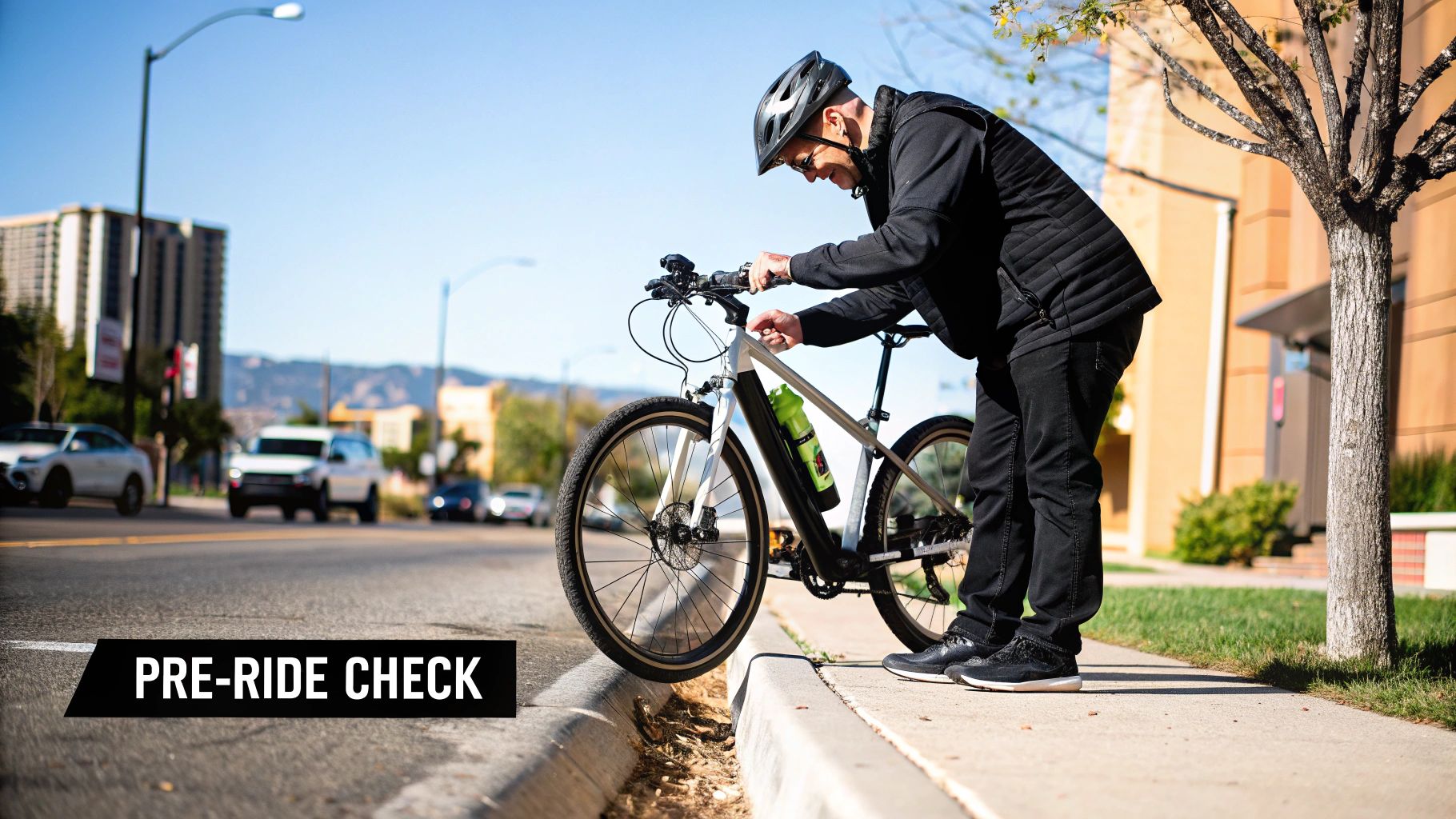
Jums nereikia būti meistru mechaniku. Tai greita, suteikianti pasitikėjimo rutina, kuri užtikrina ramybę, kad jūsų dviračio svarbiausia saugumo funkcija veikia nepriekaištingai.
60 sekundžių stabdžių patikra
Prieš išvykdami skirkite minutę, kad peržiūrėtumėte šį greitą sąrašą. Tai geriausias būdas pastebėti mažą problemą, kol ji netampa rimta.
-
Patikrinkite svirtis: Tvirtai suspauskite abi stabdžių svirtis. Jos turėtų jaustis tvirtos, ne minkštos, ir sustoti gerokai prieš pasiekiant rankeną. Jei svirtis jaučiasi puri arba traukia iki pat rankenos, tai didelis įspėjimas. Jūsų sistema greičiausiai reikalauja profesionalaus oro išleidimo.
-
Apžiūrėkite kaladėles: Atsigulkite žemai ir pažvelkite į stabdžių apkabą, kur ji suima rotorių. Turėtumėte matyti pakankamai stabdžių kaladėlių medžiagos. Jei ji atrodo labai plona (mažiau nei 1,5 mm), laikas jas pakeisti.
-
Klausykite keistų garsų: Pastumkite dviratį į priekį ir švelniai spauskite stabdžius. Sveika sistema yra gana tyli. Jei girdite garsų cypimą, girgždėjimą ar trynimą, kažkas negerai.
Šis greitas patikrinimas yra jūsų pirmoji gynybos linija. Jis užtikrina, kad jūsų stabdžiai būtų jautrūs ir patikimi, o tai yra taip pat svarbu kaip dėvėti apsauginę įrangą. Beje, aukštos kokybės šalmas yra būtinas kiekvienam elektrinio dviračio vairuotojui.
Žinoma, saugi kelionė reiškia ne tik stabdžius. Svarbu būti tinkamai apsaugotam, todėl parengėme vadovą, kaip rasti geriausią šalmą elektriniam dviračiui. Įpročiu padaryti šį paprastą stabdžių patikrinimą investuojate į savo saugumą kiekvienoje kelionėje.
Turite klausimų apie elektrinių dviračių hidraulinius stabdžius? Mes turime atsakymus.
Gerai, aptarėme pagrindus, kaip veikia šie stabdžiai. Bet tikriausiai vis dar turite praktinių klausimų apie tai, kaip iš tikrųjų yra turėti ir važiuoti elektriniu dviračiu su hidrauline sistema.
Panagrinėkime keletą dažniausiai užduodamų klausimų. Aš pateiksiu jums tiesmukus, be jokių nesąmonių atsakymus, kurių ieškote.
Kaip dažnai man iš tikrųjų reikia su jais kištis?
Štai puiki žinia: viena geriausių hidraulinių stabdžių savybių yra ta, kad juos beveik nereikia reguliuoti. Tai beveik „nustatyk ir pamiršk“ sistema, palyginti su mechaniniais stabdžiais, kuriems vis atrodo, kad reikia patraukti trosą.
Pagrindinis darbas, kurį jums reikės atlikti, yra „stabdžių oro išleidimas“, tai tiesiog senos skysčio pakeitimas, kad pašalintumėte bet kokias mažas oro burbuliukus, kurie galėjo patekti. Vidutiniam važiuotojui tai reikės daryti tik kas 1–2 metus. Be to, tiesiog kartais apžiūrėkite stabdžių kaladėles ir nuvalykite diskus, jei jie užsiteršia. Tai viskas.
Ar jie tikrai veikia lietuje ar purve?
Taip, absoliučiai. Čia jie tikrai išsiskiria ir todėl tapo pagrindiniu pasirinkimu elektriniams dviračiams visur – nuo drėgnų JAV Ramiojo vandenyno šiaurės vakarų maršrutų iki dulkėtų Australijos takų. Visa sistema yra sandariai uždaryta, todėl vanduo, purvas ir nešvarumai negali patekti ir sugadinti veikimo.
Įsivaizduokite tai kaip sandarų indą. Nieko nepatenka į vidų, niekas neišeina. Tai reiškia, kad gaunate tą pačią patikimą, stiprią stabdymo galią, nesvarbu, ar jus užklupo netikėtas lietus, ar keliate dulkes sausu taku. Mechaniniai trosai, kita vertus, gali užsikimšti purvu ir pradėti veikti lėtai bei klampiai blogu oru.
Kiek man kainuos atnaujinimas?
Gera hidraulinių stabdžių sistema jūsų elektriniam dviračiui yra viena geriausių atnaujinimų, kuriuos galite padaryti dėl savo saugumo ir bendros važiavimo kokybės. Kaina gali svyruoti, bet turėtumėte numatyti biudžetą nuo 200 iki 500 USD už kokybišką stabdžių komplektą ir profesionalų montavimą.
Tai tikrai didesnės pradinių išlaidų nei mechaninių stabdžių komplekto, bet ilgainiui nauda yra milžiniška. Jūs gaunate:
- Žymiai didesnė stabdymo galia, kas yra didžiulis saugumo pranašumas.
- Žymiai mažiau priežiūros ir reguliavimo vargo.
- Mažiau rankų įtempimo ilguose važiavimuose arba leidžiantis nuo didelio kalno.
Ar galiu šiuos stabdžius įdiegti pats?
Jei esate pakankamai įgudęs su įrankiais ir jaučiatės kaip namie savo garažo dirbtuvėse, tikrai galite pabandyti patys. Tiesiog žinokite, kad tai susiję su hidraulinio skysčio naudojimu ir oro išleidimu iš linijų, kas gali būti kaprizingas ir netvarkingas procesas, jei to dar nesate darę.
Sąžiningai, daugumai žmonių rekomenduoju patikėti šį darbą profesionalui jūsų vietinėje dviračių parduotuvėje. Jie atliks darbą tinkamai, užtikrindami, kad jūsų elektrinio dviračio hidrauliniai stabdžiai būtų puikiai sureguliuoti ir saugūs nuo pat pirmo spaudimo.
Pasiruošę patys pajusti tą sklandų, pasitikėjimą keliančią stabdymo galią? Punk Ride turi nuostabią elektrinių dviračių kolekciją, kuri standartinėje komplektacijoje turi aukščiausios klasės stabdžių sistemas. Peržiūrėkite mūsų asortimentą ir raskite jums tinkamą elektrinį dviratį adresu https://www.punkride.com.
Dalintis:
Dviratininko vadovas po skirtingas elektrinių dviračių rūšis
Tikro gyvenimo vadovas, kaip pakeisti paspirtuko padangas