


Lényegében az elektromos kerékpár lánc egy erős alkatrész, amelyet kifejezetten az elektromos motor komoly erejének kezelésére terveztek. Lehet, hogy nagyon hasonlít egy normál kerékpár láncára, de teljesen más állat, erősebb anyagokból és masszívabb kivitelben készült. Ez a megerősítés elengedhetetlen az e-kerékpár motor által leadott magas nyomaték kezeléséhez, megakadályozva, hogy a hajtásláncod túl korán elkopjon.
Az e-kerékpárod hajtásláncának csendes hőse
Gondolj a láncodra úgy, mint a kritikus hídra, amely összeköti a saját láberődet a motor ütős erejével. Egyszerűnek tűnhet, de ez a lánc a hajtásláncod csendes hőse, amely hangtalanul alakítja át a hatalmas erőket a sima, megbízható utazássá, amit szeretsz.
A normál kerékpár lánc olyan, mint egy sprinter futócipője — könnyű, fürge, és az emberi erőkitörésekhez tervezett. Az e-kerékpár lánc? Inkább egy acélbetétes munkacipő. Mindkettő mozgat, de az e-kerékpár lánc kifejezetten arra készült, hogy elviselje a motor folyamatos, erőteljes húzását, utazásról utazásra.
E-kerékpár lánc vs normál kerékpár lánc főbb különbségek
Itt egy gyors összefoglaló, amely összehasonlítja az elektromos kerékpár láncok és a normál kerékpár láncok alapvető jellemzőit, kiemelve egyedi kialakításukat és céljaikat.
| Jellemző | Normál kerékpár lánc | Elektromos kerékpár lánc |
|---|---|---|
| Anyag szilárdság | Standard acélötvözetek emberi erőhöz | Nagy szilárdságú, edzett acélötvözetek |
| Csap kialakítás | Standard szegecselés | Vastagabb, gyakran kalapált vagy szegecselt csapok |
| Nyomatéktűrés | Alacsonyabb, emberi teljesítményhez tervezve | Magasabb, a motor és az emberi nyomatékhoz tervezve |
| Tartósság és kopás | Rövidebb élettartam e-kerékpáros terhelés alatt | Hosszabb élettartam, jobban ellenáll a nyúlásnak |
| Súly | Könnyebb | Nehezebb és masszívabb |
| Költség | Általában olcsóbb | Általában drágább az anyagok miatt |
Ahogy láthatod, a megerősített anyagok és kivitelezés teszik igazán különlegessé őket, biztosítva, hogy bírják az elektromos hajtáslánc egyedi igényeit.
Több mint egy egyszerű lánc
Ez a különbség nem csupán apró részlet; alapvető fontosságú az e-kerékpárod teljesítménye és élettartama szempontjából. Az e-kerékpárok népszerűségének robbanásszerű növekedése egy teljesen új piacot teremtett ezeknek a szuperellenálló alkatrészeknek. Valójában a globális elektromos kerékpár lánc piac jelentős része ennek a növekedésnek, ami jól mutatja, mekkora kereslet van az ütésálló alkatrészek iránt. A piac bővülésének részletesebb áttekintéséért megtekintheted a részletes előrejelzéseket itt: gminsights.com.
Egy e-kerékpár motor olyan erőket fejt ki, amelyek egy normál láncot pillanatok alatt megnyújtanának, vagy akár el is törhetnék. Ezért az e-kerékpárhoz dedikált, speciális lánc használata nem csak javaslat — biztonsági és teljesítménybeli okokból kötelező.
Az, hogy megismerd, mi teszi különlegessé az elektromos kerékpárod láncát, az első lépés ahhoz, hogy a biciklid kiváló állapotban maradjon, és minden utazást élvezhess. Ebben az útmutatóban mélyebben belemegyünk a részletekbe:
- Mi teszi igazán ilyen masszívvá ezeket a láncokat.
- Hogyan válaszd ki a tökéleteset a saját kerékpárodhoz.
- Egyszerű karbantartási tippek, hogy olyan legyen, mint új korában.
- Az árulkodó jelek, hogy ideje cserélni.
Ezzel a tudással teljes magabiztossággal tekerhetsz, tudva, hogy a hajtásláncod szíve készen áll bármire, amit az út elé állít.
Miért épülnek az e-kerékpár láncok sokkal erősebbre
Első pillantásra egy e-kerékpár lánc nagyjából úgy néz ki, mint bármely más kerékpár lánca. De ne hagyd, hogy ez megtévesszen. Az igazi varázslat a fém mélyén rejlik, ahol ezeket a láncokat alapjaiban újratervezték, hogy olyan erőket bírjanak el, amikről egy normál kerékpár lánc csak álmodhat.
Gondolj rá úgy, mint egy kitartó kötélhúzó versenyre. Az egyik oldalon ott van a kerékpár, a kerékpáros és az út, amelyek visszahúznak. A másik oldalon egy erős középmotor, amely hatalmas, azonnali nyomatékot pumpál a rendszerbe. Az elektromos kerékpár lánc a középen lévő kötél, amely arra van tervezve, hogy kibírja ezt az állandó, brutális húzást anélkül, hogy megnyúlna vagy elszakadna.
Ezért kovácsolják őket sokkal jobb anyagból. Magas szilárdságú, speciálisan kezelt acélötvözetekről beszélünk, amelyek nevetnek a kopáson és a terhelésen. A szegecsek, amelyek az egész láncot összetartják, szintén kulcsfontosságú részei ennek a masszív fejlesztésnek.
Megerősítve a kitartó erőért
Az apró csapok, amelyek összekötik az egyes láncszemeket — a szegecsek — általában a lánc leggyengébb pontjai. Egy megfelelő e-kerékpár lánc esetében ezek megerősítettek. Gyakran vastagabbak, és egy úgynevezett "peening" eljáráson mennek keresztül, amely kiszélesíti a csapok végeit. Ez sokkal biztonságosabb kapcsolatot hoz létre, amely ellenáll a motor nyíró és húzó erejének.
E nélkül a plusz erő nélkül a lánc pillanatok alatt "megnyúlna". Ez nem olyan, mint egy gumiszalag nyúlása; inkább a kis csapok és görgők kopása okozza, ami meghosszabbítja a láncot és károkat okoz a fogaskerekekben. Ez különösen igaz a nehezebb kerékpárosokra, mivel a hajtásláncra ható össz-erő még nagyobb. Ha ez aggaszt, érdemes megnézned az legjobb e-kerékpárokról szóló útmutatónkat nehezebb kerékpárosoknak.
Egy középmotor három-négyszeres erőt képes leadni egy erős kerékpároséhoz képest. Egy kizárólag emberi erőre tervezett lánc egyszerűen nem bírja el ezt a fajta mechanikus izomerőt hosszú távon.
A modern motorhoz tervezve
Az, ahogyan ezeket a láncokat megtervezték, közvetlen válasz arra, hogy milyen gyorsan fejlődik az e-kerékpár technológia. Ahogy a motorok egyre erősebbek lesznek, a láncoknak is lépést kell tartaniuk. A középmotoros hajtások, amelyek közvetlenül a láncon keresztül továbbítják az erőt, robbanásszerű népszerűségnek örvendenek.
Valójában az e-kerékpár hajtóműpiac várhatóan 8,2 milliárd USD-ről 2025-ben ugrik majd 24,8 milliárd USD-re 2035-re. Ez hatalmas növekedés, és komoly innovációt hajt minden olyan alkatrészben, amelynek kezelnie kell ezt a teljesítményt.
Végső soron az elektromos kerékpár láncának minden egyes alkatrésze – a acéllemezekről a keményített görgőkre és a szegecsekre – egy célt szolgál. Ez egy apró, de rendkívül fontos mérnöki alkotás, amelynek egyetlen feladata van: megbízhatóan átvinni a motor teljesítményét az útra, mérföldről mérföldre.
A megfelelő lánc kiválasztása az e-kerékpárodhoz
A megfelelő lánc megtalálása az e-kerékpárodhoz kevésbé a „legerősebb” kiválasztásáról szól, inkább a tökéletes illeszkedés megtalálásáról. Gondolj rá úgy, mint egy kulcsra a zárhoz – a rossz kulcs hasonló lehet, de nem fog simán működni. A rossz lánc felhelyezése az e-kerékpárodra katasztrófa receptje, borzasztó váltást, szörnyű csiszoló zajokat és gyorsított kopást okoz a drága kazettádon és lánctányérjaidon.
Szerencsére a helyes választás elég egyszerű. Minden egy dologra vezethető vissza: a kerékpárod „sebességeinek” számára.
Ez a kifejezés egyszerűen arra utal, hogy hány fogaskerék (sebesség) van a hátsó kerék kazettáján. Egyszerű.
Illeszd össze a sebességeket, és találd el a tökéletes illeszkedést
Amikor egy láncot "10 sebességes lánc" jelzéssel látnak el, az azt jelenti, hogy pontosan egy 10 fogaskerekes kazettához tervezték. Minél több sebesség van egy kerékpáron, annál szorosabban vannak egymás mellett a fogaskerekek, ami azt jelenti, hogy a láncnak keskenyebbnek kell lennie, hogy beférjen közéjük.
Itt csúszhatnak el a dolgok:
- Szélesebb lánc (például egy 8 sebességes lánc egy 10 sebességes kazettán) súrlódni fog a szomszédos fogaskerekekkel. A váltás darabos és zajos lesz.
- Keskenyebb lánc (például egy 12 sebességes lánc egy 9 sebességes kazettán) túl vékony ahhoz, hogy megfelelően illeszkedjen a fogaskerék fogaira. Ez laza erőátvitelt és láncugrást eredményez, amikor erősen tekered.
Tehát az első lépés egyszerű: számold meg a fogaskerekeket a hátsó kerékeden. Ha 9 van belőlük, akkor egy 9 sebességes e-kerékpár láncra van szükséged. Ha 11, akkor egy 11 sebességes e-kerékpár láncra. Ennyire egyszerű.
A „sebesség” a lánc kompatibilitásának nyelve. Mindig igazítsd a lánc sebességértékét a kerékpárod hátsó kazettáján lévő fogaskerekek számához. Ez az aranyszabály a hibátlan teljesítményhez.
Hajtásrendszer kompatibilitás az Egyesült Királyságban és az EU-ban
A sebességszámon túl érdemes a motor rendszerére is gondolni. A nagy láncgyártók nem működnek elszigetelten; együttműködnek a motor márkákkal, hogy biztosítsák, hogy láncaik képesek kezelni a népszerű rendszerek egyedi teljesítményét és nyomatékát.
Itt az Egyesült Királyságban és az EU-ban sok kerékpáron Bosch, Shimano STEPS és Brose motorokat láthatsz. Emiatt rengeteg láncot találsz, amelyeket kifejezetten "e-bike minősítésűnek" vagy ezekhez a nagy teljesítményű középmotorokhoz tanúsítottként árulnak.
Bár bármely, megfelelő sebességosztású e-bike lánc technikailag működik, ha olyat választasz, amit a motor gyártója közösen fejlesztett vagy ajánl, az plusz nyugalmat ad. Ezeket a láncokat alaposan tesztelték, hogy tökéletesen illeszkedjenek az egész hajtásrendszerhez, így csendesebb és hatékonyabb tekerést eredményeznek. Egy kompatibilis elektromos kerékpárlánc biztosítja, hogy minden alkatrész ugyanarról az oldalról énekeljen.
Hogyan ismerd fel a kopott e-bike láncot
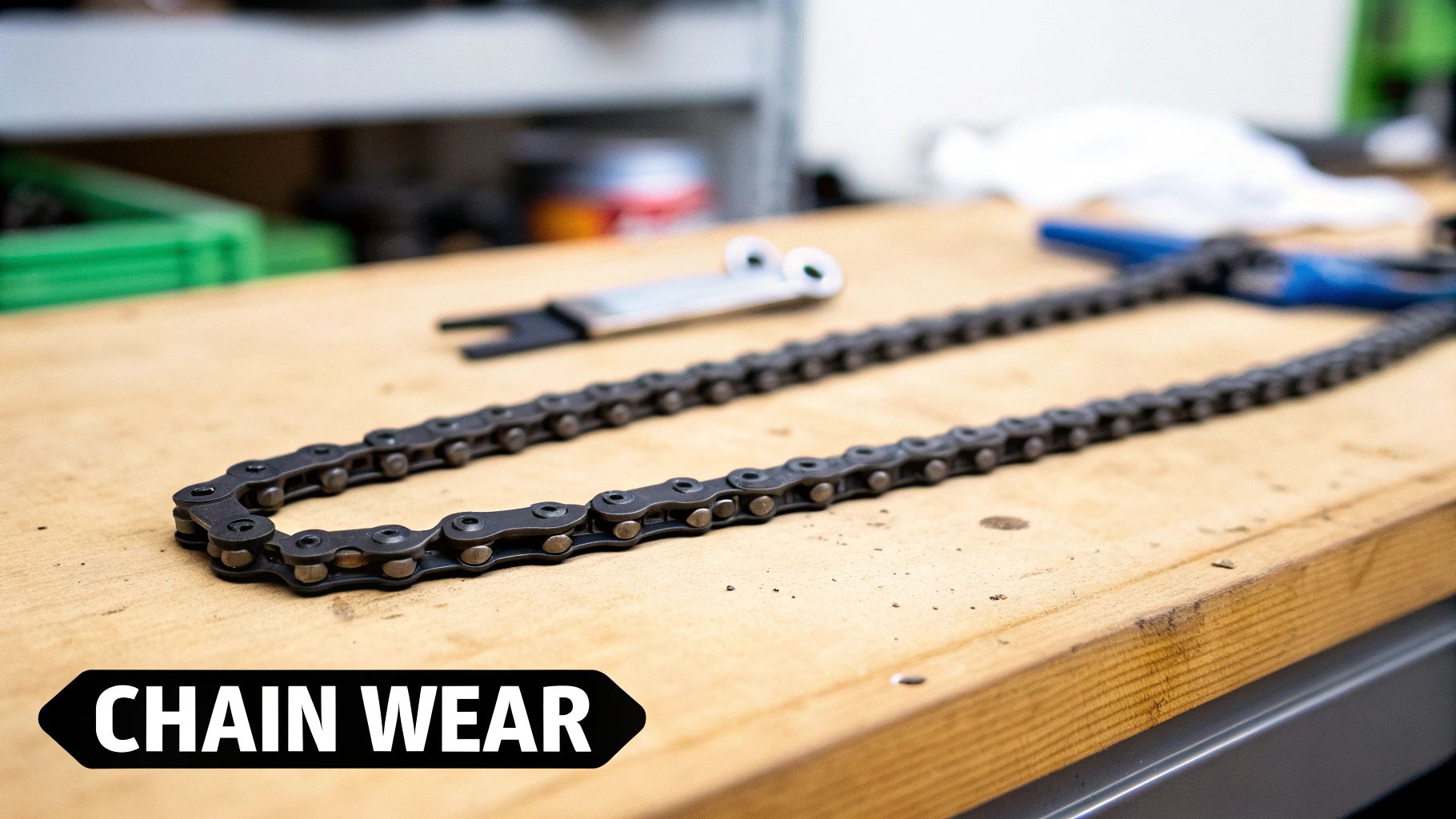
Az e-bike láncod keményen dolgozik, de még a legellenállóbb alkatrészek is idővel elkopnak. A boldog hajtáslánc — és a boldog pénztárca — titka, hogy időben észrevedd ezt a kopást. Egy kopott lánc figyelmen kívül hagyása olyan, mintha kopott gumival mennél; előbb-utóbb sokkal nagyobb, drágább problémához vezet.
A fő probléma, amit "lánchosszabbodásnak" hívnak, bár ez kissé félrevezető. Maga a fém valójában nem nyúlik meg. Ami igazából történik, hogy a kis csapok és görgők, amelyek a láncszemeket összetartják, lassan elkopnak. Ez egy kis extra helyet hoz létre minden láncszem között, így az egész lánc hosszabb lesz.
Olyan, mint a kedvenc farmered. Néhány év után már nem úgy áll rajtad — kicsit bővé válik és elveszíti az alakját. A láncod is ugyanezt teszi, és ez a "bő" illeszkedés rossz hír a váltóidnak. Az e-bike motor extra erejével ez a kis lazaság gyorsan elkezdheti koptatni a hajtáslánc többi részét.
A kopott lánc árulkodó jelei
Mielőtt bármilyen szerszámot elő kéne venned, a biciklid elkezd jelezni, hogy a lánca a végéhez közeledik. Gondolj ezekre úgy, mint a biciklid korai figyelmeztető rendszerére, ami előre szól, mielőtt egy apró probléma nagyobbá válna.
Figyelj oda és érezd meg ezeket a piros zászlókat a következő tekerésed során:
- Ugráló sebességek: Ez egy klasszikus probléma. Keményen tekered, talán egy emelkedőn, és hirtelen a lánc ugrik, egy rázós kattanást okozva, miközben lecsúszik és újra kapcsol. Legalábbis nyugtalanító.
- Zajos hajtáslánc: Egy egészséges, jól olajozott lánc csendes. Ha csikorgást, zúgást vagy csak általános zajt hallasz onnan, akkor valószínűleg a lánc a ludas.
- Rendetlen váltás: Érezhetően lassú vagy akadozó a sebességváltás? Ha már próbáltad beállítani a váltót, de még mindig nem vált tisztán, akkor a kopott lánc nagyon valószínű ok.
A kopott lánc nemcsak rázós utazást okoz – aktívan koptatja a drága kazetta és lánctányér fogait. Egy új lánc olcsó. Egy teljesen új hajtáslánc? Az már nem annyira.
A végső teszt: láncellenőrző használata
Bár az érzékszerveid jó első védelmi vonalat jelentenek, a legmegbízhatóbb módja annak, hogy biztos legyél, egy lánc kopásjelző eszköz használata. Őszintén szólva, ez a kis kütyü elengedhetetlen minden e-kerékpár tulajdonos számára. Olcsó, könnyen használható, és minden találgatást kizár azzal, hogy pontosan méri a "nyúlást."
Így egyszerű:
- Akasszad be: Helyezd az eszköz egyik végét egy láncgörgő tetejére.
- Engedd le: Hagyd, hogy az eszköz másik vége, a mérőszondával ellátott rész, beleessen a láncba.
- Ellenőrizd az illeszkedést: Ha a mérőszonda teljesen beleesik, a láncod elhasználódott. Ideje cserélni.
A legtöbb eszközön két kulcsfontosságú jelölés van: 0,5% és 0,75% kopás. A motor extra nyomatéka miatt okos döntés lecserélni az elektromos kerékpár láncát, amint eléri a 0,5% kopási szintet. Ez megóvja a többi, drágább hajtáslánc alkatrészt az idő előtti kopástól.
Néha az összes kattanás, kattanás és csikorgás kicsit zavaró lehet. Íme egy gyors útmutató, hogy segítsen kitalálni, mit próbál az e-kerékpárod közölni veled.
Lánc kopás hibaelhárító útmutató
| Tünet | Hogyan hangzik/érződik | Lehetséges ok |
|---|---|---|
| Láncugrás | Hirtelen, kemény kattanás vagy csúszás erős pedálozáskor, különösen emelkedőn. | A lánc túl "nyúlt", nem ül megfelelően a fogaskerekek fogaira, és terhelés alatt ugrál. |
| Csikorgó zaj | Állandó, érdes vagy zörgő hang, ami pedálozáskor erősödik. | A kopott lánc már nem illeszkedik simán a kazetta és a lánctányér fogaihoz. |
| Szellemváltás | A kerékpár önállóan, véletlenszerűen vált sebességet, még sík terepen is. | A lánc laza illeszkedése miatt részben egy szomszédos fogaskerékkel érintkezik. |
| Lassú vagy bizonytalan váltások | Megnyomod a váltót, de késés vagy akadozó átmenet van a következő sebességbe. | A kopott lánc nem mozog tisztán a kazetta fogaskerekei között, ahogy kellene. |
Ne feledd, ez a táblázat csak kiindulópont. Bár a kopott lánc gyakran a bűnös, ezek a tünetek néha más problémákra is utalhatnak, mint például egy meghajlott váltófül vagy elállított fogaskerekek. De a lánc ellenőrzése mindig a legegyszerűbb és legolcsóbb kezdő lépés.
Az e-kerékpár lánc karbantartásának elsajátítása
Gondolj az e-kerékpárod láncára úgy, mint az autó motorjára. Ha nem megfelelően gondozod, az katasztrófához vezethet. A megfelelő karbantartás a titkos összetevő egy csendesen működő, simán váltó és valóban tartós lánchoz. Ha kihagyod, csak a súrlódást, gyorsított kopást és végül egy sokkal nagyobb javítási számlát hívsz meg. Nézzük végig az egyszerű lépéseket, hogy a hajtásláncod zökkenőmentesen működjön.
A tiszta lánc boldog lánc. Minden alkalommal, amikor tekersz, a láncod egy kellemes koktélt gyűjt össze az útról származó kosztól, portól és szennyeződéstől. Ha ezt összekevered a régi lánckenőanyaggal, egy vastag, szemcsés pasztát kapsz. Ez a cucc lényegében folyékony csiszolópapír, amely minden egyes pedálfordulattal koptatja a láncot, a kazettát és a lánctányérokat.
Az elektromos kerékpár láncának tisztítása
Először is: le kell szedned az összes régi, koszos szennyeződést. Egy alapos mélytisztítás tiszta alapot ad, így az új kenőanyag be tud jutni minden kis zugba, ahol ténylegesen kifejtheti a hatását.
Ehhez szükséged lesz egy jó kerékpárlánc zsírtalanítóra és egy kemény sörtéjű kefére. Ne habozz — fújd be a zsírtalanítót az egész láncra és a kazettára, majd kapd elő a kefét, és dörzsöld le az összes lerakódott koszt. Kicsit koszos munka, de látni fogod, ahogy a fekete lerakódás elkezd eltűnni.
Miután mindent alaposan megtisztítottál, öblítsd le a láncot enyhén vízzel. És tényleg enyhén. Soha ne használj nagy nyomású slagot az e-kerékpárodhoz, mert víz juthat be az érzékeny csapágyakba és elektromos alkatrészekbe. Ha aggódsz emiatt, a az e-kerékpárok vízállóságáról szóló cikkünk hasznos tanácsokat ad. Végül vegyél egy tiszta rongyot, és teljesen szárítsd meg a láncot.
A tisztítás célja nem csak az, hogy a láncod fényes legyen. Arról szól, hogy eltávolítsd az apró, abrazív részecskéket, amelyek koptatják a hajtásrendszert, különösen az e-kerékpár motorja által kifejtett nagy nyomaték alatt.
A kenés helyes módja
Most, hogy a láncod csillogóan tiszta és száraz, itt az ideje, hogy beolajozd. A kenőanyag típusa nagyon számít, és főként attól függ, hol élsz és hol kerékpározol.
- Vizes kenőanyag: Ez vastagabb és ragaszkodóbb. Tökéletes a nedves, esős körülményekhez, amilyeneket gyakran tapasztalunk az Egyesült Királyságban, mert nem mosódik le könnyen. Hátránya? Mágnesként vonzza a koszt.
- Száraz kenőanyag: Ez egy könnyebb, gyakran viasz alapú kenőanyag, amely ideális a szárazabb éghajlatokra, mint amilyenek Európa nagy részén találhatók. Sokkal tisztábban tartja a láncot, de gyakrabban kell alkalmazni, különösen, ha elázol.
Az alkalmazás a kulcs. Vigyél fel egy kis csepp kenőanyagot minden egyes láncszem görgőjére. Miután az egész láncot bekened, lassan tekerj hátrafelé körülbelül 30 másodpercig, hogy a kenőanyag mélyen bejusson a csapokba és görgőkbe.
Íme a végső, és legfontosabb lépés: vegyél egy tiszta rongyot, és töröld le az összes felesleges kenőanyagot a lánc külső részéről. Komolyan, töröld addig, amíg majdnem száraznak nem tűnik. A kenőanyagnak a lánc belsejében kell lennie, nem a felületen, ahol csak egy újabb réteg koszt vonzana magára.
Az útmutatód az e-kerékpár láncának cseréjéhez
Szóval, a láncellenőrző eszközöd végre rossz hírt adott. Ne aggódj. Egy elektromos kerékpár láncának cseréje elsőre profiknak tűnhet, de az egyik legkönnyebben elvégezhető karbantartási feladat. Az a célom, hogy magabiztosságot adjak neked, hogy vagy magad csináld meg, vagy legalább úgy tűnjön, mintha tudnád, miről beszélsz a kerékpárboltban.
Az egész munka valójában négy részre bontható: az eszközök előkészítése, az öreg lánc leszerelése, az új lánc megfelelő méretre igazítása, és végül az összeszerelés.
Ehhez elengedhetetlen eszköz a lánctörő szerszám. Ez egy ügyes kis eszköz, amivel ki tudod nyomni a lánc egyik szegecseit (vagy szegeit), hogy kinyisd. Ugyanakkor sok újabb lánc rendelkezik master linkkel—egy speciális két részből álló láncszemmel, amit speciális fogóval lehet szétpattintani, így az öreg lánc leszerelése gyerekjáték.
Az új lánc méretezése
Miután az öreg, megnyúlt lánc lekerült a kerékpárról, elérkeztél a legkritikusabb lépéshez: az új lánc méretezéséhez. A túl hosszú vagy túl rövid lánc rossz hír. Pontatlan váltáshoz vezethet, vagy ami még rosszabb, nagy terhelést róhat a váltódra és más drága alkatrészekre.
A legegyszerűbb, legbiztosabb módja annak, hogy jól csináld, ha az öreg láncodat egyenesen és laposan lefekteted, majd mellé helyezed az újat. Számold meg a láncszemeket, és vágd az új láncot az öreghez igazítva. Ennyi az egész.
Ennek az alap karbantartásnak a helyes elvégzése hatalmas része annak, hogy az e-kerékpárod simán működjön. És mivel az e-kerékpár piac várhatóan 68,34 milliárd USD-ről 2025-ben több mint 165,69 milliárd USD-re nő 2034-re, sokan leszünk, akiknek tudniuk kell, hogyan kell gondoskodni ezekről a kulcsfontosságú alkatrészekről.
Összegezve
Rendben, az új lánc tökéletes hosszúságra vágva? Jöhet a szórakoztató rész. Óvatosan át kell fűznöd a váltó görgőin, a hátsó kazetta fogaskerekein, majd az első lánctányér fölött.
Ezután csak össze kell kapcsolnod a két végét. Vagy az új, a lánccal érkező master linket használod, vagy a lánctörőddel nyomsz be egy új csatlakozó szeget. Ha master linket használsz, egy nagyon kielégítő „katt” hangot fogsz hallani, amikor biztonságosan a helyére kerül. Kész a munka.
Őszintén szólva, ha ezt magad csinálod, az az egyik legjobb módja annak, hogy megismerd a kerékpárod hajtásláncát. Így az egész kevésbé tűnik titokzatosnak. Hogy még könnyebbé tedd, egy dedikált készlet igazi áttörés lehet. Egy jó elektromos kerékpár szerszámkészlet tartalmaz lánctörőt és minden mást, amire szükséged van, így nem kell eszközök után kapkodnod munka közben.
Kérdéseid vannak? Válaszaink vannak
Még ennyi információ mellett is lehetnek kérdéseid. Nézzük meg a leggyakoribb kérdéseket az e-bike láncokról, hogy teljes magabiztossággal térhess vissza az útra.
Milyen gyakran kell cserélnem az e-bike láncomat?
Ah, az arany kérdés! Az őszinte válasz pedig, nos, attól függ.
Egy jó ökölszabály a legtöbb bringásnak, hogy a lánc kopását körülbelül a 500-750 mérföld (vagy 800-1200 km) táján kezdje el ellenőrizni. De ez csak egy kiindulópont. A te kerékpározási szokásaid és a terep, amin mész, a valódi változók.
Mindig Turbo módban vagy? Szeretsz meredek emelkedőkön tekerni? Gyakran mész át sárban és esőben? Ha igen, akkor sokkal nagyobb terhelésnek teszed ki a láncod, és az gyorsabban fog kopni. Az egyetlen biztos módja, hogy megtudd, egy lánc kopásjelző eszközt használj. Amint az eszköz a 0.5% kopásjelző, ideje újat venni. Nem kell találgatni.
Felrakhatok egy sima kerékpárláncot az e-kerékpáromra?
Megtehetnéd, de abszolút nem kéne. Bár egy standard lánc úgy nézhet ki, mintha illene, teljesen más állatfajta. Egyszerűen nincs úgy megtervezve, hogy kezelje az e-bike motor hatalmas, azonnali erejét.
Gondolj rá úgy, mintha egy madzaggal próbálnál meg egy autót vontatni. Egyszerűen nem alkalmas a feladatra, és látványosan el fog bukni.
Ha nem e-bike-ra tervezett láncot teszel a bringádra, az döbbenetesen gyors kopáshoz, pontatlan váltásokhoz és sokkal nagyobb lánctörés kockázathoz vezet. Egy hirtelen szakadás nemcsak veszélyes számodra, hanem pillanatok alatt tönkreteheti a motort, a kazettát és a lánctányérokat.
Egy standard lánc felrakása egy középmotoros e-kerékpárra klasszikus hamis spórolás. Lehet, hogy eleinte néhány fontot megspórolsz, de később megfizeted az egész hajtásláncra gyakorolt gyorsított károkkal. Egy egyszerű karbantartási munkát nagyon drága javítássá változtat.
Szóval, mi a nagy baj, ha nem cserélem le a kopott láncot?
A lánccsere halogatása olyan, mintha egy konzervdobozt rugdosnál előre az úton, csak ez a doboz egy drága javításokkal teli kézigránát. Ahogy a lánc kopik, "nyúlik", vagyis a görgők közötti távolság megnő. Ez az új távolság már nem illeszkedik tökéletesen a fogaskerekek fogaihoz.
Minden egyes pedálfordulattal az össze nem illő lánc lassan, de biztosan porrá őrli a drága kazettádat és lánctányérodat.
Hirtelen egy egyszerű és megfizethető lánccsere teljes hajtáslánc-cserévé válik, ami egy teljesen más szintű költség és macera. Nem is beszélve arról, hogy a bringád zajos lesz, a váltásod borzalmas, és az egész utazás öröme elszáll.
Itt a Punk Ride-nál hisszük, hogy egy boldog kerékpár boldog bringást jelent. Gondosan válogatott, csúcsminőségű elektromos kerékpárok és rollerek gyűjteményét kínáljuk, amelyek mindig nagyszerű élményt nyújtanak. Nézd meg kínálatunkat, és találd meg a következő kalandodat a https://www.punkride.com oldalon.
Megosztás:
Útmutató az elektromos roller akkumulátorának cseréjének költségeihez
Hogyan cseréljünk robogógumit anélkül, hogy megőrülnénk