


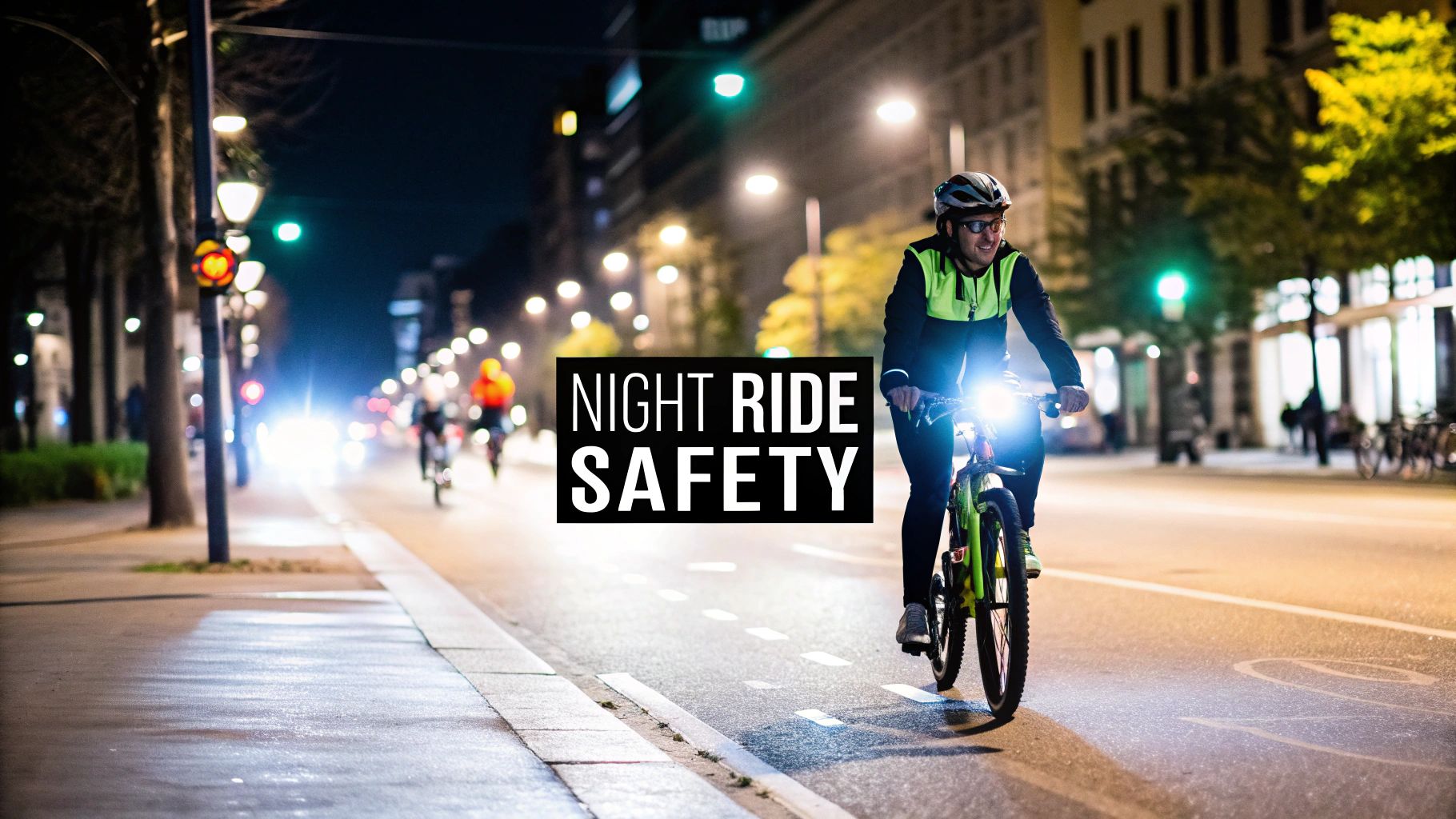
Andar de bicicleta à noite é mais do que apenas pedalar no escuro. É um jogo completamente diferente. Para o fazer com segurança, tem de mudar completamente a sua mentalidade e preparação. Quando o sol se põe, a sua visibilidade — e a estrada em si — mudam de formas que talvez não espere.
Por Que Andar à Noite Exige uma Mentalidade Diferente
Há um tipo especial de liberdade que se sente ao andar na sua e-bike depois do pôr do sol, mas não tem nada a ver com o seu trajeto diurno. Essas ruas familiares da cidade, quer esteja no movimentado centro de Sydney ou numa tranquila suburbana dos EUA, transformam-se num cenário de sombras profundas e faróis ofuscantes. Isto não é apenas ligar uma luz; é repensar toda a sua abordagem à consciência e segurança.
O maior e mais óbvio desafio é a visibilidade. É uma via de mão dupla: não vê tão bem, e os outros não o veem. A sua capacidade de detetar perigos como buracos, um tapete escorregadio de folhas molhadas ou pavimento partido diminui drasticamente. Aquela fissura na estrada que facilmente desviaria durante o dia pode fazê-lo cair à noite. Ao mesmo tempo, praticamente desaparece para os condutores que já estão distraídos.
Os Perigos Ocultos da Escuridão
Não se trata apenas do que pode ou não ver. A escuridão engana o seu cérebro. Tentar julgar a velocidade e a distância de um carro que se aproxima é muito mais difícil quando só tem dois faróis brilhantes para se guiar. Esta perceção de profundidade distorcida significa que tem de dar a si mesmo uma margem de tempo e espaço muito maior, especialmente quando está numa interseção ou a tentar entrar numa via.
E estes não são apenas riscos hipotéticos. Os números são bastante preocupantes. Segundo a Administração Nacional de Segurança Rodoviária dos EUA (NHTSA), um impressionante 36% de todos os acidentes fatais de bicicleta em 2022 ocorreram entre as 18h e as 6h. É um número enorme, especialmente quando se percebe que essas horas representam apenas cerca de 10% de todo o tempo de utilização da bicicleta. Se quiser aprofundar, pode encontrar mais informações sobre estas tendências de segurança no ciclismo, e verá o quão crítica é realmente a visibilidade.
Veja, o essencial é que andar de bicicleta à noite exige que seja proativo. Trata-se de antecipar os perigos que não consegue ver e garantir que toda a gente na estrada o consegue ver.
Antes mesmo de pensar em sair, também precisa de conhecer as regras locais. Vale a pena consultar o nosso guia sobre se as bicicletas elétricas são legais nas ruas para garantir que está a seguir as leis da sua área para andar à noite.
Criar o Seu Sistema de Visibilidade a 360 Graus
Vamos esclarecer uma coisa: a verdadeira segurança noturna não é colocar uma luz barata e única no guiador e achar que está feito. Trata-se de criar uma "bolha" protetora de visibilidade à sua volta, tornando impossível para um condutor não o ver.
Para acertar mesmo, tem de pensar em duas categorias diferentes: luzes para ver e luzes para ser visto. Não são a mesma coisa.
Luzes para Ver vs. Luzes para Ser Visto
O seu farol principal serve para ver o caminho à frente. Precisa de projetar um feixe potente e constante que destaque buracos, vidro e outros detritos muito antes de lá chegar. Isto é absolutamente crítico numa rua suburbana mal iluminada ou numa estrada rural. Para esta tarefa, vai querer uma luz com um número sólido de lumens — pense em pelo menos 400-800 lumens para andar na cidade e ainda mais para rotas mais escuras. Um feixe bem moldado que ilumine a estrada sem ofuscar o trânsito em sentido contrário é fundamental.
Depois tem as suas luzes "para ser visto". Estas servem para captar a atenção de um condutor à distância. São quase sempre luzes intermitentes que pode prender ao capacete, à mochila ou à traseira da sua bicicleta. O objetivo delas é fazer de si um farol móvel e visível de todos os ângulos possíveis. Uma pequena luz vermelha intermitente no tubo do selim, combinada com outra no capacete, pode fazer uma enorme diferença na rapidez com que um condutor percebe a sua presença por trás.
Os Dois Pilares do Seu Sistema de Iluminação
Quando perceber o papel de cada luz, montar um sistema eficaz torna-se muito mais fácil. Precisa mesmo de ambas para estar seguro por aí.
-
Luzes "Para Ver" (O Seu Farol): Esta é a sua ferramenta de navegação. Procura um feixe brilhante e constante que projete um padrão amplo, dando-lhe bastante tempo para reagir a perigos. Um utilizador urbano pode ficar satisfeito com 500 lumens, mas se vai por caminhos sem iluminação, recomendo fortemente 1000 lumens ou mais.
-
Luzes "Para Ser Visto" (Os Seus Pisca-Piscas): Pense nestas como o seu escudo defensivo. Um pisca-pisca vermelho na traseira é obrigatório por lei na maioria dos locais, mas não se fique por aí. Adicionar um pisca-pisca branco à frente e até luzes âmbar nas suas rodas ou pedais torna-o visível pelos lados — um salva-vidas em cruzamentos onde a maioria dos acidentes acontece.
Ver para onde vai é apenas metade da batalha. Ser visto por todos os outros é o que o mantém seguro.
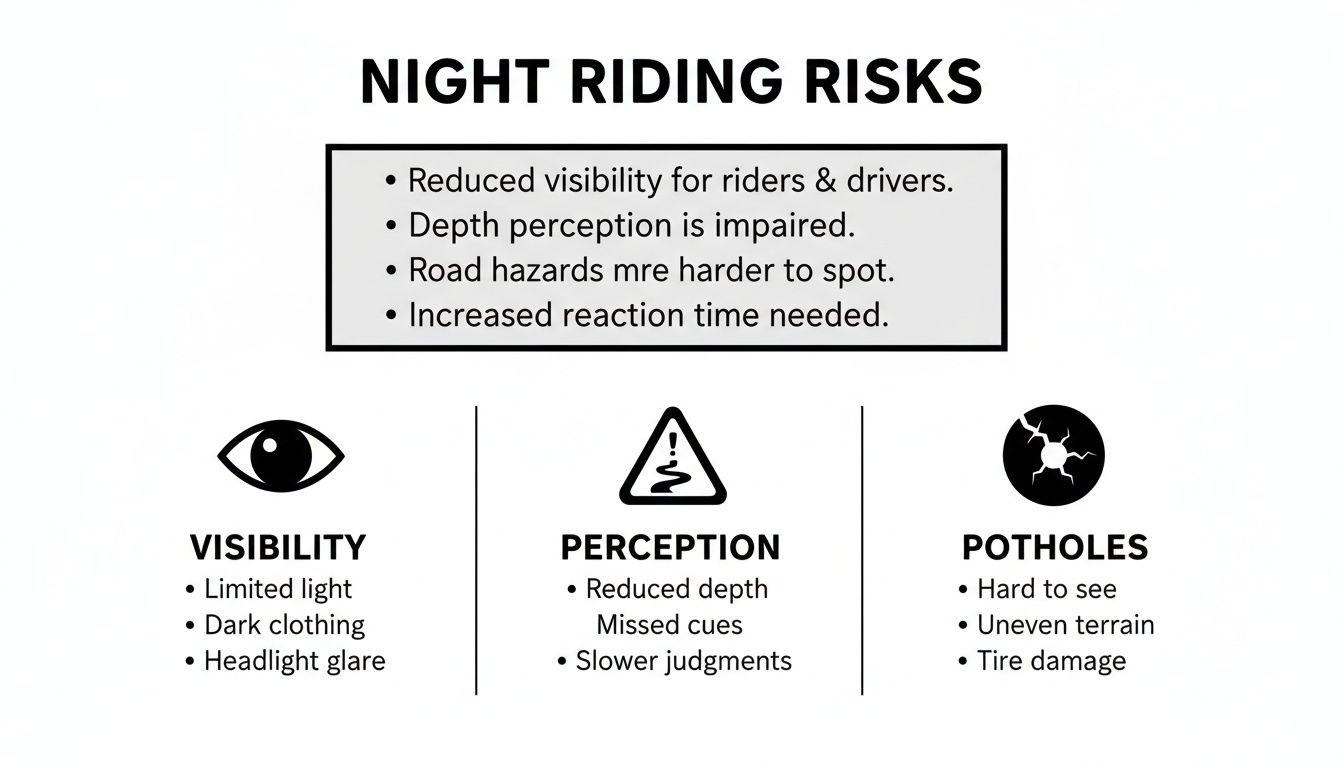
Como pode ver, estes riscos estão todos ligados. Quando a sua visibilidade é fraca, a sua capacidade de identificar e reagir a coisas como buracos na estrada diminui muito.
Para tornar isto super prático, aqui está uma lista rápida para verificar antes de sair.
A tua Lista de Verificação de Visibilidade para Condução Noturna
Esta tabela divide o equipamento que considero essencial do que é um upgrade bom de ter. É uma boa forma de priorizar se estiveres a montar o teu kit do zero.
| Tipo de Equipamento | Essencial (Obrigatório) | Recomendado (Bom de Ter) | Dica de Profissional |
|---|---|---|---|
| Luz Frontal | Farol branco fixo (400+ lúmens) | Uma luz branca intermitente secundária | Inclina o feixe principal ligeiramente para baixo para evitar ofuscar condutores e ciclistas que vêm em sentido contrário. |
| Luz Traseira | Luz vermelha intermitente brilhante | Duas luzes vermelhas para redundância | Uma luz traseira fixa e uma intermitente podem ajudar os condutores a avaliar melhor a tua distância e velocidade. |
| Visibilidade Lateral | Laterais dos pneus ou autocolantes refletivos | Luzes montadas nos raios ou pedais | O movimento chama a atenção. Luzes nas rodas ou pedais são incrivelmente eficazes em cruzamentos. |
| Vestuário | Casaco/colete com painéis refletivos | Casaco totalmente refletor ou capa para mochila | Material retrorefletor é o teu melhor amigo. Reflete a luz diretamente para a fonte, fazendo-te brilhar. |
| Capacete | Autocolantes refletivos | Uma luz montada no capacete (frontal/traseira) | Uma luz montada no topo do capacete é visível acima dos carros e outros obstáculos. |
Esta lista de verificação deve dar-te uma base sólida para construir um conjunto que te mantenha visível e seguro, não importa onde pedales.
Olha Além da Bicicleta
O teu sistema de visibilidade não termina com o equipamento na tua bicicleta. O que vestes desempenha um papel enorme.
Roupa de alta visibilidade com painéis retrorefletores é uma verdadeira revolução. Este material não é apenas brilhante; é projetado para refletir a luz diretamente para a fonte — como os faróis de um carro — fazendo-te destacar. Por outro lado, lidar com esses faróis brilhantes que vêm na tua direção também é um desafio real. Vale a pena considerar coisas como óculos anti-reflexo para condução noturna para ajudar a manter a tua visão nítida.
Um erro comum que vejo é os ciclistas dependerem de uma única luz dianteira e do refletor traseiro instalado de fábrica. Visibilidade real a 360 graus significa ser visto de frente, de trás e — mais criticamente — dos lados.
Encontrar o equipamento perfeito é uma jornada pessoal, mas um ótimo ponto de partida é o nosso guia sobre os melhores acessórios para bicicletas elétricas. Está repleto de opções de iluminação e outros essenciais para ciclistas noturnos. Consulta em: https://www.punkride.com/blogs/news-advice/best-electric-bike-accessories
Dominando a Condução Defensiva no Escuro
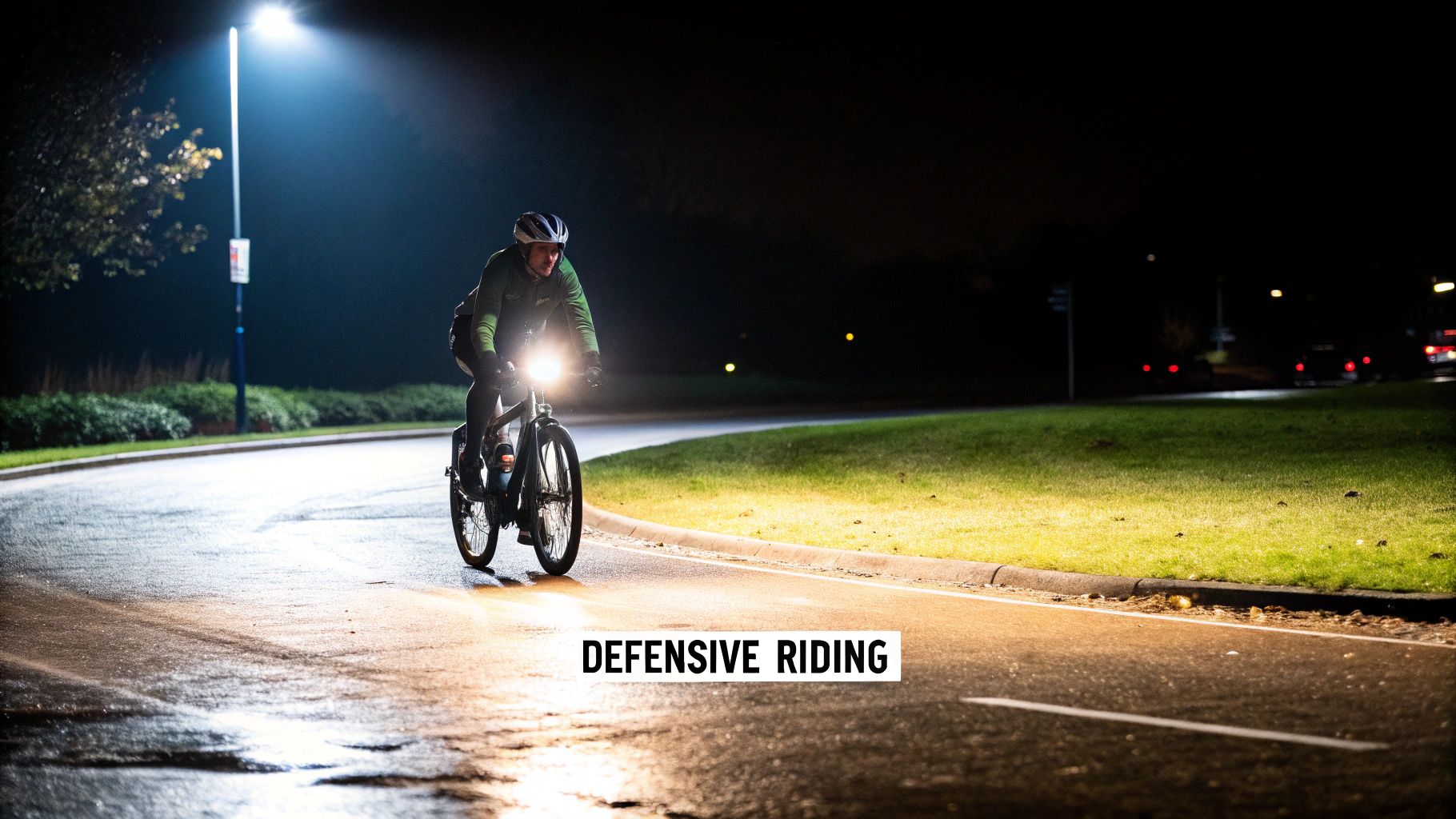
Ter as melhores luzes e equipamento refletor é um ótimo começo, mas é apenas metade da batalha. A forma como realmente pedalas depois do sol se pôr é o que realmente te mantém seguro. Conduzir defensivamente à noite não é ser tímido; é ser inteligente, previsível e estar sempre um passo à frente.
O maior ajuste que precisa de fazer? Abandone a velocidade. A sério. O seu farol só ilumina uma parte limitada da estrada à frente, o que reduz drasticamente o seu tempo de reação. Esse buraco que facilmente desviaria durante o dia pode surgir de repente na escuridão, sem lhe dar tempo para reagir. Reduzir um pouco a velocidade compra-lhe os preciosos segundos que precisa para identificar um perigo, processá-lo e contorná-lo em segurança.
Seja Visto, Seja Assertivo
Onde se posiciona na via é uma das suas ferramentas mais poderosas para comunicar com os condutores. É tentador ficar junto ao passeio, pensando que é o lugar mais seguro, mas isso muitas vezes esconde-o nas sombras, tornando-o praticamente invisível. Isto é especialmente perigoso em interseções e entradas de garagem.
Não tenha medo de "tomar a via" quando a situação o exigir. Isso significa mover-se para o centro da via, colocando-se diretamente na linha de visão do condutor enquanto se aproxima e atravessa uma interseção. Descobri que esta é uma tática inegociável em áreas suburbanas nos EUA e na Austrália, onde os carros podem sair de entradas de garagem mal iluminadas sem aviso. Ao tornar-se impossível de ignorar, força os condutores a reconhecer a sua presença.
Nunca presuma que um condutor o vê só porque as suas luzes estão acesas. Eu ando sempre como se fosse invisível e tento estabelecer contacto visual para confirmar que me viram. É um hábito que já me salvou mais do que uma vez.
Faça uma Varredura Ativa ao Seu Ambiente
Andar de noite transforma-o num scanner a tempo inteiro. Tem de estar constantemente atento a muito mais do que apenas carros, usando pistas subtis para ler a estrada à sua frente.
Os seus olhos devem estar sempre em movimento.
- Superfície da Estrada: Esteja atento a um brilho refletivo no pavimento. Esse aspeto escorregadio pode ser água, uma mancha de gelo negro ou uma mancha de óleo — todas coisas que quer evitar.
- Sombra: Preste atenção a como as sombras dançam e se movem sob os candeeiros de rua. Uma sombra que muda abruptamente de forma pode ser um peão a descer do passeio ou um animal a saltar para o seu caminho.
- Visão Periférica: Não fique com visão de túnel ao focar-se apenas no que está no feixe do seu farol. Use a sua visão periférica para captar movimentos nas ruas laterais, becos e entradas de garagem.
Pense em como é navegar numa rotunda ou numa paragem de quatro vias com pouca luz. Não está apenas à procura de carros; está também a observar o pavimento à procura de cascalho ou detritos e a garantir que os condutores prestes a entrar realmente o veem a aproximar-se. Dominar estas técnicas é o que transforma um passeio noturno stressante numa experiência confiante e até pacífica.
Planeie a Sua Rota e Pedale com Mais Segurança
Aquela rota que adora durante o dia? Pode parecer um mundo completamente diferente quando o sol se põe. Um bom passeio seguro à noite depende de uma coisa mais do que qualquer outra: planeamento inteligente da rota. Isto não é apenas sobre o caminho mais curto; é sobre escolher um que o mantenha fora de problemas.
A sua prioridade número um deve ser a luz. Antes de pensar para onde ir, mapeie as ruas da sua área que estão realmente bem iluminadas. As estradas principais movimentadas geralmente têm melhor iluminação do que as ruas calmas dos bairros, tornando-as uma aposta mais segura mesmo que tenham um pouco mais de trânsito. Manter-se em caminhos bem iluminados é a melhor forma de evitar buracos inesperados ou lixo na estrada.
Use a Tecnologia para Fazer um Pequeno Reconhecimento
Não precisa de adivinhar se uma rota é segura. Um pouco de reconhecimento digital pode fazer uma enorme diferença e dar-lhe uma grande tranquilidade.
- Google Street View: Este é o seu melhor amigo para planear passeios noturnos. Faça um pré-passeio virtual para identificar perigos potenciais como longos troços escuros entre candeeiros, cruzamentos confusos ou estradas que de repente perdem o ombro ou a ciclovia.
- Apps de Ciclismo: Apps como Komoot ou Ride with GPS são recursos fantásticos. Muitas vezes destacam rotas populares entre outros ciclistas, o que geralmente significa que são mais seguras e agradáveis. Alguns até têm camadas de mapas ou modos noturnos que podem ajudar a ter uma melhor perceção da viagem.
Pense assim: se está a ir para casa numa grande cidade, uma rápida consulta ao Street View pode revelar que uma rota um pouco mais longa através de um parque bem iluminado é uma escolha muito melhor do que um atalho direto por uma zona industrial escura.
Estradas Locais, Regras Globais
Não importa onde esteja no mundo, os princípios básicos de condução segura à noite são os mesmos, mas os detalhes locais são importantes.
- EUA e Austrália: Em áreas suburbanas mais dispersas, pode descobrir que uma estrada caótica às 17h está praticamente vazia às 21h. Nestes casos, procure rotas com limites de velocidade mais baixos e paragens simples de quatro vias em vez de cruzamentos enormes com várias faixas.
- Reino Unido e UE: Muitas cidades por toda a Europa têm agora "superestradas para bicicletas" dedicadas e bem iluminadas. Se tiver acesso a uma, use-a. Acrescentar alguns minutos extra ao seu percurso é um pequeno preço a pagar por uma viagem muito mais segura.
No final do dia, uma rota um pouco mais longa mas mais segura é sempre a escolha certa. É uma troca que aumentará a sua confiança e o manterá seguro.
Um 2023 Um inquérito da Adventure Cycling descobriu que ciclistas de ultra-endurance que pedalam à noite reduzem os riscos do trânsito diurno em 31%Mas esta vantagem depende de teres luzes potentes e um plano sólido. Consulta a pesquisa completa sobre estes resultados em ciclismo de resistência para perceberes o quão críticos são o equipamento e o planeamento.
O Teu Ritual de Segurança Pré-Passeio
Alguns minutos de preparação antes de saíres para a noite podem fazer a diferença entre um passeio tranquilo e uma dor de cabeça séria. Não me canso de repetir: tornar uma verificação rápida de segurança um hábito inegociável é a melhor coisa que podes fazer pela tua segurança. Não estamos a falar de uma revisão mecânica completa; é um ritual simples e rápido que deves fazer todas as vezes.
Pensa nisso como a lista de verificação pré-voo de um piloto. O objetivo é detetar pequenos problemas antes que se transformem em grandes complicações numa estrada escura.
A Lista Essencial para Passeios Noturnos
Quando te habituares, todo o processo demora talvez dois ou três minutos, mas é tempo muito bem gasto.
- Verificação da Bateria e Luzes: Esta é a prioridade número um, ponto final. Certifica-te de que todas as luzes — dianteira, traseira e quaisquer extras — estão totalmente carregadas e a funcionar bem. E não te esqueças da bateria da tua e-bike. Uma luz ou motor sem carga depois do pôr do sol é receita para problemas.
- Teste dos Travões: Aperta ambas as manetes dos travões. Sentem-se firmes? Funcionam corretamente? Dá um pequeno impulso à bicicleta e testa-os novamente para garantir que tens poder de paragem real.
- Inspeção dos Pneus: Aperta os pneus com firmeza para verificar a pressão. Também deves procurar sinais óbvios de danos, como pequenos cacos de vidro ou pedras afiadas presas na borracha.
Uma verificação pré-passeio consistente não é paranoia; é estar preparado. Levar a tua segurança a sério significa que podes pedalar com confiança, e não com aquela preocupação constante de que o teu equipamento possa falhar.
Preparação do Equipamento e Condições Meteorológicas
Depois de a bicicleta receber um sinal positivo, faz uma rápida inspeção ao teu próprio equipamento.
Esse casaco ou colete refletor está limpo? Pode parecer parvo, mas lama e sujidade acumuladas podem realmente apagar o brilho dos materiais refletivos, tornando-te muito menos visível para os condutores.
Por fim, pega no teu telemóvel e dedica cinco segundos para verificar o tempo. Uma chuva inesperada pode tornar as estradas perigosamente escorregadias e reduzir a visibilidade num instante. Saber o que vem permite-te vestir-te adequadamente e ajustar a forma como pedalas antes mesmo de trancares a porta de casa.
Aproveita e torna a manutenção regular da corrente da bicicleta parte da tua rotina. Confia em mim, uma corrente partida no escuro é uma situação que definitivamente queres evitar. Quando incorporas estes pequenos passos no teu ritual pré-passeio, a segurança deixa de ser um incómodo e torna-se algo natural.
Como Lidar com Problemas na Berma da Estrada Depois do Anoitecer
Um simples furo ou uma luz apagada parece dez vezes pior quando está preso na berma de uma estrada escura. Mas um pouco de preparação pode transformar uma emergência potencial numa mera demora.
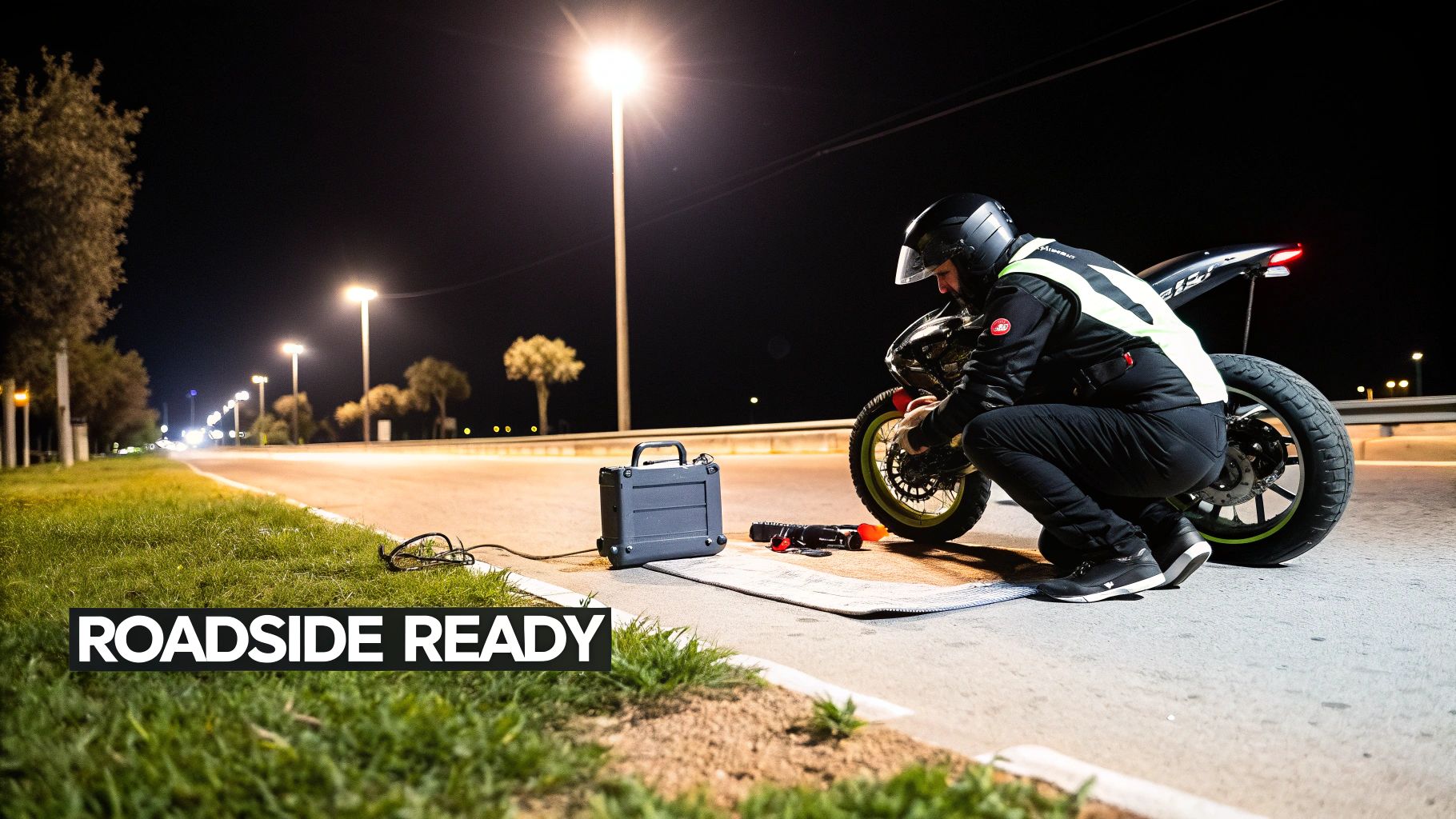
Antes de fazer qualquer outra coisa, vá para um local seguro. Afastar-se o máximo possível da estrada, idealmente debaixo de um candeeiro para ser visível. Mantenha as luzes a piscar para garantir que o trânsito que se aproxima sabe que está lá.
O Seu Kit Minimalista de Reparação para Passeios Noturnos
Não precisa de levar toda a sua caixa de ferramentas. Alguns essenciais guardados numa pequena bolsa de selim ou mochila ajudam-no a ultrapassar a maioria dos contratempos comuns que enfrentará ao andar à noite.
- Multiferramenta com quebra-correntes: Pense nela como o seu canivete suíço para salvar o passeio. Uma boa ferramenta aperta parafusos soltos e faz a maioria dos ajustes rápidos.
- Alavancas para pneus e kit de remendo: Um furo é, de longe, o problema mais comum na berma da estrada. Saber como remendar uma câmara de ar rapidamente é uma habilidade que todo o ciclista deve ter. Para uma atualização completa, consulte o nosso guia sobre como encher pneus de bicicleta e lidar com furos.
- Mini-bomba ou inflador de CO2: Um inflador de CO2 põe-no de volta na estrada em segundos, mas uma mini-bomba é a escolha fiável porque nunca fica sem ar.
- Power bank portátil: Mesmo um pequeno tem carga suficiente para ressuscitar um telemóvel descarregado ou dar o impulso necessário a uma luz recarregável por USB para o levar a casa.
O objetivo não é ser um mecânico mestre na berma da estrada. Trata-se de ter o suficiente para consertar o que é simples e voltar a andar, transformando um momento de pânico numa reparação de cinco minutos.
Soluções Rápidas para Problemas Comuns
Se a sua luz apagar-se de repente, verifique primeiro a ligação. Um troço de estrada irregular pode facilmente soltar um fio. Se for um modelo recarregável por USB, o power bank que trouxe vai tornar-se no seu melhor amigo.
A lidar com um furo no escuro? É aqui que a sua lanterna frontal ou a lanterna do telemóvel se tornam indispensáveis para encontrar esse pequeno furo. Assim que estiver em segurança fora da estrada, tome o seu tempo. Apressar a troca da câmara de ar no escuro é uma forma certa de beliscar a nova e acabar exatamente onde começou.
Um kit simples e uma cabeça fria ajudam-no a ultrapassar quase tudo o que a noite lhe possa deparar.
Ainda Tem Dúvidas Sobre Andar à Noite?
Se está a pensar em andar depois de escurecer, provavelmente tem algumas dúvidas a surgir. É totalmente normal. Vamos passar por algumas das perguntas mais comuns que ouço dos ciclistas.
"É Mesmo Legal?"
Esta é, sem dúvida, a maior questão. A resposta curta é sim, mas precisa do equipamento certo.
Praticamente em todo o lado — seja nos EUA, Austrália, Reino Unido ou UE — existem leis que exigem uma luz branca dianteira e uma luz vermelha traseira do pôr ao nascer do sol. Os refletores são ótimos e muitas vezes obrigatórios, mas não substituem as luzes ativas.
A melhor opção é fazer uma pesquisa rápida no site da autoridade local de transportes ou da câmara municipal. Procure por "leis de luzes para bicicletas [sua cidade/estado]" e encontrará os detalhes específicos.
"Posso Usar Apenas o Meu Equipamento de Dia?"
Gostava que fosse assim tão simples, mas não é bem assim. O seu capacete está pronto, claro, mas tudo o resto precisa de ser repensado.
Os refletores padrão que vêm nas bicicletas são passivos, ou seja, só funcionam quando os faróis de um carro os iluminam na direção certa. Isso não é suficiente. Precisa de luzes alimentadas por bateria para anunciar a sua presença a todos na estrada.
Além disso, aquele casaco de ciclismo preto ou azul escuro que adora? Faz de si um ninja à noite — e não de uma forma boa. Torna-se praticamente invisível. Vai precisar de adicionar algumas camadas brilhantes e refletoras para se destacar.
"E a Bateria da Minha Bicicleta Elétrica?"
Este é um ponto importante para os utilizadores de bicicletas e trotinetes elétricas. Usar luzes fortes vai definitivamente consumir mais bateria, não há como evitar.
O truque é ser inteligente com o uso da energia. Se estiver num passeio longo, talvez mude as suas luzes para um modo de piscar que poupa energia em ruas bem iluminadas. Também pode baixar o nível de assistência ao pedal para garantir que tem bateria suficiente para chegar a casa em segurança.
Tudo se resume a encontrar o equilíbrio entre ser visto e conservar energia.
"Andar em Grupo é uma Boa Ideia?"
Absolutamente! Andar em grupo à noite é uma experiência fantástica. Um grupo inteiro de ciclistas com luzes a piscar é muito mais visível do que uma pessoa sozinha. É um enorme aumento de segurança.
Além disso, há força no número. Se alguém furar um pneu ou tiver um problema mecânico, tem amigos mesmo ali para ajudar. Só certifique-se de que todos no grupo estão bem iluminados para não acabarem por se chocar uns com os outros. Um passeio em grupo bem iluminado pode mudar completamente a forma como vê a sua cidade depois de escurecer.
Pronto para se preparar para a sua próxima aventura, de dia ou de noite? Na Punk Ride LLC, oferecemos uma enorme seleção de bicicletas elétricas e trotinetes de alto desempenho, perfeitas para qualquer passeio. Encontre a sua combinação perfeita e ilumine a noite. Explore a nossa coleção.
Partilhar:
Os Melhores Acessórios para Bicicletas Elétricas para o Seu Passeio Perfeito
Encontrar Bicicletas Elétricas Perto de Mim: Um Guia para Ciclistas dos EUA e da Austrália