


Se stai cercando la migliore ebike elettrica a passo basso, stai cercando quel punto perfetto dove l'accesso facile incontra la potenza reale. I migliori modelli combinano questo, offrendoti un telaio a passo basso su cui salire e scendere senza sforzo, un motore che non si tira indietro sulle salite e una batteria che dura a lungo. Non c'è da meravigliarsi se sono la scelta principale per i pendolari urbani e i ciclisti del weekend in Australia e negli Stati Uniti.
Perché le ebike a passo basso stanno conquistando le strade cittadine
Diciamolo, a chi piace restare bloccato nel traffico o cercare di sollevare una bici ingombrante su un marciapiede? C’è un modo migliore per muoversi in città, e le ebike a passo basso stanno risolvendo proprio questi problemi ogni giorno. Sono rapidamente diventate l'eroe del pendolarismo moderno.
Pensalo come sostituire un vecchio computer desktop ingombrante con un laptop leggerissimo—rende tutto quello che fai più semplice e molto più piacevole.
Questa guida spiegherà cosa rende queste ebike speciali. Inizieremo con la caratteristica che cambia tutto: il telaio a passo basso.
La magia del telaio a passo basso
Al centro, un'ebike a passo basso riguarda il suo telaio. Elimina il tubo superiore alto che vedi sulle bici tradizionali a "telaio a diamante". Questo crea uno spazio ampio che puoi letteralmente "attraversare" per salire e scendere.
Questo semplice cambiamento fa una differenza enorme per molti ciclisti:
- Niente più movimenti goffi delle gambe: Basta salire, sedersi e partire. È una rivoluzione se indossi una gonna, un completo o semplicemente un paio di jeans rigidi.
- Fiducia su due ruote: La possibilità di poggiare facilmente entrambi i piedi a terra a un semaforo è enorme. È un enorme aumento di stabilità e fiducia, specialmente per i ciclisti più anziani o chiunque sia un po' instabile.
- Perfetta per il traffico stop-and-go: Andare in città significa molte fermate. Salire e scendere è completamente fluido, il che elimina lo stress di affrontare incroci trafficati.
Questa non è solo una bici; è una soluzione. Le ebike a passo basso sono fantastici prodotti di viaggio ecologici, offrendo un'alternativa verde all'auto che è davvero pratica per la vita quotidiana.
Un'ebike a passo basso elimina le barriere fisiche al ciclismo. Non è solo un tipo diverso di bici; è un invito a più persone a sperimentare la libertà del viaggio su due ruote, indipendentemente dall'età, dalla mobilità o da cosa indossano.
Ebike a passo basso a colpo d'occhio
Per chi vuole solo i punti salienti, ecco una rapida panoramica del perché un passo basso potrebbe essere perfetto per te.
| Caratteristica | Cosa Significa Per Te |
|---|---|
| Telaio a passo basso | Sali e scendi facilmente, qualunque cosa tu stia indossando. Perfetto per fermate frequenti. |
| Posizione di Guida Eretta | Postura più comoda, meno tensione su schiena e collo. Migliore visuale del traffico. |
| Maggiore Stabilità | Facile appoggiare i piedi a terra, dando più sicurezza e controllo a basse velocità. |
| Alta Accessibilità | Perfetta per ciclisti più anziani, persone con problemi di mobilità o chiunque sia nuovo al ciclismo. |
Questa tabella è solo una panoramica, ma mostra come queste bici siano progettate da zero pensando al comfort e alla sicurezza del ciclista.
Un Movimento in Crescita nel Viaggio Urbano
I ciclisti votano con il portafoglio, e i risultati sono chiari. Il mercato delle ebike con telaio basso è esploso. Solo negli USA, si stima che siano state importate 1,7 milioni di e-bike in un solo anno, con i modelli a telaio basso in prima linea. Un boom simile sta avvenendo in Australia, dove le vendite di e-bike sono aumentate, diventando una scelta popolare per muoversi in città come Melbourne e Sydney.
Non è solo una moda. È un cambiamento fondamentale nel modo in cui le persone dai 16 ai 65 anni scelgono di muoversi. Vogliono un modo semplice, ecologico e divertente per scivolare in città senza sudare.
Questa crescita dimostra che le persone stanno scegliendo la praticità rispetto alla tradizione. Abbinando un motore elettrico utile a un telaio accessibile, queste bici rendono il viaggio in città qualcosa da aspettare con piacere. Per vedere come si inseriscono nel quadro più ampio, dai un’occhiata al nostro approfondimento sui vantaggi delle ebike per il pendolarismo urbano.
Conoscere la Centrale Elettrica della Tua Ebike
Per scegliere la ebike con telaio basso giusta, devi davvero guardare sotto il cofano. Capire i tre elementi principali—il motore, la batteria e il telaio—è molto simile a comprendere il motore e il telaio di un’auto. Una volta che sai cosa cercare, puoi leggere una scheda tecnica e sapere subito come si sentirà la bici su strada.
Analizziamo la tecnologia che fa muovere la tua corsa, ma senza tutto il gergo complicato.
Il Motore: Il Motore della Tua Bici
Il motore è il cuore e l’anima della tua ebike. È ciò che appiana quelle salite impegnative e trasforma un vento contrario in una spinta gentile. In genere ne incontrerai due tipi, e ciascuno conferisce alla bici una personalità totalmente diversa.
Per prima cosa, c’è il motore nel mozzo, che troverai nascosto al centro della ruota anteriore o posteriore. Questo design dà la sensazione di ricevere una spinta solida da dietro. È un’opzione fantastica e senza complicazioni per girare in città su terreni per lo più pianeggianti ed è comune nelle ebike più economiche. Poiché funziona indipendentemente dalla pedalata, è semplice e fa il suo lavoro.
Poi c’è il motore centrale, che si trova proprio al centro della bici dove si collegano i pedali. Questa configurazione ti fa sentire come se avessi gambe sovrumane. La potenza è direttamente legata alla tua pedalata tramite la catena e gli ingranaggi, rendendo la sensazione incredibilmente naturale e intuitiva. Questo design è il re indiscusso delle salite ripide e aiuta anche con l’equilibrio, grazie alla sua posizione bassa e centrale.
Una semplice regola pratica: se il tuo mondo è per lo più pianeggiante, un motore nel mozzo è una scelta intelligente e conveniente. Ma se il tuo tragitto quotidiano include pendenze serie, investire in un motore centrale renderà ogni salita senza sforzo.
La Batteria: Il Carburante nel Tuo Serbatoio
Se il motore è il motore, la batteria è il tuo serbatoio di carburante. La sua dimensione e qualità determinano la tua libertà—quanto lontano puoi andare prima di dover ricaricare. Quando confronti le bici, un paio di termini chiave ti dicono tutto quello che devi sapere.
Il numero più importante è watt-ora (Wh). Pensalo come la dimensione del tuo serbatoio di benzina. Più alto è il Wh, più grande è il serbatoio. Cerca una batteria con 500Wh o più se vuoi fare giri più lunghi senza preoccuparti continuamente della prossima ricarica.
Questo numero si traduce direttamente nell'autonomia della bici—la distanza che puoi percorrere con una singola carica. Spesso vedrai una stima ampia, come 30-60 miglia (circa 50-100 km), perché il tuo chilometraggio reale può variare molto. Dipende da fattori come il tuo peso, il terreno e quanto ti affidi al supporto elettrico. Per un approfondimento su tutti i componenti, la nostra guida su come scegliere un'ebike è una risorsa eccellente.
Non dimenticare il tempo di ricarica. La maggior parte delle batterie per ebike necessita di 4-8 ore per passare da vuota a piena. È abbastanza comodo, comunque: la maggior parte delle persone la collega durante la notte ed è pronta per partire al mattino.
Il Telaio: Lo Scheletro della Tua Ebike
Il telaio è lo scheletro che tiene tutto insieme. Determina il peso della bici, come affronta le curve e come si mantiene nel tempo. Per i modelli con telaio basso, il materiale del telaio è molto importante, poiché deve essere resistente ma comunque facile da maneggiare.
Di gran lunga il materiale più comune è la lega di alluminio. È il Goldilocks dei materiali per telai: abbastanza resistente per l'uso quotidiano, abbastanza leggero da gestire facilmente e non ti svuota il portafoglio. Una bici più leggera è semplicemente meno ingombrante, sia che tu la sollevi su un portabici per auto o la manovri in un parcheggio affollato per biciclette.
La geometria del telaio fa anche una grande differenza nella sensazione di guida. Un telaio basso ben progettato sarà solido e stabile, non traballante, anche con il peso extra del motore e della batteria. Se sei un tipo pratico a cui piace sapere come sono assemblate le cose, dare un’occhiata ad alcune istruzioni generali per l’assemblaggio della bicicletta può darti una prospettiva interessante su come il telaio ancorare ogni altra parte della bici.
Una volta che avrai preso confidenza con queste tre parti fondamentali—motore, batteria e telaio—sarai in grado di confrontare diversi modelli come un professionista e trovare l’e-bike con telaio basso perfetta per la tua vita.
Abbinare l’Ebike Perfetta al Tuo Stile di Vita
Dimentica per un attimo le schede tecniche. Trovare la giusta e-bike con telaio basso riguarda solo te. La bici migliore non è quella con i numeri più grandi; è quella che sembra un’estensione naturale della tua routine quotidiana.
Pensala così: stai scegliendo il compagno perfetto per le avventure della tua vita. Guardando alcuni modi comuni in cui le persone usano le loro e-bike, puoi individuare le caratteristiche che renderanno i tuoi giri più facili e molto più divertenti.
Il Pendolare Quotidiano
Sei il guerriero della settimana lavorativa. La tua missione è andare da casa all’ufficio e ritorno, senza sudare o presentarti in disordine. La tua e-bike non è un giocattolo per il weekend—è il tuo fedele destriero per conquistare la giungla urbana.
Per te, tutto ruota attorno all’affidabilità. Hai bisogno di una bici pronta a partire quando lo sei tu, con pioggia o sole.
Ecco cosa dovresti cercare:
- Luci integrate: Questo è imprescindibile per le partenze all’alba o le pedalate a tarda sera. Le luci alimentate dalla batteria principale significano una cosa in meno da caricare o dimenticare.
- Parafanghi completi: Le pozzanghere capitano. I parafanghi sono la tua migliore difesa contro la temuta "striscia di puzzola" di sporco stradale sulla schiena, mantenendo puliti i tuoi vestiti da lavoro.
- Portapacchi posteriore: Un solido portapacchi posteriore è indispensabile per trasportare la tua borsa per il laptop, gli abiti da palestra o quel takeout che hai preso tornando a casa. Alcuni portapacchi possono sopportare oltre 70 kg (150 lbs), trasformando la tua bici in un serio mezzo da carico.
Questo semplice grafico è un ottimo punto di partenza per riflettere sul tuo tragitto casa-lavoro. Riassume la prima grande decisione che dovrai prendere in base al terreno della tua città.
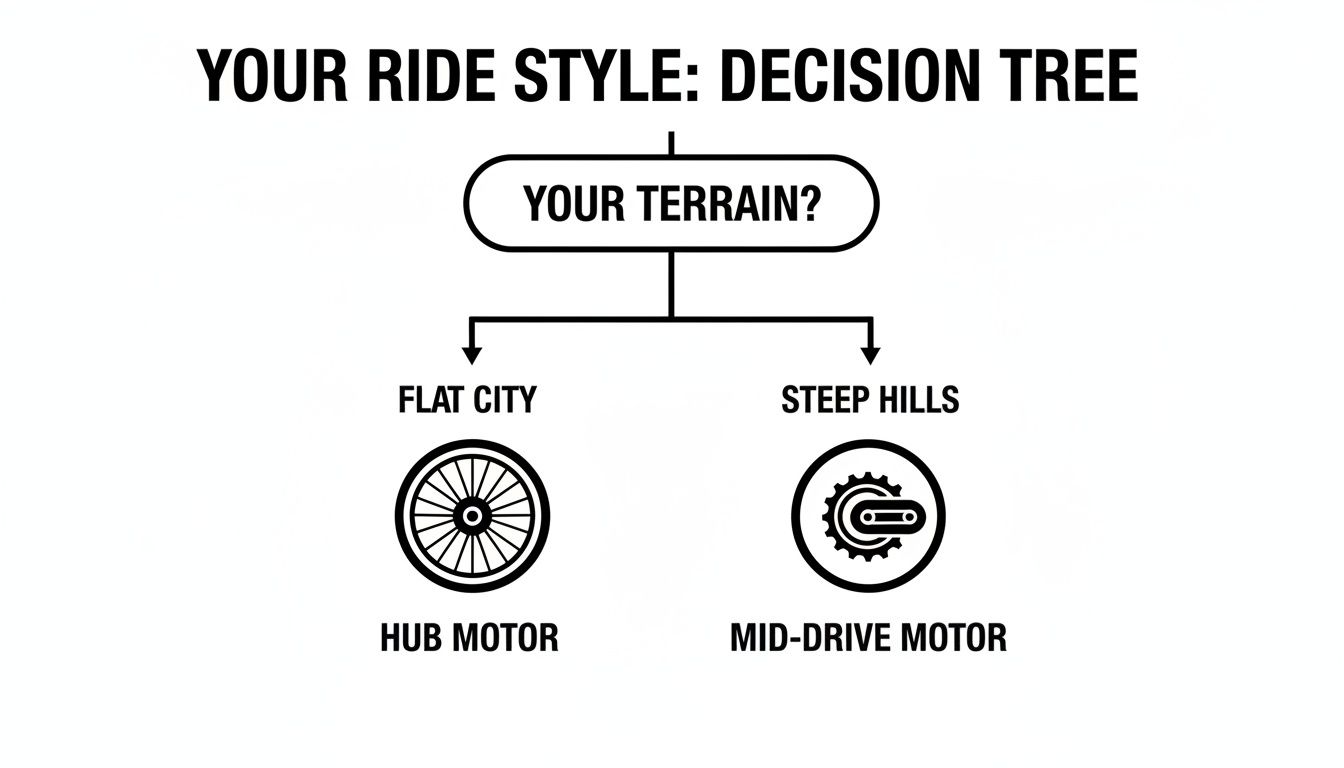
Come puoi vedere, un motore nel mozzo è di solito tutto ciò di cui hai bisogno per le strade pianeggianti della città, ma se affronti colline ogni giorno, un motore centrale sarà il tuo migliore amico.
L'Avventuriero del Weekend
Quando la settimana lavorativa finisce, sei fuori dalla porta. I tuoi giri non riguardano solo andare da A a B; riguardano il viaggio stesso. Stai percorrendo piste ciclabili panoramiche, esplorando incantevoli paesini e semplicemente assaporando tutto.
Ciò che conta di più per te è il comfort a lunga distanza e la libertà di vagare. Hai bisogno di una bici che possa tenere il passo con la tua curiosità.
La tua ebike perfetta dovrebbe sentirsi come un paio di scarponi da trekking comodi—supportivi, resistenti e pronti a fare un miglio in più. Lunga durata della batteria e una guida fluida sono le tue priorità principali.
I tuoi must-have per l’avventura:
- Batteria a lunga autonomia: Cerca una batteria con almeno 500Wh di capacità. Ti darà un’autonomia reale di 30-60 miglia (50-100 km), così potrai esplorare quel giro in più senza ansia da autonomia.
- Sospensione anteriore: Una forcella ammortizzata cambia tutto su sentieri sconnessi o sterrati. Assorbe le vibrazioni, risparmiando braccia e spalle dalla fatica e rendendo la corsa molto più fluida.
- Sella comoda: Una sella che va bene per un viaggio di 20 minuti può diventare il tuo peggior nemico dopo due ore. Una sella più larga e ben imbottita è assolutamente cruciale per goderti quelle lunghe e tranquille pedalate.
Il Navigatore di Quartiere
Sei il maestro delle commissioni locali. La tua e-bike è il tuo mezzo per andare al supermercato, passare dall’ufficio postale o al mercato contadino. Per te, conta la praticità e lo spazio per il carico.
La tua ideale con telaio basso è un cavallo da lavoro. Deve essere stabile, facile da salire e scendere, e pronta a trasportare tutto ciò che ci metti (o nel suo cestino).
Ecco l’attrezzatura che fa la differenza:
- Alta capacità di carico: Un telaio robusto è fondamentale. Alcuni modelli pensati per il carico possono gestire un peso totale fino a 200 kg (440 lbs)! Vorrai portapacchi anteriori e posteriori resistenti, o almeno la possibilità di aggiungerli in seguito.
- Cavalletto stabile: Sembra un dettaglio piccolo, ma un cavalletto centrale robusto che impedisce alla bici di cadere quando è carica di spesa è una vera salvezza.
- Posizione di guida eretta: Stare seduti dritti ti offre una vista eccellente dell’ambiente circostante, perfetta per muoverti in strade trafficate e parcheggi. È anche incredibilmente comoda e ti mette in una posizione sicura e controllata.
Capendo con quale di questi ciclisti ti identifichi di più, puoi tagliare il rumore. Trasforma una lunga lista di specifiche confuse in una guida chiara e semplice per trovare la e-bike con telaio basso che amerai davvero guidare.
Cosa rende davvero una corsa eccezionale?
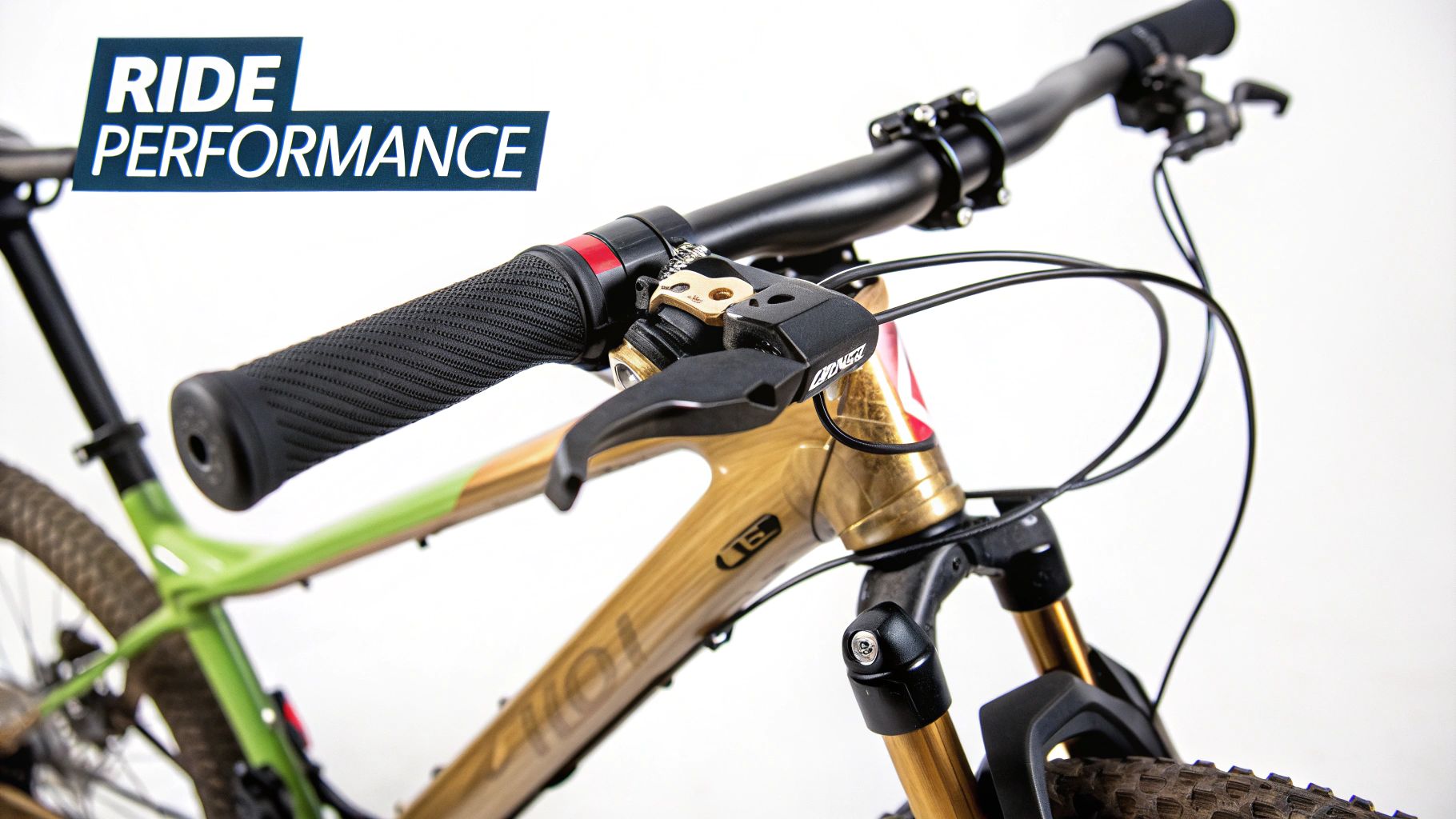
Quindi, hai già scelto motore e batteria. Fantastico! Ora è il momento di entrare nel dettaglio—le parti che davvero distinguono una buona ebike da una fantastica.
Stiamo parlando dei componenti che definiscono come la tua bici si sente. Elementi come freni, sospensioni e cambi possono sembrare dettagli minori, ma credimi, fanno tutta la differenza nella tua fiducia e comfort sulla strada. Analizziamo cosa trasforma una buona bici nel miglior step through electric bike per te.
H3: Sistemi frenanti: La potenza di fermarsi sul posto
Una bici elettrica è più pesante e veloce della tua vecchia dieci velocità. Questo significa che la potenza di arresto non è solo un optional; è una caratteristica di sicurezza imprescindibile. In genere incontrerai due tipi di freni a disco, ognuno con la sua personalità.
I freni a disco meccanici sono i fidati cavalli da lavoro. Usano un classico cavo d'acciaio per stringere le pastiglie contro un rotore sulla ruota. Offrono una potenza di arresto solida e affidabile e hanno un grande vantaggio: sono semplici ed economici da mantenere da soli.
I freni a disco idraulici, invece, sono un altro pianeta. Usano un fluido in una linea sigillata, proprio come i freni della tua auto. Una leggera pressione sulla leva fornisce una potenza di arresto enorme, fluida e costante. Serve meno forza alla mano e funzionano alla grande, specialmente sotto la pioggia o in lunghe discese tortuose.
Per semplificare, ecco un rapido confronto:
Confronto tra sistemi frenanti
| Tipo di Freno | Ideale per | Pro | Contro |
|---|---|---|---|
| Disco Meccanico | Ciclisti attenti al budget, appassionati di manutenzione fai-da-te e chi guida casualmente in zone più pianeggianti. | - Costo inferiore - Facile da riparare e regolare - Prestazioni affidabili |
- Richiede più forza alla mano - Potenza di arresto inferiore rispetto all'idraulico - Richiede frequenti regolazioni del cavo |
| Freno a disco idraulico | Pendolari in città collinari, ciclisti orientati alle prestazioni e chiunque guidi in condizioni climatiche avverse. | - Potenza di arresto superiore - Sensazione senza sforzo e reattiva - Pastiglie auto-regolanti |
- Più costosi - La manutenzione è più complessa (richiede spurgo) - Più difficile da riparare in strada |
Mentre i freni meccanici vanno benissimo per gite tranquille su terreni pianeggianti, i freni idraulici sono un aggiornamento rivoluzionario se guidi nel traffico, affronti salite o vuoi semplicemente il massimo controllo.
H3: Sospensione: Ammorbidire gli urti della vita
Pensa alla sospensione come all'ammortizzatore personale della tua bici. È ciò che trasforma una corsa scoscesa e irregolare in una scivolata liscia e confortevole. Per le ebike con telaio basso, la troverai tipicamente in un paio di punti chiave.
Una forcella anteriore con sospensione è la più comune e probabilmente la più importante. È integrata nella parte anteriore della bici e assorbe l'impatto di buche, crepe e marciapiedi. Questo non solo rende la guida più confortevole; migliora drasticamente il controllo mantenendo la ruota anteriore incollata all'asfalto. Una forcella con circa 100mm di escursione è il punto ideale per affrontare le strade cittadine e i sentieri leggeri.
Per un’esperienza davvero confortevole, alcune bici aggiungono un reggisella ammortizzato. Questo piccolo componente intelligente ha una molla o un ammortizzatore integrato, che assorbe le vibrazioni più piccole che si trasmettono attraverso il telaio. Se passi molto tempo in sella o hai la schiena sensibile, questa caratteristica è un vero toccasana per la schiena.
H3: Marce e gruppi propulsori: il tuo alleato per conquistare le salite
Anche con un motore che fa il lavoro pesante, le marce sono il tuo migliore amico. Il gruppo propulsore — cioè marce, catena e comandi — ti permette di pedalare a un ritmo confortevole qualunque cosa la strada ti riservi. Ti aiuta a trovare quella cadenza perfetta (come la chiamano i ciclisti) così tu e il motore potete lavorare insieme in modo efficiente.
La maggior parte delle migliori ebike step-through monta un affidabile sistema a deragliatore di marchi fidati come Shimano, solitamente con un range tra 7 e 9 velocità. Per il pendolarismo urbano e le gite del fine settimana, è più che sufficiente. Avere più marce ti dà un controllo più preciso, rendendo più facile affrontare una salita ripida senza sudare o mettere troppa pressione sul motore.
La qualità qui conta davvero. Infatti, alcune delle step-through più recensite ottengono voti altissimi per le trasmissioni fluide come seta e i freni potenti, con alcuni modelli che raggiungono un impressionante punteggio di 84/100. Queste bici non sono solo per una crociera casual; con autonomie fino a 100 km e pesi sotto i 25 kg, sono macchine serie per il pendolare moderno. Puoi esplorare di più su questi modelli ad alte prestazioni e le loro caratteristiche.
Pedalare in sicurezza e legalmente sulla tua nuova ebike
Quella sensazione quando sali per la prima volta sulla tua nuova ebike con telaio basso? È pura libertà. Per mantenere viva quella sensazione, vale la pena prendersi un minuto per aggiornarsi su qualche equipaggiamento di sicurezza di base e sulle regole locali della strada.
Non si tratta di memorizzare un noioso manuale legale. Consideralo come la tua guida pratica per pedalare con totale sicurezza.
Iniziamo con il tuo equipaggiamento. Sono cose abbastanza semplici che fanno una grande differenza nel mantenerti protetto là fuori.
- Un buon casco: Questa è la cosa a cui non dovresti mai rinunciare quando vai in bici. Seriamente. Un casco certificato è il pezzo più importante dell'equipaggiamento di sicurezza che possiederai. Assicurati che ti calzi bene e allaccia sempre la fibbia.
- Luci luminose: La maggior parte delle ebike decenti viene fornita con luci integrate, il che è fantastico. Se la tua non ce l'ha, procurati un buon set. Una luce bianca davanti e una rossa dietro sono essenziali per assicurarti che automobilisti e altri ciclisti ti vedano, specialmente all'alba, al tramonto o in quei giorni grigi e nuvolosi.
Navigare tra le leggi sugli Ebike negli Stati Uniti e in Australia
Ok, sei pronto. Ora, dove puoi effettivamente guidare questa cosa? Negli Stati Uniti e in Australia, le leggi sulle ebike possono essere un po' complicate perché variano da stato a stato. Ma ci sono alcuni schemi comuni che aiutano a capirle meglio.
Negli Stati Uniti, la maggior parte degli stati segue un sistema a tre classi per le ebike. Conoscere la classe della tua bici è la chiave per sapere quali strade e percorsi puoi usare.
- Classe 1: Il motore ti aiuta solo quando pedali e si spegne una volta raggiunti i 20 mph (32 km/h). Generalmente sono ammesse ovunque possa andare una bicicletta normale.
- Classe 2: Anche questa arriva fino a 20 mph (32 km/h), ma ha un acceleratore. Ciò significa che puoi ottenere una spinta senza pedalare, ottimo per partire da fermo.
- Classe 3: Sono le più veloci del gruppo. Offrono assistenza alla pedalata fino a 28 mph (45 km/h). Essendo più veloci, spesso non sono ammesse su percorsi multiuso o sentieri riservati alle bici.
In Australia, le regole sono un po' diverse e più standardizzate a livello nazionale, anche se gli stati possono avere variazioni proprie. In generale, per essere trattata come una bicicletta normale, una ebike (o "pedelec") deve avere un motore di 250 watt o meno. Il motore può fornire assistenza solo quando stai pedalando e deve spegnersi a 25 km/h (circa 15,5 mph). Alcune ebike possono avere un acceleratore, ma la potenza è limitata a 200 watt.
Lo scopo di queste regole è inserire in sicurezza le ebike sui nostri percorsi ciclabili e strade esistenti. È un modo di buon senso per evitare che una ebike super veloce sfrecci accanto ai pedoni su un sentiero tranquillo. Serve semplicemente a mantenere tutti più sicuri.
Dato che le regole possono essere un po' confuse, fare una rapida ricerca sulle leggi locali per le ebike è sempre una mossa intelligente. Per un approfondimento, puoi scoprire di più su se le biciclette elettriche sono legali su strada nella tua zona. Bastano pochi minuti di ricerca per assicurarti che i tuoi giri siano divertenti, sicuri e al 100% legittimi.
La tua lista finale di controllo pre-acquisto per l'e-bike
Sei quasi alla fine! Dopo aver approfondito motori, batterie e le regole della strada, sei sul punto di fare una scelta eccellente. Non si tratta di dubitare di te stesso; è un ultimo controllo di fiducia per assicurarti di aver pensato a tutto prima di decidere.
Consideralo come l'ultimo controllo prima di ricevere le chiavi della tua nuova bici. Passa in rassegna questi punti e potrai essere sicuro di investire in una e-bike che sembrerà fatta apposta per te.
Dimensioni e Sensazione
Prima di tutto, parliamo di vestibilità. Una e-bike che non calza bene è come un paio di scarpe di una taglia troppo piccola—non importa quanto siano belle, semplicemente non le indosserai.
- Altezza del Telaio: Anche se è un telaio basso, devi comunque sentirti a tuo agio a cavalcarla. Stai sopra il punto più basso del telaio con entrambi i piedi ben appoggiati a terra. Dovresti avere un paio di centimetri di spazio libero, facile. Questo è un aspetto fondamentale per la sicurezza.
- Portata al Manubrio: Sali sulla sella. Quando afferri il manubrio, le braccia dovrebbero avere una leggera piega ai gomiti. Non vuoi essere disteso come Superman né tutto curvo. Quella postura rilassata e eretta è ciò che rende queste bici così comode.
- Il Test Ride Fondamentale: Onestamente, questo è il momento decisivo. Un giro veloce intorno all’isolato ti dice molto. La bici sembra stabile? Il motore si attiva in modo fluido o a scatti? I freni sono troppo aggressivi o reattivi?
Una grande e-bike non dovrebbe solo adattarsi al tuo corpo; dovrebbe adattarsi alla tua sicurezza. Dovresti sentirti completamente in controllo dal momento in cui ti siedi, specialmente quando ti fermi e riparti.
Praticità e Logistica
Ok, ora passiamo alle cose pratiche. È facile dimenticare questi dettagli nell’entusiasmo dell’acquisto, ma fanno tutta la differenza nella tua vita quotidiana con una e-bike.
Peso della Bicicletta: Seriamente, riesci a gestire il peso della bici? La maggior parte delle e-bike con telaio basso pesa tra i 20-30 kg (45-65 lbs). Pensa alla tua routine. Dovrai portarla su per una rampa di scale fino al tuo appartamento? Sollevarla su un portapacchi per auto? Una bici troppo pesante da gestire facilmente finirà rapidamente per prendere polvere.
Garanzia e Supporto: Qual è il piano di riserva se qualcosa va storto? Controlla i dettagli della garanzia. Un buon marchio solitamente offre almeno una garanzia di un anno sulle parti elettriche costose e di solito una più lunga per il telaio. Oltre a questo, informati sul loro supporto clienti. C’è una persona reale che puoi chiamare o contattare via email quando hai una domanda? Un buon supporto vale il suo peso in oro.
Opzioni di Assistenza Locale: Dove lo porterai per una messa a punto? Puoi gestire le cose semplici, ma alla fine vorrai che un professionista lo controlli. Prima di acquistare, fai una rapida ricerca di negozi di biciclette locali che conoscono bene le e-bike, specialmente il marchio che stai considerando. Avere un meccanico di fiducia nelle vicinanze offre una tranquillità incredibile a lungo termine.
Hai domande? Abbiamo le risposte
Anche con tutte queste informazioni, probabilmente hai ancora qualche domanda che ti frulla in testa. È del tutto normale. Affrontiamo alcune delle domande più comuni che sentiamo dai ciclisti proprio come te.
Quindi, una ebike con telaio basso può davvero affrontare le salite?
Certo che possono! È un errore comune pensare che il telaio facile da salire e scendere significhi meno potenza. La forza per salire le colline viene dal motore, non dalla forma della bici.
Se vivi in una zona collinare, vorrai concentrarti su una bici con un motore centrale. Questi sono i campioni della salita perché lavorano direttamente con le marce, offrendo una spinta davvero naturale ed efficiente. Un potente motore nel mozzo con molta coppia (controlla il valore in Nm) può fare il lavoro altrettanto bene. Molte delle migliori ebike con telaio basso sono progettate pensando a pendenze impegnative.
Ecco un modo semplice per pensarci: Il telaio ti aiuta a salire sulla bici. Il motore ti aiuta a salire la collina. Per una salita solida e costante, cerca un motore con almeno 60Nm di coppia.
Di quanta manutenzione stiamo parlando?
Onestamente, non molto più di una bici normale. Hai sempre le basi: tieni la catena pulita, le gomme gonfie e i freni controllati. Cose semplici.
La parte "e" dell'ebike aggiunge solo una nuova cosa alla lista: la cura della batteria. Le regole principali sono tenerla lontana da calore o freddo estremi e cercare di non lasciarla scarica per settimane. Fare un controllo professionale una volta all'anno è anche un'ottima idea per mantenere tutto in perfetto ordine.
Quanto dura la batteria della mia ebike?
Una buona batteria al litio, che è quella che troverai sulla maggior parte delle ebike moderne, dura circa 500-1.000 cicli di carica completa. Un "ciclo" è semplicemente passare da completamente scarica a completamente carica.
Per chi usa la bici tutti i giorni, di solito si parla di 3-5 anni di prestazioni solide prima che l'autonomia inizi a diminuire. Buone abitudini di ricarica possono sicuramente allungare questo periodo. E non preoccuparti—quando sarà il momento, sostituire la batteria con un prodotto di marca affidabile è semplice.
È sicuro usare la mia ebike sotto la pioggia?
Sì, puoi! Le ebike di qualità sono costruite per essere resistenti all'acqua, cosa diversa dall'essere impermeabili. Le parti importanti—motore, batteria e controller—sono tutte sigillate per resistere agli schizzi da pozzanghere e a essere sorpresi da un acquazzone.
Solo non lavare la bici con il getto ad alta pressione o provare a attraversare un fiume. Una buona regola è dare una rapida passata alla bici dopo una pedalata sotto la pioggia per evitare la ruggine sulla catena e sugli altri componenti.
Pronto a trovare una bici che ti capisca davvero? Punk Ride ha fatto il lavoro per te, selezionando una gamma delle migliori biciclette elettriche con telaio basso disponibili. Ci concentriamo su prestazioni, comfort e, naturalmente, un pizzico di carattere.
Esplora oggi la nostra collezione di ebike con telaio basso!
Condividi:
Trovare il Miglior Motorino Fuoristrada per le Tue Avventure
Guida per ciclisti ai caricabatterie per biciclette elettriche