


Think of your e-bike's removable battery as the heart of your ride. It’s a lot like a power bank for your phone, but way more powerful, and it’s the single feature that makes electric biking a truly practical choice for getting around town.
Your E-Bike's Secret Weapon

The idea of a pop-out battery isn't just a small perk; it completely changes the game for e-bike owners. It’s what transforms your bike from one big, heavy machine into a super-flexible system that actually fits into your life.
This simple design choice solves so many of the little frustrations that can come with owning an e-bike. For commuters in bustling cities across the United States or sprawling Australian metros—where you're always short on space—it's a total lifesaver.
Unlocking Urban Freedom
Picture this: you live in a third-floor apartment in New York or a townhouse in Sydney. The thought of lugging a 55lb e-bike up several flights of stairs just to plug it in? No thanks. A removable battery makes that problem disappear.
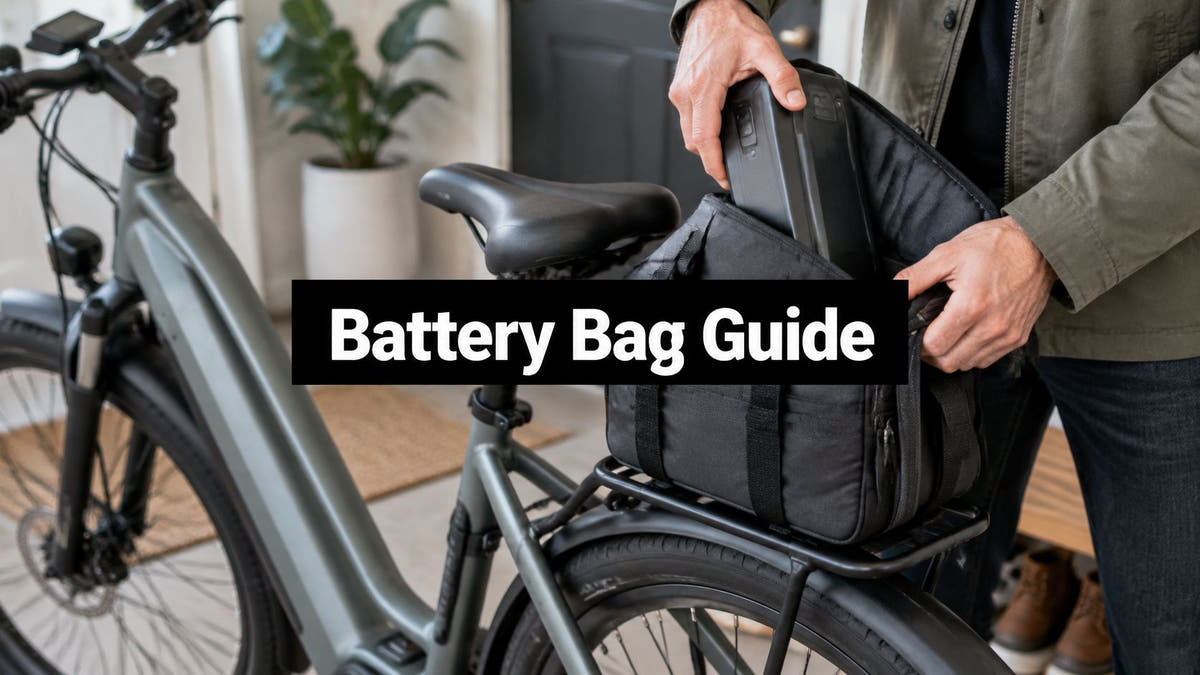
With a quick turn of a key and a simple lift, the battery—the heaviest and most valuable part of your bike—is in your hand. You can carry it inside and charge it at your desk, on your kitchen counter, or wherever you’ve got a spare socket.
This is a huge deal for a few reasons:
- Effortless Charging: Forget trying to find a plug socket near where you’ve parked your bike. Now, any standard outlet is your personal charging station.
- Enhanced Security: Locking your bike up outside feels a lot less stressful when you’ve taken its "engine" with you. It’s a massive deterrent for thieves.
- Increased Lifespan: Keeping your battery indoors shields it from the blistering heat of a Florida summer or the chilly nights of a Melbourne winter, which helps keep it healthy and last longer.
In this guide, we'll break down everything you need to know about your e-bike's removable battery. You'll get practical, real-world advice to help you make the most of every single ride.
Why a Removable Battery Changes Your Ride

Let's get right into the practical, day-to-day reasons why an e bike removable battery isn't just a nice-to-have feature—it's a total game-changer for most riders. This is all about solving the real-world headaches that can sour your love for riding an e-bike.
Picture this: you live in a walk-up apartment in NYC or an apartment complex in Brisbane. The idea of lugging a heavy e-bike up all those stairs every single day is, frankly, exhausting. But with a removable battery, that problem disappears. You just pop out the power pack, which is way lighter, and carry it inside with ease.
It's this simple ability to detach the battery that unlocks a level of freedom and pure convenience that riders with integrated batteries can only envy.
The Power of Portability and Security
The most obvious win is how easy charging becomes. You can top up your battery at your desk at work, on your kitchen counter at home, or really anywhere with a normal plug socket. You're no longer chained to finding a secure parking spot right next to an outlet.
Security gets a huge boost, too. Let's be real: an e-bike's battery is its most expensive part and the number one thing thieves are after. When you lock up your bike on a busy street, you can take its "engine" with you. Suddenly, your bike is a much less attractive prize.
A locked bike frame is one thing, but a bike frame without its power source is just dead weight to a potential thief. Taking your battery is the single best security measure you can take.
Even basic maintenance gets simpler. Cleaning your bike is far easier (and safer!) when you can pull the battery off first. You can wash the frame without constantly worrying about soaking sensitive electronics and connection points.
Unlocking Longer Adventures
Here’s where things get really fun: a removable battery means you can instantly extend your range. If you love long weekend rides along the California coast or have a monster commute across Sydney, carrying a spare battery is like having an extra fuel tank.
Instead of nervously watching your battery meter and cutting a trip short, you can just swap in a fresh battery in under a minute. That’s it. You've just doubled your riding distance, turning a 25-mile-range bike into a 50-mile explorer.
This kind of flexibility is a big reason why the market has shifted. The move toward removable lithium-ion batteries has been huge for urban commuters using brands from Punk Ride LLC, like ENGWE or ELEGLIDE. While clunky lead-acid batteries powered over 80% of e-motorcycles back in 2019, things have changed fast. By 2023, lightweight Li-ion batteries were in 60% of electric motorcycles, mostly because they're more efficient and designed to be easily removed. You can dig deeper into data on the e-bike market's evolution and see what it means for riders today.
Removable vs Integrated E-Bike Batteries
Okay, so let's put the two main styles head-to-head to make the choice crystal clear. Integrated batteries definitely win points for their sleek, hidden look. But when it comes to the daily grind, the practical perks of a removable battery often make it the smarter choice for urban riders in the US and Australia.
This table breaks down the key differences.
| Feature | Removable Battery | Integrated Battery |
|---|---|---|
| Charging Convenience | Excellent – Charge anywhere indoors. | Limited – Bike must be near a power outlet. |
| Security | High – Remove the most valuable part. | Lower – The entire bike is a target. |
| Range Extension | Easy – Carry and swap a spare battery. | Not Possible – Must stop to recharge. |
| Maintenance | Simpler – Easier and safer frame cleaning. | More Complex – Electronics are fixed to the frame. |
| Aesthetics | Utilitarian – Often mounted externally. | Sleek – Seamlessly hidden in the frame. |
While a bike with an integrated battery might look a bit cleaner, a removable one gives you real-world advantages in charging, security, and range that are hard to ignore for anyone who relies on their e-bike every day.
Maximizing Your Battery's Lifespan and Performance

Think of your e bike removable battery like the engine in a high-performance car. It’s the heart of your ride, and with just a little TLC, it'll keep running smoothly for years. Developing a few simple habits can make a huge difference in how many miles you get, protecting your investment and keeping you happily on the road.
The absolute worst enemies for a healthy battery are extreme temperatures. Lithium-ion cells really don't like being too hot or too cold—it can permanently damage their ability to hold a charge. Leaving your battery to bake in a car during an Arizona summer or letting it freeze in an unheated garage on a cold winter night is a surefire way to kill its performance.
The trick is to always store and charge your battery in a dry place at room temperature. The sweet spot is somewhere between 15°C and 25°C (60°F and 78°F). This one simple step will add some serious life to your battery.
Smart Charging and Storage Habits
If there's one "golden rule" to learn, it's about storage. If you know you won't be riding for a few weeks, never leave the battery sitting at 100% or totally empty. The goal is to aim for a partial charge.
For long-term storage, the magic number is somewhere between a 40% and 80% charge. This takes a lot of stress off the battery’s internal cells, preventing the kind of damage that happens when it's left completely full or dead for a long time.
This little habit alone can dramatically extend your battery’s overall lifespan. On that same note, try to avoid the habit of running your battery completely flat on every single ride. Regularly draining it all the way to zero will wear it out much faster.
Here are a few more quick tips for daily care:
- Use the Right Charger: Stick with the charger that came with your e-bike. It's a no-brainer. Using a cheap knock-off or a third-party charger can lead to incorrect voltage and might lack critical safety features, which is a genuine fire risk.
- Don't Overcharge: Most modern chargers are smart enough to shut off automatically, but it's still good practice to unplug the battery once it hits 100%.
- Charge After Riding: Try to get into the habit of topping up your battery after a ride. That way, it’s always ready to go for your next adventure.
Simple Maintenance Checks
You don't need to be an expert mechanic to keep your battery in great shape. A little bit of attention every now and then goes a long way. This includes ensuring your home's electrical setup is safe and efficient, and for any complex needs, it's wise to consult a professional EV charger installation electrician.
Once a month or so, just take a quick look at the battery's connection points. You want to keep the metal contacts on both the battery and the bike frame clean and dry. A quick wipe with a clean, dry cloth is usually all it takes to guarantee a solid connection and keep the power flowing efficiently.
For a much deeper dive, you can learn more about extending your electric bike battery life right here in our detailed guide.
How to Choose the Right Removable Battery E-Bike
Shopping for an e-bike with a removable battery can feel a bit like learning a new language. You’re suddenly bombarded with specs like Volts (V), Amp-hours (Ah), and Watt-hours (Wh). What does it all mean for your actual ride? Don't worry, getting a handle on these key numbers is the secret to choosing a bike that feels like it was made just for you.
Think of it this way: not all fuel tanks are the same size. A small city car doesn't need the massive tank of a long-haul truck, and the same logic applies to your e-bike. Understanding these specs helps you pick the right "fuel tank" for how you ride.
Decoding the Numbers That Matter
Let's break down the three most important battery metrics you'll come across. Getting these right means you won't overpay for a massive battery you'll never drain or, worse, end up with one that dies halfway through your commute.
- Volts (V): This is basically the "horsepower" of your bike. A higher voltage, like a 48V system, generally delivers more power and punchier acceleration. It’s fantastic for tackling the steep hills of San Francisco. For flatter urban areas, a 36V system is usually plenty.
- Amp-hours (Ah): Think of this as the "stamina" or how long the battery can sustain that power. A higher Ah rating means the battery can deliver a steady current for a longer time before it needs to be topped up.
- Watt-hours (Wh): This is the big one—the total size of your fuel tank. You get this number by multiplying Volts by Amp-hours (V x Ah = Wh). A higher Wh number, like the 500Wh to 750Wh batteries found on many DUOTTS or CYSUM bikes, means you can ride for more miles on a single charge.
The sheer convenience of an e bike removable battery is also a huge reason the market is exploding. These pop-out designs are making high-performance rides from brands like HITWAY and DUOTTS at Punk Ride LLC way more practical for everyday commuters. The global e-bike battery market was valued at $1,725.73 million in 2021 and is projected to hit an incredible $11,590.6 million by 2033. This boom is directly tied to modular batteries that let riders double their range in a snap. You can find more details on this growth in the e-bike battery market.
Matching the Battery to Your Ride
So, how do you pick the right one? It’s all about being realistic about what your daily ride looks like.
For a short, flat commute of about 5-10 miles, a smaller 300-400Wh battery is likely more than enough. However, if you're facing long distances, steep hills, or plan on leaning on the throttle a lot, you'll want to aim for 500Wh or more to avoid that dreaded range anxiety.
Finally, always, always check for safety certifications. This is a non-negotiable. Look for UL certification in the US or RCM marking in Australia. These marks mean the battery has passed rigorous safety tests, protecting you from potential hazards. After all, the battery is the heart of your ride, so making sure it's safe is just as important as how far it can take you. You can find more tips in our complete guide on electric bike chargers.
Navigating Travel and Regulations with Your E-Bike Battery
Having an e-bike with a battery you can pop right off is a game-changer for convenience. But that freedom comes with a few ground rules, especially when you want to travel or figure out what to do with it long-term. Knowing the ropes here will save you from some serious headaches down the line.
The first question I always get is about flying. Let's just get this out of the way: you cannot fly with your e-bike battery. It’s a hard no. Airlines in the US, Australia, and worldwide classify them as dangerous goods because of their high capacity, so they're banned from both carry-on and checked luggage.
Travel Alternatives and Disposal Rules
So, does that mean your e-bike can't come on holiday? Not at all. The simplest workaround is just to rent a compatible battery when you get to your destination. You'd be surprised how many bike shops in popular spots across the US and Australia offer this service. It’s a far easier option than trying to ship your own.
If you’re thinking about buying a bike from another country, you'll also need to be aware of local laws. For instance, there are specific regulations for importing e-bikes into Canada that cover the bike's power source. Always do your homework first.
This chart breaks down the thought process for picking the right e-bike, focusing on what really matters: your range needs, the terrain you'll be riding, and what you're willing to spend.
 Thinking through these points ensures you don't end up with a bike that can't handle your daily commute.
Sooner or later, every battery gives up the ghost. When that day comes, you have to dispose of it responsibly. And I don't just mean it's a good idea—it's often the law. Never, ever just toss an old e-bike battery in the household trash.
Lithium-ion batteries are full of materials that can be pretty hazardous. They're a fire risk in garbage trucks and landfills, and they're terrible for the environment. Recycling them is a must.
Your best bet in the US or Australia is to find a dedicated e-waste recycling center. In the US, stores like Best Buy or dedicated programs like Call2Recycle can help. In Australia, check with your local council or programs like B-cycle for drop-off locations. Taking care of this final step is a crucial part of owning an e bike removable battery. Until you're ready to recycle it, make sure you know how to store lithium batteries safely.
The Future of E-Bike Power is All About Swapping
Having an e bike removable battery is already a huge plus, but it's just the start. The real game-changer for getting around town is the rise of battery-swapping networks and smarter, modular bike designs.
Picture this: you're cruising across the city, and your battery light starts blinking. Instead of cutting your trip short and heading home to plug in, you just pull up to a streetside kiosk, pop out your drained battery, and slot in a fully charged one. The whole process takes seconds.
This isn't some far-off fantasy. We've already seen this model work wonders with shared e-scooters, and it's quickly becoming a reality for personal e-bikes. This idea of seamless, on-the-go power completely flips the script on how we think about range and charging. It kills the wait time and makes e-bikes an even more practical stand-in for cars on our daily trips. Brands like ISCOOTER and EVERCROSS are already building bikes with this flexible future in mind.
Plugging Into a City-Wide Power Grid
This forward-thinking approach is poised to completely reshape urban travel. The growth of battery-sharing programs fits perfectly with our mission at Punk Ride LLC to make electric rides easy and eco-friendly. As more cities get on board with these systems, the need for tough, high-capacity swappable batteries is going through the roof.
The e bike removable battery isn’t just about personal convenience anymore. It’s the key that unlocks a shared, city-wide power network, making electric travel easier and more efficient for everyone.
And the numbers definitely back this up. The global electric bike battery market was valued at $18.90 billion in 2025 and is on track to hit a staggering $55.04 billion by 2034.
This massive growth is being driven by the shift towards flexible, swappable power. You can read more about the future of the e-bike battery market and see just how big this is getting. At the end of the day, this revolution proves that a removable battery isn't just a feature—it's your ticket to true freedom in the modern city.
Got Questions? We've Got Answers
We get it—diving into the world of e-bike batteries can bring up a few questions. It’s a clever bit of tech, but a little clarity goes a long way. Here are the straight-up answers to the things we hear most often from riders just like you.
What Should I Do If My Battery Gets Wet?
First off, don't panic. E-bike batteries are built to be water-resistant, which means they can handle a typical downpour without any drama. They aren't fully waterproof, though.
If your battery gets a proper soaking, the first step is to take it off the bike. Grab a dry cloth, wipe it down thoroughly, and then let it air dry at room temperature for a good few hours. Whatever you do, don't even think about plugging it in or putting it back on the bike until you're certain it's completely dry. And please, never use a hairdryer or radiator to speed things up—that can cause serious damage.
How Long Does an E-Bike Battery Typically Last?
A good quality lithium-ion battery will usually give you 3 to 5 years of solid performance. In terms of charging, that works out to somewhere between 500 and 1,000 charge cycles. A "charge cycle" is just one full drain and recharge.
It’s a bit like your phone's battery—over time, its ability to hold a full charge will naturally start to fade. The good news is you can get the most out of it by following some simple rules. Try to avoid extreme heat or cold, and don't leave it sitting around completely empty or fully charged for weeks on end. Little habits like that really do extend its lifespan.
Can I Use a Different Brand of Battery on My E-Bike?
This is a big one, and the short answer is almost always no. Think of your e-bike's battery, motor, and controller as a perfectly matched team. They're all designed by the manufacturer to communicate and work together seamlessly.
Trying to slot in an off-brand battery isn't just a bad idea—it’s a massive safety risk. It can wreck your bike's electronics, give you terrible performance, and, most importantly, create a very real fire hazard. Stick with the battery that was made for your bike, every single time.
What Is the Average Cost of a Replacement Battery?
The price tag on a new battery can swing quite a bit, mostly depending on the brand and its capacity (measured in Wh). For most commuter e-bikes in the US and Australian markets, you’re looking at a cost of anywhere from $400 to over $900 USD.
It's definitely an investment, but swapping in a fresh battery can make your bike feel like it just rolled off the shop floor, bringing back all that original power and range.
Ready to feel the freedom that a top-notch e-bike with a removable battery gives you? Check out the amazing lineup of electric bikes and scooters from the best brands over at Punk Ride LLC. Your perfect ride is waiting to completely change your commute.
Share:
Your Guide to How to Fold Electric Scooter Models with Ease
The Ultimate Guide to Finding the Perfect E Bike Bags