


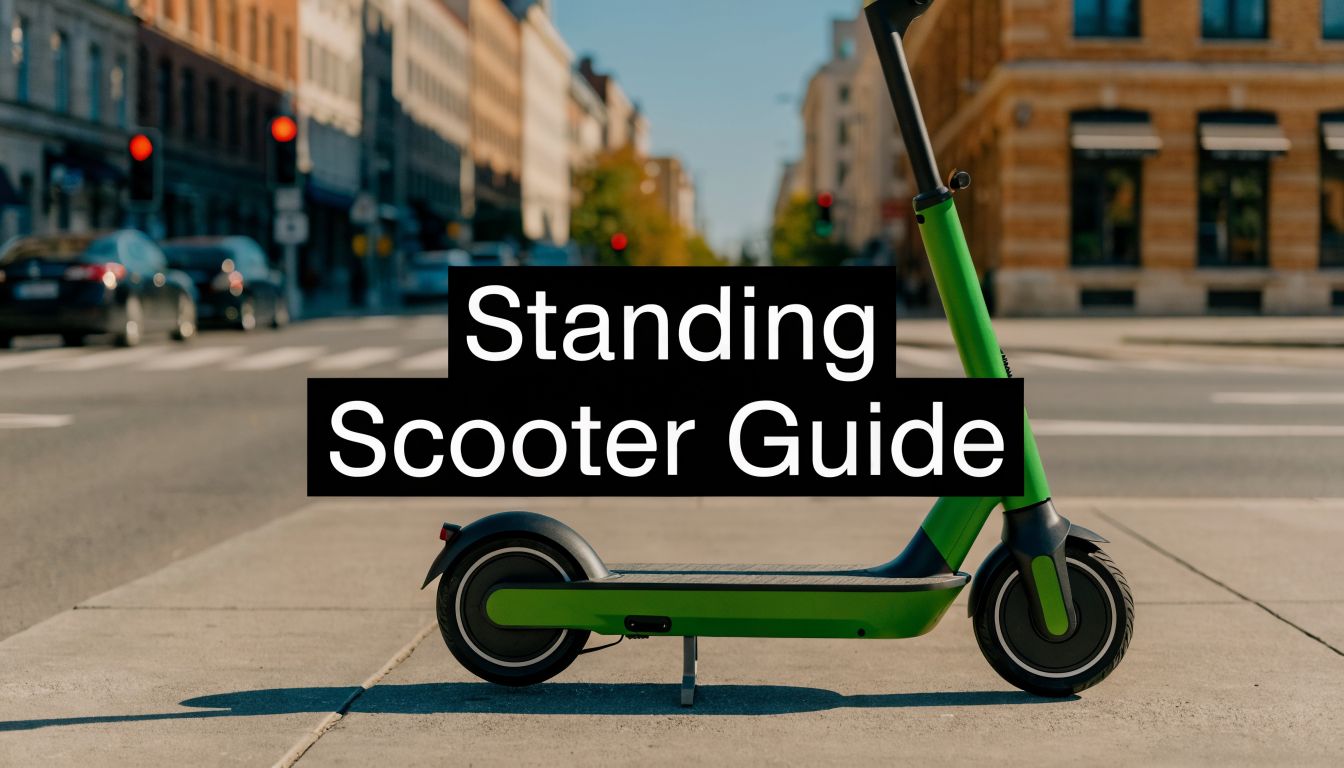
You’re probably here because your usual trip has started to feel ridiculous. The car sits in traffic. Parking eats time and money. The bus or train gets you close, but not close enough. Then you spot someone gliding past on a standing up scooter and think, “That looks like the smart move.”
That instinct makes sense. For short city hops, campus runs, waterfront rides, and that awkward last stretch between public transport and your destination, a standing scooter can feel less like a gadget and more like a missing piece in your week. In the US and Australia especially, riders often want something simple: easy to hop on, easy to store, and fun enough that the trip itself stops feeling like a chore.
If you’re buying your first one, the hard part isn’t wanting a scooter. It’s figuring out what matters, what’s hype, how to stand properly, and what local rules might catch you out. Let’s make that part easy.
The Urban Commute is Changing Fast
A standing up scooter usually enters the story at a very ordinary moment. You’re late, the road is blocked, the car park is full, or your train drops you a bit too far from work, class, or the café where you said you’d meet someone ten minutes ago.
That’s why so many riders don’t start with “I want a tech toy.” They start with “I need a better way to get around.” In Los Angeles, Tampa, Brisbane, Melbourne, or Sydney, the details change, but the problem feels familiar. Cities are busy, distances are often just a little too long to walk comfortably, and people want something more flexible than waiting around for the next bus.

What’s changed is that scooters have moved from novelty to normal transport. The standing electric scooter market is projected to grow at a CAGR of over 8%, and in the US, shared e-scooter schemes more than doubled from 2018 to 2021. By 2024, approximately 8% of Americans reported owning a private e-scooter, and 78% of shared trips covered under 2 miles, according to current electric scooter market statistics and projections.
Why short trips matter most
That under-two-mile pattern tells you something important. Scooters shine in the exact distance where cars feel wasteful and walking feels slow. They fit the inherent shape of urban travel.
A few common examples:
- The train station gap: You get off public transport, but your office is still a frustrating walk away.
- The campus dash: Lectures, labs, and student housing can be spread all over the place.
- The local errand run: Coffee, groceries, pharmacy, gym. None are far, but together they eat a chunk of your day.
Practical rule: If your regular trips are short, repeated, and urban, a standing up scooter usually makes more sense than people expect.
Why riders in the US and Australia care
US riders often deal with spread-out suburbs, wide roads, and parking headaches. Australian riders often think in terms of mixed commutes, especially where ferries, trains, and urban cycle paths shape daily travel. In both places, convenience matters as much as speed.
A good scooter doesn’t just move you. It cuts friction out of your day.
Anatomy of a Modern Standing Scooter
The easiest way to understand a standing up scooter is to stop thinking of it as one mysterious machine. It’s really a few simple parts doing clear jobs.

The parts you feel first
The deck is your standing platform. If it’s too short or narrow, your feet feel cramped. If it’s roomy and grippy, you relax almost immediately.
The handlebars are your steering point and your main contact with the scooter apart from your feet. They house your throttle, brake levers, and often a display. If the bar height feels off, your wrists, shoulders, and back will let you know fast.
The frame is the skeleton. You won’t think about it much while shopping at first, but frame stiffness affects how planted the scooter feels over rough surfaces.
The parts that make it move
The battery is the fuel tank, except it stores electricity instead of petrol. It determines how much energy the scooter has available for your ride.
The motor is the engine. It turns stored battery power into motion. More motor power usually means stronger pull off the line, better hill ability, and less strain when the rider is heavier or the route is less forgiving.
A lot of beginners confuse battery and motor. A simple way to separate them is this:
- Battery: How much energy the scooter can carry
- Motor: How strongly the scooter can use that energy
- Controller: The hidden traffic manager that decides how power gets delivered
The parts that keep you upright and comfortable
The brakes are obvious, but they’re also one of the first things I tell new riders to test seriously. You want braking that feels predictable, not grabby and not vague.
The tires matter more than most spec sheets make obvious. Air-filled tires usually feel smoother and give more grip, while solid tires often appeal to riders who don’t want to worry about punctures.
The lights help you see and be seen. Even if you don’t plan to ride at night, dusk arrives quicker than people expect.
A scooter that looks fast on paper can still feel awkward if the deck is cramped, the bars are low, and the ride is harsh.
A simple shop-floor test
When you’re checking any model, stand on it before you obsess over the display.
Ask yourself:
- Do my feet fit naturally?
- Can I bend my knees without hunching?
- Do the bars meet my hands, or am I reaching down to them?
- Does the scooter feel stable when I shift my weight?
Those basic fit questions often matter more to a first-time buyer than flashy extras.
Decoding Key Specs for Your First Scooter
Spec sheets can look more complicated than they are. The trick is to translate every number into a riding outcome. Don’t ask, “Is this spec impressive?” Ask, “What will this feel like on my route?”
Motor power and why it changes everything
Motor power is one of the few specs that deserves your attention right away. A 250 to 350W motor might reach about 15 to 20 mph on flat ground, while an 800 to 1200W motor, often paired with a 48V battery, can sustain 25 to 30 mph even on moderate inclines, according to this guide to stand-up scooter speed and performance.
That matters because real riding isn’t done on a perfect flat test strip. You hit hills, carry a backpack, deal with headwinds, and sometimes start from a dead stop at a crossing.
A useful way to think about it:
- Lower power: Fine for lighter riders on flatter routes
- Mid power: Better for mixed city riding
- Higher power: More comfortable if you want stronger acceleration or regular hill support
Battery, weight, and ride feel
Battery size affects how long you can ride before charging, but brands often describe range in ideal conditions. Your actual result depends on rider weight, terrain, speed, stop-start traffic, and weather.
Scooter weight matters just as much as battery if you live upstairs, combine your scooter with trains, or need to lift it into a car boot. The most exciting scooter in the shop can become annoying if it feels like dead weight every time you carry it.
Then there’s tire type. This changes comfort more than many beginners expect. Air-filled tires usually soften bumps and help with grip. Solid tires reduce puncture worries but can feel firmer on rough streets.
Scooter Specs at a Glance by Rider Type
| Rider Profile | Ideal Motor Power (Watts) | Typical Range | Best For |
|---|---|---|---|
| Student on flat campus routes | 250 to 350W | Short to moderate daily trips | Paths, local errands, simple commuting |
| City commuter with mixed terrain | 800 to 1200W | Moderate to longer urban use | Hills, bridges, stop-start riding |
| Taller or heavier adult rider | 800 to 1200W | Moderate to longer urban use | Better pull, steadier performance |
| Weekend explorer | 800 to 1200W | Longer leisure rides | Waterfront paths, park links, broad urban riding |
What first-time buyers should prioritise
If this is your first scooter, start with fit and use case, not bragging rights.
- For short flat trips: A simpler motor setup may be enough.
- For hills or heavier loads: More motor power makes the ride less frustrating.
- For daily commuting: Look closely at deck space, tires, braking feel, and portability.
- For comfort: Don’t ignore bar height and stance room.
Shop advice: If you’re torn between “just enough power” and “a bit more than I need,” the slightly stronger scooter is often the one riders keep longer.
The best spec sheet is the one that matches your actual week.
How People Ride in the US and Australia
A standing up scooter means different things depending on where you live. In one place it’s a campus tool. In another it’s the missing link between a ferry and an office tower. Sometimes it’s just the easiest way to enjoy a shoreline without dealing with parking.

California campus life
A student in California might use a scooter less like a vehicle and more like a time saver. Big campuses and nearby housing can turn every day into a string of mini journeys. Walk them all, and your timetable starts to feel tight. Ride them, and suddenly grabbing lunch, making class, and heading to the library feels easier.
That rider usually wants something foldable, straightforward, and not intimidating. Fast enough to be useful. Light enough to live with.
Sydney and the mixed commute
In Sydney, a scooter often fits into a layered commute. Someone might ride from home to a transport stop, fold the scooter, take a ferry or train, then ride the last stretch to work. That’s where portability and quick setup matter more than raw speed.
You also see a strong leisure angle. Urban rides aren’t always about work. They’re about slipping out for coffee, meeting friends, or cruising a waterfront path when the weather’s too good to waste in traffic.
Florida and coastal riding
A retiree or weekend rider in Florida might care most about comfort and ease. The route could be a local promenade, a coastal path, or a string of short neighbourhood trips where the car feels excessive.
For that rider, confidence matters. A stable deck, sensible braking, and an easy standing position make the scooter feel welcoming rather than twitchy.
The same scooter category can serve three very different lives. Commuter, campus shuttle, or weekend cruiser.
Why culture changes what buyers want
US riders often ask about speed, carrying distance, and how a scooter handles spread-out urban layouts. Australian riders often focus on practical integration with daily transport and route rules in their state or territory.
That’s why there isn’t one universal “right” standing up scooter. The right one is the model that fits how, where, and why you ride.
Navigating Safety and Local Scooter Laws
This is the part too many buyers skim. Don’t.
A standing up scooter is fun, but it’s still a road and path vehicle with real consequences when things go wrong. New riders sometimes treat safety gear like an optional accessory. It isn’t.
A study of e-scooter injuries found that falls caused 80.2% of rider injuries, only 4.4% of injured riders were wearing a helmet, and there were over 110 fatalities nationwide from 2017 to 2022, according to research on e-scooter emergency injuries and fatalities.
What that means in plain language
Many riders don’t get hurt because they were doing something dramatic. They get hurt because they lost balance, hit rough ground, braked badly, misjudged a corner, or rode when they were distracted.
Wear the helmet. Start there every time.
Then add the habits that prevent the small mistakes that turn into emergency room visits:
- Check your route first: Rough pavement, tram tracks, wet leaves, and driveway lips can all upset a scooter.
- Brake early: Scooters feel nimble, but quick stops can still throw your weight forward.
- Slow down in shared spaces: Pedestrians are unpredictable because they’re human.
- Stay visible: Lights help, but bright clothing and smart positioning help too.
The law is local, not universal
US and Australian buyers often get frustrated. There isn’t one neat rulebook.
In the US, laws can vary by state and city. In Australia, rules can differ by state or territory, and local enforcement can shape what riders experience on the ground. That means things like where you can ride, whether helmets are mandatory, and which devices are road-legal may change depending on where you are.
For a practical overview, it’s worth checking this guide to electric scooter laws by location before you buy or ride.
Special event riding needs extra care
Crowded weekends, festivals, and waterfront events create the exact conditions where bad decisions pile up fast. If you’re in Florida and wondering how public safety concerns show up around big celebrations, this injury lawyer's take on Gasparilla scooters gives useful local context on risk, crowds, and rider responsibility.
Safety starts before the ride. The helmet, the route choice, and the legal check all happen before the throttle does.
A scooter is only convenient when you can ride it responsibly and lawfully.
Pro Riding Stances and Easy Maintenance
Most beginner guides stop at “put one foot forward and bend your knees.” That’s not wrong. It’s just incomplete.

A standing up scooter feels completely different when your stance fits your body. That matters even more if you’re tall, have stiff knees, or plan to ride longer distances.
The two main stances
The staggered stance is the one most riders learn first. One foot stays forward, the other sits behind at a slight angle. It feels natural because it mirrors surfing, skateboarding, and kick scooter posture. It’s a strong default for many riders, especially when accelerating or braking.
Then there’s the forward-facing stance seen in some newer designs, where your feet are more parallel and your body points straight ahead. One cited comparison suggests this setup can lower a rider’s center of gravity by up to 15%, and a 2025 EU survey found 35% of riders aged 40 to 65 reported posture-related pain, according to this discussion of forward-facing scooter design and rider ergonomics.
That doesn’t mean everyone should abandon the classic stance. It means body comfort deserves more attention than it usually gets.
How to stand better right away
Try this simple setup on your next ride:
- Front foot first: Place it near the front half of the deck, not jammed against the stem.
- Back foot relaxed: Don’t force a dramatic sideways angle.
- Soft knees: Keep a gentle bend so your legs absorb bumps.
- Loose arms: Don’t death-grip the bars.
- Eyes ahead: Looking too close to the front wheel makes you ride tense.
If you’re taller, low bars are often the main problem. You end up folding yourself over the scooter, which loads your wrists and lower back. If the scooter allows adjustment, raise the bar to a position where your elbows stay slightly bent and your shoulders can stay relaxed.
A quick look at body position in motion
This short video gives a helpful visual reference for beginner body positioning and balance cues.
Easy maintenance that prevents annoying problems
You don’t need to be a mechanic. You just need a routine.
- Tires first: Check them regularly because tire condition affects grip, comfort, and control. If you want a plain-English breakdown, this guide to tires for electric scooters is a useful starting point.
- Brakes: Squeeze them before every ride. They should feel consistent.
- Deck grip: Wipe dirt and grit off so your shoes stay planted.
- Bolts and folding latch: Give them a quick visual check.
- Lights and battery charge: Don’t discover either problem halfway through a trip.
Comfort check: If your wrists, knees, or back hurt every ride, don’t just “get used to it.” Change your stance, bar position, or route.
A well-set-up scooter feels calmer, safer, and more enjoyable. That’s usually what people mean when they say a scooter “just rides right.”
Find Your Perfect Ride at Punk Ride
By this point, the choice usually gets clearer. You’re not just buying a scooter. You’re choosing a routine.
If your rides are short and flat, you can keep things simple. If you’ve got hills, a taller frame, or a longer commute, you’ll want more motor support, more standing room, and a setup that won’t leave you cramped halfway through the week. If your route includes trains, ferries, or stairs, portability matters just as much as performance.
A lot of buyers also compare local pricing, model availability, and region-specific deals before committing. For Australian shoppers browsing the wider market, Cashback Australia Segway Ninebot deals can be a useful example of how people cross-check offers while narrowing down brands and budgets.
If lightweight portability is high on your list, this roundup of best lightweight electric scooters helps frame the trade-offs between easy carrying and everyday usability.
Punk Ride LLC offers a range of electric scooters from brands such as ISCOOTER, DUOTTS, ENGWE, EVERCROSS, and HITWAY, with operations based in Florida and additional warehouse support in the UK and Germany. For riders in the US, UK, EU, and nearby markets, that kind of footprint can make model browsing and fulfilment more practical.
The main thing is to buy for your real life. Your height. Your route. Your laws. Your comfort.
If you’re ready to choose a standing up scooter that fits the way you ride, take a look at Punk Ride LLC. You’ll find a broad mix of electric scooters and bikes for commuting, exploring, and everyday urban travel, with options that suit different rider sizes, priorities, and budgets.
Share:
User Experiences: Electric Bike and Scooter Enthusiasts' Tales
Join the Electric Two-Wheel Revolution Today!