


Har du någonsin sett någon susa uppför en brant backe på sin cykel utan att svettas, och tänkt, "Vad är deras hemlighet?" Chansen är stor att de cyklar en pedalassistans-eCykel.
Så, vad är det egentligen? Tänk på det som en vanlig cykel med ett smart hemligt vapen: en elmotor som ger dig en hjälpsam knuff, men endast när du aktivt trampar. Det är inte en motorcykel eller moped; du är fortfarande motorn.
Din introduktion till pedalassistans-eCyklar
Det enklaste sättet att föreställa sig en pedalassistans-eCykel är att tänka dig själv cykla med en konstant, magisk medvind i ryggen. Den finns där när du behöver den, gör branta backar lättare och förvandlar en lång pendling genom Los Angeles eller en blåsig tur längs Sydneykusten till en ren njutning.
Du får alla fantastiska delar av cykling—den friska luften, träningen, friheten—men utan den utmattande ansträngningen som ibland avskräcker folk. Det är designat för att lägga till din kraft, inte ersätta den. När du börjar trampa känner en sensor av din rörelse och signalerar motorn att kopplas in, vilket ger dig en jämn skjuts. Hela poängen är att hålla dig i rörelse samtidigt som det tar bort hinder som annars skulle hålla din cykel i förrådet.
Vad som gör det annorlunda
Den stora skillnaden här är att du måste vara en del av aktiviteten. Till skillnad från vissa gasreglage-eCyklar där du bara kan vrida på ett handtag och åka, behöver ett pedalassistanssystem att du trampar. Det kan verka som en liten detalj, men det förändrar allt.
- En naturlig åktur: Motorns hjälp smälter så smidigt ihop med din egen trampning att det känns som att du plötsligt fått superstarka ben.
- Håller dig aktiv: Du får fortfarande träning, vilket är fantastiskt för din hälsa. Faktum är att studier ofta visar att e-cykelåkare får mer motion eftersom de cyklar oftare och ger sig ut på längre äventyr.
- Juridiskt enkelt: I USA och Australien faller pedalassistans-eCyklar ofta in i en enkel juridisk klass (som Klass 1 i många amerikanska delstater), vilket gör dem lätta att cykla på cykelvägar och vägar utan att behöva ett särskilt körkort.
Ett pedalassistanssystem är som att ha en cykelpartner. Det gör inte jobbet åt dig; det arbetar med dig, vilket gör varje tramp mer effektivt och varje resa roligare.
Här är en snabb genomgång av de grundläggande idéerna bakom pedalassistans.
Pedalassistans i korthet
| Funktion | Hur det fungerar |
|---|---|
| Motoraktivering | Motorn kopplas bara in när du aktivt trampar. |
| Cyklistens engagemang | Du bidrar alltid med ansträngning, vilket gör det till en form av träning. |
| Typ av assistans | Systemet förstärker din trampkraft, det ersätter den inte. |
| Juridisk status (USA/AU) | Ofta behandlad som en vanlig cykel, passar in i specifika e-cykelklasser. |
Det här är bara startskottet. Att förstå vad en pedalassistans elcykel är hjälper, men att välja rätt för dig är nästa stora steg. För att försäkra dig om att din nya cykel passar perfekt i ditt liv, kolla in vår guide om hur du väljer en elcykel.
Hur kadens- och vridmomentsensorer fungerar
Så, hur vet en pedalassistanscykel egentligen när den ska hjälpa dig? Det är inte tankeläsning; allt handlar om sensorsystemet, som i princip är cykelns hjärna. Den här lilla tekniken talar om för motorn när den ska kopplas in och hur mycket kraft den ska ge. Det finns två huvudtyper du kan stöta på: kadenssensorer och vridmomentsensorer. De gör båda jobbet, men skapar helt olika känslor när du cyklar.
En kadenssensor är den mer okomplicerade av de två. Du kan tänka på den som en enkel av/på-knapp. Den brukar fungera med en liten magnet på pedalarmen och en sensor på ramen. Så fort du börjar trampa passerar magneten sensorn, som säger till motorn: "Hej, de trampar! Dags att köra!"
Den mäter inte hur hårt du trampar, bara att du trampat. Upplevelsen är lite som farthållare i en bil. Du väljer en assistansnivå, och så länge dina fötter snurrar runt får du det jämna stödet. Det är en perfekt lösning för avslappnad cruising på plan mark.
Den intuitiva känslan av en vridmomentsensor
Nu är en vridmomentsensor en helt annan sak. Den är mycket mer avancerad. Istället för att bara veta att dina pedaler rör sig, mäter den hur mycket muskelkraft du faktiskt lägger i varje tramp. Det är som att ha en smart assistent som förstärker din egen styrka.
Trillar du knappt på pedalerna för att komma igång? Motorn ger dig en mild knuff. Men när du når en rejäl backe och verkligen trampar på, känner sensorn av den extra kraften och säger åt motorn att matcha din insats med en kraftfull skjuts. Det gör att åkturen känns otroligt naturlig och responsiv.
Ärligt talat är hjälpen från en bra vridmomentsensor så mjuk att det ofta känns som att du plötsligt fått supermänskliga ben. Cykeln svarar helt enkelt på vad du gör, vilket gör att motorn känns som en naturlig förlängning av din kropp.
I grunden är hela idén ganska enkel. Du tar en cykel, lägger till en motor, och får en pedalassistans elcykel. Den här illustrationen visar den grundläggande, kraftfulla formeln.
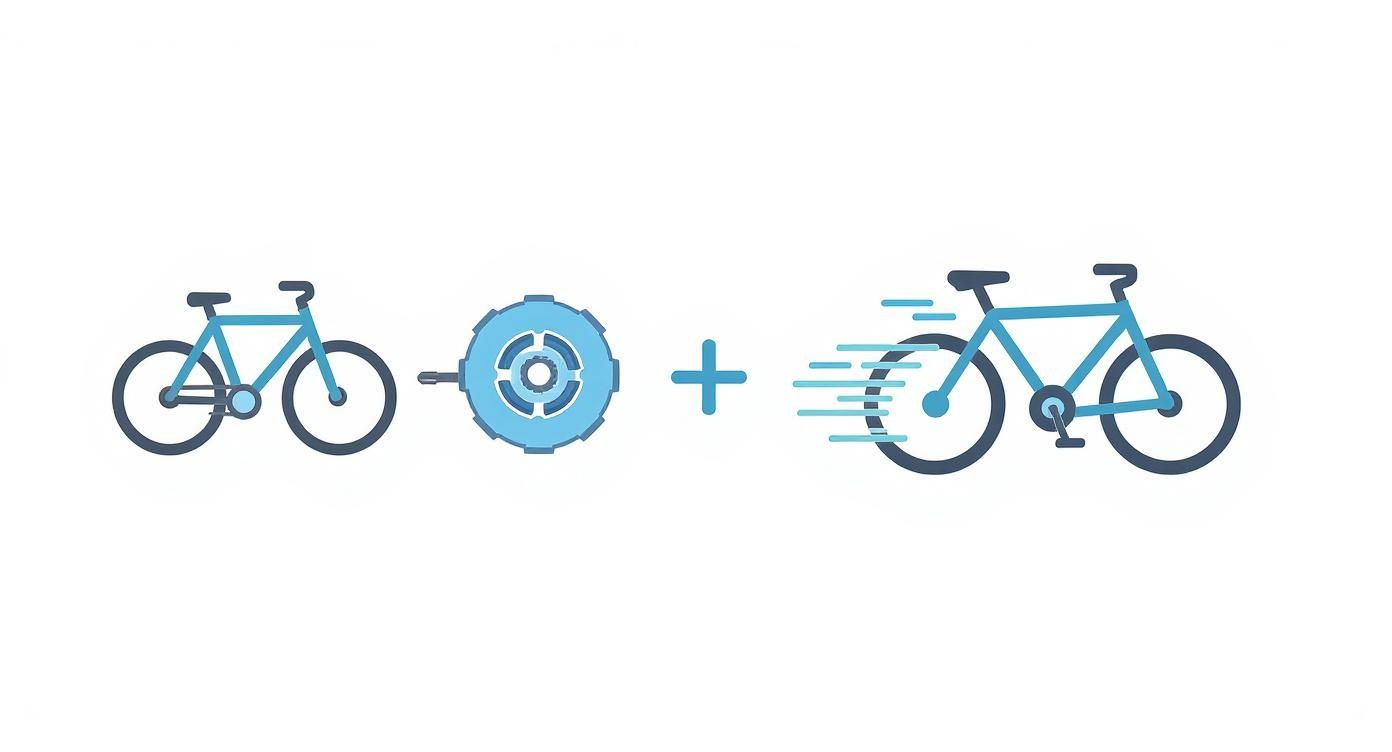
Den här bilden fångar verkligen den enkla men banbrytande kombinationen av en klassisk cykel och en elmotor.
Vilken sensor passar din cykel?
Så, kadens eller vridmoment? Det rätta svaret beror verkligen på vad du vill ha ut av din eBike. Det finns inget "bästa" val, bara det som passar din körstil och budget. Sensorn är en kritisk del av hela systemet, så det är värt att förstå den. Om du vill fördjupa dig ännu mer i hur dessa system är uppbyggda, kolla in vår guide till de bästa mid-drive elcyklarna, eftersom de ofta har dessa mer avancerade vridsensorer.
Här är en snabb sammanfattning för verklig körning:
- Kadenssensor: Perfekt för någon som bara vill ha en enkel, förutsägbar skjuts. Om din pendling mestadels är platt och du bara vill ha en jämn boost utan att behöva tänka på det, är ett kadensbaserat system ett stabilt och plånboksvänligt alternativ.
- Vridsensor: Detta är för cyklisten som längtar efter en responsiv, nästan telepatisk koppling med sin cykel. Om du tar dig an varierad terräng – från stop-and-go-trafik i staden till böljande landskap – levererar en vridsensor den dynamiska kraften precis när du behöver den.
Välja din perfekta effektnivå
En av de bästa sakerna med en pedalassistans-eBike är att du alltid sitter i förarsätet. Du styr mängden kraft du får med olika assistansnivåer, vanligtvis via en enkel display direkt på styret. Dessa inställningar, ofta märkta från Eco till Turbo, är inte bara för skojs skull – de förändrar helt din cykeltur.
Tänk på dem som olika växlar för din motor. Att lära sig att växla mellan dem snabbt är det verkliga knepet för att få ut det mesta av din cykel. Det är så du förlänger batteritiden mil efter mil och perfekt anpassar cykelns effekt till terrängen, din energinivå eller till och med bara hur du känner dig den dagen.
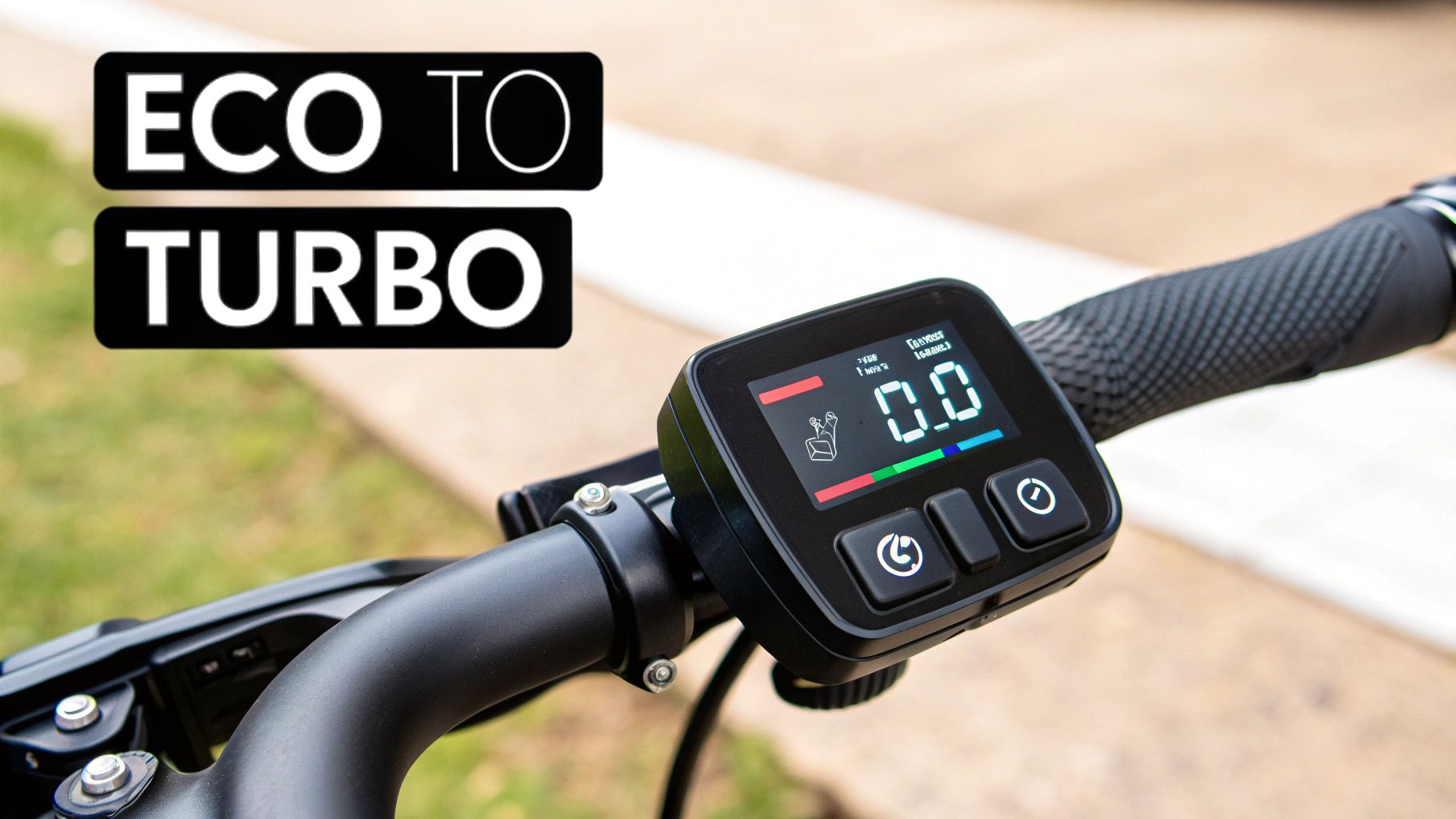
Denna förmåga att justera din boost är själva hjärtat i vad en pedalassistans-eBike är. Sedan det första verkliga pedalassistanssystemet utvecklades tillbaka 1993, har målet varit att ge cyklister anpassningsbar kraft. De flesta moderna cyklar har mellan tre och fem assistansnivåer, vilket låter dig bestämma exakt hur mycket hjälp du vill ha. Du kan fördjupa dig i historien och statistiken om eBikes på ebicycles.com.
Förstå de vanliga lägena
Även om namnen kan variera lite från ett märke till ett annat, är idén bakom effektnivåerna i stort sett universell. De erbjuder ett spektrum av assistans, från en mild viskning av hjälp till en fullständig kraftökning.
Här är lägena du nästan alltid hittar:
- Eco-läge: Det här är ditt långdistansläge. Det drar lite batteri genom att ge bara en subtil knuff, perfekt för en lång, platt tur när du vill maximera räckvidden eller få mer träning.
- Tour- eller Normalläge: Tänk på det här som ditt vardagsläge. Det ger dig en märkbar men balanserad boost som är perfekt för det mesta, som pendlingen eller en lugn tur med vänner. Det är den perfekta balansen mellan hjälpkraft och bra batteritid.
- Sport- eller Aktivt läge: Behöver du lite extra kraft? Här glänser Sport-läget. Det är fantastiskt för att ta sig an måttliga backar, hålla jämna steg med stadstrafiken eller kämpa mot en envis motvind.
- Turbo- eller Boost-läge: Det här är din superkraft. Turbo släpper lös allt motorn har, gör branta backar överraskande hanterbara och låter dig rusa iväg från trafikljusen. Använd det bara strategiskt, eftersom det är det mest batterikrävande läget.
Att bemästra dessa lägen handlar inte bara om att åka snabbare—det handlar om att cykla smartare. Att starta från stillastående i en lägre växel sparar energi, och att använda Turbo för en kort, brant backe är mycket mer effektivt än att kämpa uppför i Eco.
När du väl känner vad varje nivå kan göra har du full kontroll. Du kan pressa ut varje sista droppe räckvidd ur batteriet för ett episkt heldagsäventyr eller ta fram maximal kraft för att erövra den tuffaste delen av din tur. Den anpassningsförmågan är vad som gör pedalassistans-eBikes till otroliga verktyg för alla typer av cyklister.
Pedalassistans VS Gasreglage EBikes
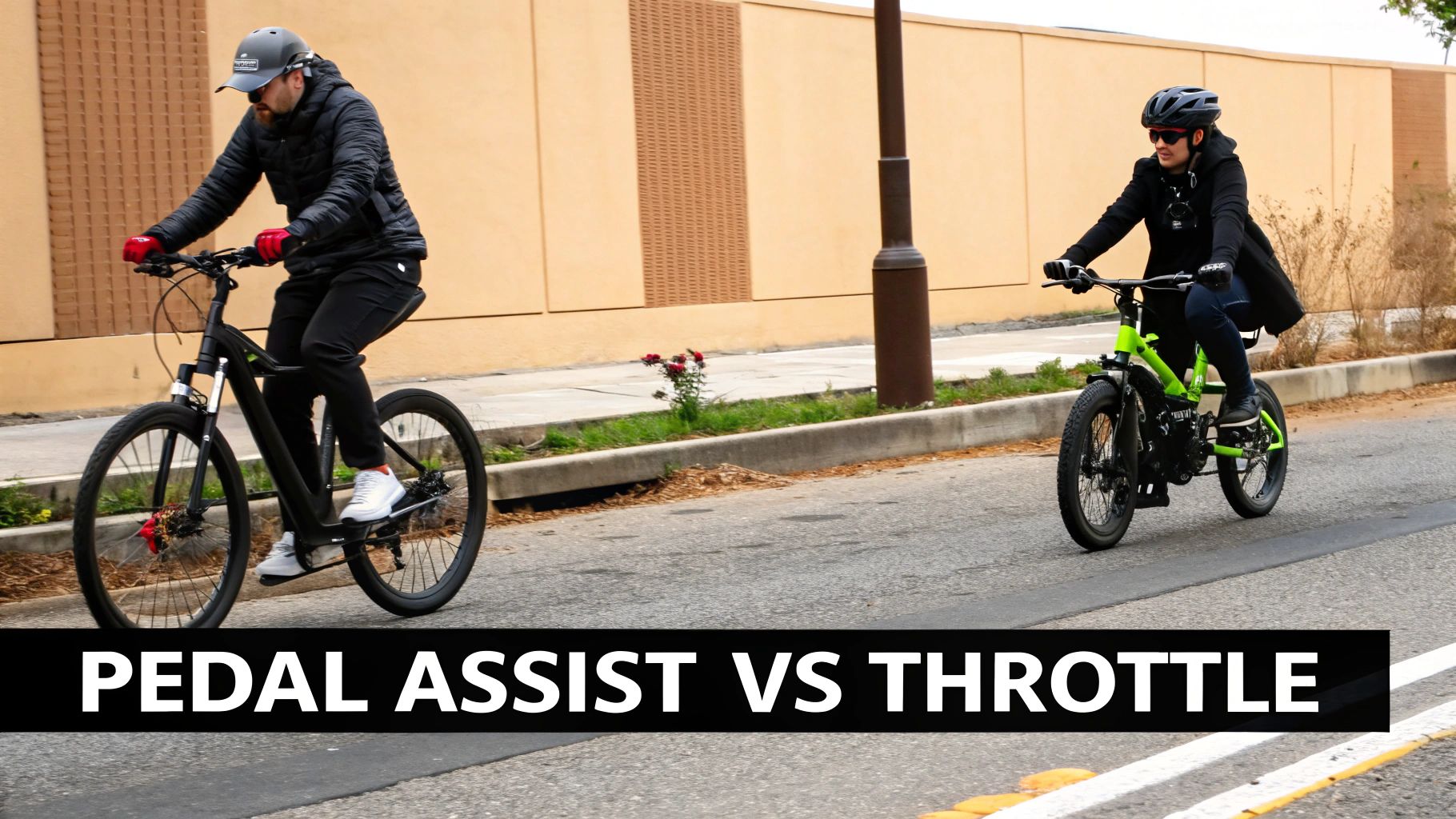
När du först börjar titta på eBikes är en av de största frågorna hela grejen med "pedalassistans vs. gasreglage". De låter lika, men skapar två helt olika cykelupplevelser. Att förstå skillnaden är avgörande för att välja rätt cykel—och för att se till att du cyklar lagligt där du bor, vare sig det är i USA eller Australien.
Låt oss börja med gasreglaget. En gasreglage-eBike fungerar ungefär som en scooter. Du vrider på ett handtag eller trycker på en liten spak, och—vissch—motorn startar och skjuter iväg dig. Du behöver inte ens trampa. Det är kraft på begäran, en omedelbar boost när du vill, utan någon ansträngning.
Nu är ett pedalassistanssystem en helt annan sak. Som vi har pratat om gör det dig till en aktiv del av cyklingen. Motorn hjälper dig bara när den känner att du trampar. Den ersätter inte din ansträngning; den förstärker den, så att du känner att du plötsligt har fått supermänskliga ben.
De grundläggande skillnaderna i upplevelse
Den där skillnaden – att trampa för att få en extra skjuts jämfört med att bara trycka på en knapp – förändrar allt med åkturen, från hur den känns till hur länge ditt batteri räcker.
Ett gasreglage ger dig en passiv upplevelse. Du kan bokstavligen bara sitta där och låta motorn göra 100 % av jobbet om du vill. Men med pedalassistans är du alltid med i spelet. Det är en aktiv, engagerande åktur som håller dig kopplad till cykeln.
Det här är en stor grej. Med pedalassistans, särskilt på en cykel med en bra vridmomentsensor, känns stödet du får helt naturligt och matchar hur hårt du trampar. Du arbetar med cykeln, inte bara sitter på den. Det känns inte bara mycket mer som äkta cykling, utan det betyder också att du faktiskt får motion.
Filosofin är enkel: En gasreglage förvandlar din cykel till en lätt moped. Pedalassistans håller din cykel som en cykel, bara en som får dig att må otroligt.
För att verkligen klargöra det, låt oss ställa dessa två system mot varandra på de saker som betyder mest.
Pedalassistans vs Gasreglage EBikes jämförda
Denna praktiska tabell bryter ner de viktigaste skillnaderna mellan de två systemen, med särskild uppmärksamhet på hur de vanligtvis klassificeras på marknader som USA och Australien.
| Funktion | Pedalassistans EBike | Gasreglage EBike |
|---|---|---|
| Körkänsla | Aktiv och intuitiv; känns som naturlig cykling men enklare. | Passiv och på begäran; fungerar som en scooter. |
| Träningsfördel | Hög. Du trampar alltid och får konsekvent skonsam motion. | Låg till ingen. Ingen trampning krävs för att aktivera motorn. |
| Batteriräckvidd | Generellt längre. Effekten används mer effektivt eftersom den kompletterar din insats. | Generellt kortare. Att förlita sig enbart på motorn tömmer batteriet snabbare. |
| Juridisk status (USA/AU) | Faller ofta in i enklare klasser (som Klass 1 i USA) med bredare tillgång till cykelvägar. | Faller ofta in i olika klasser (som Klass 2/3 i USA) med fler begränsningar. |
Så, vad blir domen? Det handlar egentligen om vad du letar efter.
Om du vill ha en cykel som hjälper dig att ta dig uppför backar, förlänga dina äventyr och få lite motion, samtidigt som du njuter av bred tillgång till cykelvägar och stigar, då gör förståelsen av vad en pedalassistans eBike är den till det självklara valet för de flesta cyklister i USA och Australien.
Så, vi har pratat om tekniken, men vad betyder allt detta för dig, cyklisten? Varför överger så många sina bilar och gamla cyklar för en pedalassistans eBike? Sanningen är att det handlar mindre om sensorerna och motorerna och mer om hur dessa cyklar helt enkelt gör livet bättre.
De gör cykling praktiskt, tillgängligt och ärligt talat, mycket roligare.
Låt oss börja med den mest uppenbara vinsten: backarna. Du vet den där – den själsdödande lutningen på väg till jobbet som får dig att ifrågasätta alla dina livsval. Ett pedalassistanssystem förändrar helt spelet. Det förvandlar den svettiga, andfådda kampen till en smidig, nästan ansträngningsfri klättring. Du kommer till kontoret full av energi, inte som om du behöver en andra dusch.
Cykla tillsammans, håll ihop
Pedalassistans är också den ultimata förenaren. Den jämnar ut spelplanen, så att vänner och familjer med olika konditionsnivåer äntligen kan cykla tillsammans utan drama. Den supertränade cyklisten kan sänka assistansen eller stänga av den helt, medan någon annan kan höja den för att enkelt hålla tempot.
Plötsligt är en cykeltur inte en tävlingssport; det är ett gemensamt äventyr. Alla kan njuta av utsikten och samtalet i en bekväm takt. Helgresor och semesterturer blev precis mycket roligare för hela gruppen.
Bra för din kropp och din plånbok
Även med motorns hjälp trampar du fortfarande. Det betyder att du får en fantastisk lågintensiv träning varje gång du cyklar. Genom att ta bort det värsta av de riktigt tuffa delarna minskar pedalassistansen belastningen på dina leder och muskler, vilket gör det till en vana du faktiskt kan hålla fast vid på lång sikt.
Och siffrorna ljuger inte. Den globala marknaden för pedalassistans-ebikes värderades nyligen till omkring 15 miljarder dollar. Experter förutspår att den kommer att explodera till nästan 40 miljarder dollar år 2033, med över 35 miljoner av dessa cyklar sålda varje år. Folk hänger med, letar efter grönare sätt att ta sig runt och undvika smärtan av höga bensinpriser. Du kan gräva i statistiken själv med dessa marknadsrapportanalyser.
Trampassistans tar inte bort ansträngningen; den tar bort hindren. Det är svaret på backarna, motvinden och de långa avstånden som brukade få dig att lämna cykeln i garaget.
När man sammanfattar allt öppnar dessa cyklar helt enkelt upp din värld. Här är en snabb genomgång av de bästa delarna:
- Pendling gjort enkelt: Kom fram till din destination fräsch, inte andfådd. Backar och motvind är inte längre ett problem.
- Cykla med vem som helst: Det är den perfekta lösningen för grupper med blandade konditionsnivåer. Ingen blir lämnad eller tappad.
- En träning som varar: Få alla fördelar med ett utmärkt lågintensivt konditionspass som är skonsamt för dina leder, så att du vill cykla oftare.
- Spara riktiga pengar: Lämna bilen för korta resor och se besparingarna på bensin, parkering och underhåll växa.
- Gå grön: Minska ditt koldioxidavtryck drastiskt genom att välja ett rent, effektivt alternativ för att ta dig runt i stan.
Förståelse för amerikanska och australiska e-cykellagar
Innan du hoppar upp på din nya pedalassistans-ebike och börjar åka, är det en bra idé att bekanta dig med trafikreglerna. Även om lagar kan variera mellan delstater och till och med städer, har både USA och Australien ramverk som gör e-cykling säkert och enkelt.
Huvudidén bakom dessa regler är att klassificera eBikes baserat på deras effekt och hastighet, vilket avgör var du lagligt kan köra dem.
Det amerikanska e-cykelklassystemet
I USA har många delstater antagit ett treklassystem som hjälper cyklister och polis att enkelt förstå vad en e-cykel kan göra. Detta är en vanlig guide:
- Klass 1: Detta är en ren pedalassistans-ebike. Motorn hjälper bara när du trampar och stängs av vid 20 mph. Dessa är ofta tillåtna där vanliga cyklar är det.
- Klass 2: Denna typ har gasreglage och kan drivas utan trampning, men motorhjälpen stängs ändå av vid 20 mph.
- Klass 3: Dessa är också endast pedalassistans (ingen gas), men de är snabbare, med motorhjälpen avstängd vid 28 mph. De har ofta fler begränsningar för var de får köras.
En standard pedalassistans-ebike faller ofta in i Klass 1-kategorin, vilket ger den bredast tillgång till cykelvägar och cykelfält. Kontrollera alltid lokala statliga och kommunala föreskrifter, eftersom regler kan skilja sig åt.
Australiska e-cykelregler
I Australien är reglerna generellt sett konsekventa över hela landet och fokuserar på två huvudtyper av eBikes (eller "pedelecs"):
- 250-watts Pedelecs: Dessa liknar den europeiska standarden. Motorn måste vara begränsad till 250 watt kontinuerlig effekt, och hjälpen måste stängas av vid 25 km/h (15,5 mph). Viktigt är att cykeln huvudsakligen måste drivas genom trampning.
- Gasreglagestyrda cyklar: Alla cyklar med ett gasreglage som kan användas utan trampning klassificeras vanligtvis annorlunda och kan kräva registrering och licensiering, liknande en moped.
Den tydliga juridiska statusen för pedalassistansmodeller har drivit deras popularitet. Faktum är att pedalassistans-ebikes utgör hela 66,9% av all försäljning globalt. Du kan utforska hela e-cykelmarknadsrapporten för mer information. För en djupare genomgång av de olika typerna, kolla in vår kompletta guide till Klass 2 eBikes.
Vanliga frågor
Har du några kvarstående frågor om hur pedalassistans-elcyklar faktiskt fungerar? Helt normalt. Låt oss gå igenom några av de vanligaste sakerna folk undrar över när de börjar.
Kan jag cykla en pedalassistans-elcykel i regnet?
Ja, det kan du! Moderna pedalassistans-elcyklar är designade för att klara verkligt väder, så lite regn eller stänk i pölar är inget problem. Allt viktigt – batteri, motor och elektronik – är tätt förseglat för att hålla vatten ute.
Det sagt, det är ingen ubåt. Du bör undvika att helt sänka ner cykeln eller spola den med högtryckstvätt, vilket kan pressa in vatten där det inte ska vara. En bra vana är att bara torka av den snabbt med en trasa efter en blöt tur för att allt ska fungera smidigt.
Hur långt kan jag åka på en enda laddning?
Det här är den stora "det beror på"-frågan. Räckvidden kan vara allt från 20 till 100 miles (32 till 160 km) på en enda laddning. Den stora variationen beror på några viktiga faktorer.
- Batteristorlek: Enkelt här. Ett större batteri (mätt i wattimmar, eller Wh) rymmer mer energi och tar dig längre.
- Hur du cyklar: Om du ständigt är i högsta "Turbo"-läge, förbrukar du batteriet mycket snabbare än om du glider fram i "Eco".
- Var du cyklar: Att klättra branta backar kräver mycket kraft. Att glida på plan mark, inte lika mycket. Din terräng gör en enorm skillnad.
- Lasten: Ju mer vikt cykeln måste flytta (du plus eventuell last), desto hårdare arbetar motorn och desto mindre räckvidd får du.
Kommer jag fortfarande få en bra träning?
Absolut. Detta är förmodligen den största myten om elcyklar. Motorn finns där för att assistera dig, inte göra allt arbete åt dig. Eftersom den bara aktiveras när du trampar, är du alltid en del av ekvationen.
En pedalassistans-elcykel tar inte bort träningen; den tar bara bort ursäkterna. Den jämnar ut backarna och förkortar avstånden, vilket gör det lättare att cykla oftare och längre – vilket ofta betyder att du får mer motion totalt sett.
Du har alltid kontroll över intensiteten. Om du vill svettas, sänk bara assistansnivån. Du kommer att känna brännan, det lovar jag.
Redo att känna skillnaden själv? Hos Punk Ride LLC erbjuder vi ett enormt urval av elcyklar från toppmärken, perfekta för alla resor. Hitta din idealiska cykel idag och förvandla din pendling.
Dela:
En guide till långdistans elskotrar för vuxna
elcykelpendling: Din guide till snabbare, grönare resor