


Λοιπόν, αναρωτιέστε πόσο γρήγορα μπορεί πραγματικά να πάει ένα ηλεκτρικό ποδήλατο; Η απάντηση δεν είναι τόσο απλή όσο ένας μόνο αριθμός. Για τα περισσότερα ηλεκτρικά ποδήλατα στην Αυστραλία, η βοήθεια του κινητήρα είναι νομικά περιορισμένη στα 25 km/h (περίπου 15,5 mph) όταν κινείται μόνο με τον κινητήρα, αν και η βοήθεια πεταλιού μπορεί να είναι γρηγορότερη. Αν περάσετε στις ΗΠΑ, όμως, θα βρείτε ποδήλατα που μπορούν να σας βοηθήσουν μέχρι και τα 28 mph (45 km/h), ανάλογα με την κατηγορία του ποδηλάτου. Από την αρχή, μπορείτε να δείτε ότι το πού ζείτε είναι ένας τεράστιος παράγοντας.
Πόσο Γρήγορα Μπορείτε Πραγματικά να Περιμένετε να Πάει το Ηλεκτρικό σας Ποδήλατο
Η ταχύτητα που βλέπετε διαφημισμένη στη συσκευασία συχνά λέει μόνο το μισό της ιστορίας. Ενώ ο κινητήρας ενός ποδηλάτου μπορεί να είναι ικανός να φτάσει αρκετά υψηλές ταχύτητες, το νομικό όριο είναι αυτό που πραγματικά καθορίζει πόσο γρήγορα θα σας βοηθήσει να πάτε. Είναι σαν τη διαφορά ανάμεσα στην τελική ταχύτητα ενός αυτοκινήτου σε πίστα αγώνων και το όριο ταχύτητας που πρέπει να τηρείτε σε ζώνη σχολείου.
Εδώ είναι που το σύστημα ταξινόμησης των ηλεκτρικών ποδηλάτων γίνεται εξαιρετικά σημαντικό. Διάφορες περιοχές έχουν θεσπίσει συγκεκριμένους κανόνες για να ορίσουν τι θεωρείται "ηλεκτρικό ποδήλατο" και πόσο γρήγορα μπορεί νόμιμα να κινείται σε δημόσιους δρόμους. Η κατανόηση αυτών των κατηγοριών είναι το πρώτο βήμα για να καταλάβετε ποια θα είναι η πραγματική σας ταχύτητα.
Κατανόηση των Κατηγοριών Ηλεκτρικών Ποδηλάτων
Στις Ηνωμένες Πολιτείες, τα ηλεκτρικά ποδήλατα συνήθως ταξινομούνται σε τρεις διακριτές κατηγορίες. Αυτές οι κατηγορίες καθορίζουν τη μέγιστη βοηθούμενη ταχύτητα και αν το ποδήλατο διαθέτει γκάζι. Η Αυστραλία, από την άλλη πλευρά, έχει ένα πιο ενιαίο εθνικό πρότυπο για αυτό που ονομάζουν 'pedalec', αν και οι συγκεκριμένοι κανόνες των πολιτειών μπορεί να διαφέρουν.
Εδώ είναι μια γρήγορη περίληψη του τι σημαίνουν αυτές οι κατηγορίες για τη βόλτα σας:
- US Κατηγορία 1: Ο κινητήρας ενεργοποιείται μόνο όταν πεταλίζετε και απενεργοποιείται μόλις φτάσετε τα 20 mph.
- US Κατηγορία 2: Αυτή η κατηγορία διαθέτει γκάζι που μπορεί να κινήσει το ποδήλατο έως 20 mph, ακόμα και αν δεν πετάλιζετε.
- US Κατηγορία 3: Πρόκειται μόνο για βοήθεια πεταλιού (χωρίς γκάζι), αλλά με υψηλότερο όριο ταχύτητας όπου ο κινητήρας βοηθά έως 28 mph.
- Αυστραλία (Pedalec): Ο κινητήρας παρέχει βοήθεια έως 25 km/h (15,5 mph). Οι γκαζιέρες συνήθως δεν επιτρέπονται για να θεωρείται το ποδήλατο ως τυπικό ποδήλατο.
Αυτή η εικόνα αποτυπώνει πραγματικά τη βασική διαφορά στα όρια ταχύτητας μεταξύ Αυστραλίας και ΗΠΑ.
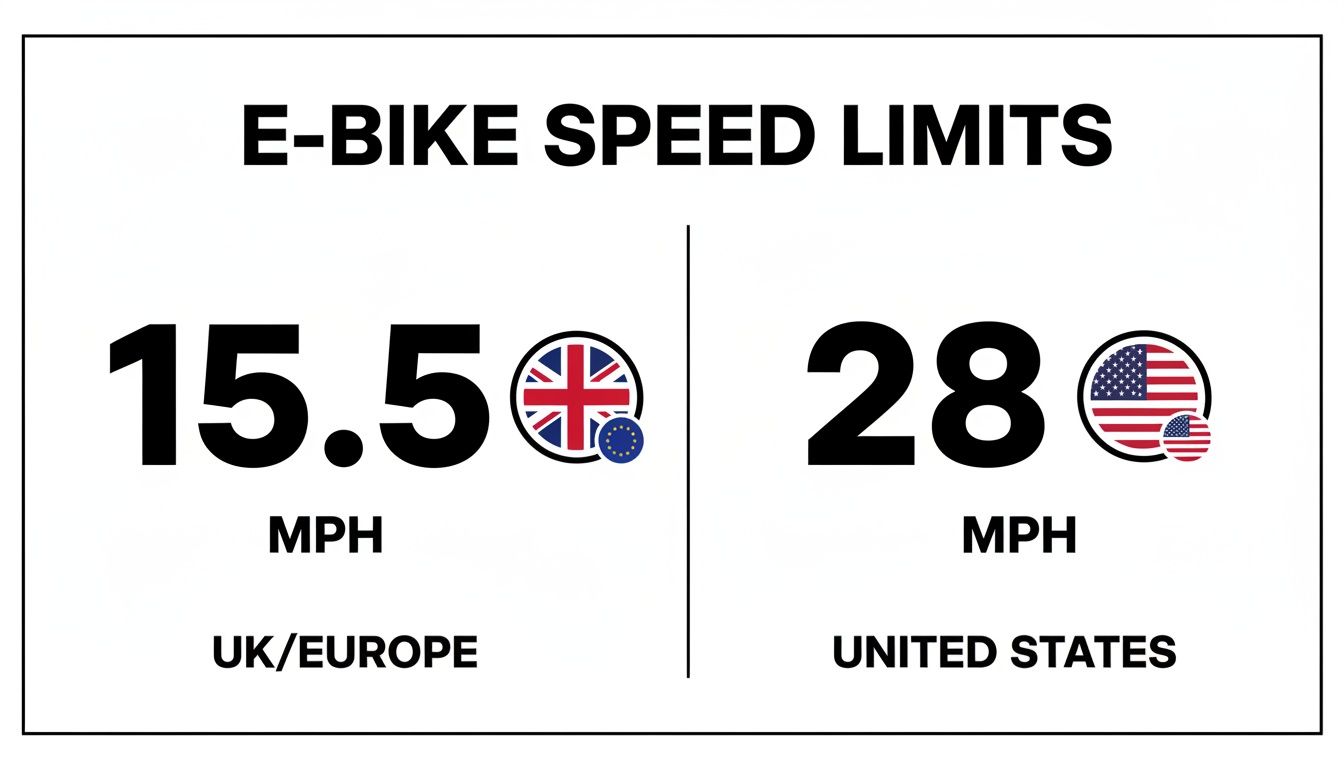
Το μεγαλύτερο συμπέρασμα εδώ είναι ότι οι αναβάτες στις ΗΠΑ με ποδήλατο Κατηγορίας 3 μπορούν νόμιμα να κινούνται με βοήθεια κινητήρα πολύ πιο γρήγορα από τους Αυστραλούς ομολόγους τους.
Κατηγορίες Ηλεκτρικών Ποδηλάτων και Όρια Ταχύτητας με μια Ματιά (AU & US)
Για να γίνουν τα πράγματα ακόμα πιο ξεκάθαρα, ας αναλύσουμε τα νομικά όρια ταχύτητας και τους κανόνες για τις κύριες κατηγορίες ηλεκτρικών ποδηλάτων (e-bike) σε αυτές τις μεγάλες περιοχές. Αυτός ο πίνακας σας δίνει μια γρήγορη σύγκριση δίπλα-δίπλα.
| Περιοχή / Κατηγορία | Όριο Βοηθούμενης Ταχύτητας | Επιτρέπεται γκαζιέρα; | Τυπική Χρήση |
|---|---|---|---|
| Αυστραλία (Pedalec) | 25 χλμ/ώρα (15,5 μίλια/ώρα) | Όχι, μόνο με βοήθεια πεταλιού | Αστική μετακίνηση, αναψυχή, ποδηλατόδρομοι |
| Κατηγορία 1 ΗΠΑ | 20 μίλια/ώρα (32 χλμ/ώρα) | Όχι, μόνο με βοήθεια πεταλιού | Ποδηλατόδρομοι, μονοπάτια, γενική μετακίνηση |
| Κατηγορία 2 ΗΠΑ | 20 μίλια/ώρα (32 χλμ/ώρα) | Ναι, έως 20 μίλια/ώρα | Χαλαρές βόλτες, προσβασιμότητα, εύκολη κίνηση |
| Κατηγορία 3 ΗΠΑ | 28 μίλια/ώρα (45 χλμ/ώρα) | Όχι, μόνο με βοήθεια πεταλιού (συνήθως απαιτείται κράνος) | Γρήγορη μετακίνηση, διατήρηση του ρυθμού της αστικής κυκλοφορίας |
Όπως βλέπετε, το σύστημα των ΗΠΑ προσφέρει πολύ περισσότερη ποικιλία, ειδικά για αναβάτες που αναζητούν υψηλότερες ταχύτητες για την καθημερινή τους μετακίνηση. Το όριο των 28 μίλια/ώρα για τα ποδήλατα Κατηγορίας 3 είναι μια αλλαγή παιχνιδιού για όσους θέλουν να αντικαταστήσουν τις διαδρομές με αυτοκίνητο.
Είναι κρίσιμο να θυμάστε τη διαφορά μεταξύ του τι ένα ποδήλατο μπορεί να κάνει και τι του επιτρέπεται νομικά να κάνει. Ενώ πολλά ηλεκτρικά ποδήλατα θα μπορούσαν τεχνικά να πηγαίνουν πιο γρήγορα, ρυθμίζονται να παραμένουν εντός αυτών των ορίων. Μπορείτε να βρείτε περισσότερες χρήσιμες πληροφορίες για κανονισμούς ταχύτητας ηλεκτρικών ποδηλάτων στο Leoguarbikes.com.
Κατανόηση των Νόμων Ταχύτητας για Ηλεκτρικά Ποδήλατα που Μετράνε
Πριν προσπαθήσετε να φτάσετε στο μέγιστο ταχύμετρο του ηλεκτρικού σας ποδηλάτου, είναι κρίσιμο να κατανοήσετε τους κανόνες του δρόμου. Σκεφτείτε τους νόμους για τα ηλεκτρικά ποδήλατα ως το επίσημο εγχειρίδιο για την ασφαλή κοινή χρήση των δρόμων. Η αγνόησή τους δεν σημαίνει μόνο κίνδυνο πρόστιμου—σας θέτει εσάς και όλους γύρω σας σε πιθανώς επικίνδυνη θέση.
Αυτοί οι κανονισμοί δεν είναι για όλους το ίδιο. Αυτό που είναι απολύτως νόμιμο για έναν αναβάτη που κινείται στην Καλιφόρνια μπορεί να απαγορεύεται για κάποιον που κινείται στους δρόμους του Σίδνεϊ. Ας αναλύσουμε τις βασικές διαφορές που πρέπει να γνωρίζετε.
Το Αυστραλιανό Πρότυπο: Το Πλαίσιο Pedalec
Στη Χώρα των Καγκουρό, τα πράγματα είναι αρκετά ξεκάθαρα σε εθνικό επίπεδο. Για να αντιμετωπιστεί ένα ηλεκτρικό ποδήλατο όπως ένα κανονικό ποδήλατο (δηλαδή χωρίς άδεια ή εγγραφή), πρέπει να είναι ‘Pedalec’.
Για να πληροί τις προϋποθέσεις ως Pedalec, ένα ηλεκτρικό ποδήλατο πρέπει να ακολουθεί δύο χρυσούς κανόνες:
- Ισχύς Κινητήρα: Ο κινητήρας δεν μπορεί να έχει συνεχή ισχύ εξόδου μεγαλύτερη από 250 βατ.
- Όριο Βοηθούμενης Ταχύτητας: Ο κινητήρας πρέπει να σταματά να σας βοηθά μόλις φτάσετε τα 25 χλμ/ώρα (15,5 μίλια/ώρα). Σίγουρα μπορείτε να πεταλιέτε πιο γρήγορα με δική σας δύναμη, αλλά ο κινητήρας απενεργοποιείται σε αυτήν την συγκεκριμένη ταχύτητα.
Ένα βασικό χαρακτηριστικό ενός Pedalec είναι ότι πρέπει να είναι μόνο με βοήθεια πεταλιού. Αυτό σημαίνει ότι δεν υπάρχει «γκαζιέρα» που λειτουργεί χωρίς να πετάτε. Ολόκληρο το νόημα είναι ότι εξακολουθείτε να ποδηλατείτε, απλώς με ηλεκτρική ώθηση.
Αυτό το απλό πλαίσιο διατηρεί τα ηλεκτρικά ποδήλατα στην ίδια κατηγορία με τα παραδοσιακά ποδήλατα, καθιστώντας εύκολο να γνωρίζετε πού μπορείτε και πού δεν μπορείτε να οδηγείτε. Αν ένα ποδήλατο έχει περισσότερη ισχύ ή ταχύτητα, συνήθως θεωρείται μηχανοκίνητο όχημα και συνοδεύεται από ένα εντελώς διαφορετικό σύνολο νομικών απαιτήσεων.
Το Σύστημα Κατηγοριών των ΗΠΑ: Μια Διαφορετική Προσέγγιση
Οι Ηνωμένες Πολιτείες ακολουθούν μια πιο ευέλικτη προσέγγιση με ένα σύστημα ταξινόμησης σε επίπεδα που δίνει περισσότερες επιλογές στους αναβάτες, ειδικά όσον αφορά την ταχύτητα. Ενώ υπάρχει ένας βασικός ομοσπονδιακός ορισμός, οι περισσότερες πολιτείες έχουν υιοθετήσει ένα σύστημα τριών κατηγοριών. Γι’ αυτό θα δεις τα ηλεκτρικά ποδήλατα στις ΗΠΑ να φέρουν σαφώς τις ετικέτες "Κατηγορία 1," "Κατηγορία 2," ή "Κατηγορία 3."
Εδώ είναι μια γρήγορη περίληψη του τι σημαίνουν αυτές οι κατηγορίες για σένα:
- Κατηγορία 1: Αυτό είναι ένα ποδήλατο μόνο με υποβοήθηση πεταλιού. Ο κινητήρας σε βοηθά καθώς πατάς πετάλι, αλλά σταματά όταν φτάσεις τα 20 mph. Γενικά επιτρέπονται όπου μπορείς να οδηγήσεις ένα κανονικό ποδήλατο.
- Κατηγορία 2: Αυτά τα ηλεκτρικά ποδήλατα έχουν γκάζι. Μπορείς να πατήσεις ένα κουμπί ή να γυρίσεις το χειριστήριο για να κινηθείς μέχρι τα 20 mph χωρίς καν να πατήσεις πετάλι. Φυσικά, έχουν επίσης λειτουργία υποβοήθησης πεταλιού που φτάνει στην ίδια ταχύτητα.
- Κατηγορία 3: Αυτά είναι τα ταχύτατα ηλεκτρικά ποδήλατα του νόμιμου κόσμου. Είναι μόνο με υποβοήθηση πεταλιού (δεν επιτρέπεται γκάζι) και θα συνεχίσουν να σε βοηθούν μέχρι τα 28 mph. Επειδή είναι πιο γρήγορα, συχνά συνοδεύονται από αυστηρότερους κανόνες, όπως όρια ηλικίας και υποχρεωτική χρήση κράνους.
Αυτό το σύστημα δίνει στους Αμερικανούς αναβάτες μια μεγάλη γκάμα επιλογών, από χαλαρά cruiser παραλίας μέχρι γρήγορους μετακινούμενους που μπορούν να ακολουθήσουν την κίνηση της πόλης. Αλλά επειδή οι συγκεκριμένοι κανόνες μπορεί να αλλάζουν από πολιτεία σε πολιτεία ή ακόμα και από πόλη σε πόλη, είναι πάντα έξυπνο να ελέγχεις τους τοπικούς νόμους σου. Για μια πλήρη επισκόπηση, δες τον οδηγό μας για τους νόμους για ηλεκτρικά ποδήλατα ανά πολιτεία.
Η τήρηση του νόμου δεν αφορά μόνο την αποφυγή προστίμου—είναι θέμα υπεύθυνου αναβάτη. Η κατανόηση των κανόνων βοηθά να διατηρηθεί η ασφάλεια όλων, αλλά είναι επίσης σοφό να ξέρεις τι να κάνεις αν συμβεί ατύχημα. Αν βρεθείς ποτέ σε μια άτυχη κατάσταση, η γνώση των επιλογών σου, συμπεριλαμβανομένης της αναζήτησης νομικών υπηρεσιών προσωπικού τραυματισμού, είναι μέρος της προετοιμασίας. Στο τέλος της ημέρας, η οδήγηση εντός των νομικών ορίων συμβάλλει σε μια πιο ασφαλή και ευχάριστη κουλτούρα ποδηλασίας για όλους μας.
Τι Ακριβώς Τροφοδοτεί την Ταχύτητα του Ηλεκτρικού σου Ποδηλάτου
Έχεις αναρωτηθεί ποτέ τι ξεχωρίζει ένα γρήγορο ηλεκτρικό ποδήλατο που εκτοξεύεται από τη γραμμή εκκίνησης από ένα που μοιάζει περισσότερο με ήρεμο cruiser; Δεν είναι μαγεία—είναι η τεχνολογία που δουλεύει μέσα στο πλαίσιο. Για να καταλάβουμε πραγματικά πόσο γρήγορο μπορεί να είναι ένα ηλεκτρικό ποδήλατο, πρέπει να ανοίξουμε το καπό και να δούμε τι παρέχει την ενέργεια.
Σκέψου το σαν αυτοκίνητα. Ένα μικρό αστικό αυτοκίνητο και ένα μεγάλο φορτηγό V8 είναι εντελώς διαφορετικά πλάσματα, ακόμα κι αν κολλήσουν στην ίδια κίνηση. Το ίδιο ισχύει και για τα ηλεκτρικά ποδήλατα, και όλα ξεκινούν από τον κινητήρα.
Ισχύς Κινητήρα (Βατ)
Ο πρώτος αριθμός που θα δείτε σχεδόν πάντα είναι η ισχύς του κινητήρα, μετρημένη σε watt (W). Απλά, τα watt είναι σαν την αξιολόγηση σε ίππους για το ποδήλατό σας. Περισσότερα watt σημαίνει γενικά περισσότερη ακατέργαστη δύναμη.
Στην Αυστραλία, τα νόμιμα ηλεκτρικά ποδήλατα έχουν όριο συνεχούς ισχύος στα 250W. Αλλά στις ΗΠΑ, τα πράγματα γίνονται λίγο πιο άγρια. Είναι συνηθισμένο να βλέπετε κινητήρες που κυμαίνονται από 250W μέχρι και 750W, και μερικά off-road τέρατα φτάνουν ακόμα και τα 1.000W ή περισσότερο.
Λοιπόν, τι σημαίνει αυτό για την πραγματική σας ταχύτητα; Ενώ ένας μεγαλύτερος κινητήρας δεν αγνοεί απλώς το νόμιμο όριο ταχύτητας, αλλάζει δραματικά το πώς το ποδήλατο αισθάνεται. Ένας κινητήρας 750W θα σας εκτοξεύσει στο όριο των 28 mph πολύ πιο γρήγορα από ό,τι ένας κινητήρας 250W θα σας φτάσει στα 15,5 mph. Είναι επίσης ο μυς που χρειάζεστε για να ανεβείτε απότομες ανηφόρες ή να μεταφέρετε βαρύ φορτίο χωρίς να νιώθετε ότι κάνετε όλη τη δουλειά.
Ροπή (Η Μυστική Σάλτσα της Επιτάχυνσης)
Εντάξει, τα watt σας λένε για τη συνολική δύναμη του κινητήρα, αλλά η ροπή αφορά το "ζωντάνεμα" του. Μετρημένη σε Νιούτον-μέτρα (Nm), η ροπή είναι η περιστροφική δύναμη που σας κινεί. Είναι αυτή η συναρπαστική ώθηση που νιώθετε από στάση.
Σκεφτείτε να προσπαθείτε να ανοίξετε ένα πολύ επίμονο καπάκι βάζου—η αρχική δύναμη στρέψης που εφαρμόζετε; Αυτή είναι η ροπή. Ένα ηλεκτρικό ποδήλατο με υψηλή ροπή νιώθει ζωηρό και ανταποκρίνεται γρήγορα, κάτι που αλλάζει τα δεδομένα όταν ξεκινάτε σε μια ανηφόρα ή χρειάζεστε μια γρήγορη ώθηση.
- Χαμηλή Ροπή (30-50 Nm): Θα τη βρείτε σε ελαφριά ποδήλατα πόλης. Είναι ιδανική για επίπεδο έδαφος και σας δίνει μια ομαλή, ήπια υποβοήθηση.
- Υψηλή Ροπή (80+ Nm): Αυτό είναι το χαρακτηριστικό των ηλεκτρικών ορειβατικών ποδηλάτων και των ποδηλάτων με έμφαση στην απόδοση. Παρέχει μια ισχυρή ώθηση για να ανεβαίνετε απότομες ανηφόρες και να επιταχύνετε δυνατά.
Ένα ποδήλατο με υψηλή ροπή κάνει τεράστια διαφορά στην πόλη. Σας δίνει την αυτοπεποίθηση να ξεκινάτε γρήγορα από τα φανάρια και να ενώνεστε στην κυκλοφορία χωρίς να μένετε πίσω.
Τάση Μπαταρίας (Η Πηγή Ισχύος)
Αν ο κινητήρας είναι η μηχανή, τότε η μπαταρία είναι τόσο το ρεζερβουάρ καυσίμου όσο και η αντλία καυσίμου. Η τάση της μπαταρίας (V) είναι ένα μεγάλο κομμάτι αυτού του παζλ. Μπορείτε να σκεφτείτε την τάση ως την "πίεση" που σπρώχνει το ηλεκτρικό ρεύμα από την μπαταρία προς τον κινητήρα.
Ένα σύστημα με υψηλότερη τάση μπορεί να παρέχει αυτή την ισχύ πιο αποδοτικά. Τα περισσότερα ηλεκτρικά ποδήλατα λειτουργούν με 36V ή 48V μπαταρία, αν και μερικά μοντέλα υψηλής απόδοσης το ανεβάζουν σε 52V ή περισσότερο. Γιατί έχει σημασία; Ένα υψηλότερο ρεύμα βοηθά τον κινητήρα να λειτουργεί πιο δροσερά και να διατηρεί την κορυφαία απόδοσή του για περισσότερο χρόνο, κάτι που είναι κρίσιμο για τη διατήρηση της ταχύτητας σε μια μεγάλη διαδρομή ή σε μια τεράστια ανηφόρα.
Αυτό είναι το σύστημα που λειτουργεί χέρι-χέρι με τους αισθητήρες για να πει στον κινητήρα πόση ώθηση να σας δώσει. Αν θέλετε να μπείτε στα ενδότερα, μπορείτε να δείτε την εις βάθος ανάλυσή μας για τον τρόπο λειτουργίας της υποβοήθησης πεταλιού στα ηλεκτρικά ποδήλατα.
Στο τέλος της ημέρας, αυτά τα τρία στοιχεία—βατ, ροπή και τάση—ορίζουν την προσωπικότητα του ηλεκτρικού σας ποδηλάτου. Ένα ποδήλατο φορτωμένο με έναν κινητήρα υψηλής ισχύος, τεράστια ροπή και μια μπαταρία υψηλής τάσης θα νιώθετε σαν ένα θηρίο που επιταχύνει δυνατά και ανεβαίνει οτιδήποτε. Από την άλλη, ένα ποδήλατο με πιο μέτρια χαρακτηριστικά θα σας προσφέρει μια πιο ήπια, χαλαρή βόλτα που είναι τέλεια για χαλαρή κρουαζιέρα. Η κατανόηση αυτών των αριθμών σας βοηθά να κοιτάξετε μια προδιαγραφή και να ξέρετε ακριβώς τι παίρνετε.
Τι σας Επιβραδύνει (Και Τι σας Επιταχύνει)
Ο κινητήρας μπορεί να παίρνει όλη την αναγνώριση, αλλά είναι μόνο ένα μέρος της εξίσωσης της ταχύτητας. Σκεφτείτε τον σαν τον κινητήρα σε ένα αυτοκίνητο—ισχυρός, σίγουρα, αλλά η τελική ταχύτητα εξαρτάται από τα πάντα, από τις συνθήκες του δρόμου μέχρι το πόσα πράγματα έχετε στο πορτμπαγκάζ. Η πραγματική ταχύτητα που νιώθετε σε ένα ηλεκτρικό ποδήλατο είναι ένας συνεχής αγώνας τράβηγμα μεταξύ της δύναμης που σας ωθεί μπροστά και δεκάδων μικρών πραγμάτων που αντιστέκονται.
Κάθε βόλτα είναι διαφορετική. Από το μπουφάν που φοράτε μέχρι τη διαδρομή που ακολουθείτε, αμέτρητες μεταβλητές παίζουν ρόλο. Ας αναλύσουμε τι πραγματικά συμβαίνει πίσω από τις σκηνές όταν γυρίζετε το γκάζι ή αρχίζετε να πετάτε πετάλια.
Εσείς, ο Αναβάτης: Βάρος και Αεροδυναμική
Η μεγαλύτερη μεταβλητή, και αυτή που δεν μπορείτε ακριβώς να αφήσετε στο σπίτι, είστε εσείς. Το συνολικό βάρος που πρέπει να μεταφέρει ο κινητήρας—εσείς, ο εξοπλισμός σας, η βαριά κλειδαριά, το σακίδιό σας—κάνει τεράστια διαφορά. Είναι απλή φυσική: περισσότερη μάζα απαιτεί περισσότερη ενέργεια για να ξεκινήσει και να συνεχίσει να κινείται, ειδικά όταν παλεύει με τη βαρύτητα σε έναν λόφο.
Αλλά δεν είναι μόνο το βάρος σας· έχει σημασία και το σχήμα σας. Η αόρατη δύναμη της αεροδυναμικής αντίστασης προσπαθεί συνεχώς να σας επιβραδύνει. Καθώς αυξάνετε την ταχύτητα, πρέπει να σπρώξετε περισσότερο αέρα από το δρόμο, και αυτός ο αέρας αντιστέκεται. Ένα χαλαρό, φουσκωτό μπουφάν λειτουργεί σαν ένα μικρό αλεξίπτωτο, αναγκάζοντας τον κινητήρα σας να δουλέψει πιο σκληρά απλώς για να διατηρήσει την ταχύτητα σε σύγκριση με μια πιο εφαρμοστή ποδηλατική φανέλα.
Έχετε αναρωτηθεί ποτέ γιατί οι ποδηλάτες του Tour de France είναι σκυμμένοι τόσο χαμηλά; Κάνουν τον εαυτό τους όσο το δυνατόν πιο μικρό και ολισθηρό για να κόψουν τον αέρα. Δεν χρειάζεται να φτάσετε σε αυτό το άκρο, αλλά είναι η ίδια αρχή που λειτουργεί.
Πού Οδηγείτε: Έδαφος και Επιφάνεια
Το περιβάλλον οδήγησής σας είναι ένας τεράστιος παράγοντας. Μια ομαλή, επίπεδη, φρεσκοστρωμένη λωρίδα ποδηλάτου είναι το ισοδύναμο ενός drag strip για το ηλεκτρικό ποδήλατο. Υπάρχει σχεδόν μηδενική αντίσταση, οπότε όλη η ισχύς του κινητήρα πηγαίνει απευθείας στο να σας κάνει να πηγαίνετε πιο γρήγορα. Θα φτάσετε στην κορυφαία υποβοηθούμενη ταχύτητα χωρίς να ιδρώσετε.
Τώρα, φανταστείτε έναν απότομο λόφο καλυμμένο με χαλαρό χαλίκι. Ξαφνικά, ο κινητήρας σας δίνει μάχη σε δύο μέτωπα. Παλεύει με τη βαρύτητα απλώς για να σας κρατήσει από το να κυλήσετε προς τα πίσω, και αντιμετωπίζει την πρόσθετη τριβή από την ανώμαλη, ασταθή επιφάνεια. Η ταχύτητά σας θα καταρρεύσει και η μπαταρία σας θα αδειάσει πολύ πιο γρήγορα. Ακόμα και κάτι τόσο απλό όσο ένας δυνατός αντίθετος άνεμος μπορεί να μοιάζει σαν να ανεβαίνετε έναν ήπιο, αόρατο λόφο.
Η Ρύθμιση του Ποδηλάτου σας: Ελαστικά και Μετάδοση
Τα ελαστικά σου είναι τα μόνα δύο σημεία επαφής με το έδαφος, και έχουν εκπληκτικά μεγάλο αντίκτυπο στην ταχύτητα. Σκέψου τα σαν παπούτσια: δεν θα φορούσες ογκώδεις ορειβατικές μπότες για να τρέξεις σπριντ, σωστά;
- Τα λεία, λεπτά ελαστικά δρόμου είναι τα ελαφριά παπούτσια του κόσμου των ποδηλάτων. Έχουν ελάχιστο πέλμα, που σημαίνει πολύ μικρή αντίσταση κύλισης στην άσφαλτο. Είναι όλα για αποδοτικότητα και ταχύτητα.
- Τα μεγάλα, χοντρά ελαστικά mountain bike είναι οι ορειβατικές μπότες. Αυτό το επιθετικό πέλμα είναι φανταστικό για να κρατάει σε χώμα και λάσπη, αλλά σε άσφαλτο δημιουργεί πολύ τριβή που απλώς καταναλώνει ταχύτητα και διάρκεια μπαταρίας.
Η πίεση των ελαστικών είναι εξίσου σημαντική. Τα υποφουσκωμένα ελαστικά γίνονται μαλακά, δημιουργώντας μια μεγαλύτερη "επιφάνεια επαφής" με το έδαφος. Αυτό αυξάνει την αντίσταση κύλισης και κάνει τον κινητήρα και τα πόδια σου να δουλεύουν πολύ πιο σκληρά. Το να κρατάς τα ελαστικά σου φουσκωμένα στην προτεινόμενη πίεση είναι ένας από τους πιο εύκολους τρόπους να κάνεις το ηλεκτρικό σου ποδήλατο να νιώθει πιο γρήγορο.
Τέλος, μην ξεχάσεις τα γρανάζια σου! Είναι οι αθόρυβοι ήρωες της ταχύτητας. Η σωστή χρήση των γραναζιών, σε συγχρονισμό με τη βοήθεια του κινητήρα, είναι το μυστικό της αποδοτικότητας. Ξεκινώντας σε χαμηλό γρανάζι από στάση και ανεβαίνοντας σταδιακά καθώς αυξάνεις την ταχύτητα, επιτρέπει στον κινητήρα να λειτουργεί στο ιδανικό του σημείο, βοηθώντας σε να φτάσεις γρηγορότερα στην ταχύτητα χωρίς να καταναλώνεις υπερβολικά τη μπαταρία.
Πέρα από τη Λωρίδα Ποδηλάτου: Ηλεκτρικά Ποδήλατα Υψηλής Ταχύτητας και ο Παράγοντας της Έντασης
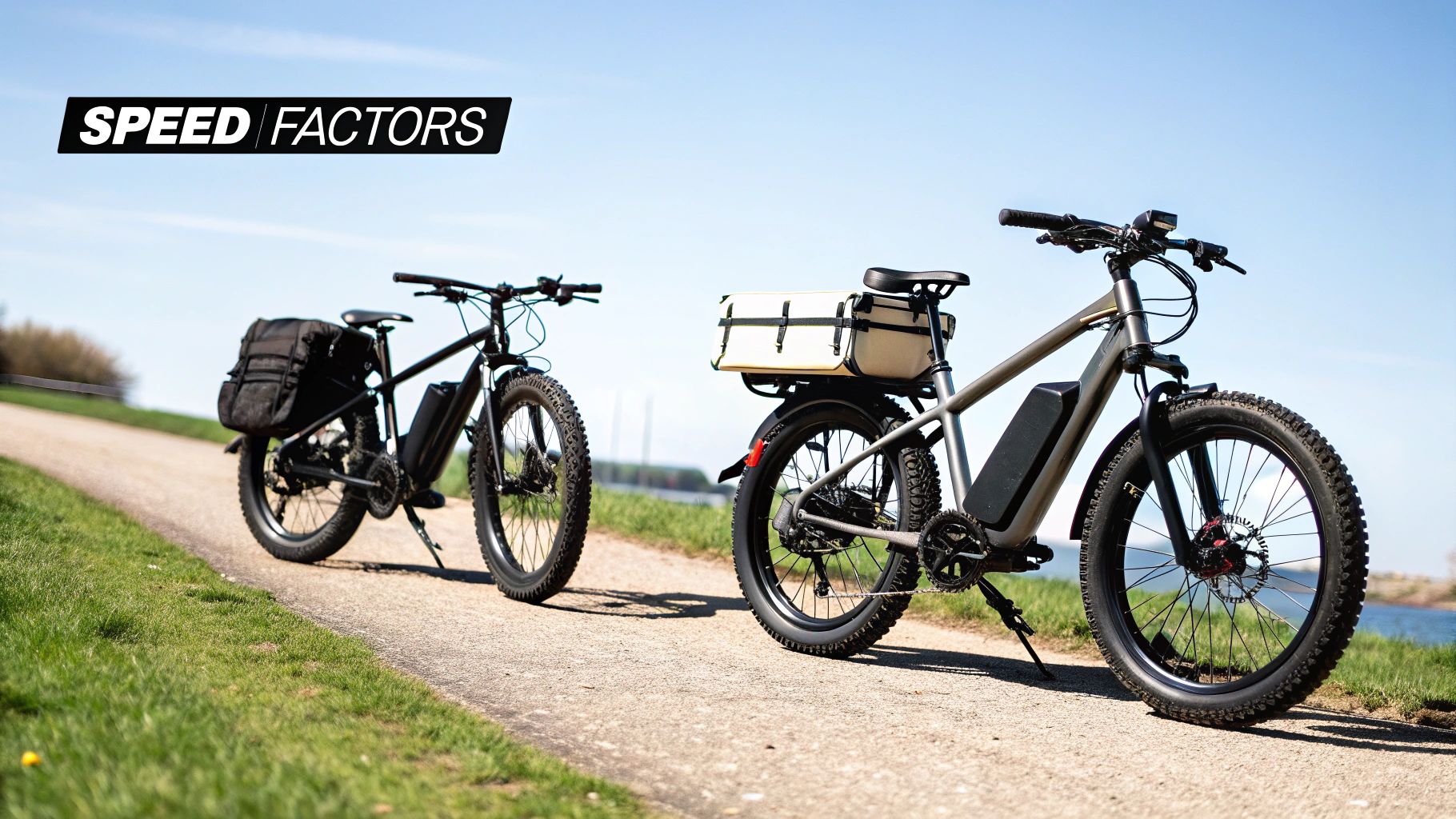
Μέχρι τώρα, μιλήσαμε για ηλεκτρικά ποδήλατα σχεδιασμένα να παίζουν με τους κανόνες στους δρόμους της πόλης και στα ποδηλατοδρόμια. Αλλά υπάρχει μια εντελώς διαφορετική κατηγορία ηλεκτρικών ποδηλάτων εκεί έξω, φτιαγμένη για ένα πράγμα: καθαρή, ατόφια ταχύτητα. Αυτά είναι τα superbikes του ηλεκτρικού κόσμου, σχεδιασμένα για ακατέργαστη ισχύ και αδρεναλίνη.
Ξέχασε τους λογικούς κινητήρες των 250W ή 750W που βλέπεις σε ποδήλατα μετακίνησης. Τώρα βρισκόμαστε σε μια κατηγορία όπου οι κινητήρες ξεκινούν από έναν τεράστιο 2000W και μπορούν να ανεβούν πέρα από ένα τρελό 5000W. Αυτές οι μηχανές δεν είναι για την απλή βόλτα σου στο καφέ· έχουν κατασκευαστεί για την αδρεναλίνη της εκρηκτικής επιτάχυνσης και την κατάκτηση δύσκολου εκτός δρόμου εδάφους.
Ένας Κόσμος Χωρίς Περιοριστές Ταχύτητας
Αυτά τα ηλεκτρικά ποδήλατα υψηλής ταχύτητας ανήκουν σε μια κατηγορία από μόνα τους, θολώνοντας τη γραμμή ανάμεσα σε ποδήλατο και πλήρως ηλεκτρική μοτοσυκλέτα. Έχουν σχεδιαστεί ειδικά για ιδιωτικές εκτάσεις, αγωνιστικές πίστες ή ειδικά πάρκα εκτός δρόμου. Και αυτό είναι το κρίσιμο σημείο: αυτά τα ποδήλατα δεν είναι απολύτως νόμιμα στους δημόσιους δρόμους στις ΗΠΑ ή την Αυστραλία χωρίς να είναι σωστά καταχωρημένα ως οχήματα.
Το να πάρεις ένα από αυτά στο δρόμο είναι σαν να οδηγείς μια μη καταχωρημένη μοτοσυκλέτα, και συνοδεύεται από όλα τα ίδια νομικά και ασφαλείας προβλήματα. Είναι καλύτερο να τα θεωρείς ως εξειδικευμένα εργαλεία για μια πολύ συγκεκριμένη δουλειά: να προσφέρουν εκπληκτική απόδοση μακριά από την κίνηση.
Αυτά τα ηλεκτρικά ποδήλατα έχουν κατασκευαστεί με έναν και μόνο σκοπό: να σπάσουν τα όρια της ταχύτητας και της ισχύος. Αντικαθιστούν την καθημερινή πρακτικότητα με την εκρηκτική αίσθηση της ακραίας απόδοσης, δίνοντάς μας μια γεύση από το πώς μπορεί να μοιάζει το μέλλον της ηλεκτρικής κινητικότητας.
Οι ταχύτητες που μπορούν να φτάσουν αυτά τα ποδήλατα είναι απλά εκπληκτικές. Ένα ηλεκτρικό ποδήλατο Class 3 στις ΗΠΑ φτάνει μέχρι τα 28 mph, αλλά αυτά τα ανεξέλεγκτα τέρατα αφήνουν αυτή την ταχύτητα πολύ πίσω. Ένα ηλεκτρικό ποδήλατο 3000W μπορεί εύκολα να φτάσει τα 50-60 mph (80-97 km/h), και μερικά από τα πιο ακραία μοντέλα μπορούν ακόμη και να σπάσουν το φράγμα των 90 mph (145 km/h).
Ισχύς, Ταχύτητα και Απόδοση
Είναι μια απλή και συναρπαστική εξίσωση: περισσότερη ισχύς ισούται με περισσότερη ταχύτητα. Καθώς αυξάνεται η ισχύς του κινητήρα σε βατ, αυξάνεται και η ταχύτητα. Τα ταχύτερα ηλεκτρικά ποδήλατα στην αγορά δείχνουν πόσο μακριά έχει φτάσει η τεχνολογία, με κορυφαία μοντέλα να φτάνουν ταχύτητες μεταξύ 50 και 93 mph χάρη σε κινητήρες από 2000W έως πάνω από 5000W.
Η συσχέτιση είναι αρκετά συνεπής:
- Κινητήρες 1500W: Κοιτάτε ταχύτητες γύρω στα 35-40 mph.
- Κινητήρες 2000W: Αυτοί μπορούν να σας οδηγήσουν στην περιοχή των 50-65 mph.
- Κινητήρες 3000W: Οι ταχύτητες συχνά ξεπερνούν τα 70 mph.
Αυτού του είδους η απόδοση είναι μια απόδειξη των απίστευτων προόδων στην τεχνολογία ηλεκτρικών κινητήρων και μπαταριών. Αν σας ενδιαφέρουν οι λεπτομέρειες για το πώς οι μηχανικοί ωθούν αυτά τα όρια, μπορείτε να βρείτε μερικές ενδιαφέρουσες λεπτομέρειες για το πόσο γρήγορα μπορούν να πάνε τα ηλεκτρικά ποδήλατα.
Για όσους είναι πραγματικά παθιασμένοι με το να αποσπάσουν κάθε τελευταία σταγόνα απόδοση από τη βόλτα τους, μπορεί να είναι χρήσιμο να δουν την βελτιστοποίηση της ταχύτητας σε άλλα ηλεκτρικά οχήματα. Οι αρχές της ισχύος, της αεροδυναμικής και της αποδοτικότητας συχνά μεταφέρονται. Μπορείτε να βρείτε περισσότερες συμβουλές και πληροφορίες απόδοσης για τη βελτιστοποίηση της ταχύτητας ηλεκτρικών οχημάτων που ίσως σας εμπνεύσουν. Αυτά τα superbikes μας δείχνουν την αιχμή του δόρατος του τι είναι δυνατό, αλλά επίσης αναδεικνύουν την εκπληκτική μηχανική που απαιτείται για να ισορροπήσεις την ισχύ με την ασφάλεια και τον έλεγχο.
Βρίσκοντας τη Σωστή Ισορροπία ανάμεσα στην Ταχύτητα, την Ασφάλεια και την Αυτονομία
Ας είμαστε ειλικρινείς, το να φτάνεις σε υψηλή ταχύτητα με ένα ηλεκτρικό ποδήλατο είναι απίστευτα διασκεδαστικό. Αυτή η αδρεναλίνη είναι μεγάλο μέρος της απόλαυσης. Αλλά όπως τα περισσότερα πράγματα στη ζωή, όλα έχουν να κάνουν με την ισορροπία. Το πραγματικό μυστικό για μια υπέροχη βόλτα δεν είναι απλώς να πατάς το γκάζι στο τέρμα· είναι να βρεις το ιδανικό σημείο ανάμεσα στην ταχύτητα, την ασφάλεια και το να διασφαλίσεις ότι η μπαταρία σου δεν θα αδειάσει στη μέση της περιπέτειάς σου.
Σκεφτείτε το σαν να οδηγείτε το αυτοκίνητό σας στον αυτοκινητόδρομο. Πατάτε το γκάζι στο τέρμα και μπορείτε σχεδόν να δείτε το δείκτη καυσίμου να πέφτει. Η μπαταρία του ηλεκτρικού σας ποδηλάτου λειτουργεί ακριβώς με τον ίδιο τρόπο. Η συνεχής οδήγηση στην υψηλότερη ταχύτητα και στη μέγιστη υποβοήθηση είναι σαν γυμναστική για την μπαταρία σας — θα αδειάσει, και γρήγορα.
Βελτιστοποίηση των Μιλίων σας ανά Φόρτιση
Αν θέλετε να εκμεταλλευτείτε κάθε τελευταία μίλια από μια μόνο φόρτιση, μερικές μικρές αλλαγές στον τρόπο που οδηγείτε μπορούν να κάνουν τεράστια διαφορά. Όλα έχουν να κάνουν με το να οδηγείτε πιο έξυπνα, όχι πιο σκληρά.
Εδώ είναι μερικές απλές συνήθειες που θα σας κρατήσουν σε κίνηση για περισσότερο:
- Να Είστε Έξυπνοι με τα Επίπεδα Βοήθειας: Αντισταθείτε στον πειρασμό να ζείτε σε "Turbo" mode. Ξεκινήστε με χαμηλότερο επίπεδο βοήθειας σε επίπεδες διαδρομές και κρατήστε τις υψηλές ρυθμίσεις για όταν τις χρειάζεστε πραγματικά, όπως σε μια απότομη ανηφόρα ή για να ξεκινήσετε πριν από την κίνηση.
- Προσαρμοστείτε Σταδιακά: Οι γρήγορες, απότομες εκκινήσεις από στάση καταναλώνουν πολύ ενέργεια. Προσπαθήστε να επιταχύνετε ομαλά και να κρατάτε μια σταθερή ταχύτητα.
- Συνεχίστε να Ποδηλατείτε: Θυμηθείτε, ο κινητήρας είναι εκεί για να σας βοηθά, όχι να κάνει όλη τη δουλειά. Ένας σταθερός, συνεπής ρυθμός πεταλιού βοηθά τον κινητήρα να λειτουργεί πολύ πιο αποδοτικά και εξοικονομεί μεγάλη ποσότητα μπαταρίας.
- Ελέγξτε τα Ελαστικά σας: Αυτό είναι εύκολο να το ξεχάσετε. Τα σωστά φουσκωμένα ελαστικά κυλούν με πολύ λιγότερη αντίσταση, που σημαίνει ότι ο κινητήρας σας δεν χρειάζεται να καταβάλει μεγάλη προσπάθεια απλώς για να σας κρατήσει σε κίνηση.
Το να βρείτε την τέλεια ταχύτητα κρουαζιέρας όπου κινείστε ομαλά χωρίς να πιέζετε τον κινητήρα στο κόκκινο είναι το κλειδί για μια μακρά και ευχάριστη βόλτα. Είναι ο καλύτερος τρόπος να φτάσετε σπίτι χωρίς το φοβερό "άγχος αυτονομίας."
Για μια πολύ πιο βαθιά ανάλυση σχετικά με το τι κάνει την μπαταρία σας να λειτουργεί, ρίξτε μια ματιά στον οδηγό μας για όλα όσα πρέπει να ξέρετε για τη διάρκεια ζωής της μπαταρίας ηλεκτρικού ποδηλάτου.
Ταχύτητα, Ασφάλεια και Ενημερότητα
Το να πηγαίνετε πιο γρήγορα δεν επηρεάζει μόνο την μπαταρία σας—αλλάζει εντελώς το παιχνίδι όσον αφορά την ασφάλεια. Όσο πιο γρήγορα κινείστε, τόσο λιγότερος χρόνος έχετε να αντιδράσετε στο απρόβλεπτο, και τόσο πιο σοβαρές μπορεί να είναι οι συνέπειες μιας πτώσης ή σύγκρουσης.
Το πιο σημαντικό που πρέπει να θυμάστε είναι ότι η απόσταση φρεναρίσματος αυξάνεται εκθετικά. Η διπλασιασμός της ταχύτητας από 10 mph σε 20 mph δεν διπλασιάζει απλώς την απόσταση που χρειάζεται για να σταματήσετε· μπορεί στην πραγματικότητα να την τετραπλασιάσει. Αυτό σημαίνει ότι πρέπει να κοιτάτε πολύ πιο μακριά στον δρόμο και να προβλέπετε τι θα κάνουν τα αυτοκίνητα, οι πεζοί και οι άλλοι ποδηλάτες πολύ πριν φτάσετε κοντά τους.
Οι υψηλότερες ταχύτητες απαιτούν επίσης καλύτερο εξοπλισμό. Ένα απλό κράνος είναι αρκετό για μια χαλαρή βόλτα στο πάρκο, αλλά αν συχνά φτάνετε τα 28 mph με ένα ηλεκτρικό ποδήλατο Κατηγορίας 3, θα πρέπει πραγματικά να σκεφτείτε να αναβαθμίσετε σε κράνος με υψηλότερη βαθμολογία ασφαλείας—κάτι πιο κοντά σε αυτό που θα φορούσατε σε ένα μοπετ. Όλα έχουν να κάνουν με το να ταιριάξετε τον εξοπλισμό σας με την ταχύτητά σας. Τελικά, μια υπέροχη βόλτα συμβαίνει όταν συνδυάζετε τη συγκίνηση της ταχύτητας με τον σεβασμό για την ασφάλεια και την αποδοτικότητα.
Έχετε ερωτήσεις για την ταχύτητα των ηλεκτρικών ποδηλάτων; Έχουμε απαντήσεις.
Εντάξει, έχουμε καλύψει πολλά, αλλά μπορεί να έχετε ακόμα μερικά πράγματα που σας απασχολούν σχετικά με το πόσο γρήγορα πηγαίνουν πραγματικά αυτά τα ποδήλατα. Ας ξεκαθαρίσουμε μερικές από τις πιο συχνές ερωτήσεις που ακούμε συνέχεια.
Μπορώ να κάνω το ηλεκτρικό μου ποδήλατο να πηγαίνει πιο γρήγορα;
Κοιτάξτε, η σύντομη απάντηση είναι ναι, αλλά είναι ένα κουτί της Πανδώρας που ίσως δεν θέλετε να ανοίξετε. Αυτό συχνά ονομάζεται "απελευθέρωση" ή "ξεκλείδωμα" και περιλαμβάνει πειραγμένο λογισμικό ή υλικό του ποδηλάτου για να παρακαμφθεί ο ενσωματωμένος περιοριστής ταχύτητας. Σίγουρα, μπορεί να κάνει το ποδήλατο πιο γρήγορο, αλλά οι συνέπειες είναι αρκετά σοβαρές.
Για αρχή, μπορείτε να αποχαιρετήσετε την εγγύησή σας. Το πιο σημαντικό, ένα ηλεκτρικό ποδήλατο χωρίς περιορισμό δεν είναι πλέον νόμιμο για δρόμο στην Αυστραλία ή στις περισσότερες περιοχές των ΗΠΑ. Επιπλέον, βάζετε τεράστια επιπλέον πίεση στο μοτέρ και την μπαταρία, που μπορεί να μειώσει σοβαρά τη διάρκεια ζωής τους. Ειλικρινά, για τη δική σας ασφάλεια και για να παραμείνετε εντός νόμου, είναι καλύτερο να τηρείτε τις εργοστασιακές ρυθμίσεις του ποδηλάτου.
Είναι Ένα Μοτέρ 750W Πιο Γρήγορο Από Ένα 250W;
Αυτή είναι μια φανταστική ερώτηση γιατί η απάντηση δεν είναι τόσο απλή όσο φαίνεται. Αν μιλάμε για τη νόμιμα υποβοηθούμενη μέγιστη ταχύτητα, τότε ναι. Ένα ποδήλατο 250W στην Αυστραλία περιορίζεται σε 25 km/h υποβοήθησης μοτέρ, ενώ ένα ποδήλατο Class 3 750W στις ΗΠΑ μπορεί να σας βοηθήσει μέχρι 28 mph.
Αλλά η πραγματική ιστορία είναι για το πώς φτάνετε σε αυτή την ταχύτητα. Το μοτέρ 750W προσφέρει πολύ περισσότερη δύναμη. Όλα έχουν να κάνουν με την επιτάχυνση και τη ροπή—θα σας ανεβάσει στην ταχύτητα σε μια στιγμή, θα ανεβεί απότομα λόφους σαν να μην είναι τίποτα και δεν θα διστάσει αν κουβαλάτε βαρύ φορτίο.
Σκεφτείτε το έτσι: ένα μικρό hatchback και ένα μεγάλο SUV οδηγούν και τα δύο σε ζώνη 30 mph. Ο ισχυρός κινητήρας του SUV του δίνει τη δύναμη να φτάσει εύκολα στην ταχύτητα και να αντιμετωπίσει δύσκολο έδαφος. Αυτή είναι η διαφορά που νιώθετε με ένα μοτέρ 750W.
Πώς Επηρεάζει η Υποβοήθηση Πεταλιού την Ταχύτητά Μου;
Η υποβοήθηση πεταλιού είναι το μυστικό συστατικό ενός ηλεκτρικού ποδηλάτου. Είναι ένα έξυπνο σύστημα που καταλαβαίνει πότε πετάτε και ενεργοποιεί το μοτέρ για να σας δώσει ώθηση. Συνήθως μπορείτε να επιλέξετε ανάμεσα σε μερικά επίπεδα, που συχνά ονομάζονται "Eco," "Tour," ή "Turbo."
Εδώ είναι μια γρήγορη ανάλυση του πώς νιώθετε:
- Λειτουργία Eco: Λαμβάνετε μια απαλή ώθηση από το μοτέρ. Νιώθετε σαν να έχετε ξαφνικά ουράνιο άνεμο, κάνοντας το πέταλο πιο εύκολο ενώ καταναλώνετε λιγότερη ενέργεια από την μπαταρία. Είναι ιδανικό για μεγάλες, επίπεδες διαδρομές.
- Λειτουργία Turbo: Αυτή είναι η λειτουργία πλήρους ισχύος. Το μοτέρ σας δίνει όλη την ενέργειά του, εκτοξεύοντάς σας στην κορυφαία υποβοηθούμενη ταχύτητα του ποδηλάτου με ελάχιστη προσπάθεια.
Η πραγματική σας ταχύτητα είναι αποτέλεσμα συνεργασίας μεταξύ της ώθησης του μοτέρ (μέχρι το νόμιμο όριο του) και της δικής σας πεταλιάς. Μπορείτε πάντα να πετάτε πιο γρήγορα από το όριο του μοτέρ, αλλά σε εκείνο το σημείο, οποιαδήποτε επιπλέον ταχύτητα τροφοδοτείται 100% από εσάς.
Έτοιμοι να βρείτε την τέλεια βόλτα που συνδυάζει ταχύτητα, στυλ και καθαρή διασκέδαση για τη μετακίνησή σας ή τα σαββατιάτικα μονοπάτια; Στο Punk Ride LLC, έχουμε μια τεράστια γκάμα κορυφαίων ηλεκτρικών ποδηλάτων και σκούτερ από τις καλύτερες μάρκες. Σταματήστε να ονειρεύεστε και ξεκινήστε να οδηγείτε.
Εξερευνήστε τη Συλλογή μας με Ηλεκτρικά Οχήματα στο punkride.com
Μοιραστείτε:
Ηλεκτρικό Πατίνι με Διπλό Κινητήρα: Ο Απόλυτος Οδηγός Εξήγησης
Πτυσσόμενο ηλεκτρικό ποδήλατο για τους μετακινούμενους: Ο Απόλυτος Οδηγός της Πόλης