


Navigating the rules for electric bikes in Florida is refreshingly simple. For the most part, you do not need a license, registration, or insurance to get out and ride. The state treats e-bikes just like traditional bicycles, as long as they fit the legal definition. This gives you the freedom to explore bike paths, streets, and countless multi-use trails across the Sunshine State.
Your Quick Guide To Florida E-Bike Rules
Electric bikes have exploded in popularity here in Florida, and the good news is, the laws are built to get you riding, not to hold you back. The state has done a great job of updating its regulations to spell out exactly what an e-bike is and where you can take it. This cleared up a ton of the old confusion that used to lump them in with mopeds or scooters.
The key thing to remember is this: as long as your bike has working pedals and a motor of 750 watts or less, Florida law views it as a bicycle. It’s that straightforward.
This modern approach has made riding more accessible than ever. The state’s goal was clearly to encourage an eco-friendly way to get around by cutting through the red tape. That means you can spend more time enjoying the ride and less time worrying about legal headaches.
The Foundation of Florida's E-Bike Laws
The real game-changer for electric bike laws in Florida arrived on July 1, 2020. Before that date, e-bikes were stuck in a legal gray area. But the passage of a new law (HB 971) established a clear, three-class system that mirrors federal standards. This law officially defined what an e-bike is and, most importantly, gave riders the same rights and duties as traditional cyclists.
This update was huge for a few reasons:
- No More Red Tape: It got rid of the need for a driver's license, vehicle registration, and insurance, which used to be required for some motorized bikes.
- Welcoming Younger Riders: It opened the door for riders under 16, who were previously barred from operating e-bikes (though it did add a helmet rule for them).
- Clarity for Everyone: It created a standard way of classifying e-bikes, so manufacturers, shops, and riders are all speaking the same language.
The core idea is simple: if it has pedals and a motor under 750W, it’s a bicycle in the eyes of the law. This is a much friendlier approach compared to the rules for other personal vehicles. For instance, have a look at Florida's golf cart regulations—you'll see they come with a different set of restrictions.
This legal framework makes it easy for residents and tourists alike to enjoy e-biking and really positions Florida as a forward-thinking state on personal mobility.
Of course, every state does things a little differently. If you're curious how Florida's rules stack up against the rest of the country, check out our comprehensive guide covering electric bike laws by state.
Now, let's break down those three classes of e-bikes so you know exactly which rules apply to your ride.
Florida E-Bike Laws At a Glance
Here’s a quick summary of the most important rules you need to know before you hit the road or trail.
| Requirement | Rule for E-Bike Riders | Key Detail |
|---|---|---|
| Driver's License | Not Required | You can ride any class of e-bike without a driver's license. |
| Registration | Not Required | E-bikes are not considered motor vehicles, so no registration or plates are needed. |
| Minimum Age | 16 years old | Riders must be at least 16 years old to operate an e-bike. |
| Helmet | Required for riders under 16 | Anyone under the age of 16 must wear a properly fitted bicycle helmet. |
This table shows just how easy Florida has made it to start riding an e-bike. The lack of licensing and registration requirements removes major barriers for riders.
Decoding Florida’s Three E-Bike Classes
So, you’re looking at e-bikes in Florida. The first thing to get your head around is that not all e-bikes are the same in the eyes of the law. The state uses a simple three-class system to keep things organized, mostly based on how fast the bike goes and whether you need to pedal to get the motor’s help.
Think of it as a way to make sure everyone—cyclists, pedestrians, drivers—knows what to expect. Getting a handle on these classes is key because it determines where you can ride and what rules you need to follow.
To make it even clearer, let's break down exactly what each class means for you as a rider.
Florida E-Bike Classifications Explained
| E-Bike Class | How the Motor Works | Max Assisted Speed | Common Use Case |
|---|---|---|---|
| Class 1 | Pedal-Assist Only: The motor helps only when you pedal. | 20 mph | Bike paths, city commuting, and recreational trails. The classic e-bike feel. |
| Class 2 | Throttle-Powered: You can use a throttle to go without pedaling. | 20 mph | Great for cruising, running errands, or when you just want to take a break. |
| Class 3 | Pedal-Assist Only: The motor helps only when you pedal. | 28 mph | Ideal for serious commuters who need to keep up with traffic over long distances. |
This system is pretty straightforward once you see it laid out. It’s all about matching the bike’s power and speed to the right environment, which keeps things safer for everyone.
Class 1: The Pedal-Assist Cruiser
The Class 1 e-bike is what most people picture when they think of an electric bike. Its motor is there to give you a boost, but only when you're actually pedaling. It feels like you’ve suddenly got superhuman legs or a permanent tailwind pushing you along.
This electric assistance gracefully cuts out once you hit 20 mph. If you want to go faster, it's all up to you and your leg power. Because they still require you to pedal, Class 1 bikes feel the most like a traditional bicycle and are perfect for bike lanes and multi-use paths.
If you want to dive deeper into this popular category, we've got a whole article explaining what is a Class 1 e-bike.
This simple flowchart nails down the core rules for all e-bikes in the Sunshine State.
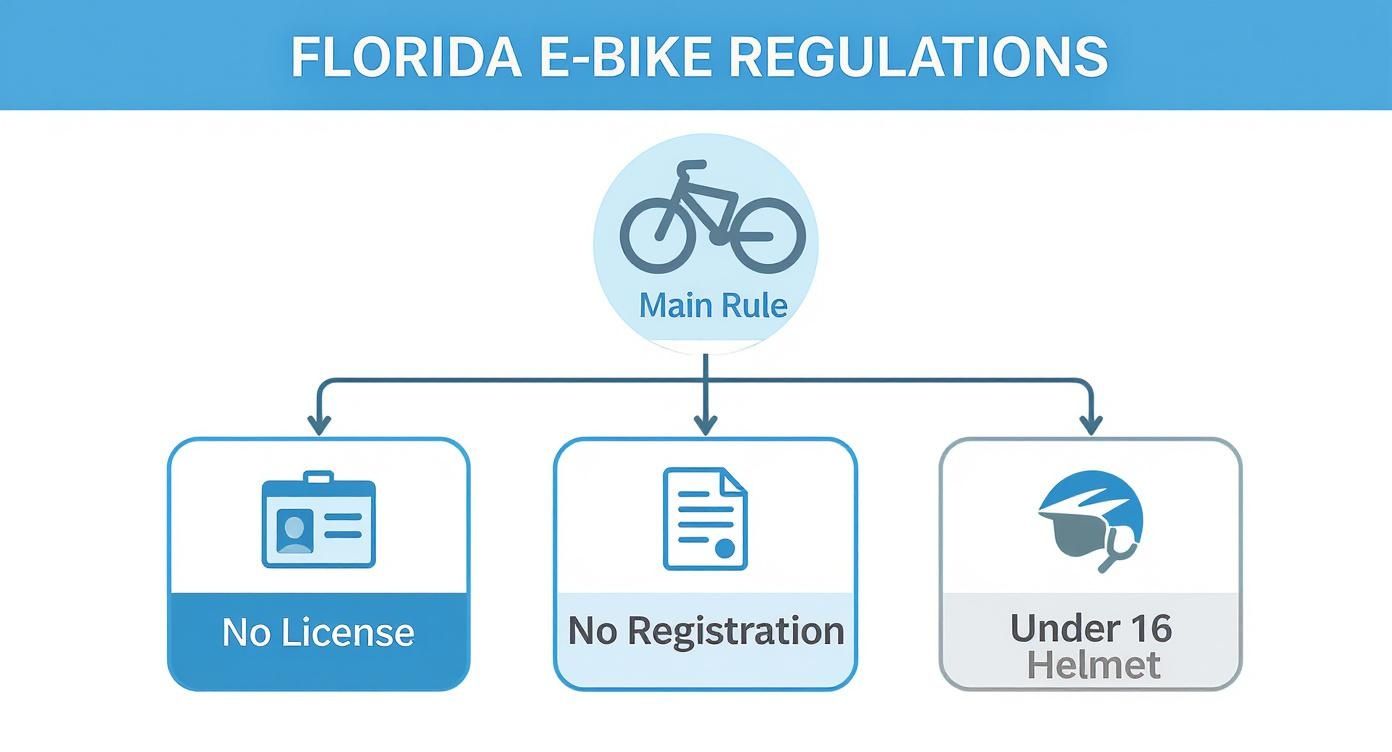
As you can see, Florida keeps it simple: no license, no registration. Just get on and ride (with a helmet if you're under 16!).
Class 2: The Throttle-Powered Ride
Next up is the Class 2 e-bike. The big difference here? The throttle. These bikes give you the option to engage the motor with a simple twist or push of a button—no pedaling required. It's the closest you can get to a scooter experience on an e-bike.
Like its Class 1 sibling, the motor on a Class 2 bike also stops assisting at 20 mph. This class is fantastic for riders who want the ultimate flexibility. Need a quick, sweat-free start from a red light? Just use the throttle. Feel like getting some exercise? Pedal away.
Class 3: The Speedy Commuter
Last but not least, we have the Class 3 e-bike—the speed demon of the group. Like a Class 1 bike, the motor only works when you’re pedaling. You won't find a throttle on a true Class 3 machine.
The real game-changer is the speed. The motor will keep helping you all the way up to 28 mph. That extra kick makes Class 3 bikes a top choice for serious commuters who need to cover ground quickly and safely merge with city traffic. Just be aware that their higher speed means they sometimes face more restrictions on shared-use paths, so always check local signage.
Key Takeaway: Every e-bike sold in Florida is required to have a label from the manufacturer right on the frame. It will clearly state the bike's class, top assisted speed, and motor wattage. This little sticker is your best friend for making sure your ride is compliant and for knowing exactly what you've got.
Where Can I Actually Ride My E-Bike?
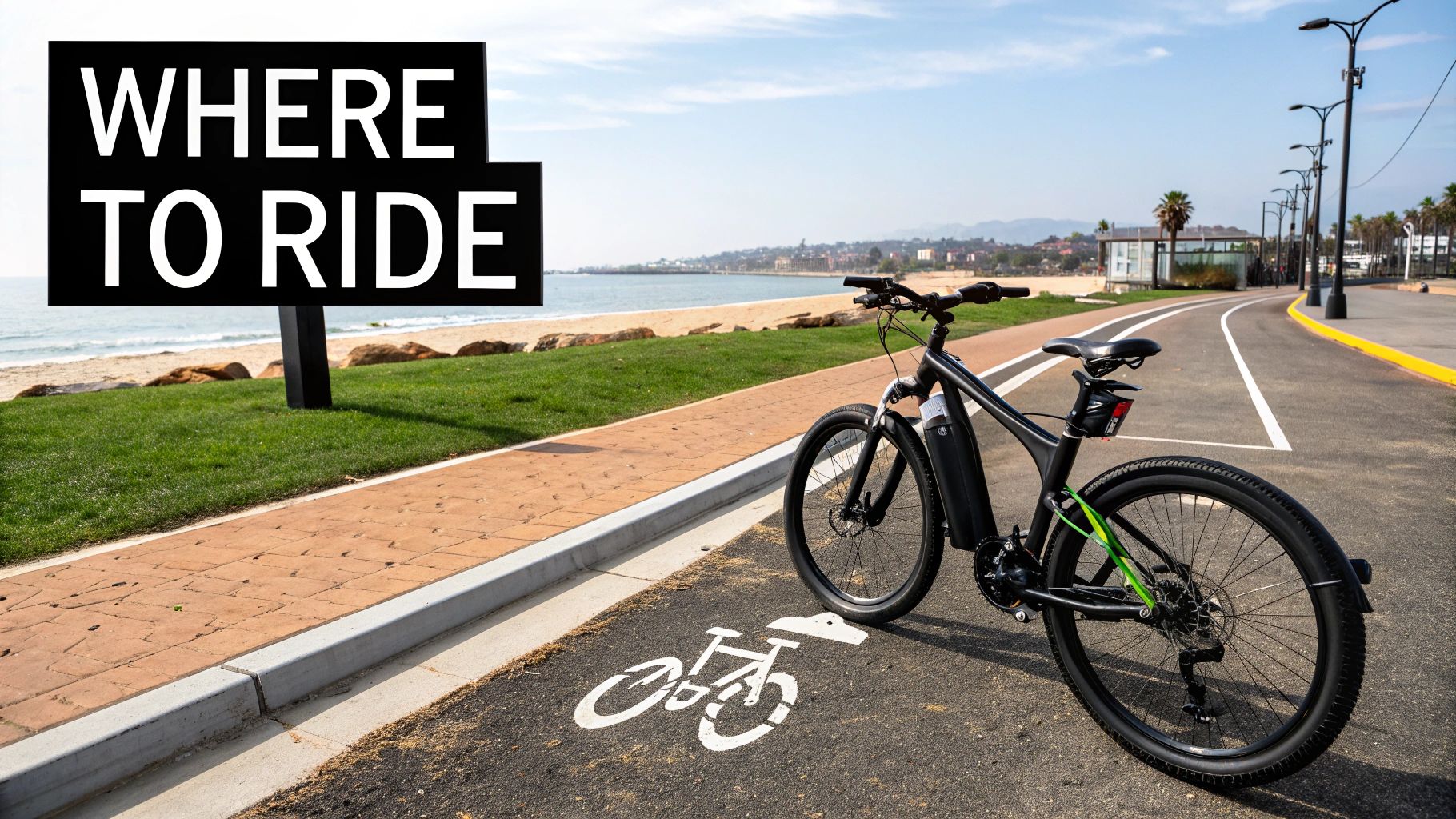
This is the big question, right? The good news is that Florida keeps it pretty simple. The state law basically says that an electric bike is treated just like a regular bicycle. If you can ride a standard bike there, you can probably ride your e-bike there, too.
That simple rule opens up a whole world of possibilities. It means you can ride on city streets, cruise in designated bike lanes, and explore the hundreds of miles of beautiful multi-use paths that make Florida such a great place to ride.
But here's the one catch you absolutely need to know about: local rules. While the state provides the big-picture guidelines, your local city, county, or park service gets the final say. This is where things can get a bit confusing if you’re not paying attention.
The Big Three Places You Can (Usually) Ride
According to Florida Statute 316.20655, your Class 1, 2, or 3 e-bike gets the same access as a traditional pedal bike. This is your green light for most common riding spots.
Generally, you’re welcome to ride your e-bike in these places:
- On the Street: You have every right to be on the road, sharing it with cars. Just be sure to follow all the same traffic laws—ride with the flow of traffic, obey signs and signals, and use hand signals for turns.
- In Bike Lanes: Those painted lanes are for you! Bike lanes give you a dedicated space away from faster traffic, which is perfect for commuting or just a casual cruise.
- On Multi-Use Paths: Florida is packed with incredible paved trails, greenways, and shared-use paths. As long as bicycles are permitted, your e-bike is typically welcome, too. This is where you'll find some of the best car-free riding in the state.
So, the statewide rules make it super convenient to get around. But before you take off, you have to understand how local ordinances can throw a wrench in your plans, especially around touchy areas like sidewalks and nature trails.
Why Local Rules Trump Everything
Think of the state law as the general driving manual, but local ordinances are the specific street signs in front of you. A city or park can legally put up its own rules that are more restrictive than the state's. This is probably the single most important detail to remember when exploring new electric bike laws in Florida.
Where do these local rules usually pop up? It's often in three key areas:
- Sidewalks: The state doesn't have a hard ban on e-bikes on sidewalks, but many, many cities do. Towns like Fort Myers Beach, for instance, have passed their own rules completely banning e-bikes on sidewalks to protect pedestrians.
- Parks and Beaches: Local parks, nature preserves, and beachfronts are notorious for having their own specific regulations. Some might welcome e-bikes with open arms, while others might restrict them to paved paths only or ban them outright to protect sensitive habitats.
- Specific Trails: Even within a large trail system, some sections might be off-limits. Unpaved, single-track mountain bike trails, for example, often prohibit any kind of motorized vehicle—and yes, that includes Class 1 pedal-assist e-bikes—to prevent trail damage.
Here's the best rule of thumb I can give you: When in doubt, look for a sign. Local governments are required to post signs if they restrict e-bikes. If you don't see a sign specifically saying "No E-Bikes," you're usually in the clear wherever regular bikes are allowed.
Navigating the Patchwork of City Rules
It can be a little jarring to see how much the rules can change from one town to the next. You could be in a super e-bike-friendly city and then cross into a neighboring community with much tougher restrictions.
Before you head out to a new area, just do a quick search for "[City Name] electric bike ordinances." A couple of minutes of homework can save you the headache of an unexpected fine and let you enjoy your ride without worry. It’s a simple habit that will let you explore all the amazing places Florida has to offer with total confidence.
Essential Rules of the Road for Riders
Knowing where you're allowed to ride is one thing, but knowing how to ride legally and safely is the real key. Florida’s rules for e-bikes are thankfully pretty straightforward. They basically blend the familiar rules of regular cycling with a few extra considerations for that electric boost. Think of it as your pre-ride checklist.
Following these rules isn’t just about avoiding a ticket. It's about keeping yourself and everyone else on the road safe. From the gear you wear to the specs of your bike, these are the fundamentals of responsible e-biking in the Sunshine State.
Helmet Rules and Age Restrictions
Safety first, always. Florida law is especially clear when it comes to protecting younger riders, and this is one area of electric bike laws in Florida you absolutely need to know.
The big one is simple: any rider or passenger under the age of 16 must wear a properly fitted bicycle helmet. That's non-negotiable. But honestly, it’s a smart move for everyone, regardless of age. E-bikes carry more speed than traditional bikes, which means a fall can be a lot more serious.
Look, even if you're over 16, a helmet is the single best piece of safety gear you can own. It’s not just about what's legal; it’s about what could save your life in a crash.
There’s also a hard age limit for operating an e-bike. You must be at least 16 years old to ride any class of e-bike in Florida. This ensures riders have a baseline level of road awareness before hopping on a motorized bike, especially a zippy Class 3 model.
Following Traffic Laws and Staying Predictable
Once you hit the road, your e-bike is treated just like a regular bicycle. That means you have all the same rights and all the same responsibilities as any other cyclist. You've got to obey traffic signals, stop signs, and all the painted lines on the road. The key to staying safe is simple: be predictable.
One of the most fundamental rules is to go with the flow. As Florida bicycle travel direction laws make clear, you have to ride in the same direction as traffic, never against it. It's a simple habit that prevents dangerous head-on encounters and keeps you visible where drivers expect to see you.
Here are the core traffic rules to burn into your brain:
- Ride with Traffic: Always stay on the right side of the road, moving in the same direction as cars.
- Use Hand Signals: Let drivers and other cyclists know what you're doing. Signal your turns and stops clearly.
- Obey All Signs: A red light is a red light, and a stop sign means stop. These rules apply to you just as much as they do to a car.
- Stay Alert: Put the phone away. Keep your eyes and ears open for cars, pedestrians, and potholes.
The Technical Rules Your E-Bike Must Follow
Finally, let's talk about the bike itself. For your ride to be legally considered an "electric bicycle" in Florida, it has to meet a few technical requirements. These aren't just suggestions—they are what separate a legal e-bike from something that could be classified as an unregistered scooter or moped.
The two main rules are all about the motor and the pedals:
- 750-Watt Motor Cap: Your e-bike’s motor cannot be more powerful than 750 watts (which is about one horsepower). This is a firm ceiling that keeps the bike’s power in the bicycle category, not the motorcycle one.
- Operable Pedals: This is a big one. Your e-bike must have functional pedals that can actually move the bike forward with good old-fashioned human power. If you take them off or have "dummy" pedals, you could be breaking the law.
These tech specs, along with the speed limits for each class (20 mph for Class 1 & 2, 28 mph for Class 3), are what define a legal e-bike. Stick to these, and you can focus on enjoying the ride without any legal headaches.
E-Bikes vs. Mopeds vs. Scooters
https://www.youtube.com/embed/6pEjOQdxudY
With so many two-wheeled rides zipping around Florida, it’s easy to get them mixed up. Is that a high-powered e-bike or a small moped? What really separates your ride from an electric scooter? The differences might seem minor, but in the eyes of the law, they’re massive.
Getting this right is a big deal. It's the difference between cruising freely in a bike lane and needing a license plate and insurance. When you boil it down, Florida law separates these vehicles based on just three key things: the presence of pedals, the motor's power, and the top speed.
Nailing down which category your ride falls into means you're playing by the right rules, keeping you safe and free from unexpected fines or legal trouble.
The Defining Features of an E-Bike
The single most important feature that makes an e-bike a "bicycle" in Florida is simple: operable pedals. This is the hard and fast rule. If your ride doesn't have pedals you can actually use to move it forward, it's not an e-bike. End of story.
Beyond that, the law puts a firm cap on power. To legally be called an electric bicycle, its motor can't be more powerful than 750 watts. This power limit, along with the speed caps for each class (20 mph for Class 1 and 2, 28 mph for Class 3), is what keeps e-bikes in the same category as traditional bicycles. That means no license, no registration, and no insurance required.
How Mopeds Are Different
Mopeds are in a class of their own, somewhere between a bicycle and a motorcycle. Sure, some of them have pedals, but they're often just for show or are completely fixed. The real distinction is all about their power and speed.
In Florida, a moped is typically defined as a vehicle that:
- Has a motor no bigger than 50 cubic centimeters (cc) or 2 brake horsepower.
- Can't go faster than 30 mph on a flat road.
Because mopeds are more powerful and faster than e-bikes, the law treats them as motor vehicles. That’s a game-changer. You must have a valid driver's license (Class E or higher) and register it with the state. It needs a license plate, and you absolutely can't ride it in bike lanes or on multi-use paths.
Want to get into the nitty-gritty of how these two stack up? Check out our in-depth guide on the electric bike vs moped comparison. It’ll help you figure out which ride fits your needs and what you’re signing up for legally.
Where Electric Scooters Fit In
Electric scooters are another animal entirely. They have their own set of rules, mainly because they don't have pedals and are designed with a standing platform. They definitely don't get the same all-access pass that e-bikes do.
To ride an electric scooter in Florida, you have to be at least 16 years old and hold a valid driver's license. You can ride them on streets with a speed limit of 25 mph or less, but they are almost always banned from sidewalks unless a specific city or town says otherwise. They occupy their own legal space, totally separate from the bicycle world of e-bikes and the motor vehicle world of mopeds.
Got Questions? We've Got Answers.
Even after you've got the basics down, real-world riding throws all sorts of curveballs. I get a lot of the same questions from riders trying to sort out the specifics, so I’ve pulled together the most common ones right here.
Think of this as your go-to guide for those "what if" scenarios. We'll cut through the noise and give you straight, practical answers.
Do I Actually Need Insurance for My E-Bike in Florida?
Legally? Nope. Florida law sees your Class 1, 2, or 3 e-bike as a standard bicycle, so you are not required to carry the kind of insurance a car or moped needs.
But just because you don't have to doesn't mean you shouldn't. Here’s the catch: your homeowners or renters insurance probably offers little to no coverage for your e-bike, especially since it has a motor. Many policies specifically exclude "motorized vehicles," and that can leave you in a tough spot.
A dedicated e-bike insurance policy is a game-changer. It can cover you for theft (a huge deal with these bikes), damage, and most importantly, liability if you accidentally cause an accident that injures someone or wrecks their property.
When you think about what a good e-bike costs and the potential financial hit from an accident, a small monthly premium for a proper policy is one of the smartest investments you can make for peace of mind.
So, Can I Cruise My E-Bike on the Beach?
Ah, the classic Florida question. The answer is a definite "maybe." There's no statewide law giving a thumbs-up or thumbs-down to e-bikes on the sand. It’s all up to the local city or county in charge of that stretch of coastline.
Some beach towns embrace bikes, while others have strict bans to protect wildlife (like nesting sea turtles) or to keep the shore safe for pedestrians. It varies from one town to the next.
So how do you know what's cool and what's not?
- Look for signs. This is your number one clue. Beach access points almost always have a list of rules posted.
- Check the local website. Before you load up the car, a quick Google search for "[Town Name] beach rules" will usually give you a clear answer.
- Stick to the path. If there's a paved boardwalk or trail running alongside the beach, that's almost always your safest bet.
When in doubt, play it safe. Assume you can't ride directly on the sand unless you see a sign that explicitly says you can.
What Happens if I Get a Ticket on My E-Bike?
If a police officer pulls you over on your e-bike, the ticket will most likely be a non-criminal traffic infraction, the same kind you’d get on a regular bike. This could be for anything from running a stop sign to riding without lights after dark.
You’ll probably just be looking at a fine. But things can get a whole lot more serious if you've been tinkering with your bike. If law enforcement finds that your e-bike has a motor over 750 watts, can go faster than its class allows, or you’ve removed the pedals to make it more like a scooter, they can reclassify it.
Suddenly, it's not a bicycle anymore—it's an unregistered motor vehicle. That means bigger fines, the risk of having your bike impounded, and even citations for driving without a license. The bottom line: keep your e-bike legal and compliant.
What's the First Thing I Should Do After an Accident?
An e-bike crash is scary and disorienting, but what you do in the moments immediately following is absolutely critical for your health and any potential claim. Your safety is always priority number one.
Here’s a simple checklist to run through if you're ever in an accident:
- Get to Safety: If you can, move yourself and your bike out of the road and away from traffic.
- Call 911: Always. Report the crash and ask for paramedics, even if you think you're okay. Adrenaline can mask serious injuries, and a police report is an essential official record.
- Gather Info: Get the contact and insurance details from everyone involved. Use your phone to snap photos of everything—the scene, the vehicles, your bike, your injuries, and any relevant signs or road conditions.
- Find Witnesses: If anyone saw what happened, politely ask for their name and number. An impartial witness can be a huge help later on.
- Watch What You Say: Stick to the facts. Avoid apologizing or saying anything like, "That was my fault." Those statements can be used against you, even if you were just being polite.
- Talk to a Pro: Get in touch with an attorney who specializes in bicycle and e-bike accidents. They can help you navigate the tricky world of insurance companies and make sure you're treated fairly.
Ready to hit the road with confidence? At Punk Ride LLC, we offer a curated selection of top-brand electric bikes and scooters that are fully compliant with Florida's laws. Find the perfect ride to match your style and start your next adventure today. Explore our collection at https://www.punkride.com.
Share:
electric scooter with seat for adults: The ultimate guide
Finding the Best Ebike for Trail Riding