


Træt af trafikpropper? Færdig med at klemme dig ind i overfyldte tog og busser? Hvis du nikker genkendende, er du kommet til det rette sted. Denne guide er din køreplan til at slippe for den daglige trummerum og slutte dig til el-cykelbevægelsen, der fuldstændigt ændrer måden, vi bevæger os gennem vores byer på.
Velkommen til fremtiden for din pendling
At vælge en el-cykel handler ikke bare om at købe et nyt sæt hjul. Det handler om fuldstændigt at genopfinde din daglige rejse, gøre den hurtigere, grønnere og ærligt talt meget sjovere. Du træder ind i en af de mest spændende og hurtigst voksende måder at komme rundt på.
Vi er her for at skære igennem det forvirrende tekniske jargon og fokusere på, hvad der virkelig betyder noget for dine byture. Vi gennemgår alt fra motorer og batterier til de forskellige færdselsregler i UK, EU, USA og Australien, så du kan køre med fuld selvtillid.
Så, hvorfor er alle pludselig på en el-cykel?
El-cykel-boomet er ikke bare en trend; det er en løsning på mange virkelige problemer, vi alle står overfor. Folk skifter til el-cykler af nogle meget kloge grunde:
- Ingen flere svedige ankomster: Kom til kontoret frisk. Den elektriske assistance udjævner bakker og får modvind til at forsvinde, så du kan ankomme klar til dagen, ikke klar til et bad.
- Spare dine penge: Glem benzinpriser, dyre månedskort til offentlig transport og den endeløse jagt på dyr parkering. El-cykler lægger penge tilbage i din lomme.
- Bliv grøn, uden besvær: Hver tur hjælper med at reducere forurening og gør din bys luft lidt renere. Det er en gevinst for dig og en gevinst for planeten.
- Slå trafikken: Dette er det store. Du kan suse forbi bilkøer og finde en parkeringsplads næsten overalt. Det er den ultimative bylivs-hack.
Dette er ikke længere en nichehobby. Det globale marked for el-cykler blev vurderet til omkring 61,89 milliarder USD og forventes næsten at fordobles til 113,64 milliarder USD i 2030. For dig betyder denne enorme vækst flere valgmuligheder, bedre teknologi og mere konkurrencedygtige priser end nogensinde før. Du kan dykke dybere ned i de blomstrende tendenser på el-cykelmarkedet på grandviewresearch.com.
At vælge en el-cykel i dag betyder, at du får en maskine, der er perfektioneret gennem års innovation. Pendling i byen er den vigtigste grund til, at folk køber el-cykler, så al den nyeste og bedste teknologi er designet specielt til ryttere som dig.
Når du er færdig med denne guide, vil du præcis forstå, hvorfor millioner skifter fire hjul ud med to, og du vil være fuldt rustet til at vælge den perfekte cykel til din nye og forbedrede pendling.
Motoren og brændstoftanken på din el-cykel
Okay, lad os komme til det gode – de dele, der gør en el-cykel elektrisk. Vi taler om motoren og batteriet. Det er en simpel måde at tænke på: motoren er din motor, der giver dig det fantastiske boost, og batteriet er din brændstoftank, der bestemmer, hvor langt sjovt varer. At mestre disse to komponenter er stort set det vigtigste skridt i at finde den rigtige cykel.
Motoren er det, der træder til med pedalassistance og flader en kæmpe bakke ud, som var det ingenting. Når du begynder at kigge på cykler, vil du se to hovedtyper stort set overalt. De giver hver især en helt forskellig køreoplevelse og er bygget til forskellige slags eventyr.
Navmotorer: Din pålidelige assistent
Først har du navmotoren. Den finder du lige i midten af et hjul, som regel baghjulet. Den bedste måde at beskrive følelsen på er som at have en blid, stabil hånd, der skubber dig fremad. Det er et konstant boost, der arbejder selvstændigt og sender kraft direkte til hjulet.
Dette design holder tingene simple, pålidelige og som regel lidt lettere for pengepungen. Navmotorer er perfekte til at cruise rundt i byen på flade gader eller til afslappede ture, når du bare vil have et nemt, effektivt boost uden besvær.
Midtmotorer: Din performance-partner
Så er der midtmotoren. Den sidder lige midt i stellet, nede ved pedalerne. I stedet for at skubbe direkte på hjulet, tilfører den kraft til kranken, så dens energi smelter sammen med din egen træden. Det føles mindre som et skub og mere som om, du pludselig har fået bioniske ben.
Fordi de arbejder sammen med cyklens gear, er midtmotorer meget mere effektive, især når du kæmper dig op ad stejle bakker. De giver dig en meget mere naturlig og responsiv kørsel, hvilket er grunden til, at du ser dem på el-mountainbikes og performance-pendlere, der skal klare alle slags terræn.
Vigtig pointe: Vælg en navmotor, hvis du vil have et enkelt, overkommeligt boost til bykørsel. Vælg en midtmotor, hvis du ønsker en problemfri, kraftfuld følelse til at bestige bakker og en mere intuitiv, højtydende kørsel.
For at hjælpe dig med at visualisere, hvor tingene bevæger sig hen, bryder dette kort de vigtigste elementer ned, der driver el-cykelrevolutionen frem – fra at gøre din pendling bedre til den smarte teknologi, der er pakket indeni.
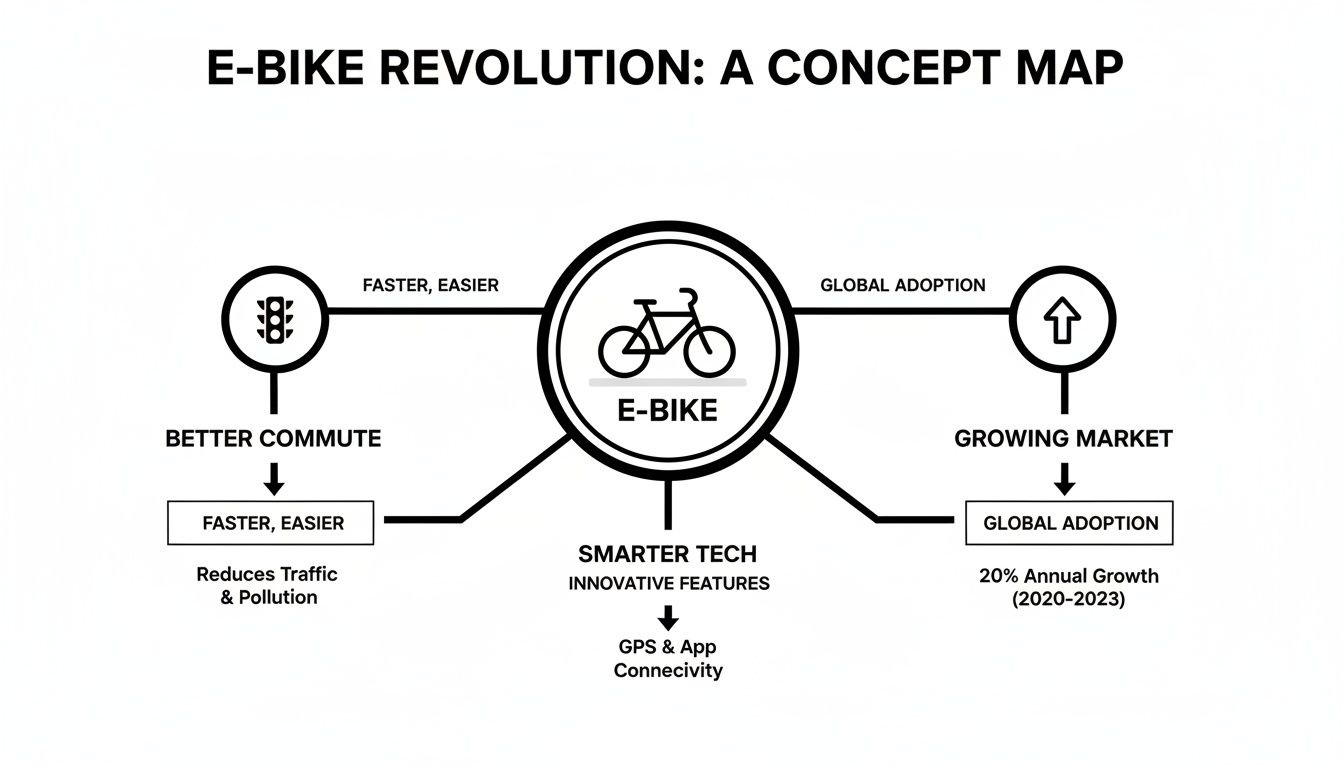
Dette viser virkelig bare, hvordan det hele passer sammen, og forklarer, hvorfor så mange mennesker dropper deres biler til fordel for el-cykler. Da de rammer det perfekte punkt med lav pris og enkel vedligeholdelse, er navmotorer på vej til at blive det mest populære valg globalt i 2025. Det er derfor, mærker som ENGWE og DUOTTS elsker at bruge dem i deres by- og foldecykler. For dig betyder det, at en cykel med navmotor er et super solidt, fremtidssikret valg.
For at give dig et klarere billede, her er en hurtig oversigt over, hvordan de to motortyper står i forhold til hinanden.
Navmotor vs. midtmotor: en hurtig sammenligning
| Funktion | Navmotor | Midtmonteret motor |
|---|---|---|
| Fornemmelse | En "skubbe"-fornemmelse | Naturligt, som stærkere ben |
| Bedst til | Bypendling, fladt terræn | Bakker, varieret terræn, stier |
| Effektivitet | God på fladt terræn | Fremragende, især på bakker |
| Pris | Mere overkommeligt | Mere dyr |
| Vedligeholdelse | Simplere, selvstændig | Mere kompleks, integreret |
| Vægt | Skævvrider cyklen en smule | Centreret, balanceret vægt |
Mens midt-motorer ofte vinder på ydeevne, giver en kvalitets navmotor dig fantastisk værdi for pengene og er mere end nok for de fleste daglige ryttere.
Forstå din el-cykels brændstoftank
Lad os nu tale om batteriet—"brændstoftanken." Dets kapacitet er det største, der bestemmer din cykels rækkevidde, punktum. Specifikationerne kan se lidt forvirrende ud, men lad os bryde det ned med en vandflaske-analogi.
- Volt (V): Tænk på Volt som vandtrykket. Højere spænding leverer kraft til motoren med mere kraft, hvilket du vil mærke som hurtigere acceleration. De fleste el-cykler, du ser, har 36V eller 48V systemer.
- Amp-timer (Ah): Det er størrelsen på din flaske. Det er, hvor meget energi batteriet kan indeholde. Så et 15Ah batteri har mere "saft" end et 10Ah.
- Watt-timer (Wh): Det er tallet, der virkelig betyder noget. Det fortæller dig den samlede kapacitet—hvor meget vand du har til hele turen. Bare gang Volt med Amp-timer (V x Ah = Wh). Et 48V, 10Ah batteri giver dig i alt 480Wh.
Et højere Wh-tal betyder næsten altid, at du kan køre længere på en enkelt opladning. Til en daglig pendling er et batteri omkring 400-500Wh et godt sted at starte. Hvis du planlægger længere eventyr eller har mange bakker på din rute, vil du måske kigge efter noget med 600Wh eller mere.
Selvfølgelig er det en færdighed at få mest muligt ud af hver opladning. Du kan lære nogle gode tricks ved at tjekke vores guide til at forlænge dit el-cykelbatteris levetid.
Og husk, god batteripleje handler om mere end bare opladning. At vide, hvordan du sikkert opbevarer dit el-cykels lithiumbatteri er afgørende for at holde det sundt i mange år og undgå sikkerhedsproblemer. Et glad batteri betyder en glad tur.
Find den rigtige el-cykel til din livsstil
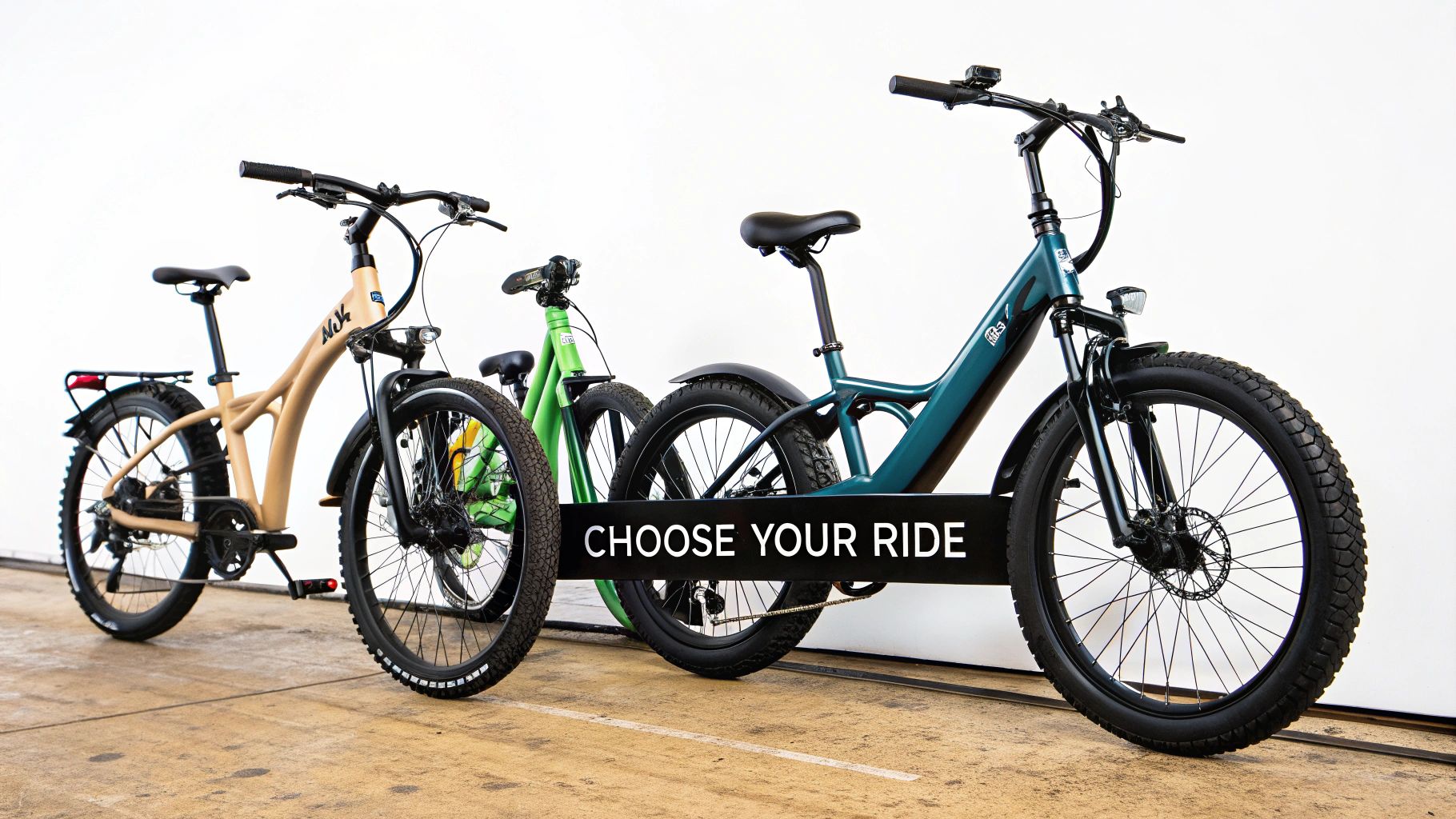
Okay, du har styr på det grundlæggende om motorer og batterier. Nu til den sjove del—at finde den cykel, der faktisk passer til dit liv.
Tænk på det som at vælge et godt par sko. Du ville vel ikke have vandrestøvler på til et bryllup, vel? Den samme logik gælder her. Den type el-cykel, du vælger, vil gøre din daglige tur god eller dårlig, så lad os få det rigtigt.
For os, der navigerer i bylivet, har nogle specifikke typer elcykler virkelig bevist deres værd. At finde ud af, hvilken der passer til din daglige rutine, er det vigtigste skridt.
Urban E-Cykel Lineup
Lad os gennemgå hovedaktørerne, du vil se cruise gennem byen. Hver enkelt er et værktøj bygget til en specifik opgave.
-
Hybrid E-Cykler: Allrounderne
Disse er schweizerknivene i elcykelverdenen. De giver dig en behagelig, opret køreposition for god synlighed i trafikken, flade styr for nem kontrol og et design, der er den perfekte mellemvej mellem fart og stabilitet. De håndterer alt fra glatte cykelstier til mindre perfekte byveje med lethed. -
Sammenklappelige E-Cykler: Pladsbesparerne
Hvis din pendling er en blanding af cykling og at hoppe på tog eller bus, er en sammenklappelig elcykel en total game-changer. Det samme gælder, hvis du har lidt plads til opbevaring hjemme eller på arbejde. Modeller fra mærker som HITWAY er bygget til at skrumpe sammen på sekunder og kan nemt gemmes under et skrivebord eller i en bagageholder. -
Fat Tire E-Cykler: Komfortkrydsere
Lad dig ikke narre af det barske udseende – fat tire-cykler er fantastiske til bykørsel. De store, kraftige dæk, som dem på CYSUM-cykler, er som at have indbygget affjedring. De flyder bare over huller, brosten og revnet asfalt og giver dig en utroligt glat og stabil tur.
Det handler ikke om at finde den "bedste" cykel, men om at finde den bedste cykel for dig. En hybrid er perfekt, hvis du kører dør-til-dør, men en sammenklappelig cykel er genial til at løse det vanskelige "sidste kilometer"-problem, når du tager offentlig transport.
Byliv betyder ofte at udnytte pladsen bedst muligt, og derfor er kompakte cykler så populære. Vi går meget mere i dybden med, hvordan de kan ændre din pendling totalt i vores guide om fordelene ved en sammenklappelig elcykel til pendlere.
At få den rigtige pasform er ikke til forhandling
Når du har fundet en stil, skal vi tale om pasformen. Dette er uden tvivl den mest kritiske del for din komfort og sikkerhed. En cykel i den forkerte størrelse er ligesom et par sko, der klemmer dine fødder – det vil gøre dig ulykkelig og kan endda være farligt.
Den rigtige pasform betyder, at du nemt kan nå styret, træde effektivt, og – vigtigst af alt – sætte fødderne fladt på jorden, når du stopper. Den sidste del er afgørende for at føle sig selvsikker og have kontrol, især i stop-og-kør bytrafik.
Sådan måler du din stelstørrelse derhjemme
Du behøver ikke være professionel for at få det rigtigt. Med et målebånd og en væg kan du få en solid måling på få minutter.
- Mål din skridtlængde: Tag skoene af og stå med ryggen fladt mod en væg, fødderne cirka seks tommer fra hinanden. Tag en hardcover bog og skub den op mellem benene, med ryggen opad, indtil den sidder tæt som en cykelsadel ville gøre.
- Marker og mål: Hold bogen stabil, og få en ven til at markere væggen lige ved toppen af bogens ryg. Mål nu bare fra det mærke lige ned til gulvet. Det tal er din skridtlængde.
- Se på størrelsesdiagrammet: Hver cykelmodel på vores side har sit eget størrelsesdiagram. Find bare din skridtlængde på diagrammet for at se den anbefalede stelstørrelse.
Det var det. Denne simple tjek fjerner gætteriet ved onlinekøb og sikrer, at din nye cykel føles fantastisk fra det allerførste tråd. At bruge fem minutter på dette nu vil spare dig for hundredvis af timer med ubehagelig kørsel senere.
Balancer dit budget, rækkevidde og effekt
Når du begynder at dykke ned i el-cykler, vil du hurtigt se tre tal dukke op igen og igen: prisen, den annoncerede rækkevidde og motorens effekt. Tænk på dem som et klassisk "vælg to"-scenario. En cykel kan være kraftfuld og have lang rækkevidde, men den bliver ikke billig. At finde din perfekte cykel handler om at finde den rette balance til din daglige rutine.
Det er det gamle kompromis. En cykel bygget til at køre langt med et kæmpe batteri og en motor, der spiser bakker til morgenmad, vil naturligvis have en højere pris. Omvendt vil en mere budgetvenlig el-cykel sandsynligvis have et mindre batteri og en motor, der trives bedre på kortere, fladere ruter. Der er ikke noget enkelt "bedste" svar her—det handler om at matche cyklens specifikationer med, hvordan dine ture ser ud i virkeligheden.
Afkodning af den annoncerede rækkevidde
Lad os være ærlige, rækkeviddeestimater kan være en af de mest forvirrende ting ved køb af en el-cykel. Du vil se påstande som "op til 60 miles," men det tal kommer altid med en stor stjerne. Din faktiske, virkelige rækkevidde afhænger af en masse faktorer, som producenterne bare ikke kan forudsige i et enkelt pænt tal.
- Dig + Dine ting: En tungere rytter eller en, der slæber en uges indkøb, vil se deres batteri drænes hurtigere end en lettere rytter, der kører alene.
- Terrænet: Bakker er den ultimative batteridræber. En flad 10-miles tur bruger lidt strøm, mens en kuperet 10-miles tur sluger den.
- Dit assistanceniveau: At suse rundt i "Turbo"-tilstand er sjovt, men det vil skære din rækkevidde ned sammenlignet med at køre i den laveste "Eco"-indstilling.
- Vejret: At kæmpe mod modvind får din motor til at arbejde overtid. Og på en kølig dag kan dit batteris effektivitet falde med så meget som 20%.
Dit bedste bud er at betragte den annoncerede rækkevidde som et "perfekt verden"-scenario. En god tommelfingerregel er at kigge efter en cykel med en annonceret rækkevidde, der mindst er 30-40% mere end din længste typiske tur-retur. Det giver dig en god buffer til bakker, blæsende dage eller bare de gange, hvor du føler behov for fart.
Denne lille realitetstjek hjælper dig med at undgå "rækkeviddeangst"—den nagende frygt for, at dit batteri dør mange kilometer hjemmefra. Det handler om at købe den rækkevidde, du faktisk har brug for, ikke bare det største tal på kassen.
Det perfekte balancepunkt mellem pris og ydeevne
Så, hvad er det magiske tal for dit budget? Nøglen er at tænke på værdi, ikke kun den indledende pris. For de fleste bypendlere handler beslutningen virkelig om tre ting: rækkevidde, pris og de samlede ejeromkostninger. Hele grunden til, at el-cykler boomer, er, at folk ønsker en grønnere måde at komme rundt i byen på, mest til ture under 10 km. Her bliver valget mellem en basal model og en mere poleret mulighed fra mærker som ENGWE eller ELEGLIDE klart. Nogle gange betaler det sig virkelig at bruge lidt mere på en kvalitetsmotor og et moderne lithium-ion-batteri over tusindvis af kilometer. Du kan dykke ned i dataene bag stigningen i urbane el-cykler på futuremarketinsights.com for at se, hvordan disse tendenser udvikler sig.
For en daglig cyklist betyder en cykel med et pålideligt, effektivt system en bedre tur og færre hovedpiner. Tænk på det sådan: at bruge lidt mere på en cykel med en smartere motor, som du finder på mange ELEGLIDE-modeller, kan presse mere brugbar rækkevidde ud af det samme batteri i samme størrelse. Det er her, god ingeniørkunst bliver til præstation i den virkelige verden.
I sidste ende er dit budget din guide, men at forstå, hvordan disse elementer passer sammen, hjælper dig med at investere klogt. Du køber ikke bare en cykel; du køber en pålidelig måde at komme rundt på. Ved at finde dit personlige balancepunkt vil du lande en el-cykel, der har den kraft, du har brug for, og den rækkevidde, du kan regne med, alt sammen til en pris, der giver mening.
Navigering i lokale regler og sikkerhed for el-cykler
Der er en utrolig følelse af frihed, der følger med at eje en el-cykel, men den frihed kommer med nogle grundregler. At få styr på dine lokale love handler ikke kun om at undgå en bøde – det handler om at holde dig selv og alle andre på vejen sikre. Den gode nyhed? Reglerne er ret enkle, når du kender det grundlæggende.
Tænk på el-cykellove som at have forskellige "varianter" afhængigt af, hvor du bor. USA, Australien, UK og EU ønsker alle det samme (sikker kørsel!), men de har hver deres måde at nå dertil på. At vide, hvilke regler der gælder for dig, er en stor del af at vælge den rigtige cykel.
Forståelse af el-cykelklasser i USA
I USA bliver el-cykler generelt inddelt i tre klasser. Dette system er en enkel måde at definere, hvor du kan køre, og hvor hurtigt motoren kan hjælpe dig med at køre.
- Klasse 1: Motoren træder kun i kraft, når du træder i pedalerne, og stopper med at assistere ved 20 mph. Disse er de mest almindelige og bredt accepterede el-cykler, som normalt er tilladt overalt, hvor du kan tage en almindelig cykel.
- Klasse 2: Denne klasse når også op på 20 mph, men har en gasregulator. Det betyder, at du kan få et boost uden at træde i pedalerne, hvilket er fantastisk til at komme i gang fra stilstand.
- Klasse 3: Gruppens fartdjævel. Motoren yder pedalassistance helt op til 28 mph. Fordi de er hurtigere, har de ofte flere restriktioner og er som regel ikke tilladt på fælles stier og spor.
Regler kan variere fra stat til stat eller endda by til by. Det er altid en god idé at tjekke en detaljeret oversigt over el-cykel love efter stat for at se, hvad der gælder i dit område.
Regler for el-cykler i Storbritannien, EU og Australien
I Storbritannien, EU og Australien er tingene meget mere ensartede. En el-cykel betragtes juridisk som en "elektrisk assisteret cykel" (EPAC), men kun hvis den opfylder nogle specifikke krav.
Cykelens motor må ikke overstige en maksimal kontinuerlig effekt på 250 watt. Derudover skal motoren stoppe med at hjælpe dig, når du når 25 km/t (ca. 15,5 mph). Så længe din cykel passer til denne beskrivelse, kan du køre på den som en almindelig cykel—ingen kørekort, ingen registrering, ingen bøvl.
Hold dig inden for de lovlige grænser. Hvis din cykel er mere kraftfuld eller hurtigere, end loven tillader, kan den juridisk set blive betragtet som en knallert eller motorcykel. Det er en helt anden sag, der involverer kørekort, skat og forsikring. Tjek altid, at den cykel, du vil have, er lovlig i dit område.
Dit ufravigelige sikkerhedsudstyr
At følge loven er én ting; at være sikker er alt. Uanset hvor du kører, er et par ting absolut nødvendige.
Din hjelm er nummer et. En hjelm af høj kvalitet, der passer korrekt, er det vigtigste udstyr, du kan eje, punktum. I nogle steder er det ikke bare en god idé, det er loven. For eksempel viser forståelsen af Florida cykelhjelmslov, hvordan hovedbeskyttelse endda kan have juridiske konsekvenser efter en ulykke.
Lyse for- og baglygter kommer lige efter. Brug dem dag og nat. De gør dig meget mere synlig for bilister, hvilket er nøglen til at navigere sikkert i trafikken.
Den hurtige sikkerhedskontrol før turen
Før du tager afsted, så gør det til en vane med en hurtig "ABC"-tjek. Det tager under et minut og kan forhindre, at et lille problem bliver til en tur-afsluttende hovedpine.
- A står for Luft: Klem godt på dine dæk. De skal føles faste. Korrekt oppustede dæk hjælper dig med at undgå punkteringer og giver dig meget bedre kontrol.
- B står for Bremser: Træk begge bremsegreb. De skal føles faste og stoppe hjulet helt, ikke bløde eller svage.
- C står for kæde: Kig på din kæde. Du leder efter en ren, let smurt kæde, ikke noget der er rustent, tørt eller dækket af snavs.
Denne simple rutine holder din cykel kørende glat og giver dig ro i sindet til bare at slappe af og nyde turen.
Din endelige tjekliste før køb
Okay, du er nået til målstregen! Al research er bag dig, og du er næsten klar til at slå til. Tænk på dette som din sidste fornuftskontrol—en hurtig gennemgang for at sikre, at alle dine ting er på plads, før du binder dig.
Det handler ikke om at tvivle på dig selv. Det handler om at låse dine beslutninger fast med selvtillid, så du ved, at cyklen, der er på vej til dig, virkelig er den rigtige for dig.
Fastlæg dine kernebehov
Lad os hurtigt gå tilbage til det grundlæggende. En hurtig gennemgang nu vil spare dig for "hvad nu hvis"-øjeblikke senere.
- Cykelstil: Er du fast besluttet på den alsidige hybrid? Eller vandt bekvemmeligheden ved en foldecykel eller den bløde kørsel på en fat tire-model dig over? Dobbelttjek bare, at den passer til dit rum og dine ture.
- Motorpræference: Har du besluttet dig mellem den problemfri kraft fra en navmotor til bykørsel og den overlegne klatretorque fra en midtmotor til at klare bakkerne?
- Reel rækkevidde: Tænk på din længste typiske tur. Sørg for, at cyklens batteri (de Watt-timer, vi talte om) giver dig en solid 30-40% buffer. Du vil takke dig selv senere, når du ikke sveder over de sidste par kilometer hjem.
- Dit budget: Har du fundet den perfekte balance, hvor du får de funktioner, du faktisk har brug for, uden at betale for meget for dem, du ikke behøver?
Sådan læser du online anmeldelser som en professionel
Anmeldelser er ren guld, men du skal vide, hvordan du finder det. Kig ikke bare på stjernerne og gå videre; dyk ned i kommentarerne for at finde den sande historie.
Se efter mønstre. Er flere personer begejstrede for den glatte kørsel, men klager over bremserne? Vær opmærksom på, hvordan virksomheden reagerer på problemer. En strålende anmeldelse fra en, hvis problem blev løst hurtigt og smertefrit, fortæller ofte mere end en anmeldelse fra en, der aldrig havde et problem.
Det vigtigste er at finde anmeldelser fra folk, der kører som dig. Deres erfaring vil være det tætteste, du kommer på en forsmag på din egen.
Din perfekte el-cykel er derude, og vi er her for at hjælpe dig med at finde den. Hos Punk Ride har vi håndplukket det bedste fra mærker som ENGWE, ELEGLIDE og CYSUM for at dække alle typer byryttere. Vores team lever og ånder for det her, så vi kan hjælpe med at matche din tjekliste til den perfekte model.
Når du har truffet dit valg, behøver du ikke vente længe. Takket være vores lagre i USA, Storbritannien og EU får vi din cykel hurtigt frem til dig. Du har viden—nu er det tid til at komme i gang. Den åbne vej kalder.
Har du et par tilbageværende spørgsmål?
Okay, du har fået en masse information, men der er altid et par sidste-øjebliks spørgsmål, der dukker op i dit hoved. Det er helt normalt. Lad os tage fat på de almindelige "hvad nu hvis" og "hvad med" så du kan føle dig 100% sikker på dit valg.
Vi hører disse spørgsmål hele tiden fra nye ryttere, så lad os give dig nogle hurtige, klare svar.
Hvor langt kan jeg virkelig køre på en opladning?
Dette er den store. Selvom du vil se mærker reklamere med nogle ret imponerende maksimale rækkevidder, så tænk på de tal som brændstoføkonomimærkningen på en bil—det er et bedste tilfælde scenarie. Din faktiske rækkevidde afhænger af mange faktorer.
Din vægt, bakkerne på din rute, hvor meget du bruger turbo-tilstanden, og endda en kraftig modvind spiller alle en rolle. For de fleste byfokuserede el-cykler er en realistisk forventning et sted mellem 25 og 50 miles (40-80 km). En god tommelfingerregel er at vælge en cykel med en angivet rækkevidde, der komfortabelt overstiger din længste daglige tur. På den måde har du altid ekstra strøm til overs.
Har jeg brug for licens eller forsikring for at køre min el-cykel?
For det meste, nej! I Australien, UK, EU og det meste af USA, så længe din el-cykel overholder de lokale regler for effekt (250W (i AU/UK/EU for eksempel) og assisteret hastighed, er du i det klare. Ingen licens, ingen registrering, ingen forsikring nødvendig.
Når det er sagt, kan reglerne være lidt specifikke afhængigt af din amerikanske stat eller endda by. Det skader aldrig at lave en hurtig søgning på dit lokale transportdepartements hjemmeside for at være sikker.
Ærligt talt, det er en af de bedste ting ved en lovlig el-cykel. Den behandles som en almindelig cykel, så du kan bruge cykelstier og -baner uden alt det bureaukrati, der følger med en knallert eller motorcykel.
Hvor meget vedligeholdelse kræver en el-cykel egentlig?
Hvis du kan håndtere grundlæggende cykelpleje, kan du også håndtere en el-cykel. Vi taler om det simple: holde dine dæk pumpede, sørge for at kæden er ren og smurt, og tjekke dine bremseklodser en gang imellem. Alt dette kan du nemt gøre derhjemme.
De elektriske komponenter—motoren, batteriet og displayet—er bygget til at være stort set vedligeholdelsesfri. Det eneste, du virkelig skal være opmærksom på, er dit batteri. Prøv at opbevare det et sted, der ikke bliver ekstremt varmt eller koldt, og lad det ikke stå helt tomt i flere uger ad gangen.
Kan jeg virkelig køre på den her i regnvejr?
Ja, det kan du helt sikkert! Moderne el-cykler er designet til at køre i alle slags vejr. Vigtige elektriske dele er tæt forseglet for at være vandafvisende, så det er ikke et problem at blive fanget i en byge.
Det betyder dog ikke, at du skal tage den med til en svømmetur eller sprøjte den med højtryksrenser. Brug bare sund fornuft. Og husk, våde veje er glatte veje, så tag det roligt og giv dig selv ekstra bremselængde, ligesom du ville gøre på enhver anden cykel.
Din vej til en meget bedre pendling er lige her. Hos Punk Ride har vi håndplukket en række fantastiske el-cykler bygget til bylivet.
Udforsk vores fulde kollektion og find din perfekte tur i dag!
Del:
Sammenklappelig elcykel til pendlere: Den ultimative byguide
Er elektriske løbehjul vandtætte: er elektriske løbehjul vandtætte?