




Picture this: you've just finished a long, satisfying ride. Instead of lugging your entire e-bike inside to charge it, you simply unclip the battery and carry it in like a small briefcase. That's the simple, liberating idea behind an electric bicycle with removable battery. This one feature can completely change the experience of owning an e-bike, turning a logistical headache into a seamless part of your day.
Why Removable Batteries Are a Game Changer
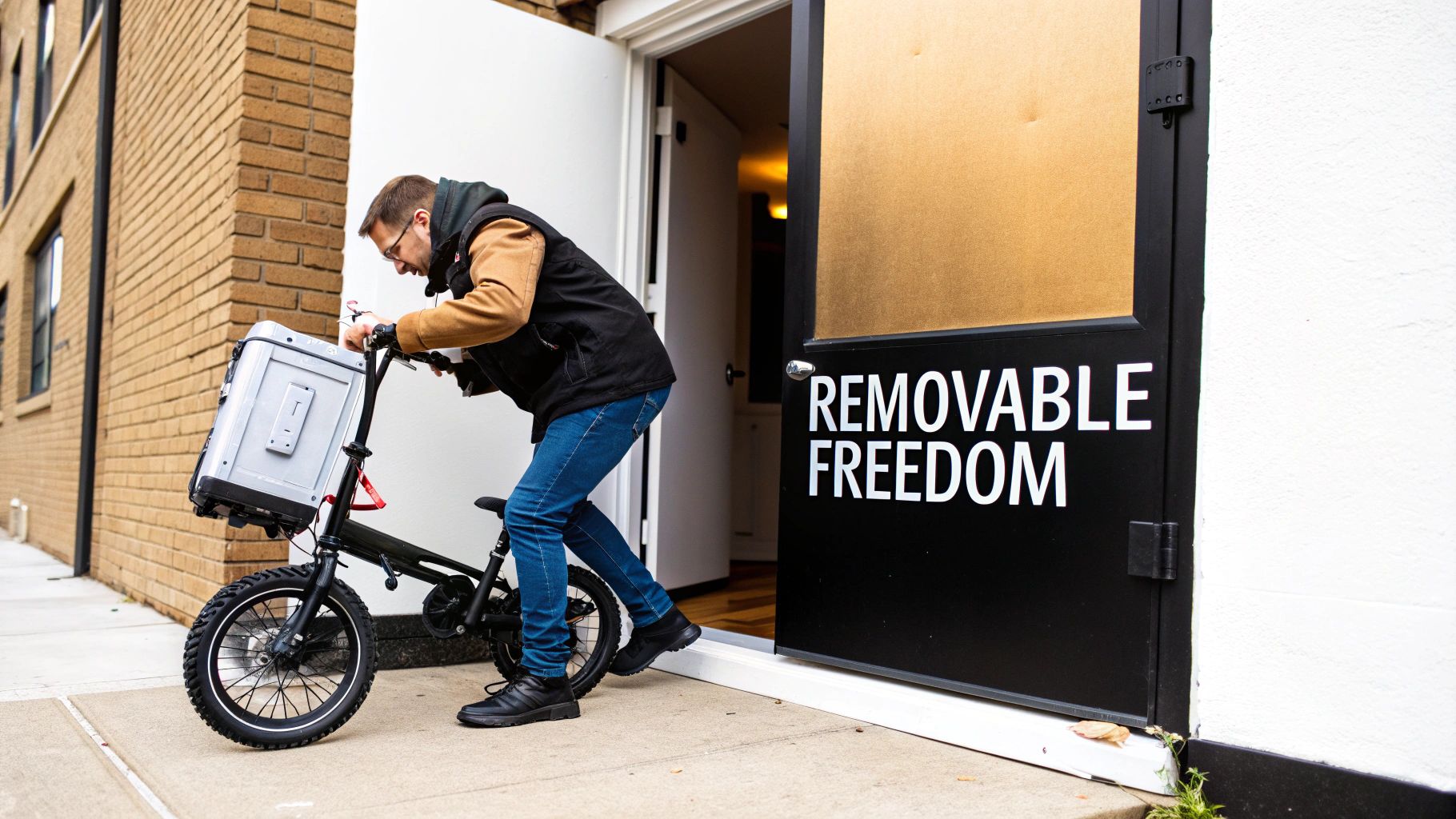
It’s a bit like the difference between a cordless drill with a swappable battery pack and an old-school one that’s permanently tethered to the wall. The swappable pack lets you charge the power source wherever you want while the tool stays in the garage. An electric bicycle with a removable battery gives you that exact same freedom.
Instead of hunting for a ground-floor outlet or a garage space, you can park your bike securely and just take the battery with you. This simple change opens up a world of convenience, especially if you live and work in a city.
The Urban Rider's Best Friend
For anyone living in a New York City apartment or working in a Los Angeles office tower, finding a secure, accessible plug socket is a tall order. Let’s be honest, nobody wants to haul a heavy e-bike up several flights of stairs or squeeze it into a tiny elevator every single evening just to charge it. That’s a dealbreaker for most.
A removable battery neatly sidesteps this entire issue. You can lock your bike up on the street or in a communal storage area, then pop off the battery—which usually weighs a manageable 6-9 lbs—and carry it upstairs to your apartment or to your desk at work.
It’s this feature that makes an electric bicycle with a removable battery the obvious choice for city living. It just works.
- Effortless Charging: You can plug your battery into any standard wall socket, whether you're at home, at the office, or even grabbing a coffee at a friend's place.
- Enhanced Security: Take the battery with you. It’s the most valuable part of the bike, and without it, your locked-up frame becomes a much less attractive target for thieves.
- Ultimate Flexibility: Stop planning your parking around power outlets. Your bike and its battery become two separate, easy-to-manage things.
The ability to separate the bike from its power source is what it's all about. It removes the single biggest hurdle for millions of people in dense US and Australian cities, turning a major hassle into a simple, two-minute task.
The whole idea is that your e-bike should fit into your life, not force you to change your life to fit it. By making the power source portable, manufacturers have made electric bikes more practical and accessible than ever. It's more than just a nice feature; it’s what allows an e-bike to blend right into the flow of a modern, busy life and is a huge reason why so many people are now commuting on them.
The Everyday Perks of a Removable Battery
Okay, so we know what a removable battery is. But let's get into the nitty-gritty of why that actually matters for your day-to-day life. These are the real-world wins that make owning an e-bike with this feature a total game-changer.
Charge It Anywhere, No Drama
This is the big one. The most immediate and obvious benefit is ditching the dreaded extension cord dance. For a lot of us, especially in US cities or Australian metro areas, finding a secure spot to park an entire e-bike right next to a power outlet is a logistical nightmare. A removable battery just sidesteps the whole problem.
Picture this: you get home from your commute to a third-floor walk-up in Brooklyn. Instead of lugging a heavy 55 lb bike up several flights of stairs, you just lock the frame up securely downstairs, pop the battery off, and carry that inside. Suddenly, you can charge it at your desk while you work, in the kitchen while you make dinner, or by your bed overnight. Your bike stays safe, and you stay sane.
This kind of flexibility follows you all day. Need a quick boost at the office? Carry the battery in and plug it in under your desk. Popping over to a friend's house? You can top it up while you catch up over a coffee. Charging becomes a simple, background task instead of a major planning headache.
A Smarter Way to Think About Security
An e-bike is a serious investment, and let's be honest, the battery is the priciest part and the number one thing thieves are after. If the battery is built into the frame, you're forced to leave the whole valuable package locked up outside, making it a very attractive target.
But when you can take the battery with you, the entire security equation changes.
You're essentially deactivating the bike and walking away with its most valuable component. A thief looking for a quick and easy score is far less likely to bother with a heavy, dead frame they can't ride away. It’s a bit like taking the engine out of your car every time you park—it just makes the vehicle a whole lot less interesting to steal.
This simple act adds a powerful layer of security and gives you real peace of mind, whether you're leaving your bike outside the supermarket, at the train station, or in a shared bike shed overnight.
Go Further, Ride Longer
For the weekend explorers and long-haul commuters, range anxiety is a real thing. What if that amazing scenic route you spotted is just a little too long? An electric bicycle with removable battery has the perfect answer: carry a spare.
Think of it like having a reserve fuel tank. A second, fully charged battery slips easily into a backpack or pannier. When your first battery starts to fade, you can pull over, swap it out in less than a minute, and you've instantly doubled your range.
This simple trick can turn a 40-mile e-bike into an 80-mile adventure machine. It opens the door to longer, more ambitious rides without that nagging worry of getting stranded miles from home with a dead battery.
Simplified Maintenance and a Future-Proof Ride
Let's face it, all batteries eventually get old and lose their mojo. With an integrated battery, replacing a worn-out one often means a trip to a specialist bike shop for a complicated and expensive procedure. They might even have to take parts of the frame apart just to get to it.
With a removable battery, you just buy a new one online and click it into place. Done. This dead-simple design makes long-term ownership so much cheaper and less of a hassle.
This convenience has been a huge driver in the market. Removable batteries have totally reshaped the e-bike experience, particularly for urban riders who need to keep moving. In fact, market analysis from Technavio predicts the e-bike battery market will grow by USD 1.63 billion between 2024 and 2029. This boom is fueled by demand for powerful lithium-ion options, which typically last 500-1000 charge cycles before they start to degrade. For brands like ENGWE and ELEGLIDE, this design also helps the bikes hold their resale value. If you want to dive deeper, you can explore the full e-bike battery market analysis on Technavio.com.
How to Read an E-Bike Battery Spec Sheet
Staring at an e-bike’s spec sheet can feel a bit like trying to decipher a secret code. It’s just a wall of numbers, letters, and jargon that can leave you more confused than when you started. But here’s the thing: those numbers are the key to figuring out if an electric bicycle with removable battery is the right fit for you.
Let’s cut through the noise and break down what actually matters. Think of it like this: you don’t need to be a mechanic to buy a car, but you should know what horsepower and fuel economy mean for your daily drive. Same deal here.
The Big Three Battery Numbers
When you’re comparing e-bikes, there are really only three core numbers on the battery spec sheet that tell most of the story. Get your head around these, and you’ll be able to compare models like a pro.
- Voltage (V) is the ‘Horsepower’: Think of voltage as the raw power or "oomph" the battery sends to the motor. In the US and Australian markets, you'll typically see 36V or 48V. A higher voltage usually translates to punchier acceleration and more muscle for climbing steep hills. It’s the bike's brute strength.
- Amp-hours (Ah) is the ‘Fuel Tank Size’: This number tells you how much juice the battery can hold. A battery rated at 10Ah can supply 10 amps of current for one hour. The bigger the Ah number, the longer you can ride before needing a recharge, just like a bigger fuel tank gets you more miles.
- Watt-hours (Wh) is the ‘Total Range’: This is your golden ticket—the single most important number for guessing how far you can actually go. It’s the total energy stored in the battery. The math is simple: just multiply the Voltage by the Amp-hours (V x Ah = Wh). A 500Wh battery will always take you further than a 360Wh one.
So, if you see a 48V 10Ah battery, a quick calculation tells you it has 480Wh of total energy. Use this "Wh" number as your go-to for making a real-world comparison of potential range between different e-bikes.
Physical Details That Matter
Beyond the electrical specs, the physical design of a removable battery makes a huge difference in your day-to-day life with the bike. Where it sits and how it locks in are just as important as the numbers.
The infographic below really nails the key advantages that come from a battery's physical design.
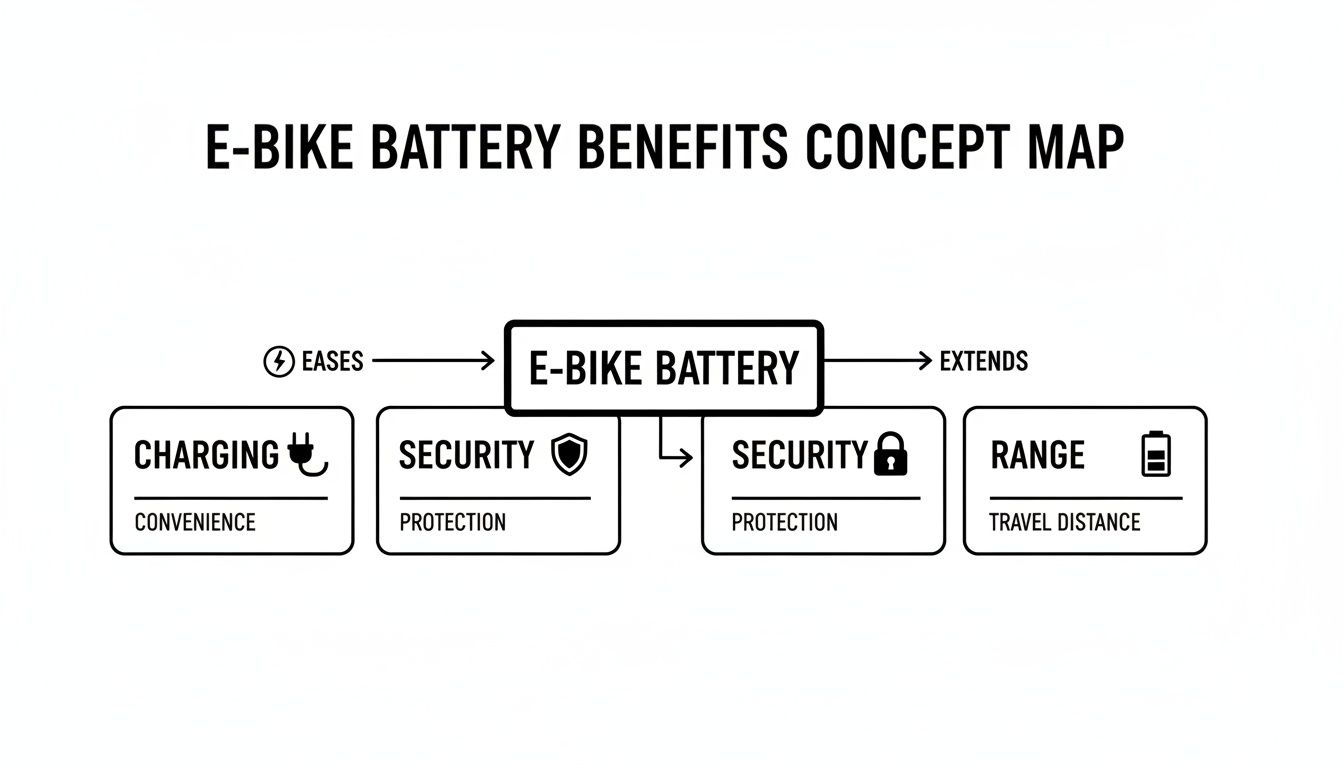
As you can see, the simple act of being able to take the battery off the bike is what unlocks all that convenience and security.
E-Bike Battery Specs at a Glance
This little table breaks down the key specs into simple terms to help you quickly size up any e-bike battery you're looking at.
| Specification | What It Means (Simple Analogy) | Why It Matters for You |
|---|---|---|
| Voltage (V) | The "horsepower" or raw power of the motor. | Higher voltage means better acceleration and hill-climbing ability. |
| Amp-hours (Ah) | The size of the "fuel tank." | A bigger number means more energy storage and a longer time between charges. |
| Watt-hours (Wh) | The total "miles in the tank." (Calculated: V x Ah) | The best single metric for comparing the potential range between different bikes. |
| Weight | How heavy the battery is on its own. | Affects the bike's overall weight and how easy it is to carry the battery. |
| Mounting Position | Where the "fuel tank" is located on the bike frame. | Impacts balance and handling. A low, central position is ideal. |
| IP Rating | The battery's "raincoat." | Tells you how well it’s sealed against water and dust. Crucial for wet climates. |
Think of these specs as the battery's personality traits—they determine how it will perform on your daily rides.
Battery Weight and Mounting Position
An e-bike battery typically weighs between 6 and 9 lbs, which definitely adds to the bike's total heft. But where that weight is placed is even more critical for how the bike feels to ride.
You’ll usually find batteries mounted in one of three spots:
- Downtube: This is the bar running diagonally down the middle of the frame. It's the sweet spot, keeping the weight low and centred for a stable, natural ride.
- Seat Tube: Tucked in behind the seat post. Also a good central spot, but it can sometimes make the bike feel a little taller.
- Rear Rack: Sits over the back wheel. This is pretty common on city and step-through bikes but can make the bike feel a bit back-heavy, especially when you’re not on it.
A sturdy locking mechanism is an absolute must-have, too. It keeps the battery from rattling around and, more importantly, stops thieves from walking off with it. Make sure it has a solid, key-operated lock. You can also dive deeper into how long e-bike batteries last and what you can do to extend their lifespan.
Surviving the Weather with IP Ratings
Whether you're riding through a sudden Sydney downpour or a drizzly Seattle afternoon, you know that rain is just part of the deal. That’s where the IP (Ingress Protection) rating comes in. It’s a simple code that tells you how well the battery's casing is sealed against dust and water.
An IP rating has two numbers. The first is for dust (from 0-6), and the second is for water (from 0-8). For batteries, we mostly care about the water number.
- IPX4: Can handle splashes from any direction. It’ll get you through a light shower.
- IPX5: Can take a soaking from low-pressure water jets. A great choice for daily commuters who know they'll get caught in a real downpour sooner or later.
- IPX6: Protects against powerful water jets. This is top-tier protection for riding in seriously heavy rain.
As a rule of thumb, look for at least an IPX4 rating. But if you’re a committed, all-weather rider, aiming for IPX5 or higher will give you the peace of mind that your bike’s power source is safe and sound, no matter what the sky decides to do.
Charging Your Battery to Maximize Its Lifespan
Think of your e-bike’s battery as its heart. It’s the powerhouse turning a grueling commute into a breezy ride, so treating it right is the best way to guarantee years of reliable performance. This isn't just about protecting your investment; it's about keeping your bike ready for action when you need it.
The good news? You don’t need to be an electrical engineer to get it right. A few simple charging habits can help you avoid common pitfalls and keep your battery performing at its peak for hundreds of charge cycles. It all boils down to building a smart, simple routine.
The Golden Rule of E-Bike Battery Charging
Forget everything you’ve heard about old-school batteries. The modern lithium-ion cells in your electric bicycle with removable battery are a completely different animal. They don't have a "memory effect" and, frankly, they don’t like being run completely empty or stuffed to the absolute brim every time.
This brings us to the single most important habit for long-term battery health: the 80/20 rule.
- Avoid Draining to 0%: Constantly running your battery completely flat puts a ton of stress on its internal chemistry. Try to plug it in before it dips below 20%.
- Don't Always Charge to 100%: For your daily rides, charging up to 80-90% is way healthier for the battery than maxing it out every single time. Save that full 100% charge for the days you know you’ll need every ounce of range.
Think of it like a muscle. You can push it to its absolute limit, but it's much healthier to work it out consistently within a comfortable range. This simple 80/20 habit can seriously extend the total number of charge cycles you get out of your battery.
Your Ideal Daily Charging Routine
Let’s get practical. Here’s a simple, step-by-step charging routine that works whether you're a commuter in Sydney, New York, or anywhere in between.
- Ride Home and Cool Down: After you get home, give the battery a few minutes to cool off before plugging it in. Charging a hot battery is a surefire way to degrade it faster.
- Use the Right Charger, Indoors: Stick with the original manufacturer's charger. No exceptions. Plug it into a standard wall socket in a dry, room-temperature spot—your living room or office is perfect.
- Charge to 80-90%: Don't just plug it in and forget about it overnight. Most e-bike batteries take about 3-6 hours to charge. Set a timer on your phone and unplug it when it hits that 80% or 90% sweet spot.
- Store It Smartly: If you're not riding for a few days, the best thing to do is store the battery with a partial charge (somewhere around 40-60%) in a cool, dry place. Extreme heat and cold are a battery’s worst enemies.
Following this routine will pay off big time. If you really want to get into the nitty-gritty of caring for lithium-ion technology, you can learn proven strategies to maximize lithium-ion battery lifespan and keep it running like new.
Essential Dos and Don'ts
Keeping your battery in prime condition is about more than just charging—it's about the little things you do every day to protect its sensitive chemistry. For an even deeper dive, you can check out our guide on understanding your electric bike battery life and how to protect it.
Here are a few final, make-or-break tips:
- DO use the official charger that came with your bike. A cheap, third-party charger can feed your battery the wrong voltage and cause serious, permanent damage.
- DON'T leave your battery in a hot car or sitting in direct sunlight. High heat is one of the fastest ways to kill a battery.
- DO bring your battery inside during freezing weather. The cold can temporarily sap its capacity and hurt its performance.
- DON'T ever charge a battery that shows signs of physical damage, like cracks, dents, or swelling. If you see anything like that, stop using it and contact your manufacturer right away.
Removable vs. Integrated Batteries: A Head-to-Head Comparison
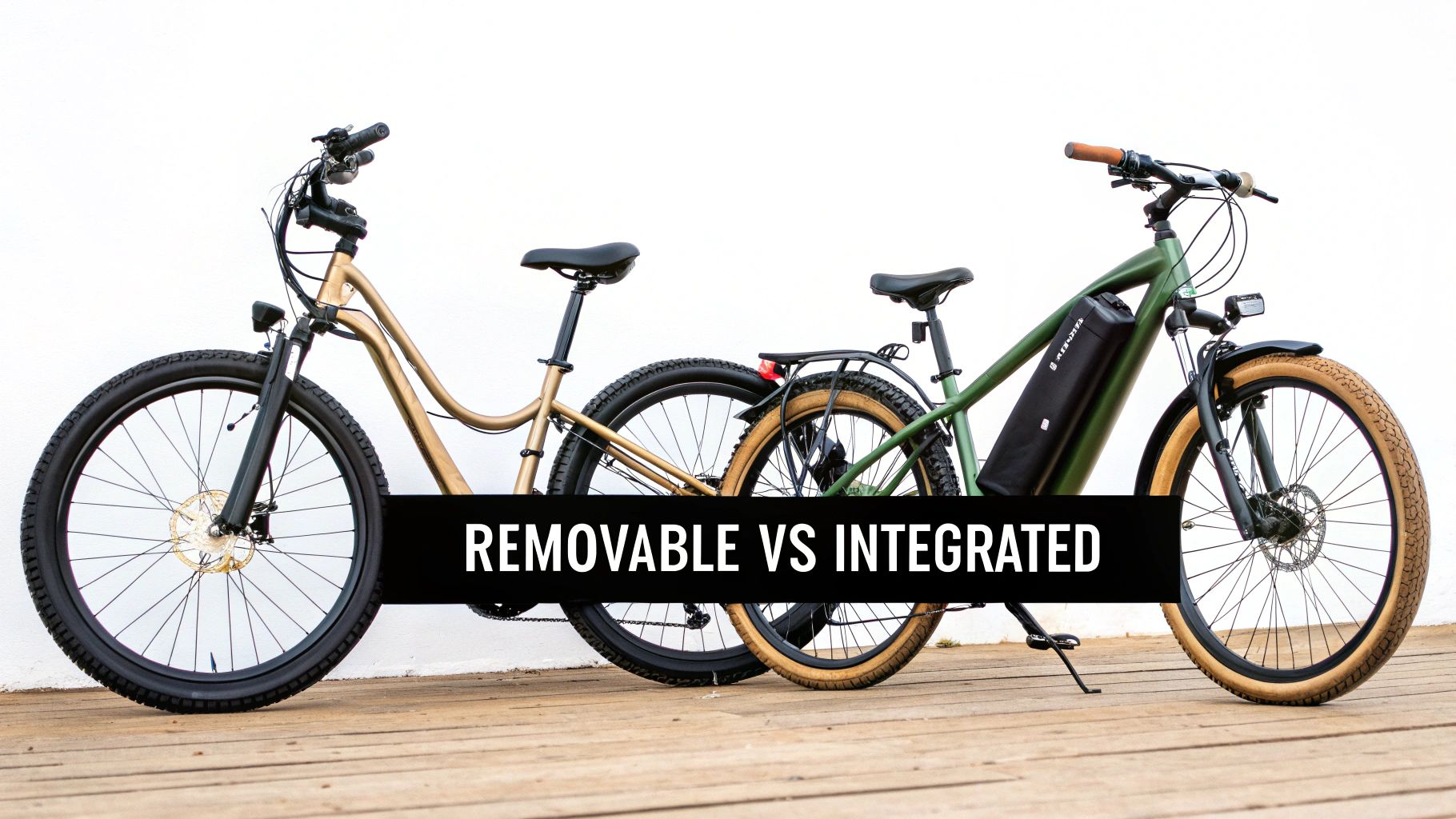
It’s the biggest design debate in the e-bike world: should the battery pop right off, or should it be tucked away inside the frame? An electric bicycle with removable battery is all about practicality, while an integrated design is gunning for those sleek, clean looks. Both sides have their die-hard fans, but the right choice for you really comes down to how you ride and where you live.
There's no getting around it—integrated batteries look fantastic. They give the bike a clean, minimalist profile that makes it hard to even tell it's electric. But that slick appearance can come with some real-world headaches.
To charge a bike with an integrated battery, you have to bring the entire bike to an outlet. That’s a deal-breaker if you live in an apartment, work in an office, or don't have a secure garage with power. Getting these batteries serviced or replaced can also be a bigger, more expensive job that often means a trip to a specialist bike shop.
The Sheer Practicality of Removable Batteries
On the other side, you've got the unmatched flexibility of a removable battery. This design puts real-world convenience first, often ahead of pure aesthetics. The ability to just unclip your power source from the frame solves a ton of daily problems for riders in the US, Australia, and pretty much everywhere else.
This practical approach is a huge reason why e-bike sharing programs have exploded. For those services to work, bikes have to be ready to go 24/7. Swapping batteries in seconds is the only way to keep fleets running without pulling bikes off the street for hours at a time. The global e-bike battery market is huge—the Asia Pacific region alone was valued at $9.76 billion in 2024. In cities like New York or Melbourne, removable batteries can slash operational costs by 25% because companies can use central charging hubs instead of plugging in every single bike. You can discover more insights about the e-bike battery market on FortuneBusinessInsights.com.
For the rest of us, this just means easier city travel. Brands like HITWAY and DUOTTS have built their whole reputation on this user-friendly design, making life simpler for commuters everywhere.
A Clear Comparison
To help you figure out which style is a better fit for your life, let's put them side-by-side. This table breaks down the key differences where it really matters: convenience, security, looks, and maintenance.
Removable vs. Integrated E-Bike Batteries
Here's a direct comparison to help you choose the right battery style for your needs.
| Feature | Removable Battery | Integrated Battery |
|---|---|---|
| Charging Convenience | Excellent. Charge the battery anywhere—at your desk, in your apartment, or at a café. | Limited. The entire bike must be near a power outlet for charging. |
| Security | Good. You can take the most valuable part with you, deterring thieves. | Excellent. The battery is hidden and much harder for thieves to access or remove. |
| Aesthetics & Design | Functional. Often visible on the frame, making the bike look more like an e-bike. | Sleek. Creates a clean, minimalist look that closely resembles a traditional bike. |
| Weight Distribution | Good. Often mounted centrally for good balance, but can be on a rear rack. | Excellent. Usually placed low and central in the downtube for optimal balance. |
| Maintenance & Replacement | Simple. Easy to swap out, replace, or use a spare for extended range. | Complex. Replacement often requires a bike shop and can be much more expensive. |
The choice really boils down to what you value more. An integrated battery offers a stealthy, clean look and better theft protection, while a removable battery provides unmatched convenience for charging and maintenance.
So, Which One Is Right for You?
So, how do you make the call? Just think about your daily routine and where you’ll be storing and charging your bike.
- Choose an integrated battery if: You have a secure, ground-floor spot with easy access to an outlet (like a garage), and you care more about a sleek, non-electric look than anything else.
- Choose a removable battery if: You live in an apartment, need to charge at the office, want to carry a spare for extra range, or just prefer practical, hassle-free ownership.
For the vast majority of city riders, the pure convenience of an electric bicycle with a removable battery makes it the obvious winner. It’s the design that fits the realities of modern life, making e-bike ownership easy and fun for everyone, no matter where they call home.
Got Questions About Removable E-Bike Batteries? We've Got Answers.
Even after you've narrowed down the basics, a few practical questions always come up when you're thinking about an e-bike with a removable battery. Let's tackle the most common ones so you can feel totally confident in your choice.
How Long Does an E-Bike Battery Really Last Before It Needs Replacing?
You can expect a modern lithium-ion e-bike battery to give you somewhere between 500 and 1,000 full charge cycles. For someone who rides daily, that usually translates to a solid 3 to 5 years of service before you'll notice a serious drop in performance.
What’s a "serious drop"? Generally, that means it can only hold about 80% of its original juice. You can definitely help it live a long and happy life by following good charging habits, like keeping it out of extreme hot or cold and not letting it drain completely to zero all the time.
Can I Just Grab Any Charger for My Battery?
Absolutely not. This is a huge safety issue, so please listen up: always use the specific charger that came with your e-bike. Using a random, incompatible charger is a recipe for disaster. It can fry your battery, cause it to overheat, and in the worst-case scenario, start a fire.
Your charger is designed to "talk" to the battery's brain—its Battery Management System (BMS)—to supply the right amount of power. If you lose or break your charger, don't cheap out. Get an official replacement directly from the e-bike manufacturer.
Is It Okay to Leave My Battery Charging Overnight?
Look, modern smart chargers are designed to stop once the battery is full, but it’s still not the best habit to get into. The safest bet is to charge it when you're home and awake.
Most e-bike batteries will be fully charged in 3 to 6 hours, so just plug it in when you get home from work and unplug it before you go to bed. It's a simple step that pretty much eliminates any tiny risk. If you want to get really nerdy about battery care, our guide on how to store lithium batteries safely has all the details you need.
Are All Removable E-Bike Batteries Interchangeable?
Nope, not even close. Batteries are almost always brand-specific. Each manufacturer designs its batteries to fit the specific shape of the frame, the unique mounting mechanism, and the exact electronic connectors of their own bikes. A battery from one company has virtually zero chance of working with a bike from another.
This is exactly why it's so important to buy any replacement or spare batteries directly from the company that made your bike. It’s the only way to be 100% sure you’re getting something that fits, performs correctly, and is safe.
Ready to experience the freedom of an electric bicycle with a removable battery? At Punk Ride, we offer a curated selection of top-tier e-bikes from brands like ENGWE, HITWAY, and DUOTTS, all designed to make your urban commute easier and more enjoyable. Explore our collection at Punk Ride today!
Udział:
Znalezienie najlepszego podwójnego silnika hulajnoga elektryczna dla Ciebie