


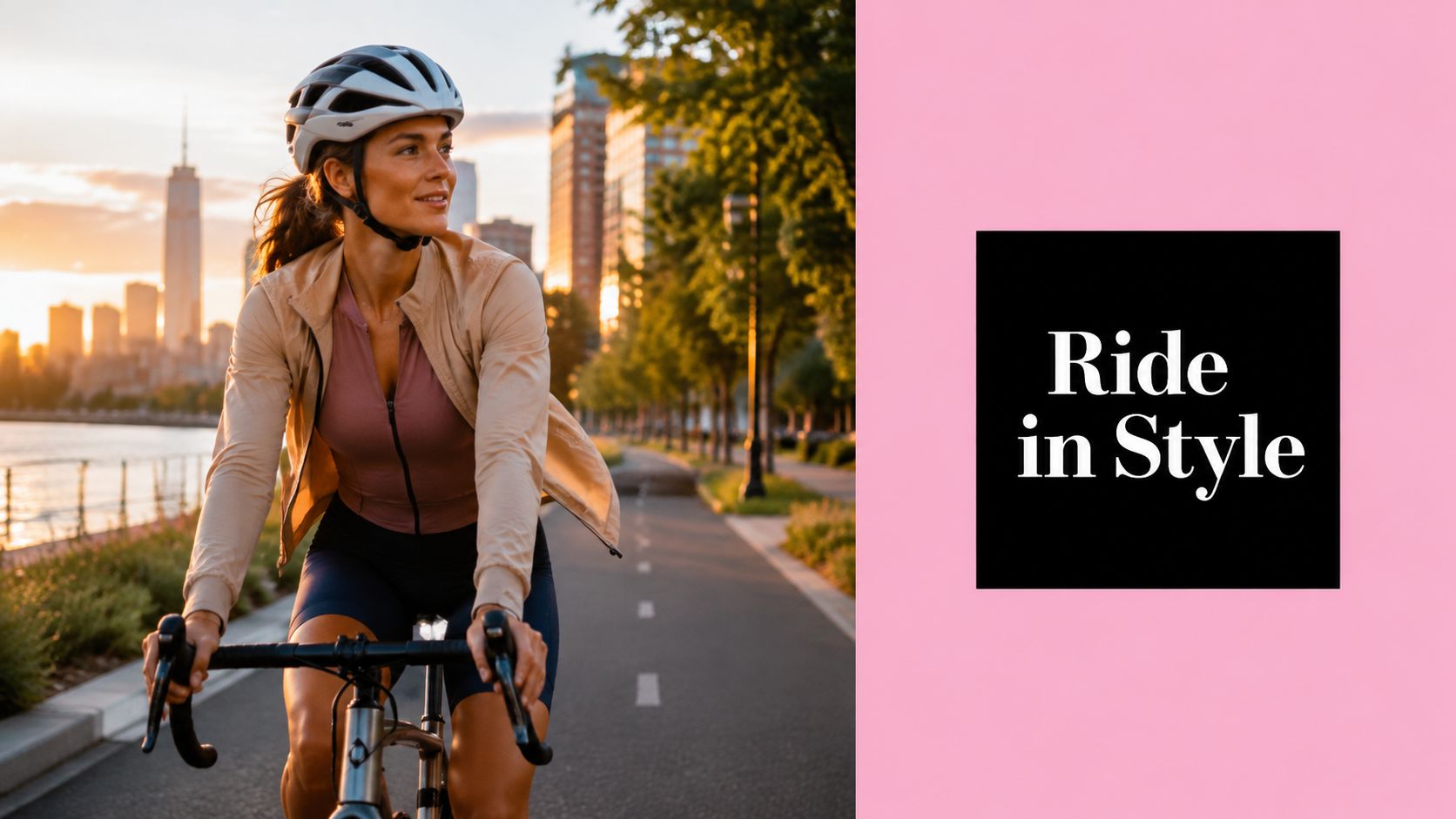
Most advice on ladies cycling attire starts in the wrong place. It assumes you need a full race kit, then tries to sell you aerodynamic bibs, close-fit jerseys, and jargon you'll never use on a school run, a grocery trip, or a wet commute on an e-bike. That's backwards. Most women riders need clothing that moves well, stays comfortable, and doesn't look absurd when they step off the bike.
The standard is simpler. If your outfit works for stop-and-go riding, mixed weather, and daily life, you're ahead of the glossy marketing. The whole point is to stop buying for an imaginary race season and start dressing for the ride you do.

If you want measurements that help you choose clothing, the accurate clothing measurements guide is a useful place to start before you buy anything that's supposed to fit close.
Why Most Cycling Clothing Advice Misses the Mark for Women
The biggest mistake in ladies cycling attire is pretending every rider is shopping for a race wardrobe. That's nonsense. A commuter needs pockets, weather resistance, and clothing that won't make her feel overexposed at a cafe. An e-bike rider needs comfort, easy movement, and fabrics that don't trap heat when the motor is doing some of the work. A weekend rider usually wants something between those two.
History backs up the same point. In the 1890s, the bicycle boom pushed women away from long, trailing skirts and toward more functional clothes, and the Smithsonian says the cycling craze helped promote rational clothing by encouraging women to abandon cumbersome skirts and undergarments. The Library of Congress also places bicycle fashion in the 1890s golden age of bicycling and notes that long skirts were unsafe for cycling, which helped create a fashion market for women's cycling wear. The scale was real, too, with a Washington, D.C. newspaper report cited by the Library of Congress describing over 30,000 cyclists on the streets in 1896, which made specialized attire commercially relevant. See the historical context in the Smithsonian's account of the 19th-century bicycle craze.
Stop Buying for a Fantasy Rider
The best first purchase for many riders is not a head-to-toe women-specific kit. It's a neutral base layer and well-fitted shorts, then a top that suits your actual riding posture and your everyday schedule. That lines up with the practical advice that body proportions and bike fit matter more than gender labels in many cases, especially for commuters.
A good outfit should disappear once you're riding. If you're tugging at seams, overheating, or wondering whether you look too “sporty” for where you're going, the kit is wrong. I'd rather see someone in plain, well-chosen gear than in a flashy set that only works on a sunny training ride.
Practical rule: buy for your route, your weather, and your off-bike life first. Aerodynamics comes after comfort, not before it.
Essential Garment Types Every Woman Rider Should Know

The core wardrobe is smaller than marketing makes it sound. If you know what each piece does, you can skip redundant purchases and build something that gets worn.
Shorts and bib shorts
Shorts solve saddle discomfort first. Bib shorts add support by removing the waistband, which many riders prefer on longer rides because nothing digs in at the stomach. Women-specific bibs matter when the chamois is shaped for female anatomy, because pad placement, seam architecture, and edge finishing directly affect pressure distribution and chafing risk. Expert guides emphasize flat or heat-sealed seams and secure but non-constrictive elastic, and those details are not cosmetic. They decide whether a ride feels smooth or irritating.
Jerseys and tops
A jersey is about storage, sweat control, and cut. If you ride with keys, a phone, or a small tool, rear pockets are useful. If you commute, a relaxed fit often makes more sense than a racing cut because you can wear it under a jacket or over a base layer without feeling boxed in. Endura's women's short sleeve collection shows how brands separate fits across road, gravel, trail, leisure, and commute use, which reflects the spread of riding styles rather than one universal “women's cycling look” (Endura women's short sleeve jerseys).
Outerwear and base layers
A base layer sits closest to skin and handles moisture. Outerwear blocks wind or rain, but only if it still lets heat escape. If a jacket feels like a plastic bag after ten minutes, it's wrong for actual riding. For everyday use, a packable shell is worth more than a heavy all-purpose coat.
If you're also choosing head protection for commuting or e-bike use, the guidance in Punk Ride's best helmet for ebike sits naturally beside your clothing decisions, because the helmet and outfit should work as one system.
Understanding Fabrics and Technical Features That Matter
Fabric marketing gets noisy fast, so strip it down to what the cloth does on the bike. Moisture-wicking fabric pulls sweat away from skin so you don't sit in a cold, clammy layer after effort. Windproof fabric cuts the chill on descents and on open roads. Breathable mesh adds ventilation where heat builds up, and UV-protective finishes help on long sunny rides.
Cotton is usually the wrong answer. It soaks up sweat, stays wet, and turns uncomfortable the moment your pace changes or the weather cools. That's why cyclists keep replacing it with technical knit fabrics, merino blends, or synthetic mixes that dry faster and keep shape better.
Judge quality by construction, not slogans
A garment can sound technical and still be badly made. Look at seam placement first. If seams sit where your body bends or where your bag straps rub, you'll feel it. Check fabric weight next. Too thin and it goes see-through or fragile. Too heavy and it stops breathing when you're climbing a hill or pedaling into wind.
Worth checking: a smooth finish, flat stitching, and well-placed panels often matter more than a long list of fabric names on the tag.
The women-specific fit question also comes down to construction. The best cycling shorts and bibs solve friction where the body contacts the saddle, and that's a pattern issue more than a branding issue. If a product page is all buzzwords and no explanation of seam placement, waistband design, or chamois shape, I'd pass.
Commuter Versus Road and E-Bike Clothing Choices
Commuting, road riding, and e-bike use ask for different clothing decisions, and pretending they're the same leads to overbuying. A road cyclist can justify tighter fits and more aggressive fabrics. A commuter usually can't, because the outfit has to survive stairs, offices, shops, and weather changes. E-bike riders sit in the middle, with less heat buildup than a hard road effort but still enough movement to need breathable, mobile clothing.
| Feature | Commuter | Road Cycling | E-Bike |
|---|---|---|---|
| Fit | Relaxed, office-friendly, easy to layer | Close, efficient, movement-first | Comfortable, not restrictive |
| Best fabrics | Easy-care technical blends | Lightweight, sweat-managing materials | Breathable, versatile fabrics |
| Bottoms | Shorts, leggings, or modest bike trousers | Bib shorts or cycling shorts | Shorts, leggings, or casual cycling pants |
| Top priority | Looks normal off the bike | Aerodynamics and comfort over distance | Comfort and temperature control |
| Outer layer | Packable rain shell | Performance jacket | Wind or rain layer that's easy to remove |
For commuters, versatility wins. A neutral base layer, a pair of shorts that fit correctly, and an outer layer you don't mind wearing into a shop will do more good than a wardrobe full of race cuts. If you want to add one piece from a cycling retailer while keeping the rest low-key, the best electric bike accessories page sits in the same practical lane as your clothing choices, because e-bike riding rewards useful add-ons over fancy kit.
Road riders can be more selective about close fit and pocket layout, but they still shouldn't buy for image alone. E-bike riders often do best in the middle ground, with clothing that feels normal in town and still performs when the route opens up.
The test is simple. If you'd wear part of the outfit indoors without feeling ridiculous, you've probably made a sensible choice.
Seasonal Layering Strategies for Year-Round Riding
Weather changes the ride more than brand names do. A smart layering system lets you handle most conditions with a small rotation instead of a closet full of single-purpose pieces. The old rule still holds, base layer, insulation, then protection, but the details matter.

Build around moisture first
Your base layer should move sweat away from skin. That matters under women-specific jerseys too, because a snug cut works better when the underlayer doesn't bunch up. A light synthetic or merino base is usually enough for most conditions, and it's easier to wash and rewear than heavy cotton.
Add insulation only when you need it
For cold rides, a fleece or thermal mid-layer adds warmth without forcing you into a bulky coat. Don't overdo it. If you start too warm, you'll sweat, then chill once the pace settles. A thin insulating layer is better than a thick one that traps heat during effort.
Use a shell that breathes
Rain and wind protection should stop the weather, not seal you in. A breathable shell is the difference between arriving dry and arriving wet from the inside. If the jacket packs down easily, even better, because you can stash it when the sky clears.
A three-piece system also keeps packing simple. You can mix and match across seasons instead of buying separate winter, spring, summer, and autumn outfits. That's the honest way to spend money on ladies cycling attire.
Safety Visibility Accessories and Grooming Tips for Riders
A grey commute at dusk changes everything. I've watched riders disappear into traffic because they wore dark clothes with no reflective detail, then wondered why drivers didn't notice them until the last second. Bright fabric helps, but reflective panels and integrated lights do more in low light, especially when you're crossing junctions or riding through urban streets.
Hair and skin matter too. Helmet hair is annoying, but it's easier to fix than a bad setup on the road. If your hairstyle fights the helmet, change the hairstyle, not the helmet. Shorter tied-back styles, low buns, or anything that sits flat under the shell usually beats a tall knot that leaves the helmet perched oddly.
Practical details that actually help
- Use visible outer layers. A bright jacket or reflective accents are easier to spot than fashion colors that look stylish in daylight but vanish at night.
- Choose underlayers that breathe. If you ride in skirts or dresses, a breathable short or tight underneath prevents chafing and keeps movement free.
- Keep chain contact controlled. Skirt clips, safety pins, or a flared cut reduce the chance of fabric catching on hardware.
- Protect skin before the ride. Sunscreen should go on under sleeves, hems, and neckline edges, not just on exposed forearms.
If you want a deeper practical angle on low-light riding, Punk Ride's bike riding at night guide fits naturally with the visibility side of clothing choices.
For riders who prefer more modest or non-traditional outfits, the win is balance. You want enough coverage to feel comfortable, enough airflow to avoid overheating, and enough structure to keep fabric away from moving parts. That combination beats trying to force regular streetwear into a bike role without any adjustments.
Building Your Cycling Wardrobe and Caring for Your Gear
Start with the pieces that do the most work. Bib shorts or well-fitted shorts first, then a jersey or top, then a shell if your weather demands it. That order keeps you from spending money on extras before you've solved comfort.

Buy slowly and test everything
One good outfit you wear beats three outfits that live in a drawer. If you ride mostly in town, start with a versatile base layer and one pair of shorts that fit well. If you ride longer distances, spend more on the chamois and less on decorative extras.
Wash and store gear properly
Technical fabrics last longer when you treat them gently. Wash inside out in cold water, skip harsh detergent, and air dry instead of blasting everything with heat. Store items flat or folded, not bunched into a damp pile, because that's how you preserve stretch and avoid worn-out seams.
Punk Ride LLC sits in the wider mobility space with products for riders who care about practical city travel, and its site also includes women's cycling apparel. If you're building a wardrobe around commuting, e-bike use, or everyday rides, take a look at Punk Ride LLC and use the same rule that should guide every purchase, buy only what fits your route, your weather, and your life.
Share:
How to Make a Bike Seat More Comfortable on E-Bikes
How to Improve Braking Performance: Expert Tips for 2026