


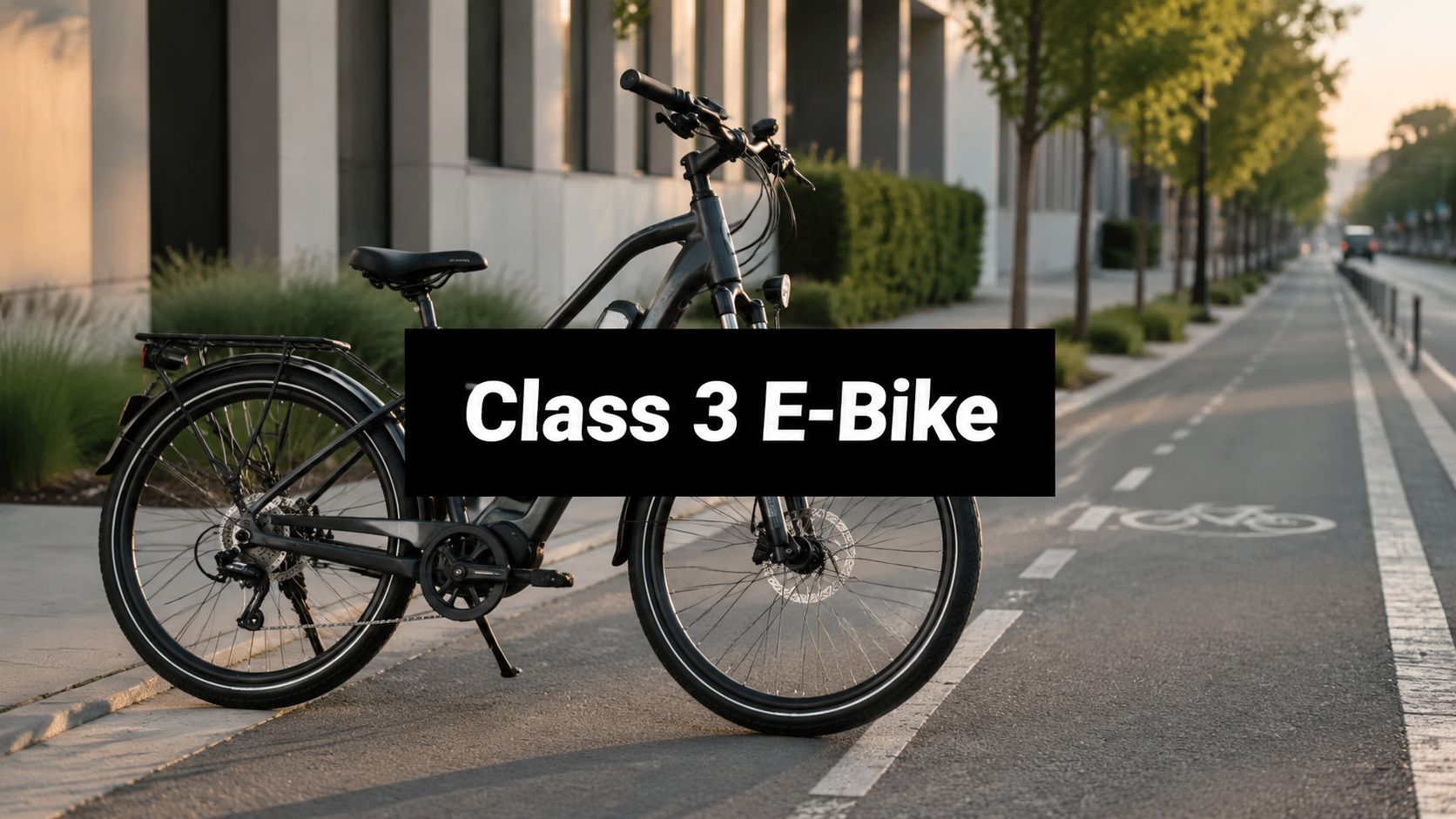
A Class 3 e-bike is a pedal-assisted bicycle that provides motor support up to 28 mph, designed for faster commuting on roads. That speed is what makes it feel so different from a regular city e-bike, and it's also why riders run into more rules, more questions, and more confusion when they start shopping.
You probably saw one glide past traffic with almost no effort from the rider and thought, what is class 3 ebike in real life, not just on a spec sheet. The short answer is that it sits at the performance end of the common U.S. three-class system, which is why commuters, hill riders, and anyone trying to keep pace with urban traffic pay close attention to it.
So You Saw a Really Fast E-Bike
A rider rolls past you on the street, keeps a steady pace with traffic, and doesn't look like they're working hard. That's usually the moment people realize not all e-bikes are the same.
In the U.S., the simplest way to understand that difference is the three-class system. Class 1 and Class 2 are generally limited to 20 mph assistance, while Class 3 stretches to 28 mph and is the performance-oriented category many commuters notice first in the wild, according to the Federal Highway Administration's e-bike fact sheet, which also places e-bikes under the 750-watt ceiling used in federal definitions (FHWA e-bike fact sheet).
That's why Class 3 bikes feel so relevant for road riding. They're built for people who want an easier time covering distance, holding speed on busier streets, or replacing some car trips without giving up the feel of pedaling.
If you want a broader speed overview before narrowing in on class labels, this guide from Punk Ride gives a helpful companion breakdown of how fast electric bikes can go: how fast electric bikes go.
Practical rule: if a bike is keeping up with traffic in a way that feels more like a small commuter machine than a casual cruiser, Class 3 is often the category to check first.
The important part is that the label isn't marketing fluff. It tells you how the bike is expected to behave on the road, what kind of riding it's made for, and why local officials often treat it differently from slower models.
The Core Specs of a Class 3 E-Bike

A Class 3 e-bike is defined by a very specific package: pedal assist only, motor support that cuts off at 28 mph (45 km/h), and a motor limit that stays within the broader 750-watt federal framework (FHWA e-bike fact sheet). That's the backbone of the class, and it's the reason these bikes are treated differently from slower ones.
Pedal assist is the first big clue
Class 3 means the motor helps while you pedal. It provides a supercharged tailwind, not a scooter-style push. You still turn the pedals, but the bike gives you a strong assist that keeps the ride lively on hills and during longer commutes.
That detail matters because it separates the bike from other electric setups people sometimes lump together. California bike-class guidance also describes Class 3 as pedal-assist only, with the motor cutting off at 28 mph and the bike carrying a speedometer as part of the legal package (California e-bike classifications).
The speed cap is the legal line
The 28 mph cutoff is the number that makes Class 3 different. Class 1 and Class 2 usually stop at 20 mph assistance, so Class 3 is the faster commuter option in the common U.S. system (FHWA e-bike fact sheet).
That doesn't mean every ride happens at 28 mph. It means the motor is allowed to help until that threshold, which is why the bike feels more road-ready than a casual neighborhood e-bike.
The motor and display are part of compliance
The common U.S. framework also keeps e-bikes under 750 watts, and Class 3 bikes are expected to include a speedometer so riders can see assisted speed clearly (FHWA e-bike fact sheet; California e-bike classifications). That isn't just paperwork. It helps the rider stay aware of what the bike is doing and helps regulators identify the class.
If you're comparing listings, Punk Ride's overview of electric bike classes is a useful way to see how these specs separate the different categories.
Where You Can and Cannot Ride Your Class 3

A Class 3 e-bike usually belongs on roads and often on on-road bike lanes, but it's much more likely to run into restrictions on multi-use paths, sidewalks, and some trails. That pattern shows up again and again because speed changes how a bike fits into shared spaces (Bosch eBike three-class system).
Roads and bike lanes are the natural home
For commuting, Class 3 makes sense where cars, bikes, and other traffic already mix. That's why a lot of riders choose it for commuting corridors and urban streets. Bosch's guidance notes that these bikes are typically allowed on roads and on-road bike lanes, which lines up with how many riders use them (Bosch eBike three-class system).
Paths and trails are where the trouble starts
The same speed that helps you merge into traffic can be a problem on shared paths. Bosch notes Class 3 bikes are restricted from bike trails and multiuse paths, and local rules often add age, helmet, and roadway restrictions (Bosch eBike three-class system).
That's why two riders can buy similar-looking bikes and still have totally different riding experiences. One can commute legally through traffic, while the other finds the local park path off-limits.
States and cities don't all treat Class 3 the same
California-oriented guidance commonly says Class 3 riders must be at least 16 and wear a helmet, while Ohio guidance says riders need to be at least 16 and also wear a helmet on Class 3 e-bikes (Ohio e-bike laws; Aventon class 1 2 3 e-bike comparison). That's the patchwork problem in one sentence. The class may be standardized, but the riding rules around it aren't.
If you want a state-by-state overview before you buy, Punk Ride has a practical guide to electric bike laws by state. It's worth checking before you assume your local park or bike path is open to Class 3 use.
Practical rule: if a route is shared heavily with pedestrians, assume there may be a restriction until you've checked the local ordinance.
For riders who also need insurance context on motorized road use, a separate but useful reference is Motorcycle Insurance Requirements in Florida from Professional Insurance Advisors, LLC. It's not an e-bike law guide, but it helps illustrate how road-use rules can vary sharply by vehicle type and location.
Safety Gear and Riding Best Practices
Speed changes the safety equation. A bike that can assist up to 28 mph asks for better habits, better visibility, and better gear than a slow neighborhood cruiser.

Start with the gear that protects your head and visibility
A helmet is the obvious first choice, and in some places it's not optional for Class 3 riders. California and Ohio guidance both point to helmet expectations for Class 3 use, and age rules are also part of the picture in those states (Ohio e-bike laws; Aventon class 1 2 3 e-bike comparison).
Lights matter too, even in daylight. Class 3 riders spend more time in traffic than in quiet recreation settings, so being seen early is a big part of riding well. Gloves, bright clothing, and reflective details aren't just comfort items, they make fast urban riding less stressful.
Ride like you belong in traffic, because you usually do
The higher pace means you need to read gaps, watch turning cars, and leave yourself space for braking. That's especially important because injury research cited by People Powered Movement found 17% internal injury risk for e-bike crash victims versus 7.5% for pedal-bike crash victims, and e-bike riders were reported to be three times more likely to be involved in crashes with pedestrians (FACS bulletin on electric bikes).
That doesn't mean Class 3 bikes are unsafe by default. It means the rider needs a sharper level of attention because the bike is moving through the world faster and often in more complex spaces.
Keep your eyes on the next two decisions, not just the road right in front of you.
A good rhythm helps. Slow a little before intersections, signal early, and don't assume drivers have noticed your speed or direction. On a Class 3, you're not just cruising, you're managing momentum.
Is a Class 3 E-Bike the Right Choice for You
A Class 3 bike makes the most sense for riders who want a commuter-first machine. If your trip includes longer distances, hills, or fast city streets, the extra assisted speed can make the ride feel realistic instead of exhausting.
Good fit for riders who want to replace more car trips
Class 3 works well when you need to keep pace with traffic and still arrive without breaking a sweat. It's a solid match for someone commuting to work, heading across town, or carrying a load that makes a slower bike feel underpowered.
It also fits people who live in hilly areas. The bike's stronger assist helps you hold momentum without turning every climb into a grind.
Not the best fit for casual path riders
If you mostly want relaxed rides on park paths, neighborhood loops, or mixed-use trails, Class 3 can be more bike than you need. Those settings are where the local restrictions show up, and the extra speed doesn't always buy you anything useful.
The throttle question is where many buyers get stuck
Some current buyer guides and reviews note that certain models use a throttle capped at 20 mph while pedal assist continues to 28 mph, which creates confusion about whether the bike is truly Class 3 or some kind of hybrid setup (Outdoor Gear Lab electric bike guide). That's a real shopping problem, because many people assume “Class 3” automatically means one simple design.
If you're comparing product listings, a connected-fitness style breakdown can help you think more clearly about how assist modes affect the ride. TextFit's connected bike insights are aimed at a different category, but the same idea applies, features matter only when you understand how they change the experience.
Punk Ride also carries electric ride options for buyers who want to compare commuter-style setups in one place, including models from brands such as ENGWE, HITWAY, DUOTTS, and TOUROLL. The useful part is not the brand list itself, it's seeing how different drivetrains and assist styles line up with different riding needs.
If you want speed without pedaling, Class 3 probably isn't your category. If you want strong assist while still riding like a cyclist, it probably is.
Your Fast Lane to Commuting
A Class 3 e-bike is the fast, road-oriented end of the common U.S. class system. It's built around pedal assist, a 28 mph cutoff, and a layout that suits commuting more than casual path cruising (FHWA e-bike fact sheet).
The two things that trip buyers up most are local riding rules and confusing product listings. One city may welcome a Class 3 on roads and lanes, while another restricts it from trails or shared paths, and some bikes blur the line with throttle features that don't fit the neatest version of the category (Bosch eBike three-class system; Outdoor Gear Lab electric bike guide).
That's why the label matters. Washington state requires manufacturers and retailers to permanently affix a label in a prominent location using Arial font and at least nine-point type that shows the classification number, top assisted speed, and motor wattage (Cascade Bicycle Club on Washington e-bike laws). It's a small detail, but it helps buyers confirm what they're getting.
If a Class 3 sounds like your kind of ride, check the local rules first, then compare the assist style, speed cutoff, and label on the bike itself. For shoppers ready to look at real options, start with Punk Ride LLC and choose a bike that fits both your commute and your local riding laws.
A CTA for Punk Ride LLC.
Share:
Long Term Mobility Scooter Hire Guide for Urban Commuters
Fat Tire Commuter Ebike: A Practical Buyer's Guide