


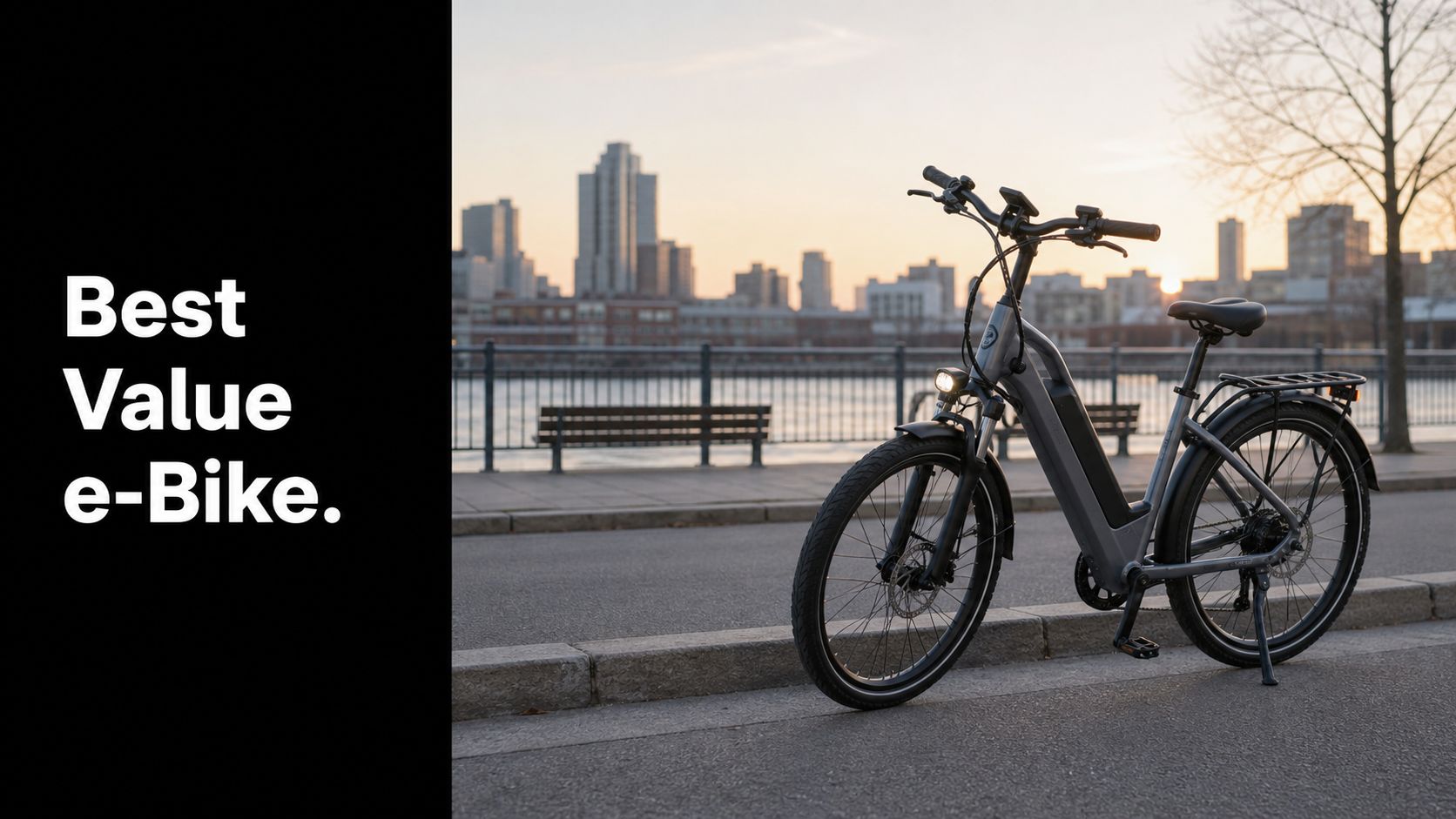
You're standing in the bike lane at 8:10 a.m., checking whether your battery will make it home, and wondering if that “great deal” you bought last spring was a smart buy. That's the core commuter e-bike question. Best value isn't the cheapest bike on the sticker, it's the one that keeps working, keeps costing less than you feared, and doesn't leave you hunting for parts or arguing with a retailer six months later.
| Price Tier | Typical Motor | Sensor Type | Brakes | Best For |
|---|---|---|---|---|
| Under £ / $1,000 equivalent | Basic hub motor | Cadence sensor, if you're lucky | Mechanical discs or basic hydraulics | Short, flat commutes and simple transport |
| Mid-tier commuter range | Better hub or entry mid-drive | Torque sensor | Hydraulic disc brakes | Serious daily riding, mixed routes, real-world reliability |
| Premium commuter range | Refined hub or mid-drive | Torque sensor, tuned assist | Strong hydraulic systems | Riders who want polish, warranty support, and less compromise |
What Best Value Actually Means for a Commuter E-Bike
The classic mistake is buying the cheapest bike that looks fine online, then paying for the gaps later. A friend of mine did that with a commuter bike that looked smart on paper, but the assist felt jerky, the lights were weak, and every pothole turned into a local repair appointment. That bike was “cheap” on day one and annoying for the next two years.
Value is uptime, not just a low sticker
For a commuter, value means the bike shows up every weekday without drama. That includes how it starts in cold weather, how predictable the assist feels in traffic, and whether the local shop will touch it when something wears out. A bike with a stronger support network can easily beat a cheaper one that nobody nearby wants to service.
The market has moved a long way from niche, heavy electric bikes toward standardized commuter models built for city use. In the U.S., Class 3 e-bikes are pedal-assist bikes with motor assistance up to 28 mph (45 km/h), and that category has become a major commuter benchmark because it fits real urban travel patterns and many state rules. One neutral roundup even put the Aventon Level.2 Step-Through at $1,299, calling out its torque sensor and Class 3 speed as core commuter strengths, which shows how far the segment has come in a short time. That kind of pricing is the historical clue, practical commuter features are no longer reserved for luxury bikes, and that changes what “best value” means. Commuter e-bike roundup and value example
Two bikes can cost the same and age very differently
A budget bike with sloppy assist and no service support can be more expensive over two or three years than a better-built mid-range model. The question isn't “What's the cheapest bike I can buy?”, it's “What keeps me riding without extra hassle?”
Practical rule: if a bike feels fine for one test ride but looks fragile for daily use, it's not a value bike. It's an upfront discount.
That's why this guide splits the legal and value picture by region. UK and EU riders live under one rule set, U.S. riders often deal with a three-class system, and Australia sits closer to the UK and EU on power and speed. If you ignore that, you can end up buying a bike that's a bargain in one country and a headache in another.
The Specs That Actually Matter for Daily Commuting
Stop reading spec sheets like they're a scoreboard. A commuter bike doesn't need the flashiest number on the page, it needs the right combination of assist feel, braking, and practical hardware that makes weekday riding easier.
Start with motor type and sensor quality
For city commuting, a hub motor usually keeps things simpler, quieter, and easier to live with. A mid-drive makes more sense if your route has serious hills or you want the bike to feel more natural under load. The motor type matters, but the sensor type changes the ride feel even more.
A torque sensor reads how hard you're pedaling and delivers assist that feels smoother and less twitchy than a basic cadence sensor. That matters every time you pull away from traffic lights or merge into a lane. Raw power numbers get all the attention, but a bike with calmer pedal assist often feels faster in real commuting because you waste less energy fighting the bike itself.
Battery, brakes, and commuter hardware are the real daily wins
Battery capacity matters more than glossy range claims. If two bikes claim similar range but one carries a better-sized battery and the other relies on optimistic marketing, the difference shows up the moment you ride into wind, climb hills, or haul a backpack. Hydraulic disc brakes are the other necessity if you commute in rain, stop often, or ride through traffic.
Look for the basics that save time every single day:
- Integrated lights: You want lights that are already wired in, not clip-ons you forget to charge.
- Full fenders: They keep road spray off your clothes and stop the bike from feeling filthy after one wet ride.
- Rear rack: If you commute with a bag, lock, or groceries, this matters more than marketing about “adventure.”
- Puncture-resistant tires: They don't make flats impossible, but they cut down on the annoying ones.
The one spec most buyers still overlook is braking feel. A bike that stops confidently in wet traffic is a commuter bike. A bike that only feels good on a dry car park isn't.

Price Brackets and Where the Smart Tradeoffs Live
The smartest shoppers don't ask, “How much can I save?” They ask, “Where does the compromise stop making sense?” That's the whole game with commuter e-bikes.
Entry tier keeps you moving, not impressing you
Under the budget line, you're usually paying for basic transport. That can work if your route is short, flat, and predictable, and you don't mind more compromise on feel and finish. It's the tier where small annoyances stack up fastest, so it's only good value if your commute is very simple.
Mid-range is where value gets real. This is the zone where better sensors, stronger brakes, and more usable batteries usually appear, and it's where serious commuters tend to land because the bike starts feeling like a tool instead of a gamble. If you're comparing that segment, this budget-bike guide is useful as a starting point, but don't let “budget” blind you to support and durability.
Premium bikes add refinement, not a miracle. You're often paying for a better frame, nicer finishing, a more polished system, and stronger warranty backing. That can be worth it if you ride hard every day, but it doesn't automatically mean more useful commuting.
| Price Tier | What You Usually Get | What You Usually Give Up |
|---|---|---|
| Entry tier | Basic assist, simpler parts, lighter feature list | Smoother assist, serviceability, and long-term polish |
| Mid-tier | Better sensor quality, stronger commuter hardware, more dependable ride feel | Some premium finish and brand prestige |
| Premium tier | Refined frame feel, stronger warranty, better integration | Lower-value sticker price for riders who don't need the extras |
Bottom line: the best value usually sits where the bike stops feeling basic, but before the price jumps into “nice to own” territory.
UK and EU Rules Versus US and Australian Rules
Many buyers make a costly mistake here. A bike might seem perfect online, but it could be illegal or unsuitable for your region since the laws governing motor power, top speed, and pedal assistance vary widely.
UK and EU riders need to stay inside the bicycle category
In the UK, electrically assisted pedal cycles, or EAPCs, are legal on public roads only if the motor's continuous rated power does not exceed 250 watts and assistance cuts off at 15.5 mph (25 km/h). The rider must be at least 14 years old, and the bike doesn't need vehicle tax, registration, insurance, or a licence. That matters because those exact thresholds decide whether you're riding a bicycle or something else. UK EAPC commuter rules
The EU uses the EN 15194 framework for electrically power-assisted cycles, with the same basic 250-watt and 25 km/h structure for standard pedal-assist bikes. For UK and EU commuters, that's the line that separates a normal e-bike from something more powerful or more heavily regulated. EU EN 15194 overview
A bike with a loud marketing pitch can still be the wrong legal class. Check the label, not the slogan.
U.S. and Australian buyers need a different filter
In the U.S. market, Class 3 becomes the key commuter benchmark because it allows pedal assist up to 28 mph (45 km/h), and many city riders like that because it fits faster urban travel. Australia generally follows the 250-watt / 25 km/h style of pedal-assist rule under the standard bicycle category, which means some bikes that are fine for one U.S. commuter are not a clean fit elsewhere. The classification problem is not academic, it decides what you can legally ride where you live.
Throttle behavior also matters. A bike that advertises a legal-looking assist level can still cross the line if the throttle setup or labeling doesn't match local rules. If you want a plain-language legality check, this street-legal guide is worth a read before you hit buy.

Matching the Bike to Your Commute and Body
The best commuter bike for a short rider in a dense city is not the best commuter bike for someone grinding up hills in a windy suburb. That sounds obvious, but most bad purchases happen because buyers shop for features instead of fit.
Short rides need easy mounting and less weight
If your commute is short and you stop often, a step-through frame makes more sense than a high top tube. It's quicker to get on and off, easier in work clothes, and less annoying when you're carrying a bag. If the route is mostly flat, you don't need to chase a huge battery or a beefy motor just because the product page makes it sound impressive.
Longer rides and hill routes need more support
If you ride farther, the battery buffer matters more than a light frame. If you climb a lot, a mid-drive with a torque sensor usually earns its keep because it handles load better and feels more natural under pressure. Riders on mixed surfaces or rough urban streets should pay closer attention to tire width and brake quality than to glossy claims about top speed.
A good fit also means the bike doesn't fight your body. Saddle comfort, handlebar reach, and frame size matter every day, even if they never appear in a headline spec. Rack compatibility matters too, because a commuter bike that can't take your actual load ends up half-used.
- Short urban commute: prioritize step-through access, moderate weight, and easy parking.
- Longer daily distance: prioritize battery size, charging convenience, and a calm assist profile.
- Hill-heavy route: prioritize torque sensor feedback and mid-drive control.
- Rough roads or mixed terrain: prioritize stronger brakes and sturdier tires.
If you want the blunt version, buy for the route you ride, not the one you wish you had.
Real Ownership Costs Over Two to Three Years
The sticker price is just the first bill. The better question is what the bike costs you while you're using it to get to work, run errands, and avoid the train.
The small costs add up before the big one hits
Tires wear out. Brake pads wear out. Chains or belts wear out depending on the setup, and service visits are part of the deal if you ride regularly. Firmware updates and diagnostics can also matter if your bike uses a smarter integrated system, because support access becomes part of the ownership experience, not just a nice extra.
The biggest surprise for first-time buyers is usually the battery. It doesn't fail on a neat schedule, but replacement is a genuine expense you need to think about when you compare cheap bikes to better-built ones. A budget bike can save money on the receipt and still demand earlier attention in practice.
Service access changes the math
A bike with easy local support often wins on value even if the purchase price is a bit higher. That's especially true in the UK and EU, where a wider support network can make maintenance simpler, and in the U.S. and Australia, where authorised options can be thinner outside major cities. If you can't get the bike serviced without shipping it across the country, the savings start looking fake.
The cost that catches almost every first-time buyer is not the ride itself. It's the battery and the labour around keeping the bike road-ready.
For a grounded look at ownership tradeoffs, the broader e-bike market discussion at GearJunkie's electric bike guide is useful because it keeps price in the same conversation as practical buying decisions. That's the mindset you need here. A true value bike isn't just cheap, it stays sensible after month six, month twelve, and beyond.

Where to Buy and How to Get It Serviced
A bike with the right frame and the wrong support can still become a bad value purchase. I've seen commuters get stuck with a decent bike on paper and a warranty process that felt like a second job.
Buy where service is realistic
Specialist commuter retailers usually do a better job of helping you choose the right legal class, the right size, and the right accessories. General marketplaces can be fine if you already know exactly what you need, but they're easier to get wrong if you don't have hands-on experience. If a brand has a local service partner, that's often worth paying for.
A slightly more expensive bike from a brand with real support can beat a cheaper one that only exists in a warehouse. That's the part bargain hunters hate hearing, but it's still true. The best value bike is the one that can be repaired without a three-week email chain.
If you're comparing sellers, this retailer guide is a sensible place to start because it keeps the focus on practical buying, not marketing noise.
Ask one question before you pay
Check how warranty claims are handled, and ask who services the bike in your area. If the answer is vague, assume you'll be the one carrying the hassle.

Your Best Value Commuter E-Bike in Three Questions
Pick the bike by answering three questions. First, what's your real daily distance and do you climb hills? Second, what country's rules does the bike need to fit? Third, do you have local service if something goes wrong? If you answer those three well, the right price tier usually reveals itself fast.
A short flat ride in a legal-compliance market points you toward a simpler commuter bike. A hill-heavy, longer ride in a region with good support pushes you toward a better sensor, stronger brakes, and probably a mid-range budget. If you're still comparing travel tradeoffs, the same thinking applies when you're deciding between riding and taking the train, and you can read more if you're also weighing rail costs against bike commuting.
The best commuter e-bike is the one you'll ride on a tired Wednesday, not the one that looks best in a product photo.
If you want help choosing a commuter e-bike that fits your route, your local rules, and your budget, visit Punk Ride LLC and start with the models that match how you really ride.
Share:
Sport E Scooter Guide: Specs, Safety, and Legal Basics
Electric Scooter Dealers: How to Choose the Right One