


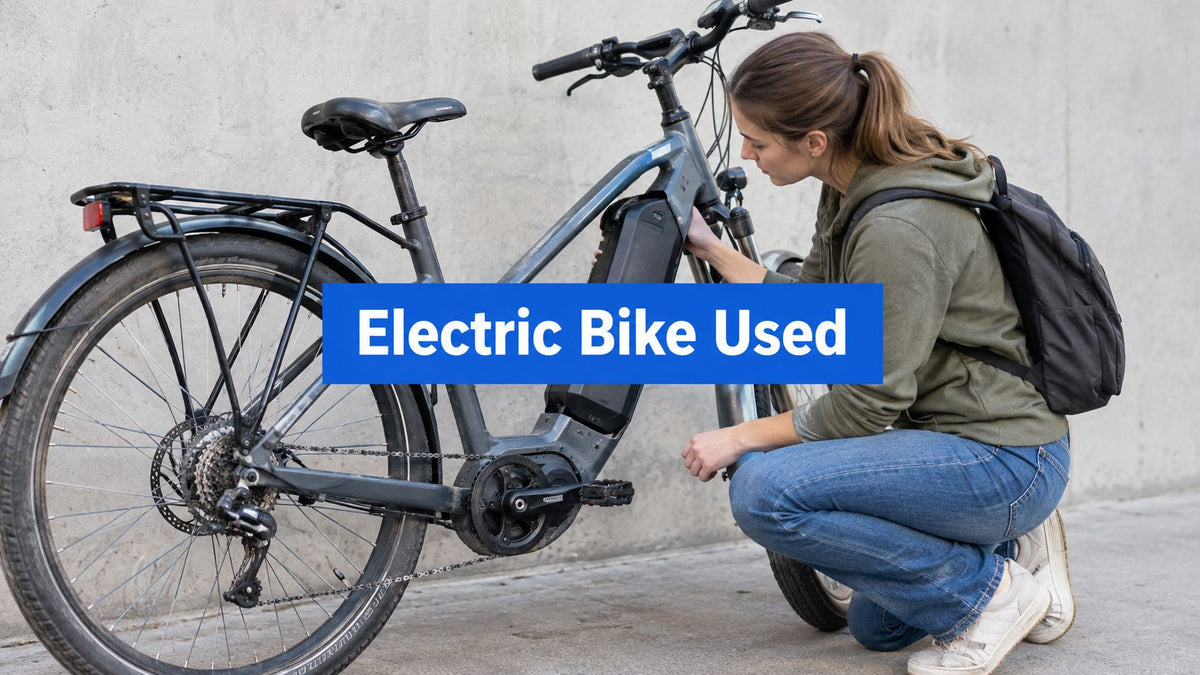
You're staring at a listing that looks almost right. The photos are decent, the price feels a little too fair, and the seller swears the battery is “fine.” That's where people get caught, because an electric bike used deal can hide a tired battery, a dodgy motor, or a frame that's been through more knocks than the ad admits.
The used market is deep now, which is good news if you know what you're doing. E-bikes have been around for over a century in one form or another, from early demonstrations in the 1880s to mass-produced pedal-assist bikes in the 1990s, and that long history means secondhand stock ranges from old-school assist rigs to modern commuter machines (history of electric bikes). The trick is not finding a bike. It's finding one that won't turn into a repair bill the moment you get it home.
Finding the Right Deal Without Getting Burned
A clean listing usually has the same bones. The seller shows the full bike, the charger, the battery, and a few close-ups of wear points. The description names the model, says how long they owned it, and doesn't dodge basic questions. That's the kind of ad that tends to come from a real owner, not a reseller hiding behind vague photos and a borrowed set of words.
The trap is the listing that looks polished but says nothing useful. If the bike is “like new” and the seller can't explain why they're selling, who serviced it, or whether the battery is original, keep scrolling. The secondary market is large enough that you don't need to gamble on a story with holes in it. Industry data shows the global e-bike market has reached massive scale, with around 47 million sold worldwide in 2022 and more than 40 million sold in 2023, which is why used inventory keeps expanding across major regions (world market statistics).
Where the decent bikes usually show up
Local marketplaces can work if you're ruthless about verification. Specialized dealers and refurbishers are safer when you want paperwork, but private sellers can still be solid if they show receipts, serial numbers, and a bike that matches the photos. A practical search resource for nearby listings is the local-bike finder on Punk Ride's electric bikes near me page, especially when you want to compare what's available before you commit to a viewing.
Practical rule: if the ad avoids the charger, the battery age, or the reason for sale, assume there's a reason.
Watch for the “seller moved quickly” excuse, stock photos mixed with real photos, and a listing that feels copied from somewhere else. If you're unsure whether a bike is just another resale or a more serious mobility choice, the broader context in Driving Test Cancellations on EVs is useful for thinking about how people are shifting away from car-only trips. The point isn't that every used e-bike is a commuter replacement. It's that the good ones should look and feel like a real vehicle, not a disposable gadget.
Checking the Motor and Frame Condition
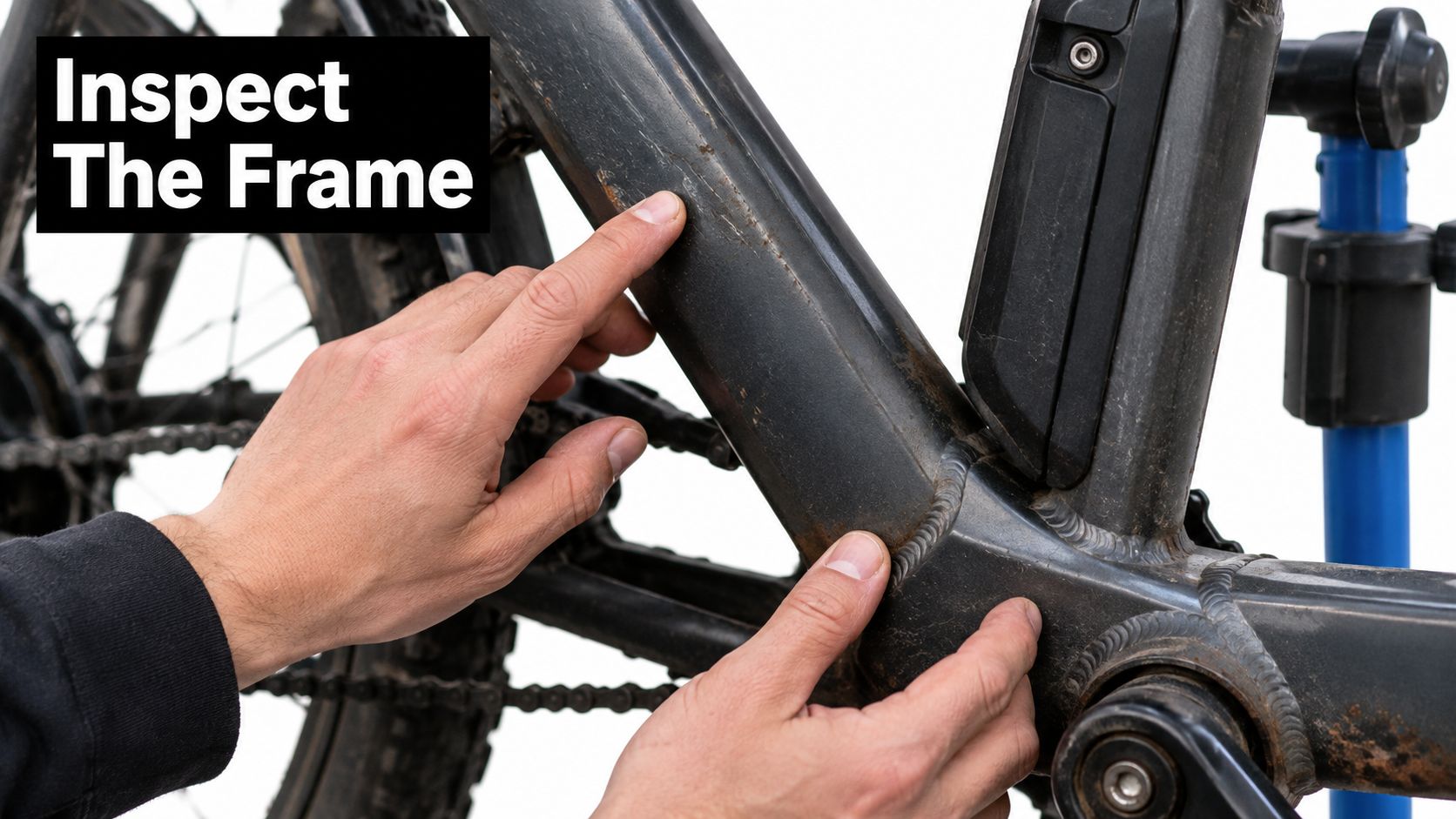
Start with the frame. Sellers can polish a bike, but metal still shows how it has been treated. Inspect beneath the bottom bracket, around the battery mount, and at every folding joint. Rust, cracks, bent dropouts, and poor weld repairs should stop the deal unless the price leaves room for a proper professional repair. Damage near the battery interface or motor mount is a reason to walk away, regardless of the asking price.
A frame that looks clean from several feet away may still hide trouble. Press lightly on the tubes, check for paint bubbles around chips, and confirm that each wheel sits straight in its dropouts. On a folding bike, test the hinge for movement or looseness. A hard-used frame often reveals its history through worn contact points, fresh paint over damage, or parts that no longer line up.
What the motor should feel like
With a hub motor, spin the wheel and listen carefully. It should turn smoothly, without grinding, scraping, clicking, or a rough point that returns with every rotation. With a mid-drive, hold the crankset and check for excess movement. Turn the cranks by hand and feel for rough bearings, resistance, or unusual play.
Test the bike under load if the seller allows it. A display can show normal readings while a failing battery or motor struggles on a hill. Battery date, casing condition, connector wear, and performance under your weight tell you more than a cheerful screen in a quiet garage. The buying notes on how long e-bike batteries last provide useful background for checking the system's history.
A motor that sounds lazy on the stand often sounds worse on the road, under load, and under your body weight.
Inspect the battery shell as closely as the frame. Swelling, cracks, corrosion at the terminals, water marks, or a mismatched third-party pack are mechanical warnings, not cosmetic defects. Guidance from a refurbished-bike operator says packs testing below 80% of original capacity are replaced, supporting the practical rule that a sub-80% battery should not be treated as healthy (used battery guidance). If the seller cannot explain where the battery came from, price the bike as an uncertain repair project, or leave it behind.
Testing the Battery Health and Capacity
A used e-bike can look like a bargain until the battery refuses to finish your commute. Sellers may describe the range confidently, then become vague when you ask for cycle count, purchase records, or service history. Treat the battery as a separate purchase decision. Start with evidence, not reassurance.
Use a repeatable check. First, look for the charge-cycle count in the manufacturer's app or a dealer diagnostic system, if available. Then confirm the battery's manufacturing date and original capacity from its label, paperwork, or system records. Finally, charge it fully and ride a familiar route using moderate assist. Watch the percentage under hills, stops, and your normal riding load. A short, flat loop can hide a weak pack.
What a tired pack looks like
A healthy battery usually loses charge steadily. A worn pack may drop sharply at the beginning, then appear to settle, creating a misleading impression of usable capacity. Age matters alongside cycle count. Used-bike battery buying guidance indicates that batteries can retain roughly 70-80% of advertised range by age 2, while packs at 4+ years old may have limited remaining life even when their cycle count seems acceptable.
Use this checklist before discussing price:
- Verify Provenance: ask for the original receipt, battery serial number, and service records. The serial number should match the bike's documented system where applicable.
- Check Cycle Count: treat 500-1,000 cycles as a serious wear zone. Be cautious when the battery is already well into that range, as outlined in this battery wear benchmark.
- Run the Range Test: ride a route with similar hills, stops, and distance to your commute. Record the starting and ending charge.
- Inspect the Pack: check for swelling, cracks, corrosion, heat, unusual odor, and water damage. These signs can indicate a safety problem or an expensive replacement.
- Confirm Ownership: ensure the battery belongs to the bike and is not a mismatched third-party replacement.
Dashboard bars are only a rough indication. A simple display can continue showing several bars while the battery's usable capacity has fallen sharply. A load test or professional capacity measurement gives stronger evidence than watching the screen in a driveway. If the seller will not allow a meaningful test, do not pay as though the battery were proven healthy.
A video walk-through can help you see the testing sequence in practice:
Reading the battery's life from the paperwork
Paperwork turns a vague battery story into a cost decision. Look for ownership records, replacement invoices, routine service notes, and any documented battery work. A seller who can explain when the pack was bought, stored, and serviced gives you a clearer risk profile. Missing records do not prove a bad battery, but they should affect your offer.
Include the likely cost of a future replacement when the history is incomplete. Clean casing, a full charge, and a cheerful display do not prove good capacity. Combine the documents, cycle count, physical inspection, and road test before handing over your money.
The Essential Road Test Checklist
A used e-bike can feel fine in a driveway and still fall apart on the street because load changes everything. Your weight, potholes, braking, gear changes, and motor demand reveal faults that a stationary inspection cannot. A tidy frame and a charged display mean little if the bike misbehaves under pressure.
Apply the brakes firmly while rolling, keeping the wheels short of a skid. The bike should slow in a straight line, without a spongy lever, harsh vibration, or a pull to one side. Chatter, grinding, or excessive lever travel points to work you should price into the deal. Shift through every gear while pedaling with force. Skipped gears and vague changes usually mean poor adjustment, worn parts, or neglected maintenance.
Listen for the stupid little noises
Noise gives you useful evidence. Clicking from the rear wheel can indicate a hub problem. Grinding around the crank may come from an abused mid-drive or bottom bracket. A rattle that grows louder over rough ground can point to loose mounts, worn bearings, or a battery that is not seated securely.
Run the pedal assist from a standstill through several speeds. Power should arrive smoothly, without a lurch, delay, or sudden drop. Watch the display while crossing small bumps and listen for changes in the motor note. Flickering, intermittent power, or assist that cuts in and out suggests a wiring, sensor, controller, or connection fault. It is not a normal quirk to accept without reducing the price and confirming the repair.
If a used bike only works when it's being babied, it isn't ready for daily use.
Use standing starts, tight low-speed turns, and a short hill if the route allows. These conditions expose weak sensors and tired electronics faster than easy cruising. Keep your hands relaxed and check whether the bike tracks straight. A machine that brakes cleanly, shifts under load, and stays electrically stable is worth more than one that only looks good beside the seller's house.
Understanding UK and EU Legal Requirements
A used e-bike can pass every mechanical check and still leave you with an expensive legal problem. In Great Britain, it qualifies as an EAPC only when it has working pedals, a motor with a maximum continuous rated power of no more than 250 watts, and assistance that cuts off at 15.5 mph (25 km/h) (UK electric bike rules). A bike outside those limits is treated as a motor vehicle, bringing possible registration, insurance, tax, licence, and helmet requirements.
Grey-market sellers often blur this distinction. They may advertise a machine as an ordinary e-bike while hiding a derestricted controller, higher motor rating, or speed setting that removes it from the legal category. Check the label and settings yourself. A seller's description is not proof.
Transport for London states that a UK-legal e-bike must stop providing motor assistance at 15.5 mph. If it has walk-assist, that function must cut out at 3.7 mph (6 km/h) (TfL e-bike safety guidance). Test both functions before money changes hands. Walk-assist is a specific compliance detail, not a feature you should accept on trust.
What to verify before you pay
- Pedals present and functional: confirm the bike can operate as a pedal-equipped cycle.
- Power rating on paper: ask for the specification sheet or motor label showing the rating. For more context, review this guide to electric bike street legality.
- Cut-off speed behavior: confirm assistance stops at the required speed rather than relying on the display's claimed setting.
- Cross-border rules: check the destination country's requirements before importing or riding the bike there.
EU rules require closer local checking. European-level discussion still describes fragmented national requirements, with no single technical standard covering braking, lighting, speed limits, and anti-tampering across the entire market (EU parliamentary discussion). A bike bought abroad may appear compliant and still fail a local requirement.
Read the rules for the place where you will ride. Treat modified controllers, derestricted speed settings, and unexplained high-power claims as red flags. A cheap bike becomes costly when it cannot legally be used on your normal roads.
Negotiating Price and Planning Maintenance
A used e-bike deal can look cheap until the first repair bill arrives. Price it around what you can verify, with the battery at the centre of the calculation. It is usually the most expensive wear item and the component whose history is easiest for a seller to obscure. Brand reputation matters when it means available parts, local servicing, and a realistic chance of keeping the bike running after purchase.
Build your offer from evidence. A high cycle count, an ageing battery, or missing service records should reduce the price. Noisy drivetrain parts and a motor that feels rough under load point to more spending soon. Name the likely repair and price it before making an offer. “It looks old” is weak bargaining. “The chain, cassette, and brake pads need replacing” gives both sides something concrete to discuss.
What to budget for after the sale
Set aside time and money for a basic inspection before using the bike for daily commuting. Clean and lubricate the chain, check brake-pad wear, inspect the tyre sidewalls, and confirm that the battery still sits firmly in its mount after several rides. A bike that has been stored for months may also need loose bolts tightened and cables checked. Small faults are cheaper to handle before they become repeated breakdowns.
Buy the bike with the repair job already in your head. If the deal only works when everything stays perfect, it's not a deal.
Battery safety deserves its own decision rule. Official guidance advises against using second-hand or modified battery packs, charging unattended or overnight, or continuing to use a pack showing odor, swelling, heat, discoloration, leakage, or unusual noises (CPSC micromobility safety guidance). On a used bike, an unknown battery history can outweigh an otherwise sound frame and motor. If the seller dismisses warning signs or cannot explain the pack's origin, leave the deal.
Punk Ride LLC lists electric bikes, including used and secondhand models, on its product pages. Comparing those descriptions with a private listing can show whether the seller has provided enough detail about condition, equipment, and history. It does not replace an inspection, but it gives you a practical reference for spotting vague or incomplete listings.
For another comparison point before committing money, review Punk Ride LLC while weighing the likely repairs, battery risk, and support available for the bike you are considering.
Share:
Electric Scooter Kickstand Guide: Types & Selection
Best Electric Bike to Buy in 2026: A Real-World Guide