


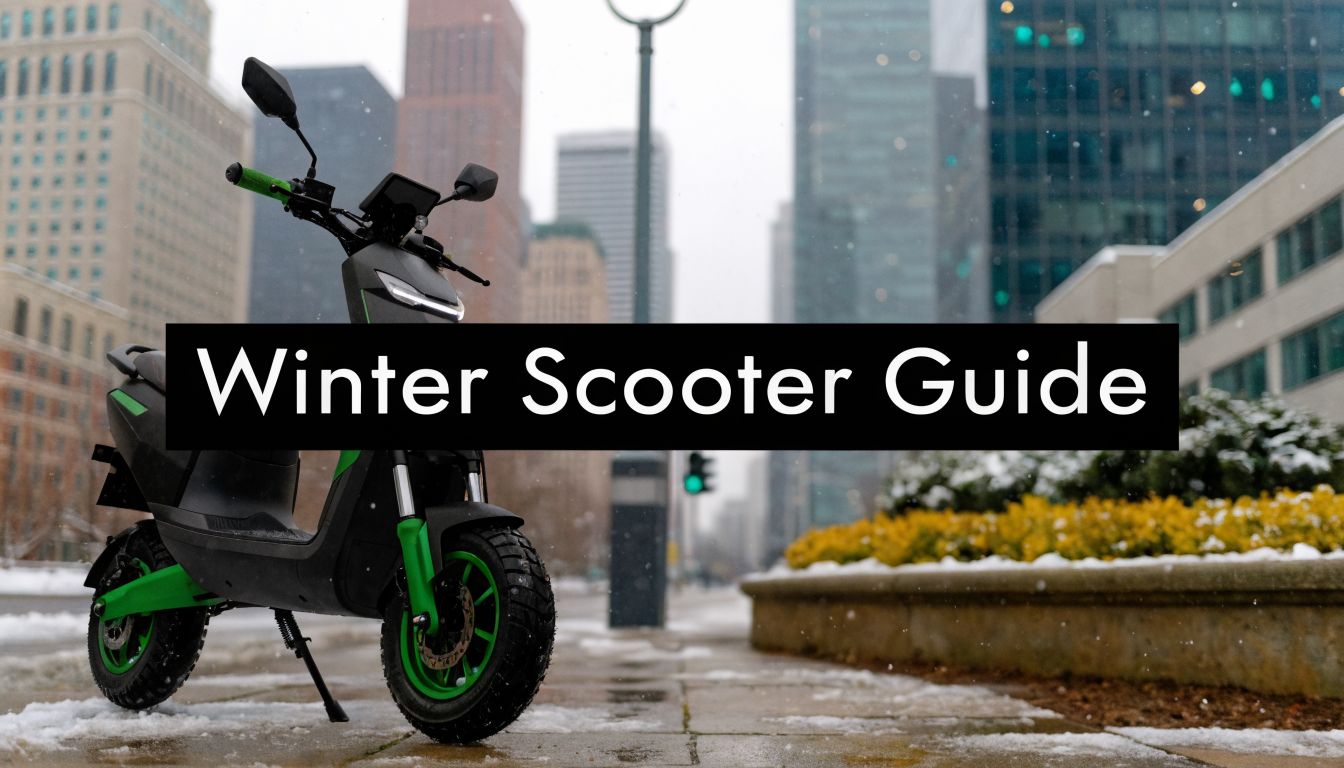
You look outside, see wet pavement, low light, maybe a bit of grit pushed to the kerb, and start doing the usual winter maths. Is the scooter worth it today, or is this one of those weeks where it stays parked until spring?
For a lot of riders in the UK and across Europe, that's the true question. Not whether a scooter in the winter is technically possible, but whether it's practical when the roads are damp, the battery feels flat sooner, and every painted line looks like it's waiting to throw the front wheel sideways.
The short answer is yes, you can keep riding through winter. You just can't ride like it's July. Cold changes battery behaviour. Wet roads change braking. Road salt, grime, and constant moisture change how fast parts wear. If you respect those trade-offs, winter commuting stays doable. If you ignore them, your scooter starts feeling unreliable fast.
This is the shop-floor version of winter advice. No fluff. Just what helps when you're commuting on dark mornings, parking in shared spaces, and trying to keep your scooter healthy through months of cold and rain.
Don't Let Winter Bench Your Electric Scooter
You head out on a dark January morning, and the road gives you three different surfaces in the first mile. Wet tarmac outside the house. A strip of leaf mush by the park. Grit and road film at the next junction. That is winter commuting on a scooter in much of the UK and Europe, and it catches riders out because the problem is rarely one dramatic weather event. It is the constant mix of cold, damp, dirt, and low grip.
A lot of scooters can handle winter use. A lot of riders just approach it with summer habits, then wonder why the scooter feels rough, short-ranged, or nervous after a few bad weeks.

What winter changes
Winter does more than make the ride less pleasant. It changes grip, braking distance, visibility, and wear rate, often on the same commute.
For UK and EU riders, the underlying challenge is persistence. Roads stay damp for days. Fine grit gets carried into cycle lanes and sticks around. Salt, dirty spray, and moisture creep into bolts, connectors, brake hardware, and folding mechanisms. The result is a scooter that may still run, but feels less predictable unless you stay on top of it.
That lines up with winter cycling guidance from RoSPA, which warns that wet leaves, ice, and poor road conditions can sharply reduce traction and control in cold-weather travel. The same lesson applies to scooters, especially small-wheel commuter models that react quickly to surface changes.
Winter shrinks your margin for error.
That is why generic advice misses the point. In a dry, cold climate, the main concern might be temperature. In Britain and a lot of western Europe, damp roads and abrasive grime do just as much damage as the cold itself.
What still works
Riders who keep using their scooters through winter without wrecking batteries or chewing through parts tend to follow a simple routine:
- They treat winter as a maintenance season. Fast wipe-downs, brake checks, and tyre checks stop small issues from turning expensive.
- They ride for the surface they have, not the speed they want. Painted lines, metal covers, brick crossings, and leaf-strewn corners all need a calmer approach.
- They protect the battery from cold soak. Leaving the scooter out all night, then charging it cold, is one of the quickest ways to shorten battery life.
Do that, and winter riding stays practical for a lot of daily commutes. Ignore it, and the scooter usually starts telling you something is wrong long before spring.
Master Your Battery in the Cold
If there's one part of winter riding you can't bluff your way through, it's the battery.
Cold slows the chemical activity inside a lithium-ion pack. You feel it as weaker pull-off, a faster drop in charge, and a scooter that suddenly seems less eager halfway through a ride. That doesn't always mean something is broken. It often means the battery is cold and working in a narrower band than it does in warm weather.
One winter guide advises planning for a 25 to 35% reduction in advertised range when temperatures fall between -7°C and 0°C, and notes that voltage drop can also make acceleration feel weaker, as covered in AAPEFI's cold-weather scooter maintenance guide.

The rules that actually matter
You don't need a complicated battery ritual. You need a strict one.
- Store the scooter indoors when you can. A hallway, utility room, dry garage, or sheltered indoor bike store is better than leaving it outside overnight in freezing conditions.
- Never charge a frozen battery. This is the expensive mistake. If the scooter has been out in freezing weather, bring it indoors and let it warm up properly before plugging in.
- Start with a full charge if you're commuting. Winter isn't the season for “it'll probably be enough.”
- Use moderate power. Hard launches and sustained high-speed riding pull more from a battery that's already less efficient in the cold.
What doesn't work
A few habits cause repeat battery trouble in winter:
- Leaving the scooter outside after the ride and charging it later while it's still cold
- Assuming summer range still applies
- Fast charging in cold conditions when a slower, gentler charge is the safer choice
- Running the battery very low before storing the scooter in a cold space
Practical rule: If the scooter feels cold-soaked, treat charging as a later job, not an immediate one.
A simple battery routine for commuters
For a normal workday ride, keep it boring.
Bring the scooter inside after the trip. Let it sit and warm naturally. Charge once the battery is back to room temperature. In the morning, roll out on a full battery and keep the first part of the ride calm instead of asking for full power straight away.
That routine isn't glamorous, but it saves batteries. In winter, boring is good.
Your Winter Pre-Ride Checklist
In summer, a lot of riders can get away with a quick glance and go. In winter, that's not enough. Give the scooter three minutes before every ride.
The reason is simple. Traction becomes the main safety constraint. Winter guides recommend pneumatic tires over solid ones, suggest checking tire pressure before every ride because cold air reduces it, and recommend around IPX5 or IP55 weather resistance for wet winter use, according to eRideHero's winter scooter guide.
The three-minute routine
Start at the tyres and work up.
| Component | Check For | Why It Matters in Winter |
|---|---|---|
| Tires | Pressure, tread, cuts | Cold air reduces pressure and wet roads punish weak grip |
| Brakes | Lever feel, bite, unusual noise | Damp conditions increase stopping demands |
| Lights | Front, rear, brake light visibility | Winter commutes often happen in poor light |
| Deck and folding points | Mud, grit, looseness | Road grime gets into moving parts fast |
| Throttle and display | Smooth response, no moisture issues | Wet conditions can expose small faults |
| Frame | Fresh rust spots, trapped dirt | Winter grime sticks and starts corrosion |
What to look at first
Tyres deserve most of your attention. If your scooter runs pneumatic tyres, that's an advantage in winter because they generally cope better with slippery roads than solid tyres. Pressure matters more than many riders realise. A tyre that feels only slightly soft can make steering vague and braking less predictable on wet tarmac.
Brakes come next. Don't just squeeze the levers in the hallway and call it done. Roll the scooter forward a few feet and test actual bite. Wet roads punish lazy brake maintenance.
If you want a broader upkeep routine beyond the winter-specific checks, Punk Ride's guide to electric scooter maintenance basics is a useful reference.
The rider check matters too
The scooter isn't the only thing that needs prep.
- Wear gloves that let you feel the levers. Big puffy gloves that kill brake feel are a bad trade.
- Use a waterproof outer layer. Staying dry keeps your reactions sharper.
- Make yourself obvious. Reflective details and bright outerwear matter more on grey afternoons than many riders admit.
- Check your shoes. Slippy soles on a wet deck are trouble before the wheels even start moving.
A winter pre-ride check isn't overkill. It's what replaces luck.
Smart Riding on Slippery Surfaces
You leave work at half five, the road looks only damp, and the first roundabout reminds you how different winter grip really is. The scooter still works, but the margin for error shrinks fast on cold tarmac, painted lanes, and road grime that never fully dries in a UK or EU winter.

The riders who stay upright in winter usually do one thing well. They read the road early. Scan well ahead, not at the front wheel, and pick out the surfaces that change grip without much warning. Cycle-lane paint, drain covers, polished paving, wet leaves pressed into the kerb line, and shallow puddles that hide broken tarmac all deserve suspicion.
How a good winter rider thinks
Smooth inputs matter more than bravery.
Roll off the throttle before you reach the slick patch. Finish most of your braking while the scooter is still upright and on predictable ground. Then let the scooter pass over the low-grip section with a light, steady hand. Sudden steering, panic braking, and sharp acceleration are what usually turn a small slide into a proper fall.
We see this all the time with commuters who are fine on dry roads and then get caught out by winter surfaces that look harmless. Damp roads in Britain and much of northern Europe are rarely just wet. They are wet, cold, dirty, and often polished by traffic. That mix reduces grip in a way many generic safety guides gloss over.
If you want the wider fundamentals behind that approach, our electric scooter safety tips for braking, visibility, and road positioning are a useful companion.
Brake earlier than feels natural. On winter roads, that usually gives you options instead of problems.
Surfaces that catch riders out
The obvious hazards are frost, slush, and standing water. The ones that cause a lot of low-speed spills are subtler:
- Painted road markings at crossings, lane symbols, and stop lines
- Metal covers and utility plates near junctions
- Wet leaves compacted along bike lanes and gutters
- Smooth paving slabs in town centres and station approaches
- Greasy road film near bus stops, traffic lights, and roundabouts
Cross these surfaces with the scooter as upright as possible. Keep the throttle neutral or gently reduced. Do your heavy braking before you get there, not on top of it.
Here's a useful visual on winter riding lines and control:
When to call it off
Some winter days are rideable with care. Some are not worth the gamble.
If side streets are frozen, if you can see untreated ice at junctions, or if compacted snow is forcing cars to wander out of line, leave the scooter at home. Most commuter models can handle damp roads and cold air if you ride sensibly. Very few are happy on true ice. We tell customers this every winter because it saves repair bills and saves skin.
If a surface looks uncertain, treat it as worse than it appears. That habit keeps you out of trouble.
Post-Ride Care and Long-Term Storage
A winter ride doesn't end when you fold the scooter. What you do in the next ten minutes matters just as much as what you did on the road.
Leaving a scooter outside in freezing temperatures can lead to battery damage, rust, or moisture-related issues, and guidance recommends indoor storage and letting the battery warm up before charging to prevent accelerated degradation from cold exposure, according to Apollo's advice on winter scooter use and storage.

Daily winter warrior
If you ride most days, your goal is simple. Get moisture, grit, and road film off the scooter before they sit there overnight.
Use a soft cloth or towel and wipe down the frame, deck edges, folding joint area, and wheel arches. Pay attention to bolts, exposed metal, and any place where dirty water collects. Then bring the scooter indoors and let it dry properly before charging.
Salt and grit don't need months to cause trouble. A few neglected wet rides can start the process.
Winter hibernator
If you know you won't ride much, storage needs a different approach.
Clean the scooter properly first. Dry it fully. Check for existing rust spots, worn tyres, or loose fasteners so you're not discovering them later. Store it somewhere cool and dry, not out on a balcony or in a damp shed.
For battery-specific handling, follow a proper lithium battery storage guide and your scooter manufacturer's instructions. The important part is avoiding cold, damp storage and avoiding the habit of abandoning the scooter after a low-battery ride.
Daily use versus storage
The difference comes down to routine.
| Rider type | Main job after the ride | Biggest risk |
|---|---|---|
| Daily commuter | Wipe down, dry, warm before charging | Moisture and grime building up quietly |
| Occasional rider | Clean and store indoors between uses | Cold exposure and neglected battery care |
| Long-term storage | Full clean, dry storage, battery care plan | Degradation from poor storage habits |
Winter wear is usually cumulative. One filthy ride won't kill a scooter. Repeating that pattern for weeks without cleanup is what does the damage.
Frequently Asked Winter Scooter Questions
Can you ride a scooter in the winter at all
Yes, in a lot of UK and EU winter conditions you can. The usual problem is not the season itself. It is wet tarmac, greasy painted markings, metal covers, and road grime that cuts grip when the temperature drops.
Cold and damp is manageable. Ice, frozen ruts, and untreated back roads are where a commuter scooter starts to make less sense.
Can you ride in snow
Sometimes, but it depends on the type of snow and the scooter under you.
A light dusting on roads that still have clear tarmac is one thing. Packed snow, slush hiding potholes, and black ice at junctions are another. For small-wheel commuter scooters, snow usually turns a normal ride into a low-grip gamble. We tell riders to leave it parked unless the route is fully clear.
Is winter demand really that different
Yes. Shared scooter usage drops sharply in winter, and Bloomington, Indiana is a clear example. Ridership fell by about 66% from 2022 to 2024, based on Bloomington shared scooter ridership reporting.
That is a US example, but the pattern is familiar. Once winter roads turn cold, damp, and gritty, casual riders stop first. The people who keep commuting usually do it by being selective about routes, tyre condition, and battery handling.
Will waterproof spray solve winter problems
No. It can help around exposed fittings or body seams, but it does not make a poorly sealed scooter fit for regular wet riding.
Water resistance comes from the scooter's design, how well it is maintained, and whether you keep moisture and grime from sitting in the wrong places. Spray is a small extra layer, not a fix.
Are solid tyres fine for winter commuting
They can work, but they are a compromise. In winter, pneumatic tyres usually give better grip and a bit more forgiveness over rough, slippery surfaces.
That matters on cycle-lane paint, brickwork, shiny paving, and patched-up road edges. If your winter route includes those surfaces every day, air-filled tyres are usually the safer choice.
What's the one mistake that causes the most grief
Plugging in straight after a freezing ride.
Riders do lasting battery damage here without realising it. A battery that is still very cold should be brought back to room temperature before charging. In a UK or northern EU winter, that simple habit makes a real difference to long-term battery health.
Should you change your route in winter
Yes, if your usual route has known slippery sections.
A route that is a few minutes longer can still be the better winter option if it has better drainage, fewer painted crossings, less traffic pressure, and fewer shaded corners that stay icy. In winter commuting, the fastest line is not always the safest one.
If you're sorting out your own winter setup, Punk Ride LLC offers electric scooters, e-bikes, and practical advice for riders in the US, UK, and Europe. It's a useful place to compare urban mobility options and get a better sense of what fits real-world commuting, including cold-weather use.
Share:
Electric Bike Moped Style Your Ultimate 2026 Guide
Complete Guide to Electric Bike Repair