


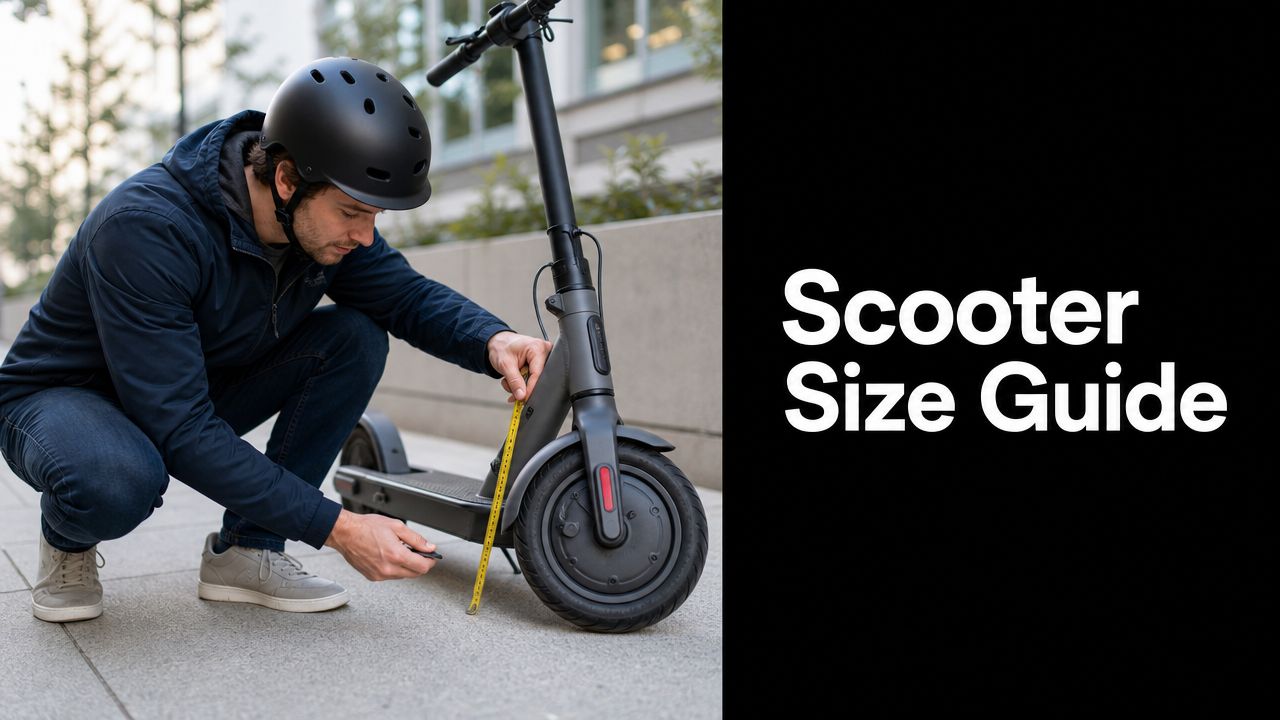
You're probably doing what most adults do when they start shopping for a scooter. You open three tabs, compare a few models, and get hit with a wall of specs that don't translate into real life. Deck width, stem height, wheel diameter, rider load. It all sounds simple until you try to picture how any of it feels on an actual commute.
That's where people buy the wrong scooter.
A bad fit doesn't just feel a bit awkward. It changes your posture, makes rough roads harsher than they need to be, and can leave you feeling twitchy at low speed or unstable when braking. In busy UK and EU cities, where scooters and e-bikes are now part of everyday urban travel, those details matter more than most buying guides admit.
Finding Your Ride Without the Regret
A common mistake is treating adult scooters like they come in one universal size. They don't. An adult who wants a compact last-mile commuter in London has different needs from someone riding for leisure in a Dutch city, and both need something different from a heavier rider in the US or Australia who's trying to avoid a frame that feels underbuilt.
That mismatch shows up fast. The bars sit too low, so your shoulders hunch. The deck is short, so every ride feels cramped. The wheels are tiny, so every crack in the pavement travels straight into your knees. People often blame scooters in general when the issue is simpler. They bought the wrong size.

The market has grown because more adults are using scooters as practical transport, not just toys. The global electric scooter market was valued at USD 48.90 billion in 2025 and is projected to surge to approximately USD 364.24 billion by 2035, growing at a CAGR of 22.24%, according to Precedence Research's electric scooter market outlook. More riders means more choices, but also more ways to choose badly.
The right scooter size for adults should disappear beneath you. You shouldn't spend the ride thinking about your wrists, back, or foot placement.
If you're still comparing broad categories, a practical first step is this guide to choosing an electric scooter. Then come back to fit. Fit is what turns a scooter from “usable” into something you'll want to ride.
The Four Core Scooter Sizing Metrics
A scooter can look right on paper and still feel wrong within five minutes. The usual reason is simple. Buyers check handlebar height, then miss the other three measurements that decide whether the scooter feels planted, cramped, twitchy, or underbuilt.
The four sizing metrics that matter are handlebar height, deck size, wheel diameter, and weight capacity.

Handlebar height
Handlebar height affects posture first, steering second. Bars that sit too low push weight into your wrists and round your shoulders. Bars that sit too high can make the front end feel less precise, especially in tight turns.
A good starting point is the height of your hands when you stand relaxed in your normal riding shoes. For many adults, that lands around waist to navel level. Then adjust for use. A commuter who rides longer distances often prefers a slightly more upright setup. A rider who wants a sportier feel may like the bars a little lower for better front-end control.
Adjustability helps only if the scooter's range fits your body. If you're comparing telescopic stems or folding models, this guide to adjusting scooter handlebar height is useful for judging the effective setup range, not just the number listed in a product spec.
Deck size
Deck size gets treated like a shoe-size check. That misses the point.
For adult electric scooters, a typical deck size is 14" by 5", according to Rider Guide's electric scooter guide. Use that as a baseline, not a target. Deck width changes how stable you feel when the road gets rough or when you brake hard. Deck length changes how naturally you can stagger your feet and shift your weight.
That matters a lot more than buyers expect. Riders who commute in normal clothes often like a deck with enough length to settle into a relaxed stance. Riders who corner harder or ride faster usually benefit from more deck width and usable foot space, because they move around more during the ride. A narrow, short deck can still work for short hops and easy storage, but it often feels restrictive for taller riders or anyone with a bigger frame.
The practical check is easy. If your rear foot keeps searching for space, or you have to stand almost straight-on with both feet cramped together, the deck is undersized for your riding style.
Wheel diameter
Wheel size shows up in comfort faster than almost any other spec. Small wheels drop into cracks and bounce off rough tarmac. Larger wheels roll over the same surface with less drama, the same way a bigger suitcase wheel handles cobbles better than a tiny one.
The Micromobility for Europe safety recommendations note that many e-scooters use wheel diameters in the 8.5 to 12 inch range. In practice, adult riders who deal with uneven pavement, drain covers, or patched roads are usually better served near the upper end of that range. Around 10 inches is a sensible floor for general adult use. Bigger than that often improves comfort and confidence, but it also adds weight and takes away some of the compact feel people want for carrying upstairs or storing under a desk.
Road surface should guide this choice more than marketing claims. Smooth cycle lanes can make smaller wheels acceptable. Broken urban streets punish them.
Weight capacity
Weight capacity is the sizing factor buyers skip most often, and heavier riders pay for that mistake first.
A scooter rated for 100 kg may technically carry an adult close to that limit, but real riding is rarely just rider weight. Add a backpack, laptop, groceries, a wet road, a steep hill, and repeated hard braking, and the scooter is working much harder than the headline number suggests. That changes acceleration, stopping feel, motor heat, and long-term frame fatigue.
This matters for heavier adults in particular, because many standard models top out around 100 kg to 120 kg. Riders above that range should not treat the published limit as a comfortable target. They should look for margin. In real use, a scooter with a stronger frame, better brakes, and a higher rated capacity usually feels calmer and lasts longer even if two models claim similar top speed.
A useful way to judge the four metrics is this:
| Metric | What it changes on the road | What goes wrong when it's wrong |
|---|---|---|
| Handlebar height | Posture and steering comfort | Hunched shoulders, wrist strain, awkward control |
| Deck size | Stance, balance, foot movement | Cramped footing, unstable braking, less control |
| Wheel diameter | Bump absorption and stability | Harsh ride, lower confidence on rough ground |
| Weight capacity | Safety margin and durability | Slower response, more frame stress, weaker braking feel |
Your Quick-Reference Adult Scooter Sizing Chart
A sizing chart helps narrow the field, but it shouldn't make the decision for you. Treat it like a starting filter. Then check riding style, deck shape, and the manufacturer's stated rider limit before you buy.
There's a reason charts only get you so far. Standard adult-sized scooters are typically engineered with total lengths of 105 to 115 cm and wheel diameters of 8 to 10 inches to support adult weights from 70 kg to 120 kg, according to this adult scooters market overview on LinkedIn. That tells you what “standard adult” usually means in the market. It doesn't tell you whether that standard works for your body or your use case.
Rider Height to Scooter Specification Guide
| Rider Height (cm / ft-in) | Ideal Handlebar Height (cm) | Recommended Deck Length (in) | Recommended Wheel Size (in) |
|---|---|---|---|
| 160 cm / 5'3" | 90 to 100 | 19 to 20 | 10 |
| 170 cm / 5'7" | 95 to 105 | 20 to 21 | 10 to 11 |
| 180 cm / 5'11" | 100 to 110 | 21 to 22 | 10 to 12 |
| 190 cm / 6'3" | 105 to 115 | 22 to 23 | 11 to 13 |
| 195 cm / 6'5" | 110 to 120 | 22 to 23 | 12 to 13 |
These ranges work best as a shortlist tool. If you're between heights, choose based on posture first and compactness second. If you're heavier, have broad shoulders, or ride rough streets daily, the next sections matter more than the chart.
Matching Scooter Size to Your Riding Style
Body measurements matter. Riding style matters just as much.
A lot of adults search for scooter size for adults as if there's one correct answer. In practice, the right fit changes depending on whether you commute, cruise, or ride more aggressively. A scooter that feels perfect on a smooth canal-side path can feel completely wrong weaving through broken city tarmac or trying to land tricks.

Daily commuter
Commuters need a scooter that forgives a messy route. Kerb cuts, drain covers, patched asphalt, damp paving, and the odd rushed brake into a crossing all push you toward a more stable setup.
For that rider, I'd prioritise:
- Larger wheels: They take the sting out of rough surfaces and track straighter at speed.
- A moderate-to-long deck: Enough room to shift your feet during longer rides.
- Sensible bar height: High enough for comfort, not so high that steering feels loose.
This is usually the rider who benefits from a balanced setup, not the smallest folding frame on the market.
Casual cruiser
The weekend rider wants comfort first. You're not trying to save every centimetre of folded length. You want a scooter that feels calm and easy.
That usually means a roomier platform and a more relaxed stance. A deck that's slightly wider often feels better here because it removes that “tightrope” sensation. If the route is mostly parks, promenades, or smoother local streets, a medium-sized setup can feel spot on.
A cruiser can get away with a little more scooter under them. The extra room often makes the ride feel less nervous and more natural.
Street and park riders
Most generic size guides fall apart. They talk about bar height and forget that deck dimensions change how a scooter behaves under you.
Street riders often require wider decks of 5.0 to 6.0 inches for technical stability, while park riders benefit from narrower decks of 4.5 to 5.1 inches, as noted in this rider discussion of deck sizing on YouTube.
That distinction matters:
- Street setup: Wider deck, more planted feel, better for technical control and varied surfaces.
- Park setup: Narrower deck, quicker movement, easier for a more agile style.
- Mixed use: Don't chase extremes. A middle-ground deck often feels better than a specialised one if you do a bit of everything.
The real takeaway
Deck width and length should match how you move, not just your shoe size. Broad-shouldered riders often feel more settled on a wider platform. Riders who shift their feet a lot during longer journeys usually prefer more deck length. Riders who value agility over comfort often go narrower and more compact.
That's why two adults of the same height can hate each other's scooters. Same body size. Different riding style.
A Critical Sizing Guide for Heavier Riders
A scooter can feel fine in a showroom and wrong within the first five minutes on the road. Heavier riders run into that more than anyone, because sizing is not only about bar height or overall length. Weight capacity, deck room, braking feel, and frame stiffness all matter more once the rider is pushing closer to the scooter's limit.

Swifty Scooters notes in its guide to common adult scooter questions that many adult kick scooters top out around 100 to 120 kg, while fewer models are built and rated for 150 kg. For heavier adults, that rating sets the baseline for the whole buying decision.
Ignore it and the problems show up quickly. Acceleration gets dull. Braking distances grow. The ride gets harsher because the tyres, frame, and suspension have less margin left to absorb rough ground. A pothole that feels like a thud to a lighter rider can feel like a full jolt when the scooter is working near capacity.
Deck size matters here too, and many guides miss that. A heavier rider often feels more stable on a longer, wider deck because there is more room to place both feet without standing heel-to-toe all the time. That extra platform helps on longer rides, rougher streets, and stop-start commuting. A compact deck can still work, but it usually suits a more agile, short-hop riding style than a comfort-first setup.
If you are comparing models built for this range, this electric scooter guide for adults around 300 lbs is a useful place to narrow the shortlist.
What to look for instead
Shop with a stricter filter than the average buyer:
- A clearly stated weight rating: Vague listings are a bad sign.
- A deck with enough usable room: More width and length usually mean a calmer, more planted stance.
- A stiffer frame: Flex feels worse with more rider weight, especially under braking or on broken pavement.
- Larger wheels and proper suspension: Bigger wheels roll through rough surfaces more cleanly, much like a larger tyre on a bike deals with cracks better than a tiny one.
- Enough motor for your real use case: NIU's electric scooter buying guide explains that heavier riders and hillier routes need more motor output than flat, short urban trips.
A good visual explanation can help if you're comparing build quality and rider support features across categories:
Don't buy on optimism
Buy for your actual riding weight. Include your backpack, work gear, lock, and anything else you carry every day.
I have seen riders choose the lighter, cheaper scooter because the spec sheet looked close enough. That usually ends with a scooter that feels nervous on bad roads, struggles on inclines, or gets used less because it never feels fully settled. Paying attention to rider weight and deck dimensions up front saves money and frustration later.
If you sit above the standard limit range, you are not asking for a special case. You are asking for a scooter sized to do the job properly.
Navigating Scooter Rules in the UK and EU
Fit matters. So does legality.
The UK remains awkward territory for private e-scooter ownership because what you can buy and what you can legally ride in public haven't always lined up neatly. That uncertainty has hovered over the market for years, even while rider interest kept growing.
The commercial side shows that demand hasn't gone away. The UK electric scooters market generated USD 874.8 million in 2025 and is projected to reach USD 1,818.8 million by 2033, growing at a CAGR of 9.6%, according to Grand View Research's UK electric scooters market outlook.
The UK situation
In practical terms, many riders in the UK know the split already. Rental schemes have been visible in some areas, but private use on public roads and pavements has remained a separate legal question. That means your ideal scooter size for adults still has to pass a second test. Can you use it where you plan to ride?
The safest approach is simple:
- Check local guidance before buying: Rules can change and enforcement can vary.
- Match the scooter to likely legal use: Some buyers are really purchasing for private land, campuses, or future-proofing.
- Don't assume shop availability equals road legality: Retail listings and road rules aren't the same thing.
The wider EU picture
Across the EU, the picture is broader but still not uniform. Many countries allow electric scooters under defined conditions, often tied to speed, where they can be ridden, and equipment requirements. The exact rulebook changes by country and sometimes by city.
That matters for sizing because legal restrictions can affect what makes sense to buy. If your local framework rewards compact urban use, a huge high-power machine may be the wrong answer even if it fits your body. Good fit is always body, purpose, and law working together.
Conclusion Your Perfect Fit Awaits
Buying the right scooter gets easier when you stop chasing the single “best” model and start matching the machine to the rider. That's what scooter size for adults really comes down to. Not just your height, but your stance, your route, your weight, and the way you plan to ride.
Use this three-step checklist when you're narrowing options:
-
Start with your numbers
Measure your comfortable bar height and check the rider weight limit before anything else. If either one is wrong, the rest of the spec sheet won't save the scooter. -
Define your purpose
A commuter usually needs stability and comfort. A cruiser often wants deck room and a calm ride. A trick-focused rider may prefer a tighter, more agile setup. The right scooter on the wrong route quickly feels like the wrong scooter. -
Check the rules where you live
This matters most in the UK and across Europe, where local regulations shape what's practical. If you're shopping from the US or Australia, the same principle applies. Always check where and how you'll ride before you commit.
A well-sized scooter feels easy from the first push-off. Your feet settle naturally. The bars meet your hands where they should. The ride feels controlled instead of fussy. That's the fit you're looking for, and once you know what to screen for, it's much easier to find.
If you're ready to compare properly sized electric scooters and e-bikes for commuting, leisure, and heavier rider needs, Punk Ride LLC is a strong place to start. Punk Ride curates urban mobility options from a wide range of established brands, with support for customers across the UK, Germany, the EU, and the US.
Share:
The Ultimate Utility E Bike Guide for UK & EU
Dual Motor Electric Bike: The Ultimate Power Guide 2026