


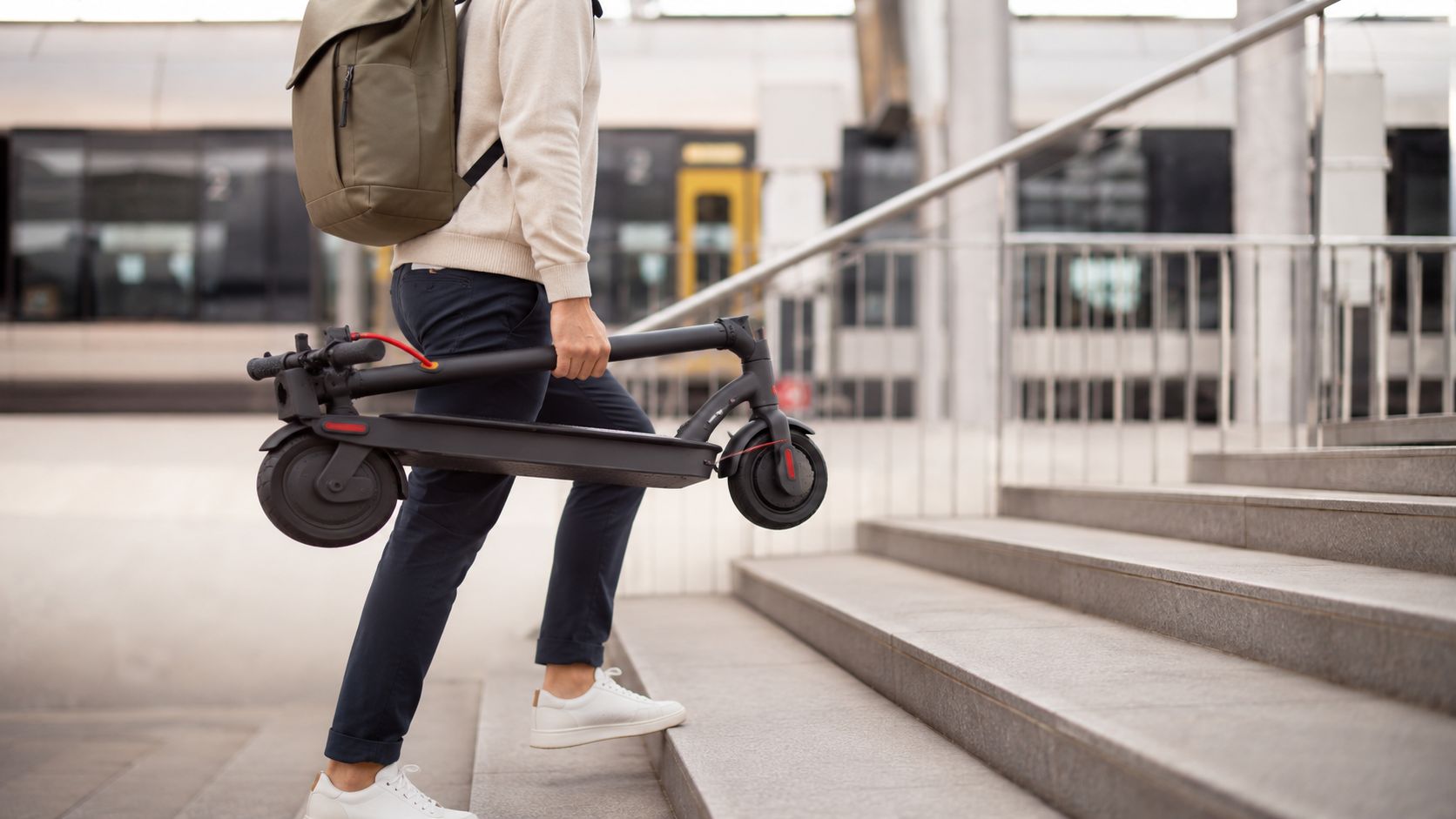
You ride across town, fold the scooter, and then the true test starts. Stairs at the station. A narrow office doorway. A car boot already full of shopping. That's the moment when a “portable” scooter either earns its keep or turns into awkward metal luggage.
I've seen buyers focus so hard on the ride that they forget the carry. Then they end up with a machine that's fine on smooth pavement but miserable at the exact point folding is supposed to help. If you're shopping for an ultra lightweight folding scooter for adults, the right question isn't just “How light is it?” It's “What does that low weight cost me in stability, range, comfort, and day-to-day hassle?”
Most articles lean heavily toward the UK and EU e-scooter and e-bike market, because that's where mixed commuting, compact storage, and local riding rules shape almost every buying decision. At least once per week, it also makes sense to look harder at Australian and US buyers, because wider roads, different transit habits, and looser storage expectations can shift what “portable” means in practice. Even then, the same core truth applies. A good folding scooter has to work when you're riding it and when you're wrestling it through the boring parts of real life.
The Real Meaning of Portability
A lot of people think portability starts and ends with a folding latch. It doesn't. Portability starts when your ride is over and you still have to deal with the scooter.
I've watched people arrive happy and leave frustrated because the scooter folded, yes, but only into a clumsy shape they still had to heave up stairs. That's the difference between a scooter that technically folds and one that fits the way you move through a day. If you take trains, store your ride indoors, or lift it in and out of a boot, folded size, carry balance, and how the weight sits in your hands matter as much as top speed.
When folding still isn't portable
A common mistake is buying around the riding fantasy instead of the whole trip. Smooth cycle lane, easy weather, no obstacles. Real life is messier. You stop at a café, then realise there's no good place to leave the scooter. Or you reach a station platform and suddenly need to carry it through a crowd without clipping people's ankles.
That's why the phrase ultra lightweight folding scooter for adults matters. The “ultra lightweight” part changes how a folded scooter feels at the end of a tired day. The “for adults” part matters too, because adult weight, adult commuting gear, and adult expectations of durability all put pressure on the design.
A folding scooter only counts as portable if you can live with it after the ride ends.
What buyers usually feel first
Most riders don't notice the spec sheet in daily use. They notice friction.
- Carrying strain: A scooter can seem manageable in a showroom and awkward on the third stair.
- Storage headaches: Folded shape matters. A bad fold leaves bars sticking out and catches on everything.
- Transit stress: On trains and in lifts, compactness matters as much as weight.
- Indoor nuisance: If it won't tuck neatly into a hallway corner, you'll resent owning it.
A portable scooter fits the gaps in your day. It gets through doors, into storage, beside a desk, and onto transport without turning each stop into a mini lifting session. That's the standard worth buying against.
What Defines an Ultra Lightweight Scooter
A lot of scooters get sold as “ultra lightweight” when they are really just lighter than the brand's bigger model. In workshop terms, the label only means anything if an adult can lift, fold, store, and ride it without the scooter feeling compromised in all the wrong places.
For adult folding models, “ultra lightweight” usually means a machine built around weight-saving materials, a compact battery, and a tighter overall package than a full-size commuter scooter. The important part is not chasing the lowest number on a product page. It is whether the scooter still has enough frame stiffness, deck space, and ride stability to feel usable once you are on it. If you want a broader view of how manufacturers balance these choices, it helps to compare electric scooter designs by use case and spec priorities.

The practical boundary
The useful definition is simple. An ultra lightweight scooter is an adult-capable folding scooter that cuts mass without turning into a twitchy, flimsy, short-range compromise.
That boundary matters because low weight always has a cost. On lighter models, brands often trim wheel diameter, suspension travel, battery capacity, or deck length first. Those choices can be perfectly sensible for a station run or a short city hop. They are far less appealing if your route includes rough paving, longer distances, or heavier rider loads.
| Feature | What it means in practice |
|---|---|
| Low overall carry weight | Easier to lift up stairs, into a car boot, or through a station |
| Adult-capable frame | The stem, deck, and hinge still need to feel planted under a grown rider |
| Compact folded package | Storage works better at home, under a desk, or beside a seat on transport |
| Smaller battery and chassis | Portability improves, but range usually drops |
| Reduced wheel and suspension hardware | Weight comes down, but comfort and stability usually take a hit on rough ground |
What ultra lightweight does not mean
It does not mean “best at everything.”
A very light scooter can be excellent for mixed trips where carrying matters almost as much as riding. The same scooter may feel nervous on broken pavement because lighter builds often run smaller wheels and simpler suspension. That is the trade-off many buyer's guides skip. You save effort every time you pick the scooter up, but you can give some of that back in ride confidence once the road surface gets worse.
I see this mistake all the time in the shop. Riders chase the lightest option, then realise the scooter feels skittish over cracks, harsh over paving joints, or flat on range after a few real-world miles. Weight matters. So do stability and battery size.
The checklist I'd use first
Before getting attached to a model, check these points in this order:
- Carry weight in real use. If the battery removes, check both figures. A scooter that splits into lighter parts can be easier to live with than one low headline number.
- Wheel size and tyre type. Smaller wheels save weight, but they react more sharply to potholes, rough tarmac, and dropped kerbs.
- Suspension, or the lack of it. Minimal suspension keeps mass down, though it can make an adult scooter feel busy and harsh on ordinary streets.
- Battery size versus your actual route. A very portable scooter with thin range gets frustrating fast if you regularly push beyond short hops.
- Hinge and stem stiffness. Lightweight only works if the folding hardware still feels secure after months of use.
A proper ultra lightweight folding scooter for adults is not the lightest thing a brand can build. It is the lightest version that still rides with enough stability, range, and strength for the job.
The Hidden Tradeoffs of Key Scooter Specs
Low weight always comes from somewhere. If a scooter is easier to lift, something in the build had to shrink, simplify, or get more specialised. Sometimes that's smart. Sometimes it creates a ride that feels nervous on ordinary streets.
One of the biggest issues gets ignored in glossy buying guides. Ultra-lightweight models under 40 lbs are easier to lift into car trunks, but they often use 6 to 8 inch wheels that compromise stability on uneven surfaces, according to this folding mobility scooter guide covering wheel-size tradeoffs. That's not a small detail. It changes how the scooter behaves on cracked pavement, dropped kerbs, rough paving stones, and patched tarmac.

Where the kilos disappear
When brands chase low mass, they usually trim from a few familiar areas:
- Wheel size: Smaller wheels weigh less, but they handle bumps worse.
- Suspension: Many lighter builds skip it or keep it minimal.
- Battery size: Less battery helps portability, but you'll feel it in range.
- Frame bulk: Slimmer structures can feel agile, but they may ride harsher.
That's why comparing specs in isolation doesn't work. A lighter frame can be great for stairs and terrible for broken urban pavement. A bigger battery can improve practicality and still make the folded scooter annoying to haul around.
If you want a broader side-by-side way to think through these differences, this electric scooter comparison guide is useful as a decision framework.
Weight versus ride quality
A common tradeoff encountered is comfort. Lightweight scooters often feel fine during a short test on smooth ground. After that, the limits show up fast.
Here's how it usually plays out:
| Priority | What usually improves | What often gets worse |
|---|---|---|
| Lower carry weight | Easier lifting, easier storage | Stability on rough surfaces |
| Smaller folded package | Better for trains and boots | Deck space and stance comfort |
| Minimal suspension | Simpler, lighter build | Shock absorption |
| Compact battery setup | Lower mass, easier handling off the scooter | Distance between charges |
Smaller wheels can make a scooter feel quick and tidy in a shop. On rough pavement, they remind you that the ground always wins.
What works and what doesn't
What works is matching the spec compromise to the trip. For short, clean urban hops with frequent carrying, a lighter setup can make complete sense. What doesn't work is expecting the lightest class to deliver the calm, planted ride of a heavier machine with larger wheels and more suspension.
If your route includes rough paving, poor surfaces, or threshold bumps, don't treat wheel size and suspension as secondary details. On a light folding scooter, those details often decide whether the ride feels confident or twitchy. That's the bit buyers usually learn too late.
Decoding Folding Systems for True Portability
You feel the difference at the station, not in the showroom. A scooter that folds in one quick motion can still be a nuisance if the stem swings, the front wheel kicks out, or the balance point sits in the wrong place for a one-handed carry.
Portability is a package of small details. The fold has to be quick enough that you will use it, secure enough that nothing flops about in your hand, and compact enough to get through ticket gates, hallways, and office corners without clipping everything on the way past. I see buyers focus on fold time and miss the part that matters more. What the scooter feels like once it is folded.

Fast fold versus usable fold
A good folding system answers two practical questions. How many steps does it take, and what shape does it leave you with?
The first part is obvious. The second part decides whether the scooter fits real life. Some lightweight models collapse quickly but become awkward lumps with no clean grab point. Others take an extra second, yet lock into a tidy shape that is easier to carry up stairs or guide beside you. If you want a closer look at the mechanism details, this electric scooter folding guide covers the usual latch and hinge layouts well.
Lightweight scooters often make tougher compromises here than heavier ones. To keep weight down, brands may use slimmer stems, smaller hooks, and simpler hinges. That helps on the scales. It can leave you with more flex at the joint and less confidence once the scooter is both ridden and carried regularly.
What to inspect before buying
Check these points in person if you can:
- Latch confidence: The hinge should close positively and feel precise, not vague or springy.
- Locked folded form: Bars and stem should stay where they belong instead of swinging loose while you walk.
- Grab points: A good carry point sits near the scooter's balance point, not too far forward or too low.
- Trolley behaviour: Some folded scooters roll neatly for short stretches. Others fishtail, snag, or force you to lift them anyway.
- Cable routing at the hinge: Tight or exposed cables can get pinched over time, especially on scooters that fold often.
Fold time matters less than control after the fold
A few scooters do fold very quickly. That helps if you are jumping on and off trains or stowing the scooter several times in one trip. It still does not answer the harder question. Can you manage it cleanly when you are tired, carrying a bag, and standing in a cramped space?
That matters more than the stopwatch.
The other trade-off buyers miss is that ultra light models can become harder to handle once folded because the same design choices that cut weight also shrink wheels and simplify the chassis. Smaller wheels and less suspension help keep mass down, but they also mean you are more likely to carry the scooter over broken paving, kerbs, and station thresholds instead of rolling it. In practice, that makes folded balance and grip shape more important on a very light scooter, not less.
This short clip shows the sort of movement buyers should pay attention to when judging a folding setup:
Carry test: Fold it, turn in a tight space, and walk ten or twenty steps. That tells you more than a polished shop demo.
For commuting, the best folding system is the one that stays secure, balanced, and easy to handle after the fold, not the one with the flashiest party trick.
Choosing Your Ride Commuting versus Leisure
A buyer who needs a scooter for station runs should not shop the same way as someone who wants relaxed weekend mileage. Many people make a mistake here. They chase one ideal machine when what they really need is the right compromise for one dominant use.
The multi-modal commuter
This rider cares about hassle reduction. The scooter has to fold quickly, fit through everyday bottlenecks, and feel manageable off the road as much as on it.
The biggest trap here is chasing fantasy weight. People ask for folding scooters under 15 lbs, but no commercially viable adult scooter meets that threshold, and the lightest known adult foldable model mentioned in that discussion is the iScooter i9 at 24 lbs, based on this discussion about super-light foldable scooters. That tells you something important. If your standard is impossibly low, every real product will feel like a letdown.
For commuting, I'd prioritise:
- Lowest realistic carry weight
- A fold that's quick and tidy
- Compact shape for trains, halls, and desks
- Predictable controls over outright punch
The weekend explorer
This rider usually benefits from backing away from the absolute lightest class. A little extra weight can buy you a calmer ride, more comfort, and less fatigue on mixed surfaces.
That doesn't mean going huge. It means admitting that leisure rides often expose weaknesses that commuting hides. Rougher paths, longer outings, more time standing on the deck. A scooter that feels acceptable for a short hop can feel thin and chattery over a longer relaxed ride.
| Rider type | Best priority | Worth sacrificing |
|---|---|---|
| Commuter | Folded convenience and easy lifting | Some comfort and planted feel |
| Leisure rider | Stability and ride quality | Some portability and carry ease |
A simple way to choose
If you carry the scooter often, shop from the folded state backwards. If you mostly roll it, shop from the ride feel forwards.
Buy for the annoying part of your routine, not the fun part. The fun part is easy to imagine. The annoying part is what decides whether you keep using the scooter.
That one shift saves people from lots of bad purchases. The commuter usually needs less machine than they think. The leisure rider usually needs more stability than they expect.
Staying Legal and Safe on UK and EU Streets
For UK buyers, legal use matters just as much as spec sheets. A folding scooter that fits your commute still has to fit the rules where you ride it.
In the UK mobility market, Class 2 mobility scooters, including foldable scooters, are limited to 4 mph on footpaths or pedestrian-friendly areas and cannot be used on roads, according to this UK mobility scooter rules guide. If you're in the EU, the legal picture changes by country and sometimes by city, so local verification is always part of responsible ownership.

What UK and EU riders should do first
The safest habit is boring but effective. Check your local rules before your first ride, not after a close call.
For a broader look at the rules and regulations, this electric scooter laws guide is a helpful place to start.
Then handle the essentials:
- Know your permitted riding areas: Pavements, roads, and cycle infrastructure aren't treated the same everywhere.
- Match your use to your scooter class: Don't assume “folding” means universally allowed.
- Check lighting and brakes before every outing: Lightweight scooters have less margin for sloppy maintenance.
Basic safety that actually prevents problems
Ultra lightweight scooters need regular checks because compact parts can go out of adjustment faster than buyers expect.
My standard pre-ride routine is simple:
- Squeeze the brakes and make sure engagement feels consistent.
- Check tyres and wheels for wear, looseness, or obvious damage.
- Confirm lights work if there's any chance of low visibility.
- Inspect the folding latch so the scooter locks fully before riding.
Battery care and lifespan habits
Battery care doesn't need mystique. Keep the pack clean, avoid careless storage, and pay attention if performance changes suddenly. If the battery is removable, seat it properly every time. If the scooter has been folded and carried around a lot, recheck the fit before setting off.
Lightweight scooters reward routine maintenance. Ignore the hinge, latch, and wheel condition, and small issues become expensive ones.
For UK and EU riders, legal caution and mechanical caution belong together. A scooter that's easy to carry still needs to be safe, predictable, and appropriate for the environment where you use it.
Is an Ultra Lightweight Scooter Right For You
An ultra lightweight folding scooter for adults makes sense when portability is the problem you need solved. If stairs, trains, office storage, and car boots shape your day, low weight has real value. If your route is rough and your rides are longer, the lightest class can become a compromise you feel every minute.
The core decision is simple. Do you need to carry the scooter often, or do you need it to ride better once you're on it? Those are related goals, but they aren't the same. The more a scooter is optimised for lifting and compact folding, the more carefully you need to judge stability, wheel behaviour, and comfort.
Ask yourself these before buying
- How often will I lift it? Daily stairs and station changes justify paying close attention to weight.
- What's my ground like? Smooth city paths are forgiving. Broken pavement exposes weak small-wheel setups.
- How important is ride calm? Some buyers can tolerate a firmer, busier ride. Others hate it after one week.
- Will I store it indoors often? Hallways, lifts, and under-desk spaces make folded shape matter fast.
- Am I buying for commuting or roaming? A station tool and a leisure machine rarely want the same spec balance.
The honest answer most buyers need
If your trips are short, your storage is tight, and carrying is part of the routine, a lightweight folding model can be exactly right. If your route is rough, your body wants comfort, or you expect bigger-wheel confidence from a very compact scooter, you may be happier with a slightly heavier machine.
That's the part glossy buying guides skip. The best option isn't the lightest one on paper. It's the one whose compromises line up with your actual day.
If you want help sorting through those tradeoffs without the marketing fluff, Punk Ride LLC is a solid place to start. They focus on modern urban mobility, carry a wide mix of scooter and e-bike brands for UK, EU, US, and other riders, and make it easier to compare what fits your commute, your storage, and your roads before you buy the wrong machine.
Share:
Electric Bike vs Car: The Ultimate Commuter Showdown
Finding the Lightest Commuter Ebike: A 2026 US & AU Guide