


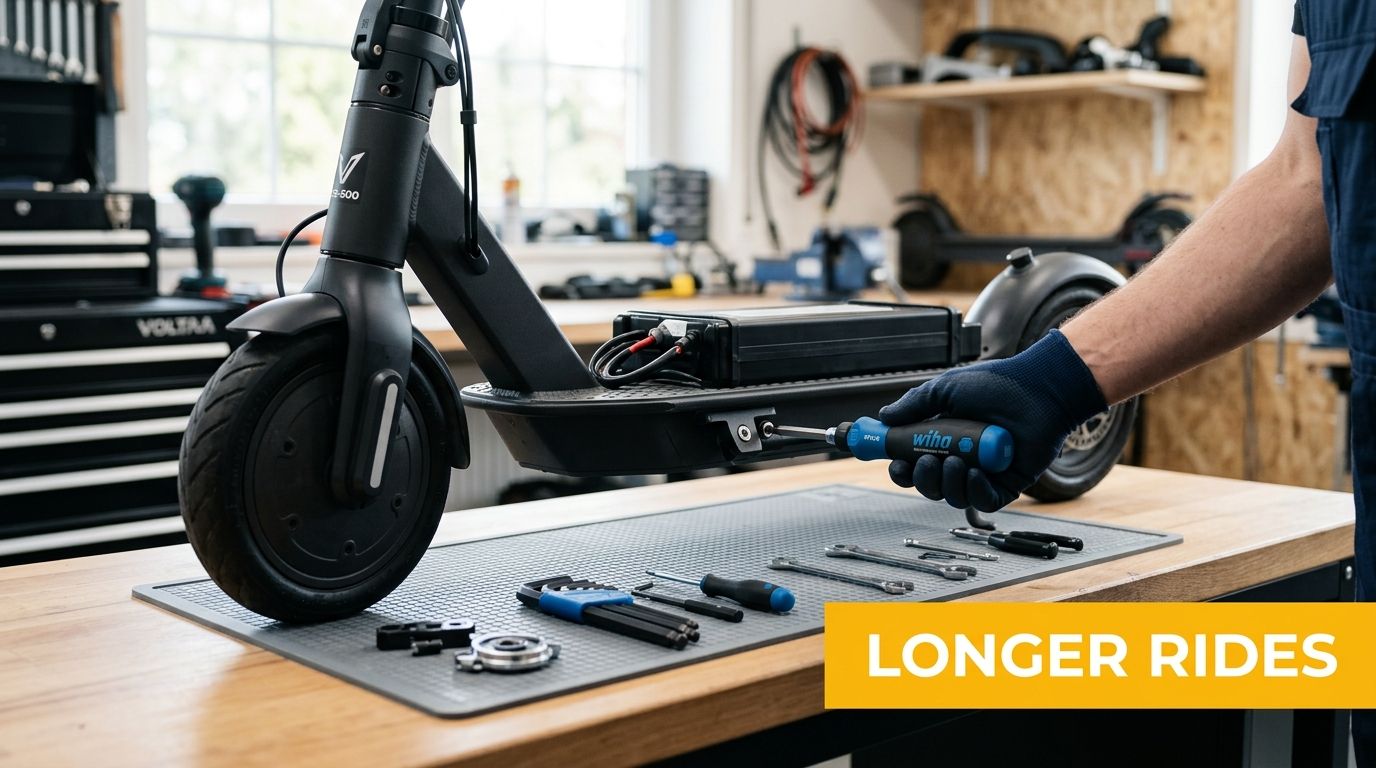
You know the feeling. The scooter's still moving, but it's gone a little vague in the front end, the brake lever feels softer than it used to, and the deck has that small mystery rattle that wasn't there last weekend. That's usually the moment riders grab a tool, stare at the fasteners, and wonder if they're about to save money or make a mess.
The Moment You Decide to Open It Up
The best time to service a scooter is before it starts shouting at you. Most riders wait until something feels wrong, then discover the cheapest fix would've been a simple inspection done earlier. That's why servicing is less about heroic repairs and more about catching wear while it's still boring.
For personal electric scooters, independent 2026 maintenance estimates put annual servicing at about $100–$400 for riders commuting roughly 1,000–2,000 km per month, with the biggest recurring costs coming from tires, brakes, and battery-related replacement over time, according to the breakdown at GreenMoov's 2026 maintenance guide. That same source says tire sets typically cost €50–100 and are replaced every 5,000–10,000 km, while battery replacement can run $300–800 every 3–6 years. A separate owner survey in the same reference shows 42% of respondents spent less than $100 per year on maintenance, repairs, and accessories, while 20% spent $100–250 and another 20% spent $251–500.
Practical rule: if the scooter still feels normal, that's the right time to inspect it, not the wrong time.
What belongs on the bench
The home job is the one where you can safely see, touch, and confirm basics. Think fasteners, tire condition, brake feel, connector checks, and cleaning without soaking anything electrical. Once you're opening battery compartments, chasing hidden wiring faults, or dealing with a controller issue you can't identify, the job stops being casual maintenance.
A serviceable work area matters more than fancy gear. A clean table, strong light, a non-conductive mat, gloves, and eye protection keep you from turning a routine check into a damaged connector or a lost screw. For tools, most scooter decks and stem covers live in the world of hex keys and Torx bits, but a torque driver is the tool that saves the most grief because it keeps you from stripping soft threads or leaving fasteners unevenly tightened.

Start with power isolation
Every electric service starts the same way, switch off, isolate the battery, and confirm the scooter is dead before your hands go anywhere near wiring or connectors. That isn't drama, it's basic fault prevention. Skipping it is how people create short circuits, blown connections, and a repair bill that's bigger than the original problem.
A simple habit keeps the whole job under control. Lay out your tools first, remove loose accessories, check the service area for water, then only open what you can close again in the same sitting. If you're the sort of rider who likes to get things done fast, that five-minute setup is what keeps fast from becoming sloppy.
A Weekly, Monthly and Annual Service Rhythm
A scooter costs less to keep on the road when servicing is routine, not random. Vibration, weather, and brake wear do not wait for you to remember them. A set rhythm also gives you a clean baseline, so when something changes, you can tell it is new instead of just more noise.
| Service Cadence at a Glance | ||
|---|---|---|
| Interval | Key Tasks | Who Handles It |
| Weekly | Quick visual tire check, brake test, look for loose fasteners and obvious cable damage | Rider |
| Monthly | Tire pressure check, torque check on key fasteners, deeper visual inspection of folding joints and wear points | Rider or technician |
| Annual | Full service, brake inspection, battery health review, connector check, bearing and drivetrain assessment | Technician |
A weekly inspection should be short and practical. The mobility-scooter guidance at this servicing schedule guide recommends a weekly visual tire check and brake test, a monthly tire-pressure check, and full professional tune-ups every 6–12 months. That split makes sense because daylight checks catch obvious wear, while the deeper work needs tools, time, and a steadier hand.
What the rider should catch early
Weekly checks should feel quick enough to stick. Spin the wheels, squeeze the brakes, look over the stem, and check for anything rubbing, loose, or sitting out of line. If the scooter has started to sound different, that often comes before a visible fault.
The monthly check is the point for fasteners and tire pressure. It is also the time to catch a developing issue before it turns into a parts job. For riders who keep putting service off, the costly bit is often not the labour, it is the wear that keeps moving on while nobody is looking.
A scooter that gets checked often usually needs fewer surprises, not fewer parts.
Annual servicing is the proper reset, especially if you want to keep ownership costs sensible in the UK or across the EU. A technician can check what is hard to confirm at home, including hidden wear, electrical condition, and anything that needs deeper disassembly. The electric scooter maintenance guide from Punk Ride is useful here because it draws a clear line between what a rider can keep on top of and what belongs on a workshop bench. If you only keep one rule in mind, make it this. Inspect often, repair early, and do not wait for a failure to prove the point.
Battery and Charging Habits That Actually Extend Range
Battery care is the part most scooter owners underdo and most guides under-explain. Tires, brakes, and folding clamps get the attention because they're visible, but the pack is what decides whether the ride still feels reliable next season. A scooter that charges badly, stores badly, or gets pushed to empty all the time will usually show range loss before it shows a dramatic failure.
The useful habit is simple, keep the battery out of deep discharge, avoid unnecessary full-cycle abuse, and don't park it empty for long periods. Mobility-scooter maintenance guidance stresses charging after each use, avoiding deep discharge, and checking battery connections as routine care, which lines up with the idea that the pack wants steady, predictable treatment, not punishment. If your scooter sits for a while, partial charge storage is usually kinder than leaving it flat or baked full for days on end.

What climate changes
Weather changes battery behavior more than most riders think. Cold storage can reduce usable range on the next ride, while heat tends to make bad habits worse by stressing the pack and its electronics. In the UK and much of the EU, damp storage matters too, because condensation around connectors is never a good thing.
That's why battery checks belong in any serious service routine, not as an afterthought. A scooter that charges normally but loses range too quickly, cuts out early, or behaves differently when the weather shifts needs closer attention than a casual visual check. When battery issues start looking like range problems, the fix is rarely in the tires.
Cheap third-party chargers usually save the wrong money. They look fine until they don't match the pack's expectations, and then the savings disappear into poor charging behavior or inconsistent output. If you want one practical takeaway, use the charger that matches the scooter, keep the pack healthy, and don't treat the battery like a disposable accessory.
For a deeper checklist, this battery-life guide is worth keeping handy when you're comparing charging habits and storage routines.
Brakes, Tires and Folding Joints Working Together
These three parts fail together more often than riders expect because they all sit in the same vibration zone. A loose folding joint can feel like brake wobble, underinflated tires can make braking feel vague, and worn brake parts can make the whole front end feel slack. Read the symptoms as one system, not as separate complaints.
Start with the tire
Tire pressure is the easiest place to begin because low pressure steals steering precision and speeds up wear. On many scooters, a practical workshop reference is about 1.5–1.8 bar front and 2.0–2.2 bar rear, which gives you a sensible baseline for judging whether the ride feels too soft or too harsh Motorcycle Powersports News scooter maintenance. Low pressure usually shows up as lazy turn-in, poorer cornering feel, and uneven wear that starts before the tire looks obviously worn.
For a rider-friendly check on tire condition, this electric scooter tire guide is worth a look. It helps separate wear from pressure problems and from a rough road surface that is doing the scooter no favours.
Brake feel needs the same straight answer. A brake that grabs unevenly, squeals all the time, or takes longer than usual to bite deserves inspection before you start making adjustments. Pads, rotor condition, and cable or caliper alignment all matter, but a folding joint with play can make sound brakes feel worse than they are.
A home check is simple enough. Set the pressure correctly, spin the wheel, and look for flat spots, cuts, bulges, or uneven wear across the tread. If the tyre is soft on the sidewalls, scrubbed at the edges, or losing air between rides, replacement is usually cheaper than chasing handling problems later.
Don't ignore the folder
A wobbly folding mechanism is one of those faults that gets misread all the time. Riders often blame the brake because the movement shows up at the handlebar, but the cause is usually in the stem clamp, latch, or hinge. Once that movement starts, vibration moves through the frame and everything downstream feels less solid.
If you are comparing service options or looking at suspension and maintenance work as part of a wider job, Sixrace service for riders is a useful reference for how shop-level maintenance is framed around ride quality, not just parts replacement.
The home checks that save money are plain. Look for tire wear, check pressure with a gauge, test the brake by hand, and inspect the hinge for play. If the scooter still wanders, chatters, or rocks under load after that, park it and let a technician trace the cause before it turns into a cracked part or a longer repair.
Electrical Checks and Drivetrain Inspection
Electrical checks reward patience. A loose connector or chafed wire can sit hidden for weeks, then turn into an intermittent fault that eats time and parts. Start with the power off, then work from the outside in so you are not chasing live problems with a half-open scooter.
What to inspect at home
Start with the wiring you can see, especially around the folding stem where movement and flex do the most harm. Look for fraying, pinched insulation, loose plugs, corrosion, and connectors that do not seat firmly. Professional inspection notes also call out brake-voltage testing, loose connectors, and exposed wire as part of a proper check, which is why a quick glance is never enough on an electric scooter RoadRunner Scooters.
Drivetrain checks depend on the scooter design. On belt-driven machines, inspect the belt for width, deflection, contamination, and the correct rotation direction, because oil, water, and dirt shorten belt life fast. On scooters with a geared hub or sealed motor system, the home inspection is mostly about noise, smooth rotation, and signs of bearing wear rather than pulling parts apart Scooter maintenance guide.
If you have to force a connector or guess where a wire goes, stop there.
You can inspect what is already exposed, clean it lightly, and reconnect parts that were meant to come apart. You should not open a battery pack unless you are trained, equipped, and ready to handle the electrical and sealing risks that come with it. That is technician territory, and the fee is usually cheaper than the mistake.
Cleaning and Lubrication Without Damaging Components
Most scooter damage from cleaning comes from enthusiasm, not neglect. Riders hose off dirt, water gets where it shouldn't, and then they spend the next week chasing a fault that started with a rinse. The smarter habit is controlled cleaning, targeted lubrication, and drying that respects the electronics.
Clean the dirt, not the scooter
A damp cloth and mild cleanser do the job for normal grime, and that's consistent with the maintenance advice for mobility scooters from Apex Pharmacy's care guide. The source of damage isn't dirt itself, it's forcing water into ports, switchgear, bearings, or the controller housing. If the scooter needs a deep clean, cover the ports, avoid blasting seams, and let it dry fully before storage.
Lubrication belongs only where movement is meant to happen. Folding pivots, hinge points, exposed cable routing, and select brake pivots can benefit from the right lubricant, but hub motors, sealed bearings, and controller housings should stay dry. Put oil on a rotor or pad surface, and you've created a brake problem instead of preventing one.
The small routine matters more than the occasional big cleanup. Wipe the scooter after wet rides, check the stem and deck for grit, and keep salt or road muck from sitting overnight. That's usually enough to cut down on corrosion, squeaks, and the mystery noises that start once the weather turns.
Match the symptom to the likely cause
- Range dropping early: check battery habit, tire pressure, and whether the scooter has been stored badly.
- Throttle cutting out: inspect connectors, brake cutoff behavior, and visible wiring near the stem.
- Squealing brakes: check pad wear, contamination, and whether the rotor or cable path has picked up grime.
- Clicking folder: check fastener tightness and hinge play before blaming the wheel or brake.
- Dashboard not waking up: confirm power isolation, battery charge, and connector seating before opening anything deeper.
The reason this order matters is simple. Riders often start replacing parts before they've ruled out dirt, loose hardware, or bad contact. That's the expensive path. If a scooter still behaves strangely after a careful clean, dry it, inspect it, and hand it over before the fault multiplies.
For a more service-friendly cleaning routine, maintenance best practices for sanitation equipment is a useful parallel reference because it treats cleanliness as a maintenance system, not a cosmetic one.
Building Your Own Servicing Habit
Servicing a scooter works best when it becomes a line item, not a crisis response. In the UK and EU especially, owners who keep to a simple schedule usually spend less time improvising and more time riding with the kind of confidence that comes from knowing the fasteners, tires, and battery have all been checked recently. The practical cost picture stays manageable when routine work happens early, not after a breakdown.
A useful habit is to keep one page for the scooter and one drawer for the tools. Put down the date of the last weekly check, the last pressure check, the last professional service, and any parts you already know are close to the edge. That way, the next odd noise isn't a mystery, it's just the next line on the list.
Punk Ride LLC carries a wide mix of electric ride models, and that matters if you're thinking about service-friendly ownership from day one, because some scooters are easier to inspect, maintain, and source parts for than others. If you want to compare models with upkeep in mind, it's worth starting with a brand lineup that includes Punk Ride LLC and then checking how the deck, battery access, and folding hardware are arranged before you buy.
Keep the maintenance routine short enough that you'll actually do it.
The cleanest approach is still the most practical one. Don't spray everything down, don't skip battery care, and don't wait for a loose hinge or soft brake to become your reminder. A scooter that gets checked on a schedule is a scooter that stays useful longer, costs less to keep alive, and feels better every time you pull it out of the garage.
If you want help choosing a scooter that's easier to live with, browse Punk Ride LLC for service-aware electric rides and compare the models with maintenance access, battery handling, and everyday repair practicality in mind. That's the fastest way to spend less time wrenching and more time riding.
Share:
Fast Electric Bike Under 1000: A Practical Buyer's Guide
Tie Down Straps for Bikes: A Safe Setup Guide