


You've just locked your e-bike outside the station, the shop, or your office, and you're already doing that mental check on the walk away. Did the lock go through the frame? Is that railing fixed to anything? Is the battery still on it? That uneasy feeling is usually right. Most thefts don't need a master criminal, they need a weak lock, a quiet corner, and a few undisturbed minutes. Good electric bike security removes those three things, one layer at a time.
Security Layers and What Each One Stops
No single lock stops every thief. Give someone enough time, privacy, and an angle grinder, and they'll get through almost anything you can carry. That isn't a reason to give up. It's the reason you stack layers, so each one forces a different tool, more noise, or more time.
The stakes in the UK have shifted fast. A Freedom of Information analysis of UK police forces reported in Cycling Industry News found reported e-bike thefts increased by 103% in 2023 compared with 2022. E-bikes represented 6.2% of all recorded bicycle thefts in 2023, up from 1.4%. Thieves have worked out where the value is.
Run through this checklist before the bike leaves the house. It's the whole plan in one view.
| Layer | What It Stops | Where It Falls Short |
|---|---|---|
| Primary lock through frame and anchor | Quick cuts and opportunist grabs | Angle grinders given enough time |
| Second lock on wheel and frame | Wheel theft and lever attacks | Only as good as the rack it loops around |
| Sold Secure Gold or Diamond rated lock | Bolt cropping, drilling and levering | Not a guarantee of invulnerability |
| Hidden GPS tracker | Recovery after the bike is gone | Fails indoors, runs flat, or gets removed if visible |
| Frame number registered | Selling a stolen bike on | Only helps if someone checks it |
| Secure home anchor and storage | Overnight theft from sheds and gardens | Enclosed spaces still get raided |
| Certified charger and battery care | Fire risk from tampered or mismatched batteries | Does not stop theft |
How to Read the Table
The primary lock does most of the work. Everything else either protects a part the first lock can't reach, helps you get the bike back, or proves it's yours. A tracker on a bike held by a thin cable isn't a plan, it's a way to watch your bike leave.
Registration and home storage are the layers riders skip because they don't feel like locking. They're also the ones that matter at 2 a.m. when a shed door gets forced, or months later when police recover a frame and nobody can prove who owns it.
Practical rule: Run at least three layers on every e-bike, every time. Frame lock first, then pick the next two for where you're parking.
If you can only afford to upgrade one thing this month, upgrade the primary lock. Add the second lock, tracker, and registration as budget allows, in that order.
Lock Budget and Rating by Bike Value
Start with a number, not a feeling. Police Scotland bike theft advice advises owners to use roughly 10% of the bicycle's value as a lock-budget guideline, use a Sold Secure-rated lock, and secure the bicycle through its frame and wheel to a fixed object or anchor.
| Bike Value | Lock Budget (10% Guide) | Rating to Aim For |
|---|---|---|
| £1,000 | £100 | Gold |
| £1,500 | £150 | Gold |
| £3,000 | £300 | Diamond, plus a second lock |
Sold Secure grades cycle locks Bronze, Silver, Gold or Diamond. For an e-bike, I would look for Powered Cycle Gold or Diamond and treat anything below that as a secondary lock only. Say you're commuting on a £1,500 bike and parking in a city centre all day. That £150 budget buys you a proper Gold-rated U-lock or chain. A £35 lock that looks chunky in the shop doesn't become Gold-rated because it's heavy.
What the Rating Actually Means
The rating comes from lab testing, not marketing. Sold Secure's pedal cycle ratings describe a laboratory process evaluating resistance to bolt cropping, drilling, picking, levering, cutting, freezing, and angle-grinder attacks, using defined tool lists and attack durations. That makes the grade a useful comparison between locks. It does not make any lock unbeatable.
Thickness and price are poor stand-ins for that test result. Check the rating printed for the exact model before you buy, because one brand often sells similar-looking locks at different grades.
Two Locks Beat One Expensive Lock
Police Scotland also advises owners to double-lock with two different lock types where possible and keep locks off the ground. A U-lock plus a chain forces a thief to carry and use two approaches instead of one. If your £3,000 bike gets a £300 budget, I'd split it across a Diamond-rated primary and a solid second lock rather than spending it all on one piece.
The same graded thinking applies beyond bikes, which is why property owners check tested ratings in door lock guidance for property managers instead of buying on appearance. Match the lock to where you park, not only to what the bike cost. A cheap bike left overnight at a station needs more lock than an expensive one that lives in your hallway and stops at cafés.
How to Lock Your E-Bike Properly
A good lock used badly is just expensive decoration. This order takes under a minute once it's habit.
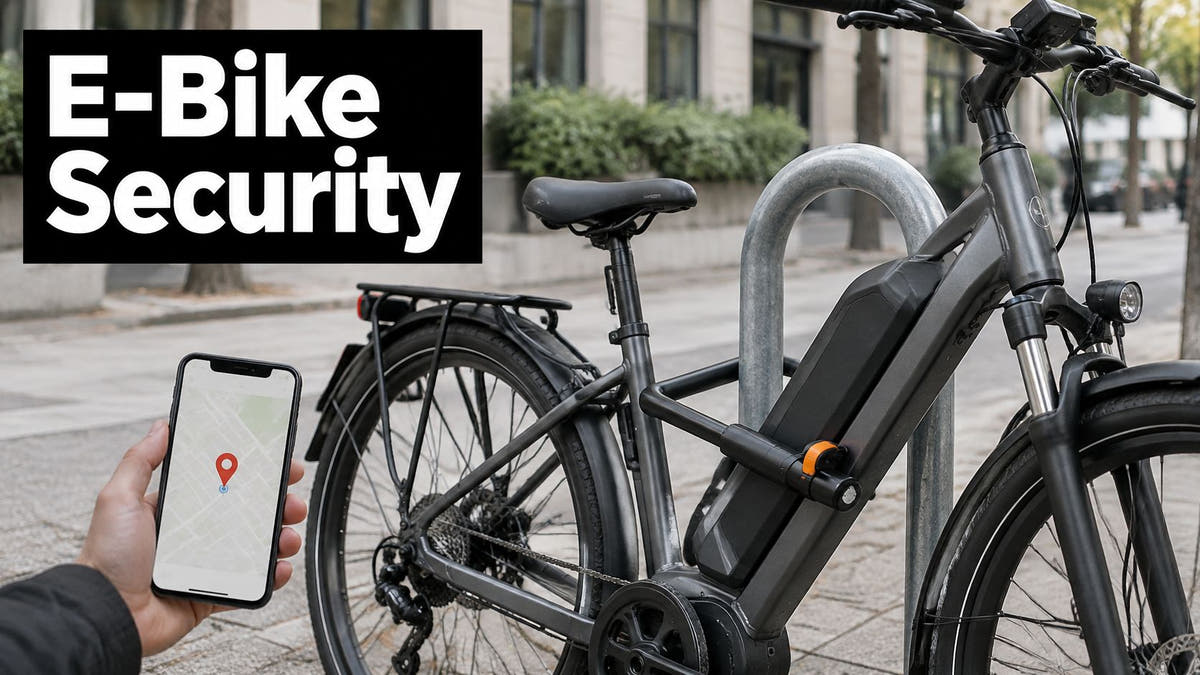
The visual below sums up the same sequence, so you can check your own routine against it.
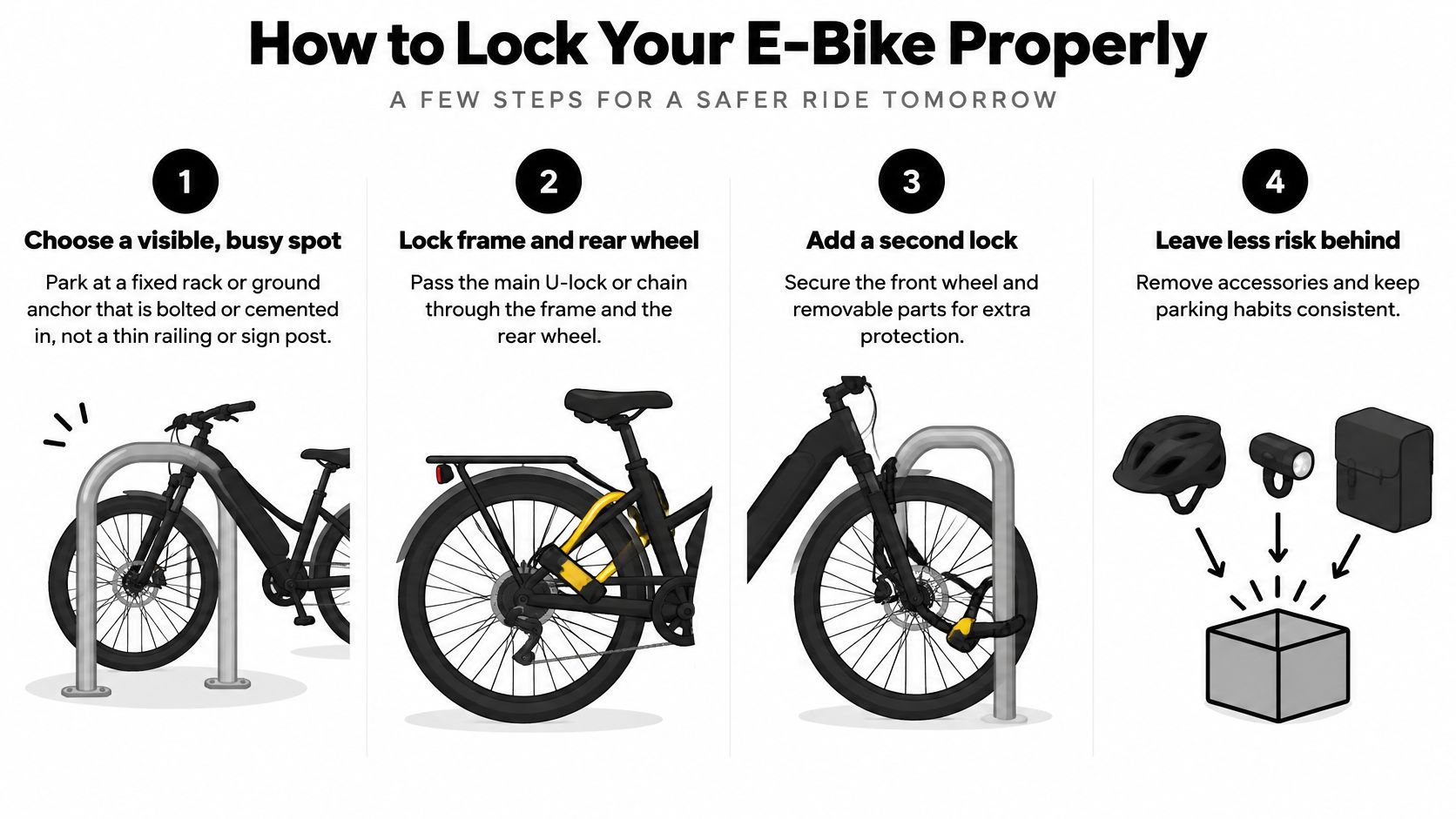
- Pick the anchor first. Use a fixed rack or ground anchor that's bolted or cemented in, in a visible and busy spot. Skip thin railings, sign posts you can lift the bike over, and anything that wobbles when you pull it.
- Lock the frame and rear wheel. Pass your main U-lock or chain through the frame, through the rear wheel, and around the anchor. The frame carries the motor and battery mounts, and it's the expensive part to replace, so it goes inside the lock before anything else.
- Lift the lock off the ground. A lock resting on concrete gives a thief a solid surface for a hammer or jack attack. Position the body up on the frame or rack, with the keyway facing down or toward the bike where it's harder to work on.
- Take up the slack. Fill as much of a U-lock's shackle as you can, and pull a chain tight so it doesn't sag. Empty space inside a lock is room for a lever or a small jack to open and do damage.
- Add the second lock. Run it through the front wheel and frame, or through the frame and rear wheel at a different point. Use a different type from your primary where you can, a chain alongside a U-lock, so one tool doesn't defeat both.
- Test it before you walk away. Lift the back of the bike, wiggle both wheels, and tug each lock. If the bike can be rotated around the rack or a wheel comes free with a quick-release, you've found the gap a thief would find.
Slips That Undo a Good Lock
- Locking only the front wheel: A thief unclips it and walks off with everything else. You're left holding a very secure wheel.
- Using a cable as the main lock: Cables are fine for a saddle or as a third layer. As the only thing holding an e-bike, they're cut in seconds with hand tools.
- Looping over the top of a post: If the lock and bike can be lifted up and off together, the anchor isn't an anchor.
- Locking to your own wheel only: The café stop habit of locking wheel to frame stops someone riding off. It doesn't stop two people lifting the bike into a van.
A finished set-up looks boring. Tight, no gaps, nothing touching the ground, and both locks in plain view of passers-by.
Take removable lights, displays, and bags with you as well. Anything that unclips in your hand unclips just as fast in someone else's, and a stripped bike signals that nobody is watching it closely.
Parking and Storage Habits That Cut Theft
Your lock buys time. Your parking spot decides whether a thief gets to use that time undisturbed. A Benelux-NRW position paper on bicycle theft prevention cites European police-based estimates of approximately 1.3 million bicycles reported stolen across the European Union each year, with the actual total likely higher because many thefts are not reported.
Well-used streets and racks give passing foot traffic a clear view of your bike, like this row of public racks.
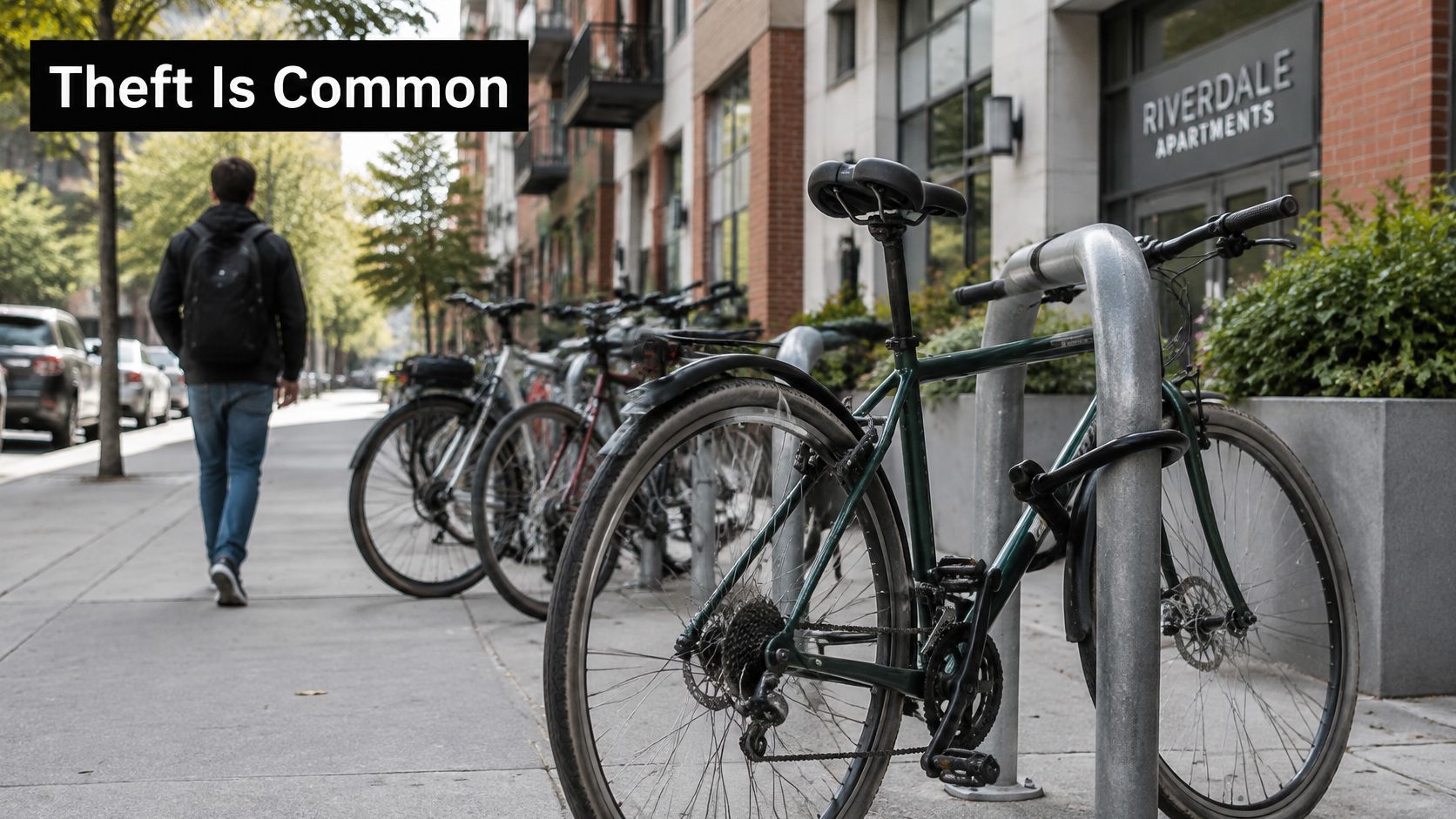
- Park where people pass: Busy, well-lit spots turn strangers into informal witnesses. Avoid quiet corners, dead-end racks, and the far end of empty car parks.
- Use monitored storage when it exists: Check whether your station or workplace offers a secure bike room or covered monitored rack. It's often free or cheap, and riders never ask.
- Ask before you buy in shared buildings: Ask your landlord about a secure store or permission for a ground anchor. It's an easier conversation before the bike is sitting in a communal hallway.
- Anchor it at home too: Bolt an anchor to a structural point in the shed or garage and lock to that. A closed door on its own is a privacy screen for whoever forces it.
- Take the battery for long stops: If the bike sits outside for hours and removing the battery is practical, take it in. The bike gets heavier to sell and less useful to ride away.
Say you leave a cargo e-bike outside a station for nine hours every weekday. Same lock, same bike, but moving it to the covered monitored rack and carrying the battery into work changes the risk completely. Thieves shop for the easiest target on the row, not the most valuable one.
For more detail on home set-ups, work through these electric bike storage solutions and pick the option that fits your space. Then photograph the bike and its serial number today, while you still have both.
GPS Tracking, Registration and Recovery Steps
Treat a tracker as a recovery layer, not a lock. It does nothing to stop the bike being taken. Its job starts after everything else has failed.
This checklist shows the set-up order to follow before you ever need it.
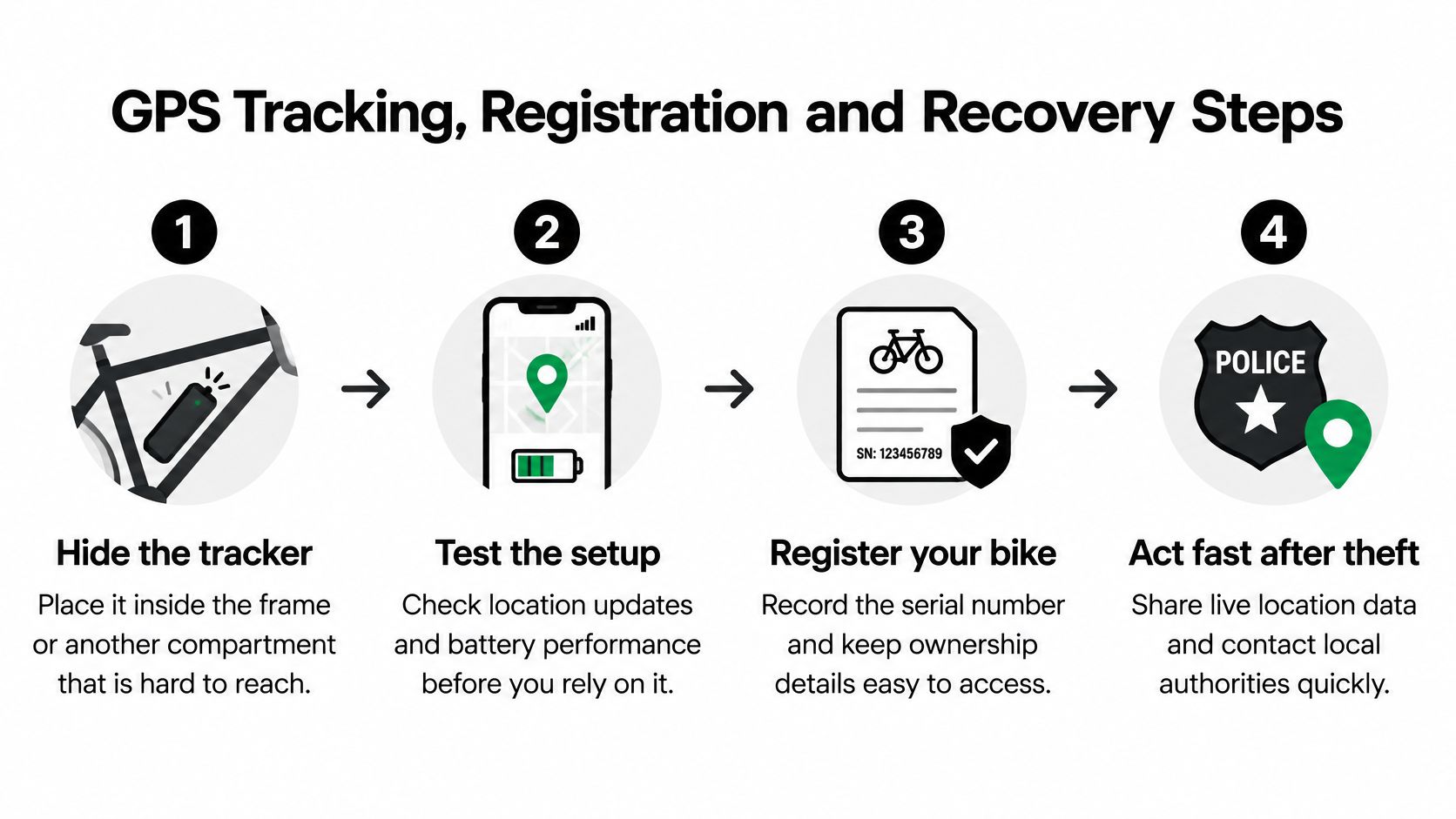
- Hide the tracker. Fit it inside the frame or another compartment that's hard to reach without tools. A visible unit under the saddle gets ripped off in the first minute.
- Test before you trust it. Check location updates around your usual routes and confirm real battery life, not the number on the box. Charge it on a schedule, like you charge the bike.
- Turn on alerts. Enable geofence or movement alerts so your phone buzzes when the bike moves without you. Speed matters more than pinpoint accuracy in the first hour.
- Keep your ownership file together. Store photos, the receipt, and the frame number somewhere you can reach from your phone. Register the frame number as well, so a recovered bike can be matched to you.
- Hand the data to police. If the bike goes, share live location with them and let them recover it. Don't follow a tracker signal to someone's address yourself.
Honest Recovery Numbers
Set your expectations low and act fast anyway. An Invoxia guide to GPS trackers for cargo bikes reports independent survey evidence that only 15% of stolen bicycles were recovered overall. The same survey found 15% recovery among respondents who knew when the theft occurred versus 9% among those who did not. Knowing the time window helps police check cameras and helps you search listings while the trail is warm.
GPS also has blind spots. Signals weaken indoors and in basements, batteries run flat, and a location dot can sit a street away from the actual bike. That's false confidence if you let the tracker replace the lock.
The Privacy Trade-Off
A tracker creates a location record and an app account, and both deserve the same care as the bike. Use a unique strong password and turn on two-factor login where the app offers it. Review what location history the app keeps and who you've shared access with.
After a theft: Report to police with the frame number, mark the bike stolen on its register, notify your insurer, then check local second-hand listings with your photos ready to send.
A tracker only earns its place when it's hidden, charged, and paired with a lock that holds long enough for the alert to reach you.
Smart Locks, Alarms and Insurance
A smart lock that opens by Bluetooth or app is convenient, and convenience means you'll use it. It doesn't change the basics. The lock body still needs a Sold Secure Gold or Diamond rating, and a lock that opens by app is only as secure as the account behind it.
For alarms, check the stated decibel level and whether movement alone triggers it. Then test it at home, locked to your anchor, so you know how it behaves before it goes off outside a café.
Set-Up Checklist
- Secure the account. Give the lock app a unique password and turn on two-factor login.
- Close unused connections. Switch off Bluetooth pairing you don't use, so the lock isn't discoverable for no reason.
- Update carefully. Install firmware updates only through the manufacturer's app. Signed updates from authenticated sources are your defence against malicious software.
- Test both paths. Confirm the app opens the lock and the alarm works, and know how to open the lock if your phone dies.
Insurance is the final layer, and it has conditions. Check whether home contents or a bike-specific policy covers e-bikes away from home, what the single-item value limit is, and which lock rating the policy requires. Run the numbers with this guide to what electric bike insurance costs before you assume you're covered.
Keep the receipt, frame number, battery serial number, and dated photos on file. Claims move at the speed of your paperwork, and most insurers ask for exactly that list.
Battery Safety and Your Security Routine
Here's the uncomfortable part. The most convenient habit, charging indoors overnight while you sleep, can raise the cost of a failure in an occupied building. Your battery isn't just a theft target to unclip and carry in. It's part of your security routine at home.
Charging where you can see the bike, on a clear surface near an outlet, is the safer pattern.
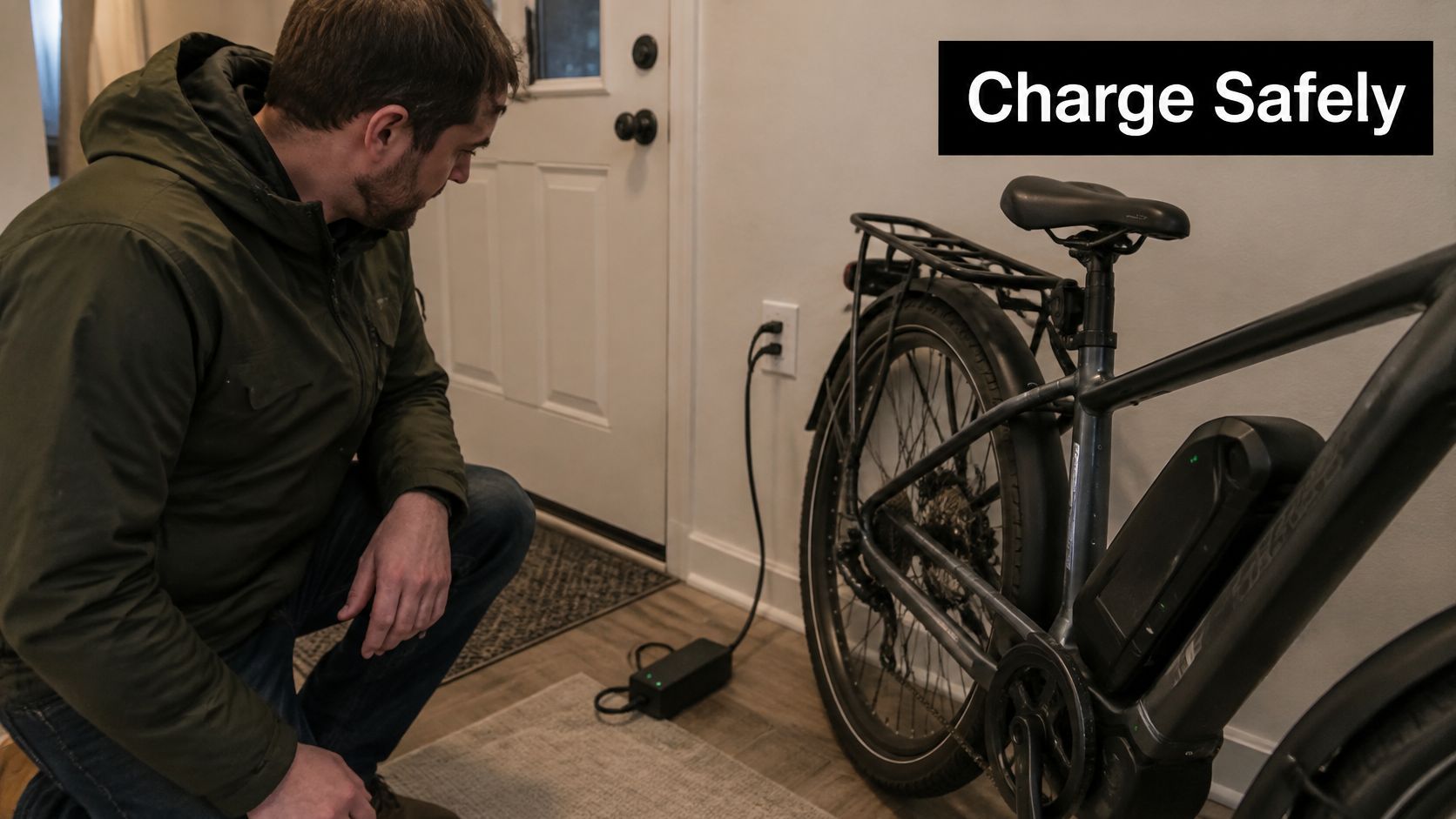
University of Warwick research commissioned by the UK Office for Product Safety and Standards found that severe fires are more dangerous when batteries are charged or stored indoors, that fire likelihood rises when lithium-ion batteries are fully charged and rises further when over-charged, and that testing found some products could over-charge when paired with an incorrect charger. The same work notes a 2025 campus inventory found 22% of surveyed electric micromobility devices lacked verifiable accreditation. Cheap, uncertified kit is common enough that checking matters.
A Short Safe Routine
- Match the charger. Use only the manufacturer's charger or a certified replacement made for your battery. A universal charger that fits the plug can still feed the wrong voltage.
- Charge awake and nearby. Pick a clear spot away from exits, at moderate temperatures, near a working smoke alarm. Unplug when it's full rather than leaving it topped up for days.
- Respect damage. Never charge a battery that's been dropped hard, crushed, or soaked. Swelling, hissing, heat, or a sweet chemical smell means stop.
- Quarantine problems. Move a damaged battery outdoors, away from the building if you can do so safely, and contact the manufacturer or local fire service advice line.
This short video walks through safe charging habits you can copy at home.
Removing the battery when you park does help against theft, and if you're choosing a bike with that in mind, it's worth weighing up an electric bike with removable battery against a fixed design. Just bring that battery into a sensible charging routine, not onto a sofa or next to your bed.
Finally, record the battery serial number with your frame number and keep the receipt. A stolen or uncertified battery resold to another rider carries your risk into their home, and your records help police and insurers trace it.
Set Up Your Lock Plan This Weekend
Stack at least three layers on every e-bike and let the frame lock do most of the work. You can set the whole thing up in one weekend, in this order.
- Count your layers. Check what you own now against the first table and find the gaps.
- Check budget and rating. Compare your lock spend and its Sold Secure grade with your bike's value.
- Fit a home anchor. Bolt a ground or wall anchor to something structural if you don't have one.
- Build the ownership file. Record the frame and battery serial numbers and photograph the bike from both sides.
- Decide on a tracker. Fit one only if you'll keep it hidden and charged.
- Secure the apps. Set unique passwords and two-factor login on any smart lock or tracker account.
We sell e-bikes, e-scooters and accessories including locks and bike storage, so if you're still choosing kit you can sort the lock and the rest of the set-up in one place. Do one thing today. Pick the lock you'll use tomorrow and check its rating before you buy.
Ready to put your three layers together? Punk Ride LLC stocks e-bikes, e-scooters and the accessories that protect them, including locks and bike storage for home and commuting. Browse the range, match a rated lock to your bike's value, and ride away with a security plan that holds up.

Share:
Foldable Electric Scooter for Heavy Adults: 2026 Guide