


So, you're wondering if your electric scooter can get wet. The short answer is yes, but it's not quite that simple.
Think of it less like a submarine and more like a high-end rain jacket. Some jackets will keep you bone-dry in a monsoon, while others are only good for a light drizzle. The real question isn't if your scooter can get wet, but how wet it can safely get without causing problems.
So, Can Your Electric Scooter Handle the Rain?
Let's face it, whether you're riding in Sydney or San Francisco, rain is just part of the deal. A sudden downpour can spark a bit of panic for any e-scooter rider. Will a splash from a puddle fry my battery? Is this rain going to cause a costly repair? These are totally valid worries—water and electronics have never been a great mix.
The good news is that most modern e-scooters are built with some water resistance. Manufacturers know we're not just weekend warriors; many of us rely on our scooters for daily commutes, rain or shine. But there’s a massive difference between a scooter being water-resistant and waterproof.
Waterproof vs. Water-Resistant: A Crucial Difference
Let’s get one thing straight: no commercially available electric scooter is 100% waterproof. A truly waterproof device could be dropped in a lake and come out working perfectly. What scooters have is water resistance, which means they're designed to handle a certain amount of exposure—think splashes, light rain, or damp roads—without shorting out.
Think of it like a watch. A water-resistant watch is fine if you're washing your hands or get caught in a shower. But you wouldn't take it scuba diving. Your scooter is the same; it’s built to resist water, not be submerged in it.
This protection level is officially measured by an IP (Ingress Protection) rating. This little two-digit code is the key to understanding exactly how well your scooter’s sensitive electronics are sealed against dust and water. Getting to know your IP rating is the single most important step in figuring out how confidently you can ride when the skies open up.
So, while your scooter can handle some wetness, knowing its specific limits is everything. In this guide, we'll break down what those IP ratings actually mean for your ride, point out the most vulnerable parts, and show you how to keep your scooter safe, no matter what the weather throws at you.
Decoding IP Ratings for Everyday Riders
When you see a code like IP54 on a scooter's spec sheet, it’s easy for your eyes to just glaze over. It sounds super technical, but it's actually the most direct answer to the question, "Can my electric scooter get wet?" Think of it as a simple report card for how well your scooter can defend itself against the elements.
This two-digit code is called an Ingress Protection rating, and it tells you exactly how well the scooter's guts are sealed off from solids (like dust) and liquids (like water). Getting your head around this code is like knowing the difference between a light windbreaker and a full-on waterproof jacket—it helps you make smarter choices when the sky starts looking a little grey.
Breaking Down the Numbers
The IP rating is just two numbers, and each one tells a different part of the story.
-
The First Digit (Solids Protection): This number, from 0 to 6, is all about how well your scooter keeps out solid stuff like dust and grit. A rating of 5 (like in IP54) means it's "dust protected." It's not totally airtight, but not enough dust can sneak in to mess with the electronics.
-
The Second Digit (Water Protection): Okay, this is the one you really care about for rainy-day rides. Ranging from 0 to 9, it tells you how tough your scooter is against moisture. Simply put, the higher the number, the better.
Let's translate what these water ratings actually mean for your daily commute, whether you're navigating the drizzly streets of Melbourne or dodging puddles in Miami.
What IP Water Ratings Mean in the Real World
Forget the technical manuals. Here’s the real-world breakdown of what those second digits mean when you're actually out there on the pavement.
| IP Water Rating | What It Really Means | Real-World Scenario |
|---|---|---|
| IPX4 | Splash Resistant - Can handle water splashing from any direction. | Getting caught in a light drizzle or riding on damp roads after a quick shower. |
| IPX5 | Light Jet Resistant - Can withstand a sustained, low-pressure water jet spray. | Riding through a steady, moderate rain or cleaning it with a gentle garden hose. |
| IPX6 | Strong Jet Resistant - Protected against powerful water jets from any direction. | Getting hit with a heavy downpour or a surprise wave of water from a passing bus. |
| IPX7 | Temporary Immersion - Can be submerged in up to 1 meter of water for 30 minutes. | Accidentally dropping the scooter into a deep puddle (which, let's be honest, is extremely rare). |
See the pattern? It’s a clear progression from light splashes to powerful jets. This is a key concept that applies to a lot of gadgets, and it's helpful for understanding the limits of waterproof ratings in general, not just for your scooter. The same logic applies to electric bikes, which face similar weather challenges.
Over the last decade, water resistance has become a huge deal in the scooter world, quietly reshaping what "getting wet" actually means for us riders. Right now, about 40% of e-scooters on the market claim some level of water resistance, with most of them sitting around the IP54–IPX5 range. An IP54 rating is pretty much the standard—it means the scooter is protected from some dust and water splashes, which is fine for light rain but not for deep puddles or a proper soaking.
While most mainstream scooters are still stuck at IPX4/IP54 (good for little more than a light shower), higher ratings like IP65, IP66, and IPX6 are becoming more common, but usually only on more premium models.
The Rider's Takeaway: Don't just settle for the word "water-resistant" in a product description. Hunt down the specific IP rating. An IPX4 rating is the absolute minimum you should even consider, but an IPX5 or IPX6 will give you much more confidence when the weather is unpredictable.
Once you know how to decode this simple rating, you stop hoping your scooter will be okay in the rain and start knowing exactly what it can handle. It’s a small bit of knowledge that transforms you from an anxious rider into a savvy one, ready to take on the city, rain or shine.
Your Scooter's Most Vulnerable Spots in Water
So, an IP rating gives you a baseline for your scooter's water resistance, but it's far from the whole story. To really get why you can't just plow through a storm, you need to know where your scooter is weakest. Think of your scooter's frame like a suit of armor and the electronics as the knight inside. The armor might look solid, but water is a master at finding the chinks.
The real answer to "can electric scooters get wet" is all about protecting a few key components. These are the mission-critical parts where just a little bit of water can cause a world of expensive hurt. Once you know where the weak spots are, you'll understand why being a little paranoid about water is a good thing.
This graphic breaks down how different IP ratings stack up against different levels of water exposure, from a light drizzle to a full-on jet spray.
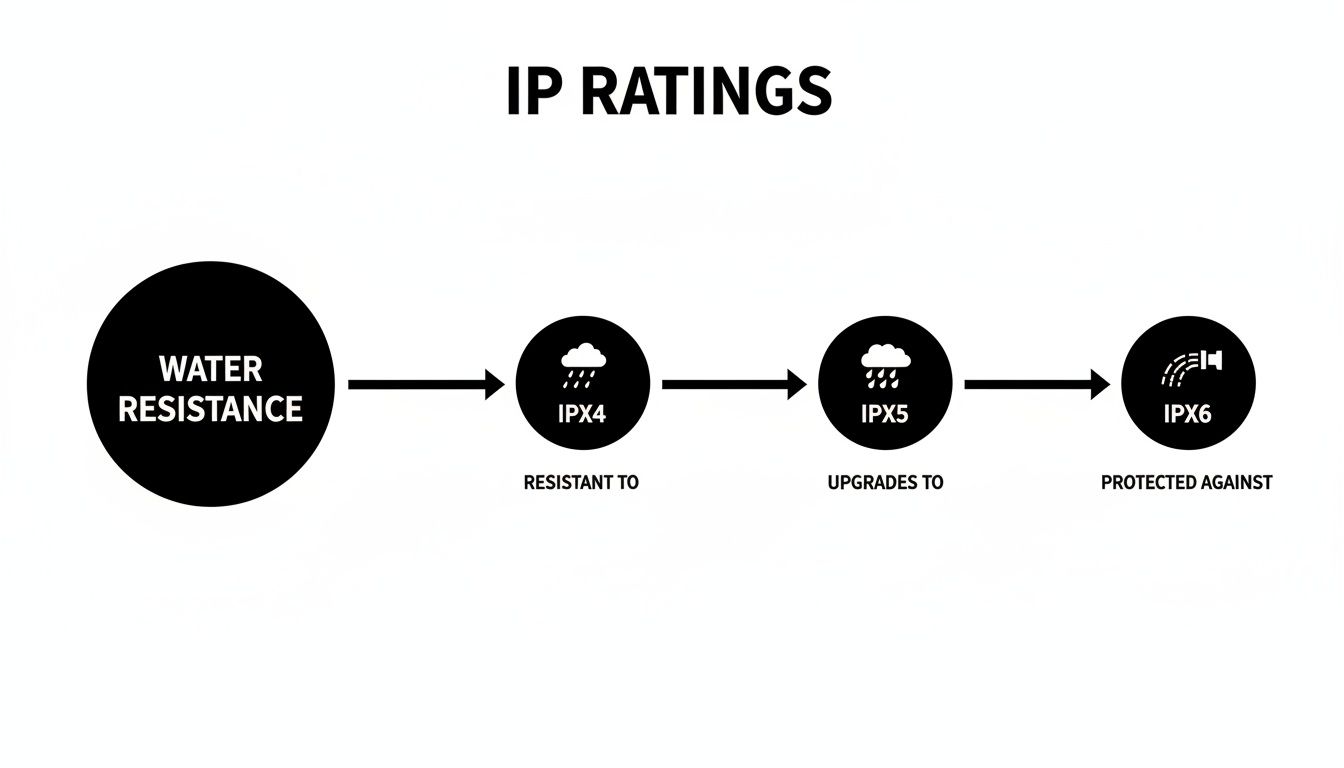
As you can see, the jump from one level to the next is pretty significant. That extra protection matters a lot for the specific parts we're about to dive into.
The Battery: The Heart of Your Ride
The battery is the lifeblood of your scooter, and unfortunately, it's the component most likely to suffer a total meltdown from water. Most batteries live in a compartment under the deck, putting them right in the splash zone for puddles and road spray.
If water gets past the seals, it can short-circuit the cells. This can kill the battery for good, or in the worst-case scenario, create a serious fire hazard. And remember, never, ever charge a scooter that you suspect is wet. It's asking for trouble.
Even if you avoid an immediate short, moisture inside the battery compartment will start corroding the terminals and connections. That corrosion is like rust, slowly eating away at your scooter's performance until your range and power are a shadow of their former selves.
The Controller: The Brains of the Operation
If the battery is the heart, the controller is the brain. This little electronic box, usually tucked away near the battery, is the command center for everything—throttle, brakes, power management, you name it. It's a complex circuit board, and just like your laptop, it does not like water.
A single drop in the wrong spot can fry the controller, turning your scooter into a very expensive paperweight. Water damage here often shows up as weird, unpredictable behavior. The scooter might suddenly jerk forward, refuse to accelerate, or just die completely without warning.
The Hub Motor: The Powerhouse in the Wheel
The motor, typically housed right inside the wheel hub, is another major weak point. It’s usually sealed pretty well, but its location means it's constantly getting drenched and is the first thing to get submerged in a deep puddle.
When water seeps in, it goes to work on the internal bearings and windings. This leads to rust and corrosion, which you might first notice as a grinding sound. Over time, it will kill your efficiency and can eventually cause the motor to seize up entirely. A rusted motor is usually a goner, meaning a pricey replacement is in your future.
Key Takeaway: It’s not always the dramatic, single splash that does the damage. The real enemy is often moisture that creeps in slowly and quietly, starting a process of corrosion in the battery, controller, or motor that you won't even notice until it's too late.
Knowing these weak spots isn't about scaring you off the road. It's about helping you ride smarter. You’re not just dodging puddles; you’re actively protecting the vital organs of your scooter from the quiet damage that water can do.
Your Practical Safety Checklist for Riding in the Rain
Knowing your scooter’s IP rating is half the battle. The other half is knowing how to actually handle your scooter when the streets are slick. When the skies open up, you need to switch from a casual cruiser mindset to a super-focused, defensive one.
Think of it this way: your scooter’s IP rating is like its rain jacket. It offers a certain level of protection, but your riding skills are the umbrella and waterproof boots. You really need all of it to stay safe and keep your scooter in good shape. Let's break down the habits that will get you home safely.
Before You Head Out the Door
A safe ride in the rain begins before you even leave. Seriously, a quick five-minute check can be the difference between a smooth ride and a nasty spill. It's all about catching potential issues before they become real problems on wet pavement.
- Check Your Tires: Your grip is everything on a slippery road. Make sure your tires are inflated to the recommended PSI. If they're underinflated, your handling will feel mushy and you'll lose traction. Overinflated tires? They make less contact with the road, which is just as bad.
- Test Your Brakes: Wet roads mean it takes way longer to stop. Give your brakes a gentle squeeze before you set off to make sure they feel right. If you have mechanical brakes (like discs or drums), just know they won't feel quite as sharp when they're wet.
- Turn On Your Lights: Rain kills visibility. Your lights aren't just so you can see—they're so other people can see you. Flip on your front and rear lights, even if it's the middle of the day.
Smart Tactics for Riding in the Rain
Once you're actually out there, it's all about adjusting to the conditions. Slow it down, stay alert, and try to see hazards before you're right on top of them.
Most of us who ride regularly know we're going to get caught in the rain at some point. In cities across the US and Australia, you can easily face 80–120 rainy days a year, which is why manufacturers are finally starting to take water resistance seriously. These days, an IP54 rating is pretty much the minimum you should look for in a commuter scooter. That'll handle light rain just fine, but you still need to avoid deep puddles and never submerge the deck. Even on scooters rated IPX4/IP54, riding for 30–40 minutes in a steady downpour can push water into places it shouldn't be, leading to corrosion if you don't dry it off later.
With that in mind, here's how to stay safe while you're rolling:
-
Brake Sooner and Gentler: Your stopping distance can easily double on wet asphalt. Start braking way earlier than you normally would and apply the pressure smoothly. Jamming on the brakes is a great way to lock up your wheels and go into a skid.
-
Avoid Road Hazards: Some things on the road become incredibly treacherous when wet. Keep a sharp eye out for:
- Manhole Covers: Metal plus water equals zero traction. Avoid at all costs.
- Painted Lines: Crosswalks and bike lane markings get as slick as ice.
- Piles of Wet Leaves: They're slippery and can hide nasty potholes underneath.
-
Steer Clear of Puddles: This is the golden rule. You have no idea if that puddle is an inch deep or a wheel-swallowing crater. Even worse, hitting a puddle at speed can blast water right into your scooter's most sensitive parts, like the motor hub or battery case.
To make it even easier, here's a quick checklist to run through before and during your ride.
Wet Weather Riding Checklist
Running through these quick checks helps build the right muscle memory for staying safe whenever the weather turns.
| Check Point | Before You Ride | While You Ride |
|---|---|---|
| Tires | Inflated to correct PSI? | N/A |
| Brakes | Responsive and not mushy? | Braking earlier and gentler? |
| Lights | Front and rear lights ON? | Are they still on and visible? |
| Puddles | N/A | Actively avoiding them? |
| Slick Surfaces | N/A | Watching for painted lines, manhole covers, wet leaves? |
| Speed | N/A | Reduced your speed to match conditions? |
By combining these pre-ride checks with a defensive riding style, you can handle a rainy commute with confidence. These habits are crucial for rider safety, something we cover in-depth in our complete guide to electric scooter safety tips. Making them second nature will not only protect you but will also help your scooter last a lot longer.
So, you’ve navigated the wet streets and made it home. High five! But your job isn’t quite finished. What you do in the next few minutes is crucial. It’s the difference between a scooter that serves you well for years and one that ends up a rusty, glitchy mess.
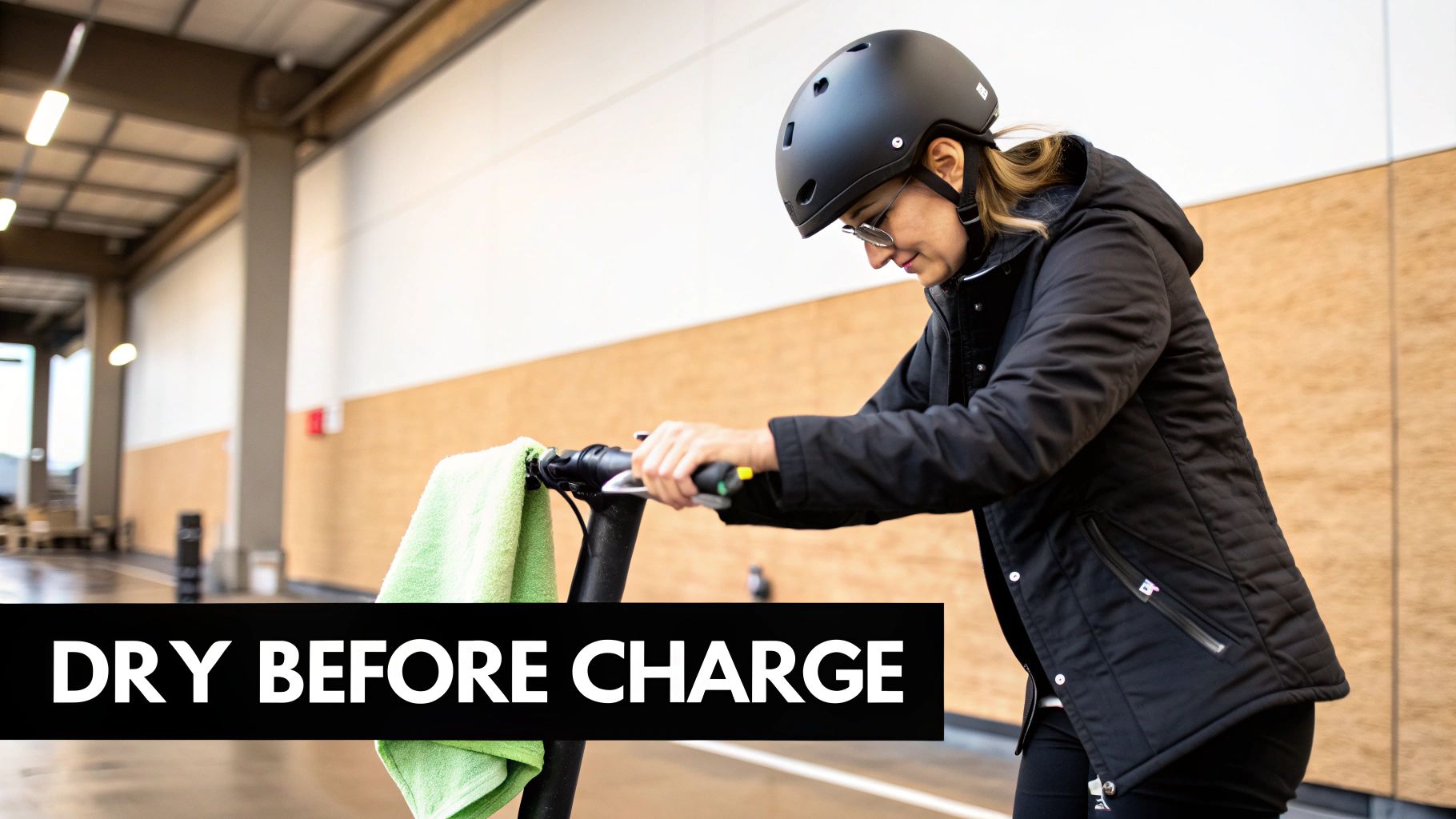
Think about it like coming inside after being caught in a downpour. You wouldn't just toss your soaking wet coat in a corner of the closet, right? You’d hang it up to dry to stop it from getting musty and ruined. Your scooter needs that exact same TLC to fight off the slow, creeping damage that water inevitably causes.
This quick post-ride routine is your single best defense.
Your Immediate Drying Game Plan
As soon as you roll your scooter inside, it's go-time. The main goal here is to banish all that surface water before it finds a way into the scooter's guts. Grab a good, absorbent cloth—a microfibre towel works wonders.
Give the entire machine a thorough wipe-down. We're talking the frame, handlebars, deck, everywhere. This isn't just for looks; it's proactive maintenance. Water has a nasty habit of pooling in all the little nooks and crannies, so be meticulous.
Pay special attention to these high-risk spots:
- The Charging Port: This is a direct line to your battery. Make double-sure the port and its little rubber cover are bone dry, inside and out.
- Your Display and Controls: Gently wipe down the screen, throttle, and brake levers. Any moisture left here can lead to sticky buttons or a flickering display down the road.
- The Folding Mechanism: This spot is a minefield of joints and moving parts where water loves to hang out and start causing rust. Get in there and dry it well.
What You Should Never Do
When dealing with a wet scooter, your first instinct might actually cause more harm than good. To avoid a costly, catastrophic mistake, there are two golden rules you absolutely have to live by.
Rule #1: Never, ever charge a wet scooter. This is the single most important thing to remember. Plugging in your scooter when there’s even a tiny bit of moisture around the charging port can create a short circuit. Best case? A fried charger. Worst case? A dead battery and a hefty repair bill. After wiping it down, let it air dry for at least a few hours before you even think about plugging it in.
If you're serious about scooter care, understanding your battery is a must.
Rule #2: Don’t get clever with high-pressure tools. It’s tempting to grab a pressure washer to blast off the grime or use a hairdryer to speed up the drying process. Just don't. A powerful jet of water or air can easily force moisture past the seals and directly into the controller, motor, or battery compartment. A simple towel is your best and safest tool for the job.
And please, skip the bag of rice. For a reality check on why some common "fixes" are just wishful thinking, it's worth reading up on some of the work debunking myths about liquid-damaged electronics. Sticking to these simple, proven steps is the best way to make sure your scooter is always ready for the next ride.
How to Choose an All-Weather Scooter
If you're a daily commuter in a place that sees more than its fair share of rain—think Seattle or anywhere in Australia—just grabbing any old scooter off the shelf is a recipe for disaster. Let's be real: not all e-scooters are built to handle a proper downpour. Picking a true "all-weather" ride means you have to look past the flashy marketing and get into the specs that actually keep you safe and your scooter alive when the streets are slick.
It’s kind of like buying a car. You wouldn't get a convertible if you live somewhere with 150 rainy days a year, right? Your scooter should be the same kind of practical investment. Match it to your climate, and you’ll get a reliable machine that’s worth every penny.
The Non-Negotiables for a Rain-Ready Ride
When you start comparing models, a few key features need to be at the very top of your list. These are the things that separate a sunny-day toy from a serious, year-round commuting machine. If you're committed to riding in any weather, don't skimp on these.
-
A Minimum IP54 Rating: We've already gone over what IP ratings mean, and for riding in the rain, IP54 is the absolute bare minimum. But if you want real peace of mind, you should be looking for scooters with an IP65 rating or higher. That’s the sweet spot where you know your scooter can handle actual, sustained rain, not just a surprise sprinkle.
-
Fully Sealed Battery Compartment: Your battery is the heart of your scooter—and easily the most expensive part to replace. Make sure the models you're considering specifically mention a sealed or weatherproof battery casing. A well-protected battery is your number one defense against a dead scooter and a very expensive repair bill.
-
Superior Braking Systems: Wet pavement is no joke. Standard electronic or foot brakes just don't cut it when things get slick; they can lose a ton of their stopping power. For reliable braking in the rain, you absolutely want to prioritize scooters with drum or hydraulic disc brakes. These systems are enclosed, so they're much less affected by water, giving you the strong, consistent braking you need when you need it most.
The Rise of the Waterproof Scooter Market
This whole focus on weatherproofing isn't just a small-time concern anymore—it’s a massive driver in the industry. The ability for an e-scooter to get wet and survive is now big business. We're seeing a whole new class of "waterproof" models popping up.
In fact, the waterproof e-scooter market is valued at around US$1.41 billion in 2025 and is only expected to grow as more commuters in North America and Australia demand rides they can count on year-round. This is changing the game for manufacturers. The brands that are investing in IP65–IP66 construction are using that superior water resistance as a major selling point to stand out in crowded US and Australian markets. If you're interested in the business side of things, you can find more insights on the future of waterproof e-scooters.
Rider's Bottom Line: When you're picking out a scooter, match its specs to your reality. An IPX4 rating might be perfectly fine if you live in a desert, but for year-round commuting in a rainy city, investing in a model with an IP65 rating and hydraulic brakes isn't a luxury—it's essential for your safety and the life of your scooter.
Got a Few More Questions About Wet Scooters?
We've thrown a lot of information at you, but when it comes to keeping your scooter safe from the elements, the devil is always in the details. Let's tackle some of the most common questions that pop up so you can ride with a bit more peace of mind.
Will Riding in the Rain Void My Warranty?
More often than not, yes. It's a tough pill to swallow, but most manufacturers will explicitly state that water damage is not covered under their standard warranty. This holds true even for scooters with impressive IP ratings.
They might cover a factory defect in the seals, but they won't cover damage from what they consider misuse—like bombing through a giant puddle or riding home in a monsoon.
The fine print is everything. Seriously, take a few minutes to actually read your scooter's warranty. Knowing exactly what’s covered (and what isn't) before you get caught in a downpour is your best defense.
So, Can I Just Ride Through Puddles?
I’m going to give you a hard "no" on that one. It’s always a terrible idea to ride through a puddle, mainly because you have no clue how deep it is.
One wrong move and you could submerge the deck or motor hub for a split second. That’s often all it takes for water to blast past the seals and fry your electronics. A scooter with a high IP rating might survive a quick splash, but it’s a massive gamble. Just steer around them. It's not worth the risk.
What Are the First Signs of Water Damage?
The early warning signs can be tricky, but catching them fast is key. If you notice any of these things happening after a wet ride, it’s time to pay attention:
- A flickering display or a screen that's completely dead.
- A glitchy throttle that feels jerky or doesn't respond right away.
- The scooter won't power on at all, even after you've let it dry out.
- A weird grinding or whining sound from the motor, which could mean the bearings are already starting to suffer.
See any of those red flags? Stop riding immediately. Park the scooter somewhere warm and dry for at least 24-48 hours and give it a chance to air out completely. If it's still acting up after that, you’ll need to get it looked at by a pro.
Ready to find a ride that can handle your all-weather commute? At Punk Ride, we offer a curated selection of electric scooters from top brands, with options built for durability and performance. Explore our collection and find the perfect scooter for your needs.
Share:
Benefits of Electric Bikes: Discover the Perks for Your Daily Commute
Finding the Best Electric Bike for City Commuting