


That number you see on the box? The one promising an epic range of electric scooter models? Think of it as a best-case scenario, cooked up in a lab under perfect conditions. It's a great starting point, but your real-world mileage will almost always be a different story once you hit the actual streets.
Understanding Advertised vs. Real-World Range
Ever gotten a new scooter and felt like the battery drains way faster than the ad promised? You're not imagining things. That advertised range is a lot like a car's official MPG—it’s a benchmark set in a perfect, controlled world, a world without the hills, headwinds, and stop-start traffic we deal with every day.
Manufacturers need a standardized way to test, so they create ideal scenarios to measure maximum distance. This usually means:
- A very light rider, typically around 155-165 lbs (70-75 kg).
- A perfectly flat, smooth road with zero inclines.
- No wind at all.
- A steady, medium speed with no sudden stops or starts.
These tests are designed to show off what the scooter can do, highlighting the absolute peak performance of its battery and motor. But let's be real, that's not how we ride. The number on the box is useful for comparing models, but it's definitely not a guarantee of your daily range.
Why the Difference Matters
The gap between what's advertised and what you actually get can be pretty big. Honestly, it's not unusual for a scooter's real-world range to be 20-30% lower than what the spec sheet claims. This isn't a defect; it's just physics. Every hill, every gust of wind, and every time you punch the throttle from a standstill, you're asking the battery for a little extra juice.
Think of your scooter's battery like the fuel tank in a car. You'll always get better mileage cruising down a flat, empty highway than you will battling stop-and-go city traffic with a few steep hills thrown in. It's the exact same principle for scooters.
This isn't unique to scooters, either—it's a reality for all electric vehicles. For a deeper dive into how this plays out with bigger machines, check out this great piece on the 'unvarnished truth' about electric car real-world range. Getting your head around this difference is the first step to picking a scooter that won't leave you stranded and pushing it the last mile home.
The Tech Behind Your Scooter's Stamina
If you really want to get a handle on what makes an electric scooter go the distance, you’ve got to look under the deck. It all comes down to two key players: the battery and the motor. Think of them as the heart and lungs of your ride—they work together to decide not just how far you can go, but how much of a blast you'll have getting there.
The single most important spec to look at is the battery's capacity, which is measured in watt-hours (Wh). The simplest way to wrap your head around this is to picture it as your scooter's gas tank. A scooter with a 500Wh battery has a bigger "tank" and can hold more juice for longer trips than one with a 300Wh battery. It's that straightforward.
This concept map helps visualize how the tech specs, the advertised range, and the real world all connect.

As you can see, the battery is right at the center of it all, heavily influencing both the best-case-scenario distance and what you’ll actually get on your daily commute.
The Power Source: Your Battery
Almost every modern scooter you'll find uses a lithium-ion battery, and for a good reason. They cram a ton of power into a small, lightweight package—a trait called high energy density. Of course, a big battery is great, but you also need to think about its lifespan. Understanding how batteries degrade over time is key, and you can learn more about maximizing battery lifespan.
The push for better batteries is a global race. Fueled by growing cities, the Asia Pacific region dominated the e-scooter market in 2023, owning a massive 83.08% share with models that averaged a 43-mile (70 km) range. The next wave of battery tech is aiming for 60+ mile (100+ km) ranges, which could cut charging time in half for regular commuters.
To give you a clearer idea of what to expect, here's a quick breakdown of how battery capacity generally translates to real-world mileage.
Battery Capacity vs. Estimated Real-World Range
| Battery Capacity (Wh) | Typical Real-World Range (Miles) | Ideal for |
|---|---|---|
| 250 - 400Wh | 10 - 20 miles | Short commutes, quick errands, "last-mile" trips |
| 400 - 700Wh | 20 - 35 miles | Daily commuting, longer recreational rides |
| 700 - 1000+Wh | 35 - 55+ miles | Long-range enthusiasts, hilly areas, performance riders |
Remember, this table is a general guide. Your actual range will still depend on all the factors we’ll get into later.
The Engine: Your Motor
So, if the battery is the gas tank, the motor is the engine. Its power is measured in watts (W), and it’s what gives your scooter its muscle. A more powerful motor—say, 500W versus 250W—delivers zippier acceleration and makes you feel like a superhero when you're tackling steep hills.
But there’s always a catch, right? A beefy motor is thirsty. It drinks up that battery juice much faster, just like a V8 engine guzzles more gas than a four-cylinder. So while a high-wattage motor is a thrill, it will cut into your maximum range.
For riders who crave the ultimate punch, some scooters even pack two motors. If that sounds like you, check out our guide on the pros and cons of dual-motor electric scooters. In the end, it's all about finding that sweet spot between the range you need and the performance you want.
The Real-World Factors That Drain Your Battery
Alright, so we've seen the impressive range numbers that manufacturers put on the box. But let's get real. The advertised range is a clean, simple number, and your daily ride is anything but.
Think of your battery like a fuel tank. Every single thing you do on your trip sips a bit of that fuel, and some things just chug it down.
A whole bunch of "range killers" come together to decide the true range of electric scooter models, turning that perfect-world figure into a much less predictable reality. Getting to know these is the secret to figuring out how far you can actually go and avoiding that sinking feeling when your scooter dies miles from your front door.
Your Weight and Cargo
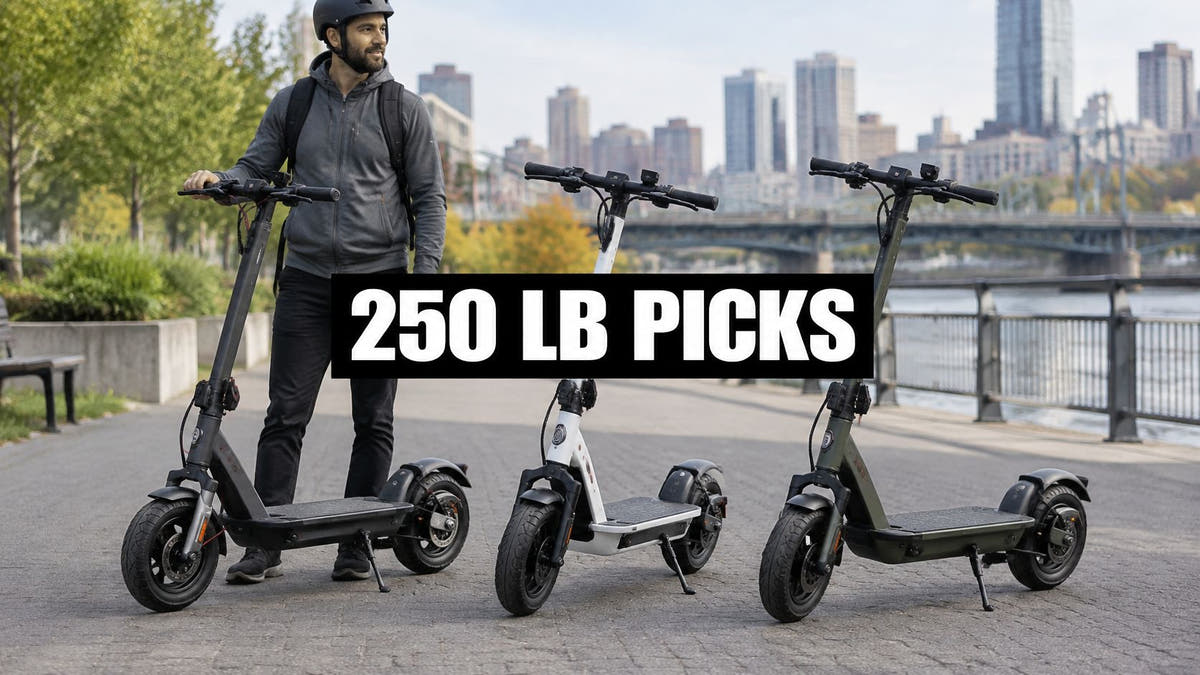
It's just basic physics, really. The more weight the scooter has to move, the more muscle the motor needs to flex. A 200 lb rider will always get less range than a 155 lb rider on the exact same scooter, even if they ride the same way. The hit to your range can be pretty significant, sometimes knocking off 15-20% or more.
And don't just think about your own weight. That heavy backpack stuffed with your laptop and gym clothes? Or the weekly shop you just picked up? It all adds up, forcing the motor to pull more juice and drain your battery that much faster.
The Terrain You Ride On
Where you ride is probably the biggest factor of them all. Cruising along a perfectly flat, smooth bike path in Melbourne or a boardwalk in California is a dream for your battery. But most of us don't live in a postcard.
- Hills are the ultimate battery drain. Seriously. Every time you start climbing, your motor goes into beast mode, gulping down energy. A commute with just a few steep hills can easily slice your range by a third.
- The surface matters, too. Smooth asphalt is your best friend for efficiency. But the moment you hit gravel, grass, or uneven pavement, the extra friction makes the motor work way harder just to keep you moving.
It’s a lot like riding a bike. Pedaling on a flat, smooth road is a breeze. Now picture trying to cycle up a steep, muddy hill—you'd be gasping for air in seconds. Your scooter's motor feels the exact same strain.
The range of electric scooters has come a long way. We've gone from early models that barely managed 12-18 miles per charge to modern beasts that can push past 60 miles. This leap is mostly down to huge improvements in battery technology, which is powering a market set to hit an insane USD 63.64 billion by 2032. You can read up on the astonishing growth in the electric scooter market if you're curious.
Weather and Riding Style
Finally, we have the things you can't always control—and the one thing you can. Cold weather is a notorious battery assassin. On a frosty morning, don't be surprised if your range drops by 30% or even more. The cold literally slows down the chemical reactions inside the battery, making it sluggish and less efficient. Riding straight into a strong headwind is just as bad; it’s like riding uphill the entire time.
Your own riding style is the final piece of the puzzle. If you're constantly gunning it from a standstill and then slamming on the brakes at every light, you're burning through power. A smooth, steady cruise is way more efficient. By looking ahead, easing off the throttle instead of braking hard, and accelerating gently, you can add precious miles back to every single charge.
Getting More Juice: How to Maximize Your Scooter's Range
You don't always need a monster battery to squeeze more miles out of your ride. Boosting the range of an electric scooter often just comes down to a few smart tweaks in how you ride and how you treat your machine. These are some simple, real-world tricks that can make a huge difference, helping you get the most out of every single charge.
First up, let's talk settings. Most modern e-scooters have different riding modes, and the one you choose can be a total game-changer for your range.

Flipping it into Eco Mode is hands-down the easiest win. This mode puts a leash on your top speed and acceleration, stopping the motor from sucking down huge gulps of power. It's like going for a steady jog instead of a full-out sprint—you burn way less energy and can go a lot farther.
Dial In Your Riding Style
It’s not just about pushing buttons; how you actually ride the scooter matters. A lot. The secret to max efficiency is all about being smooth and consistent. Small changes here add up to big gains in distance over time.
Try building these habits:
- Go Easy on the Throttle: Don't just slam the accelerator from a dead stop. Gently rolling into your speed is way kinder to your battery.
- Think Ahead: See a red light or a stop sign up ahead? Don't wait until the last second to jam on the brakes. Let off the throttle and just coast. It costs zero energy and makes the most of your momentum.
- Keep It Steady: Constant stop-and-go riding is a huge battery killer. Whenever you can, just cruise at a nice, steady pace.
Think of your scooter’s tyres like the shoes on your feet. You wouldn’t want to go for a run in squishy, flat-soled boots—it’d take way more effort. Same thing here. Properly inflated tyres have less rolling resistance, so the motor doesn't have to fight as hard to push you along. That translates directly into more range.
Seriously, check your tyre pressure once a week. It takes two minutes and can boost your efficiency by up to 10%.
Smart Scooter, Smarter Care
Finally, how you care for your scooter long-term has a massive impact on your battery's health and, you guessed it, its maximum range. A happy battery holds its charge better and gives you a more reliable ride for years.
Start with your charging routine. Try not to let your battery die completely and hit 0% if you can help it; deep discharges really stress the cells out. On the flip side, don't just leave it plugged in for days after it's already full. If you want the full rundown, check out our guide on how to store lithium batteries safely.
Put all these habits together, and you'll be making sure every ride is as long and efficient as it can be.
How to Choose a Scooter with the Right Range
Finding the right scooter isn't about grabbing the one with the biggest battery or the most impressive advertised mileage. The real trick is matching the range of electric scooter models to how you actually live your life.
Let's be real: are you a daily commuter with a predictable 10-mile round trip, or are you a weekend wanderer who wants the freedom to explore without a plan? The answer changes everything.
Start by figuring out your most common trip. Clock the distance from your front door to work, the grocery store, or your favorite hangout and back again. That number is your starting point, but it's definitely not the range you should be aiming for. You need a cushion.
Calculating Your Personal Range Buffer
To dodge that gut-sinking feeling of "range anxiety"—watching your battery light blink red when you're still miles from home—you need a scooter that can handle your daily grind with power to spare.
A solid rule of thumb is to calculate your typical daily distance and add a 40-50% buffer on top.
Let's say your daily commute is 10 miles. Here’s how the math breaks down:
- Daily Distance: 10 miles
- Buffer (50%): 5 miles
- Your Target Real-World Range: 15+ miles
This buffer isn't just for peace of mind. It's your safety net against all those real-world variables we talked about. It accounts for your battery losing capacity over time, those spontaneous detours, surprise hills, and windy days that chew through your charge.
For this rider, a scooter with a real-world range of 15-20 miles would be a perfect, stress-free fit. This simple math helps you stop looking at a giant number on a box and start focusing on a practical number that works for you.
This focus on usable distance just shows how far the tech has come. The evolution in the range of electric scooters is pretty wild, with some data showing a 300% improvement since 2015. Back then, a 15-mile range was decent. Now, premium models are hitting 45-60 miles, which is a big reason why the market is projected to hit USD 60.65 billion globally. You can see more on the growing e-scooter market on Precedence Research.
Matching the Scooter to the Journey
Once you know your target range, picking the right ride gets a lot easier.
Someone zipping around a college campus in the US for quick trips between classes could get by just fine with a nimble city scooter that has a 20-mile range. It’s light, easy to carry inside, and gets the job done.
But what about a rider in a sprawling Aussie suburb who wants their scooter for longer errands and weekend fun? Their daily rides might already be 20 miles, so with the buffer, they should be looking for a model that can genuinely deliver 30-35 miles.
Thinking this way ensures your new scooter becomes a reliable partner for your adventures, not a constant source of frustration. For a closer look at what's out there, you can compare electric scooters in our detailed guide.
Got Questions About Scooter Range? We've Got Answers.
We've covered a ton of ground, from the numbers on the box to what actually happens on the street. But you probably still have a few questions rolling around in your head. This last section is all about tackling those common "what ifs" and "how comes" so you can ride with total confidence.
Let's get right into the stuff riders always ask.
Will My Scooter's Range Get Shorter Over Time?
Yep, it will. That’s just the nature of any device running on a lithium-ion battery. After hundreds of charge cycles, the battery just can't hold as much juice as it did on day one. Think of it like a good pair of running shoes—they're amazing at first, but after a few hundred miles, some of that spring is gone. It's just normal wear and tear.
The good news? You can seriously slow this process down with a little TLC. Good battery habits can keep your scooter feeling fresh for years.
Here's how to keep that battery healthy:
- Avoid deep discharges: Try not to run it all the way down to 0% if you can help it.
- Don't overcharge: Once it's full, unplug it. Leaving it plugged in for days on end isn't doing it any favors.
- Store it smart: Keep your scooter somewhere cool and dry, away from crazy hot or cold temperatures.
A happy battery is a long-lasting battery. Simple as that.
How Bad Is Cold Weather for My Scooter's Range?
Oh, it's a real range-killer. When the temperature drops, don't be shocked if you see your range plummet by 30% or more. The cold makes the chemical reactions inside the battery sluggish, so it can't push out power as efficiently. It’s not broken; it’s just shivering.
The best way to fight the freeze is to store and charge your scooter indoors where it's warm. When you do have to head out into the cold, just remember to mentally chop a good chunk off your expected range so you don't get stranded.
Is a Removable Battery Better for Range?
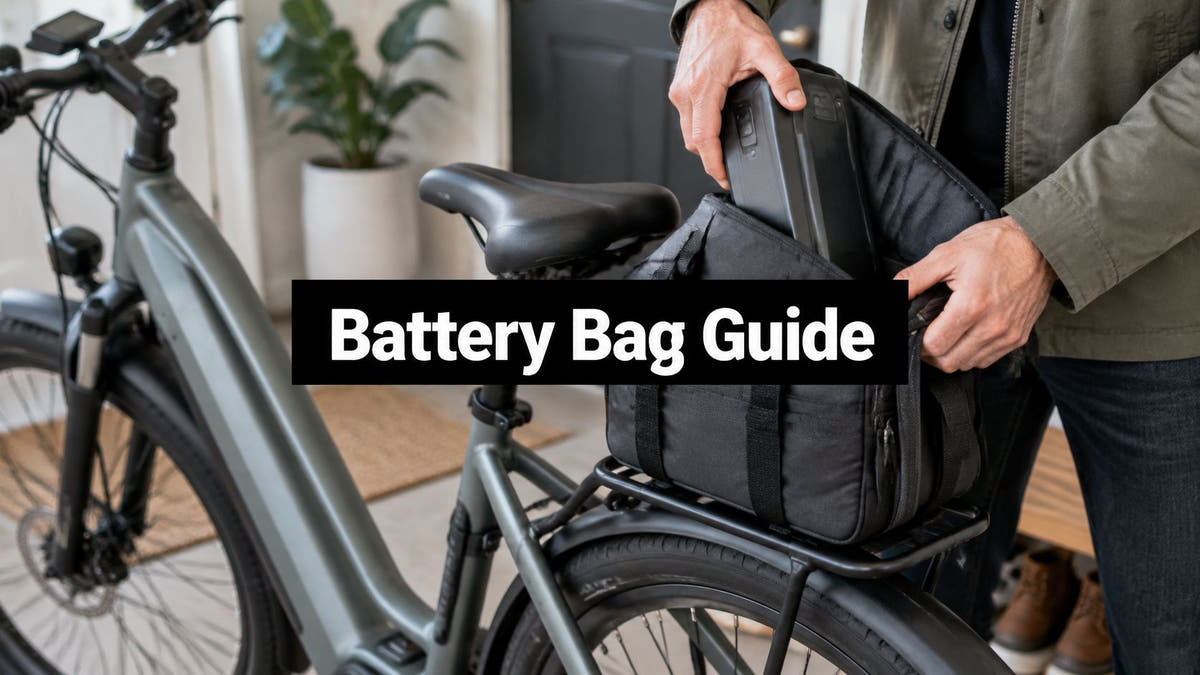
For sheer flexibility, a removable battery is a massive win, and that definitely affects your practical range. The most obvious perk is that you can carry a spare. Just like that, you can double your travel distance and turn a stressful long commute into a total breeze.
But it’s about more than just doubling your miles. A removable battery is a lifesaver for convenience. If you live in an apartment or don't have an outlet in your garage, popping the battery out to charge inside is a game-changer. It solves a huge headache for tons of city riders.
Can I Install a Bigger Battery for More Range?
It sounds like an easy hack, but swapping in a bigger, third-party battery is a tricky and dangerous game we really don't recommend playing. Your scooter's brain—especially its Battery Management System (BMS)—is calibrated perfectly for the battery it came with.
Slapping in an unfamiliar battery can cause all sorts of chaos. You could fry your controller, instantly void your warranty, and even create a serious fire hazard. The safest, smartest way to get more mileage is to buy a scooter that was built for the range you actually need right from the get-go.
At Punk Ride, we've got a massive lineup of scooters for every kind of rider, from quick city slashers to long-haul beasts. Find the perfect ride for your life and stop worrying about the battery meter. Explore our collection at Punk Ride today.
Share:
How to Make an Electric Scooter Faster: Safe Upgrades & Tips
Torque Sensor Electric Bike Explained