


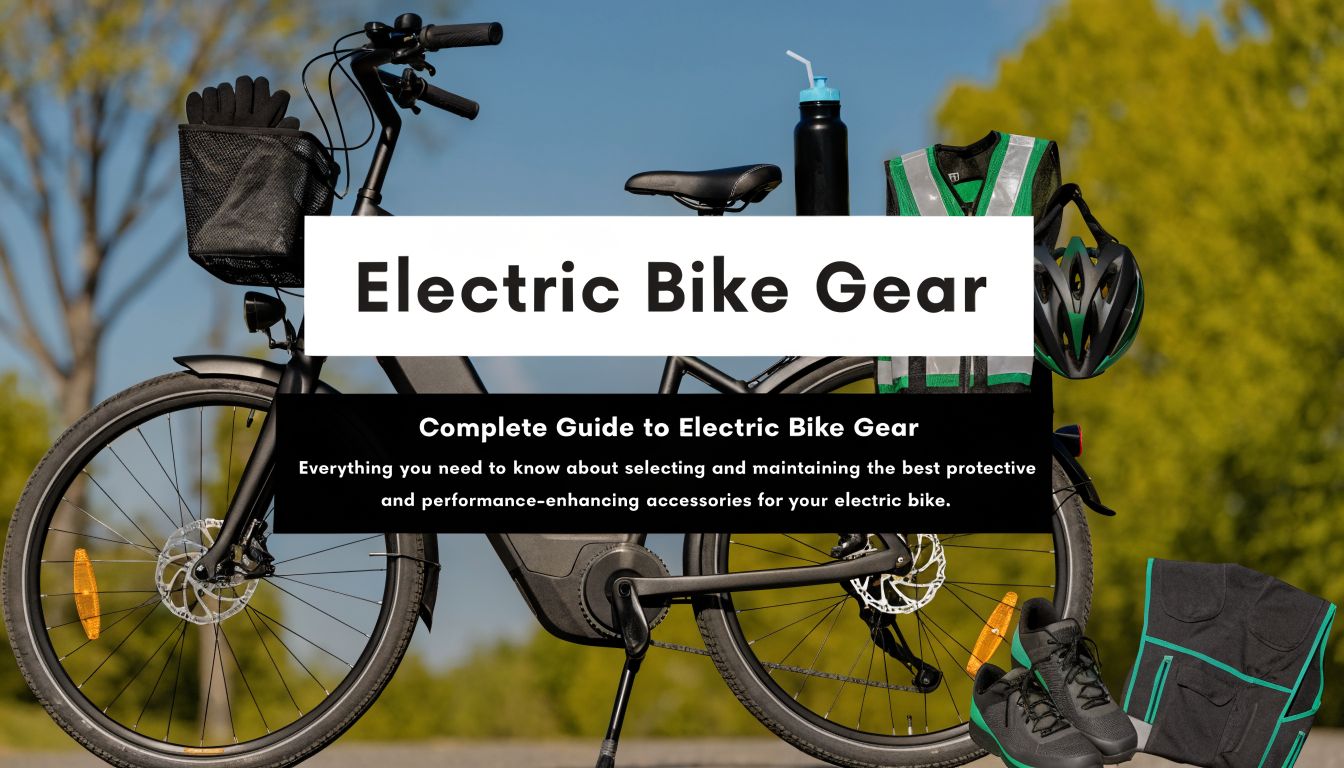
You've probably done this already. You search for electric bike gear, and half the results talk about cassettes, derailleurs, and gear ratios, while the other half tell you to buy a helmet, gloves, and a lock.
That confusion is normal.
For a new e-bike owner, “gear” means two different things at once. It can mean the mechanical gears on the bike, the parts that help you pedal comfortably and let the motor work more efficiently. It can also mean the rider gear you wear or carry, the kit that keeps you safe, visible, dry, and practical on a daily ride.
If you're riding in the UK or wider EU, that double meaning matters even more. A commuter in Manchester, Bristol, Berlin, or Amsterdam might deal with traffic lights, wet roads, short sharp climbs, bike storage worries, and changeable weather in the same week. Knowing how to use your bike's gears is only half the job. Knowing what rider gear belongs with that commute is the other half.
What Does Electric Bike Gear Even Mean
A new rider usually hears advice like “shift down before the hill” and “don't forget your gear” in the same conversation. One person means the drivetrain. Another means your helmet and lock. No wonder it feels muddled.
The easiest way to clear it up is this:
- Bike gear means the parts that change how hard or easy it is to pedal
- Rider gear means the equipment you use for safety, comfort, and carrying stuff
- Good riding happens when both work together
Why the phrase confuses so many riders
An e-bike already has a motor, so many people assume the gears don't matter much. Then they ride up a hill in the wrong gear and wonder why the bike feels heavy, noisy, or awkward. Others focus so much on the machine that they forget the practical side of commuting, like visibility in winter traffic or how they'll carry a laptop without a sweaty backpack.
That's why this topic keeps coming up. The e-bike world has grown fast. The global e-bike market reached US$34.98 billion in 2024 and is projected to hit US$51.78 billion by 2029, according to Laka's e-bike market statistics. The same source notes that in Europe, e-bikes with multi-speed systems make up over 70% of sales, which tells you one thing quickly. Most riders aren't buying simple one-speed machines. They're buying bikes that expect them to understand gears.
Simple rule: if your e-bike helps you move, and it helps you ride safely, it counts as part of your electric bike gear.
A clearer way to think about it
Think of your setup as two systems.
One system is the drivetrain, which includes the chain, cassette, derailleur, or hub gear. That system controls how your pedalling feels.
The other system is your commuter kit, which includes things like lights, a helmet, a lock, and luggage. That system controls how safe and usable the bike feels in real life.
Get both right, and an e-bike stops feeling like a gadget. It starts feeling like a dependable everyday vehicle.
The Heart of Your Ride Drivetrain Gears Explained
The bike's mechanical gears are the part most riders mean when they talk about “shifting.” If you've driven a manual car, the basic idea is familiar. You use a low gear when you need easier movement and more pull, and a high gear when you want to keep speed on flatter ground.
On an e-bike, the same logic applies. The motor helps, but it still prefers to work with the right gear rather than against the wrong one.

What the gears are actually doing
When you shift, you're changing the relationship between the front chainring and the rear cogs. That changes how much effort each pedal turn needs.
A low gear is easier to turn. It's useful for:
- Starting off at lights
- Climbing hills
- Riding into a headwind
- Moving a heavier e-bike with luggage
A high gear is harder to turn, but it lets you hold speed more comfortably on open, flatter roads.
That's why gears still matter on an electric bike. The motor isn't there to replace smart shifting. It's there to reward it.
The two main systems you'll see
Most urban e-bikes in the UK and EU use one of two drivetrain styles: derailleur systems or internal gear hubs.
A derailleur is the more familiar setup. You can see the chain move across several cogs at the back wheel. An internal gear hub hides the gearing inside the rear hub, so the outside of the bike looks cleaner and simpler.
According to this e-bike gearing guide from Tamo Bike Sport, derailleur systems hold 90% of the market share and offer a 400 to 500% gear range. The same guide says internal hub gears such as a Shimano Nexus 8-speed offer a 307% range, 98% efficiency in all ratios, and 70% less maintenance.
That tells you a lot about the trade-off. Derailleurs give you a wider spread of gears. Hub gears usually ask less from you in day-to-day upkeep.
Drivetrain Showdown Derailleur vs. Internal Hub for Urban Riding
| Feature | Derailleur System | Internal Gear Hub |
|---|---|---|
| Feel on mixed terrain | Better for a wider range of hills and speeds | Better for steady urban riding |
| Maintenance | More cleaning and adjustment | Lower maintenance in daily use |
| Weather exposure | Exposed parts pick up grit and rain | Enclosed parts are better protected |
| Stop-start traffic | Best shifted while pedalling | Often easier in city conditions |
| Cost and complexity | Common and widely available | Usually a more premium choice |
| Best fit | Riders who want flexibility | Riders who want simplicity |
A derailleur is like a sporty hatchback with more options. A hub gear is like an automatic city car. Less fuss, less mess, easier daily use.
Which one suits a UK commuter
If your route includes bridges, hills, or mixed roads, a derailleur usually gives you more choice. If you ride in all weather and want something tidier for stop-start city use, an internal hub can be very appealing.
The one thing both systems need is a healthy chain. If you want a practical primer on cleaning, wear, and replacement, this guide to your electric bike chain is worth reading before problems start.
Decoding Motors and Their Link to Gears
Not every motor uses the bike's gears in the same way. Many new riders get caught out by this distinction.
A mid-drive motor and a hub motor can both feel smooth on a test ride, but they interact with the drivetrain very differently once you hit a hill or start riding longer distances.

Mid-drive means the motor uses your gears
A mid-drive motor sits near the cranks. Because it drives through the bike's drivetrain, your gear choice directly affects how the motor performs.
That's why mid-drives often feel so good on hills. Shift into a lower gear, keep the pedals turning smoothly, and both you and the motor get a better mechanical advantage. It feels a bit like dropping into first or second gear in a car before climbing a steep road.
There's a long history behind this idea. This history of the electric bike notes that the story goes back to 1897, when Hosea W. Libbey's prototype used twin motors and multiple battery circuits as an early multi-gear concept. The same source connects that idea to modern systems, saying today's mid-drive motors from Bosch and Shimano integrate with 7 to 11 speed gears, offer up to 100Nm of torque, and can multiply climbing capability by 500%.
Hub-drive means the motor is more independent
A hub motor sits in the wheel, usually the rear wheel. It pushes the wheel directly instead of going through the chain and cassette in the same way a mid-drive does.
That doesn't make the gears useless. Your gears still affect how comfortable your pedalling feels. But the motor itself is less dependent on your chosen gear than a mid-drive motor is.
For a new rider, the difference feels like this:
- Mid-drive bike: your shifting has a bigger effect on climbing and efficiency
- Hub-drive bike: your shifting still matters, but mostly for your legs and cadence
- Both types: the wrong gear can still make the ride clunky
What low and high gear feel like on the road
If gear ratios sound abstract, ignore the maths for a moment and use body feel.
A low gear feels like quick, light pedal turns. Your legs spin faster, but each push is easier. That's what you want pulling away from traffic lights or riding up a rise.
A high gear feels slower and firmer at the pedals. You don't want it at a dead stop. You do want it once you're moving well on a flatter stretch and don't want to spin your legs too quickly.
If the pedals feel heavy and the motor sounds like it's working hard, you probably should have shifted earlier.
That's the key relationship. Motor and gears aren't separate systems competing with each other. They're teammates.
Beyond the Bike Essential Rider Gear for Safety and Comfort
This is the other meaning of electric bike gear, and for daily riding it's just as important as the drivetrain. You can have a beautifully tuned e-bike, but if you can't lock it securely, see the road properly, or arrive without a soaked back, the setup still isn't working.

Start with the four essentials
For most UK commuters, the core kit is simple:
- Helmet
- Lock
- Lights
- Carrying setup
Those aren't “nice extras.” They're the difference between occasional leisure riding and a reliable daily transport habit.
Helmet first, and make it one you'll actually wear
A helmet that pinches, wobbles, or feels sweaty after ten minutes often ends up hanging on a hook instead of going on your head. Fit matters more than style, though both help.
Look for:
- A secure fit that doesn't shift when you shake your head
- Good ventilation if you ride year-round
- Visibility features such as lighter colours or reflective details
- A shape that works with your riding posture, especially if you sit more upright on a commuter e-bike
If you're unsure where to start, this guide to the best helmet for ebike riders can help narrow down the practical differences.
Locks need to match where you park
A cheap cable lock is fine for a quick coffee stop in sight of the bike. It's not what you want for station parking, outside an office, or anywhere theft is a regular concern.
In the UK, many riders look for Sold Secure ratings because insurers and bike owners often use that system to judge lock quality. The exact level you need depends on your area and how long the bike will be unattended, but the main point is simple. Match the lock to the risk, not just to the bike's price.
A strong D-lock paired with a secondary lock for the wheels gives more peace of mind than a flimsy single option.
Your lock isn't there to make the bike impossible to steal. It's there to make your bike a much worse target than the one next to it.
Lights and visibility matter even on “short rides”
UK riding conditions change fast. A route that starts in daylight can end in drizzle, dusk, or traffic spray. Good lights aren't only for seeing. They help drivers judge your position earlier.
A practical setup usually includes:
- A bright front light aimed at the road, not into oncoming eyes
- A rear light that stays visible through spray and road grime
- Reflective details on clothing, bags, or the bike itself
Flashing modes can help in traffic, but a steady beam often helps with road reading on darker streets. Many commuters use both depending on conditions.
Carrying gear changes how the whole ride feels
A backpack works for short distances, but on warmer days it can leave your back damp and your shoulders tense. A rear rack with panniers often makes an e-bike feel far more useful.
For city riding, good carrying gear should:
- Keep weight off your back
- Protect electronics or clothing from rain
- Make loading groceries or work kit easy
- Clip on and off without fuss
This is the least glamorous part of electric bike gear, but it's often the one that turns casual use into daily use.
Matching Your Gear to Your UK Commute
A lot of riders know what the gears do, but they still aren't sure how to use them in real situations. The trick is to stop thinking in separate boxes. Your drivetrain gear, assist level, clothing, luggage, and comfort all shape the same journey.

A simple way to ride smarter
For everyday commuting, you want three things working together:
- A comfortable pedalling rhythm
- The right assist for the terrain
- Rider gear that suits the weather and load
When those line up, the ride feels smooth. When they don't, you get that jerky, overworked feeling where your legs, bike, and motor all seem slightly out of sync.
Example one with a flatter city route
Take a mostly flat ride across London. You're stopping at lights, filtering into position, and accelerating little and often.
In that kind of commute:
- Middle gears usually feel best for steady rolling
- Lower gears help you restart cleanly from junctions
- Moderate assist keeps the ride natural without wasting energy
- A pannier and waterproof layer often matter more than maximum drivetrain range
You don't need to overthink every shift. You just want to avoid grinding away in a hard gear from every stop.
Example two with short climbs and mixed streets
Consider a route featuring sharper rises, such as certain areas of Bristol or a hilly suburban commute. Timing matters in these situations.
A 2025 Electric Bike Report study, cited in Himiway's guide to electric bicycle gears, found that riders who match low gears (1 to 3) with high assist levels (4 to 5) on inclines save 22% more battery life than riders who stay in high gears. The same source says this approach helps with range anxiety for 68% of urban commuters.
That gives you a very usable real-world rule.
Shift before the hill, not halfway up it. Once the bike is already labouring, you're fixing a problem instead of preventing one.
The comfort piece people forget
Range isn't just about battery. It's also about how fresh your body feels after repeated rides.
If your feet get sore on longer commutes, small fit upgrades can help. Riders who spend a lot of time on pedals may find pedorthist-selected cycling supports at Insoles.com useful, especially if hot spots or arch discomfort make steady cadence harder to maintain.
A practical commuting checklist
Use this when you're setting off:
- For flats and easy cruising: choose a middle gear and a moderate assist level
- For hills or bridges: shift to a lower gear before the slope starts
- For stop-start traffic: downshift as you roll toward a junction so the restart is easier
- For wet weather: prioritise grippy gloves, a bright outer layer, and luggage that keeps clothes dry
- For longer rides: reduce strain points early, including saddle comfort, foot support, and backpack weight
The best electric bike gear setup is the one that disappears beneath you. No drama. No wrestling with the bike. Just smooth movement from door to destination.
Keeping Your Gear in Top Shape
Most e-bike maintenance isn't difficult. It's just easier when you do a little bit often instead of waiting for the bike to sound unhappy.
UK weather is hard on drivetrains. Rain, grit, and winter road residue all work their way into moving parts, especially if your bike lives outside or gets ridden daily.
The checks that matter most
Before a ride, keep it basic:
- Look at the chain for obvious dirt, rust, or dryness
- Check the tyres by feel and make sure they're not soft
- Test the brakes before you join traffic
- Shift through a few gears to catch hesitation early
That takes only a minute or two, and it prevents a lot of annoying rides.
Weekly habits that protect the drivetrain
The main job is chain care. A dirty, dry chain wears faster, shifts worse, and makes the whole bike feel rougher than it should.
A good weekly routine looks like this:
- Wipe the chain down after wet or gritty rides
- Add suitable chain lubricant in small amounts, then wipe off the excess
- Check for noisy shifting or skipping under load
- Inspect bolts and contact points on racks, mudguards, and accessories
For riders wondering how much shifting technique really matters, Electric Bike Report's range guidance notes that proper gear selection can extend battery range by 20 to 30%. The same source says that maintaining an ideal pedal cadence of 70 to 90 RPM helps prevent motor overload, while poor gear use can cause 15 to 25% higher energy loss as heat.
That's worth remembering during maintenance because a “bike problem” is sometimes really a “riding in the wrong gear” problem.
Don't ignore water exposure
Many riders assume a bit of rain is no big deal, and usually it isn't. But regular wet riding changes what you need to clean and check, especially around connectors, drivetrain parts, and storage habits.
If you're riding year-round, it helps to know what your bike can handle. This guide on whether electric bikes are waterproof gives a practical overview of what rain-safe usually means in real use.
Clean, lube, inspect, repeat. That routine is cheaper than replacing worn parts early.
Your E-Bike Journey Starts Here
Electric bike gear doesn't mean one thing. It means the gears on the bike and the gear around the rider. Once that clicks, a lot of beginner confusion disappears.
The drivetrain side helps you ride smoothly, protect battery range, and make hills feel manageable. The rider-gear side makes the bike usable in real life, especially for UK and EU commuting where weather, visibility, security, and carrying capacity all matter.
You don't need to become a mechanic to get this right. You just need a few habits. Shift earlier. Ride in a cadence that feels smooth. Keep the chain clean. Wear a helmet that fits. Use a lock that matches the risk. Carry your kit in a way that makes the ride easier, not harder.
That's how an e-bike becomes more than a novelty. It becomes transport you trust.
If you're ready to put all of this into practice, Punk Ride LLC is a solid place to explore e-bikes and everyday accessories built for urban riding. With brands covering different riding styles and practical commuter needs, it's a useful starting point if you want a setup that handles both sides of electric bike gear properly.
Share:
Find Your Perfect Electric Ride: A Guide for Everyone
Compact Electric Bikes for Effortless Urban Travel