


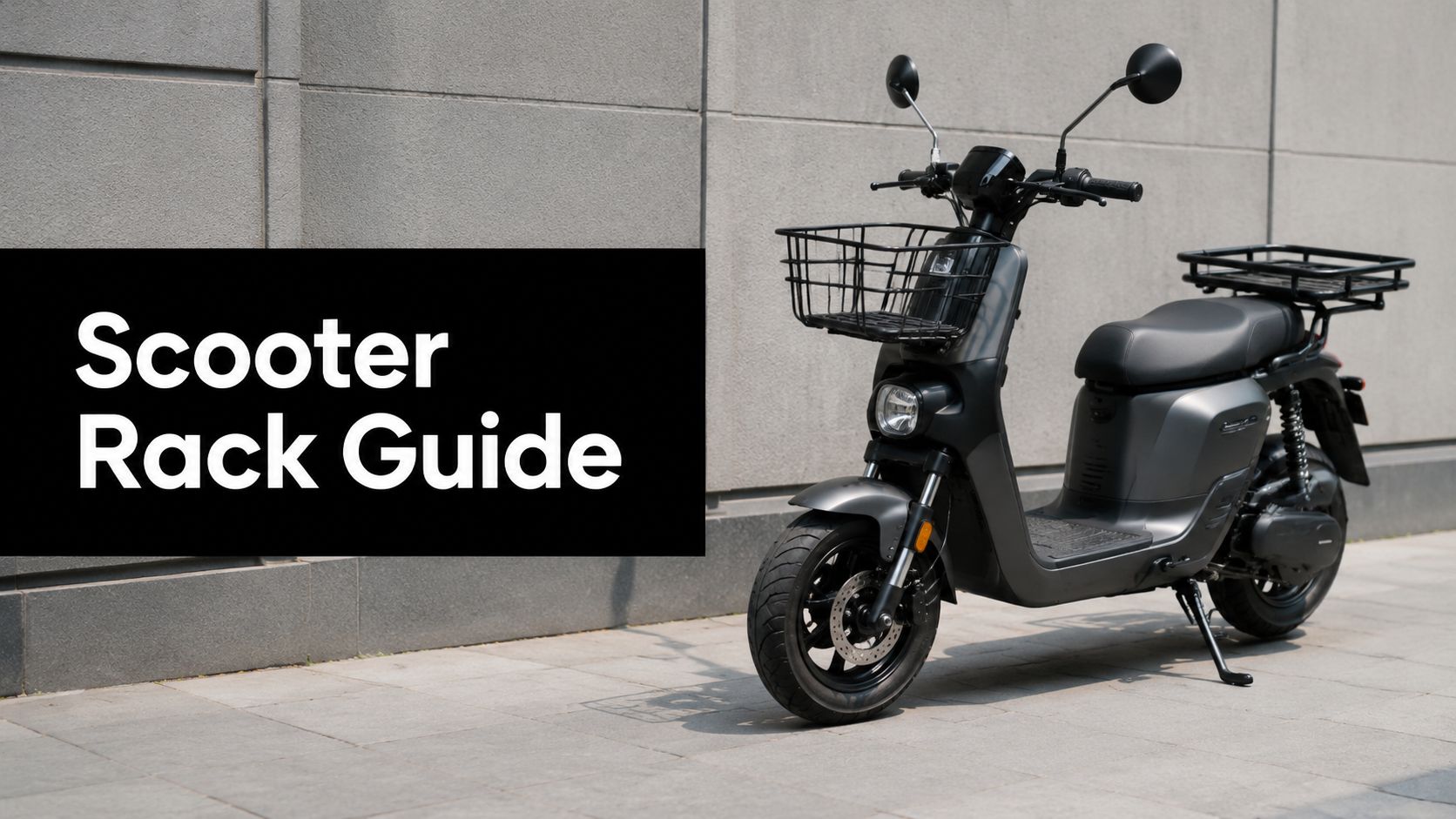
If you're reading this on a wet Tuesday morning after arriving at work with a sweaty back, a laptop shifting side to side, and a scooter that suddenly feels less like freedom and more like a balancing act, you're in the right place. A lot of UK and EU commuters buy an electric scooter for the easy bit of the trip, then realise the awkward part is carrying everything else.
That's where a proper rack for a scooter starts making sense. Not as a gimmick, and not as a random add-on from a marketplace listing with vague dimensions, but as a real upgrade that changes how useful your scooter is day to day. If you ride an AOVO, HITWAY, ISCOOTER, or another common commuter model, the details matter more than most guides admit. Folding stems, rear mudguard clearances, battery placement, and rack mounting points can make the difference between a solid setup and a rattly mistake.
More Than a Backpack The Case for a Scooter Rack
A heavy backpack is fine for a ten-minute walk. It's much less fine when you're standing on a scooter, braking in traffic, and feeling the load pull your shoulders backward every time the road surface changes. Delivery riders learn this quickly, but so do office commuters carrying a charger, lock, lunch, and waterproofs.

A rack turns the scooter from a last-mile toy into something closer to a practical urban machine. It gives awkward items a place to live, lowers the strain on your body, and usually makes short daily rides more comfortable. If you still need something on your person, slimmer options like everyday carry bags for busy lives pair much better with a rack than a full overloaded rucksack.
The wider market tells the same story. The electric scooter lift-and-carrier market was valued at US$157.96 billion in 2023 and projected to reach US$259.76 billion by 2033, at a 5.1% CAGR, according to Fact.MR's electric scooter lift-and-carrier market report. That report covers lifts and carriers rather than only personal cargo racks, but the signal is clear. Scooter handling, transport, and storage aren't niche problems anymore.
What a rack fixes in real commuting
For most riders, the gains are simple:
- Less body strain: Your shoulders and lower back stop doing the carrying.
- Better organisation: Lock, charger, rain layer, and groceries don't all fight for the same space.
- Cleaner riding position: You can keep both hands focused on steering and braking.
- More daily usefulness: A scooter with cargo capacity gets used for more trips.
A rack doesn't make a bad scooter into a cargo scooter. It just makes a good commuter far easier to live with.
If you're still deciding whether you need luggage at all, this guide to motor scooter luggage options is a useful place to compare racks with bags and mounted storage.
Finding the Right Rack for Your Ride
Not every rack solves the same problem. Some are meant for daily commuting. Some are only for home storage. Some are for carrying a scooter on a car. A lot of frustration comes from buying the right product category for the wrong job.
Scooter Rack Type Comparison
| Rack Type | Best For | Typical Capacity | Impact on Handling |
|---|---|---|---|
| Rear cargo rack | Commuting, groceries, lock, small work bag | Light to moderate loads, depending on scooter frame and rack rating | Noticeable change at the rear, especially under braking |
| Front basket or front-mounted tray | Quick-access items, lighter bags, short errands | Best kept light | More effect on steering feel |
| Wall or floor storage rack | Home, garage, hallway organisation | Storage only | No riding impact |
| Car transport rack or carrier | Taking a scooter on holiday or between cities | Depends on vehicle carrier design | No riding impact because it's for transport, not use |
Rear cargo rack for daily use
For most riders in London, Manchester, Berlin, Amsterdam, or Paris, the rear cargo rack is the one that makes the most sense. It keeps weight behind you, leaves the bars uncluttered, and works with cargo nets, straps, or pannier-style bags if the design allows it.
It's also the one people fit badly most often. On many commuter scooters, the rear section looks strong enough for a rack but may be a mix of mudguard bracket, light mount, and trim pieces. If the rack relies on flimsy plastic or a thin unsupported fender stay, skip it.
Front-mounted basket or tray
A front basket sounds convenient because you can see your stuff. Sometimes it is. For a light rain jacket, gloves, or a takeaway bag on a very short run, it can work well.
But front weight changes steering immediately. Even a modest load can make the bars feel slower or wobblier over rough paving. On scooters with narrow stems or folding hooks near the head tube, front-mounted hardware can also interfere with folding.
Workshop view: If a rider says, "I only want to carry a phone, charger, and lunch," I usually steer them toward a rear setup or a bag-and-hook setup before I suggest a front basket.
Storage racks for home and shared spaces
This is a different category, but it matters. Shared micromobility is now common enough that scooter parking is part of normal city planning. The U.S. Bureau of Transportation Statistics notes docked bikeshare systems in the United States grew from 68 in 2015 to 116 in 2019, then fell to 69 in 2020, while the League of American Bicyclists reports more than 200 cities now have a shared micromobility system and dockless e-scooters are the most common system type, as outlined in this BTS overview of bikeshare and e-scooters in the U.S..
That doesn't tell you which rack to buy for your hallway. It does explain why organised parking, shared storage, and mixed bike-scooter rack designs are getting more relevant in flats, offices, and courtyards.
Car racks and travel carriers
If your goal is taking a scooter to the coast, campsite, or another city, you're not looking for a commuter rack. You're looking for a vehicle carrier or lift system built around transport security. That means tie-down points, wheel support, and weight compatibility with the car setup.
Buyers often confuse these categories because both get called "scooter racks". For commuting, pick a rack that rides on the scooter. For holidays, pick a rack that rides on the car.
Will It Fit? Compatibility Weight Limits and Materials
A rack that almost fits is usually worse than no rack at all. It rattles, shifts under load, and leaves you chasing creaks that were never there before.

That catches out a lot of UK and EU commuters buying for popular scooters like AOVO and HITWAY. On the listing page, the rack looks universal. On the scooter, the rear mudguard sits too high, the bracket angle is wrong, or the folded stem lands right where the cargo platform needs to be. I see this most often on budget commuter models sold through general micromobility shops, where small frame differences matter more than the photos suggest.
Dero makes the same basic point in its note on e-scooter rack design. Scooter dimensions vary enough that broad compatibility claims need checking against the actual frame and clearances.
Start with the scooter, not the listing title
Check the scooter in front of you before comparing finishes, load ratings, or price.
Look for:
- Mounting points: Threaded holes near the rear frame, axle area, or deck support make life much easier.
- Wheel clearance: The rack needs enough space above the tyre for bumps and flex.
- Mudguard support: On many commuter scooters, the mudguard bracket is too flimsy to act as a load-bearing mount.
- Folding path: A folding scooter still needs to latch and carry properly after the rack is fitted.
- Rear visibility: Lights and reflectors need to stay visible from behind.
On many AOVO and HITWAY models, and similar scooters often stocked by Punk Ride, the trouble spot is the rear section. The frame shape can taper, the mudguard sits close to the tyre, and the rack struts may need spacers to clear plastic bodywork. If a product photo only shows a side view, assume nothing.
The measurement check that saves hassle
Use a tape measure. Product titles like "for electric scooter" are far less useful than four or five real dimensions taken from your own scooter.
Measure these points:
- Distance between mounting holes
- Available width above the rear wheel
- Tyre-to-mudguard clearance
- Height from deck or axle area to the intended rack platform
- Folded stem position, if the scooter folds onto the rear half
- Protruding parts such as lights, charging-port covers, locks, and suspension hardware
Measure the widest point that affects the install, not the neatest point. That matters in small flats, shared bike rooms, and train-station parking just as much as it does on the road. If you want a good comparison for how rear rack geometry and mounting support should line up, this eBike rear rack setup guide is useful before you buy brackets or start drilling anything.
Here's a useful fitting walkthrough before you buy or drill anything:
Weight limit isn't the same as scooter payload
Buyers often get misled by spec sheets.
Your scooter's payload rating covers the whole load on the machine. That includes the rider, clothing, lock, charger, shopping, and anything bolted to the scooter. The rack rating only covers what the rack itself may carry under ideal mounting conditions. If the rack says 15 kg but the rear of the scooter flexes with a small bag on it, the weak point is the scooter, not the rack.
A quick workshop check helps. Press down on the rear section by hand. If the mudguard bracket bends, the body panel shifts, or the mount twists slightly, keep cargo light and close to the frame. Dense loads like tools, drinks, or groceries expose bad mounts very quickly on rough UK streets and patched cycle lanes.
If the rear end flexes when you push down by hand, don't plan to carry dense cargo there.
Steel or aluminium
Material choice comes down to how and where the scooter is used.
Steel suits riders who carry heavier loads, lock the scooter outdoors, or ride on broken surfaces every day. It weighs more, but it usually copes better with vibration, small knocks, and the sort of abuse commuter scooters get from kerbs, paving joints, and hurried parking.
Aluminium keeps the scooter lighter and can work well for a light bag, waterproofs, or a lunch box. The catch is stiffness. A well-braced aluminium rack can be perfectly good. A thin one with long unsupported stays often starts vibrating, loosening bolts, or cracking around the joints long before the scooter itself wears out.
Finish matters too. In wet UK conditions and coastal EU towns, painted steel chips and starts rusting if the coating is poor. Aluminium does not rust the same way, but cheap hardware bolted to it can still corrode and seize. Stainless fasteners and decent washers are worth paying for.
A simple accessory option like a stand-and-hook set can help with light carrying or parking tasks. Punk Ride lists a scooter accessories set with a stand and hooks, which may suit riders who need basic utility rather than a full cargo rack.
A Practical Guide to Rack Installation
You find out whether a rack was fitted properly the first time you hit a pothole on the way to work. A good install stays quiet, keeps the load level, and does not shift when the road gets rough. A bad one starts with a faint rattle, then a loose bolt, then a rack sitting crooked over the wheel.
That matters on UK and EU commuter scooters because the roads are rarely kind. AOVO and HITWAY models sold through retailers such as Punk Ride often get used for short daily trips with shopping, waterproofs, chargers, or a lock on board. That kind of stop-start use shakes weak fittings loose faster than a quick ride around a car park.
Start with the parts and the scooter
Lay everything out before fitting anything. Check the rack, stays, bolts, washers, spacers, and brackets against the parts list. If the kit came with loose hardware and vague instructions, match bolt lengths and thread sizes first instead of guessing halfway through.
Use a clean floor or bench, and protect the deck and side panels with a cloth or mat.
The usual tools are simple:
- Allen keys or hex bits: Common on scooter fasteners.
- Spanners or sockets: Needed for locknuts and bracket hardware.
- Medium thread locker: Helps on bolts exposed to constant vibration.
- A careful hand or torque wrench: Small mounting bolts strip more easily than many riders expect.
- A torch: Handy for checking clearance around mudguards, lights, and folding hardware.
If you also work on utility bikes, the mounting logic is similar to a rear rack setup on an eBike. The rack needs support from more than one point, and the stays need to pull evenly from both sides.
Fit it loose first, then align it
Do not tighten the first bolt fully and force the rest into place. That is how racks end up twisted.
Offer the rack up to the scooter and look at the whole shape before you commit. Check tyre clearance, mudguard clearance, rear light visibility, and whether the charger port or folding latch stays accessible. On some commuter scooters, especially compact folding models, the rack can fit the frame but still interfere with the folding hook or rear lamp.
A clean install usually goes like this:
- Position the rack first: Hold it where it will sit and check clearances from the side and rear.
- Thread the lower mounts in loosely: Just enough to support the weight.
- Attach the upper stays or side struts: Adjust both sides until the platform sits level.
- Test the folding action: Fold and unfold the scooter before final tightening.
- Tighten side to side in small steps: This keeps the rack centred and reduces stress on one mount.
Step back and sight down the scooter from behind. If the rack leans even slightly, fix it now. A small misalignment becomes obvious once a bag is strapped on.
Check movement at the joints
Once the bolts are snug, grab the rack and try to move it up, down, side to side, and diagonally. You are looking for movement where the rack meets the scooter, not normal flex from the scooter frame or tyre.
Then repeat the check with a light test load. A rack can feel solid when empty and still shift once a few kilos are added. I see this a lot on budget kits with thin stays and soft washers. The bolts feel tight, but the hardware beds in under load and the rack settles crooked after the first ride.
If the rack only feels secure when every bolt is brutally tight, stop and correct the fit. The issue is usually poor alignment, the wrong spacer stack, or a bracket that does not match the scooter properly.
Common installation mistakes
These are the faults that keep coming back in workshop checks:
- Wrong bolt length: Too short means poor thread engagement. Too long can bottom out or contact hidden parts.
- Missing washers or spacers: The rack may clamp unevenly and work loose.
- Rack resting on the mudguard: A mudguard is not a load-bearing mount.
- Uneven stays: One side carries more load, which loosens fittings and twists the platform.
- Blocked rear light or reflector: Easy to miss in daylight.
- No thread locker on vibration-prone bolts: Fine for the first mile, less fine after a week of commuting.
After the first short ride, check every fastener again. New installs often settle slightly once the rack has seen real road vibration.
Safety Checks and Riding with Cargo
A fitted rack isn't automatically a safe one. The scooter rides differently once you add cargo, especially if the load sits high or behind the axle.

Safe Cargo Riding Checklist
Before every ride with cargo, check the obvious things and the easy-to-forget ones:
- Tighten bolts: Rack bolts can loosen gradually from vibration.
- Secure the load: Use straps or a cargo net so nothing shifts under braking.
- Balance the weight: Keep heavy items low and centred.
- Test the brakes: Extra weight changes stopping feel.
- Adjust your riding style: Brake earlier and take wider, calmer turns.
Accessibility matters here too. Some public rack systems now use spring-assist loading to make upper positions easier to use, and that's a smart reminder that your own setup should be something you can load and unload comfortably without strain, especially if strength or mobility is a factor, as discussed by Pedal Power Promoters in its bike and e-scooter rack overview.
How cargo changes the ride
Rear cargo can make the front end feel lighter. Front cargo can make steering feel heavier. In both cases, the scooter is less forgiving if you hit a pothole mid-corner or grab too much brake too suddenly.
Keep the ride style simple:
Smooth inputs beat fast reactions when you're carrying weight.
If you want a broader refresher on riding habits, braking, and visibility, these electric scooter safety tips are worth a look before you start carrying cargo daily.
Frequently Asked Questions About Scooter Racks
Will adding a rack void my warranty
Sometimes it can. It depends on the scooter brand, the part of the scooter being modified, and whether the rack installation involves drilling, changing structural fasteners, or overloading factory mounting points. Read the warranty terms for your exact model. If the rack uses existing mounting points and doesn't require frame modification, you're in a better position than if you've altered the chassis.
Are there legal limits on cargo in the UK or EU
Rules vary by country and local enforcement. The safest approach is practical rather than theoretical. Keep cargo secure, don't block lights or reflectors, don't interfere with steering or braking, and don't let the load extend in a way that creates a hazard. If the scooter becomes unstable or your view is reduced, the setup is wrong even if no one has measured it.
Can I use a bicycle rack on an electric scooter
Sometimes, but don't assume. Bicycle racks often expect frame eyelets, seat stays, or axle geometry that scooters do not have. Even when a bike rack can be adapted, folding clearance, mudguard shape, and deck layout often make the fit poor. Check mounting points and alignment first. If you need adapters to make everything barely line up, it's usually not the right rack.
Is a rear rack always better than a front basket
For most commuting scooters, yes. Rear racks usually affect steering less and feel more predictable. But a badly mounted rear rack is still worse than a well-mounted light front carrier. The answer depends on load type, scooter design, and how often you carry things.
What's the smartest first load to test with
Use something light but bulky, like a rolled jacket or empty shopping bag stuffed with towels. That lets you test straps, clearance, and handling without immediately stressing the rack or the scooter.
If you're comparing commuting setups for an AOVO, HITWAY, ISCOOTER, or another everyday model, Punk Ride LLC is one place to browse scooters and related accessories with UK and EU availability in mind. Start with compatibility first, choose the rack type that matches your actual trips, and keep the installation simple and solid.
Share:
RockShox Ebike Forks: Expert Guide
Electric Bike Parts: Your Ultimate UK & EU Guide