


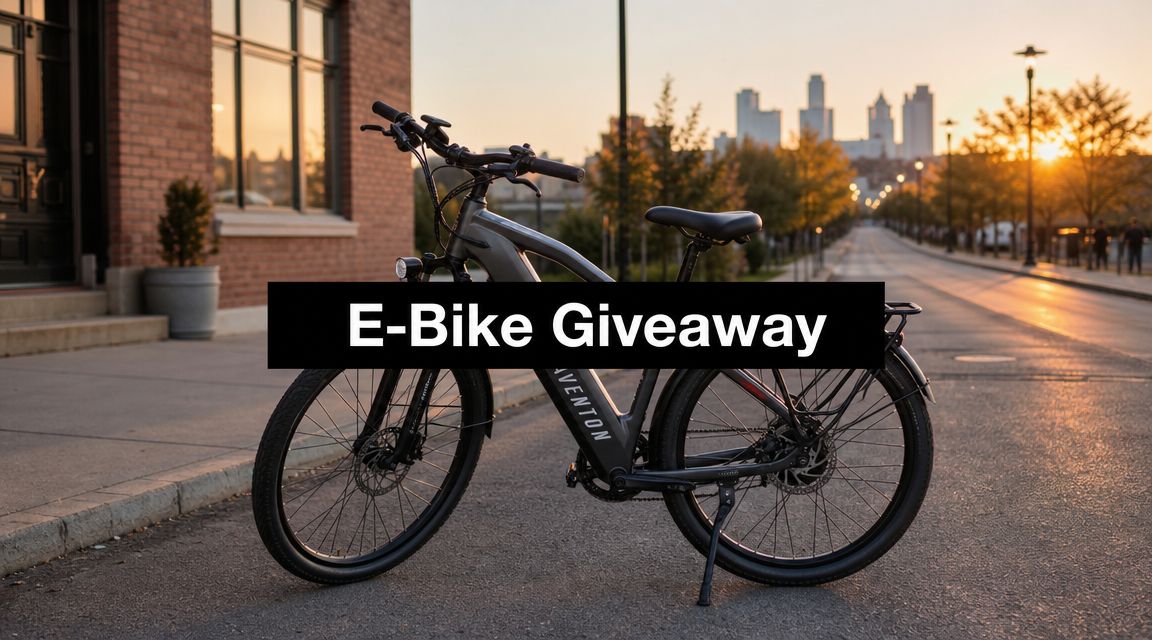
You're probably in the same spot most e-commerce teams hit sooner or later. Paid ads are getting expensive, organic reach is uneven, and someone suggests an electric bike giveaway because it feels like the kind of campaign people notice.
They're not wrong. A well-run giveaway can pull in fresh leads, wake up a sleepy list, and put your product in front of people who've been curious about e-bikes but haven't crossed the line into buying yet. The problem is that high-value prizes attract more than attention. They attract legal complexity, low-intent entrants, fake accounts, shipping headaches, and internal pressure to prove the campaign did more than generate a pile of vanity metrics.
That's where most brands get sloppy. They focus on entry volume and a glossy launch post, then realize too late that the wrong prize, the wrong mechanic, or vague rules can turn a promising campaign into a mess. If you're running in the US or Australia, that risk gets even sharper because “free” promotions around expensive products need cleaner execution than a simple merch draw.
Why Run an Electric Bike Giveaway Anyway
An electric bike giveaway works because it sits at the point where aspiration meets hesitation. Plenty of people want an e-bike. Fewer are ready to pay for one today. Your campaign gives them a reason to engage with the category now instead of later.
That's not just marketing theory. Public programs already show that reducing upfront cost changes behaviour. Connecticut's e-Bike Incentive Program offered a standard $500 voucher and a stackable Voucher+ worth an additional $750, bringing the total incentive to $1,250 for qualifying residents through participating brick-and-mortar retailers, with Round 2 closing on October 1, 2024 and award notifications scheduled by December 16, 2024, as detailed by Connecticut's e-bike incentive program. The same state reference matters in a bigger commercial context because the U.S. e-bike market was valued at $1.98 billion in 2022, with projected growth from 2023 to 2030 in that source.
That tells you something useful as an operator. A giveaway isn't only a flashy top-of-funnel stunt. It's a direct response to the biggest friction point in the category, which is upfront price.
What a giveaway actually does
When I look at giveaway performance, I don't treat it as a generic “awareness” play. I treat it as a purchase intent sorter. You quickly learn who wants a free thing, who wants an e-bike specifically, and who might buy from you later if the offer and follow-up are tight.
A good campaign can help you:
- Build a warmer email list by attracting people already interested in electric mobility
- Launch a new model without relying only on discounting
- Create social proof if entrants share commute goals, route ideas, or rider stories
- Test audience segments such as commuters, parents, campers, or first-time riders
Practical rule: If the giveaway doesn't connect to a product line you actually sell and follow up on, you're buying attention instead of building demand.
Why this isn't just a social media stunt
Brands often copy event promo tactics without adapting them to e-mobility. That's a mistake. E-bikes are higher consideration purchases. People ask harder questions about battery range, fit, storage, service, and whether ownership is worth it at all. If you need ideas on how live promotions and experiential campaigns create stronger recall than a basic prize post, this roundup of strategic brand activations for events is useful because it shows how context changes engagement.
That same buyer hesitation is why content around ownership questions tends to convert well before and after a giveaway. If someone is still weighing the category, practical guidance like whether electric bikes are worth it usually supports the campaign better than another hype post.
Laying the Groundwork Planning and Prize Selection
The fastest way to waste an electric bike giveaway is to start with the graphic instead of the plan. Before you announce anything, decide what success looks like and choose a prize that fits that outcome.

Start with one primary objective
Most giveaway failures come from trying to do five jobs at once. Pick one primary goal, then let the rest become secondary benefits.
Here's a simple way to frame it:
- Email list growth: Use a low-friction entry form and keep optional bonus actions separate
- Launch support for a specific bike: Build the campaign around one model and one clear buyer profile
- User-generated content: Ask for photo or story submissions only if your audience already knows the brand
- Retail or local activation: Tie the campaign to test rides, in-store visits, or event signups
If your audience is still early-stage, don't force high-effort creative entries. Many won't make a video review for a brand they met yesterday.
Prize value has to feel real
Operators get unrealistic. A weak incentive creates noise but not movement. PeopleForBikes' review of e-bike incentive program design notes that most e-bike incentives are in the $200 to $500 range, while typical new e-bikes often cost above $1,000. That gap matters because the incentive has to feel meaningful relative to the item's price.
For private giveaways, the same principle applies. If you promise a grand prize but then bury the winner in upgrade charges, accessory exclusions, or shipping surprises, trust drops fast.
The prize should match the buyer you want, not the warehouse item you need to move.
A commuter-focused campaign usually performs better with a practical, easy-to-understand city model than with an extreme off-road build that gets clicks but attracts the wrong crowd.
Match the bike to the audience
If you're choosing between models, think in buyer language instead of product language.
- Commuters respond to removable batteries, manageable frame design, and everyday usefulness
- Leisure riders care more about comfort, simplicity, and confidence
- Adventure buyers engage with suspension, fat tyres, and off-road aesthetics
- First-time riders need low intimidation and clear value
That's also the point where product education helps. If entrants need help understanding categories before they commit to your mailing list or your follow-up offer, practical explainers like how to choose an e-bike pull more weight than generic promo copy.
For physical event planning and branded prize support, this guide to memorable event giveaways is a useful contrast because it shows how lower-cost items support a tentpole prize instead of replacing it.
Choosing your giveaway entry mechanic
| Entry Method | Lead Quality | Effort to Enter | Viral Potential |
|---|---|---|---|
| Email signup on landing page | Medium to high if the prize is tightly targeted | Low | Low |
| Email signup plus quiz on riding needs | Higher because intent is easier to segment | Medium | Low |
| Social follow plus email entry | Medium | Low | Medium |
| Referral-based entry | Mixed, depends on anti-fraud controls | Medium | High |
| User-generated photo or video entry | High from existing community, low from cold traffic | High | Medium to high |
The mechanic should fit the audience stage. Cold traffic usually needs simplicity. Warm audiences can handle more work if they see a reason.
Navigating the Rules and Regulations
This is where brands either look professional or reckless. With an electric bike giveaway, the legal side isn't background admin. It shapes how you structure entry, how you promote the campaign, and how much trouble you avoid later.

The first legal trap
In the US and Australia, the core issue is simple. If chance decides the winner and entry requires payment or another form of consideration, you can drift into territory you do not want to be in. That's why serious brands build the promotion as a sweepstakes structure with clear no-purchase entry language where required and properly drafted terms.
The UK and EU are often more harmonised in practice, but they're not “easy mode.” You still need transparent eligibility, privacy disclosures, promotion terms, and a clear process for winner selection and contact.
What “free” must mean in practice
Many searches for an electric bike giveaway are really about one question. Is the bike free?
That's where sloppy copy creates complaints. California's former E-Bike Incentive Project offered up to $2,000 in point-of-sale incentives, but applicants had to meet income rules, receive approval before purchase, and buy eligible class 1 to 3 bikes from approved sellers, according to California's E-Bike Incentive Project details. The useful lesson for private brands is not to copy the policy model. It's to copy the transparency.
If the winner may need to cover taxes, delivery surcharges, assembly, accessories, or regional compliance items, say so before they enter.
A giveaway goes off the rails when the headline says “free bike” and the winner discovers a list of conditions after the draw.
For US campaigns, state-level legal context also matters because riding rules differ by class and location. If your winner could be in a market with specific operating restrictions, reference practical compliance information such as electric bike laws by state in your follow-up or onboarding.
Terms you should never leave vague
Your official rules need real detail, not template filler. At minimum, spell out:
- Eligibility: Age, geography, excluded regions, and whether employees or affiliates can enter
- Entry period: Start time, end time, and timezone
- Winner selection: Random draw, judging criteria, or hybrid method
- Prize description: Exact model, colour options if any, substitutions, and limits
- Notification process: How the winner is contacted and how long they have to respond
- Disqualification rights: Duplicate entries, fake accounts, bot activity, and rule breaches
- Data disclosures: What marketing consent the entrant is giving and how their data is stored
A short campaign page can still work, but the linked terms need to answer hard questions before support tickets do.
Launching and Promoting Your Giveaway
A giveaway doesn't fail because the prize is boring. It usually fails because the launch path is fragmented. People see the post, click through, hit a weak landing page, and drop off before entering.

Build one page that does one job
Your landing page should answer four things fast: what the prize is, who can enter, when it closes, and what happens after entry. Don't make visitors hunt through carousel slides or stitched-together social captions.
Keep the page tight:
- Headline: State the bike and the entry promise clearly
- Hero image or short video: Show the actual model, not a generic stock bike
- Form block above the fold: Name, email, country or region if needed
- Rule summary: Eligibility, closing date, and any key exclusions
- Follow-up incentive: A modest post-entry offer for non-winners can lift campaign value
The broader market gives you room to think bigger than one channel. ElectroIQ's e-bike market summary reports annual global e-bike sales of about 40.1 million units in 2023 and projects around 77.3 million by 2030, with one estimate in that source also projecting market revenue of about $51.78 billion by 2029. That matters because your giveaway is not fishing in a niche curiosity pond. It sits inside a category with large, active, growing demand.
Promotion works best in phases
Don't dump all your reach on day one.
A cleaner rollout looks like this:
-
Pre-launch tease
Show part of the bike, not the full campaign. Collect early interest if you have a list segment for e-bike shoppers. -
Launch burst
Email your house list, post across social channels, and direct all traffic to one landing page. - Mid-campaign refresh Publish FAQs, entrant reminders, rider use cases, and model-specific clips. At this point, weak campaigns usually go quiet.
-
Closing push
Remind people of the deadline and restate eligibility rules so you don't create false urgency in excluded regions.
A product clip can also keep the campaign from feeling abstract. Here's a simple example format that works well in the middle phase when attention starts to flatten.
Channel mix matters more than raw reach
Social is useful for attention, but email and retargeting usually do the heavy lifting on actual entries. Influencer collaborations can work if the creator already speaks to commuters, outdoor riders, or urban mobility buyers. Generic lifestyle creators often bring cheaper attention and weaker intent.
If you need a platform option with regional warehouse support for prize fulfilment, product variety, and category relevance, Punk Ride LLC is one practical option because it sells electric bikes and scooters and operates from Florida with warehouses in the UK and Germany. That matters when your giveaway needs a prize model that can be shipped from the right region without turning logistics into the main story.
Managing Entries and Preventing Fraud
High-value giveaways attract fraud fast. If you're giving away an e-bike, assume someone will try to game the entry system with duplicate emails, referral loops, fake social accounts, or automated submissions.
That's why fraud control isn't a cleanup task at the end. It belongs in the campaign design from the start.
What suspicious activity looks like
Most bad entries don't look dramatic. They look slightly off. A cluster of submissions arrives in a short window with near-identical naming patterns. Referral activity spikes from accounts that have no real engagement history. Email addresses look disposable or machine-generated. Shipping locations and account behaviour don't line up.
The easiest mistake is to treat all growth as good growth. It isn't. A bloated list full of fake or low-trust contacts hurts follow-up performance and can create unnecessary support work when you audit the winner pool.
Controls worth using
You don't need to make entry painful, but you do need friction in the right places.
- Email verification: Confirm the address before counting the entry
- Duplicate review rules: Flag repeated names, phone numbers, or addresses
- Referral caps: Limit bonus actions so one bad actor can't dominate
- Manual audits: Review shortlisted finalists before the draw
- Platform controls: Use giveaway tools that log timestamps and entry sources
Some fraud rings use phone verification workarounds and account farming to scale fake signups. If your team wants a better view of how those methods work from the operator side, this breakdown of legitimate SMS verification bypass methods is useful as threat awareness. Read it as a defensive resource, not as a how-to for campaigns.
Clean data beats a bigger spreadsheet. A smaller pool of real entrants is more valuable than a huge pile of junk leads you can't market to.
Your rules should also reserve the right to disqualify entries that appear automated, deceptive, or in breach of platform terms. If that language isn't in your terms, enforcement gets harder when someone challenges the outcome.
Fulfillment Winner Selection and Measuring Success
A giveaway doesn't end at winner selection. It ends when the bike is delivered, the campaign data is cleaned up, and you can tell whether the promotion created business value.

Choose the winner in a way you can defend
Your draw process should be random, documented, and repeatable. Save the eligible entry list, remove disqualified records before the draw, and keep a dated record of how the winner was selected. If the campaign was judged instead of random, keep the scoring criteria and judges' notes.
Then contact the winner exactly as your rules say you will. Don't improvise. Expensive prizes create more scrutiny than a T-shirt bundle or store credit campaign.
For fulfilment, confirm:
- Identity and eligibility before shipping
- Delivery region compatibility with the prize model
- Any accessories or assembly requirements
- Who pays any stated extra costs, if your rules included them
- What happens if the winner doesn't respond in time
ROI comes from behaviour, not applause
This is the part many teams skip because it's less exciting than the launch post. But it's the only part that tells you whether to run the campaign again.
The most useful benchmark in the source material comes from a controlled voucher study. North Carolina's 2025 e-bike incentive evaluation found that more than 82% of voucher winners bought an e-bike, versus fewer than 8% in the control group, using a design with randomized allocation, a fixed redemption window, participating bike shops, panel surveys, OpenPATH travel data, and interviews, as reported in the North Carolina e-bike incentive evaluation. The key lesson isn't that every private giveaway will reproduce that outcome. It's that structured incentives can move real purchase behaviour, and the design of the offer matters.
That's why I care less about raw entries and more about signals like:
- Qualified lead rate: How many entrants fit your target customer profile
- Post-campaign email engagement: Who stayed subscribed and clicked later offers
- Attributed sales lift: Orders from entrants and near-entrants during the follow-up window
- Content reuse value: Whether the campaign produced usable creative, reviews, or community proof
- Operational cost per useful lead: Prize, ads, platform, support, and shipping compared with downstream revenue opportunity
Don't ask whether the giveaway “went viral.” Ask whether it lowered customer acquisition cost, improved list quality, or accelerated product consideration.
The strongest electric bike giveaway campaigns behave less like raffles and more like acquisition systems. The winner gets a bike. Everyone else should move one step closer to buying, visiting a retailer, booking a test ride, or staying engaged with your brand long enough to matter.
If you're planning an electric bike giveaway and want a prize that fits real riders in the US, UK, or EU, Punk Ride LLC is worth a look for category-relevant bikes and scooters, plus regional fulfilment support through its Florida, UK, and Germany operations.
Share:
Ebike Water Bottle Holder: Your UK & EU Fit Guide for 2026
The Longest Range Electric Bike: A 2026 UK & EU Guide
1 comment
If I won I would sponsor this company on my Instagram and also pay off my eviction.