


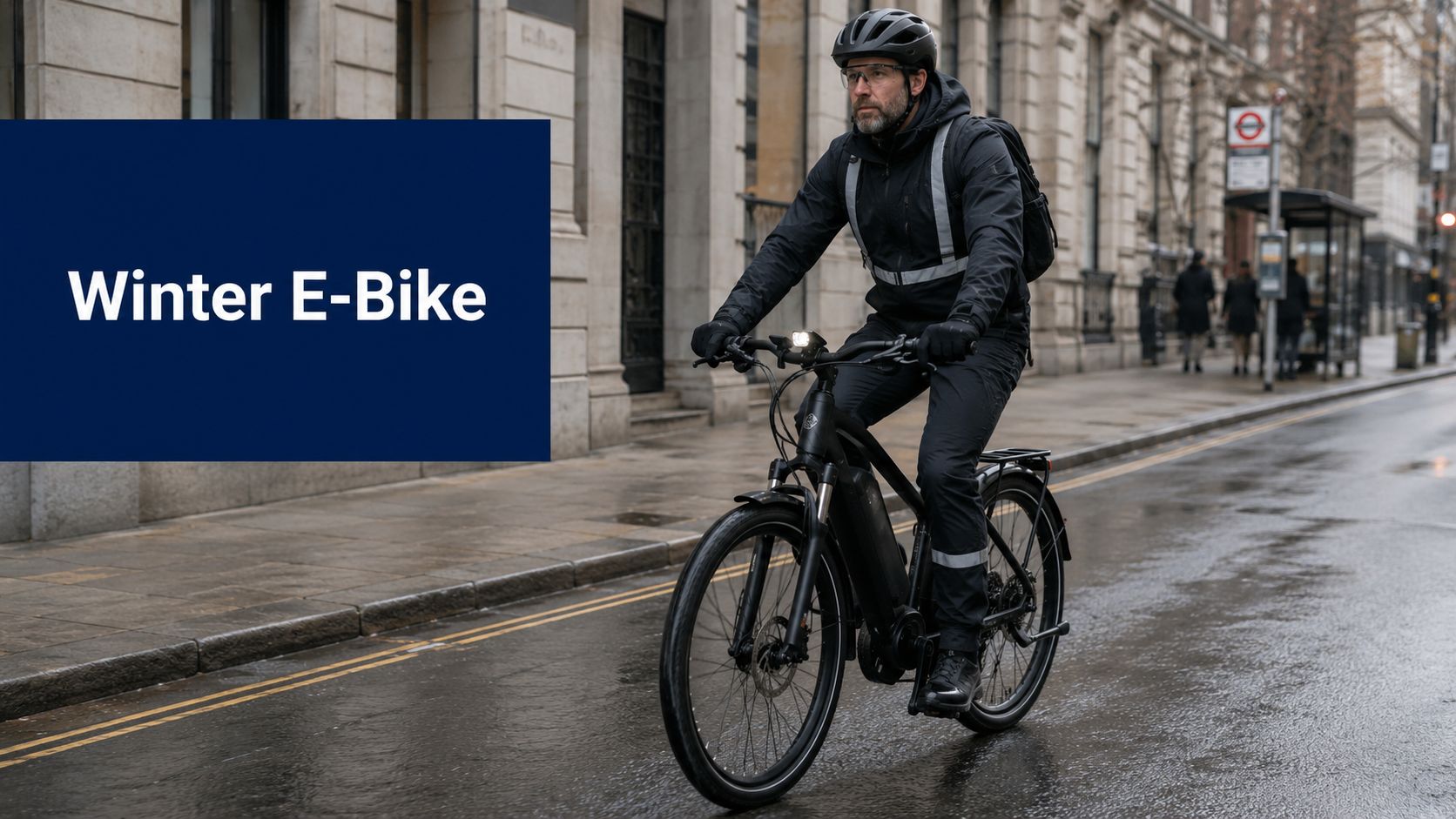
You look outside at 7:20am and the road is shining in that unpleasant winter way. Not snow. Worse, in some ways. Wet tarmac, greasy painted lines, a bike lane full of leaf mulch, and a temperature cold enough to make you wonder whether the e-bike is going to feel flat before you even reach the office.
That's the winter e-bike question in the UK and much of Europe. Not “can it handle a mountain blizzard?” More often it's “can I trust this thing every weekday from November to March when it's damp, dark, salty, and miserable?”
The short answer is yes, but only if you stop treating winter like summer with a thicker jacket. Reliable winter commuting comes from setup, battery habits, riding technique, and a boring little post-ride routine that saves the bike from salt and neglect. Get those right and a winter e bike stops feeling fragile. It becomes one of the most dependable ways to get to work when trains are delayed, buses are packed, and driving means sitting in cold traffic.
Embracing Your Winter E-Bike Commute
A lot of riders give up on winter too early. They get one horrible ride in sideways rain, the battery feels weaker, the drivetrain starts sounding gritty, and the bike gets parked until spring. That's understandable. Winter commuting can feel like a chore if the bike isn't prepared for it.
But in UK and EU conditions, the worst enemy usually isn't deep snow. It's repetition. Day after day of spray, road grime, darkness, and salt. A winter e bike that works well is one that copes with those repeated annoyances without turning every trip into a maintenance drama.
I've always found the biggest shift is mental. Stop asking whether winter riding will feel pleasant every day. Some days it won't. Ask whether it's still practical, faster than the alternatives, and dependable enough to build your routine around. That's a much better standard, and e-bikes can absolutely meet it.
Practical rule: Winter commuting gets easier when the bike is ready before the bad weather arrives, not after the first miserable ride.
There's also a freedom to sticking with it. You leave when you want, you don't wait on a platform in the rain, and short urban trips still make sense even when the weather is grim. The trick is to treat winter as its own riding season with its own rules.
Three things matter most:
- Traction first: Predictable tyres and sensible pressure make more difference than extra power.
- Battery discipline: Cold changes range. You can manage it, but you can't ignore it.
- Routine maintenance: Salt will chew through an otherwise good bike if you let it sit.
Once those are sorted, the ride itself becomes much less dramatic. Cold and wet still exist, but they stop being deal-breakers.
Winter-Proofing Your E-Bike for UK Conditions
The bike needs a proper winter setup. Not an expensive overhaul. Just the bits that matter when roads are damp, lanes are filthy, and daylight disappears before you've finished work.
A good visual checklist helps before you start buying parts.

Start with tyres and pressure
For most UK and EU commuters, winter tyre choice is about wet grip, broken road surfaces, occasional frost, and surprise patches of slush. It isn't always about full snow capability. Wider, grippier tyres usually help more than chasing outright speed.
If you regularly ride untreated lanes, canal paths, or roads that hold ice in shaded sections, studded tyres can make sense. If your commute is mostly wet tarmac with the odd frosty morning, a tyre with a more confident tread pattern is often the better compromise.
Pressure matters more than many riders realise. Winter tyre guidance notes that riders often lower pressure by 10% to 20% for better grip on snow and ice, with 20 to 25 PSI cited for mixed snow and slush use, while some fat tyre riders go as low as 8 PSI in deeper winter conditions. On a normal urban commuter bike, that usually means moving toward the lower end of the manufacturer's range rather than guessing.
Here's a simpler way to view it:
| Setup | Best fit | What to watch |
|---|---|---|
| Standard commuter tyre | Cleared roads, wet city riding | Can feel skittish on leaves and slush |
| Wider winter tread | Mixed urban winter surfaces | Slightly slower rolling |
| Studded tyre | Frequent ice or untreated roads | Noisier and draggier on dry tarmac |
| Fat tyre | Loose snow, rough winter paths | Extra weight and bulk in city use |
Keep spray and corrosion under control
Full-length mudguards are close to essential. Short sporty fenders don't cut it in winter. You want proper coverage that keeps slush off your feet, bottom bracket, battery area, and drivetrain. They also make the bike behind you hate you less.
Then deal with the wet. Check connector covers, charging ports, and cable entry points. If your bike's weather resistance is still a mystery, it's worth reading this guide on whether e-bikes are waterproof. It's a useful reminder that water resistance doesn't mean you should ignore winter grime.
For exposed metal parts, think like a car owner in a rough climate. The same logic behind harsh winter car care applies here. Salt isn't dramatic at first. It just keeps sitting there and gradually ruins things.
Sort visibility before the clocks change
Commuters often focus on seeing the road and forget the other half of the job, being seen early enough by drivers. Winter means dark mornings, dark evenings, and flat grey afternoons where you blend into the background.
Prioritise these upgrades:
- Front light with real reach: You need enough beam to read wet road texture, potholes, and debris, not just mark your position.
- Rear light that cuts through spray: A weak rear light disappears in road mist.
- Reflective touchpoints: Ankles, bag straps, helmet details, and wheel reflectives catch attention from odd angles.
- Wet lube on the chain: It stays put better in cold rain and road spray than a dry lube.
Later in the season, it helps to refresh your setup instead of waiting for a failure. If a light mount is flimsy in October, it will be useless by January.
Before changing parts, it also helps to watch a practical winter prep walk-through and compare it to your own bike:
Winning the Winter E-Bike Battery Battle
Winter commuting demands serious consideration. The battery decides whether your ride feels normal, sluggish, or unreliable. You can't bully a cold lithium-ion battery into acting like it's a warm July morning.
The most useful benchmark comes from this cold-weather battery explanation. A lithium-ion e-bike battery can lose about 20% of its capacity at 0°C (32°F), and losses can reach 50% or more below -10°C (14°F). In practical terms, a 50-mile ride can fall to roughly 25 miles in very cold conditions.
That doesn't mean your commute becomes impossible. It means winter range needs a buffer.

What cold feels like on the road
On a winter e bike, cold battery behaviour usually shows up as softer acceleration, earlier battery bar drop, and less confidence on longer rides home. Riders often panic because the bike feels “wrong,” but some of that change is normal cold-weather chemistry.
Where people get caught out is assuming the battery will deliver the same margin it did in autumn. If your usual ride already uses a large chunk of the battery, winter can push it from manageable to annoying very quickly.
Cold weather changes the reliability calculation. The bike may still complete the ride, but the safety margin gets smaller.
That's why removable batteries matter so much in real commuting. If you can bring the battery indoors at home and at work, winter ownership gets easier.
The habits that actually help
You don't need laboratory tricks. You need a routine.
- Store the battery indoors: Don't leave it on the bike overnight in a shed or on the rack outside the flat.
- Charge warm, not cold: Let the battery come up to indoor temperature before charging.
- Start the ride calmly: Use lower assist at the beginning rather than demanding maximum power straight away.
- Plan for a buffer: In winter, don't treat the claimed range as your commute budget.
- Use insulation if practical: A battery cover can help slow the chill during the ride.
One winter riding guide also notes that battery efficiency can fall by 20% to 40% in cold weather and recommends pre-warming the battery, using lower assist levels, and planning shorter charge intervals every 30 to 40 miles. The same guide advises storing batteries indoors at about 50 to 70°F (10 to 21°C) during downtime and keeping them at 50% to 70% charge for storage, which you can read in more detail in this piece on electric bike battery storage.
A better way to judge winter range
Don't ask, “What's the official range?” Ask:
- How far is my round trip in bad weather?
- Can I charge at work or carry a spare?
- What happens if I need a diversion or headwind slows things down?
That's the everyday reliability test. If your bike passes that, winter commuting is realistic. If it only just scrapes by in summer, winter will expose it.
Dressing for the Ride Not Just the Temperature
Most bad winter commutes start with bad clothing choices. Riders either underdress and suffer, or they wrap themselves like they're standing still for two hours. Then they sweat on the first climb, cool off at the lights, and spend the rest of the ride damp and cold.
Dress for effort, not just the forecast.
Build around layers that move moisture
The basic system works because each layer has a job. The base layer moves sweat away from your skin. The middle layer traps warmth. The outer shell blocks rain and wind while still letting some heat escape.
That matters more on an e-bike than people think. Even with motor assist, you still generate heat, especially on stop-start city routes or gentle climbs. If your outer layer doesn't breathe at all, you end up wet from the inside.
A practical winter setup often looks like this:
- Base layer: Close-fitting and sweat-wicking
- Mid layer: Light fleece or insulated jersey
- Outer shell: Waterproof or highly water-resistant jacket with venting
- Lower half: Thermal tights, softshell trousers, or overtrousers depending on the route
- Hands and feet: Waterproof gloves and overshoes make a huge difference

Small clothing choices that change the ride
Hands, ears, and feet usually fail first. A thin thermal cap or skull cap under the helmet stops a lot of misery. Gloves need enough insulation to keep fingers working, but they also need grip and dexterity for braking and controls. Wet feet can ruin a commute even if the rest of you feels fine.
For urban riding, I'd take practical weatherproof kit over bulky “extreme winter” gear every time. The UK version of winter is often damp cold rather than alpine cold. Flexible layers are more useful than one massive jacket.
Daily commuter note: If you arrive slightly cool for the first five minutes, you're probably dressed about right. If you're already warm before moving, you may be overdressed.
Visibility is part of clothing now
Winter visibility isn't just a bike-light problem. Dark jackets, spray, and poor afternoon light make riders disappear into the road scene. That's why your clothing should do some of the visibility work too.
Focus on contrast and movement:
- Reflective details on moving parts: Ankles and knees catch attention well.
- Bright waterproof outerwear: Especially helpful in daytime gloom.
- Reflective gloves or cuffs: Drivers often notice hand signals late in winter conditions.
- Bag covers and helmet details: Small reflective points help from side angles.
You don't need to look like a roadworks sign. But you do need to stand out from wet tarmac, parked cars, and dull skies.
Mastering Slick Streets and Salty Roads
A winter e bike feels safest when you ride it smoothly and give yourself time. Most slips happen because the surface changes faster than the rider's inputs do. Wet paint, metal covers, black ice, and compressed slush all punish abrupt braking and sharp steering.
That's why winter control comes down to calm handling, not raw power. Guidance on riding mixed winter surfaces makes the point well. Predictable handling from tyre choice and maintenance may matter more for safety than outright motor power.

Three winter road moments worth practising mentally
The first is the shiny bend with wet leaves. You turn in, the front starts to feel vague, and your instinct is to tighten up. Don't. Keep your body relaxed, reduce lean, and avoid sudden braking mid-corner. If you can, straighten the bike before slowing more.
The second is the slushy bike lane. This is common on partially cleared routes where the carriageway is wet but the lane keeps hold of mush and grit. The bike can feel draggy and twitchy at the same time. Hold a steady line, look ahead, and don't fight every little movement through the bars.
The third is the surprise icy patch near kerbs or side roads. Black ice often shows up where water has run across the road and refrozen in shade. If you spot it late, the best response is usually to stay as upright as possible and avoid big inputs. Braking hard while turning is what usually causes the slide.
What changes in winter technique
You don't need advanced skills. You need earlier decisions.
- Brake sooner: Start slowing while the bike is upright.
- Open your turns: Wider, gentler lines are more stable than tight urban swoops.
- Scan farther ahead: Winter hazards reward early eyes.
- Stay light on the controls: Death-gripping the bars makes the bike harder to manage.
- Use assist thoughtfully: Sudden power on a slick surface can upset the rear tyre.
A lot of newer riders assume a more powerful bike solves winter traction. It usually doesn't. More torque can just make traction mistakes happen faster if the surface is poor.
If the lane looks polished, greasy, or patchy, ride as if grip is limited until the surface proves otherwise.
Salt changes the ride too
Salty roads aren't just a maintenance issue. They can also leave that strange gritty film on surfaces after traffic has churned everything up. Grip can feel inconsistent, especially at junctions and roundabouts where oil, dirt, and road treatment mix together.
That's another reason to value predictability over speed. The rider who gets through winter well is rarely the fastest one. It's the one who reads surfaces early and makes boring choices.
The Post-Ride Ritual That Saves Your Bike
If you ride through a UK winter and skip the clean-down, the bike will tell you. First the chain sounds rough. Then bolts start looking furry. Then the drivetrain feels expensive.
The fix is not a long workshop session every evening. It's a short routine that stops salt from sitting on the bike for days.
The five-minute winter routine
When you get home from a filthy ride, do this before the grime dries hard:
- Wipe the frame and fork down Focus on areas catching spray from the front wheel and road mist from the rear.
- Clean around the drivetrain Chain, cassette, jockey wheels, and chainring collect the worst of the winter paste.
- Dry exposed metal Don't leave water sitting on bolts, rotors, or rack hardware.
- Re-lube the chain when needed Use a wet-condition lube, then wipe off the excess so it doesn't turn into grit glue.
- Check tyres and brake feel Winter potholes, debris, and grit can create problems unnoticed.
Pressure washers are a bad idea here. Winter bikes already deal with enough water. Forcing more into bearings and electrical areas is not helpful.
Battery storage when you're riding less
If the bike is going to sit for a bit, battery care matters as much as cleaning. A winter maintenance guide advises storing e-bike batteries indoors at about 50 to 70°F (10 to 21°C) and keeping them at 50% to 70% charge during downtime to reduce capacity loss and avoid accelerated degradation, as outlined in this practical guide to electric bike repair.
For everyday riders, the useful part is simple:
| Situation | Best habit |
|---|---|
| Daily winter commuting | Bring the battery indoors after the ride |
| Bike parked for several days | Store the battery inside, not in a freezing shed |
| Taking a longer break | Leave it partially charged, not full and not empty |
What actually wears out in winter
The parts that suffer first are usually the unglamorous ones. Chain, cassette, brake pads, cables, fasteners, and any exposed steel all take a beating. Riders often blame “winter” generally when the actual issue is old salt and neglected grime sitting in place.
That's why the post-ride ritual matters. It keeps tomorrow's commute simple and protects the bike for the rest of the season. A winter e bike can be dependable, but only if you finish the job after the ride, not just during it.
If you're ready to keep riding through the worst months instead of parking up until spring, Punk Ride LLC is a solid place to explore practical electric mobility options, parts, and advice for everyday commuting. Whether you're comparing e-bikes for city use or looking for gear that makes rough-weather travel easier, they've built their range around real urban riding.
Share:
E2 Error Code: Quick Fixes for E-Bikes & Scooters
Electric Bike Hunting 2026: Your Ultimate Guide & Gear