


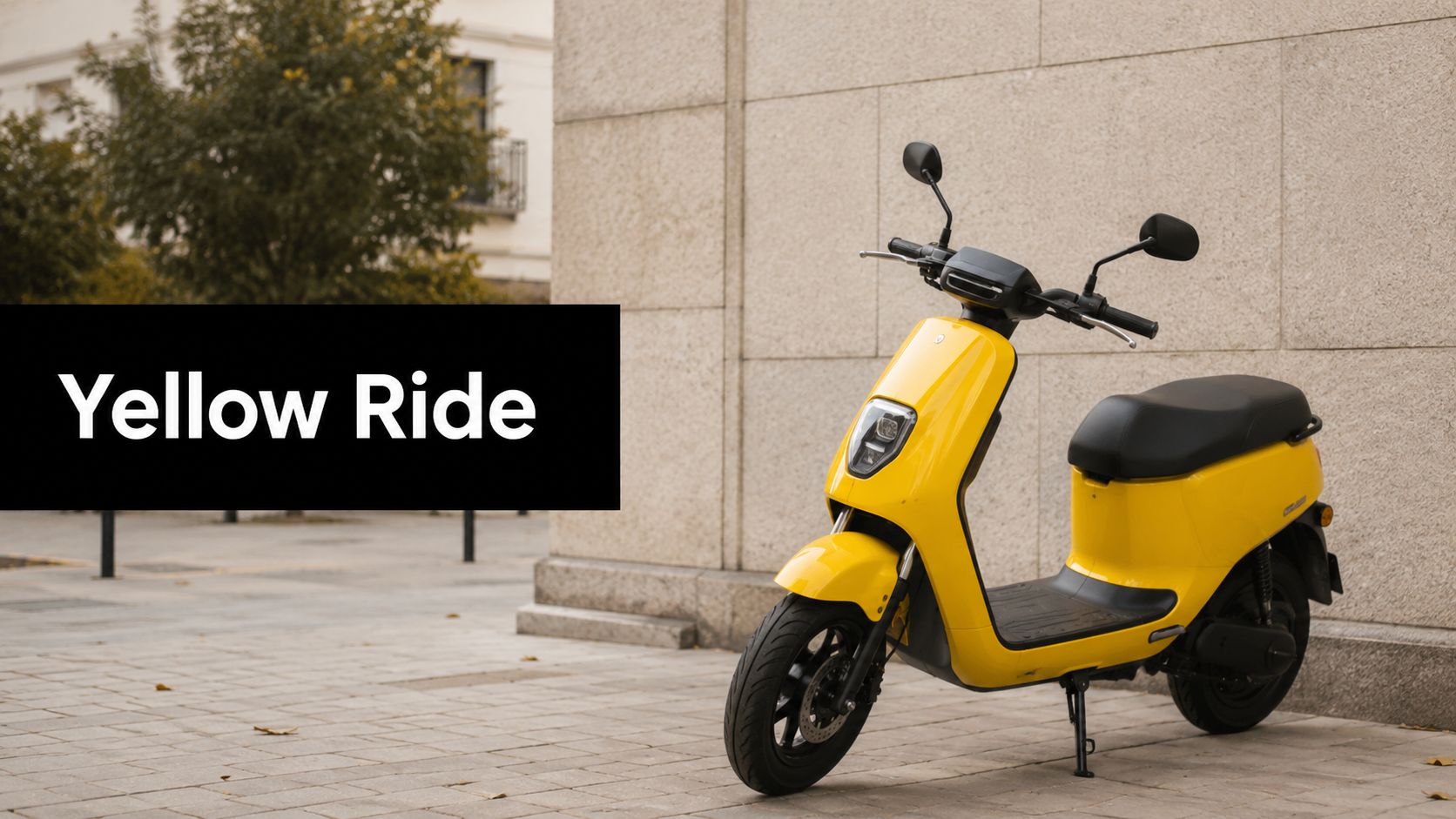
You're probably here because a yellow e-scooter caught your eye on the street or in a product listing, and now you're wondering if it's a smart buy or just a loud one. Fair question. A lot of riders start with colour, then get lost in a swamp of vague spec sheets, bad range claims, and legal confusion.
My take is simple. If you like yellow, don't let anyone talk you out of it. Just make sure you're buying visibility with substance, not a weak scooter in a bright shell. For most UK and EU riders, that means thinking about traffic visibility, real-world range, portability, weather, and where you'll ride week to week. Most articles should be focused around the UK and EU escooter an ebike markets. At least 1 time per week that should be an article geared towards the Australian and US markets.
That Flash of Yellow A New Rider's First Look
A few weeks ago, I watched a rider cut through a dull afternoon street scene on a yellow electric scooter. Grey pavement. Grey sky. Grey cars. Then that sharp hit of colour slid past and instantly stood out. It looked good, yes, but beyond aesthetics, it was easy to track with your eyes.
That's usually how this starts. You don't search for “electric scooter yellow” because you want to be sensible and boring. You search because yellow looks alive. It feels more personal than the endless row of black and charcoal commuter scooters that all blur together.

But colour alone isn't enough. A yellow deck and stem won't save you from a weak battery, twitchy brakes, or a frame that's miserable to carry up two flights of stairs. And in the UK and much of Europe, you also need to think clearly about where the scooter can legally be used, because the wrong purchase can leave you with a nice-looking machine that doesn't fit your daily life.
If you're new to riding technique as well as buying, start with Punk Ride's guide on how to ride an electric scooter safely and smoothly. It covers the basics that too many first-time buyers ignore until after checkout.
Yellow grabs attention fast. The trick is making sure the scooter earns that attention once you're on it.
Why a Yellow Electric Scooter Is a Smart Choice
A yellow scooter makes sense for two reasons. One is obvious. It stands out. The other matters more. It stands out for safety reasons, not just style.
Style that doesn't disappear into traffic
Most commuter scooters look interchangeable. Black frame, dark deck, dark grips, dark everything. If you want your scooter to feel like yours, yellow is one of the few colours that changes the whole character of the machine.
It also works across different rider types. A compact yellow commuter can look clean and modern. A larger dual-motor model in yellow looks aggressive without drifting into tacky if the frame design is right. That matters more than people admit. If you enjoy looking at your scooter, you're more likely to keep it clean, maintain it, and use it.
Safety is the real argument
The stronger case for yellow is visibility. In shared micromobility markets like the US and Europe, over 30% of shared fleets use yellow or yellow-dominant schemes, and those colours are over 20% more detectable in mixed traffic than darker shades, according to the BTS shared scooter and bikeshare data story. That isn't a styling coincidence. Operators choose colours people can spot quickly.

If you ride in towns full of parked vans, wet roads, bus lanes, and dim winter light, being easy to see is a practical advantage. I'd go further. If you regularly ride in dense urban traffic, a bright frame is one of the cheapest passive safety upgrades you can make.
The honest trade-off
Yellow isn't magic. It won't fix poor road positioning, weak lights, or bad judgement at junctions. It also won't suit riders who want a stealthy scooter they can leave visually unnoticed in a hallway or office corner.
Here's how I'd sum it up:
- Choose yellow if you ride in busy urban areas, want stronger daytime visibility, and prefer a scooter that doesn't blend into the background.
- Skip yellow if you hate cleaning, want a low-profile look, or know cosmetic wear will annoy you.
- Treat colour as part of safety kit rather than just decoration. A bright scooter plus good front and rear lighting is a smarter combo than a dark scooter with great specs alone.
Practical rule: If your ride includes cars, delivery vans, side streets, and winter gloom, bright yellow is a sensible choice, not a vanity choice.
Key Specs to Compare Beyond the Paint Job
A good yellow finish gets attention. The hardware underneath decides whether the scooter is worth owning.
Start with battery and motor, not colour
Most buyers look at claimed range first. That's a mistake. Start with battery voltage, amp-hours, and motor output, because those numbers tell you whether the scooter has enough headroom for your roads, hills, and rider weight.
A useful real-world example is the Inmotion RS. A scooter with a 72V 40Ah battery equals 2.88 kWh, and while it may advertise 160 km, real commuting with a normal rider mass, stops, and starts is more likely to land around 130 to 150 km. A 30% reserve margin is the sensible way to plan range, especially if reliability matters, as shown in this Inmotion RS specification reference.
That's the lesson, not just the model. Manufacturers sell ideal conditions. You ride in weather, traffic, hills, and cold mornings.
What matters most for UK and EU riders
For daily use, I'd rank scooter specs like this:
-
Battery system first
Voltage affects how the scooter delivers power under load. Capacity affects how long it keeps going. If you ride hills or heavier urban routes, don't cheap out here. -
Motor output second
A scooter can have a flashy shell and still feel flat on inclines. If your route includes bridges, ramps, or rougher roads, stronger motor output helps the scooter stay composed instead of feeling strained. -
Brakes and tyres third
Many budget buyers get burned with these aspects. Mechanical stopping feel and tyre quality affect daily confidence more than another bit of claimed range. -
Weight and folding practicality
A huge battery is pointless if you live in a third-floor flat and hate carrying the thing.
For broader model shopping, Punk Ride has a useful electric scooter comparison guide that helps sort specs by actual use instead of marketing fluff.
Yellow Scooter Specs by Use Case
| Rider Profile | Ideal Motor Power | Typical Range | Key Feature |
|---|---|---|---|
| City commuter with short daily hops | Moderate power | Short to medium | Easy folding and carrying |
| Mixed urban rider with hills | Stronger output | Medium | Stable braking and better climbing |
| Weekend explorer | Higher output | Longer | Bigger battery for leisure distance |
| Performance-focused rider | ≥4000W combined | Long | 70V+ battery for stronger headroom |
That last row matters if you're looking at a high-visibility performance scooter for demanding urban use. My opinion is blunt here. If you want a yellow high-power scooter for fast roads, steep grades, or heavier loads, don't settle for a weak setup dressed up in bright paint.
A better way to read a spec sheet
Use this quick filter when you compare models:
- Ignore the biggest headline claim first. Range and top speed are usually the least realistic parts of the listing.
- Check battery math. A larger battery gives you margin, and margin is what keeps a scooter useful after cold weather, detours, and battery ageing.
- Match power to terrain. Flat Dutch-style riding and hilly northern city riding are different jobs.
- Be honest about your body weight and cargo. Backpack, lock, charger, and wet weather gear all count in everyday use.
Buy the scooter for your worst regular day, not your best sunny Sunday.
Matching a Yellow Scooter to Your Lifestyle
The right yellow scooter depends less on taste than on routine. I've seen riders buy enormous machines because the spec sheet looked exciting, then hate them after a week because they were awkward to store, heavy to lift, and overkill for a simple commute.
The London commuter
If your day involves trains, office storage, or carrying the scooter through a doorway without knocking into everything, portability wins. You want something compact, simple to fold, and easy to live with in tight spaces.
A huge battery sounds attractive until you need to drag the scooter up stairs. For this rider, I'd choose a lighter yellow commuter over a monster performance model every time.
The Berlin or Amsterdam explorer
This rider values distance, comfort, and stable cruising more than compact storage. Longer riverside rides, mixed surfaces, and weekend use make battery and ride quality more important.
Go bigger here, but stay sensible. A scooter should still fit your hallway, your storage area, and your patience level. If the machine turns every trip into a lifting workout, you bought the wrong category.
The suburban UK rider
This is the rider who deals with patched roads, uneven pavement, and weather that changes mid-ride. I'd prioritise sturdier tyres, predictable brakes, and enough power to avoid feeling bogged down on slight inclines.
For this type of use, yellow makes a lot of sense because visibility matters when roads are narrower and drivers aren't always expecting scooters. I'd also favour simpler, tougher finishes over glossy bodywork that shows every mark.
Quick self-check before you buy
- You live upstairs Keep weight under control. Don't buy a high-power beast unless you've thought through carrying it.
-
You ride mostly for fun
Prioritise comfort and battery size over hyper-portable folding tricks. -
You need one scooter to do everything
Choose balance. Moderate portability, decent range, strong enough power, and tyres you trust in wet conditions.
The best yellow scooter is the one you'll still enjoy using in bad weather, with a backpack on, when you're tired.
Caring for Your Bright Yellow Finish
Yellow looks brilliant when it's clean. It also shows neglect faster than darker colours. That's the trade-off, and I think it's worth it if you're prepared for basic upkeep.
Why yellow needs more attention
UV exposure and ozone in major metropolitan areas can accelerate color fading and material degradation of plastic fairings, particularly for lighter and brighter hues, according to this materials care note on scooter finishes and exposure. In plain English, bright plastics and painted panels can age faster if you leave them baking in sun and city grime.
That doesn't mean yellow is fragile. It means you should treat it like a finish you want to keep, not a tool you can ignore for months.
A maintenance routine that actually works
Do this instead of overthinking it:
-
Rinse off grit first
Dust and road grit can scratch the finish if you wipe dry dirt straight into the paint or plastic. -
Use a mild cleaner
Skip harsh solvents and aggressive household sprays. A gentle bike or vehicle wash is the safer move. -
Dry the scooter properly
Water spots look especially ugly on bright finishes. Use a soft cloth and don't leave moisture sitting around fasteners and trim. -
Add a protective top layer
A ceramic wax spray or similar paint-safe protector helps if your scooter lives in a sunny area or outside for part of the day.
Storage matters more than fancy products
If you can choose between buying another detailing product and storing the scooter out of direct sun, choose shade every time. Bright yellow bodywork, plastic trim, and seat-style accessories all last better when they aren't constantly cooking under UV.
A few habits make a real difference:
- Indoor storage beats outdoor storage
- Covered parking beats exposed parking
- Regular light cleaning beats occasional deep scrubbing
Don't wait until the yellow looks tired. A five-minute wipe-down after wet or dirty rides is easier than trying to restore a neglected finish months later.
Customizing and Accessorizing Your Ride
A yellow scooter gives you more room to build a look than a black one. You can go sharp and minimal, or lean into the loud colour and make it unapologetically yours.
Build around contrast
The easiest pairing is yellow with black. Black grips, black helmet details, black lock mount, black bag. It keeps the scooter looking intentional instead of random. If you want a bit more personality, dark blue accessories also work well without clashing.
I've also seen riders overdo it with too many competing bright colours. Usually that makes the scooter look cheaper, not cooler. Pick one main accent and stick with it.
Useful upgrades that also look good
Try a few of these:
-
Custom deck tape
Great for grip and style. A black-and-yellow pattern usually looks cleaner than a full graphic explosion. -
Bar grips
Cheap, easy to swap, and one of the fastest ways to freshen up the whole cockpit. -
Helmet matching
A yellow helmet can work, but a black helmet with yellow accents is easier to wear daily. -
Lock and bag setup
Practical gear changes the silhouette of the scooter more than people think. Keep it tidy.
If you're considering protecting the finish or changing the appearance without repainting, it's worth reading about understanding car wraps and PPF. The principles translate well if you're deciding between a cosmetic wrap, a protective film, or just leaving the factory finish alone.
Don't customize past the point of usefulness
Programmable LEDs, flashy stem pieces, coloured bolts, and novelty accessories can be fun. But if they make the scooter harder to maintain, harder to fold, or more tempting to thieves, they're probably not worth it.
My rule is simple. Add style where your hands and eyes naturally go first. Grips, deck, helmet, lighting setup. Leave the rest clean.
Buying and Riding Legally from Punk Ride
If you're buying a yellow scooter for UK or EU use, legal fit matters as much as visual fit. A lot of first-time riders buy first and research later. That's backwards.

The law first, then the scooter
In the UK, the big issue is public-road legality for privately owned e-scooters. In many EU markets, rules also vary by country and city, especially around speed limits, lighting, and where scooters can be used. Don't assume a scooter that ships to your address is automatically legal for every public route you plan to ride.
Also worth knowing. International standards like ISO 3864 and ANSI Z535.1 designate yellow for warning signs on electrical equipment, which means yellow on an e-scooter often points riders toward safety-critical areas like the battery or electrical system, a convention understood by over 90% of riders in major markets, as explained in this guide to reading electric scooter specs. That's another reason yellow on a scooter isn't just cosmetic.
Before buying, read Punk Ride's electric scooter buying guide and compare what you want with where you'll ride.
Why warehouse location matters
For UK and Germany-based buyers, local warehousing matters more than many people realise. Punk Ride LLC has warehouses in the UK and Germany, which helps reduce the usual headaches around import surprises and long waits for regional orders. That doesn't replace checking local law, but it does make the buying side more straightforward for riders in those markets.
A quick visual overview helps if you're narrowing your shortlist:
My buying advice in one go
- If visibility matters to you, yellow is a smart pick
- If you ride daily, judge the scooter by battery, brakes, tyres, and carryability
- If you live in the UK or EU, check road-use rules before checkout
- If you care about looks long term, commit to simple maintenance from day one
A yellow scooter can be a style buy and a practical buy at the same time. That's the sweet spot.
If you're ready to compare real options, take a look at Punk Ride LLC. The store focuses on electric mobility products for urban riders, including scooters and e-bikes, with UK and Germany warehouse support for regional orders.
Share:
Electric Scooter Phone Holder: Your Ultimate UK/EU Guide
The 7 Best Electric Bike Videos & Channels for 2026