


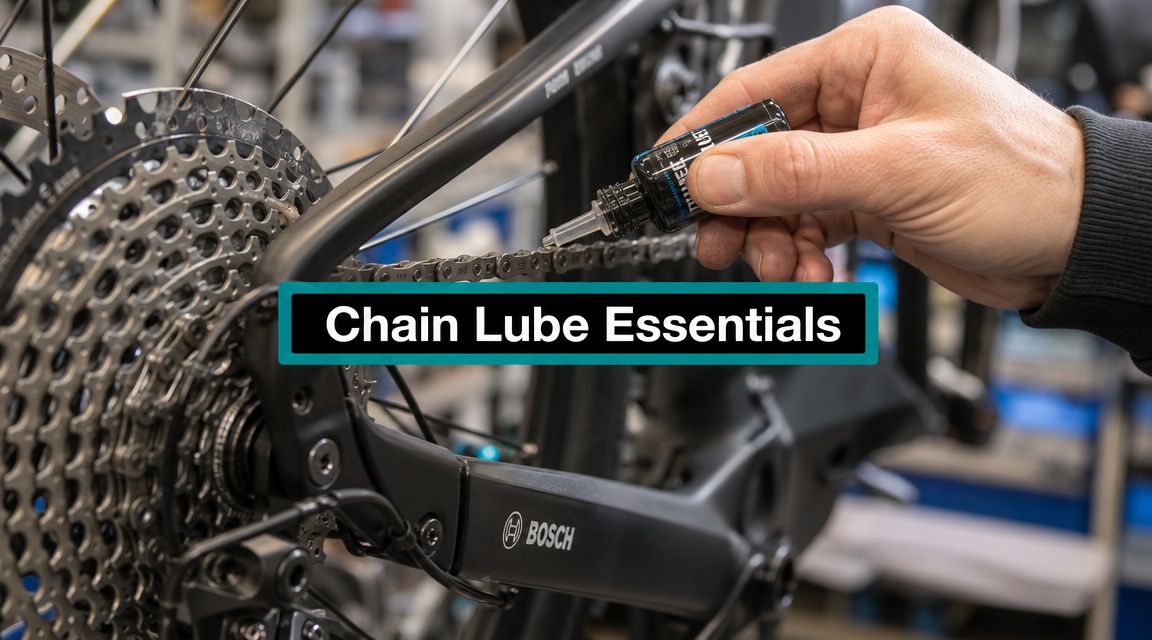
You know the sound. You set off for work on a damp morning, the motor kicks in, and instead of that smooth electric glide you get a dry rasp from the drivetrain. Not loud enough to stop the ride, but loud enough to tell you something's off.
Most everyday ebike chain problems start there. Not with a dramatic failure, just a chain that's slightly gritty, slightly dry, and slowly wearing faster than it should. For UK and EU commuters, that happens even sooner because a lot of riding is done in mixed conditions: wet roads on Monday, dry cycle paths on Wednesday, road grime all week.
Good ebike chain lube helps, but only if you use the right kind and apply it properly. That's the part many riders miss. The bottle matters, but the method matters more. A clean chain with a modest amount of the correct lube will usually run quieter and stay cleaner than a filthy chain that's been drenched in expensive product.
Why Your Ebike Needs a Special Kind of TLC
Leave an ebike chain to fend for itself through a few wet commutes, a couple of hard starts at traffic lights, and one gritty ride home, and it usually tells on you fast. The motor makes a neglected drivetrain show its problems sooner.
An ebike chain may look like any other chain, but the workload is different. The motor adds extra torque through the drivetrain, and many riders end up doing more miles, more stop-start riding, and more loaded riding than they would on a standard bike. As explained in Espin's guide to ebike chain lube, that combination of higher torque, longer rides, and heavier use is why ebike chain care needs a bit more attention. In practice, that means the chain, cassette, and chainring wear faster if lubrication is patchy or dirt is left sitting in the links.
That catches plenty of commuters out. Riders often assume electric assist makes the bike easier on parts because some of the effort comes from the motor. In the workshop, the opposite is usually what shows up. The bike feels easier to ride, so it gets ridden more often, in worse weather, and with more force going through the chain when pulling away or climbing.
A generic bottle of old lube can still work, but it often stops working well sooner on an ebike. That is the part worth understanding. The goal is not fancy product for its own sake. The goal is a lubricant film that stays in place under higher load and does not turn into a grinding paste the first time the road goes damp and dirty.
What feels different on an ebike
On a regular commuter bike, a dry or slightly dirty chain can stay merely annoying for a while. On an ebike, that same chain often gets noisy quicker, shifts worse under load, and starts wearing the rest of the drivetrain along with it. Motor assist does not cause damage on its own. Poor lubrication under motor-assisted load does.
Usage pattern matters as much as torque. A UK or EU commuter might ride through drizzle in the morning, let the bike sit outside work, then head home on roads covered in fine grit, diesel film, or winter salt residue. That mix is hard on chains because moisture helps contamination stick, and contamination speeds up wear.
A simple maintenance rhythm helps more than people think. If the bike is used as everyday transport, monthly cleaning and relubing is a sensible baseline, with extra attention after very wet or filthy rides, as noted earlier.
Practical rule: If your ebike replaces car trips or public transport, service the chain on a schedule, not just when it starts complaining.
Practical implications for commuters
For commuting riders, chain lube is not only about keeping things quiet. It is about reducing metal-on-metal wear when the motor is adding load, and limiting how much road grit stays inside the rollers. Get that right, and the bike usually runs smoother, shifting stays more consistent, and expensive parts last longer.
The main point is simple. An ebike does not need mysterious maintenance. It needs slightly more deliberate chain care because the drivetrain works harder, gets used more, and has to cope with UK and EU weather that changes by the week.
Wet Dry or Ceramic Choosing Your Lube
Walk into any bike shop and the lube shelf can look needlessly complicated. Wet, dry, ceramic, all-weather, wax-based, PTFE, synthetic. Most riders don't need the marketing pitch. They need to know what works on a rainy commute, what stays cleaner in summer, and what's worth paying extra for.
Modern ebike chain lubes are often formulated with higher proportions of PTFE and synthetic oils to improve coverage and durability, and one manufacturer says that can mean more lube per milliliter than standard formulas, as described in Heybike's overview of bike chain lube. That same piece also reflects a broader shift in cycling toward data-driven lubricant testing focused on wear, efficiency, and cost, rather than just rider impressions.

The short version for UK and EU riding
If you ride through drizzle, puddles, and dirty roads for half the year, wet lube is usually the practical choice. It hangs on better in poor weather, but it also attracts more grime if you overapply it.
If most of your riding is in dry conditions on cleaner roads or hard-packed paths, dry lube usually keeps the drivetrain cleaner. The trade-off is that it doesn't cope as well once rain turns up halfway through the week.
Ceramic lube sits in the premium lane. It's often chosen by riders who want a quieter, smoother drivetrain and don't mind paying more for a more refined formula. For some commuters it's worthwhile. For others, a good wet or dry lube used properly is the smarter spend.
E-Bike Lube Comparison for UK/EU Riders
| Lube Type | Best For | Pros | Cons |
|---|---|---|---|
| Wet lube | Rainy commutes, winter roads, mixed wet conditions | Stays on well, better in drizzle and road spray, useful for year-round commuting | Picks up grime more easily, can leave the drivetrain messy if you use too much |
| Dry lube | Dry weather, dusty paths, cleaner summer riding | Runs cleaner, less sticky on the outside of the chain, good for fair-weather commuters | Washes off more easily in rain, needs closer attention in changeable weather |
| Ceramic lube | Riders who want refined performance and are happy to be fussier | Smooth-running feel, durable formula, often chosen for high-wear drivetrains | Costs more, still needs a clean chain and careful application |
What actually works
For most city riders, the choice comes down to weather first, not hype. If your commute includes wet roads, shared paths with grit, and long spells of drizzle, I'd rather see you using the correct wet lube consistently than chasing a fancy product and neglecting the chain.
Too much attention goes into picking a bottle. Not enough goes into matching it to the weather and wiping off the excess.
One more thing matters with all three types. Purpose-built ebike chain lubes are designed around torque, cadence, and dirt attraction. That's why application technique matters so much. Even good lube turns into a dirt magnet if you leave it sitting thick on the outside of the chain.
The Clean Slate Prepping Your Chain for Lube
The biggest mistake riders make is adding fresh lube to a dirty chain and calling it maintenance. That doesn't protect the drivetrain. It makes a grinding paste.
If the chain is carrying old oil, road grit, and black residue, new lube can't get where it needs to go. It just mixes with contamination and keeps it circulating through the rollers and links.

What you need on the bench
You don't need a full workshop. A simple home setup works:
- Degreaser: A bike-specific degreaser is the easy option.
- Brushes or an old toothbrush: Useful for side plates, jockey wheels, and stubborn grime.
- Clean rags: One for the dirty stage, one for final drying.
- A stable way to hold the bike: Workstand if you have one, otherwise prop the bike securely.
If you want a broader look at chain wear and drivetrain upkeep, Punk Ride's electric bike chain guide is a useful companion read.
A no-fuss cleaning method
Start by shifting into a position that gives you easy access to the chain. Apply degreaser to the chain and work it through while turning the cranks by hand. Brush the chain, cassette area, and pulley wheels until the old residue loosens.
Then wipe. Wipe again. Keep wiping until the rag stops coming away black.
If the degreaser you're using calls for rinsing, rinse it off and dry the chain thoroughly. Don't rush that part. Fresh lube on a damp chain won't perform the way it should.
A clean chain doesn't need to look showroom-perfect. It does need to be free of old oily grit before you add new lubricant.
What doesn't work
A quick spray over the outside of the chain is not cleaning. Neither is wiping the top run with one rag pass and hoping for the best. You're trying to free up the moving parts inside the chain, not polish the side plates.
This is also where riders waste money on premium lubes. If the chain isn't properly prepped, the product can't do its job. Clean first, then lube.
Applying Lube Like a Pro The Right Way
Once the chain is clean and dry, the job gets easier. At this point, precision beats quantity every time.
For ebike chains, the most reliable method is to fully degrease first, rinse and dry, then apply a moderate amount of lubricant while rotating the cranks, and finally wipe off all excess, as outlined by Zéfal's ebike chain lube guidance. That same guidance also makes the key point that effective lubrication only happens on a clean, degreased chain.

Where the lube needs to go
The lube belongs inside the chain, where the rollers and pins move against each other. It does not need to sit thick on the outer plates. That shiny, oily coating many riders leave behind looks reassuring, but it mostly just collects muck.
Apply the lube while slowly rotating the cranks backward. Aim for the inside of the lower chain run so the lubricant can work into the rollers as the chain moves. Go steadily. This is not a race.
Use less than you think
A moderate amount is enough. More isn't better. Excess lube doesn't make the chain more protected. It makes it dirtier.
One of the best practical lines on this comes from the guidance quoted in the verified material: “any lubricant you see on the chain is considered extra” because the useful part has already soaked into the rollers. That matches what mechanics see every day. The chain needs internal lubrication, not a sticky outer coating.
Here's a good rhythm to follow:
- Turn the cranks slowly: Keep the chain moving so you can apply evenly.
- Target each roller: A dropper bottle gives more control than a broad spray.
- Let it settle briefly: Give the lube a moment to work inward.
- Wipe thoroughly: Hold a clean rag around the chain and backpedal to remove what's left outside.
The wipe-off step is where a tidy, quiet drivetrain is won or lost.
A quick visual demo helps if you're doing this for the first time:
The mistakes I see most often
Spraying the cassette from the side. Flooding the chain until it drips. Lubing a chain that still feels tacky from old grime. Those are the habits that make a drivetrain noisy again within a few rides.
A properly lubed chain usually won't look dramatic. It'll just run smoothly, shift cleanly, and stay cleaner for longer. That's the result you want.
Your Ebike Lube Schedule and Common Mistakes
Most riders wait too long. They lube the chain when it starts sounding rough, then forget about it again. A simple schedule works better because it catches wear before the drivetrain starts complaining.
A practical benchmark for relubrication is every 100-150 km (60-90 miles) in dry conditions, with more frequent service in wet or muddy conditions, according to Fucare's ebike chain lubrication guide. That same guide also recommends using a dropper bottle rather than spray to reduce waste and lower the risk of brake contamination.

A schedule that makes sense
For a dry-weather commuter, that benchmark is a solid starting point. In UK and northern EU conditions, I'd treat it as the optimistic version. Wet roads, puddles, grit, and winter muck can cut through chain cleanliness quickly, so inspect the chain often and service it sooner when the ride conditions are rough.
If you want a broader maintenance routine around the chain, brakes, tyres, and battery care, these electric bike maintenance tips for longevity fit well alongside a regular lube habit.
Common mistakes that cost money
- Over-lubing the outside: This is the classic one. The chain looks freshly serviced, but the excess just attracts dirt.
- Using spray carelessly: Overspray can go where you don't want it. A dropper bottle gives control.
- Waiting for loud noise: By the time the drivetrain gets vocal, it's often been dry or contaminated for a while.
- Using WD-40 as chain lube: It may free up a grimy chain in a pinch, but it's not the same thing as a proper lubricant for ongoing drivetrain protection.
The habit worth building
Check the chain after bad weather, not just after a certain distance. That's especially true if your bike lives outdoors or you ride on salted winter roads. A minute spent inspecting the chain can save you a lot of avoidable wear.
Riders save more drivetrains by being consistent than by buying fancy products.
Troubleshooting Common Chain Noises and Issues
If you've cleaned the chain and applied the lube properly but the bike still sounds rough, don't assume the answer is more lubricant. Noise usually means something in the process was missed, or the problem sits elsewhere in the drivetrain.
A squeak right after lubing often means one of three things. The chain wasn't fully clean before the fresh lube went on. The excess wasn't wiped off and it's already collecting grime. Or the sound isn't coming from the chain at all. Bikes are full of little noises that bounce around the frame and pretend to come from somewhere else. That's why a basic process of elimination matters. The logic is similar to household squeak diagnosis, and this plain-language guide on Neasden Hardware solutions is a good reminder that friction noise usually has a specific contact point, not a mystical cause.
When the chain still squeaks
Start with the chain link by link. A stiff link can click or chirp even when the rest of the chain is properly lubed. Backpedal slowly and watch for any link that doesn't articulate smoothly as it passes through the derailleur pulleys.
Then look at the drivetrain alignment. A dirty jockey wheel, a bent derailleur hanger, or poor indexing can all create noise that riders blame on lubrication. If the chain sounds worst in only one or two gears, that points more toward shifting setup than lube.
Chain suck and rough pickup
If the chain seems to hang up on the chainring and lift rather than release cleanly, that's often tied to contamination and wear. Thick grime can make the chain and teeth cling to each other. Proper cleaning and restrained lubrication help because they reduce the sticky paste that encourages that problem.
Surface rust after a wet ride is another common one. A light orange film can appear quickly if the bike is left damp, especially outdoors. If it wipes away and the chain still moves freely, it's often an early warning rather than a disaster. If rust remains after cleaning, or the links feel gritty and tight, the chain needs more attention.
Think like a mechanic
The useful question isn't “what lube should I add?” It's “what failed in the process?” Cleanliness, correct application, wipe-off, and regular checks all work together. When one piece gets skipped, the symptoms show up as noise, poor shifting, grime buildup, or rough pedalling.
If you're chasing a drivetrain problem that goes beyond lubrication, Punk Ride's electric bike repair guide is a helpful next step for diagnosing the rest of the bike.
If you need parts, care items, or practical guidance for keeping your electric ride running properly, Punk Ride LLC is a useful place to start.
Share:
Electric Bike Parts: Your Ultimate UK & EU Guide
Electric Bike Looks Like Dirt Bike: 2026 Guide