


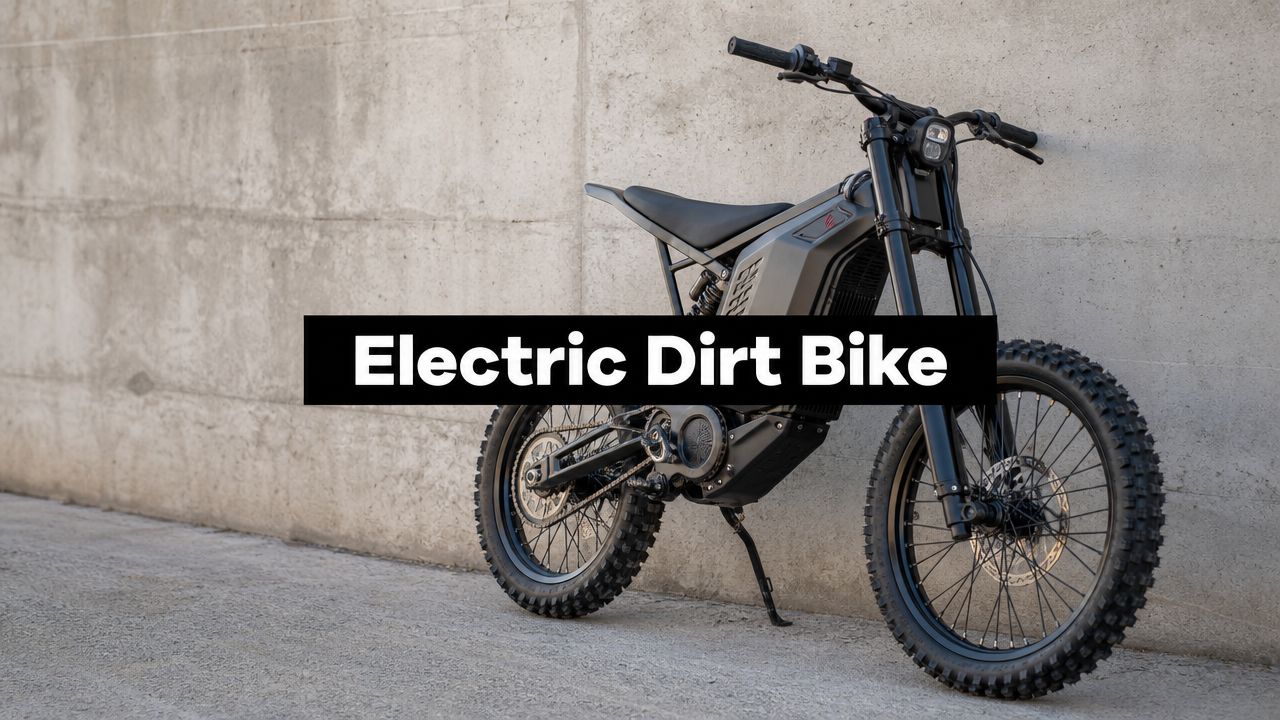
You've probably seen one already. A near-silent machine with a long seat, chunky tires, and a stance that looks far closer to a motocross bike than a city bicycle. It rolls past in a bike lane or cuts through a park path, and the first reaction is usually the same. Is that an e-bike?
That confusion is the whole point of this category. The electric bike that looks like a dirt bike sits in a messy space between urban mobility, off-road fun, and small motorcycle performance. Some are legal bicycle-class machines. Some are really e-motos with pedals added for appearance. Some can work for a daily commute. Others are a terrible idea for anyone who needs to lock up outside a café, carry groceries, or stay on the right side of local enforcement in the US or Australia.
I like these bikes. They're fun, fast-feeling, and visually different from the usual commuter setup. But a lot of buyers get seduced by the look and ignore the trade-offs. That's where bad purchases happen.
That E-Bike Does Not Look Like a Bicycle
The first time most riders notice this category, it isn't on a trail. It's on a city street.
A rider goes by on something with a compact wheelbase, moto bars, a bench seat, and thick side panels. It has pedals, but they almost look secondary. That's when people start searching for terms like electric bike looks like dirt bike because “e-bike” doesn't feel like a complete answer anymore.
What's happened is simple. Styling has moved faster than public understanding. Some brands build around the visual language of a dirt bike because it looks aggressive, modern, and fun. Other brands use that same look because the machine underneath is already much closer to a lightweight electric motorcycle than a normal bicycle.
You can learn a lot from the silhouette before you ever look at the spec sheet.
That matters more now because the category itself has grown quickly. The split between bicycle-class e-bikes and more powerful e-motos became a real market issue as electric sales expanded. The legal discussion around that divide matters because, in the United States, a low-speed electric bicycle is generally defined by operable pedals, a motor of 750 watts or less, and motor-only assistance capped at 20 mph, while anything beyond that enters a different class, as discussed by PeopleForBikes on the e-bike and e-moto split. The same discussion notes that more than 1.1 million electric bicycles were sold in the United States in 2022, with projected annual growth of 10%.
If you like the stripped-down motorcycle aesthetic but still want something usable in daily life, it helps to compare this segment with a more classic moped-style electric bike. The overlap is real, but the dirt-bike-styled machines usually push further into off-road posture, taller suspension, and a more aggressive riding feel.
Why people want one
Some buyers want trail capability. Some just want a machine that feels less like fitness equipment and more like a proper ride. The appeal is easy to understand. These bikes look rebellious without sounding obnoxious.
The problem is that appearance often hints at bigger compromises. And in this segment, looks can be a legal clue.
The Dirt Bike Look Deconstructed
The dirt bike vibe doesn't come from one part. It comes from a stack of design choices working together.

Frame and rider position
Start with the frame. A normal commuter e-bike usually puts the rider in a practical, upright position. A dirt-bike-styled machine does the opposite. The top line is flatter, the middle section is chunkier, and the seat usually sits in a way that suggests standing on the pegs, shifting body weight, and moving around the bike.
That shape changes how the bike feels even before the motor kicks in. It gives the rider a more active posture and makes the machine look ready for jumps, trails, or at least rougher surfaces than an urban bike path.
Suspension and tires
Suspension does a lot of visual work here. Long-travel forks and rear shocks signal off-road intent immediately. They also raise the bike's height and bulk, which adds to the motorcycle impression.
Then come the tires. Wide, knobby rubber tells everyone this thing wasn't designed around smooth tarmac first. On loose ground, that can be useful. On pavement, it often means more drag, more noise, and less of the quick, efficient feel people expect from a normal city e-bike.
A few design clues usually show up together:
- Long seat profiles that look closer to a pit bike or small moto than a bicycle saddle
- Minimal body panels that hide battery placement while keeping the bike visually clean
- Shorter rear triangles and compact proportions that make the bike look playful rather than practical
- Moto-style bars and controls that encourage a more aggressive hand position
The motor is part of the look
The powertrain finishes the illusion, and sometimes it stops being an illusion. Models in this segment commonly use mid-drive or high-output hub motors with peak outputs ranging from roughly 25 kW to 38 kW on lightweight performance models, and a 72V to 81V system can produce motorcycle-like launch behavior under full throttle, according to this electric dirt bike performance review.
That's why some of these machines don't just look like dirt bikes. They respond like them.
Practical rule: If the bike's geometry, suspension, and power delivery all feel moto-first, treat it like a separate category from a commuter e-bike, even if it has pedals.
What works and what doesn't
What works is obvious. The style is distinctive. The riding position can feel planted. Rough surfaces bother these bikes less. Acceleration is often the main event.
What doesn't work is subtler. A bike built to look tough usually sacrifices simple city-bike virtues like easy mounting, discreet appearance, and practical accessory fitment. You may love the stance and still hate living with it Monday to Friday.
Power Pedals and the Law
You buy a dirt-bike-styled e-bike for the commute, roll it out on Monday, and get a very fast lesson in how little pedals matter if the rest of the machine reads like a small motorcycle. That happens more often than sellers admit.

In the United States, the baseline federal definition for a low-speed electric bicycle generally points to three things: operable pedals, a motor of 750 watts or less, and motor-only assistance capped at 20 mph. Once a bike steps outside that envelope, you need to stop assuming it will be treated like a bicycle. This street-legal e-bike guide gives the broader legal picture, including the state-level differences that trip up buyers.
Australia reaches the same practical conclusion through its own rules. A product page can call something an e-bike all day long. That does not mean you can ride it on public roads, bike lanes, or shared paths without the same scrutiny applied to a moped or motorcycle.
Compliance is about function, not cosplay
I see the same mistake again and again. Buyers fixate on pedals, a seat height, or whether the brand avoids the word "motorcycle." Enforcement looks at output, speed, equipment, and how the vehicle is configured at the time of use.
For a US or Australian city rider, the checklist is simple:
- Actual motor rating, not just category labels in ads
- Top assisted speed in the mode you will really use
- Access to derestricted settings through the display, app, or controller
- Required road equipment such as lights, mirrors, turn signals, or a horn where applicable
- Whether the seller can support registration if the bike falls outside bicycle rules
That last point matters more than many first-time buyers expect. Some dirt-bike-styled machines are sold with street use implied in the marketing, but without the paperwork, VIN support, or equipment package needed to register them if local law treats them as motor vehicles. For commuting, that can turn a fun purchase into garage art.
More speed changes the risk profile
Higher power also changes how mistakes happen. These bikes accelerate harder, carry more mass, and invite motorcycle speeds while often being bought by riders who still think of them as bicycles.
A study published in JAMA Surgery found e-bike riders had a greater likelihood of internal injuries than bicycle riders and a greater likelihood of being admitted to the hospital than both bicycle riders and motorcycle riders, based on US injury data analyzed from 2017 to 2022 in this JAMA Network study on micromobility injuries. That does not mean every e-bike is uniquely dangerous. It does mean a fast, heavy bike used like a lightweight bicycle deserves more respect than the marketing usually gives it.
Helmet choice, braking distance, and tire quality stop being casual decisions here. So does route choice. A rough bike-lane merge at commuter speeds feels very different on a long, heavy dirt-bike-style machine than on a normal city e-bike.
Here's a useful video if you're trying to understand why so many of these machines sit in a legal gray area before you buy.
My rule for US and Australian buyers
For daily city use, buy the machine that clearly fits the rules where you live, carries the right equipment, and can be insured or registered if required. Then worry about styling.
A pedal set does not turn a small electric motorcycle into a bicycle.
That distinction decides whether your ride is easy to live with or a constant argument with police, path users, building managers, and your own commute.
Choosing Your Ride Trail Warrior or Urban Commuter
This category makes more sense on dirt than in dense city life. That doesn't mean it can't work in town. It means you need to be honest about your actual week, not your ideal weekend.

Where the format shines
On trails, these bikes are easy to love. The suspension matters. The upright control and quick power delivery feel natural. Loose surfaces, uneven ground, and short steep sections are exactly where the design earns its keep.
If your riding life is mainly fire roads, private land, and recreational blasts, the package fits. That's also why riders shopping for a true off-road machine often start with guides to the best e-bike for trail riding before they even think about commuting.
Where city use gets annoying
Urban riding exposes every compromise. Dirt-bike-styled e-bikes are often much heavier than conventional commuter e-bikes, with one comparison describing them at roughly 60 to 120 lbs, while full electric dirt bikes can run around 100 to 150+ lbs, according to this comparison of dirt-bike-styled e-bikes and electric dirt bikes. That same comparison notes that high-powered models are often limited to private land or off-road trails.
Weight alone changes daily ownership. Carrying one upstairs is miserable. Lifting one onto a rack is worse. Pushing one through a narrow hallway feels more like handling a small motorcycle than a bicycle.
Side-by-side reality check
| Use case | What helps | What becomes a hassle |
|---|---|---|
| Trail riding | Suspension, traction, punchy acceleration, confident stance | Battery drains faster when ridden hard, off-road wear adds up |
| City commuting | Strong road presence, relaxed seated cruising, unique style | Bulk, theft attention, weak cargo practicality, legal uncertainty |
A few practical downsides tend to surprise people:
- Storage problems. Big frames and wider bars don't fit gracefully into apartments, lifts, or office corners.
- Theft visibility. These bikes attract attention, and not all of it is good.
- Poor utility setup. Many don't come ready for racks, panniers, mudguards, or everyday errands.
- Awkward lane fit. In bike lanes, they can feel oversized. In traffic, they may still be slower and less visible than a motorcycle.
If your commute includes stairs, public parking, or grocery stops, the coolest-looking option often becomes the least convenient one.
A lot of riders would be happier with a lighter, simpler e-bike that borrows some moto style without committing fully to the dirt-bike format.
Customizing Your Electric Dirt Bike Look
A dirt-bike-styled e-bike usually starts the same way. You buy it for the stance and the fun, then after a week of city riding you start noticing the details that affect daily use. Bars feel too wide for tight gaps. The stock seat looks right but gets old on a longer commute. The tires sound great in the marketing photos and feel slow on pavement.

The best custom work starts with comfort and control, not cosmetics. I like bars, grips, pedals, and the seat to come first because those are the parts you notice on every ride. A small change in bar rise or sweep can make a bike feel calmer in traffic, and a better seat matters more on city streets than another aggressive visual add-on.
Tires are the next big decision. Full knobbies finish the look, but they also add noise, rolling drag, and vague road feel on sealed streets. For a US or Australian rider using the bike for commuting, a more street-biased tread is usually the smarter call. You keep most of the moto attitude and lose a lot of the daily annoyance.
Cosmetic changes still matter. They just work best when they stay honest about how the bike is used.
Common upgrades that usually make sense:
- Grips and touch points for better feel and less hand fatigue
- Bar swaps to tune posture and steering response
- Front number plates or plate-style panels for a cleaner moto look
- Decal kits to tie the frame, battery cover, and panels together
- Lighting changes that improve the front-end look without hurting road visibility
Some riders also want the bike to carry personal meaning. That can be done tastefully. Custom memorial dirt bike stickers fit well on side panels, battery covers, or a front plate area, and they add identity without affecting how the bike rides.
The line to treat carefully is performance tuning. Cosmetic parts rarely create serious problems. Controller edits, speed de-restrictions, and power mods can. A bike that was manageable in stock form can become abrupt, harder to stop cleanly, and harder to explain if you get pulled over or end up in a crash. As noted earlier in the article, risk goes up fast once riders start pushing these machines beyond their intended setup.
A sensible order for custom work is simple:
- Fix fit first. Bars, grips, pedals, and seat improve every trip.
- Match the tires to your real route. Pavement, mixed paths, and trails want different tread.
- Add graphics last. Visual changes are easy to reverse and low risk.
- Leave compliance hardware alone unless you fully understand the legal category and insurance consequences.
A good custom build still has to work on Monday morning. If the bike is meant for city use, the smartest setup usually looks a little less extreme and rides a lot better.
A Smart Buying Guide for City Riders
You see one locked to a bike rack outside a cafe, and it looks perfect. Tall stance, moto bodywork, fat tires, real presence. Then Monday arrives, and the same bike has to fit your apartment hallway, survive a grocery run, and get you to work without drawing the wrong kind of attention from police or building management.
That is the real buying test for a city rider.
For urban use, the smart choice is usually the bike that looks a bit like a dirt bike, but still behaves like a bicycle-class machine in daily life. I have ridden both legal commuter e-bikes and high-powered e-motos, and the difference shows up fast in traffic. The bigger, heavier, more aggressive bike is exciting for a few hard pulls. It is also harder to carry, harder to park, and much less forgiving if your route includes stairs, shared paths, tight bike storage, or regular street enforcement.
Start with legal status, then work backward into everything else. If a seller cannot clearly tell you whether the bike is sold as a bicycle-class e-bike, an off-road vehicle, or something that needs registration, stop there. A vague answer usually means future problems for the owner.
The checklist I'd use
- Ask how it is classified. In the US and Australia, that answer shapes where you can ride, what equipment you need, and whether you are buying a commuter or a registration problem.
- Check whether the road mode is factory limited. "Can be changed later" is not the same as compliant out of the box.
- Look at the practical hardware. Proper lights, mirrors, turn signals, a horn, and plate or VIN support matter if the bike sits outside normal e-bike rules.
- Check weight and storage first. If you live upstairs, use a bike room, or park in public, a heavy moto-style frame gets old quickly.
- Match the bike to your actual route. City pavement, stop-start traffic, train station ramps, and office parking favor lighter bikes with simpler tires and cleaner pedal ergonomics.
- Buy from a seller that understands urban use. Punk Ride LLC sells electric mobility products and publishes buyer guidance aimed at street and city riders.
What usually works best
For commuting, errands, and short urban trips, the best buy is often the machine that borrows the dirt-bike style without carrying full dirt-bike baggage. You still get the visual appeal. You avoid a lot of the headaches that come with excess weight, questionable road status, and parts chosen for off-road image rather than daily pavement use.
That trade-off matters more than many buyers expect.
A true off-road style setup can be a blast on private land or trails where it belongs. In a city, the same bike often turns into extra hassle. Pedaling feels like an afterthought, security gets harder, and every interaction with traffic law depends on details the seller should have explained before the sale.
If what you really want is off-road power and dirt-bike handling, buy for that purpose and treat street use as a separate legal question. If what you need is a weekday commuter for US or Australian city riding, choose the bike that still works on a wet Tuesday with a backpack, a lock, and nowhere convenient to park.
Punk Ride LLC offers electric bikes and scooters for riders who want practical urban mobility with stronger styling than a plain commuter setup. If you're comparing bicycle-class models against dirt-bike-styled options, have a look at Punk Ride LLC and focus on the bikes that match how and where you ride.
Share:
The Right Ebike Chain Lube and How to Use It
The Ultimate Electric Bike Pump Guide for 2026