



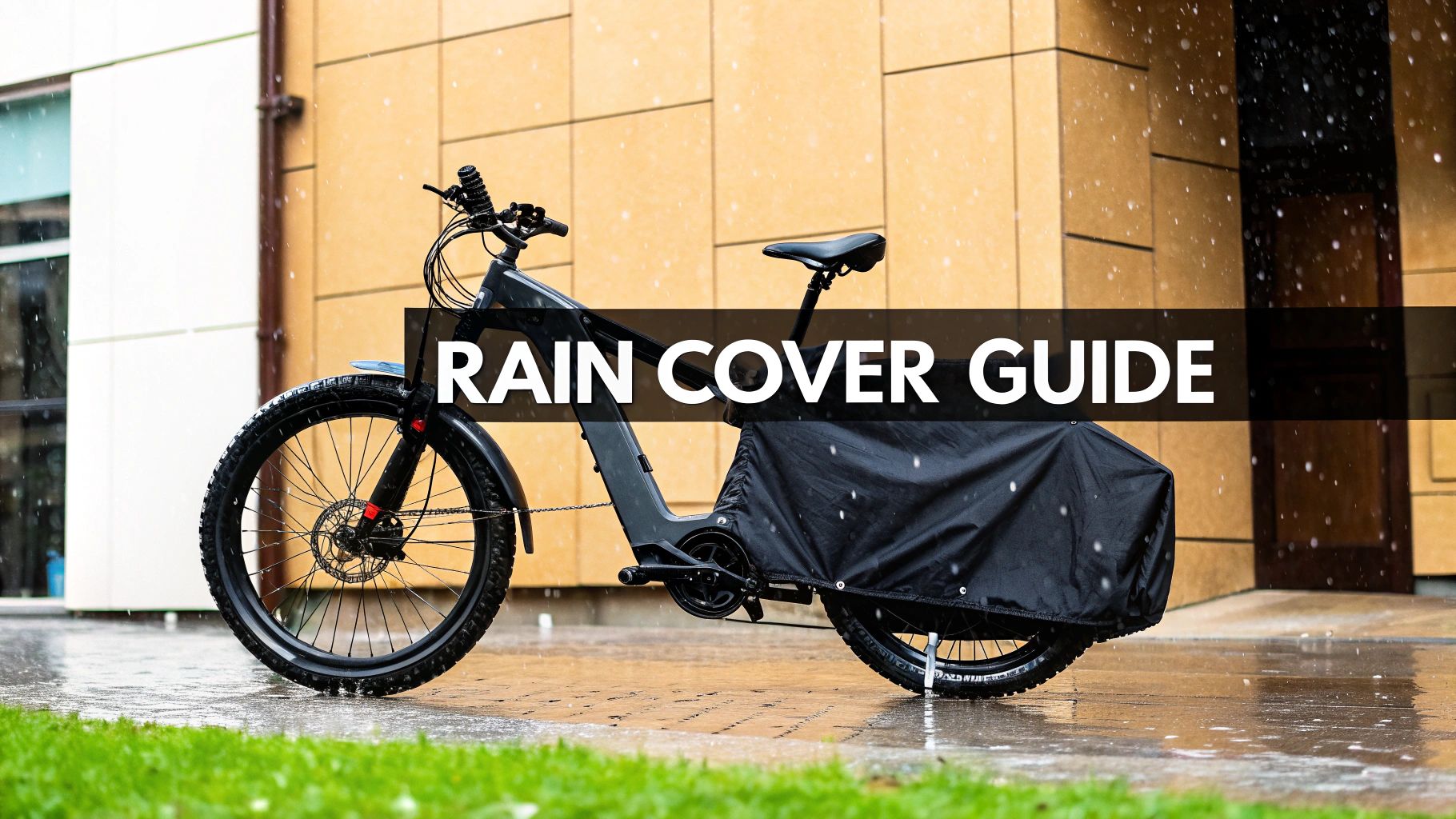
An electric bike rain cover is your first line of defense against the elements, a purpose-built shield that protects your e-bike’s frame and, most importantly, its sensitive electronics from rain, dirt, and even sun damage. Whether you're dealing with a sudden Florida thunderstorm or a foggy morning in San Francisco, you know how quickly the weather can turn—making a good cover less of a luxury and more of a necessity.
Why Your E-Bike Needs a Dedicated Rain Cover
Let's face it, getting caught in a downpour is practically a rite of passage for cyclists in many parts of the US. And while your e-bike is designed to handle a bit of a splash, leaving it exposed to constant moisture is a surefire way to invite rust, electrical issues, and a shorter lifespan for your ride.
An electric bike rain cover is much more than a simple plastic sheet. It's a tailored insurance policy for your investment.
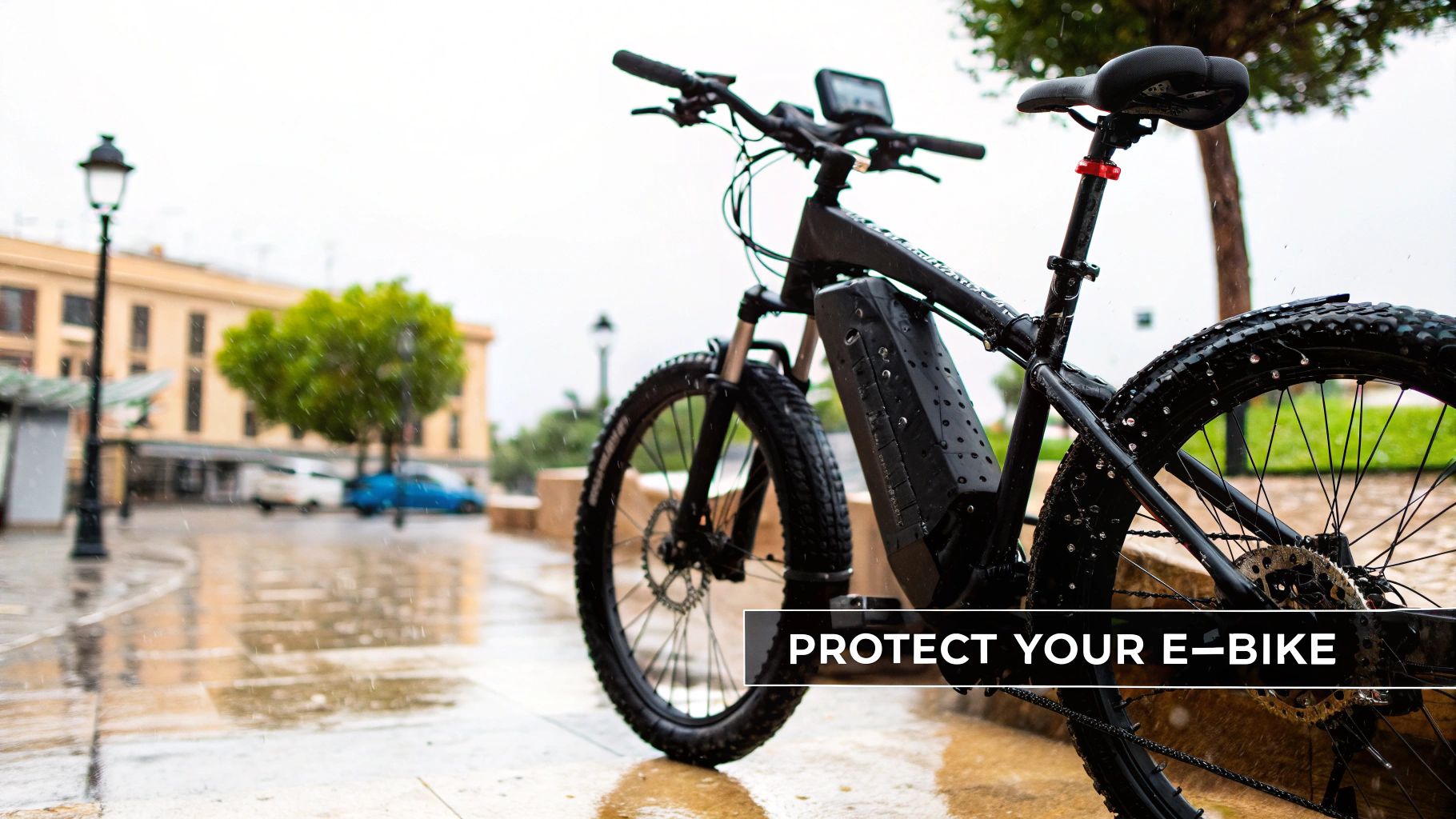
Think of it like a high-performance GORE-TEX jacket, but for your bike. It’s engineered to form an impenetrable barrier, specifically safeguarding the complex tech that sets your e-bike apart from a standard bicycle.
Shielding Critical E-Bike Components
Your e-bike has a central nervous system of wires, sensors, and displays that just don't mix well with persistent dampness. A quality cover provides targeted protection for these vulnerable areas:
- Battery Contacts: Keeping the connection point between your battery and the frame dry is absolutely critical. This prevents corrosion that can lead to frustrating power problems down the road.
- Motor Housing: Even though e-bike motors are sealed pretty well, an extra layer of defense during a heavy storm or long-term outdoor storage can prevent water from finding its way in.
- Handlebar Display and Controller: This is your bike's command center. A cover protects the screen and buttons from direct rainfall that could easily damage the delicate electronics inside.
In the same way there are important considerations for electric vehicles in wet weather, protecting your e-bike from moisture is fundamental to its health and performance.
This growing understanding of proper e-bike care is why the global bike cover market is exploding. Projections show it could hit roughly $1.2 billion by 2033, a clear sign that owners are getting serious about protecting their bikes from the elements.
At the end of the day, a dedicated electric bike rain cover isn't just about preventing immediate damage. It’s about preserving your bike's performance and resale value, ensuring it stays in prime condition no matter what the sky decides to throw at it.
What Your E-Bike Cover Is Made Of (And Why It Matters)
Not all rain covers are cut from the same cloth—literally. The real secret to keeping your e-bike dry and protected comes down to the fabric and how it's treated. Think of it like picking a jacket for yourself; a light windbreaker won't do you much good in a thunderstorm, and the same logic applies to your bike.
Let's break down the materials you'll see most often.
Know Your Fabrics: Polyester vs. Oxford Cloth
You'll typically find covers made from either polyester or Oxford cloth. Polyester is your lightweight, easy-to-pack option. It doesn't stretch or shrink much, making it a great choice if you need a cover you can stuff into a bag for your commute.
Then there's Oxford cloth. This stuff is the tough guy of the fabric world. It’s known for being incredibly durable and resistant to tearing, which is exactly what you want if your bike is going to be stored outside full-time, braving the elements day in and day out. Most of these fabrics also get a PU (polyurethane) coating, which is a fancy way of saying they have an extra layer of waterproofing painted on.
E-Bike Rain Cover Material Comparison
Choosing the right material is a balancing act between portability, durability, and cost. Here’s a quick rundown to help you figure out what’s best for your setup.
| Material Type | Key Advantages | Best For | Typical Price Range |
|---|---|---|---|
| Polyester | Lightweight, packable, affordable, resists shrinking | Daily commuting, temporary outdoor cover, light rain | $25 - $45 |
| Oxford Cloth (e.g., 210D-420D) | Highly durable, tear-resistant, great for long-term use | Permanent outdoor storage, all-weather protection | $35 - $65 |
| Heavy-Duty Oxford (e.g., 600D+) | Extremely tough, excellent abrasion resistance, often UV-coated | Harsh climates, maximum security, long-term stationary storage | $55 - $85+ |
This table should give you a solid starting point. For most people, a good quality Oxford cloth cover hits the sweet spot, but if you're constantly on the move, the convenience of a lightweight polyester cover is hard to beat.
What Do Waterproofing Ratings Actually Mean?
Okay, this is where it can get a little nerdy, but stick with me—it's simpler than it sounds. A fabric's waterproofing is measured in millimetres (mm), and that number tells you how much water pressure it can handle before it starts leaking.
Here’s an easy way to think about it:
- 1,500mm: This is your "showerproof" windbreaker. It's totally fine for a bit of drizzle or a light mist, but it's not going to hold up in a proper downpour.
- 5,000mm: Now we're talking. This is standard raincoat territory. A cover with this rating can handle steady, moderate rain for a good while, making it a reliable choice for most climates across North America.
- 10,000mm and up: This is the full-on mountain-grade storm gear. It’s built to withstand heavy, driving rain and will keep your bike bone dry even in the worst weather.
Even though many e-bikes have some water resistance built-in, you really can't rely on that alone for long-term exposure. Our guide on the question "are electric bikes waterproof" dives deeper into why that extra layer of protection is so critical.
Weaves, Denier, and Special Coatings
Beyond the base material, you’ll see numbers like 210D or 420D. The "D" stands for Denier, which is just a measure of the thread's thickness. The rule is simple: a higher Denier number means a thicker, tougher, and more durable fabric. A 420D Oxford cloth is going to be way more rugged than a 210D version.
At the end of the day, a cover's most important job is making water bead up and roll right off. This is done with special coatings that create a hydrophobic (water-hating) surface so moisture never gets a chance to soak in.
Many modern covers also add a silver or black coating. This isn't just for looks; it provides crucial UV protection, stopping the sun from fading your bike's paint or cracking the plastic on your display over time. These kinds of protective layers are a big deal in other industries, too. If you're curious about the science, check out this explainer on rain repellant ceramic coating to see how surface treatments can offer serious protection from the elements.
Getting the right material and rating for your local weather is the key to true peace of mind.
How to Get the Perfect Fit for Your E-Bike
A rain cover that doesn't fit right is a real pain. Honestly, it's almost as bad as having no cover at all. If it's too tight, you're leaving expensive components exposed to rust and rain. Too loose, and it turns into a giant sail in the wind, flapping around and collecting puddles that can weigh it down.
Getting the size right isn't rocket science, but it's easily the most crucial step. A snug, proper fit is what guarantees your e-bike stays dry and protected.
The Three Core Measurements for a Perfect Fit
Alright, time to grab a tape measure. Eyeballing it won't cut it here—a few inches can be the difference between a perfect fit and a frustrating mess. You just need three key numbers.
- Length: Start at the very front of your front tire and measure all the way to the back of the rear tire. This is your main number and ensures total end-to-end coverage.
- Height: Find the highest point on your bike. This is usually the handlebars, but it could be your mirrors or a child seat. Measure from that spot straight down to the ground.
- Width: Now, find the widest part of your bike. For most people, this is the handlebars. Measure from the tip of one grip straight across to the other.
Taking these three simple measurements is your ticket to a cover that fits like a glove.
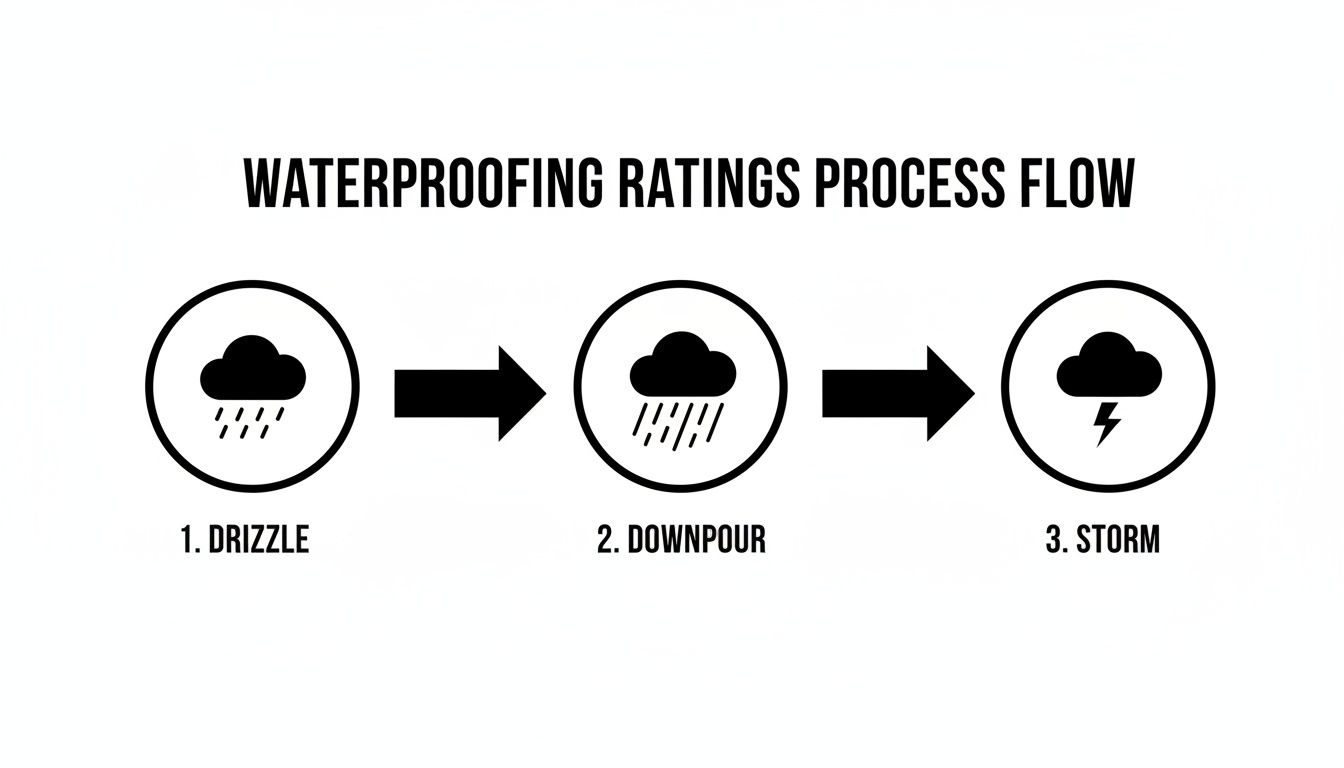
This visual is a handy way to think about how a cover’s waterproofing spec matches up with the kind of weather you actually ride in.
Accounting for Accessories and Unique Shapes
Those basic measurements are a great starting point, but let's be real—e-bikes are rarely "standard." All those handy accessories add extra bulk, and you have to account for them. Otherwise, you'll get a cover that's stretched so tight it puts stress on the seams.
Trust me on this one: an ill-fitting cover is a disaster waiting to happen. I've seen loose covers catch a gust of wind and act like a parachute, knocking the whole bike right over. Taking five extra minutes to measure properly is worth it.
Before you jot down your final numbers, think about what else is on your bike:
- Pannier Racks and Bags: Got a rack on the back? Especially with bags on it? You’ll definitely need to re-measure your bike's length and width back there.
- Front Baskets: A basket adds to the front-end length and width. Make sure you measure from the very front of the basket, not the tire.
- Child Seats: These add a ton of height and width. Your measurements absolutely must include the seat.
- Wide Handlebars or Mirrors: If you've got custom cruiser bars or big mirrors, that initial width measurement becomes extra important.
A good rule of thumb is to add a couple of extra inches to your measurements to give these items some breathing room. Do that, and you can order an electric bike rain cover online with total confidence, knowing you've got complete protection locked in.
What Really Makes a Great Rain Cover?
Sure, a rain cover needs to keep the rain out. That's the bare minimum. But the best ones—the ones you'll actually love using—are packed with smart features that make a massive difference day-to-day. When you're shopping around, it’s these little details that separate a cheap, flimsy tarp from a cover that's truly built for the real world.
Think of this as your cheat sheet for spotting a high-quality cover that's both tough and easy to live with.
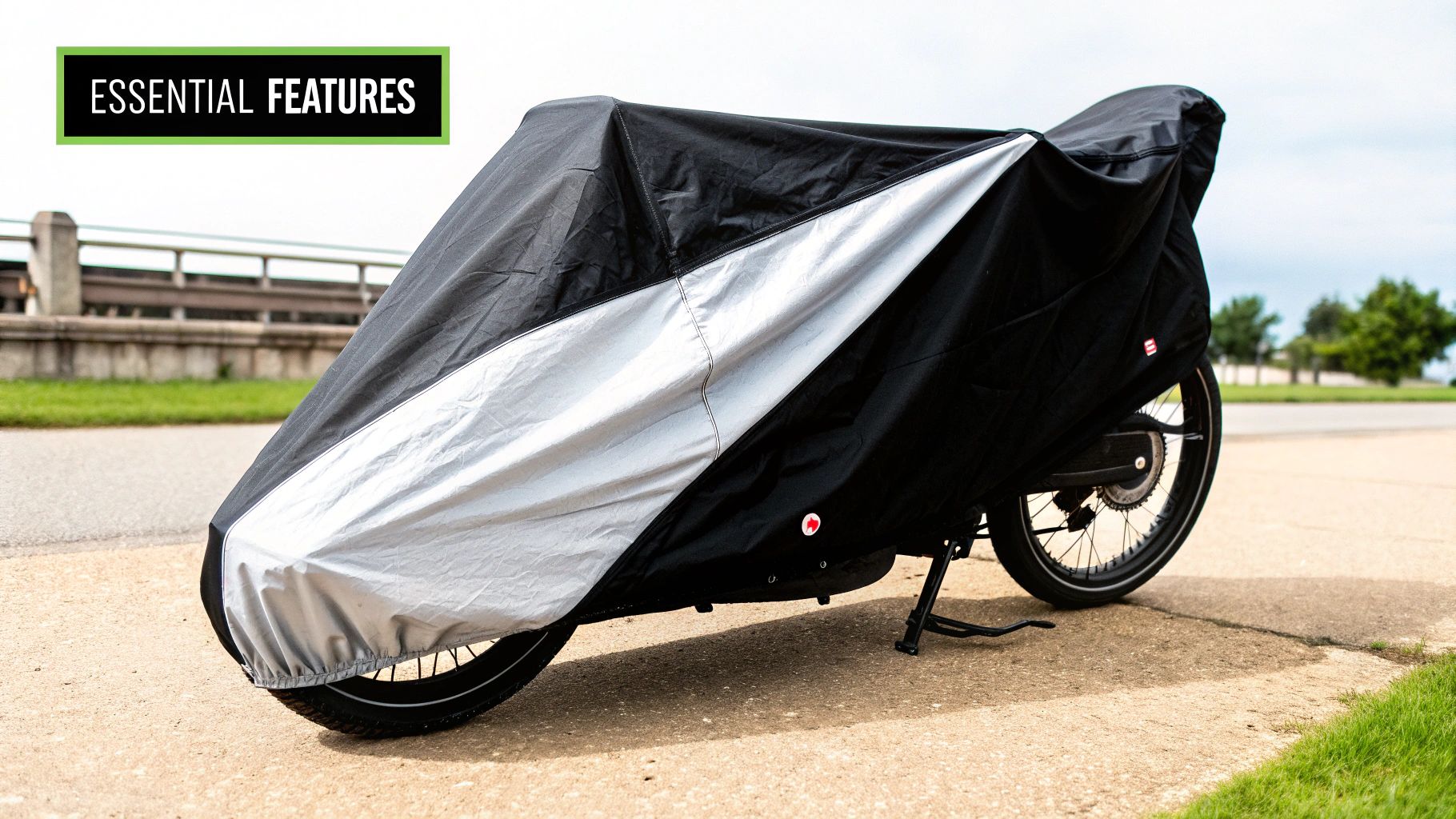
A top-tier cover isn't just waterproof; it's designed to be windproof, secure, and incredibly user-friendly.
Secure Fastenings and a Snug Fit
A cover that's flapping in the breeze is basically useless. Strong winds can get right underneath, turning it into a giant parachute and leaving your bike totally exposed. That's why a solid fastening system isn't just a nice-to-have; it's essential.
Here’s what to look for:
- Elasticated Hems: A good, strong elastic band running along the bottom edge is your first line of defense. It helps the cover hug your wheels and frame, creating a tight seal against the ground.
- Adjustable Straps and Buckles: You absolutely want to see one or two straps with buckles that snap together underneath the bike. These are the anchors that stop the cover from being ripped off in a nasty storm.
Ventilation to Stop Condensation
This might sound a bit backward, but a cover that's too perfectly sealed can cause its own problems. Temperature swings can make condensation build up on the inside, trapping moisture right next to your bike’s delicate electronics and metal parts.
This is where ventilation flaps are a game-changer. They're just small, well-placed vents—usually covered with an overlapping flap of fabric to keep rain out—that let all that damp, trapped air escape. Without them, you're just inviting rust and mildew to the party.
Practical Extras You'll Actually Use
The best covers are clearly designed by people who actually ride bikes. They think about the entire experience, from security to visibility. These features add a layer of safety and convenience you’ll appreciate every single time you use the cover.
A cover shouldn't just protect from rain; it should fit right into your daily routine. Things like lock holes and reflective strips are a sign the manufacturer gets what urban commuters really need.
- Reinforced Lock Holes: This is a brilliant feature. These are specially designed openings, usually reinforced with metal rings or tough fabric, that let you pass your D-lock or chain right through the cover to secure your bike's frame and wheel. It locks your bike and your cover at the same time.
- Reflective Detailing: If you ever park near a road or in a busy lot, high-visibility strips or logos are a must. They make your bike way more noticeable to drivers at night, which can prevent it from getting accidentally bumped or knocked over.
- Integrated Storage Bag: A cover that stuffs into its own little attached pouch is a lifesaver. You can just toss it into your backpack or pannier without it becoming a tangled mess, making sure it’s always on hand when the weather turns.
These thoughtful features are hallmarks of a quality electric bike rain cover and are why you'll see them pop up in lists of the best e-bike accessories. It’s all part of a bigger picture where riders are demanding smarter, more effective gear. In fact, the waterproof bicycle cover market is expected to grow from US$905 million in 2025 to US$1,066 million by 2031, a shift fueled by this demand for better, feature-packed solutions. You can even discover more insights about bicycle cover industry trends if you're curious about the market.
Using and Maintaining Your E-Bike Cover
You've picked out the perfect rain cover for your e-bike—awesome. Now, let's talk about how to make it last. A little TLC goes a long way in making sure your cover can stand up to whatever the weather throws at it.
Think of it as simple upkeep for your bike's first line of defense. A few good habits will keep the fabric strong and waterproof, so it’s always ready for the next downpour.
Daily Use and Best Practices
Putting the cover on shouldn't be a wrestling match, even if you're trying to beat the rain. The secret is to go front to back. Drape the cover over your handlebars first, then smoothly pull it down over the saddle and the rest of the bike. This simple trick keeps it from getting snagged on your pedals or mirrors.
I know it's tempting to throw the cover on your bike the second you get home from a wet ride, but hold off for a few minutes. Covering a sopping wet bike traps all that moisture inside, creating a humid little bubble that's no good for your bike's components. If you're short on time, even a quick wipe-down with a towel makes a huge difference.
Here’s a pro tip: Letting your bike air dry before covering it is one of the best habits you can get into. It stops the cover from turning into a mini-greenhouse, which is key for protecting your e-bike's electronics from moisture damage over time.
When you're ready to ride, storage is key. Most good covers come with their own little stuff sack. The best way to pack it up is to fold it into a neat rectangle, then roll it up tightly before stuffing it into the bag. This keeps it compact and minimizes creases, making it easy to toss into a backpack or pannier.
Cleaning and Long-Term Maintenance
Keeping your cover clean isn't just about looks—dirt and grime can actually break down the waterproof coating over time. But whatever you do, don't just toss it in the washing machine. That's a surefire way to kill its protective mojo.
Instead, just follow these simple steps:
- Brush It Off: Grab a soft brush and get rid of any loose dirt, dust, or leaves.
- Spot Clean: For stubborn stuff like bird droppings or tree sap, use a sponge with cool water and a mild, non-detergent soap.
- Rinse Well: Gently hose the whole thing down with cool water to wash away any soap.
- Air Dry Only: Hang the cover up to dry completely before you pack it away. Never, ever put it in a machine dryer. The heat will melt the waterproof lining.
Even with the best care, tiny rips and punctures happen. Don't sweat it—a small tear doesn't mean you need a whole new cover. You can easily find waterproof fabric patch kits online or at any camping store. Slapping on a patch is a quick fix that can add years to your cover's life.
For more ideas on keeping your ride safe and sound, check out our complete guide on electric bike storage solutions.
Got Questions About E-Bike Rain Covers? We've Got Answers.
Let's dive into some of the questions I hear all the time from riders trying to keep their electric bikes dry. I'll give you the straight scoop to help you pick the right cover and ride with confidence, rain or shine.
Can I Just Use a Regular Bicycle Cover for My E-Bike?
I get this question a lot. It seems like an easy way to save a few bucks, but honestly, it’s usually a bad idea. Your e-bike is a different beast—it's almost always bigger, heavier, and has a chunkier frame to house that battery and motor. A standard bike cover just won't fit right, leaving some of your most expensive parts exposed to the elements.
The real kicker, though, is that a proper electric bike rain cover is designed specifically to protect the electronics. They often have better ventilation to stop condensation from building up around the battery, motor, and controller. It's a small extra investment that protects the heart of your ride.
Should I Cover My E-Bike Right After a Wet Ride?
Good question. If you can, always let your bike air dry for a little while first. Throwing a cover over a sopping wet bike is like putting it in a sauna—you trap all that moisture against the frame and components, which can lead to rust and mildew down the road.
If you're in a hurry and have to cover it right away, at least do a quick wipe-down of the frame, battery, and display with a dry cloth. This is where those covers with good ventilation really earn their keep; they help that trapped moisture find a way out, keeping your bike happier and healthier.
Here's a pro tip: for any kind of long-term storage, make absolutely sure your e-bike is bone dry before you cover it. It's a simple habit that will save you a world of moisture-related headaches.
How Do I Lock My Bike with the Cover On?
This is a smart thing to ask and a feature you should definitely look for. The best covers have reinforced lock holes. These are basically heavy-duty, purpose-built openings, usually near the front wheel, that let you thread a D-lock or chain right through the cover.
It’s a fantastic two-for-one design. You can lock your bike’s frame and wheel to a bike rack while the cover itself is anchored in place, so it won’t go flying off in a windstorm. It's a simple feature that adds a huge amount of security and peace of mind.
Does a Rain Cover Also Protect Against Sun Damage?
It sure does! Think of a quality cover as an all-weather shield. The same tough, often UV-stabilized fabric that blocks a downpour is also fantastic at stopping the sun's harsh rays from beating down on your e-bike.
This is a bigger deal than you might think. Sun protection stops your paint from fading and prevents plastic or rubber bits—like your handlebar display and grips—from getting brittle and cracking over time. And let's not forget, it's also a great barrier against dust, sticky tree sap, and the dreaded bird droppings, keeping your bike clean and ready for your next ride.
This need for total protection is a huge reason why the electric bike market is projected to grow from USD 54.12 billion in 2025 to USD 87.15 billion by 2032. As more of us rely on e-bikes, protecting that investment from everything the weather throws at it becomes non-negotiable. You can learn more about e-bike market growth projections to see just how fast the industry is growing.
Ready to give your ride the ultimate all-weather protection? At Punk Ride LLC, we offer a curated selection of top-tier accessories designed for the modern rider. Explore our collection and find the perfect gear to keep your e-bike in prime condition. Visit us today at https://www.punkride.com.
Partilhar:
The Ultimate Guide to Finding the Perfect E Bike Bags
Your Guide to the Best Electric Bike for Delivery