


Picking the best electric scooter for commute is all about finding a ride that genuinely makes your life easier—saving you time, cash, and a whole lot of frustration. For most commuters in the US and Australia, that sweet spot is usually found with brands like Glion and Niu. They just nail the balance between range, portability, and enough oomph to get you around town without a fuss.
Why an Electric Scooter Is Your Next Commute Upgrade
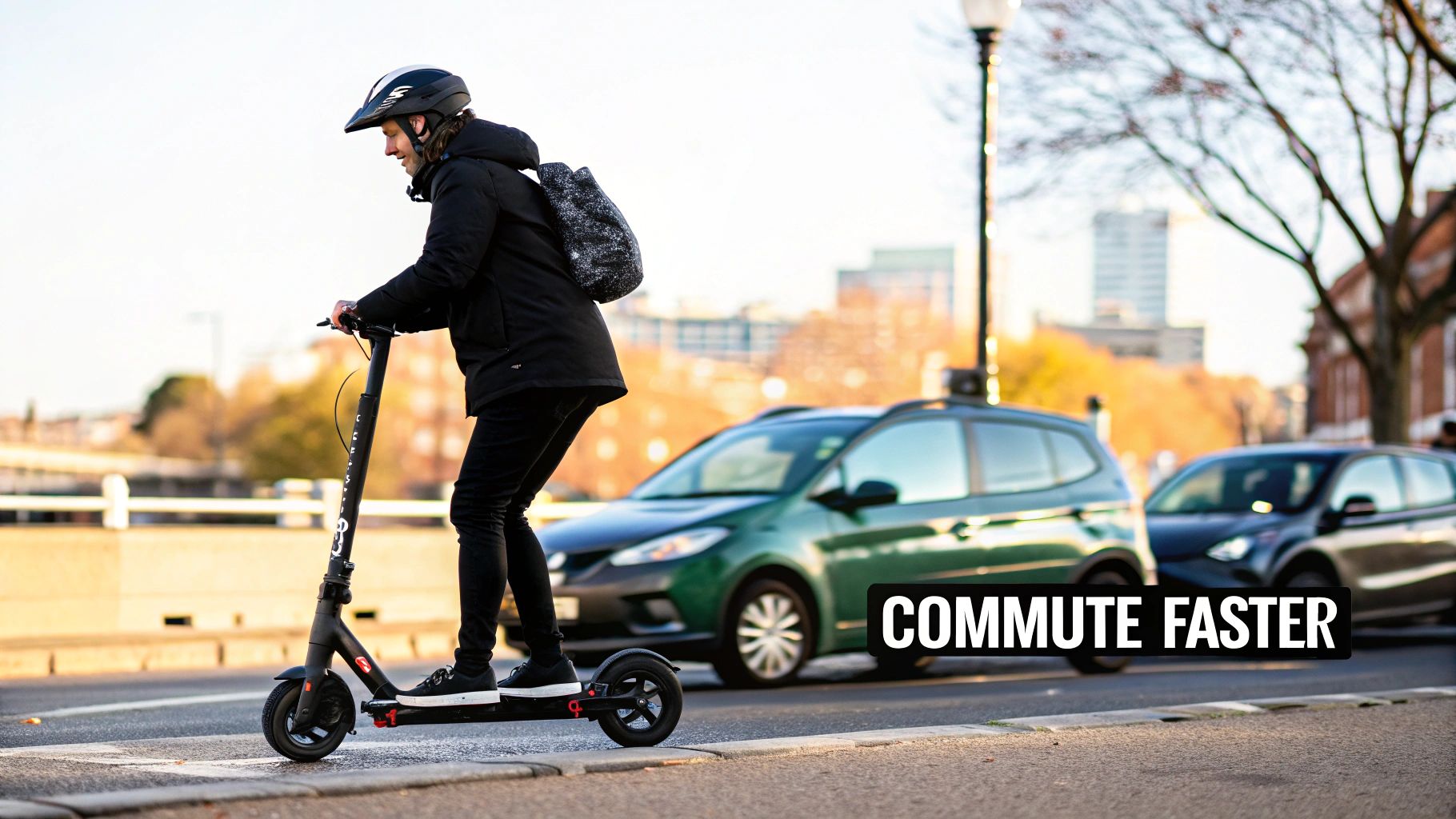
Does your daily commute feel like a constant battle against the clock, whether you're stuck in traffic on the I-5 or waiting for a train that might never show up? You're not alone. Electric scooters are quickly becoming the secret weapon for thousands of people across the US and Australia who want a smarter way to get around the city. This isn't just a fleeting trend; it’s a real shift in how we think about getting from A to B.
And the numbers back it up. The global electric scooter market is on track to explode from USD 38.4 billion in 2025 to a staggering USD 91.1 billion by 2035. That kind of growth doesn't happen by accident. It’s a direct answer to the daily headaches of traffic jams and sky-high fuel prices, making e-scooters a genuinely practical choice. You can dig into the specifics in the full electric scooter market report.
The Real-World Benefits for US and Australian Commuters
Let's get down to what this actually means for your daily grind. Instead of sitting in your car watching the minutes tick by, you could be zipping past the gridlock, turning a miserable 45-minute crawl into a breezy 15-minute ride. It’s not just about getting there faster; it’s about taking back control of your mornings and evenings.
Here's a quick look at how an e-scooter really compares to the usual suspects:
| Commute Method | Time Efficiency | Cost Efficiency | Stress Level |
|---|---|---|---|
| Electric Scooter | High (Bye-bye, traffic!) | Very High (Tiny running costs) | Low |
| Personal Car | Low (Stuck in jams) | Low (Fuel, insurance, parking) | High |
| Public Transport | Medium (Delays, crowds) | Medium (Ticket prices add up) | Medium |
By switching to an electric scooter, the average commuter can save thousands of dollars per year on fuel and public transport fares alone. Honestly, the reduction in daily stress might be even more valuable.
Before we dive deeper into scooters, it helps to see the bigger picture. The move toward electric mobility is happening everywhere, and you can read more about the benefits of electric driving to see why so many people are ditching fossil fuels for good.
More Than Just a Ride—It’s a Lifestyle Change
Ultimately, choosing an e-scooter for your commute is about more than just a new gadget. It’s a conscious decision to build a less stressful, more enjoyable, and greener lifestyle. And with solid, urban-focused models from brands like Glion and Niu, making that switch has never been more straightforward.
Getting to Grips With the Specs That Actually Matter for Commuters
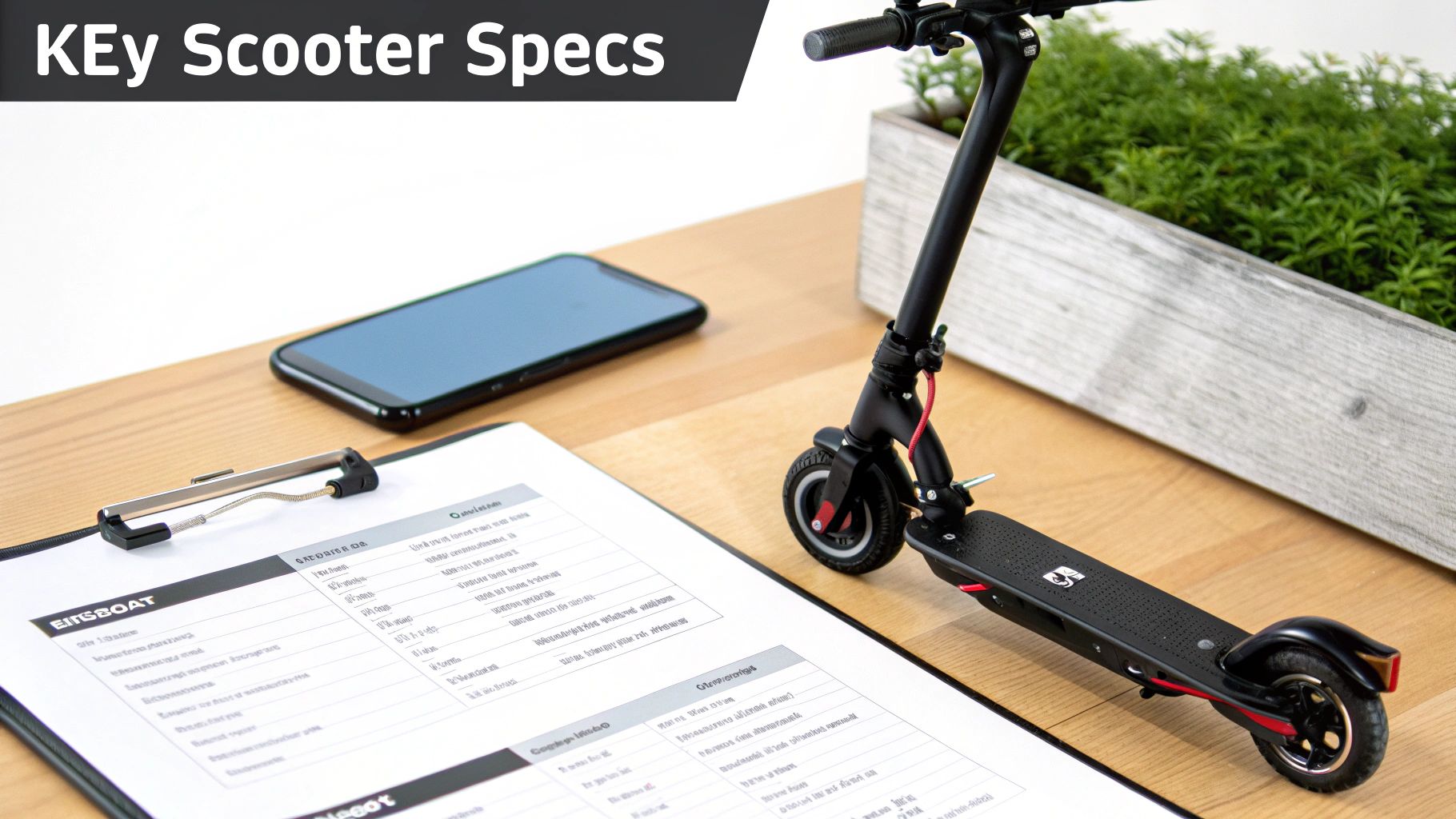
Staring at a scooter’s spec sheet can feel a bit like trying to decipher a secret code. You're hit with a wall of numbers and tech jargon, and it's tough to figure out what any of it means for your actual, real-world ride to work.
Let’s cut through the noise. We're going to break down the big four—range, motor power, weight, and suspension—into plain English. Forget what it says on the box; let's talk about what these specs mean when you're actually out there on the pavement.
Before we dive into the details, it's helpful to see how these features stack up and why they're crucial for your daily trip. This table gives a quick overview of what to look for and how it impacts your commute.
Key Commuter Spec Showdown
| Commuter Feature | What It Means | Why It Matters for Your Commute |
|---|---|---|
| Range (Miles/km) | The maximum distance the scooter can travel on a single charge under ideal test conditions. | Your real-world range will be lower. Pick a model with 1.5x to 2x your daily round-trip distance to avoid "range anxiety" and have a buffer for hills, wind, and battery aging. |
| Motor Power (Watts) | The strength of the motor. More watts generally means better acceleration and hill-climbing ability. | A 250W-500W motor is fine for flat cities like Melbourne. If you have hills like San Francisco on your route, you'll need a more powerful motor to avoid slowing to a crawl. |
| Scooter Weight (lbs/kg) | The total weight of the scooter. Lighter scooters are easier to carry and lift. | This is critical if you use public transport or have stairs. A super-portable scooter is a must for "last-mile" trips, while a heavier one is fine if you're riding door-to-door. |
| Suspension & Tyres | The system that absorbs bumps (suspension) and the type of tyres (solid or air-filled). | This is your comfort factor. Air-filled tyres and a good suspension system will save your back and arms from the rattling of rough pavements, potholes, and cracked sidewalks. |
Understanding these specs in context is the key to choosing a scooter you'll love riding every day, not one that just looks good on paper.
Range: How Far Can You Really Go?
That big, bold range number on the box? Take it with a pinch of salt. Manufacturers test their scooters in a perfect world—think a super-light rider on a perfectly flat, smooth surface with no wind. Your commute is definitely not that.
What really matters is your round-trip distance. If your office is 5 miles away, a scooter with a 10-mile "max range" is a recipe for disaster. You’re cutting it way too fine, leaving no room for a quick detour, a strong headwind, or the simple fact that batteries lose a bit of their oomph over time.
A good rule of thumb is to look for a scooter with at least 1.5x to 2x your daily round-trip mileage. This gives you peace of mind, so you're not constantly worried about the battery indicator on your way home.
A scooter with a 30-mile range isn't just for marathon journeys. It’s perfect for someone who mixes their commute, maybe riding to the train station and then from the station to the office. You'll have plenty of juice for the whole day without breaking a sweat.
Motor Power: Conquering Your Route
Motor power, measured in watts (W), is all about two things: getting up to speed and tackling hills. For most city commuters on relatively flat ground, a motor between 250W and 500W has plenty of poke to get the job done.
But if your daily route involves a monster hill, a wimpy motor will leave you stranded. A 350W scooter might just give up, forcing you into the walk of shame. This is where you need something with more muscle. Brands like Apollo pack more powerful motors, ensuring you can fly up inclines without losing all your momentum.
For a more in-depth look at this, our guide on how to compare electric scooter specifications really gets into the nitty-gritty of motor performance.
Scooter Weight and Portability
You don't think about a scooter's weight until you're lugging it up three flights of stairs after a long day. Trust me, portability can be just as important as performance.
Think about your specific journey:
- The "Last-Mile" Commuter: Hopping on and off trains or buses? You need something light and nimble. An ultra-portable model like a Glion Balto, which can weigh as little as 26 lbs, is a lifesaver. It folds in a flash and won't feel like a dead weight in a crowded station.
- The Direct Commuter: Riding all the way from A to B? A heavier scooter is totally fine. That extra weight usually comes with benefits like a bigger battery and a more planted, stable feel on the road.
Be honest about your daily routine. If you know you'll be lifting it often, every single pound matters.
Suspension and Tyres: The Comfort Factor
Finally, let’s talk comfort. Your ride quality hinges almost entirely on the suspension and tyres, and it can make or break your commuting experience. Most US and Australian cities are a patchwork of dodgy pavements, cracked sidewalks, and the occasional pothole.
Solid tyres are great because they're puncture-proof, but they transmit every single bump directly to your bones. It can be a jarring ride. Air-filled (pneumatic) tyres, on the other hand, are a world apart. They act as natural shock absorbers, smoothing out all those little imperfections in the road.
Add a real suspension system into the mix, and you're in for a treat. A good setup, whether it's spring-based or hydraulic, soaks up the bigger hits and vibrations. This isn't just a luxury; it's what keeps you from arriving at work feeling like you've been in a tumble dryer.
Comparing Top Commuter Scooter Styles
Figuring out the best electric scooter for your commute isn’t about finding one “perfect” model. It's about matching the type of scooter to your actual, real-world daily grind. Your route, how much you need to carry it, and the local climate are the big players here.
Let's break down the main categories so you can find the right commuting partner. We’ll look at three very different profiles: the ultra-portable "Last-Mile Connector," the tough "All-Weather Voyager," and the beastly "Long-Distance Powerhouse." Each one is built for a specific kind of commuter.
The Last-Mile Connector
This is your ultimate urban sidekick. It's designed for people who mix and match their travel, like hopping on a train and then scooting the final stretch to the office. The whole game here is portability.
Models from Unagi and Glion are the kings of this category. What makes them tick?
- Seriously Lightweight: Tipping the scales at around 12-15 kg (26-33 lbs), you can actually carry one up a flight of stairs or onto a packed train without getting death stares.
- Folds in a Flash: They're designed to collapse in seconds, so you’re not fumbling around when you're in a rush to catch your connection.
- Tiny Footprint: Once folded, it’s small enough to slide under your desk at work or tuck into a luggage rack. Out of sight, out of mind.
Of course, there's a trade-off for all that convenience. You're not getting a powerhouse. With smaller motors (usually around 350W) and batteries, they’re perfect for flat city streets but will whine a bit on steep hills. The range is built for short hops, not cross-city expeditions.
The bottom line: The Last-Mile Connector is your best bet if your commute involves jumping on and off public transport. Its light, foldable design is what makes navigating a mixed-mode journey practical.
The All-Weather Voyager
For the truly dedicated US or Australian commuter, riding isn't just a fair-weather hobby. The All-Weather Voyager is built for the reality of varied climates—damp roads, unexpected storms, and hot pavement. These scooters are all about durability, safety, and a comfortable ride, even if they aren't the lightest.
Brands like Segway-Ninebot really get this. They build resilient machines that are basically reliable workhorses, designed to get you there safely, rain or shine.
Here’s what sets them apart:
- Better Water Resistance: They often have higher IP ratings, like IPX5 or above. This means the important electronics are sealed up tight against splashes, giving you some much-needed peace of mind when the clouds roll in.
- Solid Grip and Brakes: These scooters usually have bigger, air-filled tires that grip much better on wet tarmac. Pair that with a good set of disc brakes, and you get stopping power you can actually trust in the damp.
- Sturdy Build: You can feel the difference. They're built with solid frames that feel more planted and stable, which is incredibly reassuring when you’re navigating slick city streets.
These models are heavier, for sure. You won't want to be carrying them very far. But for someone who needs a dependable, door-to-door ride, that resilience is a massive win. You still shouldn't ride through a torrential downpour, but the All-Weather Voyager gives you the confidence that a bit of rain won't ruin your day.
The Long-Distance Powerhouse
What if your commute is a straight shot, no public transport required? This is where the Long-Distance Powerhouse takes over. These are the titans of the scooter world, built for pure performance, serious range, and tackling whatever the road throws at them.
We're talking about the dual-motor beasts from brands like Kaabo. Forget portability; this is all about raw capability.
- Dual-Motor Muscle: With a powerful motor in both wheels, you get incredible acceleration and the ability to laugh in the face of steep hills. Seriously, inclines that would stop a lesser scooter are no problem at all.
- Go-All-Day Range: These things are packed with massive batteries. We’re talking real-world ranges of 30 miles (50 km) or more on a single charge. Range anxiety simply isn't a thing.
- Plush Suspension: To handle the higher speeds and longer rides, they come with heavy-duty dual suspension. This soaks up bumpy roads and potholes, giving you a ride that stays comfortable for the long haul.
And for those who want to take the comfort level up a notch on those long trips, exploring an electric scooter with a seat for adults can be a game-changer.
The rise of these powerful commuting tools is genuinely changing how we get around cities. Back in 2024, the e-scooter market was already valued at USD 1.99 billion, and it's on track to hit nearly USD 3 billion by 2032. For commuters, this boom means real-world benefits: studies show e-scooter riders get where they're going 22% faster in congested areas and save about $1,200 a year on transit passes. The US and Australia are seeing massive adoption, with scooters becoming a key part of urban transport planning. You can dig into more of the numbers on the global electric scooter market growth.
Ultimately, the right scooter for you comes down to the unique demands of your daily journey. Once you nail down what you need most—be it portability, weather resistance, or raw power—you can pick the style that will truly make your commute better.
Sorting Out E-Scooter Laws in the US and Australia
Before you even think about hitting the pavement, you need to get your head around the local rules of the road. The legal situation for electric scooters in the United States and Australia is a real patchwork, with laws that can change dramatically from one state—or even one city—to the next.
Getting this wrong can mean a hefty fine or, even worse, getting your scooter taken away. A little homework now will save you a massive headache later and keep your commute smooth and stress-free.
What's the Deal in the US?
The laws for private e-scooters in the US are highly localized. There's no single federal law, so it all comes down to state and city ordinances. This means what's legal in Los Angeles might be totally different in New York City.
Here are some common themes you'll find:
- California: Generally, e-scooters are treated like bicycles. You're allowed in bike lanes, and helmets are required for riders under 18. Speed is typically capped at 15 mph (24 km/h).
- New York: After a long ban, e-scooters are now legal in many parts of the state (with NYC having its own specific rules). They are generally allowed on roads with speed limits of 30 mph or less.
- Florida: Florida has very permissive e-scooter laws, allowing them pretty much anywhere bicycles can go.
The big takeaway for the US is to check your local city and state laws. A quick search for "[Your City] electric scooter laws" on Google is the best first step. Don't assume the rules are the same one town over.
A Look at Australia
Australia is also a patchwork of state-based regulations, and the rules can be quite strict in some places.
Here's a quick look at how a couple of major states handle it:
- Queensland (QLD): One of the most scooter-friendly states. Private e-scooters are legal on footpaths and in bike lanes, with speed limits of 12 km/h on paths and 25 km/h elsewhere.
- New South Wales (NSW): The rules here are much tighter. Currently, you can only legally ride private e-scooters on private property. Public use is restricted to shared rental schemes in trial areas.
- Victoria (VIC): Similar to NSW, private e-scooter use on public roads and paths is largely prohibited, though rental trials are underway.
This just goes to show how critical it is to check the local rules. A scooter that's perfectly legal for your commute in Brisbane might get you into trouble in Sydney. Laws are evolving quickly, so always check your state's transport authority website for the most up-to-date information before you head out. It's a simple step that makes sure every ride is a safe and legal one.
Which Scooter Matches Your Commute?
Finding the right electric scooter for your daily commute isn't just about picking the one with the biggest numbers on the spec sheet. It's about matching the machine to your real-world journey. The "best" scooter is the one that fits your life, not the other way around.
To make it easier, we've broken it down into three common commuter profiles. See which one sounds like you.
But first, a quick reality check on the rules. Where you live is the first and most important filter.
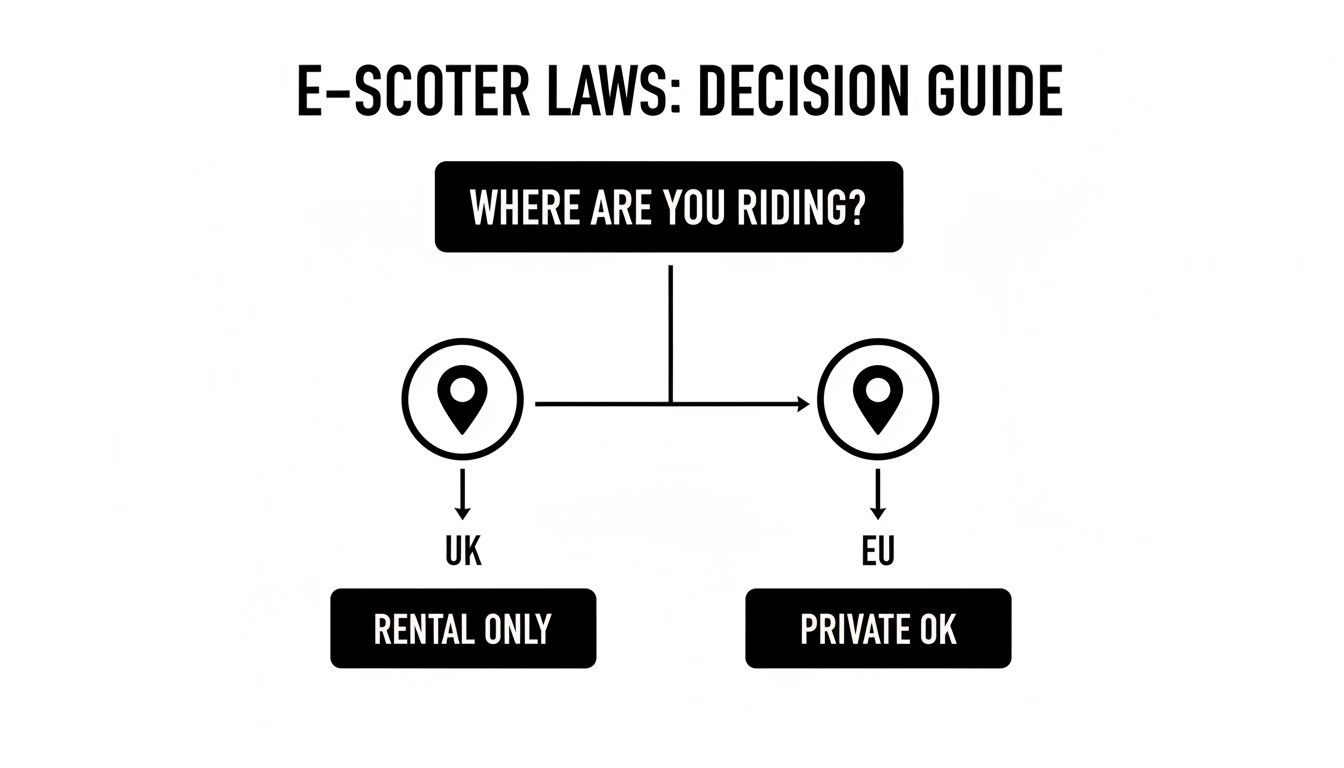
The long and short of it? If you're in a scooter-friendly state in the US or Australia (like QLD), you're generally good to go with your own private scooter. In more restrictive areas like NSW or parts of the US, you may be limited to rental schemes or specific local trials for now. Always check local laws first!
With that in mind, let's meet our commuters.
The City Hopper: Master of the Mixed Commute
First up is the City Hopper. Their day involves a blend of transport: a quick scoot to the train station, a ride into town, then another short scooter leg to the office. For this person, speed and range take a backseat to one thing: portability.
The City Hopper's perfect ride is something ultra-light and foldable, like a Unagi Model One. Here’s why it just works:
- Truly Lightweight: These scooters are built to be carried. You won't be dreading that flight of stairs at the station or lifting it onto a packed train.
- Folds in a Flash: No one wants to be that person, awkwardly fumbling with a scooter while the train doors are about to close. These fold down in seconds.
- Stows Away Neatly: Once folded, it's small enough to slide under a desk or into a luggage rack, staying completely out of everyone's way.
When your commute involves multiple modes of transport, how much the scooter weighs and how fast it folds become far more critical than its top speed. The goal is a seamless, stress-free transition from riding to carrying.
A City Hopper knows they're trading off some battery life and power. But since their scooter trips are short and mostly on flat city pavement, it's a trade they're happy to make for a hassle-free journey.
The Suburban Explorer: Going the Distance in Comfort
Next, we have the Suburban Explorer. Their commute is longer and more direct, starting from a residential neighborhood and heading into the city. They're dealing with varied road qualities and need a scooter that won't leave them stranded with a dead battery.
For this rider, a scooter from a brand like Niu is the obvious choice. It’s built for exactly these kinds of longer trips.
- Real-World Range: A bigger battery means they can do the whole round trip without a shred of battery anxiety, even if they have to run an errand on the way home.
- Smooths Out the Bumps: Let's be honest, suburban roads can be rough. Good suspension is non-negotiable for a comfortable ride, soaking up cracks and potholes.
- Big, Cushy Tyres: Large, air-filled tyres act as another layer of suspension, giving you a much smoother ride and better grip on less-than-perfect surfaces.
The Suburban Explorer probably isn't carrying their scooter anywhere; they’re riding it from their front door to the office door. For them, a stable, comfortable machine with a long range is the definition of a great commuter scooter.
The Power Commuter: Taming the Urban Jungle
Finally, let's meet the Power Commuter. Their route might be direct, but it's a challenge. We're talking steep hills, dense traffic, and the need to keep up with the city's pulse. They aren't just commuting; they're conquering an obstacle course.
This rider needs a beast. They need a high-performance scooter, like something from Apollo, where raw power and performance are the name of the game.
- Dual-Motor Power: With a motor in both the front and back wheels, these scooters have incredible torque. They don't just climb hills; they eat them for breakfast, holding their speed where lesser scooters would bog down.
- Traffic-Ready Top Speed: To ride safely in a busy city, you need to be able to keep up with the flow. A higher top speed lets the Power Commuter blend in with traffic instead of being an obstacle.
- Serious Stopping Power: All that "go" needs a lot of "stop." High-end braking systems, usually with dual disc brakes, deliver the confident stopping power you need when navigating unpredictable urban traffic.
It’s easy to see why so many are making the switch. In places like the US and Australia, government incentives and infrastructure investments are helping the market grow rapidly. For the individual, owning a scooter can cut total commuting costs by a massive 70% compared to a motorbike, and modern safety features have helped reduce accident rates by 40% versus traditional bikes. You can read more about the global shift to electric two-wheelers and see just how big this movement is becoming.
Got Questions About Commuting by E-Scooter? We've Got Answers.
Deciding to switch to an electric scooter for your commute is a big step, and it's totally normal to have a few questions before you take the plunge. We get it. You're probably wondering about the day-to-day practicalities.
Let's dive into some of the most common questions we hear from new riders. Think of this as the final piece of the puzzle, giving you the confidence to ditch the traffic and start enjoying your daily travel.
How Do I Charge My Electric Scooter at Work?
This is probably the number one question on every potential commuter's mind. The good news is, it's way easier than you think. Most scooters, like the ones from Hiboy and Segway, come with a simple charger that plugs into any standard wall outlet—just like your phone or laptop.
The power brick is usually small enough to tuck away in your backpack. It’s always a good idea to get the green light from your office manager first, but most workplaces are pretty cool about it. A full charge often takes between four to six hours, so you can juice it up while you work and have plenty of power for the ride home, plus any detours you might make.
Can Electric Scooters Handle US or Australian Weather?
Ah, the weather dilemma! Here’s the deal: no electric scooter is 100% waterproof, but the good commuter models are built to be highly water-resistant. You'll see this reflected in their IP (Ingress Protection) rating, which is often IPX4 or similar. That means your scooter can easily handle a bit of drizzle and splashing through puddles, something brands like Niu and Segway focus on.
Just remember, there's a huge difference between 'water-resistant' and 'waterproof.' Your scooter will be fine in a light shower, but you should definitely avoid riding through a torrential downpour or submerging it in deep water. That’s the quickest way to fry the electronics.
A great habit to get into is giving your scooter a quick wipe-down with a dry cloth after a wet ride. A little extra attention to the charging port and display will go a long way in keeping your ride in top shape for years.
What Kind of Maintenance Does a Commuter Scooter Need?
One of the biggest perks of switching to an e-scooter is just how low-maintenance they are, especially when you compare them to a car or even a bike. Your regular checklist is short and sweet.
- Tyre Pressure: This is the big one. Always make sure your tyres are inflated to the right pressure. It makes a massive difference in your range, gives you a smoother ride, and is your best defense against punctures.
- Brakes: Before you head out, just give the brakes a quick squeeze to make sure they feel tight and responsive.
- Check for Loose Screws: Daily rides mean vibrations, which can sometimes loosen screws around the handlebars or folding mechanism. A quick once-over every few weeks will keep everything feeling solid.
Honestly, that's about it. Keep it clean, keep the battery charged, and do these quick checks, and your scooter will be a reliable workhorse for your daily commute.
Ready to find the perfect ride that fits your daily journey? At Punk Ride LLC, we’ve curated a selection of the best electric scooters from top brands to match every commuter’s needs. Explore our collection today and transform your travel. Find your ideal commuting partner at https://www.punkride.com.
Share:
Your Guide to an Electric Bicycle with Removable Battery
Your Guide to Electric Scooter Top Speed