


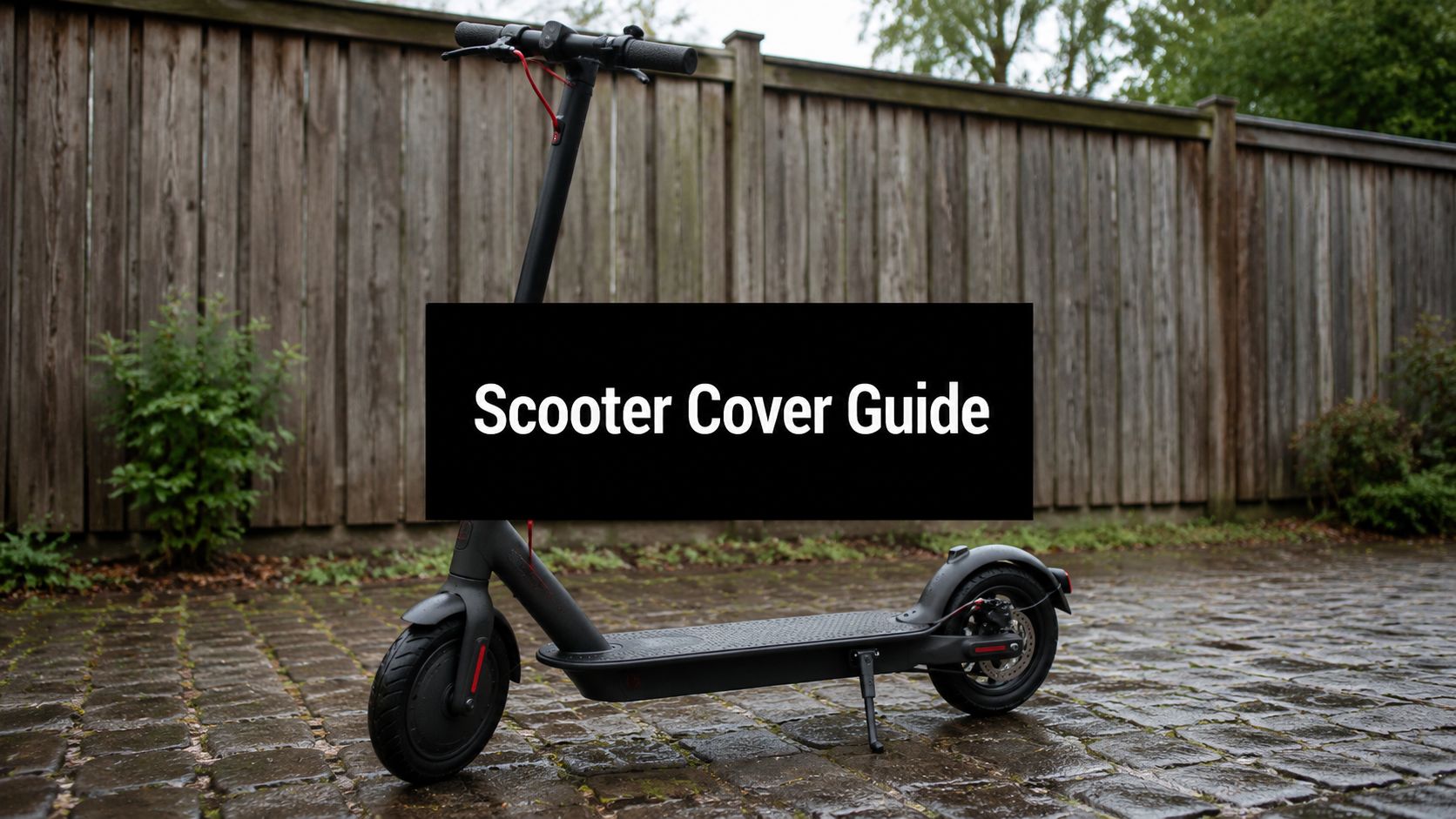
You get home in the rain, lean your scooter outside the front step, and tell yourself it'll only be there for the night. By morning, the deck is damp, the controls feel clammy, and the whole thing looks far more exposed than it did when you parked it. That's normal in the UK and a lot of Europe. It's rarely dramatic weather that causes the hassle. It's the steady drizzle, damp air, dirty spray, shared entrances, and awkward storage that wear things down.
A decent cover won't make a scooter indestructible. It will make daily ownership much easier. It keeps grime off, reduces how much rain reaches vulnerable areas, hides the scooter from casual attention, and helps if your only realistic storage spot is a hallway corner, shared shed, courtyard, or bike rack.
Why Your Electric Scooter Needs a Cover
If you ride regularly, your scooter stops feeling like a gadget pretty quickly. It becomes your commute, your station run, your backup when the bus doesn't show, or the thing that gets you across town without hunting for parking. Once it's part of your week, leaving it uncovered feels a bit reckless.

That matters more now because the market isn't built around throwaway fleet use in the same way it once was. US federal transportation data shows shared e-scooters operated in 189 cities in 2022 and 133 cities in 2025 as consolidation reshaped the sector, according to federal bikeshare and e-scooter data. For everyday riders, the practical takeaway is simple. Personal ownership and long-term maintenance matter more, so protective accessories matter more too.
Daily protection beats occasional rescue
The problems a cover solves are boring, which is exactly why they're important:
- Rain exposure: Not just heavy rain. Fine mist and repeated dampness are often worse because people ignore them.
- Dust and grit: Shared sheds and outdoor corners coat a scooter faster than most riders expect.
- Sun and fading: Even in northern Europe, UV still cooks plastics, trim, and cheaper fabrics over time.
- Visual concealment: A covered scooter attracts less casual attention than one sitting fully exposed.
A cover is often less about surviving a storm and more about stopping small exposures from becoming a constant maintenance job.
UK and EU riders also deal with storage that generic guides miss. Terraced house hallways are narrow. Flat entrances are shared. Bike rooms are crowded. If you also store furniture or other kit in a damp outbuilding, practical guides on solutions for furniture storage are useful for the same reason scooter covers are. They help you think in terms of moisture, dust, abrasion, and airflow rather than just “put something over it.”
It also helps when the scooter is indoors
A lot of riders think covers are only for outdoor parking. Not true. Indoors, a cover keeps hallway walls cleaner, stops wet tyres brushing against coats and bags, and makes a folded scooter less awkward in a communal space.
If your scooter has already been caught out a few times, it's worth understanding whether electric scooters can get wet so you're not assuming “a bit of rain” means “no problem.”
Decoding Cover Materials and Weatherproofing
Most disappointment with electric scooter covers starts with one bad assumption. People read “waterproof” on a listing and think the job is done. It isn't. The fabric matters, but the whole material system matters more.

For outdoor storage, the key technical point is that UV-resistant, waterproof fabrics help reduce sun damage and moisture ingress, while stitched seams are a known weak point that can turn an otherwise waterproof textile into something only highly water-resistant, as explained in this guide to scooter cover protection and style. That's why good covers last longer in real weather and cheap ones fail around the joins.
What the material names usually mean in practice
Listings often throw around polyester, nylon, and Oxford cloth as if they tell you everything. They don't, but they do hint at how the cover will behave.
| Material | Pros | Cons | Best For |
|---|---|---|---|
| Polyester | Usually light, easy to fold, fine for sheltered use | Can feel flimsy in wind if the build is cheap | Indoor storage, covered porches, light weather |
| Nylon | Often stronger for repeated handling, better tear resistance in many covers | Can still fail fast if seams and hems are poor | Daily commuters taking the cover on and off often |
| Oxford cloth | Usually feels heavier-duty and more robust | Bulkier to store, can be overkill for indoor-only use | Outdoor parking, shared sheds, exposed courtyards |
The exact spec still matters. A lightweight cover can work well if the stitching, hem, and cut are right. A thick cover can still be annoying if it traps moisture or fights you every time you fit it.
Waterproof isn't the whole story
If you're buying for UK drizzle, Dutch damp, or a shared bike shelter in Germany or France, focus on these details first:
- Sealed or reinforced seams: Rain often sneaks in first at these junctures.
- UV-resistant fabric: It protects the cover itself from going brittle and helps with long-term outdoor use.
- Smooth inner surface: Less chance of rubbing against painted or plastic parts.
- Reasonable weight: Heavy enough not to flap wildly, light enough that you'll still use it daily.
Practical rule: A cover you can fit in under a minute gets used. A “better” one that's awkward often ends up left at home.
It also helps to think beyond scooters. A lot of the same weatherproofing mistakes show up in marine gear. Articles on preventing boat cover issues are useful because they highlight familiar failure points like poor fit, trapped moisture, and stitching stress.
If your storage worries overlap with e-bikes too, this guide on electric bike rain cover choices is worth a look because the same material trade-offs apply.
What works and what usually doesn't
What works:
- A medium-to-heavy cover with proper seam attention
- Fabric that dries reasonably fast after use
- Material that doesn't turn stiff and noisy in cold weather
What doesn't:
- Ultra-thin bargain covers that feel like disposable tent lining
- Glossy coatings that crack after repeated folding
- Big waterproof claims with no mention of seams, vents, or fastening points
Getting the Perfect Fit for Your Scooter
Fit decides whether a cover protects your scooter or just sits on top of it badly. Too loose, and wind gets under it, the fabric rubs against the scooter, and the whole thing can shift half off overnight. Too tight, and you'll stress the zipper, hem, or stitching every time you pull it over the bars.

Vendor sizing data shows common cover dimensions around 58 inches long, 55 inches high, 27 inches in handlebar width, and 12 inches in rear deck width, with other size systems offered in 50/60/70 inch classes, according to RoadRunner scooter cover sizing information. That's why one-size-fits-all usually isn't true in practice.
Measure these points before you buy
Use a tape measure and check the scooter unfolded if that's how you store it.
-
Total length
Measure from the furthest point at the front wheel to the furthest point at the rear. -
Maximum height
Go from the ground to the highest fixed point, usually the handlebars. -
Handlebar width
This catches a lot of people out, especially on chunkier commuter and off-road models. -
Deck or rear section width
Useful if the scooter has a broad rear platform, side bags, or unusual frame shapes. -
Added accessories
Phone mounts, mirrors, baskets, and seat kits all change how a cover sits.
A visual walkthrough helps if you're not used to measuring gear. This short video shows the sort of sizing mindset that makes cover buying much easier:
Aim for slight clearance, not bagginess
You want enough room to get the cover on without wrestling with it, but not so much that it balloons in the wind.
- Good fit: Slides over bars and deck with a little spare room
- Bad fit: Excess fabric pooling near the wheels
- Also bad: Corners stretched tight over brake levers or grips
If the cover snags every time on the same point, the problem is usually fit, not technique.
For riders in flats or shared buildings, this matters even more. A badly fitting cover is slower to use, and anything slow gets skipped on busy mornings.
Tips for Easy Installation and Storage
The best cover is the one you'll use on a dark weekday evening when it's raining sideways and you just want to get indoors. Ease matters.
Make installation routine, not a wrestling match
Most riders do best with the same sequence every time:
- Start at the handlebars: Hook the front section over the bars first so the shape is anchored.
- Pull down over the stem: This keeps the front from slipping off while you move back.
- Drop the rear over the deck and wheel: Don't yank. Guide it into place.
- Secure hems or buckles last: Fasten the underside once the cover is sitting naturally.
If the cover has an elastic hem, let the elastic do the work. Don't overstretch it trying to make an oversized cover look fitted. If it has a belly strap or buckle, tighten it enough to control flapping, not so hard that it distorts the fabric.
Don't pack a wet cover away
Plenty of covers start to smell grim if you remove a wet cover and shove it straight into a bag, hallway cupboard, or under-seat box, where moisture lingers in the folds. Over time that leads to mildew, stale odour, and fabric that never feels properly clean again.
A better habit is simple:
- Shake off surface water first
- Hang it open when you get home
- Let both sides dry before folding
- Wipe grit off the lower edge before storage
If space is tight, hang it over a bannister, shower rail, utility rack, or even the back of a sturdy chair near airflow. In small UK homes and city flats, that's usually enough.
Fold it the same way every time
Repeatedly crumpling a cover into a tight ball wears coatings and creates stress lines. A simple rectangle fold works better and makes the next use much quicker. If you want a cleaner method, this guide on how to fold a scooter is useful because the same principle applies to storage discipline. Consistent folding saves time.
Leave the charging port area and controls dry before long storage. A cover helps, but it shouldn't trap existing moisture against the scooter.
Best habits for messy weather
A few small habits make a big difference:
- Keep one microfibre cloth nearby: Handy for wiping the scooter before covering it.
- Check the hem for road grit: Grit at the bottom edge acts like sandpaper.
- Rotate the cover occasionally: If one side always faces the weather, inspect that side more often.
- Air it out on dry days: Even a weatherproof cover benefits from occasional ventilation.
Essential Security and Convenience Features
A basic sheet of fabric is better than nothing, but the details decide whether a cover is useful in real life. The best electric scooter covers do three jobs at once. They protect from weather, stay put, and make the scooter less appealing to opportunistic thieves.

Lock holes and access points
A reinforced lock hole, often called a grommet, is one of the most useful features on any cover meant for street or shed use. It lets you run a lock through the scooter while keeping the cover in place. That matters because removing a cover takes time and effort, and small delays often discourage casual interference.
What you want:
- Metal-reinforced lock openings
- Placement low enough to work with real locking points
- No sharp edges that chew through the fabric
What often goes wrong is poor placement. Some lock holes are technically present but awkward to use once the cover is on. If the opening doesn't line up with a sensible place to secure the scooter, it's decoration.
Air vents and condensation control
A sealed cover sounds ideal until you use one through a damp winter. Without some airflow, moisture can linger underneath from the scooter itself, from wet roads, or from temperature changes overnight.
Good vents help with:
- Reducing condensation
- Speeding up drying
- Stopping the cover from ballooning in gusts
Poor vents can also become water entry points if they're badly designed. The best ones are shaped or sheltered so they allow airflow without acting like funnels.
A cover should block rain from above while still letting moisture escape from underneath.
Buckles, hems, and reflective details
Underbody buckles matter more in windy places than most product listings suggest. In exposed courtyards, canal-side flats, and coastal towns, they're often what stops a cover becoming a flag.
Look for:
- Elastic hems that grip without digging in
- Adjustable buckles that are easy to use with cold hands
- Reflective strips if the scooter sits near cars, pavements, or shared parking areas
Reflective panels won't stop theft, but they do make a covered scooter easier to spot at night. That's handy in communal garages and roadside parking spots where visibility is poor.
Features worth skipping
Some extras sound useful but don't add much:
- Complicated zip panels that create more leak points
- Tiny storage pouches sewn onto the cover that add bulk
- Overbuilt straps everywhere that slow down daily use
The best feature set is usually modest. Strong hem, sensible venting, usable lock access, and fabric that doesn't fall apart after repeated folding.
Checking Compatibility with Popular Scooter Models
Cover fit gets more complicated once you compare real scooter shapes. Two scooters can look similar in photos and need very different covers once you account for handlebar width, tyre size, stem height, and accessories.
Compact commuters
Scooters from brands such as ISCOOTER and some AOVO models often suit a more compact cover profile. These are usually easier to store in hallways, under stairs, or in office corners, so a bulky all-weather cover can feel excessive if the scooter only occasionally sits outside.
With compact commuter models, the usual mistakes are:
- buying a cover that's too long
- leaving too much loose fabric near the wheels
- ignoring added width from phone mounts or mirrors
A neater fit is better here. It looks tidier, installs faster, and won't drag on dirty ground when the scooter is folded.
Mid-size daily riders
Brands like HITWAY, RCB, and some EVERCROSS scooters often sit in the middle. They're not tiny, but they're not huge off-road machines either. These benefit from covers that balance weather resistance with manageable size.
For this category, pay closest attention to:
- handlebar span
- stem height
- whether a rear rack or basket changes the silhouette
If you lock the scooter outside a station or in a shared bike shed, lock-hole placement and lower buckles become more important than raw fabric thickness alone.
Larger and off-road style scooters
A chunkier scooter from DUOTTS, HIDOES, IENYRID, or MINIWALKER usually needs more generous dimensions and more forgiveness around the bars and tyres. These scooters can also have broader decks, more pronounced suspension hardware, and accessories that make standard commuter covers sit awkwardly.
For larger models, look for:
- extra height for taller bars
- wider cut around the front end
- heavier material that won't flap hard against bigger frames
If you own a larger scooter, don't buy by brand label alone. Measure the actual machine you have in front of you.
Folded versus unfolded storage
People often get tripped up by a folded scooter's change in shape. It may become shorter, but it can also become harder to cover neatly because the bars and stem create odd pressure points.
If you store your scooter folded in a hallway or boot, a lighter dust-and-damp cover may be enough. If you park it unfolded outdoors, prioritize shape, fastening points, and seam quality over compact packed size.
Buying and Shipping Covers in the UK and EU
Buying the right cover isn't only about specs. It's also about where it's shipping from, how quickly it arrives, and whether returning the wrong size will be a headache.
The global electric scooter market is projected to reach USD 98.96 billion by 2033, according to Grand View Research on electric scooter market growth. The same analysis points to major markets including Germany and France, which helps explain why accessory demand keeps expanding alongside scooter ownership. For UK and EU riders, that usually means more options, but also more mixed-quality listings.
What to check before ordering
A product page should make a few things clear without forcing you to guess:
- Exact dimensions: Not “universal fit”
- Material description: Preferably with mention of UV resistance and seam treatment
- Fastening method: Elastic hem, buckle, lock access
- Storage guidance: Especially if the cover will be used daily in damp weather
- Dispatch location: UK, Germany, wider EU, or overseas
If a listing is vague on dimensions, skip it. If it only shows studio photos and no close-up of seams or hems, be cautious.
Why local warehousing matters
For riders in the UK and mainland Europe, local warehousing makes the whole process smoother. It usually means faster delivery, easier returns, and fewer surprises after checkout. That matters with covers because fit can be slightly off even when you measure carefully, especially on scooters with aftermarket accessories.
It also helps with seasonality. A cover ordered during a wet spell is usually needed now, not several weeks from now. Reliable regional fulfilment is part of the product experience.
Buy for your weather, not somebody else's climate
A lot of generic advice is written for places that get intense but brief downpours, or for riders with detached garages and loads of space. UK and EU buyers often need something else:
- Better resistance to persistent damp
- Easy drying between uses
- Compact storage in small homes
- Secure fastening for shared outdoor areas
That's why the best buying decision is usually the least glamorous one. Choose the cover that matches your parking reality, not the thickest or cheapest option on the page.
If you want a cover from a retailer that understands electric mobility and can serve UK and EU riders efficiently, take a look at Punk Ride LLC. With a broad range of scooter and e-bike brands and warehouse support in the UK and Germany, it's a practical place to start when you need gear that fits real commuting use.
Share:
Electric Scooter Kit: Your UK & EU Upgrade Guide for 2026
Bike Looks Like Dirt Bike: Buyer's Guide 2026