


The ride usually starts the same way. You roll away from home feeling fresh, then hit a red light, a damp junction, a short rise that somehow feels steeper in work clothes, and a bus lane that demands quick decisions. By the time you reach the office in London, Berlin, or another busy European city, you're not thinking about motor design. You're thinking about whether the bike felt smooth, predictable, and easy to live with.
That's where the ebike hub motor matters. It's the quiet helper built into the wheel, and for a lot of city riders it's the reason a commute feels manageable instead of tiring. It doesn't ask you to understand engineering before you enjoy it. You just notice that starts are easier, headwinds sting less, and you arrive less sweaty.
The Secret Engine of Your City Ride
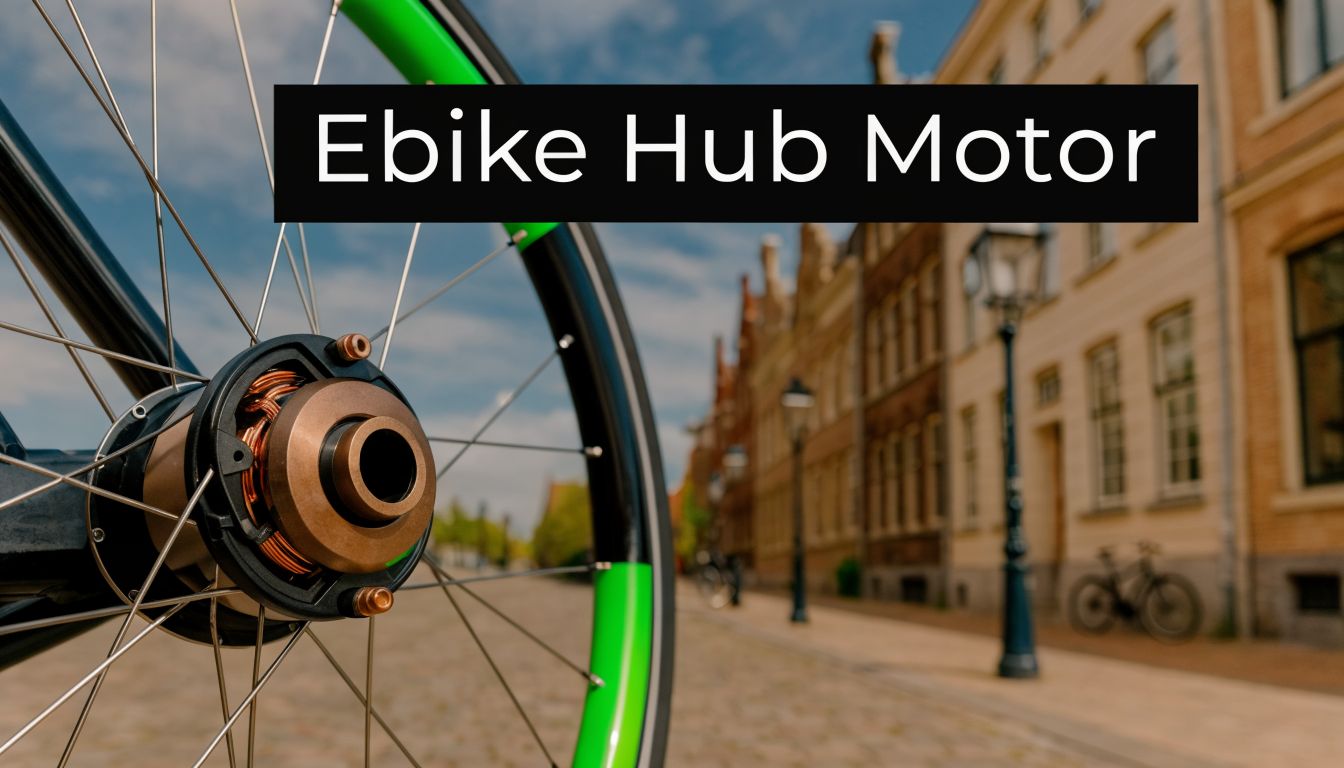
A hub motor is easy to overlook because it hides in plain sight. On many ebikes, the motor sits in the centre of the front or rear wheel, looking like a slightly oversized hub. No dramatic shape. No exposed moving parts. Yet that little drum is doing the hard part of city riding: helping you pull away from traffic lights, smoothing out short climbs, and taking the edge off stop-start commuting.
For UK and EU riders, that matters more than many guides admit. A lot of online advice comes from markets that focus on higher power and open-road speed. Daily riding in Europe is different. You're dealing with tighter streets, legal power limits, bike lane manners, wet mornings, and mixed traffic where smooth control matters more than brute force.
The popularity of hub motors isn't a niche trend. The e-bike motor market, dominated by hub motors, was valued at $28.4 billion in 2023 and is projected to grow at a 16.5% CAGR through 2034 to reach $150.3 billion, according to Fact.MR's e-bike motor market analysis. That tells you something simple: riders keep choosing this setup because it works for everyday transport.
Why commuters notice them first
The average rider doesn't fall in love with hub motors because of spec sheets. They notice practical things:
- Easier starts: Pulling away from a junction feels less awkward.
- Less drivetrain fuss: The motor pushes the wheel directly, so the chain doesn't take all the strain.
- Calmer riding: Power delivery can feel steady and beginner-friendly in city traffic.
For commuting, the best motor isn't the one that sounds impressive in a forum. It's the one that disappears into the ride and lets you focus on the road.
That “invisible helper” quality is why hub motors suit so many urban riders. They're not trying to turn your bike into a motocross machine. They're trying to make Tuesday morning easier.
How a Hub Motor Actually Works
A hub motor works a bit like an electric fan, except instead of spinning blades, it spins your wheel. The basic idea is simple: electricity flows from the battery into the motor, magnets react to that electrical energy, and the wheel turns. Once you get that picture in your head, the black-box mystery fades pretty quickly.

The parts that do the work
Inside a typical ebike hub motor, four pieces matter most:
- Stator: This is the fixed part. It stays still while doing the magnetic work.
- Copper coils: Electricity runs through these coils and creates a magnetic field.
- Rotor: This is the part that rotates.
- Magnets: These sit on the rotating section and respond to the magnetic field from the coils.
To visualize this process, imagine a carefully timed magnetic nudge. The controller sends power to different coils in sequence. That changing magnetic field pulls and pushes the magnets around in a circle. The outer shell rotates, and because that shell is part of the wheel hub, the wheel rotates with it.
Why brushless matters
Most ebike hub motors are brushless DC motors. “Brushless” sounds technical, but the practical meaning is easy: there are fewer wear parts rubbing inside the motor. That's one big reason hub motors have a reputation for low maintenance. You don't have little brushes wearing down and needing regular replacement.
For a commuter, the takeaway is more useful than the term itself:
Practical rule: If you want a system that can handle routine city miles without constant tinkering, a brushless hub motor is one of the simpler options in the ebike world.
What the controller and sensors do
The motor doesn't act alone. The controller is the traffic manager. It decides how much power to send and when. The bike's sensors tell it what you're doing, such as pedalling or requesting assistance. On some bikes, the assistance can feel very gentle. On others, it feels quicker and more eager.
That's why two hub-motor ebikes can feel completely different even if the motor placement looks similar. The motor provides the muscle, but the controller and sensors shape the personality.
Why this design suits city riding
A hub motor drives the wheel directly. It doesn't need to route power through the bike's chain and gears in the same way a mid-drive does. For urban use, that often means straightforward behaviour. You pedal, the system assists, and the bike gets moving without much drama.
That simplicity is a big part of the appeal. If you're commuting through wet streets, locking the bike outside work, and riding home half tired, simple is good.
Geared Hubs Versus Direct-Drive Hubs
You leave a traffic light in London. A bus is pulling out, the lane is narrow, and you want the bike to get up to pace quickly but politely. In that moment, the difference between a geared hub and a direct-drive hub matters more than any spec sheet.

Both are hub motors, but they solve the job in different ways. A geared hub is the compact city option. A direct-drive hub is the heavier, calmer option. For UK and EU commuters riding within the 250W legal limit, that trade-off often matters more than raw power claims you see in US-focused guides.
Geared hubs: better at the first few bike lengths
A geared hub motor has a small motor inside that spins quickly, plus internal gears that reduce that speed and turn it into stronger turning force at the wheel. It works a bit like using a low gear in a car to pull away cleanly from a stop.
That gives geared hubs their character. They usually feel more eager at low speed, which is exactly where urban riders spend a lot of time. Traffic lights, mini roundabouts, painted cycle lanes, short bridge ramps, and repeated stop-start riding all favour a motor that wakes up early rather than one that prefers to settle in once you are already rolling.
For a commuter in Berlin or Manchester, this often means less fuss pulling away in normal clothes and less temptation to surge aggressively just to keep up with traffic. You get assistance where city riding asks for it most.
There is a cost. Those internal gears add mechanical complexity, and geared hubs are often a little noisier than direct-drive motors. Not loud, usually just a faint whirr.
Direct-drive hubs: smoother once rolling
A direct-drive hub motor skips the internal reduction gears. The hub shell is part of the motor itself, so the wheel is driven in a more direct, simpler way internally.
On the road, that usually feels smoother and more muted. Riders who value a very quiet bike often like direct-drive systems for that reason. They can also feel more stable at steady speed, which suits flatter commutes and riders who prefer a calm, even response instead of a punchy launch.
The trade-off is weight and low-speed feel. Because there are no reduction gears helping the motor multiply force at the wheel, direct-drive hubs tend to be larger and heavier for the same job. Under UK and EU power limits, that can make them feel less lively in stop-start city traffic, especially if your route includes frequent starts on slight inclines or wet junctions where smooth control matters.
Some direct-drive hubs can also offer regenerative braking. That sounds attractive, but urban commuters should keep expectations realistic. In flat cities and short braking zones, the energy recovered is usually modest. The more noticeable benefit is often the braking feel on certain setups, not a dramatic boost in range.
For everyday city riding, geared hubs usually feel quicker off the mark. Direct-drive hubs usually feel quieter and steadier once you are up to speed.
Which suits a UK or EU commuter better?
For many legal-limit commuter ebikes, a geared hub is the easier recommendation. It matches the actual rhythm of urban riding. Start, slow, filter, stop, repeat. It also tends to keep the bike feeling less cumbersome when you carry it up steps, wheel it through a station, or park it in a hallway.
Direct-drive hubs still make sense for some riders. If your route is mostly flat, you value quiet running, and you care more about a planted feel than brisk acceleration, they can be a good fit. They are just less common in this part of the market because the usual city commute in Europe rewards low-speed responsiveness more than high-speed cruising.
If you are also weighing a hub motor against a crank-based setup, our guide to the best mid-drive electric bike options for commuting helps clarify where each design fits.
A quick comparison makes the difference easier to spot:
| Type | Best for | Strong point | Trade-off |
|---|---|---|---|
| Geared hub | Stop-start city commuting | Better pull-away feel at low speed | More internal parts, slight motor whirr |
| Direct-drive hub | Flatter routes and steady cruising | Quiet, smooth running, possible regen braking | Heavier feel, less eager from a standstill |
If you want a visual explanation of how the two designs differ in practice, this video gives a helpful overview after you've got the basics in mind:
Hub Motors Compared to Mid-Drive Motors
The biggest debate in ebikes isn't really front hub versus rear hub. It's hub motor versus mid-drive. Riders often talk about it as if one side must be right and the other must be wrong. In the workshop, that's rarely how it goes. It's mostly a question of what kind of ride you want, and how much maintenance you're willing to live with.
A hub motor pushes the wheel. A mid-drive powers the bike through the crank area and works through the chain and gears. That difference changes the whole feel of the bike.
How they feel on the road
A hub motor often feels like an external helping hand. You pedal, and the bike gets a gentle shove forward. Many city riders like that because it's intuitive. It doesn't demand much technique, and it can be especially reassuring in traffic.
A mid-drive often feels more blended with your pedalling. Because it works through the drivetrain, it can feel more “bike-like” to experienced cyclists. It also responds strongly to your choice of gear, which can be great on steeper climbs.
The practical commuter difference
For urban use, the day-to-day trade-offs matter more than theory.
| Feature | Hub Motor | Mid-Drive Motor |
|---|---|---|
| Ride feel | Pushes the wheel directly | Amplifies your pedalling through the drivetrain |
| City starts | Often smooth and easy | Strong, but more tied to gear choice |
| Maintenance | Usually simpler | More drivetrain wear and more system complexity |
| Cost direction | Often more budget-friendly | Often pricier |
| Best match | Commuters, casual riders, conversion builds | Riders who want a more natural pedal feel or tackle steeper routes often |
If you're comparing complete bikes, it helps to see a focused breakdown of what makes a good mid-drive electric bike.
Where people get confused
A lot of new riders assume a mid-drive is automatically “better” because it sits in the middle of the bike and often appears on premium models. That's not the right question. Better for what?
If your ride is mostly paved streets, cycle lanes, moderate inclines, and daily practicality, a hub motor can be the more sensible choice. It gives simple assistance, often asks less from the chain and cassette, and can keep ownership less fussy.
Choose the motor that fits the ride you actually do, not the ride you imagine doing twice a year.
Mid-drives shine when terrain gets more demanding or when a rider wants that tightly integrated pedalling feel. Hub motors shine when you want dependable city help without turning every maintenance job into a drivetrain discussion.
Decoding Ebike Motor Specs and Power
Spec sheets can make simple things sound complicated. You'll see W, V, and Nm, and it's easy to think you need an engineering degree to compare bikes. You don't. You just need to translate those numbers into what they feel like at a junction, on a mild hill, and in a headwind.

What watts, volts, and torque mean
Watts describe power. For UK and EU commuters, this is especially important because legal pedal-assist bikes are typically built around the 250W standard. That number doesn't mean the bike will feel weak. It means the bike is designed within the local rules, and the way the controller delivers assistance matters as much as the headline figure.
Volts relate to the battery system. You can think of voltage as part of the bike's electrical pressure. It affects how the system delivers power.
Torque, measured in Nm, is the shove you feel when starting or climbing. According to Movcan's technical guide to e-bike motor torque, modern hub motors typically range from 30Nm for lightweight city models to over 90Nm for performance versions, with efficiency ratings of 80% or higher. In plain language, higher torque usually means the bike feels more eager when the light turns green.
What those numbers feel like in daily riding
Here's the practical version:
- Lower torque city bikes: Often feel smooth and polite, ideal for flatter routes and calmer riding.
- Higher torque hub motors: Feel more confident when carrying a bag, climbing a ramp, or restarting in traffic.
- Efficient motors: Waste less energy as heat, so more of the battery goes into moving the bike.
If battery questions are on your mind, this guide on electric bike battery life and what affects it is worth reading alongside motor specs.
What matters most for UK and EU riders
In Europe, don't get distracted by power numbers from overseas content that doesn't reflect local rules. For commuting, the useful questions are better than the flashy ones:
- Does it pull away smoothly in traffic?
- Does the torque suit your hills and cargo?
- Does the system feel controlled on wet roads?
A well-tuned 250W commuter ebike can feel far more pleasant than a poorly tuned bike that looks stronger on paper. Specs matter, but setup matters more than many buyers expect.
Choosing Your Perfect Commuter Hub Motor
You leave work in the rain, the bike lane is crowded, and there are four traffic lights between you and home. In that kind of commute, the best hub motor is the one that pulls away calmly, grips well on damp roads, and never feels like it is trying to rush the people around you.
Choosing a commuter hub motor in the UK or EU is slightly different from following high-power advice meant for other markets. Because of the 250W legal limit, the primary concern is not how wild the bike feels. The central question is how well it fits your route, your weather, and your daily stop-start riding.

Three commuter types I see all the time
The flat-city rider
This rider is common in central London, Berlin, or anywhere with decent bike lanes and mostly level streets. You want help getting up to speed without fuss, and you care more about a natural feel than hard acceleration. A lighter, well-tuned hub motor usually suits this job well.
The mixed-route commuter
Your ride includes bridge ramps, short climbs, rough junctions, and constant traffic lights. You need a motor that responds quickly at low speed, because that first few metres after each stop shapes the whole ride. This is often where a rear hub setup feels more settled and easier to trust.
The all-weather practical rider
You ride through drizzle, cold mornings, and shiny winter roads. Your bike probably has mudguards, lights, a rack, and maybe panniers. For this rider, predictable power matters more than sporty feel. Gentle delivery is easier to manage on wet paint, metal drain covers, and slippery corners.
Front hub or rear hub
Motor position changes the bike more than many new riders expect.
A front hub motor can work well on calmer, flatter routes, especially on simple commuter builds and some conversion bikes. But on wet streets, the front wheel has less weight pressing down on it, so it can feel a bit nervous if you accelerate while turning or crossing slick surfaces.
A rear hub motor usually feels more natural in city riding. The back wheel carries more rider weight, so traction is often better when the light turns green. For many commuters, that makes the bike feel calmer and more polite in traffic, which matters in busy cycle lanes where smooth starts are part of good etiquette.
If you are fitting a kit, wheel repairs are part of the decision too. A motorised wheel is a little less convenient to deal with at the roadside, so it helps to read up on basic ebike tyre repair before choosing a hub conversion.
What to prioritise for a city commute
Start with your real commute, not the marketing sheet.
If your route is mostly flat, a simple city-focused hub motor is often enough. If you carry shopping, a laptop, or child-seat weight, look for a bike known for smooth low-speed pull rather than flashy numbers. If your area gets regular rain, traction and controllable assistance should move higher up your list.
Noise matters too. A quieter motor feels less intrusive on shared paths and bike lanes, and that can make the whole bike seem better mannered in urban riding.
A simple buying checklist
Before you choose a bike or conversion kit, ask these questions:
- How often do you stop and restart? Dense traffic rewards smooth low-speed response.
- How wet are your roads for half the year? Grip and predictable power matter more in winter.
- How much are you carrying? A backpack is one thing. Panniers, groceries, and child-carrying are another.
- Do you want a very simple ownership experience? Hub motors appeal to many commuters because they are usually straightforward.
- Will you be locking it outside often? A practical commuter should be easy to live with, not just nice on a test ride.
A good commuter ebike should feel easy on an ordinary Tuesday, not only exciting for ten minutes outside the shop. That same practical mindset applies to accessories and gifts too. If you also enjoy finding memorable gear for road cyclists, keep that separate from your motor choice. Your daily bike should first solve the ride you do.
Hub Motor Maintenance and Quick Fixes
A hub motor suits city commuting partly because it asks for less fuss than many riders expect. For a London or Berlin commute, that matters. You want a bike that starts on a damp morning, handles repeated traffic lights, and gets you home without turning every small noise into a workshop mystery.
The good news is that most hub motor problems start small and stay manageable if you catch them early. The motor is like a sealed wheel part with a few supporting pieces around it. In practice, the weak points are usually the cable, the connectors, the wheel itself, or a simple setup issue.
The checks worth doing regularly
Start with a quick look before or after a ride, especially through autumn and winter.
- Check the motor cable near the axle: It should not be twisted, pinched, or rubbing on anything sharp.
- Look at the connectors: If they are loose, dirty, or wet inside, power delivery can become patchy.
- Listen for new sounds: Clicking, grinding, or a pulsing feel under assistance means something has changed.
- Inspect the wheel: Hub motors add weight to the wheel, so spokes, rim straightness, and tyre condition matter more than many commuters realise.
A puncture on a hub motor wheel can feel more intimidating than it should. If you want the basics before you end up fixing one in the rain, this guide to ebike tire repair before your next roadside fix is worth a read.
When the motor suddenly feels weak
A weak-feeling bike does not always mean the motor itself is failing. On 250W UK and EU commuter bikes, the cause is often simpler and more boring.
Start with four checks:
- Make sure the battery is charged and fully seated. A battery that is slightly loose can cause cut-outs over bumps.
- Check the display for an error code. Many systems will point you toward the fault.
- Inspect the sensor wires and visible cables. One loose connection can interrupt assistance.
- Give the system a few minutes to cool if the bike has been working hard at low speed. Stop-start traffic, extra luggage, and repeated restarts can build heat.
That last point catches out urban commuters more than hill-climb marketing would suggest. In UK and EU city riding, you often spend more time pulling away from lights than cruising flat-out. A hub motor can handle that well, but repeated slow starts in heavy clothes, with panniers, on wet roads, can warm the system up and make assistance feel softer for a while. That is often the bike protecting itself.
If the power returns after a short pause, heat was likely the issue.
Small habits that prevent bigger headaches
Wet-weather habits make a bigger difference than many spec sheets suggest. After a rainy ride, dry around the axle, cable entry point, and battery contacts. You do not need to pamper the bike. You just want to stop water and road grit from sitting where electrical parts meet.
Smooth take-offs help too. In crowded bike lanes, they are better manners, and they also reduce stress on the motor and wheel. That is useful on legal 250W bikes, where controlled support matters more than dramatic acceleration anyway.
A few other habits pay off over time:
- Keep tyres properly inflated: A soft tyre makes the motor work harder and increases puncture risk.
- Watch spoke tension: If the wheel starts going out of true, book it in before a few loose spokes become a cracked rim.
- Avoid pressure-washing the bike: A gentle rinse and cloth are safer around seals and connectors.
- Pay attention after kerb hits or potholes: The motor may be fine, but the wheel hardware could have taken the impact.
And if you are buying for someone who treats bike maintenance like part of the hobby, this guide to finding memorable gear for road cyclists has some thoughtful ideas.
A commuter hub motor is less like a high-strung race part and more like a good city boiler. It should work without fuss in the background. Give it basic care, keep the wheel healthy, and deal with small faults early, and it will usually stay dependable through a long, wet urban season.
If you're comparing ebikes for your daily route and want a setup that suits real city riding, Punk Ride LLC offers a wide range of electric bikes and urban mobility options with UK, Germany, and US fulfilment. Browse the lineup, compare practical commuter models, and pick a ride that matches your streets, your weather, and your routine.
Share:
Compact Electric Bikes for Effortless Urban Travel
The Health Benefits of Riding Electric Bikes