


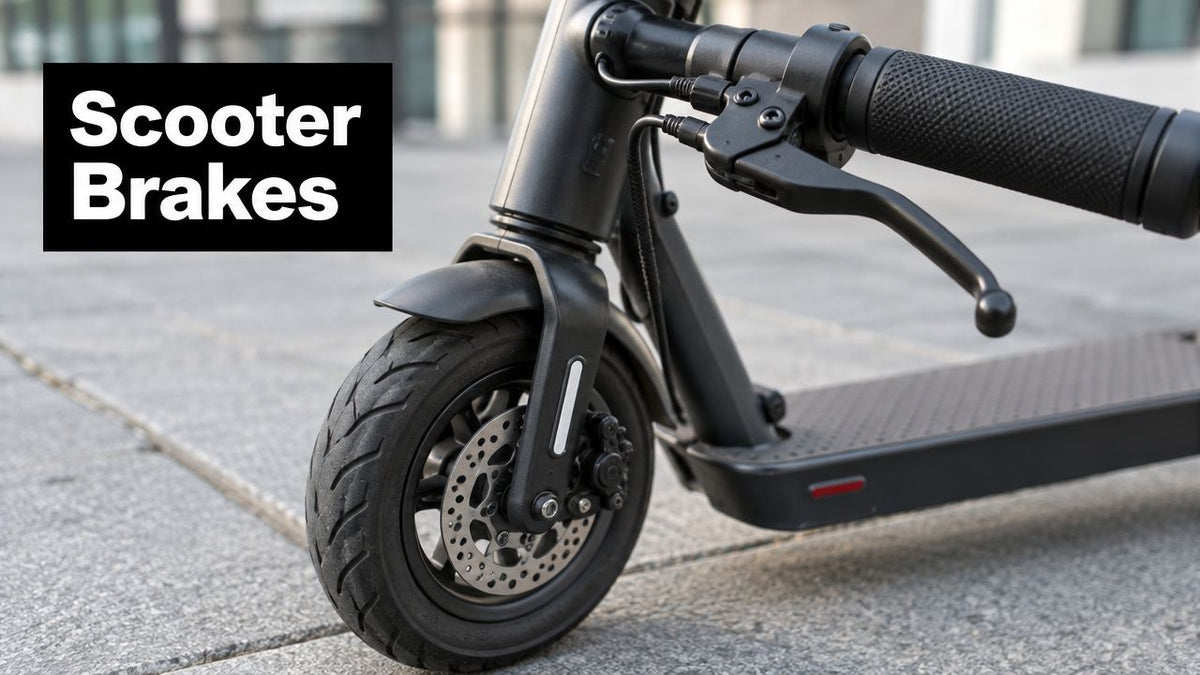
You're rolling along a busy UK cycle route when a car brakes unexpectedly ahead. You squeeze the lever, but the scooter slows later than you expected. That short moment explains why an electric scooter brake matters more than a high top speed. The motor gets you moving, but the braking system, tyres, road surface, and your technique decide whether you stop neatly or lose control.
A scooter brake isn't one isolated component. It's a complete system that must turn motion into controlled deceleration, repeatedly and predictably. The right hardware helps, but a well-maintained brake used correctly matters more than a flashy specification.
Why Your Electric Scooter Brake Matters More Than Speed
Urban riding gives you little room for mistakes. Pedestrians step into a cycle lane, a delivery van pulls out, or another rider stops beside a junction. A scooter that accelerates quickly is enjoyable, but a scooter that slows smoothly gives you time to respond when the street changes.
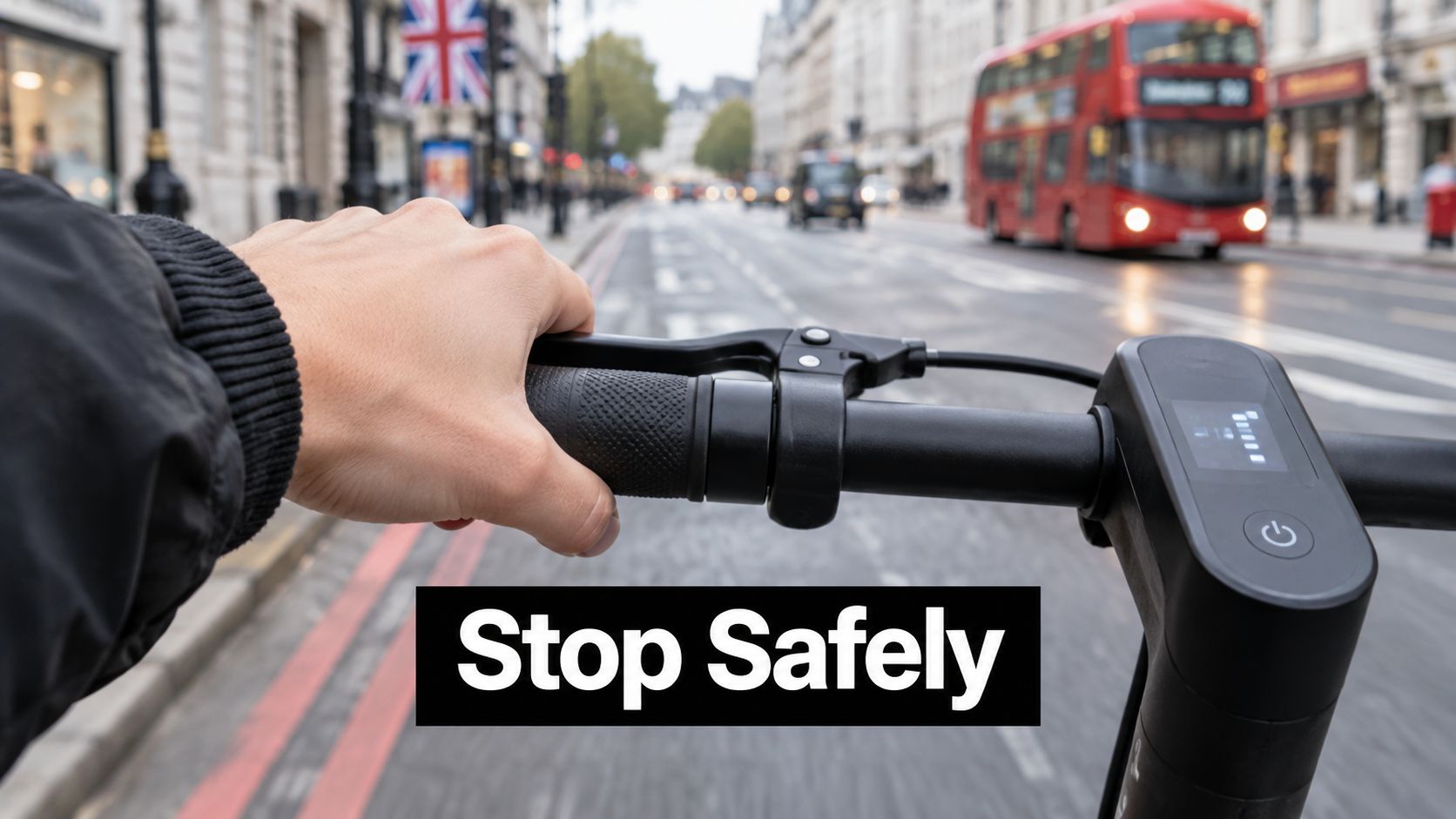
Think of the system like a bicycle or car. Your hand movement starts the process, the cable or hydraulic fluid transfers force, and the pads, drum, motor, or rear foot surface creates resistance. The tyres then transfer that braking force to the pavement. If any part is worn, contaminated, poorly adjusted, or used abruptly, the scooter may not behave as you expect.
Practical rule: A brake that feels strong in a showroom still needs to work on wet pavement, after repeated stops, and with a loaded rider.
The European Union's micromobility guidance recommends a minimum braking deceleration of 4 m/s² and two independent braking devices, with at least one working independently of the scooter's electrical system. The guidance also discusses how separate front and rear brakes improve control, while a brake on every wheel could help preserve stopping ability if one brake fails. These recommendations reflect a simple engineering truth: relying on one front brake can make the scooter less stable during a hard stop. (EU micromobility safety guidance)
Your own hands are part of the equation. Braking shifts weight forward, which can make the rear wheel lighter and easier to skid. A calm, progressive squeeze usually gives you more control than grabbing one lever as hard as possible.
Electric Scooter Brake Types Explained With Real Riding Scenarios
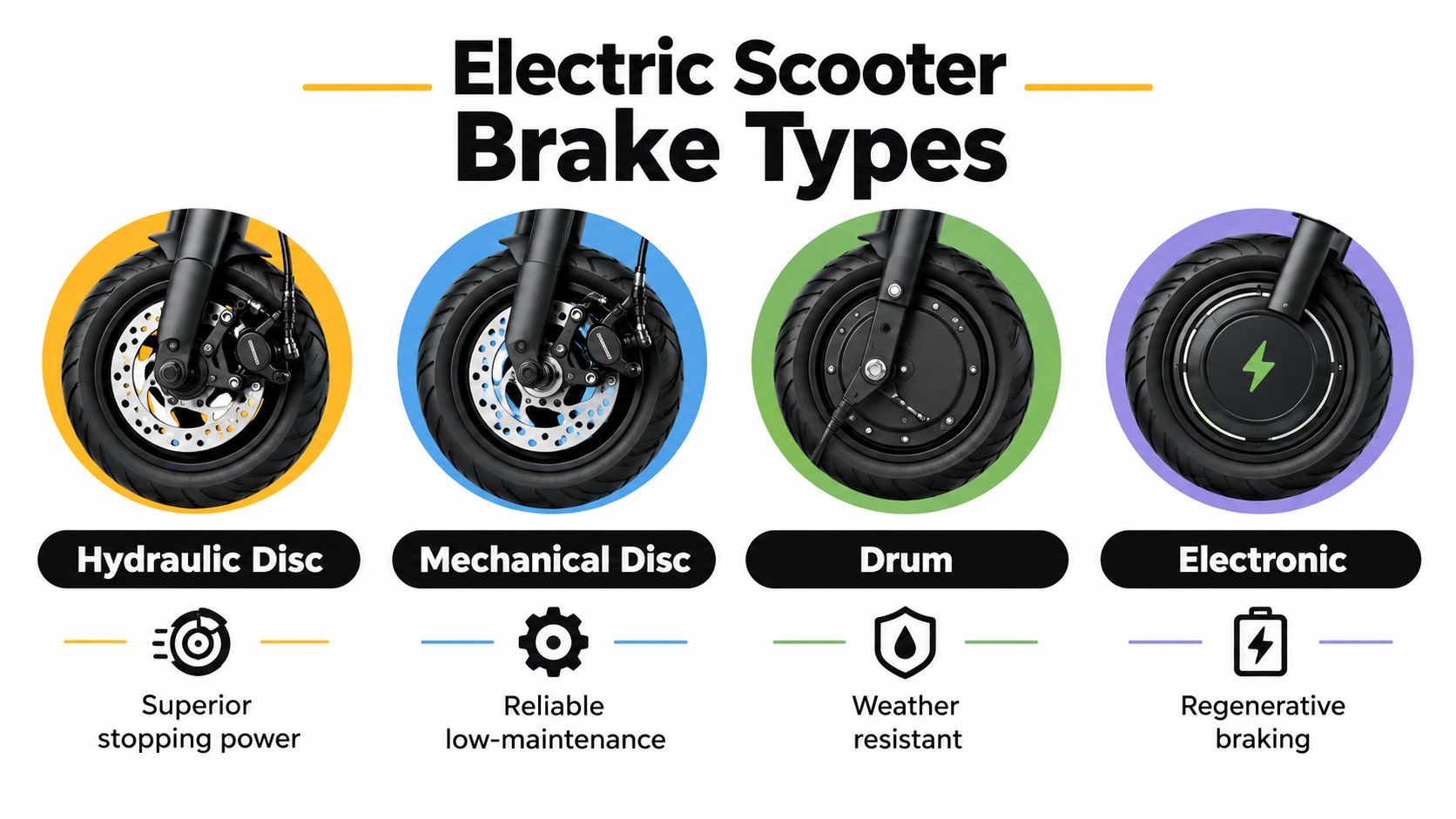
Different brakes suit different routes. A commuter crossing wet streets may value enclosure and consistency, while a heavier rider on steep roads may prefer the direct bite of a hydraulic disc system. Regeneration can make daily riding smoother, but it shouldn't be treated as the only emergency brake.
The main options
| Brake Type | Stopping Power | Maintenance | Wet Weather | Best For |
|---|---|---|---|---|
| Hydraulic disc | Very strong and easy to modulate | Higher skill and component cost | Good with clean, correctly set parts | Hills, heavier riders, demanding routes |
| Mechanical disc | Strong and familiar | Cable adjustment and pad replacement | Good, though exposed parts need cleaning | General commuting and easy servicing |
| Drum | Consistent and enclosed | Usually low | Very good against dirt and moisture | All-weather daily riding |
| Electronic or regenerative | Smooth assistance | Low mechanical wear, but electrical settings matter | Depends on the mechanical brake backup | Gentle deceleration and range support |
| Foot brake | Simple backup | Inspect the contact surface and tyre | Usable, but technique-dependent | Lightweight scooters and emergency backup |
A disc brake works much like a bicycle disc brake. Pads clamp a visible rotor, giving you a direct lever response. Hydraulic systems use fluid pressure and generally offer fine control, while mechanical versions use a cable and are easier for many home mechanics to adjust.
A drum brake hides its friction surfaces inside a housing. That makes it a sensible choice for a UK commuter who rides through spray, grit, and road salt. It may not feel as sharp as a premium disc, but it can deliver dependable everyday control with less exposure to contamination.
A regenerative brake uses the motor as resistance while recovering some energy. One simulation found recovery of up to 35% of the kinetic energy when slowing from 45 km/h to 20 km/h, or 43% of the energy difference between those states. In an experimental comparison, electric braking produced a stopping distance of around 12 m, compared with 8.9 m for a disc brake, so regeneration is best viewed as assistance rather than a full replacement for friction braking. (Regenerative braking study)
The video below gives a visual overview of how scooter braking systems differ.
A foot brake presses onto the rear tyre or a dedicated mudguard surface. It's basic, but it can help if the electrical system stops responding. Don't use it as your only plan on a fast, heavy scooter.
UK and EU Electric Scooter Brake Safety Standards You Should Know
A product listing may say “dual braking” without telling you how the system performs. Standards give you a more useful way to judge the design, especially if you're comparing scooters sold in the UK, Germany, France, or other European markets.
EN 17128:2020 sets a service-brake benchmark of no more than 4.0 m from 20 km/h on dry pavement and no more than 8.0 m in wet conditions. It also includes a parking-brake test on a 7° gradient for at least 3 minutes, plus a fade test involving 10 consecutive stops at 5.0 m/s², with at least 80% residual effectiveness afterward. (EN 17128 brake engineering guide)
Those tests answer practical questions. Can the scooter stop on a damp road, not just a clean test surface? Can the brake keep working after repeated junctions or a long descent? “Fade” is the loss of braking effectiveness caused by heat, much like a car brake that feels less powerful after heavy use.
What independent braking means
European recommendations consistently favour two braking methods that don't depend on the same failure point. One EU and UNECE-style rule text specifies a front and rear brake, both operable without taking either hand away from the steering control. Together they must reach 3.5 m/s² deceleration, while one remaining brake must still deliver at least 44% of the specified braking effect if the other fails. (EU and UNECE-style braking rule text)
UK technical research recommends a mechanically or hydraulically actuated brake on each road wheel and a minimum deceleration of 3.5 m/s² at maximum designed mass. (UK e-scooter construction standards research)
For legal-use questions, check the current rules that apply to your location, including this guide to whether electric scooters are street legal. A standards reference doesn't automatically make every scooter legal on every road.
How To Maintain And Inspect Each Electric Scooter Brake Type
A quick inspection catches many brake problems before they become roadside emergencies. Start with the controls, then inspect the hardware, then test the scooter at walking pace in a clear area.
The supplied maintenance image uses a specific checklist, but the practical routine is broader:
- Check lever movement. Pull each lever gently. A lever that travels to the handlebar, feels spongy, or changes feel between pulls needs attention. Hydraulic systems may need bleeding, while cable systems may need tension adjustment or replacement.
- Inspect disc pads and rotors. Look for thin pads, deep grooves, oil contamination, blue heat marks, or a rotor that moves side to side. Clean the rotor with appropriate brake cleaner, never oily household spray.
- Examine cables and housings. Frayed strands, cracked outer housing, rusty adjusters, or excessive slack can delay engagement. A barrel adjuster may restore tension temporarily, but damaged cables need replacement.
- Test drums carefully. Check the cable tension and lever travel. A drum can look fine outside while its internal friction surfaces wear, so persistent weak braking calls for a technician rather than aggressive adjustment.
- Observe electronic braking. Test regeneration on a quiet, dry surface. If the response changes after an app or firmware update, check the scooter's settings and confirm that the mechanical brake still works independently.
- Inspect a foot brake and tyre. Look for thinning, heat damage, uneven tyre wear, or a brake surface that no longer contacts firmly.
TRL found that more than 50% of e-scooters in its sample had brakes or steering in unserviceable condition, showing why the condition of the scooter can matter more than its original specification. (TRL e-scooter investigation)
For broader checks, use this practical street-legal brake care guide, then compare it with Punk Ride's electric scooter maintenance guide. Don't keep riding if a brake slips, grinds badly, leaks fluid, or fails to hold the scooter during a low-speed test.
Common Electric Scooter Brake Problems And Safe Troubleshooting Steps
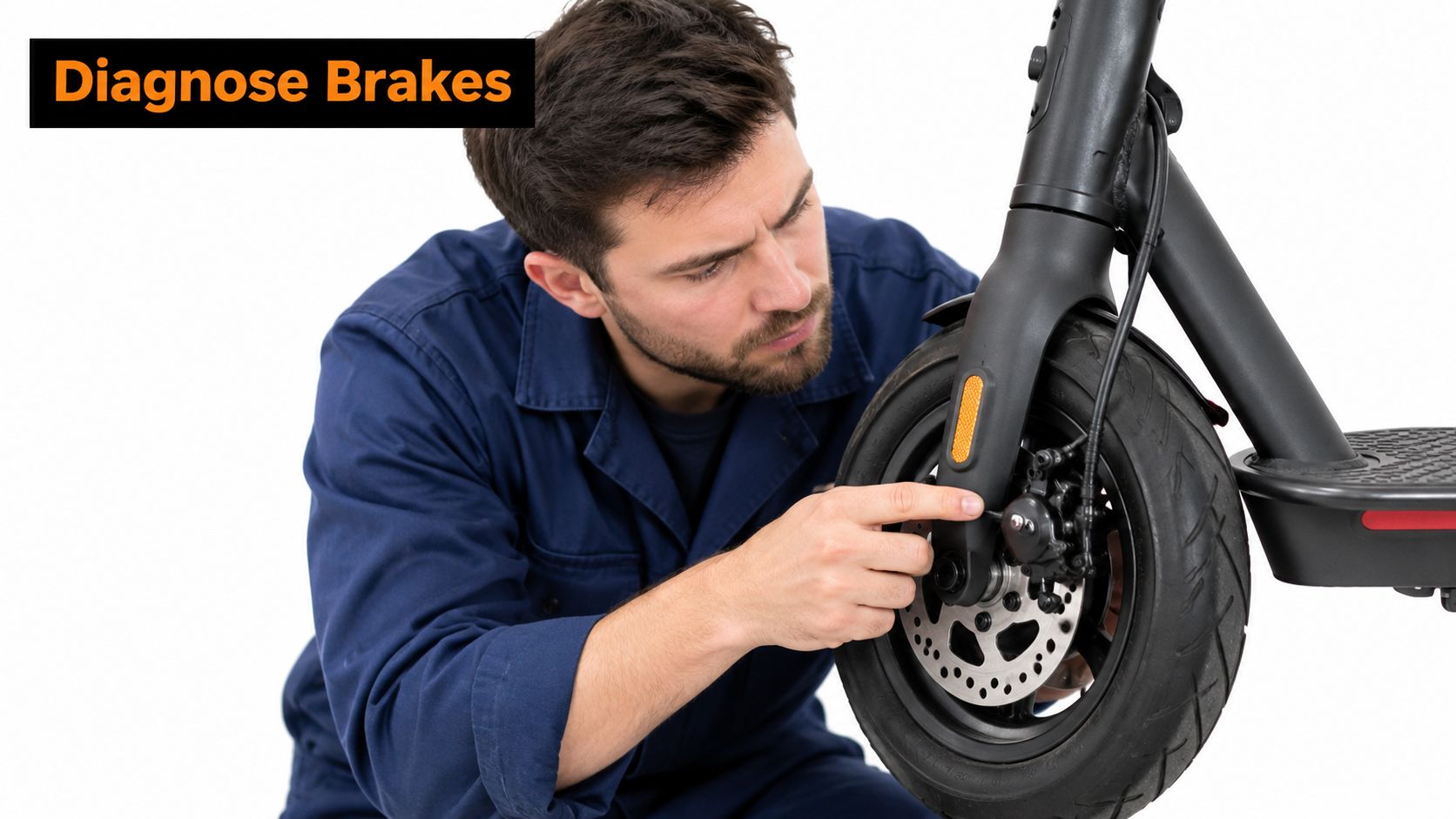
Brake faults usually give you a warning before they become total failures. A soft lever, delayed response, or new scraping noise deserves attention, even if the scooter still stops.
Start with the symptom
Soft or spongy lever: Stop and check for cable slack, damaged housing, or hydraulic fluid leakage. If a hydraulic lever remains soft after basic inspection, it needs proper bleeding or professional service.
Delayed engagement: A stretched cable, misaligned caliper, contaminated pad, or electronic controller issue can create lag. Reduce speed, test each brake separately at low speed, and don't return to traffic until the cause is clear.
Uneven braking: If the scooter pulls to one side, inspect caliper alignment, rotor damage, tyre pressure, and wheel security. A brake that grabs during a turn is especially risky because the tyre is already handling cornering forces.
Squealing or grinding: Light squeal can follow moisture or dirt, but grinding usually means the pad material is exhausted or contamination has reached the braking surface. Stop riding until the rotor and pads have been inspected.
Weak regeneration: Confirm the ride mode and brake settings, then check whether the battery is full or the motor system is limiting regeneration. Electronic braking still needs a dependable mechanical backup.
The U.S. Consumer Product Safety Commission identified brake problems in 16 of 37 investigated e-scooter incidents in one annual micromobility review, with many involving brakes that didn't engage, engaged intermittently, or responded after a delay. A later CPSC report covering 2017 through 2024 recorded 40 reported incidents associated with brake problems and 206 fatalities known to staff across micromobility products. (CPSC micromobility safety data)
If both brakes fail, don't jump off at speed. Ease off the throttle, steer toward a clear escape area, use gentle foot braking if safe, and stop riding for repair. The Ninebot scooter repair guide can help with basic checks, but serious faults need a qualified repairer.
Safer Stopping Habits Every Electric Scooter Rider Should Use
Hardware can't overcome poor technique. The 2024 TU Wien research notes that safety problems aren't primarily caused by the brake system alone, and that riders need to move their body weight rearward and distribute braking force correctly to reduce skidding or overturning. (TU Wien brake-by-wire research)
As you brake, bend your knees slightly and shift your hips back. Apply pressure progressively rather than instantly locking the front wheel or dragging the rear wheel through a corner. On wet pavement, leave more room, brake before the turn, and keep the scooter as upright as possible while slowing.
Practice in an empty, level area. Start slowly, squeeze both brakes evenly, and notice how much lever pressure produces a controlled stop. Repeat after rain or after a tyre change, because grip changes with surface and condition.
Use this pre-ride check
- Feel the levers: Each lever should have a predictable, firm response.
- Test the first metre: Roll slowly and confirm that braking begins without delay.
- Check the tyres: Look for damage, uneven wear, or poor inflation.
- Confirm regeneration: Make sure electronic braking responds as expected, but remember it isn't your only stopping method.
- Plan your escape: Keep enough space to slow before crossings, bends, parked cars, and crowded paths.
An electric scooter brake is safest when hardware, maintenance, and rider behaviour work together. A premium disc won't protect a rider who grabs it while turning on wet paint, and a modest drum system won't feel trustworthy if its cable is loose. Check the machine before each ride, practise controlled stops, and treat any change in braking feel as a repair signal.
Punk Ride LLC offers a curated selection of electric scooters and electric bikes, with product listings that identify brake specifications for different riding needs. Visit Punk Ride LLC to compare available models and choose a braking setup that fits your route, weather, and maintenance confidence.
Share:
Best Bicycle Saddle for Comfort: A Practical Guide