


You're carrying a removable e-bike battery upstairs after your morning commute. Your bag is beside the door, and you're wondering whether slipping the battery inside makes it safe to charge indoors. That's a sensible question, but the bag is only one part of battery safety, and it doesn't make charging safe by itself.
A battery bag is best treated as a protective carrying enclosure, not a certified electrical component or a guarantee against fire. Before choosing one, check what kind of protection it's designed to provide, whether it fits your battery, and whether your battery and charger are compatible and undamaged.
Why Electric Bike Battery Bags Are Getting More Attention
You've brought your removable battery in from the rain, and it's time to charge it before tomorrow's ride. A loose bag can keep it from knocking against keys or tools, but it doesn't answer the bigger question: is the battery itself safe to charge?
Lithium-ion batteries power most e-bikes and e-scooters. The U.S. Consumer Product Safety Commission identified 227 incidents involving lithium-ion batteries in e-bikes, e-scooters, and related micromobility products from 2019 through 2023. Those incidents were associated with 39 deaths and 181 injuries. Fires accounted for 195 incidents, or 86%, and were associated with all 39 deaths and 174 injuries (federal micromobility incident analysis).
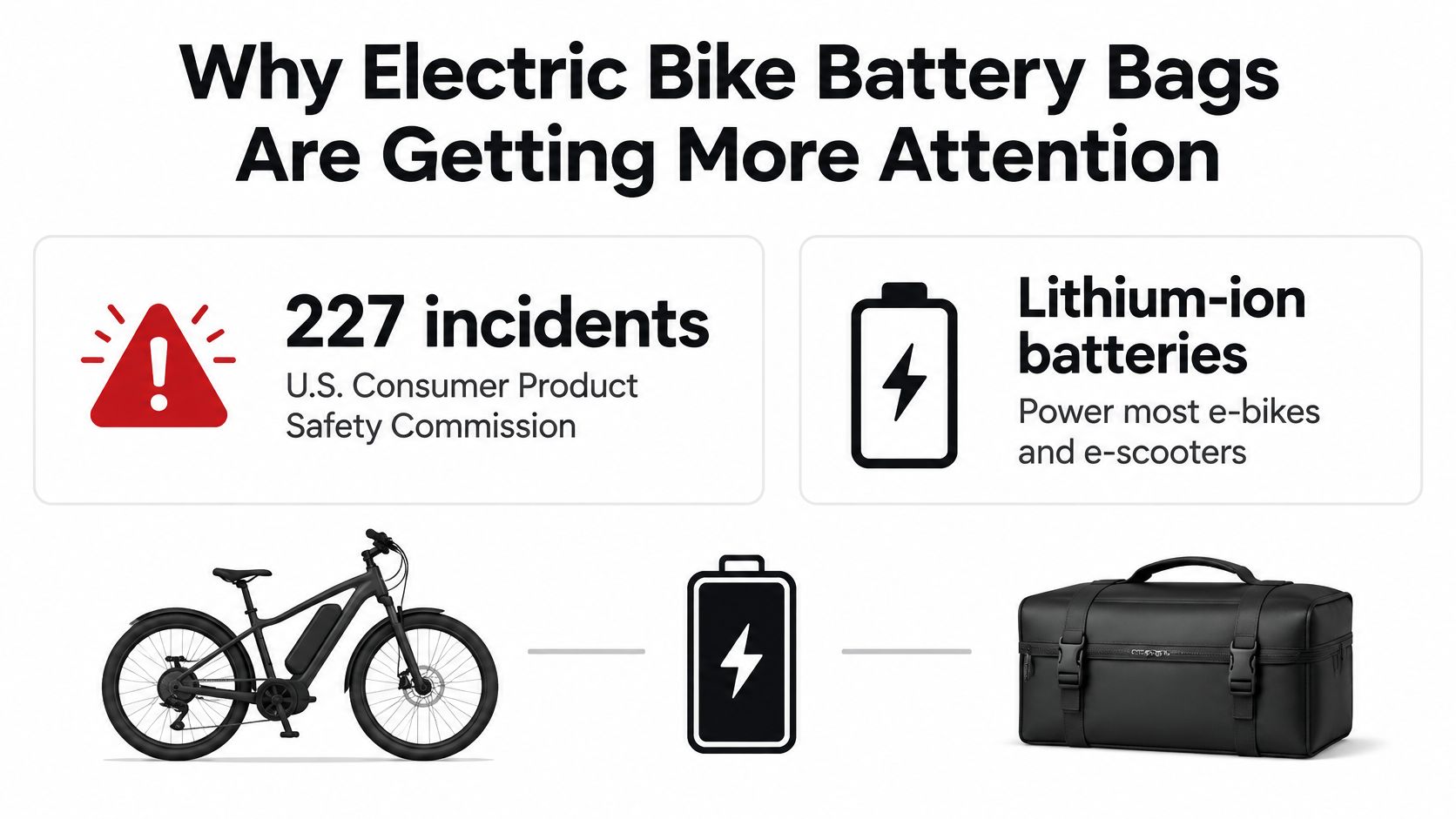
Those figures don't mean that every battery is likely to fail, or that a bag will prevent a fire. They show why it's important to separate everyday carrying protection from electrical safety. A bag can help shield a battery from bumps, moisture, and loose conductive objects. It can't repair faulty cells, make an incompatible charger suitable, or certify an e-bike's electrical system.
For riders in the UK and EU, the same basic idea applies: treat the bag as an accessory, then follow the battery and bike maker's instructions and local fire-safety guidance. Whether your battery lives in a frame, clips onto a downtube, or comes inside with you after a ride, check its condition, charger, fit, storage location, and warning signs before relying on a bag.
What an Electric Bike Battery Bag Actually Does
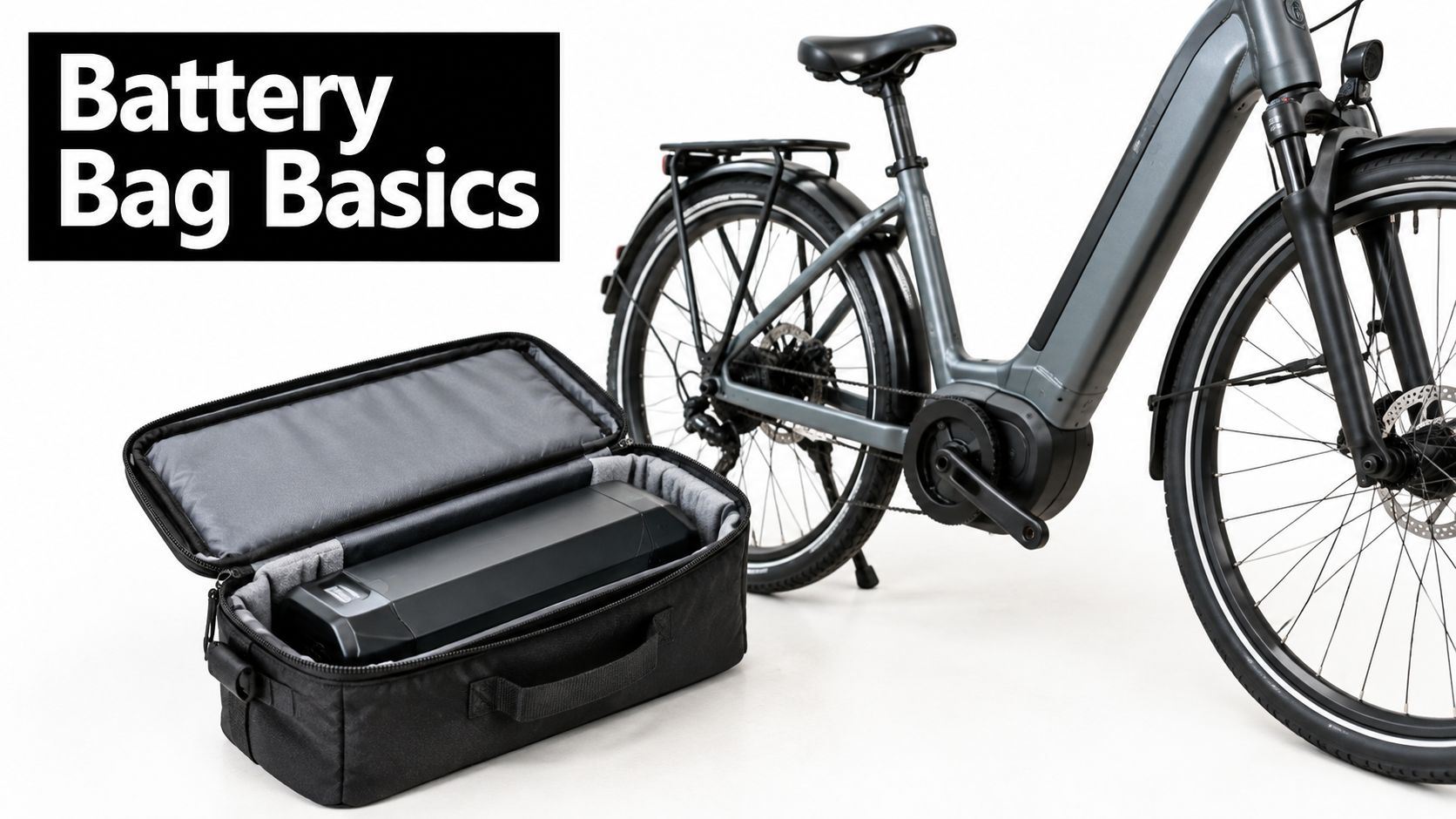
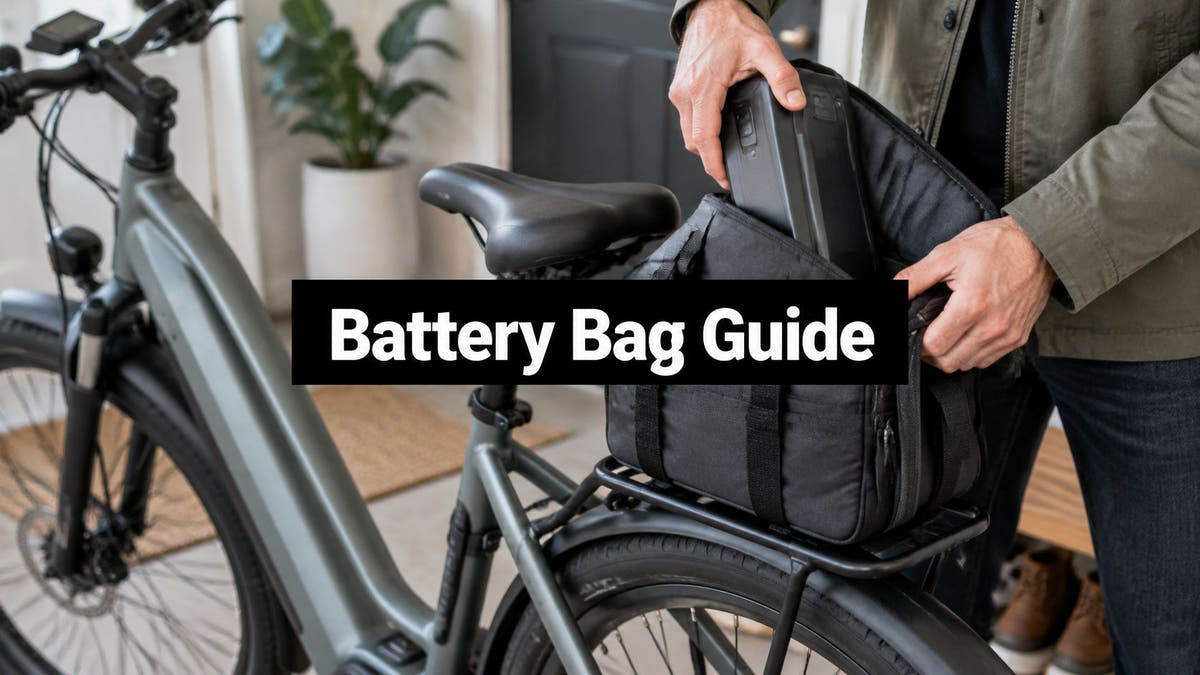
Your battery already shares a bag with your keys, your phone, and a squashed sandwich on the ride to work. An electric bike battery bag works like a padded lunchbox for that trip: it cushions the pack, keeps drizzle off the casing, and stops loose metal resting against the terminals, where a coin or a key can cause a short.
The lunchbox idea also shows where the job ends. It stops a sandwich getting crushed. Spoiled food stays spoiled. A battery bag handles what happens outside the casing, the knocks, scrapes, and rain of a normal commute. The chemistry inside the cells is a separate matter, and that is where the actual risk sits.
Why fire claims need more than thick fabric
When a lithium-ion cell fails, it can overheat and vent hot gases, and neighboring cells can follow. Containing that event is a different job from padding a commute. When Consumer Reports surveyed battery bags, it found that many may be too small to contain the gases released during thermal runaway, and that none of the bags it looked at had safety certification from a nationally recognized testing laboratory (Consumer Reports' battery-bag coverage).
A tight seal can even work against you, because vented gases build pressure. Treat any containment claim as something to verify: what was the product tested to hold, under which conditions, and by whom?
The bigger safety levers sit outside the bag entirely. A battery certified by a recognized testing laboratory starts from a stronger position than an uncertified pack, and the charger built for that battery matters more than any fabric. The bag is the lunchbox. Certification and charging habits are the kitchen.
Keep a pack out of any bag if it is swollen, damaged, wet, unusually hot, or acting strangely in any way. Stop using it and ask the manufacturer or a qualified service provider before it travels again. Labels and inspection points should stay uncovered too, so small changes stay easy to spot.
If you are weighing up a bike with a pack you can carry indoors, see how the daily routine changes in electric bicycles with removable batteries. Whatever you pick, the pack's condition and the maker's handling instructions outweigh how rugged a bag looks.
Types, Sizes, and Compatibility to Check First
A commuter orders a padded sleeve listed as a battery bag, slides the pack in, and zips it shut for the ride to work. The battery arrives dry and scratch-free. Job done? That depends on what the bag was built to do.
A battery bag works like a lunchbox. It keeps the contents clean, cushioned, and separate from the rest of your kit. What it cannot do is fix anything wrong with what sits inside, and it is not automatically a fire barrier. Three broad categories exist, and each answers a different question.
| Electric Bike Battery Bag Categories at a Glance | ||
|---|---|---|
| Bag category | Main job | Key limit |
| Protective carrying sleeve | Shields a battery from everyday bumps, drizzle, and loose tools during transport | Offers no tested fire containment and says nothing about the safety of the battery itself |
| Charging or storage bag | Intended by its maker for a stated charging or storage use | Only valid if the product was engineered and approved for that use; a generic carry sleeve is not a substitute |
| Purpose-built containment system | Designed and tested for a stated containment purpose | Needs published evidence of what it was tested to contain and under which conditions |
The "charging bag" label trips up plenty of riders. The default habit stays simple: take the battery out of an ordinary carry bag before plugging it in. Charging inside a bag only makes sense when the maker engineered the product for that purpose and states it plainly. A name on a product page is not a test result.
Check the pack and mounting method
Measure the battery itself, then compare those numbers against the product's stated internal dimensions. A good fit holds the pack snug without squeezing the casing or straining zippers and seams. Consider how the battery mounts too: a frame-mounted pack, a removable downtube battery, and a spare riding in a pannier each call for different shapes and retention.
Some e-bikes carry a removable pack. Others build the battery into the frame, where a bag may be pointless. Never pull a pack out unless the manufacturer designed it for removal and explains the handling steps.
Compatibility runs deeper than shape. The battery and charger specified by the manufacturer form the baseline, and conversion kits or second-hand bikes can muddy that picture when the parts' shared history is unclear. A roomier bag solves none of that.
Carrying capacity and battery protection are separate shopping questions. For a look at the formats side by side, browse e-bike bags for everyday riding, then check each product's stated dimensions and intended use before buying.
How to Choose the Right Bag and Where Punk Ride Fits
The best-looking bag isn't necessarily the safest choice. Battery and charger compatibility, battery condition, and recognized system-level safety testing matter more than fabric thickness, capacity, or appearance. A protective bag can help with handling, but it can't certify the battery, charger, or bike.
UL 2849 addresses the electrical system of e-bikes powered by rechargeable lithium-ion batteries. UL 2272 applies system-level testing to personal e-mobility devices, including design, construction, component, electrical, mechanical, and environmental considerations. Neither standard means that an accessory bag is certified, and a bag can't correct unsafe cells, a mismatched charger, a poor battery-management system, or a damaged pack (UL Solutions' overview of e-bike and micromobility safety certification).
Practical rule: Treat a bag as a layer of carrying protection. Check the battery and charging setup independently.
A checklist for comparing a product listing
- Battery and charger compatibility: Confirm that the battery and charger are the ones specified or approved by the manufacturer. A bag doesn't make an incompatible combination safe.
- Undamaged pack and connectors: Check the casing, connector area, and charging port. Don't buy a bag as a workaround for visible damage or unusual battery behaviour.
- Traceable safety compliance: Look for identifiable information about the battery and the complete electrical system. Don't mistake a bag's material claims for battery or bike certification.
- Temperature-aware charging: Follow the battery maker's instructions and charge in an appropriate place. A bag isn't a reason to cover the battery or charger.
- Storage away from exits: Plan where the battery will rest between rides. Don't place it where it could obstruct an escape route.
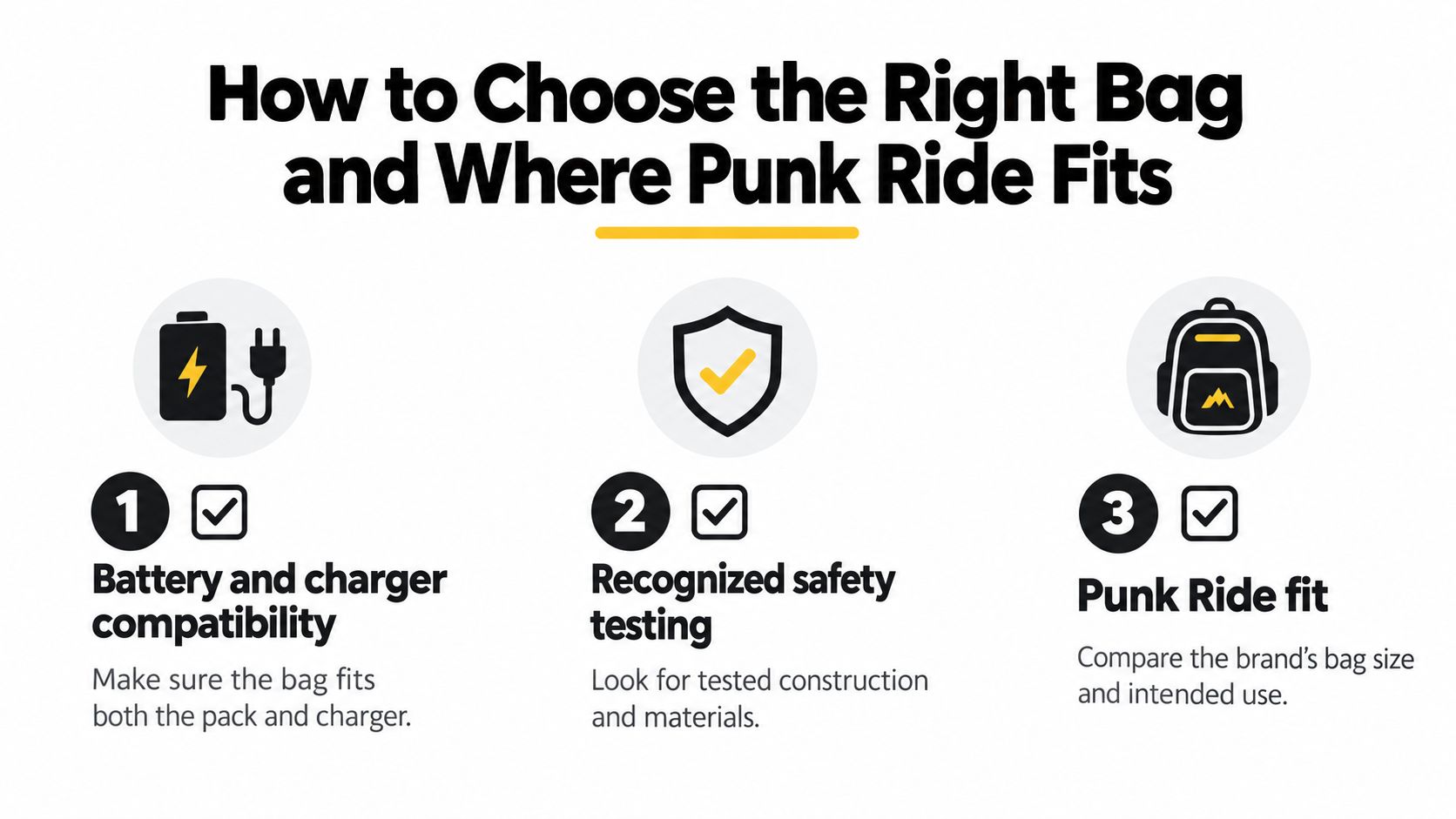
Punk Ride is an online retailer curating electric bikes and scooters from brands including ISCOOTER, AOVO, DUOTTS, HITWAY, and ENGWE. It has headquarters in Florida and warehouses in the UK and Germany. The same checklist applies whichever seller you choose: verify fit, intended use, and compatibility instead of letting a product photo make the decision for you.
Installing and Using a Bag Without Creating New Risks
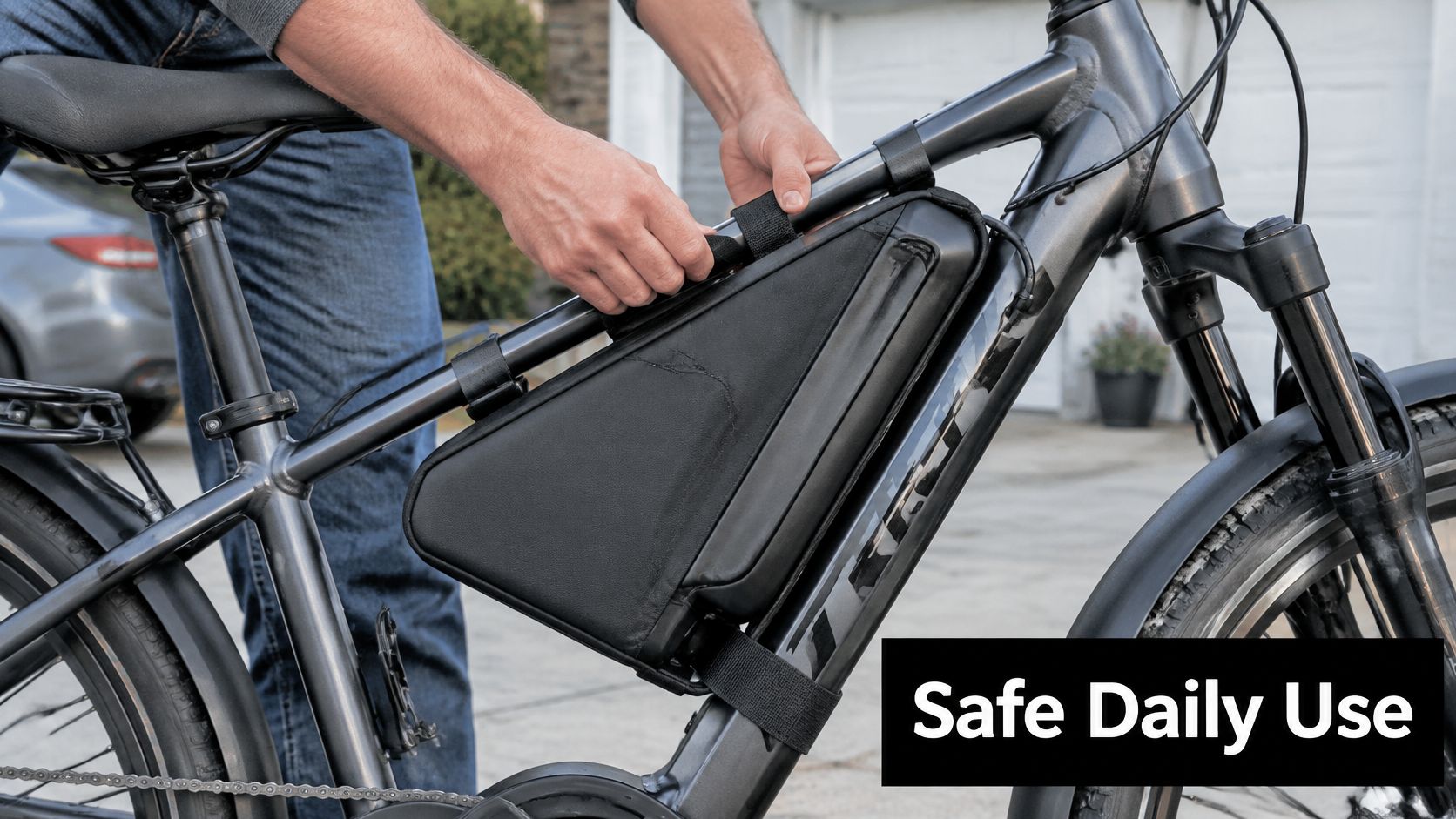
Start with a dry run before your commute. Put the battery into the bag without forcing it, then mount or carry the bag as the product maker directs. It should hold the pack securely without squeezing it.
Set up the bag for the ride
- Check the fit: The battery shouldn't slide around or be compressed. Keep keys, tools, and other conductive items in a separate compartment.
- Route straps carefully: Keep straps clear of wheels, pedals, brake cables, and moving parts. After installation, turn the handlebars and check that nothing catches.
- Keep labels and access visible: Don't cover warning labels, required vents, connectors, or inspection points. You need to be able to check the battery and reach it when needed.
- Avoid heat and direct sun: Don't leave a packed battery in a hot place or direct sunlight. A bag shouldn't trap heat around a battery.
- Choose a sensible resting place: Keep the battery away from combustible materials and don't leave it where it could block an exit.
Charging habits matter more than the bag. Remove the battery from an ordinary carry bag before charging, use only the correct manufacturer-specified or approved charger, and don't cover the battery or charger. Follow the manufacturer's instructions for the charging location and conditions.
Charge while you're awake and present, then unplug when the battery is full. Don't charge on a bed or sofa, and don't put the battery near an escape route. Check local guidance about power strips and extension cords, and avoid them where that guidance prohibits their use.
For a visual walkthrough of fitting and using a battery bag, watch the video below. Treat it as a demonstration of setup, not a substitute for the instructions supplied with your own bike, battery, and bag.
Maintenance, Storage, and Warning Signs to Watch For
A battery bag works like a lunchbox: it keeps the pack clean, dry, and easy to carry, but it does nothing to manage what happens inside the cells. Care and inspection handle that job, and they matter whether the battery sits in a bag, on a shelf, or still mounted on the bike.
Temperature is the first thing to get right. The National Fire Protection Association advises charging e-bike batteries outdoors, away from structures or enclosures and out of direct sunlight, and warns against storing them in extremely hot or cold locations (NFPA lithium-ion battery guidance). Your battery maker's instructions come first, since no bag controls the heat around the cells.
After a wet or hard ride, give the pack time to cool the way the manufacturer directs before you bag it. Then store it in a cool, dry spot where you can still see it.
A bag should never become a hiding place.
Make inspection part of the routine
Before packing the battery away, run a quick check for unusual odor, discoloration, excessive heat, swelling, leakage, or smoke. Look over the casing and connectors for damage at the same time. If anything seems off, stop using and charging the pack and take it out of service.
Say you get home from a rainy commute and the battery feels warm. The easy move is to zip it into the bag and forget it until morning. The better move takes two minutes: set it down somewhere clear, let it cool, and look it over while it dries.
If a battery shows warning signs, don't put it in a bag and hope for the best. Stop using it and get appropriate safety advice.
If a battery does catch fire in Great Britain, government guidance says don't try to fight it. Raise the alarm, leave immediately, stay out, and call 999 (UK fire-safety guidance for e-cycle users). Storing the pack away from hallways and exits keeps that escape path open.
The bag itself needs a little attention too. Check the seams, zipper, and lining for wear or dampness, and only pack a battery that is fully dry. For more on keeping the pack healthy across seasons of commuting, see this guide to electric bike battery life and care. And if a battery has been dropped, submerged, or crashed, ask the manufacturer or a qualified service provider before it goes back into rotation.
Your Next Step Toward a Safer Setup
Start with the battery and charger, since they carry more risk than the bag. Confirm the charger is the manufacturer-specified or approved unit, look over the pack for damage or swelling, and find the compliance markings before you shop. If anything seems off, pause charging and ask the manufacturer or a qualified service provider what to do next.
Then match the bag to a clear job. A fitted sleeve can protect a pack from bumps and rain on the way to work. A purpose-built containment product is different: it should have an intended use and testing you can read before trusting it. No bag turns indoor charging into a safe habit by itself.
A useful order is simple. Lunchbox first: keep the battery clean, dry, inspected, and easy to remove. Habits second: charge as directed, on a suitable surface, where you can respond quickly. Product last: choose gear that fits the battery and the routine you follow.
Punk Ride LLC offers a curated selection of electric bikes, scooters, and bicycle bags for urban and outdoor riding, including bikes and scooters from ISCOOTER, DUOTTS, and ENGWE. Use the checks above before comparing options.

Share:
Pedal Assist Bike Kit Guide: Choose, Install, and Ride