


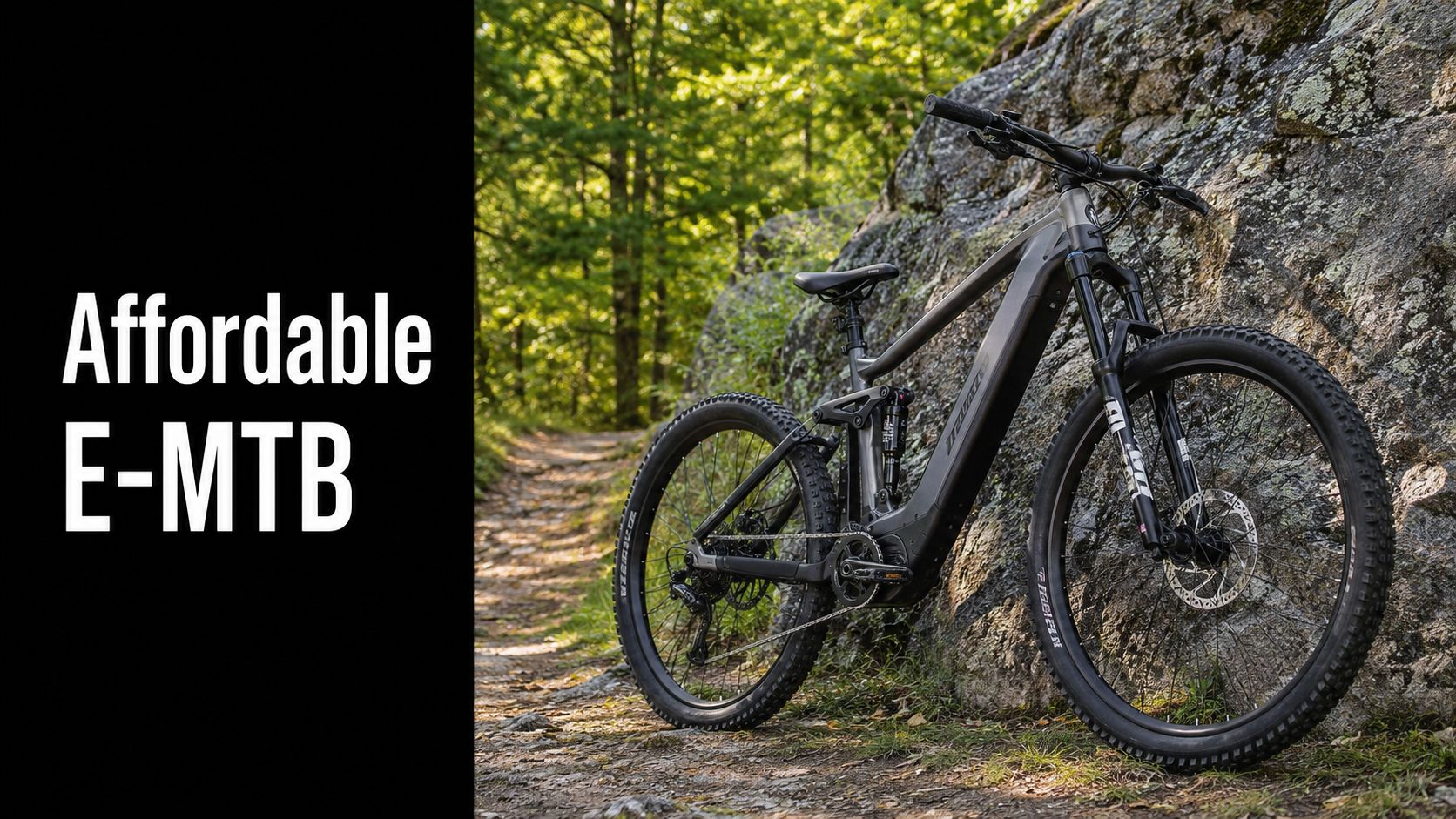
You're probably doing the same math most first-time buyers do. You want an e-MTB that feels exciting on real trails, but every bike that looks properly built seems to cost more than you expected, and every cheap one looks suspiciously flashy.
That's the trap. An affordable e mountain bike isn't the cheapest thing with knobby tyres and a battery bolted on. It's the bike you can ride hard, maintain without drama, and still enjoy a year later. I'd rather see you buy a simpler bike with solid fundamentals than a feature-stuffed mess that drains your wallet after the first few rides.
Most buyers reading this are in the UK and EU market, where legal limits shape what brands sell and what kind of riding experience you'll get. But at least once a week it's worth speaking directly to US and Australian riders too, because the rules, value equation, and buying priorities are not the same there.
What Affordable Really Means for an E-Mountain Bike
Sticker shock is normal. People walk into a shop expecting “budget” to mean minor compromises. Then they realise that with e-MTBs, going too cheap often means buying a bike that's expensive to fix, annoying to ride, and hard to trust.
Affordable means durable enough to keep
For an affordable e mountain bike, the target isn't “lowest price.” The target is best total cost of fun.
That means a bike that:
- Climbs properly: You don't want a bike that wheezes on steep ground and feels awkward under power.
- Stops confidently: Trail riding on a heavy e-bike punishes weak parts fast.
- Uses serviceable components: If your local shop can't source wear parts or diagnose the system, your bargain turns into garage art.
- Fits your real riding: Forest tracks, trail centres, rocky descents, and mixed-use riding all ask for different compromises.
Buy the bike you'll still want after the honeymoon phase. That's usually the real bargain.
A lot of riders overpay for capability they won't use. Just as many underbuy and spend months fighting a bike that never felt right. The sweet spot usually sits in the middle, where the frame, motor system, brakes, and suspension make sense together.
A realistic way to budget
Instead of chasing marketing labels, sort bikes into practical tiers.
| Price Bracket (UK/EU) | Price Bracket (US/AU) | Typical Use Case | Key Features |
|---|---|---|---|
| Lower budget | Lower budget | Light off-road use, towpaths, smoother trails | Usually basic kit, fewer adjustment features, often better as a hardtail than a cheap full-suspension build |
| Value sweet spot | Value sweet spot | Regular trail riding, trail centres, mixed climbing and descending | Better motor integration, more trustworthy brakes, stronger wheels, more reliable drivetrain parts |
| Stretch budget | Stretch budget | Frequent trail use, rougher terrain, longer ownership horizon | Better suspension control, stronger finishing kit, improved service support, fewer weak links |
That table is intentionally blunt because you need blunt advice. If your budget is tight, a hardtail with honest components beats a cheap full-suspension bike almost every time. The rear shock might look impressive in photos, but if the fork is poor, the brakes are weak, and the pivots are cheap, you're paying for the wrong thing.
What UK and EU buyers should expect
In the UK and EU, “affordable” often means choosing from bikes tuned around stricter road-legal pedal-assist rules and dealer-supported motor systems. That can be a good thing. You usually get more sensible bikes and fewer overpowered gimmicks.
For US and Australian buyers, the market often leans harder into power and bigger claims. That sounds fun, and sometimes it is, but it also means you need to be stricter about component quality because speed and mass magnify every weakness.
The Core Components Where You Should Not Skimp
Buy the wrong e-MTB and the problems show up on the first steep climb, the first long descent, and the first time you need parts six months later. For total cost of fun, three things deserve your money first: motor, battery system, and brakes.

Motor first, always
A cheap motor can make an otherwise decent bike feel annoying every time the trail tilts up. Power delivery matters more than headline torque if you ride technical ground. You want support that comes in cleanly, keeps traction, and does not surge when you are picking through roots or loose rock.
My advice is simple. Prioritise a proven mid-drive from a brand your local shop already services, such as Bosch, Shimano, Yamaha, or Brose. A familiar system usually means easier diagnostics, software updates, replacement sensors, and fewer dead ends when something goes wrong. That matters more than saving a few hundred quid or dollars up front.
It also matters more in some regions than others. In the UK and much of the EU, dealer-backed systems are often the safer value play because legal pedal-assist limits keep the focus on ride quality and support. In the US and Australia, higher-power bikes and looser categories can put more strain on drivetrains and electronics, so buying a no-name motor is an even bigger gamble. If you want a broader sense of what wears and what to inspect, this guide to electric bike parts and service basics is useful.
Battery quality matters more than battery hype
Battery capacity gets all the attention. Battery support is what saves you money.
A big pack from an obscure supplier can leave you stuck with poor range estimates, hard-to-find chargers, and expensive replacement headaches. A slightly smaller battery from a known system is often the smarter purchase because you can get parts, warranty help, and a replacement pack later.
Check three things before you buy:
- Cell and system reputation: Known battery suppliers and established bike brands are safer bets than vague marketing claims.
- Replacement path: Ask the shop what a new battery costs and how long it would take to get one.
- Integration and security: The battery should fit properly, lock securely, and come out without a fight.
Regional buying changes the maths. UK and EU riders often pay a bit more for tightly integrated, dealer-supported systems, but the long-term ownership picture is usually better. US and AU buyers may see tempting deals on high-capacity bikes from direct sellers. Some are fine. Some become expensive garage ornaments when a battery or charger fails.
Brakes are the hard line
Save money on colour-matched parts, fancy displays, and carbon claims. Do not save money on brakes.
An e-MTB is heavier than a standard mountain bike and carries speed differently, especially on long descents. That extra mass builds more heat in the system and exposes weak brakes fast. Mechanical discs can work on light bikes and easy terrain, but on an affordable e-MTB they are usually a false economy. You end up with more hand fatigue, less control, and an upgrade bill you should have avoided from day one. As BikeRadar's guide to mountain bike disc brakes explains, hydraulic systems give stronger, more consistent braking and better modulation than cable-operated setups.
Hydraulic disc brakes are the minimum I would accept on any e-MTB meant for real trail use.
If you are comparing two bikes at a similar price, pick the one with the better brake setup even if the motor display looks less flashy. For UK and EU riders on lower-powered legal-assist bikes, good brakes still matter because weight is the issue, not just speed. For US and Australian buyers looking at faster or more powerful builds, brake quality matters even more because every extra bit of speed increases the demand on rotors, pads, and calipers.
A practical shop-floor rule helps here. I would rather see a budget e-hardtail with basic but branded hydraulic brakes than a full-suspension bike with corner-cutting stoppers. One gives you confidence and predictable maintenance. The other gives you a larger repair bill.
Making Smart Trade-Offs on Frame Suspension and Gears
This is the fun part because you can save money without wrecking the ride. You just need to be ruthless about what matters and what only looks premium.

Hardtail versus full-suspension
For affordable bikes, this decision shapes everything else.
Good: Hardtail
Better: A really well-sorted hardtail with decent fork, tyres, and geometry
Best for rough terrain if the budget allows: A full-suspension bike that doesn't cut corners in the wrong places
If your budget is limited, I'd choose a hardtail almost every time. A quality hardtail gives you a stronger frame package, better-value components, less maintenance, and a more direct feel on climbs. Cheap full-suspension bikes often spend the money on the rear shock and linkage, then downgrade the fork, wheels, drivetrain, and brakes.
That's a bad trade for most riders.
If you ride trail centres, smoother woods, bridleways, fire roads, and ordinary singletrack, a hardtail is the smart buy. If your local rides are relentlessly rocky and you know you'll hammer rough descents, then full-suspension starts to make more sense, but only if the overall build still looks coherent. For more on that decision, this guide to the hardtail e-bike value equation is useful.
Frame material is easy
Don't overthink this. For an affordable e mountain bike, aluminium is the value king.
Carbon is lovely. It's also expensive, easier to obsess over, and unnecessary for most budget-minded riders. On an e-MTB, weight matters, but smart component choices matter more than chasing fancy frame material. I'd rather ride an aluminium bike with solid trail parts than a cheaper carbon bike with weak kit attached.
Gears should be boring and dependable
Drivetrains sell bikes badly because buyers often compare speed counts and logos instead of how the bike will hold up after muddy rides.
What you want is:
- Clean shifting under load: Not race-bike crispness. Just predictable changes when climbing.
- Readily available replacement parts: Chains, cassettes, hangers, and jockey wheels should be easy to get.
- A workhorse groupset: Mid-range trail drivetrains are usually the sweet spot.
Cheap suspension feels disappointing. Cheap gears feel annoying. Cheap brakes feel dangerous.
That's why I'd rather compromise on drivetrain prestige than on braking or motor quality. If the bike has a sensible aluminium frame, decent hardtail layout, and a drivetrain from a mainstream MTB line, you're usually in good shape.
The Hidden Costs Beyond the Initial Price Tag
A cheap checkout total can still produce an expensive bike. That's the part many buyers ignore until the first service bill lands.
Consumables wear faster than new riders expect
An e-MTB is heavier, puts more load through the drivetrain, and invites you to ride more often. That means chains, brake pads, tyres, and cassettes don't live an easy life. If you ride in wet UK conditions or gritty forest trails, wear arrives sooner and more often than most first-time owners assume.
This isn't a reason to avoid buying. It's a reason to budget like an adult.
Think in categories, not surprise purchases:
- Brake consumables: Pads and rotors take a beating, especially on hills.
- Drivetrain wear: Chains and cassettes don't last forever when motor support is involved.
- Tyres and sealant: Grip costs money. Good tyres are worth it, but they are not one-time purchases.
- Workshop labour: Even handy riders sometimes need firmware checks, brake bleeds, or wheel work.
Your riding kit counts too
A lot of “bike budget” spreadsheets exclude the stuff you need to ride safely and comfortably. Helmet, gloves, mini pump, multitool, spare tube or tubeless repair kit, decent pedals if the stock ones are poor, and a way to transport or secure the bike all belong in the full total.
If you skip these, the bike didn't cost what you think it cost.
Battery replacement is part of ownership
No battery lasts forever. You don't need to panic about that, but you do need to factor it into the ownership picture from day one. The good news is that bikes from supported brands usually make this less painful because there's a clearer path to replacement parts and service.
The sticker price gets you through the door. Maintenance is what decides whether the bike stays fun.
That's why I keep coming back to “total cost of fun.” A better-built bike often costs less emotionally and financially over time because it asks for fewer desperate fixes and fewer upgrades to correct bad original choices.
UK and EU vs US and AU Buying Considerations
You find a bargain e-MTB online. The spec sheet looks brilliant. Then you realise the motor setup is awkward for your local rules, the shop near you will not touch the system, and the final price just went up. Region changes value fast.

UK and EU buyers should buy for legal use and easy servicing
In the UK and much of Europe, the smart money usually goes on a bike from a mainstream motor brand with proper dealer support. Assist limits are tighter, so the winning bike is rarely the one with the loudest power claims. It is the one that pedals naturally, climbs cleanly, and stays simple to service.
The European Cyclists' Federation guide to e-bike rules in Europe is a useful starting point if you want the broad legal picture before you buy.
My advice for UK and EU riders is blunt:
- Buy legal, dealer-supported systems first.
- Pay for good motor tuning and battery support.
- Save money on flashy drivetrain upgrades before you save money on the electrical system.
That approach usually gives you the lowest total cost of fun. You spend less time chasing warranty answers, hunting for odd parts, or explaining to a shop why your bargain import needs software they do not have.
US and AU buyers need to be stricter about the whole package
US buyers often see more powerful options and looser rules depending on state and riding location. Australian buyers also face a mess of local interpretation, import variation, and retailer differences. That sounds like more freedom. It often means more ways to buy the wrong bike.
A cheap high-power e-MTB can feel exciting in a parking lot and disappointing on a trail. If the frame is harsh, the brakes are undergunned, or the motor brand has weak local support, the extra speed does not add value. It adds hassle and repair bills.
For US and AU buyers, I would focus on three checks before anything else:
- Ask who services the motor and battery locally.
- Check the landed price, not just the sale price. Shipping, taxes, assembly, and replacement parts can erase a deal quickly.
- Be suspicious of huge power claims on cheap bikes. Good chassis balance matters more than bragging rights.
If stretching the budget gets you into a bike with known support and better long-term ownership costs, that can be the smarter move. A realistic electric bike payment plan often makes more sense than buying the cheapest bike twice.
Value changes by region
UK and EU buyers usually get better value from conservative, compliant bikes that a local dealer can maintain. US and AU buyers can find stronger paper specs for the money, but they need more discipline because the market has more tempting junk.
The best affordable e mountain bike is the one that fits your local rules, has parts and service within reach, and keeps ownership boring in the best possible way. Boring support is cheap. Unsupported excitement gets expensive fast.
Finding Your Bike How to Buy Smart
Buying well matters almost as much as choosing well. I've seen riders pick decent bikes and still end up frustrated because they bought from the wrong place or skipped the inspection.

Online versus local bike shop
Online direct-to-consumer brands can offer sharp value. You often get stronger specs for the money because there's less retail overhead built into the price. That can be the right move if you're comfortable assembling basics, adjusting fit, and sorting small setup issues yourself.
A local bike shop usually costs more upfront, but you're paying for support, setup, warranty handling, and a human being who can tell you if the bike suits your local trails. If you're new to e-MTBs, that support can be worth a lot.
My blunt take:
- Buy online if: You know your sizing, understand bike setup, and accept that support may be slower.
- Buy in-shop if: You want test rides, fitting help, and easier aftersales problem-solving.
Used e-MTB checklist
Second-hand can be brilliant value, but only if you inspect like a sceptic.
Check these before handing over money:
- Battery and system menu: Ask the seller to show system diagnostics if the bike supports it.
- Frame condition: Look closely around welds, pivots, and impact areas for cracks or suspicious paint damage.
- Drivetrain wear: A tired cassette and stretched chain can turn a good deal into a workshop bill.
- Motor behaviour: Listen for unusual noises and feel for surging or hesitation under load.
- Charger and keys: Missing accessories are a red flag, not a minor inconvenience.
- Proof of ownership: Walk away if the story feels off.
A quick buyer's guide can help before you commit, especially if financing lets you step up into a better-supported bike. If that's relevant, take a look at these electric bike payment plan options.
One more practical walkthrough is worth watching before you buy:
My buying rule
If two bikes cost about the same, choose the one with the better support network, clearer parts availability, and fewer obvious compromises. Fancy specs don't rescue a bike that's painful to own.
Your Affordable E-MTB Questions Answered
Is a budget full-suspension e-MTB ever worth it
Yes, but only if the rest of the bike still makes sense. If the suspension is the headline feature and everything else looks downgraded, I'd pass. A solid hardtail is usually the better buy for most riders chasing value.
Should I buy a hub-motor e-MTB for trails
For casual paths and very light off-road use, maybe. For real trail riding, I wouldn't recommend it as a first choice. A proper trail bike needs balanced handling, predictable assistance, and a build that feels designed as a whole.
Can an affordable e mountain bike still be fun on proper trails
Absolutely. Affordable doesn't mean dull. It means you're making the right compromises. A well-chosen aluminium hardtail with a dependable motor system and hydraulic brakes can be a brilliant bike to own.
Is renting a smart idea before buying
Yes, especially if you're unsure what kind of terrain you enjoy. A rental day tells you more than weeks of reading spec sheets. If you're planning a riding trip and want a low-risk way to test the experience in real mountain scenery, these e-bike rentals in Triglav National Park are a useful example of the kind of try-before-you-buy option that helps people make better decisions.
What's the biggest beginner mistake
Buying based on appearance or motor hype instead of serviceability. New riders often focus on battery placement, frame shape, or a flashy display. I'd focus on whether the bike stops well, climbs smoothly, and can be maintained without drama.
If a bike looks amazing online but nobody nearby wants to service it, that's not value.
Should I stretch my budget if the better bike feels clearly better
Usually, yes. Not endlessly, and not emotionally. But if the next step up gets you a stronger motor system, better brakes, and a more trustworthy overall package, that extra spend often protects you from expensive frustration later.
If you want a better way to compare e-bikes and electric rides without getting lost in marketing fluff, have a look at Punk Ride LLC. They focus on modern electric mobility with options for riders across the US, UK, and Europe, which makes them a practical place to start narrowing down what fits your budget and riding style.
Share:
Dual Motor Electric Bike: The Ultimate Power Guide 2026
Best Cargo Bike 2026: UK & EU Buyer's Guide