


You know the sound. You roll home on a Tuesday, stop at the lights, and the drivetrain gives you that dry, gritty whine when you put a bit of pressure through it. It's usually the moment riders decide the chain is either “fine, I'll deal with it later” or “I need to strip this thing tonight.” Bicycle chain cleaning sits between those two bad habits, and the right answer is usually simpler than both camps want to admit.
A clean chain isn't vanity. It's lower friction, quieter shifting, and less money leaking out of your drivetrain every month. When grime builds up, you're not just dealing with noise, you're dragging abrasive paste through the rollers, cogs, and chainrings, and that's where the damage starts.
Why a Clean Chain Matters on the Road
A dirty chain shows up fast in traffic. The bike feels a little flat pulling away from a stop, shifts under load hesitate, and the drivetrain starts sounding like it is fighting itself. Friction testing reported by cycling media found that after a muddy ride, skipping clean and lube cost about 12 watts for a rider producing 250 watts, roughly 5% of power output, and even a rainy ride cost about 6 watts (Triathlete's friction testing summary).

The road feeling is only part of it. Inside the drivetrain, grit mixed with oil gets pushed into the rollers and across the sprocket teeth, which speeds wear on the chain, cassette, and chainring. Clean before lubricating is still the rule because fresh lube on top of dirt just makes a better cutting compound. The chain's history runs from Hans Renold's 1880 bush-roller chain patent to the 1898 bicycle adaptation by the Nevoigt brothers, but the care routine stayed the same (bicycle chain history and care).
The quiet warning signs
A chain rarely fails all at once. It gets noisier first, then slower to shift, then more annoying under load.
Chain skip on a smaller sprocket usually points to contamination, wear, or both. On steep climbs, or on an e-bike when assist surges mid-corner, a dirty or stretched chain can make the drivetrain feel unpredictable, not just inefficient. That matters because a clean chain keeps power transfer steadier, so more of what you put through the pedals reaches the wheel instead of getting lost to friction.
For riders who split time between city commutes and harder rides, the trade-off is simple. Chase the chain all week with obsessive scrubbing and you waste time. Rinse-and-go leaves abrasive paste in place and costs watts every ride. The middle ground is the practical one. Clean enough to keep friction down, keep wear in check, and stop the drivetrain from turning your legs into heat.
Tools and Degreasers Worth Keeping on Hand
A decent chain-cleaning setup doesn't need a wall of boutique products. It needs the handful of things that move grime off metal without scattering it somewhere worse. The basics are a stiff-bristled brush or chain-cleaning tool, a stack of lint-free shop rags, nitrile gloves, and a container that can catch the dirty runoff instead of sending it straight onto the floor. For a full off-bike clean, a small parts washer tray or sealed bottle is far more useful than improvising with random kitchen containers.
For degreaser choice, I'd keep it boring and safe. Citrus-based degreasers work well for routine drivetrain cleaning, and mineral spirit alternatives are better when the chain has turned into stubborn black paste. REI's expert guidance also supports a short dwell time for deeper cleaning, with solvent left long enough to free grime from the links and bushings before wiping or scrubbing (REI chain cleaning guide).
Don't reach for gasoline, brake cleaner, or dish soap on a chain. They create more problems than they solve.
That matters even more on e-bikes, where you're cleaning around motor housings, battery casings, rubber seals, and wiring grommets. A bike-safe degreaser used sparingly near those areas is one thing, but harsh solvent around electrical interfaces is asking for trouble. If you're also building out your ride setup, it's worth checking the practical accessory guidance in Punk Ride's electric bike accessories resource, because cleaning tools and storage habits often go together.
For the commercial side of cleaner selection, the role of disinfectant wipes commercially is a useful lens, not because wipes replace proper degreasing, but because it highlights the difference between wiping surface residue and breaking down greasy contamination.
Degreaser comparison for bike chain cleaning
| Cleaner Type | Best For | Cautions |
|---|---|---|
| Citrus-based degreaser | Routine chain wiping and general drivetrain grime | Can still be messy if overapplied, keep it off delicate seals |
| Mineral spirit alternative | Heavy black paste and long-neglected chains | Use with ventilation, avoid soaking sensitive parts |
| Bike-specific degreaser | Mixed use on chain, cassette, and pulleys | Still needs proper wiping and drying afterward |
| Harsh household cleaner | Not recommended | Can damage finishes, seals, and nearby components |
Cheap brushes are another trap. The bristles shed, the loose fibers lodge between plates, and the next ride starts with a new squeak you didn't have before. Spend the money on a brush that keeps its hair.
The Quick On-Bike Wipe-Down Between Rides
If the chain isn't caked in mud, there's a lot you can do without touching a cassette lockring or pulling a quick link. Flip the bike upside down or clamp it in the stand so the cranks spin freely, then lay a rag across the top run of the chain and backpedal until you've worked through the whole length. Rotate to a fresh section of rag and repeat. You're trying to lift the surface grit, not polish the chain into a mirror.
A light citrus degreaser belongs on a fresh rag, not directly on the chain. That keeps overspray off the frame, brake surfaces, and seals, and it gives you more control over how much solvent reaches the drivetrain. Use that rag on the derailleur pulleys and the cassette gaps too, because those little shelves hold old lube in places the chain wipe can't reach.
The goal is to get the chain to the point where the cloth comes away mostly clean, not pitch black every pass. Then run a dry section of rag through the lower run again to lift moisture and leftover solvent. After that, spin the cranks by hand with no power applied and listen. A quiet drivetrain after a wipe-down is the best sign that the chain is ready for the next ride.
Practical rule: if the chain still leaves heavy black streaks after two good rag passes, you've moved from wipe-down territory into deep-clean territory.

This is the cleanest shortcut in bicycle chain cleaning. No disassembly, no drama, and it stops light contamination from becoming the sticky mess that makes the next ride feel off.
A Deeper Off-Bike Clean When Grime Has Built Up
When the chain starts looking like a black crayon, a wipe-down won't save it. That's the point where taking it off the bike makes sense. Shift to the smallest cog, release the quick link or master link with the proper tool, then place the chain in a sealed bottle or parts washer tray with a bike-safe degreaser.
REI's deeper-clean guidance lines up with a short dwell rather than an endless soak, and that's the right instinct. Let the solvent sit just long enough to loosen the grime, then agitate the chain gently with a stiff nylon brush or by shaking the container. After that, hang the chain to drip-dry on a wire hook, or work it through a clean dry rag until the metal stops feeling slick.
Drying matters more than most riders think. If the chain goes back on wet, the fresh lubricant gets diluted and doesn't stay where it should. A clean chain that isn't fully dry is still a bad surface for lube, and that's how people end up rebuilding the same grime layer they just removed.
Off-bike cleanup cues
- The chain should feel dry to the touch, not oily or cold-wet.
- The quick link should seat cleanly, without gritty resistance.
- The rag should stop turning black immediately, which tells you most surface contamination is gone.
For a deeper reference point on electric-bike storage and garage habits that affect chain care, Punk Ride's electric bike storage solutions page is worth a look because a clean chain stays cleaner when the bike itself is stored sensibly.
One useful reality check here is that the off-bike method is about recovery, not ritual. If your wipe-down is working, you shouldn't need to do this every weekend. If it isn't, the chain is already telling you the grime has moved below the surface.
How Often to Clean Based on Where and How You Ride
Cadence should follow conditions, not guilt. Canyon recommends cleaning a commuting chain around once per week, while road bikes should be cleaned every 150 to 250 km or whenever the chain is visibly dirty. It also says gravel bikes should be cleaned after dusty or wet rides, and mountain bikes after muddy or wet conditions (Canyon chain cleaning guidance).
That lines up with what you see at the workstand. A dry-road rider can often get by with a wipe-down every couple of weeks and a deeper clean less often, while an all-season commuter in rain and road salt needs to stay on top of it more aggressively. Road Bike Rider's maintenance guide also supports a simple monthly deep clean for riders who log steady use, with a quick rag wipe and fresh lube in between (Road Bike Rider chain tips).
Chain cleaning frequency by riding style
| Riding Style / Conditions | On-Bike Wipe-Down | Off-Bike Deep Clean | Wear Check |
|---|---|---|---|
| Dry-road commuting | Every couple of weeks | About every three months | Every couple of months |
| All-season commuting | Weekly | Monthly | Every couple of months |
| Gravel in dust or wet | After messy rides | Regularly, as needed | Every couple of months |
| Mountain biking in mud | After every ride | Often after several rides | Every couple of months |
If you're new to riding and still figuring out the maintenance rhythm, Thermo Recovery Wear's beginner road biking advice is a decent companion read because it reinforces the idea that routine care beats panic repairs.
The quickest inspection tool is your eyes. Lift the chain and look at the lower run. If it still looks shiny silver between the pins, you're probably fine. If it's become a uniform dark brown or black band, it's overdue. Pair that with a chain wear checker every so often, and you'll catch stretch before it starts chewing the cassette.
Lubing the Chain Without Trapping Fresh Dirt
Lube choice changes how the chain behaves long after the cleaning rag is put away. Wet lubes cling longer and stand up better to rain, but they also attract grit. Dry lubes stay cleaner for longer, but they're less forgiving if you ride through wet weather and may need reapplication sooner. The right answer depends on your climate and commute, not whatever bottle had the loudest marketing.
Apply lube only to a chain that's fully dry. If there's solvent left in the rollers, it thins the lubricant and encourages sling-off later. Hold the bottle over each link, give one slow drop to each roller, then pedal backward several full turns so the lube reaches the pins and inner surfaces.
Wipe the outside plates harder than you think you need to. The lubricant belongs inside the chain, not on the surface where dust can stick to it.
Let it sit a few minutes, then take a clean rag and grip the chain tightly as you backpedal through it. That's the step that separates a clean-running drivetrain from a black, sticky one. The outside of the chain should end up looking almost dry while still being protected where it matters.
The common mistake is over-lubing because the rider equates visible shine with care. On a chain, surface shine usually means excess oil, and excess oil is what turns the next commute into a dirt magnet.
E-Bike Specific Precautions Most Riders Skip
E-bike chain cleaning has a few extra traps, and they're the kind that don't show up until the warranty discussion gets uncomfortable. The first one is spraying degreaser near the motor housing. If solvent creeps where it shouldn't, you've made a cleaning job into a sealing problem. The second is working on the drivetrain with the battery still seated, which is a sloppy habit around connectors and wiring that don't need any extra exposure.

What to protect before you spray
- Motor casing: cover it with a microfiber cloth before any aerosol degreaser goes near the bike.
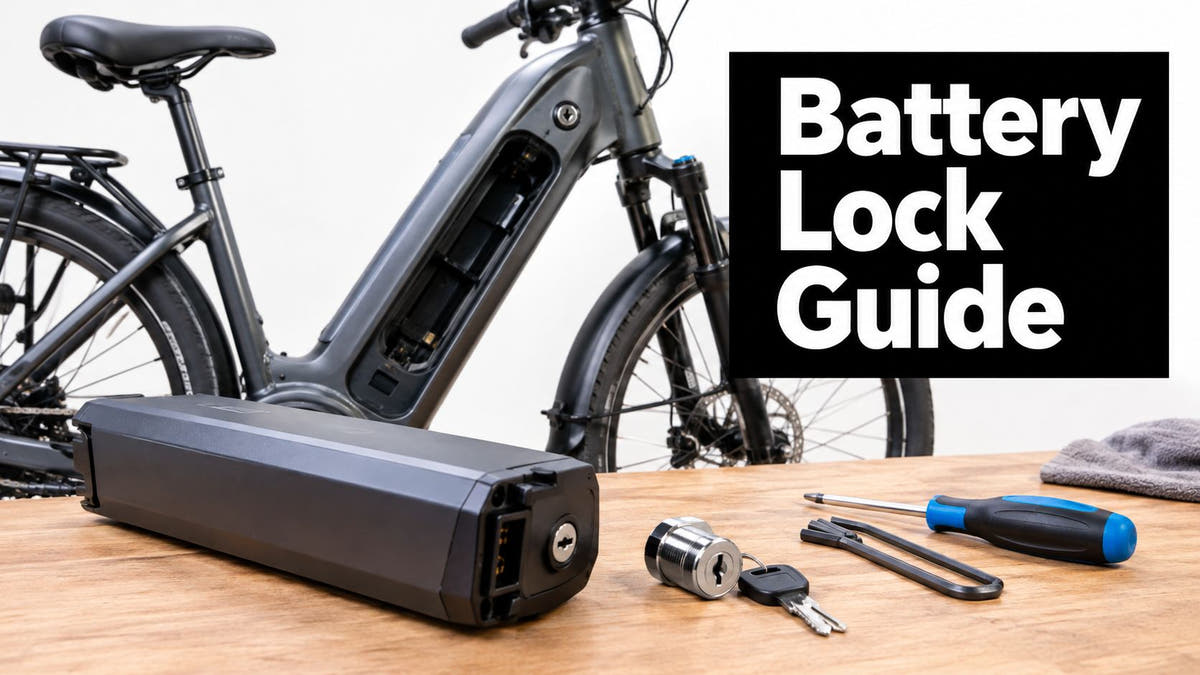
- Battery pack: remove it if the manufacturer's guidance and bike layout make that practical.
- Cable grommets: give them a quick visual check before and after cleaning.
- Rear dropout sensor area: avoid blasting water where the speed sensor magnet and wiring live.
Mid-drive bikes deserve even more caution. Don't aim a pressure washer at the bottom bracket shell or rear axle area, because that's where water intrusion problems love to start. The same goes for torque-sensor wiring routed along the chainstay. It's easy to ignore until a connector gets unhappy and the assist behavior stops feeling normal.
E-bikes also load chains harder in everyday use. The motor adds torque, which means the lubricant film gets worked more aggressively than on a non-assisted bike. That's why they often need more frequent wipe-downs, not because they're fragile, but because they ask more from the chain every time you start off or climb.
For a broader look at sealing and weather exposure, Punk Ride's explanation of whether electric bikes are waterproof is useful context before you start hosing down a mid-drive bike like a garden tool.
There's another habit that pays off on e-bikes. Keep a rag in the saddle bag, wipe the chain after wet rides before fresh lube goes on, and don't wait for the weekend. Riders who log mileage, check chain length monthly, and replace quick links before they're a mess tend to spend less time at the shop. If you're rotating two chains on the same bike, each one gets more time to dry properly, which helps the whole drivetrain last longer.
The rule on e-bikes is simple. Clean gently, keep water away from the motor and connectors, and stay ahead of wear, because routine chain cleaning is cheaper than replacing parts that got punished by avoidable grime.
Punk Ride LLC carries electric rides, accessories, and practical gear that fit the same maintenance habits that keep a drivetrain quiet and efficient. If you're sorting out an e-bike or scooter setup and want products plus guidance that match real commuting use, visit Punk Ride LLC and take a look at what fits your ride.

Share:
Scooter Tire Pressure Guide for Safer Rides
Best Cargo E Bikes for Families in 2026