


Let's be real, "sustainable transportation solutions" sounds like a mouthful of jargon. But the idea behind it is actually pretty straightforward. It's all about finding smarter, cleaner ways to get around our cities—ways that don't rely on a gas-guzzling car for every single trip.
Think of it as swapping that stressful, bumper-to-bumper car commute for a breezy ride on an electric bike or a relaxing trip on a modern tram. It's about having better options.
What Are Sustainable Transportation Solutions
This whole movement is about more than just being trendy; it's a direct answer to a massive problem. Our travel habits are a huge contributor to climate change, with transportation accounting for nearly 20% of global carbon emissions. That's a staggering number.
Because of this, governments are stepping up. The European Union and the United Kingdom, for example, have put their foot down with strict emission standards for new cars, forcing a major shift toward cleaner vehicles. You can dig into the details of these global transport initiatives to see just how serious this is.
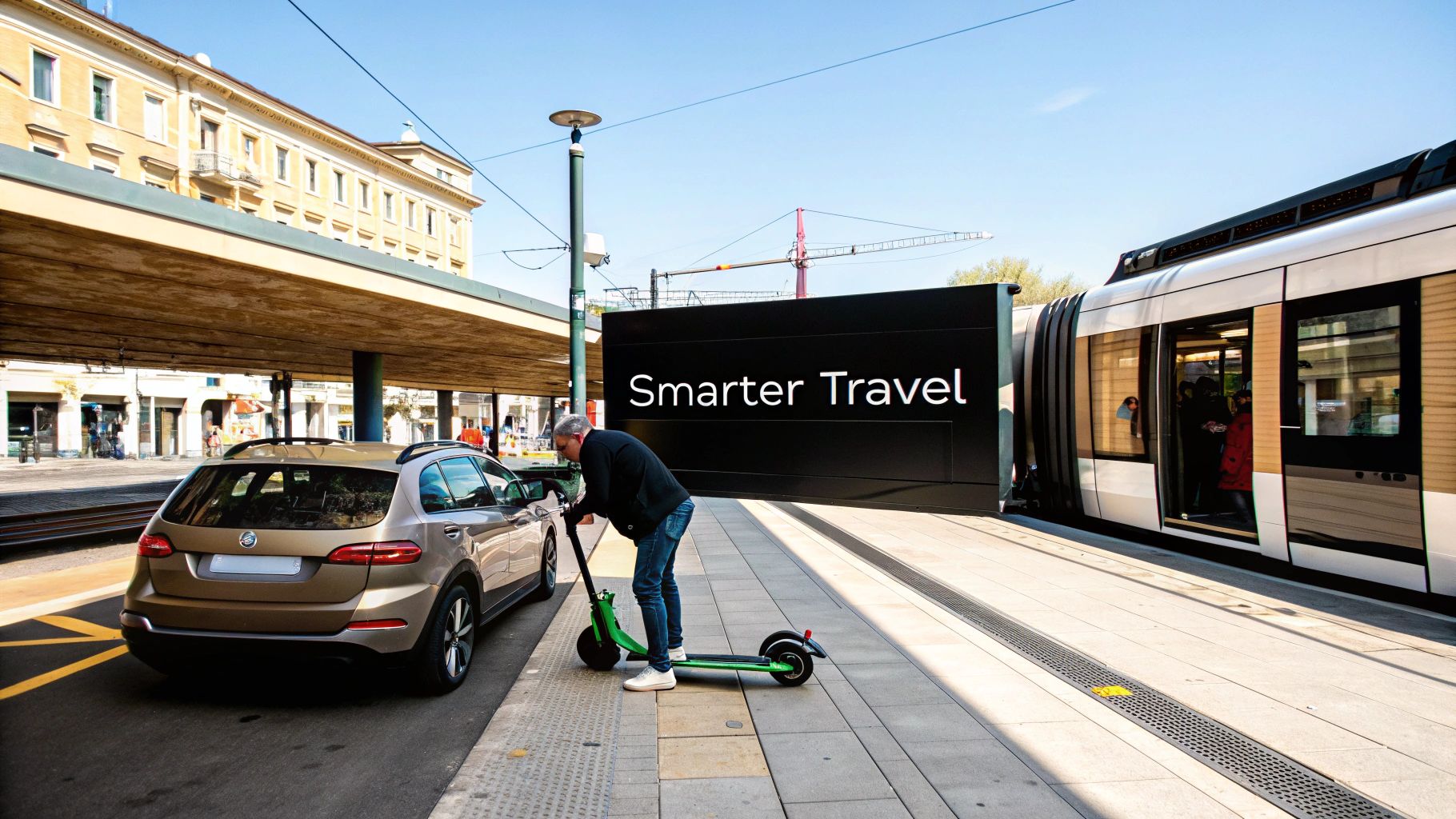
The Big Idea: Mobility That Just Works
At its core, sustainable transport is all about efficiency and finding the right balance. It's not some radical war on cars. Instead, it’s about creating a connected system where different ways of getting around work together smoothly.
The goal is to build cities where you have the freedom to choose the right tool for the job—whether that’s an e-scooter for a quick trip to the shop, a train for a cross-town journey, or a bike ride through a park.
This mix-and-match approach, often called multimodal transportation, is already making cities across the UK and Europe better places to live. They’re becoming quieter, less polluted, and more focused on people, not just cars.
The Key Ingredients of a Greener Commute
So, what do these solutions look like on the ground? They usually fit into a few main categories, each with a unique role to play.
- Active Transport: This is the simple stuff—walking and cycling. It's totally emission-free, fantastic for your health, and perfect for short journeys.
- Public Transit: Think buses, trams, and trains. These are the workhorses of urban mobility, moving tons of people at once with a tiny carbon footprint per person compared to individual cars.
- Micromobility: Here's where it gets fun. This category includes shared e-scooters, e-bikes, and other small electric vehicles. They're brilliant for solving that "last-mile" problem—the annoying gap between the bus stop and your front door.
- Shared Mobility: Services like car-sharing and ride-pooling apps help cut down on the number of cars with just one person inside, which means less traffic and fewer emissions for everyone.
Getting your head around these concepts is the first step. Once you see how they all fit together, it's easy to understand why this is the future of city living.
Your Quick Guide to Greener Commuting
Feeling a bit overwhelmed by the options? Don't be. Here’s a quick-and-dirty comparison to help you figure out what might work best for you.
| Transport Mode | Best For | Typical Cost | Carbon Footprint |
|---|---|---|---|
| Walking/Cycling | Short trips, exercise | Free! | Zero |
| Public Transit | Medium to long distances | Low (single or daily pass) | Very Low (per person) |
| E-Scooter/E-Bike | "Last-mile" trips (1-5 km) | Low (pay-per-minute/ride) | Extremely Low |
| Carpooling | Long commutes, group travel | Moderate (split costs) | Low (shared) |
Ultimately, the best choice depends on your specific journey. The real win is having the flexibility to pick the most efficient, affordable, and enjoyable option every time you head out the door.
Exploring Your Green Commuting Options
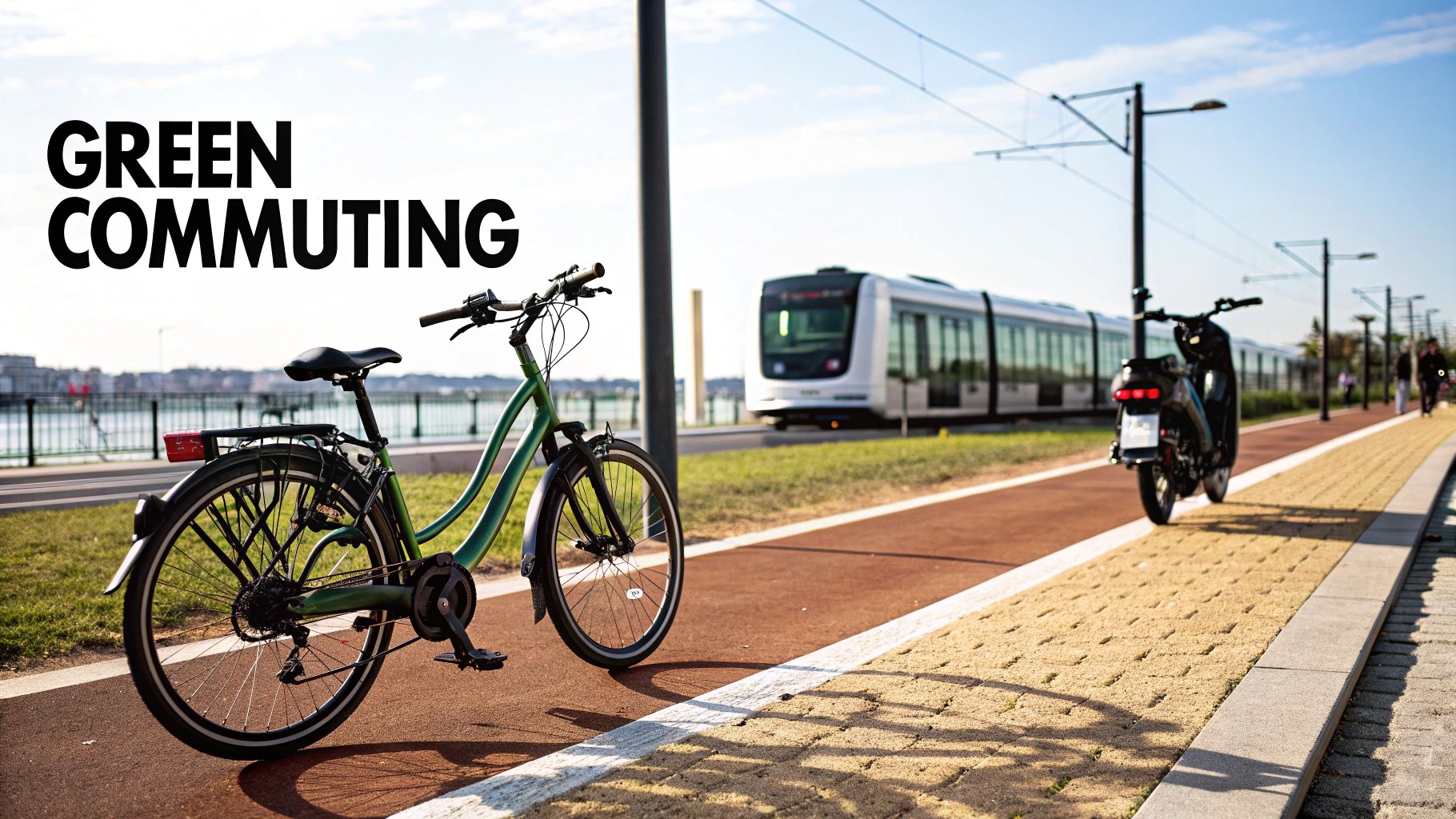
So, you’re ready to ditch the soul-crushing traffic jams? That’s great. Knowing the theory is one thing, but actually diving into your real-world options is where the magic happens. There’s a whole menu of sustainable transport choices out there, and each one has its own perks for getting around cities like London, Berlin, or Paris.
Let’s get practical and look at what’s available right now. From the old reliables to the new kids on the block, there’s a green commuting option that’ll fit just about any lifestyle.
Public Transit: The Backbone of Urban Mobility
Public transit has been the workhorse of our cities for decades. Think about it: systems like the London Underground, Berlin's U-Bahn, or the tram networks crisscrossing Europe are masters of efficiency. They move millions of people every day with a much lighter environmental footprint than if everyone drove their own car.
The biggest win here is capacity. Trains and trams slice right through city congestion, giving you a reliable and often faster way to handle medium-to-long commutes. Better yet, you get your time back—you can read, scroll, or just zone out instead of glaring at the bumper ahead of you.
Of course, it’s not always a perfect door-to-door solution. This brings us to the famous “last-mile problem”—that annoying gap between the station and your actual destination.
Micromobility on the Rise: E-Scooters and E-Bikes
This is where things get really interesting. Micromobility—think personal, lightweight vehicles like e-scooters and e-bikes—has completely shaken up urban travel. These zippy electric rides are the ideal fix for short trips and the perfect answer to that last-mile problem.
Picture it: you step off the train in Central London. Instead of a 20-minute walk or a costly taxi, you grab a shared e-scooter and zip to your office in five minutes. It’s this kind of seamless connection that makes the entire public transport network so much more powerful.
The benefits are pretty clear:
- Convenience: They’re nimble, a breeze to park, and built for crowded city streets.
- Cost-Effective: Whether you're paying per minute or own your own, it’s a lot cheaper than running a car.
- Eco-Friendly: Zero tailpipe emissions mean cleaner air for everyone.
Deciding between an e-scooter and an e-bike really comes down to personal preference, distance, and comfort. For a closer look, check out our detailed e-scooter vs e-bike comparison to see which one fits you best.
The real power of micromobility is how it fills the gaps left by traditional transport. It stitches the whole sustainable network together, making it more accessible and user-friendly for everyone.
Active Transport: The Original Green Commute
Let’s not forget the simplest and healthiest ways to get around: walking and cycling. If you live reasonably close to where you work, this is a total win-win. You produce zero carbon emissions, it costs next to nothing, and it’s a fantastic way to bake some exercise into your daily routine without even trying.
Cities across the UK and Europe are catching on and pouring money into better infrastructure. Just look at the protected cycle lanes in Amsterdam or the pedestrian-friendly zones in Copenhagen—they’re making it safer and more enjoyable than ever to get around on your own two feet (or two wheels).
While it might not work for every single trip—especially long hauls or in miserable weather—active transport is a critical piece of the sustainable commuting puzzle. The key is to mix and match these different modes to build a commute that’s flexible, efficient, and genuinely enjoyable.
The Rise of Electric Micromobility
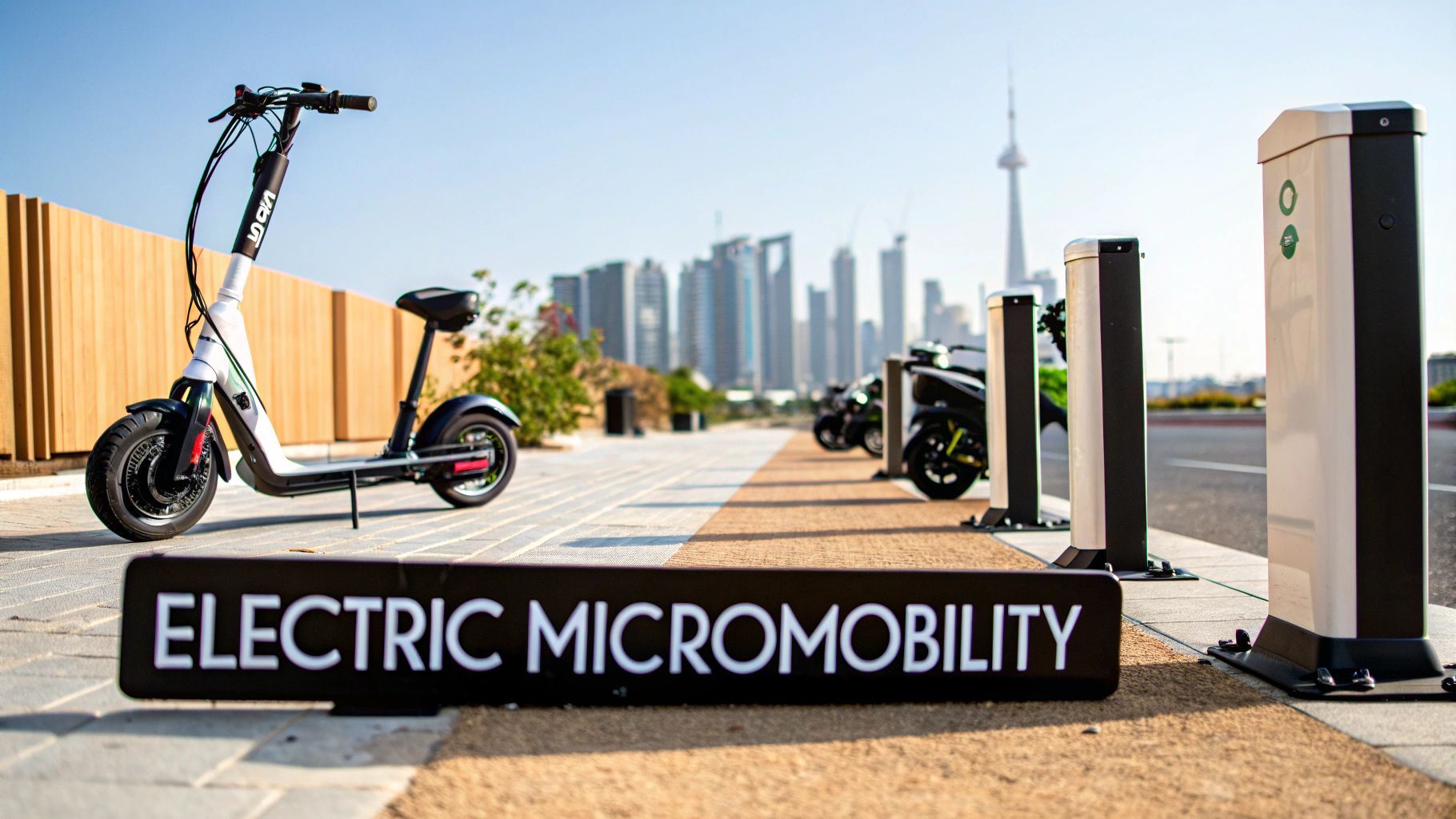
It wasn't long ago that electric scooters and e-bikes were seen as little more than fun gadgets. You'd spot one here and there, but they weren't exactly a serious way to get around. Fast forward to today, and you can't walk through a major city in the UK or Europe without seeing them everywhere. These little electric rides have gone from novelty to necessity, cementing themselves as a huge part of the sustainable transportation puzzle.
So, what happened? It was a perfect storm, really. City traffic got worse, people started looking for greener ways to travel, and the technology behind these vehicles became incredibly simple and reliable. This potent mix has made electric micromobility one of the fastest-growing transport sectors, and it’s completely changing the way we zip around our cities.
This trend is riding a much bigger wave of electrification. By 2025, electric vehicles (EVs) are set to become a dominant force in transport, with sales expected to soar past 20 million units a year. This boom is being fueled by smart government policies and huge leaps in battery tech. You can get more insights on the growth of eco-friendly transport from SG Analytics.
The Simple Tech Powering Your Ride
You might assume e-scooters and e-bikes are stuffed with complex gizmos, but their design is actually beautifully simple. That simplicity is their secret weapon, making them dependable and easy for almost anyone to use.
At the core of every e-ride, you’ll find just three main parts working together:
- The Battery: This is the "fuel tank," usually a lithium-ion pack tucked neatly into the scooter's deck or the bike's frame. Modern batteries are lighter and more powerful than ever, giving you enough juice to handle a full day of city travel.
- The Motor: A small, whisper-quiet motor is built right into one of the wheels. When you hit the throttle or start pedaling, it gives you that smooth push to get you going without having to break a sweat.
- The Controller: This is the tiny brain of the operation. It's an electronic unit that tells the battery how much power to send to the motor, making sure your ride is safe and responsive.
This straightforward setup is a total game-changer. It provides power on demand in a light, low-maintenance package, turning electric micromobility into an incredibly practical solution for getting around town.
Shared Schemes vs. Private Ownership
As e-scooters and e-bikes have taken over city streets, two main ways to ride have emerged: hopping on a shared rental or buying your own. Each has its pros and cons, and the right choice really depends on how you commute.
Shared Micromobility
- How it Works: Companies like Lime, Voi, and Tier scatter fleets of e-scooters and e-bikes around town. You just open an app on your phone, find a ride nearby, unlock it, and go. You pay by the minute and can leave it in a designated zone when you're done.
- Best For: Casual riders, tourists, and anyone needing to bridge that "last-mile" gap from the train station to the office. It's brilliant for spontaneous trips where you don't want the hassle of ownership.
Private Ownership
- How it Works: You buy your very own e-scooter or e-bike. You’re on the hook for charging, maintenance, and locking it up, but it's yours to use whenever you want.
- Best For: Daily commuters. If you’re riding it regularly, the initial investment pays for itself pretty quickly, and the cost-per-ride plummets. It offers unbeatable reliability and convenience.
The choice between sharing and owning really boils down to how often you ride. If it’s your daily go-to, owning just makes more sense financially. For the occasional trip, the pay-as-you-go freedom of sharing is tough to beat.
Navigating The Rules of The Road
The explosion of micromobility has left lawmakers scrambling to keep up, creating a patchwork of rules that can be tricky to navigate, especially here in the UK. Knowing the local laws is crucial for staying safe and legal.
Across much of Europe, e-bikes are generally treated like normal bicycles, but e-scooter laws can differ from one country to the next.
The UK is a unique case. Privately owned e-scooters are still illegal to use on public roads. However, the government has given the green light to numerous rental e-scooter trials in cities across the country. These trials allow people to legally ride rental scooters within specific zones, which helps policymakers gather the data needed to create permanent laws. As these trials progress, the rules will likely evolve, so it's vital to check your local regulations before you ride.
More Than Just Saving The Planet
Sure, ditching your car for greener transport is a huge win for the planet, but let's be honest—the immediate, personal benefits are what really sell the idea. It’s not just about a smaller carbon footprint; it's about making your everyday life better, cheaper, and healthier.
When you swap four wheels for two, you're doing more than cutting emissions. You're sidestepping traffic, saving a pile of cash, and turning a stressful commute into the best part of your day.
Keep More Money in Your Pocket
Let's get straight to the numbers, because they’re pretty convincing. Running a car in a city like Manchester is expensive. Really expensive. Once you factor in fuel, insurance, tax, parking, and maintenance, you’re easily looking at over £3,000 a year. Imagine what you could do with that cash instead.
An electric bike, on the other hand, costs next to nothing to run. A full charge will set you back about 10-20p and get you anywhere from 30-80 kilometres. Even if you only swap a few car trips a week for an e-bike ride, you'll save hundreds on fuel alone.
Here’s a quick look at where the savings come from for a typical UK city commuter:
- Fuel: Kiss goodbye to at least £1,000+ a year.
- Parking: City centre parking can be a nightmare, costing anywhere from £5-£20 a day. E-bikes? They park for free.
- Insurance & Tax: The mandatory costs for a car just don't exist for a bike.
- Maintenance: You're looking at simple bike upkeep, not eye-watering bills for engine trouble or oil changes.
Add it all up, and the financial argument is a slam dunk. Your e-bike will likely pay for itself in the first year alone.
A Serious Boost for Your Body and Mind
The perks go way beyond your bank account. Getting out of the driver's seat can completely change your outlook on the day.
Trading rush hour for a bike lane isn’t just about getting from A to B. It’s a complete upgrade for your mental and physical health. You start and end your day feeling alive and focused, not drained and annoyed.
Think about it. The constant low-level stress of navigating traffic, the endless search for a parking spot—it all adds up. Research consistently shows that people who walk or cycle to work are less stressed and generally happier.
And yes, even with an electric motor helping you out, you’re still getting a decent dose of light exercise. This isn't a high-intensity workout; it's just gentle movement that gets your blood flowing, helps your heart, and releases endorphins (the chemicals that make you feel good). It's an effortless way to build a bit of activity into your day, showing up to work or home feeling refreshed and ready to go.
How Smart Cities Are Showing Us What's Possible
Theory is one thing, but seeing these ideas come to life in the real world is where the magic happens. Let's take a quick trip to a few cities that are absolutely nailing sustainable transport. From the legendary bike paths of Amsterdam to Lisbon's full-on embrace of e-scooters, these places offer a blueprint for the future.
Each story is a masterclass in how smart policies, a little bit of public enthusiasm, and a lot of commitment can create cities that are just plain better to live in. These aren't just feel-good stories; they're roadmaps for everyone else.
European Cities Paving The Path
Europe has been at the forefront of designing cities for people, not just cars, for a long time now. Amsterdam is the classic example everyone points to, and for good reason. Decades of investing in protected bike lanes didn't just encourage cycling—it made it the default way to get around. It's woven into the fabric of daily life, slashing both traffic jams and pollution.
Over in Switzerland, Zurich shows off what happens when public transit is so good it makes owning a car feel like a chore. Their network is punctual, spotless, and goes everywhere. By making the green choice the ridiculously easy choice, they’ve managed to change how an entire city moves.
More recently, cities like Lisbon have shown us how to roll with the new tech. They set up clear rules and dedicated parking for shared e-scooters, turning a potential nuisance into a vital piece of their transportation puzzle. It’s now that much easier for locals and tourists to zip around town without ever hailing a cab.
The secret sauce in these European success stories? A long-term vision backed by real investment in infrastructure. They didn't just cross their fingers and hope people would ditch their cars; they built safe, convenient networks that made the decision a no-brainer.
Micromobility Making Waves Across the UK and EU
This push for smarter urban travel is a powerful force across the continent. While some global cities are making progress, the real revolution in e-scooter and e-bike adoption is happening right here in the UK and EU.
In the UK, cities like Bristol and London are leading the charge with large-scale e-scooter rental trials. These programmes are not only providing a new transport option but are also generating crucial data to shape future national legislation, paving the way for wider legalisation of private e-scooters.
Across the channel, Paris has become a global leader in micromobility integration. The city has invested heavily in creating over 1,000 km of cycle paths, including pop-up "coronapistes" that have now become permanent. This has led to a boom in e-bike and e-scooter usage, fundamentally changing the Parisian commute.
Understanding these shifts is key to grasping the future of getting around. To go deeper, you can explore our guide on what is urban mobility and how these concepts are shaping modern cities.
Key Takeaways From Cities That Got It Right
So, what’s the lesson from these European pioneers? A few clear strategies keep popping up, forming the bedrock of any successful sustainable transport system. By looking at what they did, a clear pattern of what works emerges.
European Sustainable Transport Initiatives
Here’s a quick look at the policies and impressive results from a few cities that have mastered sustainable mobility.
| City/Region | Key Initiative | Primary Goal | Noteworthy Result |
|---|---|---|---|
| Amsterdam, NL | Extensive protected cycling infrastructure | Make cycling the safest and easiest choice | Over 60% of trips in the inner city are made by bike |
| Zurich, CH | High-frequency, integrated public transit | Reduce car ownership and usage | One of the highest public transit usage rates in the world |
| Paris, FR | Rapid expansion of cycle lanes & micromobility hubs | Provide viable alternatives to driving | Cycling traffic increased by 71% in one year after infrastructure boost |
| London, UK | E-scooter trials & Ultra Low Emission Zone (ULEZ) | Encourage cleaner transport & gather data | Significant reduction in air pollution and growth in micromobility use |
These cities prove that overhauling how we move isn't some pipe dream—it's an achievable goal. It just takes a smart mix of infrastructure spending, forward-thinking policy, and a genuine desire to build cities for people. The payoff is a better quality of life for everyone.
Your Action Plan For A Greener Commute
Feeling fired up to make a change? Awesome. That's always the first step. Now, let’s get practical and turn that energy into action with a few simple ways you can build a smarter, less stressful, and more enjoyable commute.
This isn’t about some massive, overnight life overhaul. It's about making small, smart choices that really add up.
Whether you're just sick of sitting in traffic every morning or you're a business leader looking to give your team better options, this is your roadmap. We’ll arm you with the confidence and know-how to start your journey, one ride at a time.
For The Individual Commuter
Switching to a greener way of getting around might feel like a huge leap, but honestly, it's easier than you'd think. It all comes down to finding what clicks with your daily routine.
1. Choose Your Ride Wisely
The perfect ride really depends on your journey. For those shorter, flatter trips under eight kilometres, an e-scooter is incredibly nimble and convenient. You can just zip around town without breaking a sweat.
But if your commute is a bit longer or has some killer hills, an e-bike is a game-changer. It gives you the comfort and range to make it a legitimate car replacement. For a deep dive, check out this guide on the best electric bikes for urban commuting to see what features actually matter.
2. Plan Your Multimodal Route
You don't have to be a purist and stick to just one mode of transport. Think like a city planner and mix it up! Could you ride your e-bike to the train station, catch the train across town, and then walk the last few blocks? This "multimodal" strategy is often the fastest and most efficient way to get through a busy city.
3. Ride with Confidence and Safety
Before you hit the busy streets, take some time to get comfortable with your new ride. Find a quiet park or an empty parking lot to practice. Always, always wear a helmet. And take a few minutes to learn the local traffic laws, especially for e-scooters in the UK and EU, which can be a bit tricky. Being a predictable, visible, and safe rider makes the road better for everyone.
This is exactly how cities approach it, too. This simple framework shows the flow for building a successful sustainable transport system.
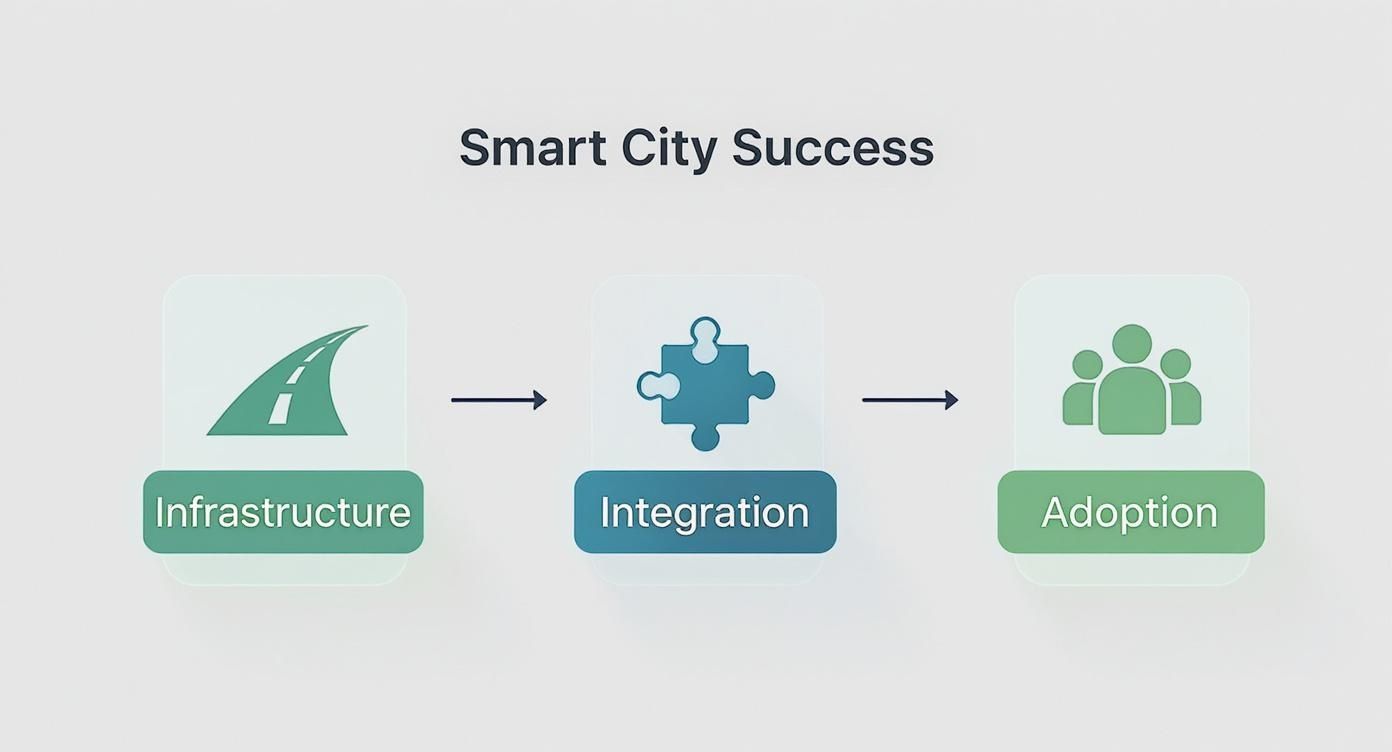
As you can see, it’s not just one thing. It’s about building the right infrastructure, making sure different transport modes work together, and finally, getting people like you and me on board.
For Businesses and Fleet Operators
Helping your team commute greener is a fantastic perk that does wonders for morale and seriously boosts your company's sustainability credentials.
A corporate micromobility program is more than just an employee benefit; it's a statement that your company is invested in the well-being of its team and the health of its community.
Here’s how to set up a program that your employees will actually be excited to use:
- Provide Secure Parking & Charging: The number one worry for most people is "Where do I park it?" or "What if my battery dies?" Solve that problem for them. Offer secure bike racks and easy-to-access charging stations to eliminate that stress.
- Offer Incentives: A "cycle to work" scheme or even small stipends for employees who consistently use sustainable transport can make a big difference. It shows you genuinely value their effort.
- Create a Fleet Program: Why not partner with a provider to offer a small fleet of shared e-bikes or e-scooters? They're perfect for employees to grab for lunch runs or short meetings. It’s a low-risk way to introduce everyone to the benefits of micro-mobility.
By taking these steps, you’re moving beyond just talking about sustainable change—you’re actively building it right into your daily life and company culture.
Got Questions About Greener Travel? We've Got Answers.
Still curious about a few things? Perfect. Let's tackle some of the most common questions people have when they're thinking about shifting to a more sustainable commute.
Are E-Scooters Actually Legal to Ride in the UK?
This is a big one, and the rules can be a bit confusing. Right now, the only e-scooters you can legally ride on public roads are the rental ones you see in specific government-approved trial zones.
Your own private e-scooter? It’s still illegal to ride it on public roads, pavements, or even in cycle lanes. The laws are definitely in flux and expected to change, so always check the latest official government guidance and your local council’s rules before you head out.
How Much Money Can I Really Save with an E-Bike?
Honestly, the savings can be staggering. Think about it: running a car in the UK with fuel, insurance, tax, maintenance, and parking can easily set you back over £3,000 a year.
An e-bike’s costs are pocket change in comparison—we’re talking pennies for a full charge and some basic upkeep. It’s not uncommon for people to save hundreds of pounds every single month after swapping their car for an e-bike on their daily commute.
The "last-mile problem" is that annoying gap between where public transport drops you off (like the train station) and your actual destination. It's often too far to walk but seems silly to get a cab for.
How Do E-Bikes and Scooters Fix the "Last-Mile Problem"?
This is where micromobility really shines. E-scooters and e-bikes are tailor-made for closing that final gap in your journey. They're quick, cheap, and just plain easy.
They make getting from the bus stop or train station to your front door totally painless, which in turn makes the entire public transport network a much more attractive option. They’re the missing piece of the puzzle that connects everything together.
Ready to find the perfect ride for your greener commute? Punk Ride offers a curated selection of high-performance e-scooters and e-bikes from top brands. Explore our collection and redefine your city travel at https://www.punkride.com.
Share:
Best Budget Electric Bikes: Finding Your Perfect Ride in the US & Australia
Fat Tire Electric Bike Reviews Your Ultimate Guide
2 comments
Great article on sustainable transportation. Electric golf carts are another eco-friendly solution helping campuses, resorts, and industrial facilities reduce emissions while improving mobility. This article is a worthwhile read: https://mobisoftinfotech.com/resources/blog/transportation-logistics/strategic-role-of-golf-carts-in-facility-mobility
Sustainable transportation is one of those topics where the business case and the ethical case are finally aligning — which makes it easier to act on. The emissions reduction angle is compelling but what stuck with me is how route consolidation through a smart employee transportation solution directly reduces carbon footprint without asking employees to change behavior. https://mobisoftinfotech.com/products/employee-transport-management-system optimizes routes in ways that have real sustainability impact. Has anyone started including transport efficiency in their ESG reporting?